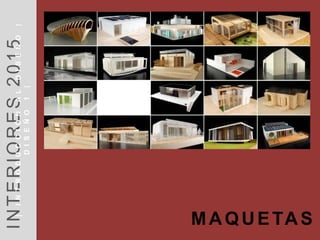
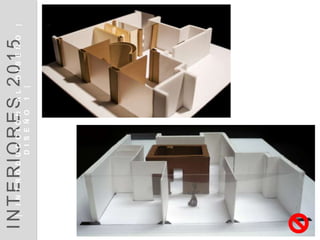
MAQUETAS
INTERIORES2015|INTRODUCCIÓNALDISEÑO|
DISEÑO1|
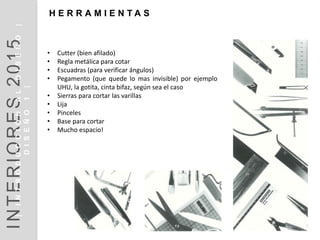
• Cutter (bien afilado)
• Regla metálica para cotar
• Escuadras (para verificar ángulos)
• Pegamento (que quede lo mas invisible) por ejemplo
UHU, la gotita, cinta bifaz, según sea el caso
• Sierras para cortar las varillas
• Lija
• Pinceles
• Base para cortar
• Mucho espacio!
H E R R A M I E N T A S
INTERIORES2014INTRODUCCIÓN|DISEÑO1|
DISEÑOI1
INTERIORES2015|INTRODUCCIÓNALDISEÑO|
DISEÑO1|
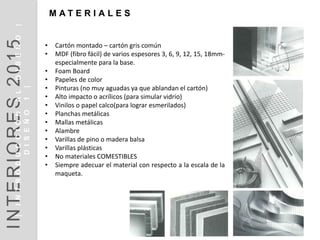
• Cartón montado – cartón gris común
• MDF (fibro fácil) de varios espesores 3, 6, 9, 12, 15, 18mm-
especialmente para la base.
• Foam Board
• Papeles de color
• Pinturas (no muy aguadas ya que ablandan el cartón)
• Alto impacto o acrílicos (para simular vidrio)
• Vinilos o papel calco(para lograr esmerilados)
• Planchas metálicas
• Mallas metálicas
• Alambre
• Varillas de pino o madera balsa
• Varillas plásticas
• No materiales COMESTIBLES
• Siempre adecuar el material con respecto a la escala de la
maqueta.
M A T E R I A L E S
INTERIORES2014INTRODUCCIÓN|DISEÑO1|
DISEÑOI1
INTERIORES2015|INTRODUCCIÓNALDISEÑO|
DISEÑO1|
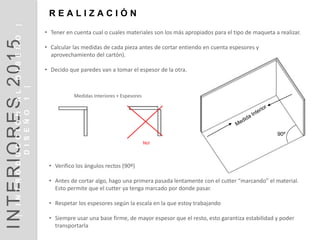
90º
No!
• Tener en cuenta cual o cuales materiales son los más apropiados para el tipo de maqueta a realizar.
• Calcular las medidas de cada pieza antes de cortar entiendo en cuenta espesores y
aprovechamiento del cartón).
• Decido que paredes van a tomar el espesor de la otra.
Medidas Interiores + Espesores
R E A L I Z A C I Ó N
• Verifico los ángulos rectos (90º)
• Antes de cortar algo, hago una primera pasada lentamente con el cutter “marcando” el material.
Esto permite que el cutter ya tenga marcado por donde pasar.
• Respetar los espesores según la escala en la que estoy trabajando
• Siempre usar una base firme, de mayor espesor que el resto, esto garantiza estabilidad y poder
transportarla
INTERIORES2014INTRODUCCIÓN|DISEÑO1|
DISEÑOI1
INTERIORES2015|INTRODUCCIÓNALDISEÑO|
DISEÑO1|
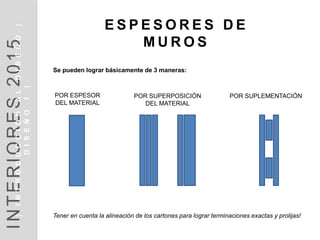
Se pueden lograr básicamente de 3 maneras:
E S P E S O R E S D E
M U R O S
POR ESPESOR
DEL MATERIAL
POR SUPERPOSICIÓN
DEL MATERIAL
POR SUPLEMENTACIÓN
Tener en cuenta la alineación de los cartones para lograr terminaciones exactas y prolijas!
INTERIORES2014INTRODUCCIÓN|DISEÑO1|
DISEÑOI1
INTERIORES2015|INTRODUCCIÓNALDISEÑO|
DISEÑO1|
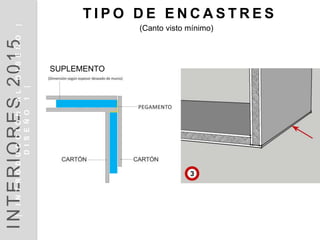
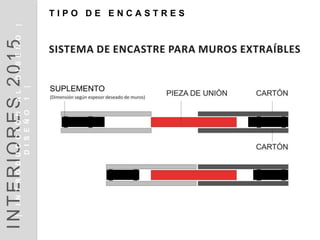
T I P O D E E N C A S T R E S
SUPLEMENTO
(Canto visto mínimo)
INTERIORES2014INTRODUCCIÓN|DISEÑO1|
DISEÑOI1
INTERIORES2015|INTRODUCCIÓNALDISEÑO|
DISEÑO1|
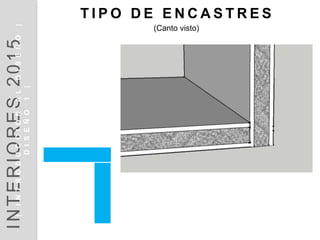
T I P O D E E N C A S T R E S
(Canto visto)
INTERIORES2014INTRODUCCIÓN|DISEÑO1|
DISEÑOI1
INTERIORES2015|INTRODUCCIÓNALDISEÑO|
DISEÑO1|
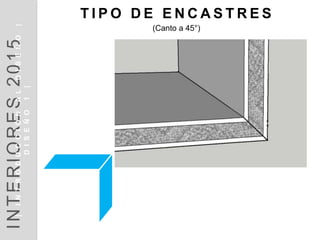
T I P O D E E N C A S T R E S
(Canto a 45°)
INTERIORES2014
INTRODUCCIÓN|DISEÑO1|
INTERIORES2015|INTRODUCCIÓNALDISEÑO|
DISEÑO1|
T I P O D E E N C A S T R E S
MACHO - HEMBRA
SUPLEMENTO
INTERIORES2014INTRODUCCIÓN|DISEÑO1|
DISEÑOI1
INTERIORES2015|INTRODUCCIÓNALDISEÑO|
DISEÑO1|
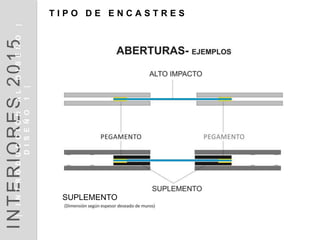
T I P O D E E N C A S T R E S
SUPLEMENTO
INTERIORES2014INTRODUCCIÓN|DISEÑO1|
DISEÑOI1
INTERIORES2015|INTRODUCCIÓNALDISEÑO|
DISEÑO1|
INTERIORES2014INTRODUCCIÓN|DISEÑO1|
DISEÑOI1
INTERIORES2015|INTRODUCCIÓNALDISEÑO|
DISEÑO1|
INTERIORES2014INTRODUCCIÓN|DISEÑO1|
DISEÑOI1
INTERIORES2015|INTRODUCCIÓNALDISEÑO|
DISEÑO1|
INTERIORES2014INTRODUCCIÓN|DISEÑO1|
DISEÑOI1
INTERIORES2015|INTRODUCCIÓNALDISEÑO|
DISEÑO1|
INTERIORES2014INTRODUCCIÓN|DISEÑO1|
DISEÑOI1
INTERIORES2015|INTRODUCCIÓNALDISEÑO|
DISEÑO1|
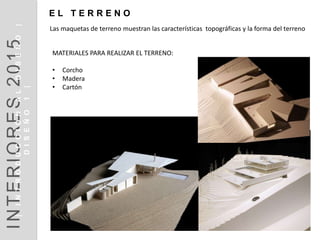
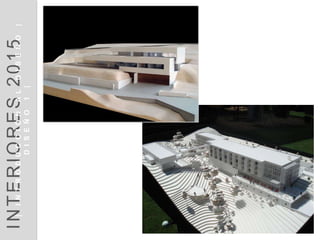
Las maquetas de terreno muestran las características topográficas y la forma del terreno
MATERIALES PARA REALIZAR EL TERRENO:
• Corcho
• Madera
• Cartón
E L T E R R E N O
INTERIORES2014INTRODUCCIÓN|DISEÑO1|
DISEÑOI1
INTERIORES2015|INTRODUCCIÓNALDISEÑO|
DISEÑO1|
INTERIORES2014INTRODUCCIÓN|DISEÑO1|
DISEÑOI1
INTERIORES2015|INTRODUCCIÓNALDISEÑO|
DISEÑO1|
INTERIORES2015|INTRODUCCIÓNALDISEÑO|
DISEÑO1|
• Manifestar las diferentes texturas con distintos materiales que se adapten tanto en
estética como en escala. (ej: piedra=lijas-corcho, mampostería-hormigón= cartón, etc)
• Exterior Monocromáticas (material crudo)
• Base MDF 6 u 9 mm con rotulo en el extremo inferior derecho
• NO UTILIZAR ELEMENTOS COMESTIBLES, NI DEL ASEO PERSONAL
• NO UTILIZAR ELEMENTOS DE LA NATURALEZA
R E Q U E R I M I E N T O S P A R A L A M A Q U E T A F I N
INTERIORES2014INTRODUCCIÓN|DISEÑO1|
DISEÑOI1
INTERIORES2015|INTRODUCCIÓNALDISEÑO|
DISEÑO1|

Teórica Armado de maqueta - UM

  • 1.
  • 2.
    • Cutter (bienafilado) • Regla metálica para cotar • Escuadras (para verificar ángulos) • Pegamento (que quede lo mas invisible) por ejemplo UHU, la gotita, cinta bifaz, según sea el caso • Sierras para cortar las varillas • Lija • Pinceles • Base para cortar • Mucho espacio! H E R R A M I E N T A S INTERIORES2014INTRODUCCIÓN|DISEÑO1| DISEÑOI1 INTERIORES2015|INTRODUCCIÓNALDISEÑO| DISEÑO1|
  • 3.
    • Cartón montado– cartón gris común • MDF (fibro fácil) de varios espesores 3, 6, 9, 12, 15, 18mm- especialmente para la base. • Foam Board • Papeles de color • Pinturas (no muy aguadas ya que ablandan el cartón) • Alto impacto o acrílicos (para simular vidrio) • Vinilos o papel calco(para lograr esmerilados) • Planchas metálicas • Mallas metálicas • Alambre • Varillas de pino o madera balsa • Varillas plásticas • No materiales COMESTIBLES • Siempre adecuar el material con respecto a la escala de la maqueta. M A T E R I A L E S INTERIORES2014INTRODUCCIÓN|DISEÑO1| DISEÑOI1 INTERIORES2015|INTRODUCCIÓNALDISEÑO| DISEÑO1|
  • 4.
    90º No! • Tener encuenta cual o cuales materiales son los más apropiados para el tipo de maqueta a realizar. • Calcular las medidas de cada pieza antes de cortar entiendo en cuenta espesores y aprovechamiento del cartón). • Decido que paredes van a tomar el espesor de la otra. Medidas Interiores + Espesores R E A L I Z A C I Ó N • Verifico los ángulos rectos (90º) • Antes de cortar algo, hago una primera pasada lentamente con el cutter “marcando” el material. Esto permite que el cutter ya tenga marcado por donde pasar. • Respetar los espesores según la escala en la que estoy trabajando • Siempre usar una base firme, de mayor espesor que el resto, esto garantiza estabilidad y poder transportarla INTERIORES2014INTRODUCCIÓN|DISEÑO1| DISEÑOI1 INTERIORES2015|INTRODUCCIÓNALDISEÑO| DISEÑO1|
  • 5.
    Se pueden lograrbásicamente de 3 maneras: E S P E S O R E S D E M U R O S POR ESPESOR DEL MATERIAL POR SUPERPOSICIÓN DEL MATERIAL POR SUPLEMENTACIÓN Tener en cuenta la alineación de los cartones para lograr terminaciones exactas y prolijas! INTERIORES2014INTRODUCCIÓN|DISEÑO1| DISEÑOI1 INTERIORES2015|INTRODUCCIÓNALDISEÑO| DISEÑO1|
  • 6.
    T I PO D E E N C A S T R E S SUPLEMENTO (Canto visto mínimo) INTERIORES2014INTRODUCCIÓN|DISEÑO1| DISEÑOI1 INTERIORES2015|INTRODUCCIÓNALDISEÑO| DISEÑO1|
  • 7.
    T I PO D E E N C A S T R E S (Canto visto) INTERIORES2014INTRODUCCIÓN|DISEÑO1| DISEÑOI1 INTERIORES2015|INTRODUCCIÓNALDISEÑO| DISEÑO1|
  • 8.
    T I PO D E E N C A S T R E S (Canto a 45°) INTERIORES2014 INTRODUCCIÓN|DISEÑO1| INTERIORES2015|INTRODUCCIÓNALDISEÑO| DISEÑO1|
  • 9.
    T I PO D E E N C A S T R E S MACHO - HEMBRA SUPLEMENTO INTERIORES2014INTRODUCCIÓN|DISEÑO1| DISEÑOI1 INTERIORES2015|INTRODUCCIÓNALDISEÑO| DISEÑO1|
  • 10.
    T I PO D E E N C A S T R E S SUPLEMENTO INTERIORES2014INTRODUCCIÓN|DISEÑO1| DISEÑOI1 INTERIORES2015|INTRODUCCIÓNALDISEÑO| DISEÑO1|
  • 11.
  • 12.
  • 13.
  • 14.
  • 15.
    Las maquetas deterreno muestran las características topográficas y la forma del terreno MATERIALES PARA REALIZAR EL TERRENO: • Corcho • Madera • Cartón E L T E R R E N O INTERIORES2014INTRODUCCIÓN|DISEÑO1| DISEÑOI1 INTERIORES2015|INTRODUCCIÓNALDISEÑO| DISEÑO1|
  • 16.
  • 17.
  • 18.
    • Manifestar lasdiferentes texturas con distintos materiales que se adapten tanto en estética como en escala. (ej: piedra=lijas-corcho, mampostería-hormigón= cartón, etc) • Exterior Monocromáticas (material crudo) • Base MDF 6 u 9 mm con rotulo en el extremo inferior derecho • NO UTILIZAR ELEMENTOS COMESTIBLES, NI DEL ASEO PERSONAL • NO UTILIZAR ELEMENTOS DE LA NATURALEZA R E Q U E R I M I E N T O S P A R A L A M A Q U E T A F I N INTERIORES2014INTRODUCCIÓN|DISEÑO1| DISEÑOI1 INTERIORES2015|INTRODUCCIÓNALDISEÑO| DISEÑO1|