G A R D E N N E W S L E T T E R 
SILER CITY ELEMENTARY 
SCHOOL GARDEN 
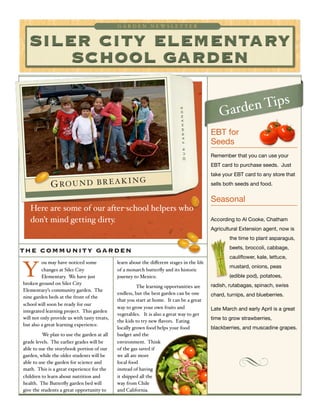
Here are some of our after-school helpers who 
don’t mind getting dirty. 
Garden Tips 
G R O U N D B R E A K I N G 
ou may have noticed some 
changes at Siler City 
Elementary. We have just 
broken ground on Siler City 
Elementary’s community garden. The 
nine garden beds at the front of the 
school will soon be ready for our 
integrated learning project. This garden 
will not only provide us with tasty treats, 
but also a great learning experience. 
We plan to use the garden at all 
grade levels. The earlier grades will be 
able to use the storybook portion of our 
garden, while the older students will be 
able to use the garden for science and 
math. This is a great experience for the 
children to learn about nutrition and 
health. The Butterfly garden bed will 
give the students a great opportunity to 
learn about the different stages in the life 
of a monarch butterfly and its historic 
journey to Mexico. 
The learning opportunities are 
endless, but the best garden can be one 
that you start at home. It can be a great 
way to grow your own fruits and 
vegetables. It is also a great way to get 
the kids to try new flavors. Eating 
locally grown food helps your food 
budget and the 
environment. Think 
of the gas saved if 
we all ate more 
local food 
instead of having 
it shipped all the 
way from Chile 
and California. 
EBT for 
Seeds 
Remember that you can use your 
EBT card to purchase seeds. Just 
take your EBT card to any store that 
sells both seeds and food. 
Seasonal 
According to Al Cooke, Chatham 
Agricultural Extension agent, now is 
the time to plant asparagus, 
beets, broccoli, cabbage, 
cauliflower, kale, lettuce, 
mustard, onions, peas 
(edible pod), potatoes, 
radish, rutabagas, spinach, swiss 
chard, turnips, and blueberries. 
Late March and early April is a great 
time to grow strawberries, 
blackberries, and muscadine grapes. 
THE COMMUNITY GARDEN 
Y 
Our farmhands
Donations 
We would like to thank the 
organizations and people that made 
this possible. 
Donors 
Chatham Education Foundation 
Healthy Sprouts Grant 
Brooks Compost 
Carolina Lumber 
Volunteers 
Alex Bidot 
Ann Watson 
Daniel Haithcox 
Food & Organics Recycling for 
Communities & Schools (FORCS) 
Greta James 
Lee Dixon 
Matt Hart 
Peter Scholle 
The Tolentino Alba Family 
The Cruz Pablo Family 
The Conroy Family 
Zac Deaton, RD 
Sally Scholle 
School Social Worker and 
Garden Coordinator 
Phone: 919-742-5220 
Email:sscholle@chatham.k12.nc.us 
Layout of our garden beds 
Herb bed: Here we will 
grow popular herbs and 
spices. 
We also encourage you to 
start your own garden at 
home. Please contact Sally 
Scholle, School Social 
Worker, and you can be on 
our Garden Wall of Fame. 
We would like to keep 
track of all our SCE family 
gardens and help support 
Peter Rabbit: These are 
plants from the popular 
children’s book. 
Latin American: This 
bed contains typical 
fruits and veggies found 
in this region. 
Butterfly: Here there 
will be a Monarch 
butterfly way station. 
Jack and the Beanstalk: 
We’ll have bean plants 
from the popular 
children’s folk tale. 
North Carolina: This 
bed contains typical 
fruits and veggies found 
in North Carolina. 
Pizza Bed: This bed will 
contain the ingredients 
that go into a pizza. 
Seasonal Bed: In this bed 
we will grow the fruits and 
veggies that are in season. 
Salad bed: In this garden 
bed we will be growing 
ingredients to make a 
salad.
B O L E T Í N D E L J A R D Í N 
EL JARDÍN DE 
SILER CITY ELEMENTARY 
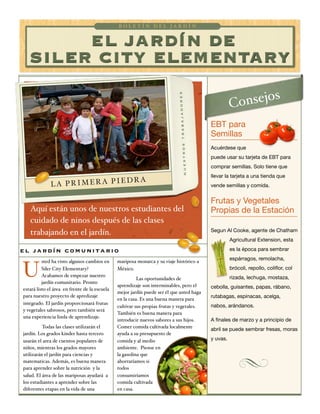
Aquí están unos de nuestros estudiantes del 
cuidado de ninos después de las clases 
trabajando en el jardín. 
Consejos 
L A P R I M E R A P I E D R A 
sted ha visto algunos cambios en 
Siler City Elementary? 
Acabamos de empezar nuestro 
jardín comunitario. Pronto 
estará listo el área en frente de la escuela 
para nuestro proyecto de apredizaje 
integrado. El jardín proporcionará frutas 
y vegetales sabrosos, pero también será 
una experiencia linda de aprendizaje. 
Todas las clases utilizarán el 
jardín. Los grados kinder hasta tercero 
usarán el area de cuentos populares de 
niños, mientras los grados mayores 
utilizarán el jardín para ciencias y 
matematicas. Además, es buena manera 
para aprender sobre la nutrición y la 
salud. El área de las mariposas ayudará a 
los estudiantes a aprender sobre las 
diferentes etapas en la vida de una 
mariposa monarca y su viaje histórico a 
México. 
Las oportunidades de 
aprendizaje son interminables, pero el 
mejor jardín puede ser él que usted haga 
en la casa. Es una buena manera para 
cultivar sus propias frutas y vegetales. 
También es buena manera para 
introducir nuevos sabores a sus hijos. 
Comer comida cultivada localmente 
ayuda a su presupuesto de 
comida y al medio 
ambiente. Piense en 
la gasolina que 
ahorraríamos si 
todos 
consumiríamos 
comida cultivada 
en casa. 
EBT para 
Semillas 
Acuérdese que 
puede usar su tarjeta de EBT para 
comprar semillas. Solo tiene que 
llevar la tarjeta a una tienda que 
vende semillas y comida. 
Frutas y Vegetales 
Propias de la Estación 
Segun Al Cooke, agente de Chatham 
Agricultural Extension, esta 
es la época para sembrar 
espárragos, remolacha, 
brócoli, repollo, coliflor, col 
rizada, lechuga, mostaza, 
cebolla, guisantes, papas, rábano, 
rutabagas, espinacas, acelga, 
nabos, arándanos. 
A finales de marzo y a principio de 
abril se puede sembrar fresas, moras 
y uvas. 
el jardín comunitario 
U 
nuestros trabajadores
Donaciones 
Queremos agradecer a todas las 
organizaciones y personas que han 
ayudado hacer nuestro jardín una 
realidad. 
Donantes 
Chatham Education Foundation 
Brooks Compost 
Carolina Lumber 
Healthy Sprouts Grant 
Voluntarios 
Alex Bidot 
Ann Watson 
Daniel Haithcox 
Food & Organics Recycling for 
Communities & Schools (FORCS) 
Greta James 
Lee Dixon 
Matt Hart 
Peter Scholle 
The Tolentino Alba Family 
The Cruz Pablo Family 
The Conroy Family 
Zac Deaton, RD 
Sally Scholle 
Trabajadora Social y 
Coordinadora del Jardín 
Teléfono: 919-742-5220 
Email:sscholle@chatham.k12.nc.us 
diseño de nuestro jardín 
Hierbas: Aquí 
cultivaremos hierbas y 
especias populares. 
Le recomendamos que 
empiece su propio jardín en 
la casa. Favor de 
comunicarse con Sally 
Scholle, Trabajadora Social, y 
puede ser incluido en 
nuestro Muro de Fama del 
Jardín. Nos gustaría 
mantener una lista de todos 
los jardines familiares de 
SCE para apoyarlos. 
Peter Rabbit: Plantas del 
libro famoso para niños. 
América Latina: 
Contendrá frutas y 
vegetales típicas de esa 
región. 
Mariposas: Aquí estará 
nuestra estación de 
mariposas. 
Juan y los Frijoles 
Mágicos: Tendremos 
plantas de frijoles del 
cuento popular. 
Carolina del norte: 
Contendrá frutas y 
vegetales típicas de 
nuestro estado 
Pizza: Contendrá 
ingredientes para hacer 
pizza. 
Frutas y vegetales propias 
de la estación 
Ensalada: Aquí 
cultivamos ingredientes 
para hacer una ensalada.

Siler City Elementary School Gardening News

  • 1.
    G A RD E N N E W S L E T T E R SILER CITY ELEMENTARY SCHOOL GARDEN Here are some of our after-school helpers who don’t mind getting dirty. Garden Tips G R O U N D B R E A K I N G ou may have noticed some changes at Siler City Elementary. We have just broken ground on Siler City Elementary’s community garden. The nine garden beds at the front of the school will soon be ready for our integrated learning project. This garden will not only provide us with tasty treats, but also a great learning experience. We plan to use the garden at all grade levels. The earlier grades will be able to use the storybook portion of our garden, while the older students will be able to use the garden for science and math. This is a great experience for the children to learn about nutrition and health. The Butterfly garden bed will give the students a great opportunity to learn about the different stages in the life of a monarch butterfly and its historic journey to Mexico. The learning opportunities are endless, but the best garden can be one that you start at home. It can be a great way to grow your own fruits and vegetables. It is also a great way to get the kids to try new flavors. Eating locally grown food helps your food budget and the environment. Think of the gas saved if we all ate more local food instead of having it shipped all the way from Chile and California. EBT for Seeds Remember that you can use your EBT card to purchase seeds. Just take your EBT card to any store that sells both seeds and food. Seasonal According to Al Cooke, Chatham Agricultural Extension agent, now is the time to plant asparagus, beets, broccoli, cabbage, cauliflower, kale, lettuce, mustard, onions, peas (edible pod), potatoes, radish, rutabagas, spinach, swiss chard, turnips, and blueberries. Late March and early April is a great time to grow strawberries, blackberries, and muscadine grapes. THE COMMUNITY GARDEN Y Our farmhands
  • 2.
    Donations We wouldlike to thank the organizations and people that made this possible. Donors Chatham Education Foundation Healthy Sprouts Grant Brooks Compost Carolina Lumber Volunteers Alex Bidot Ann Watson Daniel Haithcox Food & Organics Recycling for Communities & Schools (FORCS) Greta James Lee Dixon Matt Hart Peter Scholle The Tolentino Alba Family The Cruz Pablo Family The Conroy Family Zac Deaton, RD Sally Scholle School Social Worker and Garden Coordinator Phone: 919-742-5220 Email:sscholle@chatham.k12.nc.us Layout of our garden beds Herb bed: Here we will grow popular herbs and spices. We also encourage you to start your own garden at home. Please contact Sally Scholle, School Social Worker, and you can be on our Garden Wall of Fame. We would like to keep track of all our SCE family gardens and help support Peter Rabbit: These are plants from the popular children’s book. Latin American: This bed contains typical fruits and veggies found in this region. Butterfly: Here there will be a Monarch butterfly way station. Jack and the Beanstalk: We’ll have bean plants from the popular children’s folk tale. North Carolina: This bed contains typical fruits and veggies found in North Carolina. Pizza Bed: This bed will contain the ingredients that go into a pizza. Seasonal Bed: In this bed we will grow the fruits and veggies that are in season. Salad bed: In this garden bed we will be growing ingredients to make a salad.
  • 3.
    B O LE T Í N D E L J A R D Í N EL JARDÍN DE SILER CITY ELEMENTARY Aquí están unos de nuestros estudiantes del cuidado de ninos después de las clases trabajando en el jardín. Consejos L A P R I M E R A P I E D R A sted ha visto algunos cambios en Siler City Elementary? Acabamos de empezar nuestro jardín comunitario. Pronto estará listo el área en frente de la escuela para nuestro proyecto de apredizaje integrado. El jardín proporcionará frutas y vegetales sabrosos, pero también será una experiencia linda de aprendizaje. Todas las clases utilizarán el jardín. Los grados kinder hasta tercero usarán el area de cuentos populares de niños, mientras los grados mayores utilizarán el jardín para ciencias y matematicas. Además, es buena manera para aprender sobre la nutrición y la salud. El área de las mariposas ayudará a los estudiantes a aprender sobre las diferentes etapas en la vida de una mariposa monarca y su viaje histórico a México. Las oportunidades de aprendizaje son interminables, pero el mejor jardín puede ser él que usted haga en la casa. Es una buena manera para cultivar sus propias frutas y vegetales. También es buena manera para introducir nuevos sabores a sus hijos. Comer comida cultivada localmente ayuda a su presupuesto de comida y al medio ambiente. Piense en la gasolina que ahorraríamos si todos consumiríamos comida cultivada en casa. EBT para Semillas Acuérdese que puede usar su tarjeta de EBT para comprar semillas. Solo tiene que llevar la tarjeta a una tienda que vende semillas y comida. Frutas y Vegetales Propias de la Estación Segun Al Cooke, agente de Chatham Agricultural Extension, esta es la época para sembrar espárragos, remolacha, brócoli, repollo, coliflor, col rizada, lechuga, mostaza, cebolla, guisantes, papas, rábano, rutabagas, espinacas, acelga, nabos, arándanos. A finales de marzo y a principio de abril se puede sembrar fresas, moras y uvas. el jardín comunitario U nuestros trabajadores
  • 4.
    Donaciones Queremos agradecera todas las organizaciones y personas que han ayudado hacer nuestro jardín una realidad. Donantes Chatham Education Foundation Brooks Compost Carolina Lumber Healthy Sprouts Grant Voluntarios Alex Bidot Ann Watson Daniel Haithcox Food & Organics Recycling for Communities & Schools (FORCS) Greta James Lee Dixon Matt Hart Peter Scholle The Tolentino Alba Family The Cruz Pablo Family The Conroy Family Zac Deaton, RD Sally Scholle Trabajadora Social y Coordinadora del Jardín Teléfono: 919-742-5220 Email:sscholle@chatham.k12.nc.us diseño de nuestro jardín Hierbas: Aquí cultivaremos hierbas y especias populares. Le recomendamos que empiece su propio jardín en la casa. Favor de comunicarse con Sally Scholle, Trabajadora Social, y puede ser incluido en nuestro Muro de Fama del Jardín. Nos gustaría mantener una lista de todos los jardines familiares de SCE para apoyarlos. Peter Rabbit: Plantas del libro famoso para niños. América Latina: Contendrá frutas y vegetales típicas de esa región. Mariposas: Aquí estará nuestra estación de mariposas. Juan y los Frijoles Mágicos: Tendremos plantas de frijoles del cuento popular. Carolina del norte: Contendrá frutas y vegetales típicas de nuestro estado Pizza: Contendrá ingredientes para hacer pizza. Frutas y vegetales propias de la estación Ensalada: Aquí cultivamos ingredientes para hacer una ensalada.