


¿Te gusta la foca?
Me gusta la foca
¿Te gustan las focas?
Me gustan las focas
¿Te gusta la foca
    gordita?
¡Me gusta mucho
 la foca gordita!
¿Te gusta la rana?
No me gusta la rana.
     La rana es fea.
“Vicki, ¿te gusta la foca?”
    “Sí, me gusta.”
 A Vicki le gusta la foca.
“Vicki, ¿te gusta la rana?”
   “No me gusta la rana.”
     A Vicki no le gusta la rana.
Gustar is different from the other
verbs we have learned.
We have already learned that there are 5 groups of
Subject Pronouns we use to conjugate Ar, Er, and Ir
verbs:

Yo
Tú
Él, ella, usted
Nosotros/nosotras
Ellos, ellas, ustedes
But Gustar is conjugated differently:

We will use only two forms; and Gustar
requires object pronouns
Gustar
Person(s) being pleased + gusta/gustan + thing(s) that are pleasing


        me                                      Singular items:
                                                el helado
         te                  gusta          +
                                 Singular
                                                la fruta
         le                                     comer y bailar (note:
                  +                                verbs are singular)

        nos
                                                Plural items:
        les                  gustan             las uvas
                                   plural   +
                                                las fresas
                                                los camarones
Is this
item
pleasing
to me?                Is this
I need                item
to use                pleasing
                      to you?
                      I need
                      to use


           Is this
           item
           pleasing
           to
           someone
           else? I
           need to
           use
Is this
item       Is this
pleasing   item
to us?     pleasing
I need     to you
to use     all or to
           them?
           I need
           to use
Ojo (watch out!)

 Nos is not short for Nosotros.
Nosotros is a subject pronoun.

It means “we” and can „drive a verb‟.

 In other words, we can conjugate verbs
in the Nosotros form:

Nosotros hacemos la tarea.
Nos means “us”

It is an object pronoun and object
pronouns cannot drive a verb.
We cannot conjugate a verb for “nos”.

Objects get stuff:

La profe nos da la tarea.

La profe gives us the homework

or La profe gives the homework to us.
Gustar


           To clarify the meaning of le and les,
      add a + person in front of the object pronoun:

Pedro y Ana toman el desayuno juntos. Para beber, a Pedro le gusta
  tomar el café, pero a ella le gusta el té.


A Vicki no le gusta la rana fea. (Le refers to Vicki)

A Kiera y a Debi les gusta ir al parque. (Les refers to Kiera and Debi)
Gustar


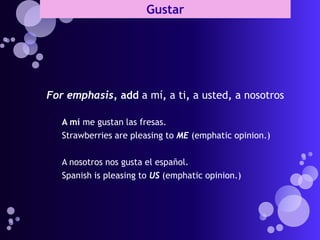
For emphasis, add a mí, a ti, a usted, a nosotros

   A mí me gustan las fresas.
   Strawberries are pleasing to ME (emphatic opinion.)

   A nosotros nos gusta el español.
   Spanish is pleasing to US (emphatic opinion.)
Gustar


      To avoid repeating a question
     to ask someone else’s opinion,

 You can use ¿Y a ti?, ¿Y a usted?, ¿Y a él?, etc.


—¿Te gustan los hongos?

—Sí, me gustan. ¿Y a ti, Vicki?

--Sí, a mí también.
¿A ustedes les gusta la foca?

     Sí, nos gusta la foca.
¿A ustedes les gusta la rana?
A nosotros no nos gusta la rana.
Gustar

Important things to remember about gustar:


 The definite article is used with the thing(s) pleasing to you:

        Me gusta el helado.

        Me gustan las fresas.

        Les gusta la novela.

        Les gusta el sombrero y las botas.
Gustar

Important things to remember about gustar:


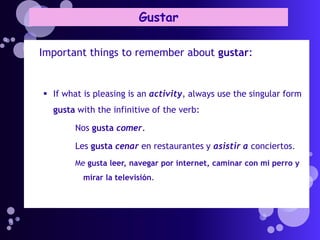
 If what is pleasing is an activity, always use the singular form
  gusta with the infinitive of the verb:

        Nos gusta comer.

        Les gusta cenar en restaurantes y asistir a conciertos.
        Me gusta leer, navegar por internet, caminar con mi perro y
          mirar la televisión.
Ojo:
Using Gustar with people

It indicates a physical attraction
Do not make the mistake
       of conjugating Gustar
           in the Yo form.


              Me gusto


If you make this mistake, do not say
that you learned Spanish from me.
But using titles with people
makes it ok:

A Joann le gusta el arquitecto Ieoh Ming Pei.
But there are better expressions to
indicate you like or get along with
people:

Caer bien

Llevarse bien
For more information,
check out the Gustar page at
Practica
    con
   otros
estudiantes.
Practica
    con
   otros
estudiantes.

El Verbo Gustar

  • 2.
  • 3.
  • 4.
  • 5.
  • 6.
    ¿Te gusta lafoca gordita?
  • 7.
    ¡Me gusta mucho la foca gordita!
  • 8.
  • 9.
    No me gustala rana. La rana es fea.
  • 10.
    “Vicki, ¿te gustala foca?” “Sí, me gusta.” A Vicki le gusta la foca.
  • 11.
    “Vicki, ¿te gustala rana?” “No me gusta la rana.” A Vicki no le gusta la rana.
  • 12.
    Gustar is differentfrom the other verbs we have learned. We have already learned that there are 5 groups of Subject Pronouns we use to conjugate Ar, Er, and Ir verbs: Yo Tú Él, ella, usted Nosotros/nosotras Ellos, ellas, ustedes
  • 13.
    But Gustar isconjugated differently: We will use only two forms; and Gustar requires object pronouns
  • 14.
    Gustar Person(s) being pleased+ gusta/gustan + thing(s) that are pleasing me Singular items: el helado te gusta + Singular la fruta le comer y bailar (note: + verbs are singular) nos Plural items: les gustan las uvas plural + las fresas los camarones
  • 15.
    Is this item pleasing to me? Is this I need item to use pleasing to you? I need to use Is this item pleasing to someone else? I need to use
  • 16.
    Is this item Is this pleasing item to us? pleasing I need to you to use all or to them? I need to use
  • 17.
    Ojo (watch out!) Nos is not short for Nosotros. Nosotros is a subject pronoun. It means “we” and can „drive a verb‟. In other words, we can conjugate verbs in the Nosotros form: Nosotros hacemos la tarea.
  • 18.
    Nos means “us” Itis an object pronoun and object pronouns cannot drive a verb. We cannot conjugate a verb for “nos”. Objects get stuff: La profe nos da la tarea. La profe gives us the homework or La profe gives the homework to us.
  • 19.
    Gustar To clarify the meaning of le and les, add a + person in front of the object pronoun: Pedro y Ana toman el desayuno juntos. Para beber, a Pedro le gusta tomar el café, pero a ella le gusta el té. A Vicki no le gusta la rana fea. (Le refers to Vicki) A Kiera y a Debi les gusta ir al parque. (Les refers to Kiera and Debi)
  • 20.
    Gustar For emphasis, adda mí, a ti, a usted, a nosotros A mí me gustan las fresas. Strawberries are pleasing to ME (emphatic opinion.) A nosotros nos gusta el español. Spanish is pleasing to US (emphatic opinion.)
  • 21.
    Gustar To avoid repeating a question to ask someone else’s opinion, You can use ¿Y a ti?, ¿Y a usted?, ¿Y a él?, etc. —¿Te gustan los hongos? —Sí, me gustan. ¿Y a ti, Vicki? --Sí, a mí también.
  • 22.
    ¿A ustedes lesgusta la foca? Sí, nos gusta la foca.
  • 23.
    ¿A ustedes lesgusta la rana? A nosotros no nos gusta la rana.
  • 24.
    Gustar Important things toremember about gustar:  The definite article is used with the thing(s) pleasing to you: Me gusta el helado. Me gustan las fresas. Les gusta la novela. Les gusta el sombrero y las botas.
  • 25.
    Gustar Important things toremember about gustar:  If what is pleasing is an activity, always use the singular form gusta with the infinitive of the verb: Nos gusta comer. Les gusta cenar en restaurantes y asistir a conciertos. Me gusta leer, navegar por internet, caminar con mi perro y mirar la televisión.
  • 28.
    Ojo: Using Gustar withpeople It indicates a physical attraction
  • 30.
    Do not makethe mistake of conjugating Gustar in the Yo form. Me gusto If you make this mistake, do not say that you learned Spanish from me.
  • 31.
    But using titleswith people makes it ok: A Joann le gusta el arquitecto Ieoh Ming Pei.
  • 33.
    But there arebetter expressions to indicate you like or get along with people: Caer bien Llevarse bien
  • 34.
    For more information, checkout the Gustar page at
  • 37.
    Practica con otros estudiantes.
  • 38.
    Practica con otros estudiantes.