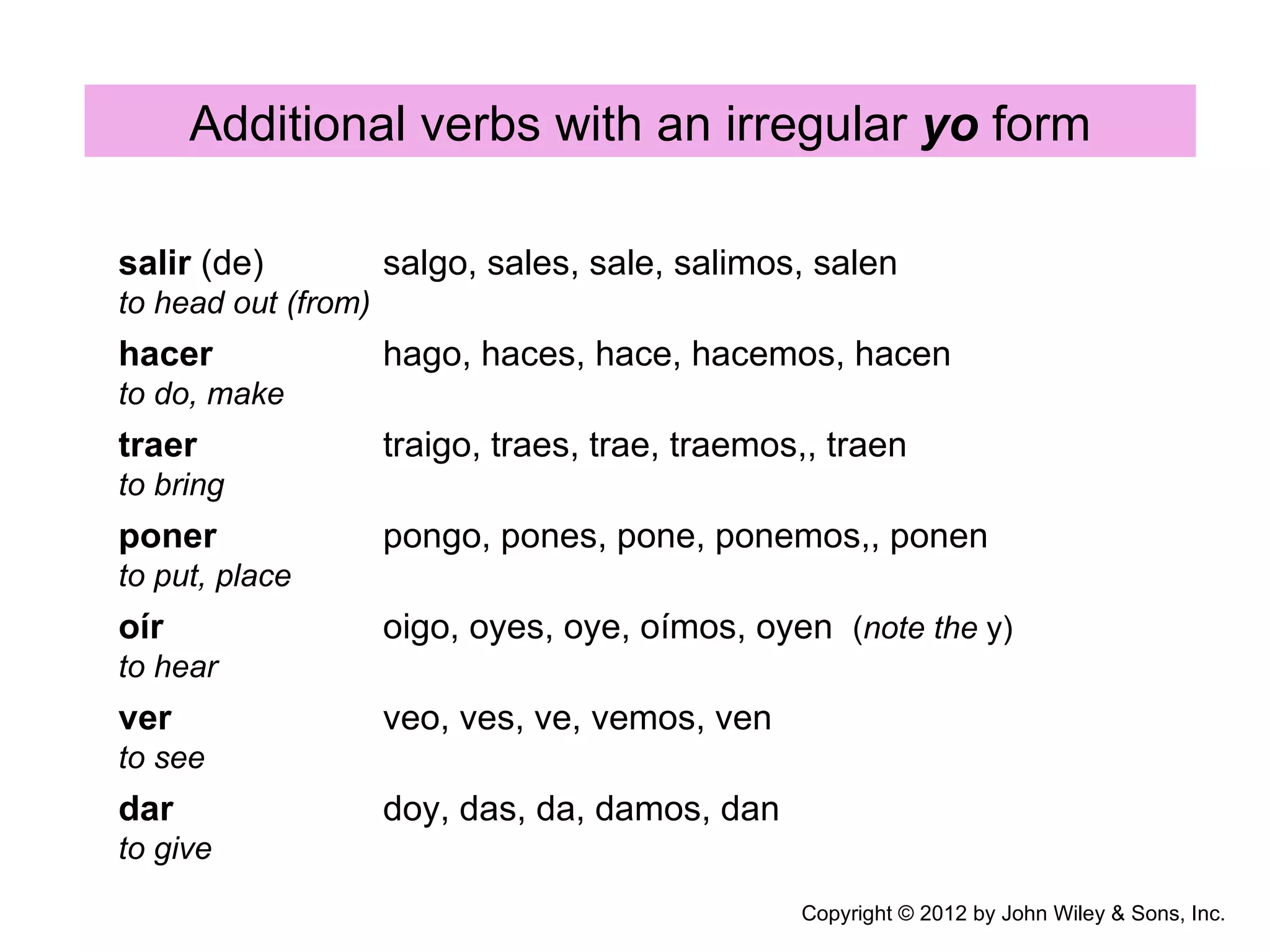
Additional verbs with an irregular yo form

salir (de)           salgo, sales, sale, salimos, salen
to head out (from)
hacer                hago, haces, hace, hacemos, hacen
to do, make
traer                traigo, traes, trae, traemos,, traen
to bring
poner                pongo, pones, pone, ponemos,, ponen
to put, place
oír                  oigo, oyes, oye, oímos, oyen (note the y)
to hear
ver                  veo, ves, ve, vemos, ven
to see
dar                  doy, das, da, damos, dan
to give
                                                 Copyright © 2012 by John Wiley & Sons, Inc.
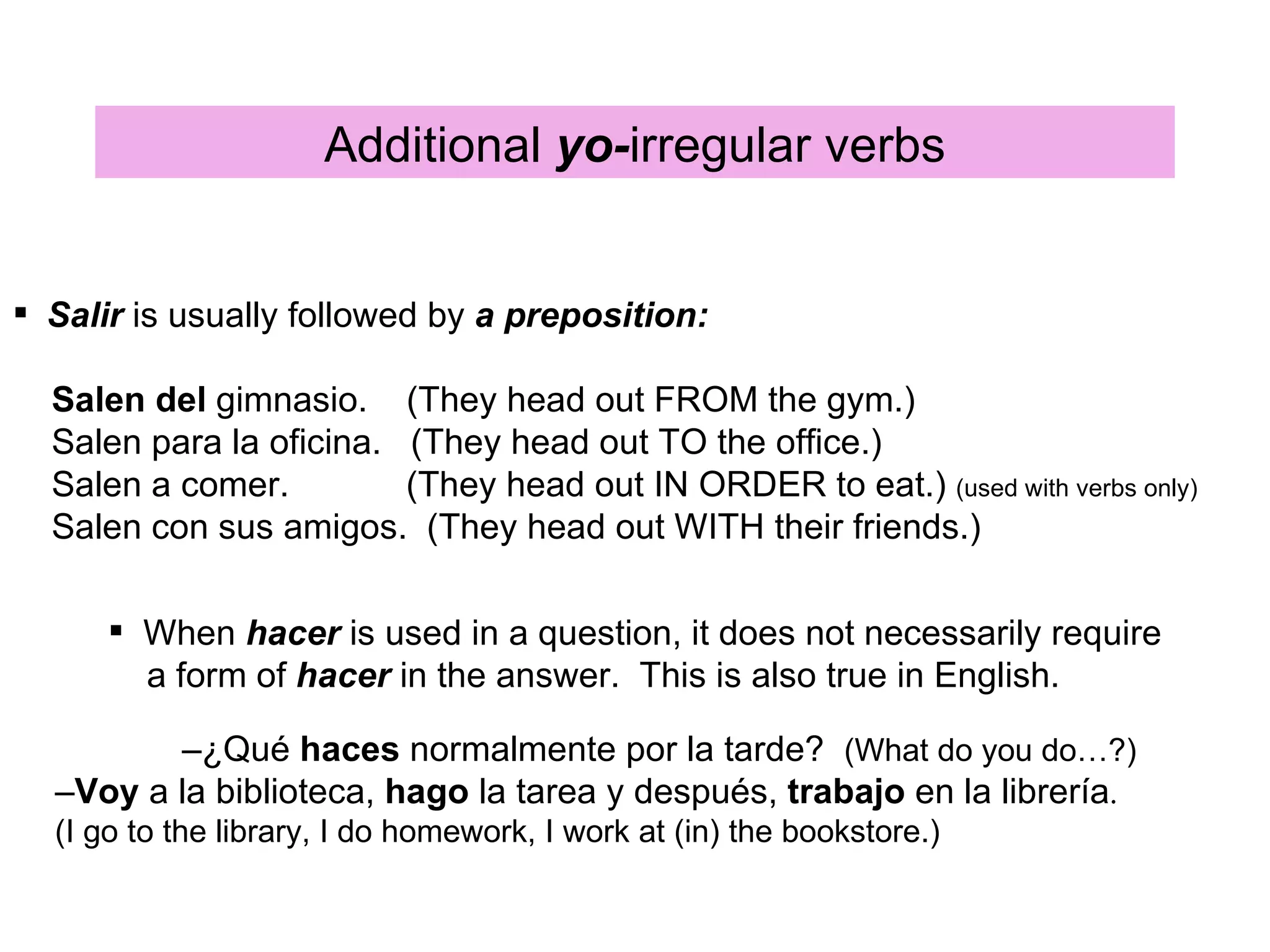
Additional yo-irregular verbs


 Salir is usually followed by a preposition:

  Salen del gimnasio. (They head out FROM the gym.)
  Salen para la oficina. (They head out TO the office.)
  Salen a comer.         (They head out IN ORDER to eat.) (used with verbs only)
  Salen con sus amigos. (They head out WITH their friends.)

       When hacer is used in a question, it does not necessarily require
        a form of hacer in the answer. This is also true in English.

         –¿Qué haces normalmente por la tarde? (What do you do…?)
  –Voy a la biblioteca, hago la tarea y después, trabajo en la librería.
  (I go to the library, I do homework, I work at (in) the bookstore.)
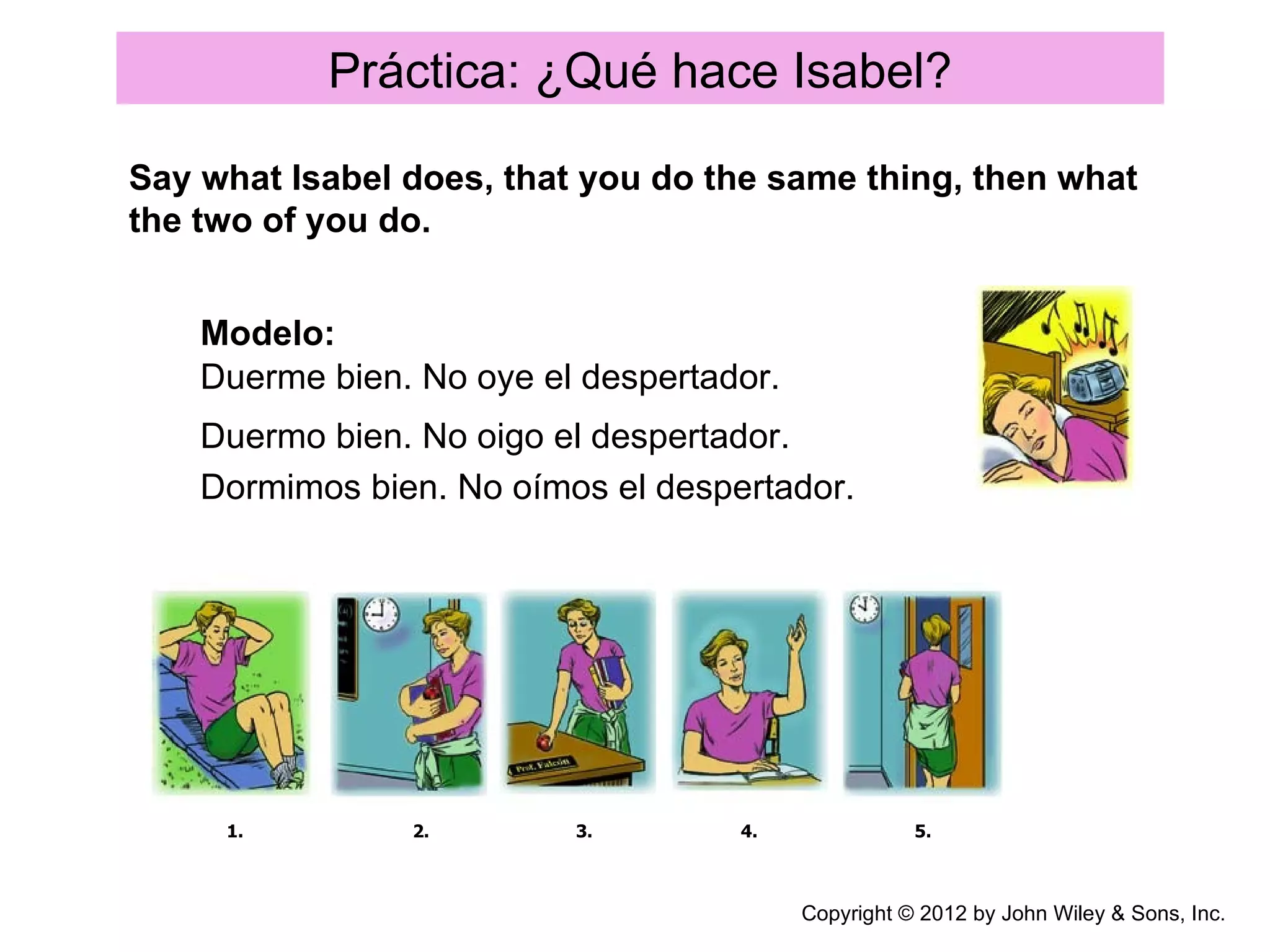
Práctica: ¿Qué hace Isabel?

Say what Isabel does, that you do the same thing, then what
the two of you do.


    Modelo:
    Duerme bien. No oye el despertador.
    Duermo bien. No oigo el despertador.
    Dormimos bien. No oímos el despertador.


     1.         2.        3.        4.               5.


                                          Copyright © 2012 by John Wiley & Sons, Inc.
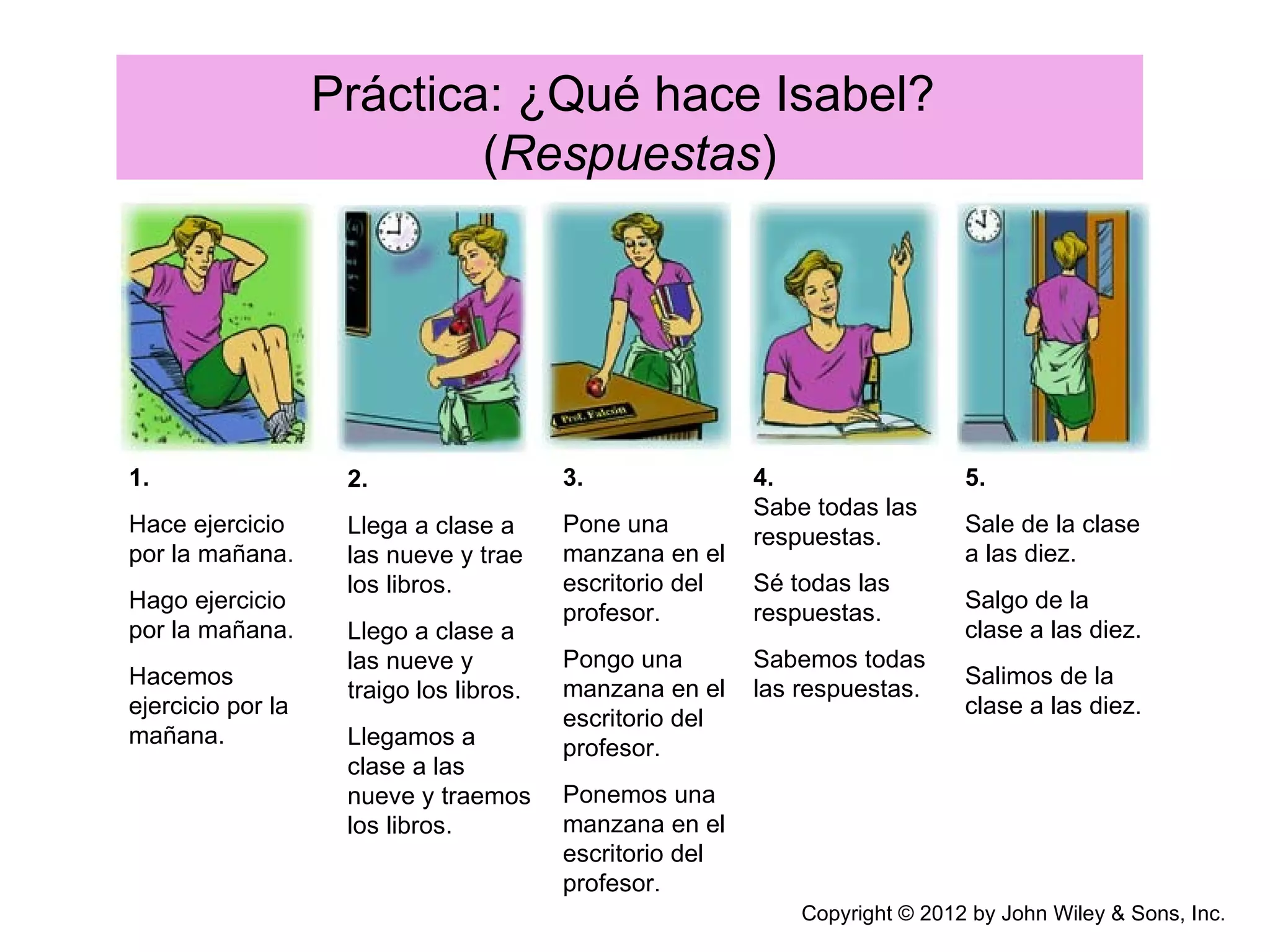
Práctica: ¿Qué hace Isabel?
                           (Respuestas)


1.                  2.                   3.               4.                  5.
                                                          Sabe todas las
Hace ejercicio      Llega a clase a      Pone una                             Sale de la clase
                                                          respuestas.
por la mañana.      las nueve y trae     manzana en el                        a las diez.
                    los libros.          escritorio del   Sé todas las
Hago ejercicio                                                                Salgo de la
                                         profesor.        respuestas.
por la mañana.      Llego a clase a                                           clase a las diez.
                    las nueve y          Pongo una        Sabemos todas
Hacemos                                                                       Salimos de la
                    traigo los libros.   manzana en el    las respuestas.
ejercicio por la                                                              clase a las diez.
                                         escritorio del
mañana.             Llegamos a           profesor.
                    clase a las
                    nueve y traemos      Ponemos una
                    los libros.          manzana en el
                                         escritorio del
                                         profesor.
                                                              Copyright © 2012 by John Wiley & Sons, Inc.

Irregular yo verbs

  • 1.
    Additional verbs withan irregular yo form salir (de) salgo, sales, sale, salimos, salen to head out (from) hacer hago, haces, hace, hacemos, hacen to do, make traer traigo, traes, trae, traemos,, traen to bring poner pongo, pones, pone, ponemos,, ponen to put, place oír oigo, oyes, oye, oímos, oyen (note the y) to hear ver veo, ves, ve, vemos, ven to see dar doy, das, da, damos, dan to give Copyright © 2012 by John Wiley & Sons, Inc.
  • 2.
    Additional yo-irregular verbs Salir is usually followed by a preposition: Salen del gimnasio. (They head out FROM the gym.) Salen para la oficina. (They head out TO the office.) Salen a comer. (They head out IN ORDER to eat.) (used with verbs only) Salen con sus amigos. (They head out WITH their friends.)  When hacer is used in a question, it does not necessarily require a form of hacer in the answer. This is also true in English. –¿Qué haces normalmente por la tarde? (What do you do…?) –Voy a la biblioteca, hago la tarea y después, trabajo en la librería. (I go to the library, I do homework, I work at (in) the bookstore.)
  • 3.
    Práctica: ¿Qué haceIsabel? Say what Isabel does, that you do the same thing, then what the two of you do. Modelo: Duerme bien. No oye el despertador. Duermo bien. No oigo el despertador. Dormimos bien. No oímos el despertador. 1. 2. 3. 4. 5. Copyright © 2012 by John Wiley & Sons, Inc.
  • 4.
    Práctica: ¿Qué haceIsabel? (Respuestas) 1. 2. 3. 4. 5. Sabe todas las Hace ejercicio Llega a clase a Pone una Sale de la clase respuestas. por la mañana. las nueve y trae manzana en el a las diez. los libros. escritorio del Sé todas las Hago ejercicio Salgo de la profesor. respuestas. por la mañana. Llego a clase a clase a las diez. las nueve y Pongo una Sabemos todas Hacemos Salimos de la traigo los libros. manzana en el las respuestas. ejercicio por la clase a las diez. escritorio del mañana. Llegamos a profesor. clase a las nueve y traemos Ponemos una los libros. manzana en el escritorio del profesor. Copyright © 2012 by John Wiley & Sons, Inc.