Carlota Shoup
   Qué vs. Cuál
   Ser
   Estar
   Transitions
   Imperfect
   Triggers
   Acabar de + Infinitive
   Hacer + Time + Qué + Present Tense
   Verbs Like Gustar
   Reflexives
   Tu Commands
    -Affirmatives
    -Negatives
    -Irregulars
   DOP Placement
   Preterite
Dates
                      (¿Que dia es hoy?;    Descriptions
                      ¿Cuál es la fecha?)


      Events
(¿Cuándo/dónde es?)                    D                   Origin

                         E                         O
                                       Ser:
                                    *Is/are

                      P                             C
 Possession                      *Permanent
(¿De quién es?)                  *Nationality               Characteristics
                                *Times & Dates
                                 *Doctor PED


                         R                         T
                                       O
 Relationships                                                 Time
                                                                 v
    (¿Quién es?)                                           (¿Qué hora es?)

                                  Occupation
                                    (¿Qué hace?)
¿Cómo estás?
      Bien, mal,                ¿Cómo estás?
       regular,            Enojado, triste, cansado,
     enfermo, etc.            alegre, contento,
                            emocianado, nervioso,
                           tranquilo, ocupado, etc.
Health       Emotions
                                              ¿Dónde estás? EN:
                                            La casa, la escuela, el
                         Location         supermercado, el banco, el
                            EN               gimnasio, el café, el
                                           aeropuerto, el museo, la
                                                biblioteca, etc.


 ESTAR                    Present
                         Condition
                                                  ¿Cómo está?
                                            Abierto, cerrado, verde,
                                            maduro, limpio, sucio,
                                              roto, frio, caliente,
                                               lluvioso , soleado,
                                                  nublado, etc.


                          I                ¿Qué estás haciendo?
                                      Jugando, estudianto, contando,
                                      leyendo, escribiendo, hablando,

 G             N                         mirando la tele, paseando,
                                      caminado, carriendo, haciendo
                                                ejercicio, etc.


                        Ar- Ando
                        Er/Ir- Endo
                            -Yendo
 Tambien
 Ahora
 Primero
 Despues
 Ni-ni
 Por-eso
 Asi-que
 Pero
 Entonces
Y
 Time/date/age/feelings/descriptions
 Past tense
 No definite beginning or end
 Interrupted activity
    (Cuándo)
 Ongoing    action
    (Was/were)
 Repeated
    (Used to)
 Todos los días
 A muendo
 A veces
 Siempre
 Cada día
 Los lunes
 Generalmente
 Mientras
 De vez en cuando
 Muchas veces
 Frecuentemente
 Used  to explain something that was
  just done
 Example:
    Acabo de leer el libro.
HACER      Usedto talk about how
           much time you have
           been doing something
              Example: Hace treinta y
Time           cinca minutos que Paula
               espera el autobús


 QUÉ
   v


Present
 Tense
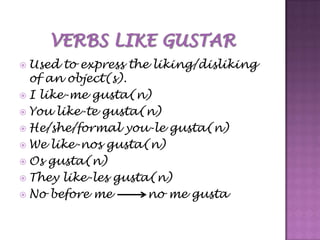
 Used  to express the liking/disliking
  of an object(s).
 I like-me gusta(n)
 You like-te gusta(n)
 He/she/formal you-le gusta(n)
 We like-nos gusta(n)
 Os gusta(n)
 They like-les gusta(n)
 No before me        no me gusta
*RULES:
 1. Pick pronoun
2. Conjugate verb
3. Put pronoun in
        front
                            Used in “yo”
                   Me          form.


   Reflexive        Te        Used in “tu”
   Pronouns                      form.


                   Se        Used in “el, ella,
                           ellos, ellas, ustedes”
                                    form.
  Os      Nos
                       Used in        *The person/thing
                   “nosotros” form.      doing=The
    Used in                             person/thing
“vosotros” form.
                                          receiving
Affirmative             Irregular
  Simply drop the “S”      Di- decir
Negative                   Haz- hacer
  Di- no digas             Ve- ir
                           Pon- poner
  Haz- no hagas
                           Sal- saler
  Ve- no vayas             Se- ser
  Pon- no pongas           Ten - tener
  Sal- no salgas           Ven- vener
  Se- no seas
  Ten- no tengas
  Ven- no vengas
 Can
    attach to an affirmative
 command
e        i
aste    iste
 o       io
amos   imos
aron   ieron

Grammar book

  • 1.
  • 2.
    Qué vs. Cuál  Ser  Estar  Transitions  Imperfect  Triggers  Acabar de + Infinitive  Hacer + Time + Qué + Present Tense  Verbs Like Gustar  Reflexives  Tu Commands -Affirmatives -Negatives -Irregulars  DOP Placement  Preterite
  • 3.
    Dates (¿Que dia es hoy?; Descriptions ¿Cuál es la fecha?) Events (¿Cuándo/dónde es?) D Origin E O Ser: *Is/are P C Possession *Permanent (¿De quién es?) *Nationality Characteristics *Times & Dates *Doctor PED R T O Relationships Time v (¿Quién es?) (¿Qué hora es?) Occupation (¿Qué hace?)
  • 4.
    ¿Cómo estás? Bien, mal, ¿Cómo estás? regular, Enojado, triste, cansado, enfermo, etc. alegre, contento, emocianado, nervioso, tranquilo, ocupado, etc. Health Emotions ¿Dónde estás? EN: La casa, la escuela, el Location supermercado, el banco, el EN gimnasio, el café, el aeropuerto, el museo, la biblioteca, etc. ESTAR Present Condition ¿Cómo está? Abierto, cerrado, verde, maduro, limpio, sucio, roto, frio, caliente, lluvioso , soleado, nublado, etc. I ¿Qué estás haciendo? Jugando, estudianto, contando, leyendo, escribiendo, hablando, G N mirando la tele, paseando, caminado, carriendo, haciendo ejercicio, etc. Ar- Ando Er/Ir- Endo -Yendo
  • 5.
     Tambien  Ahora Primero  Despues  Ni-ni  Por-eso  Asi-que  Pero  Entonces Y
  • 6.
     Time/date/age/feelings/descriptions  Pasttense  No definite beginning or end  Interrupted activity  (Cuándo)  Ongoing action  (Was/were)  Repeated  (Used to)
  • 7.
     Todos losdías  A muendo  A veces  Siempre  Cada día  Los lunes  Generalmente  Mientras  De vez en cuando  Muchas veces  Frecuentemente
  • 8.
     Used to explain something that was just done  Example:  Acabo de leer el libro.
  • 9.
    HACER  Usedto talk about how much time you have been doing something  Example: Hace treinta y Time cinca minutos que Paula espera el autobús QUÉ v Present Tense
  • 10.
     Used to express the liking/disliking of an object(s).  I like-me gusta(n)  You like-te gusta(n)  He/she/formal you-le gusta(n)  We like-nos gusta(n)  Os gusta(n)  They like-les gusta(n)  No before me no me gusta
  • 11.
    *RULES: 1. Pickpronoun 2. Conjugate verb 3. Put pronoun in front Used in “yo” Me form. Reflexive Te Used in “tu” Pronouns form. Se Used in “el, ella, ellos, ellas, ustedes” form. Os Nos Used in *The person/thing “nosotros” form. doing=The Used in person/thing “vosotros” form. receiving
  • 12.
    Affirmative Irregular Simply drop the “S” Di- decir Negative Haz- hacer Di- no digas Ve- ir Pon- poner Haz- no hagas Sal- saler Ve- no vayas Se- ser Pon- no pongas Ten - tener Sal- no salgas Ven- vener Se- no seas Ten- no tengas Ven- no vengas
  • 13.
     Can attach to an affirmative command
  • 14.
    e i aste iste o io amos imos aron ieron