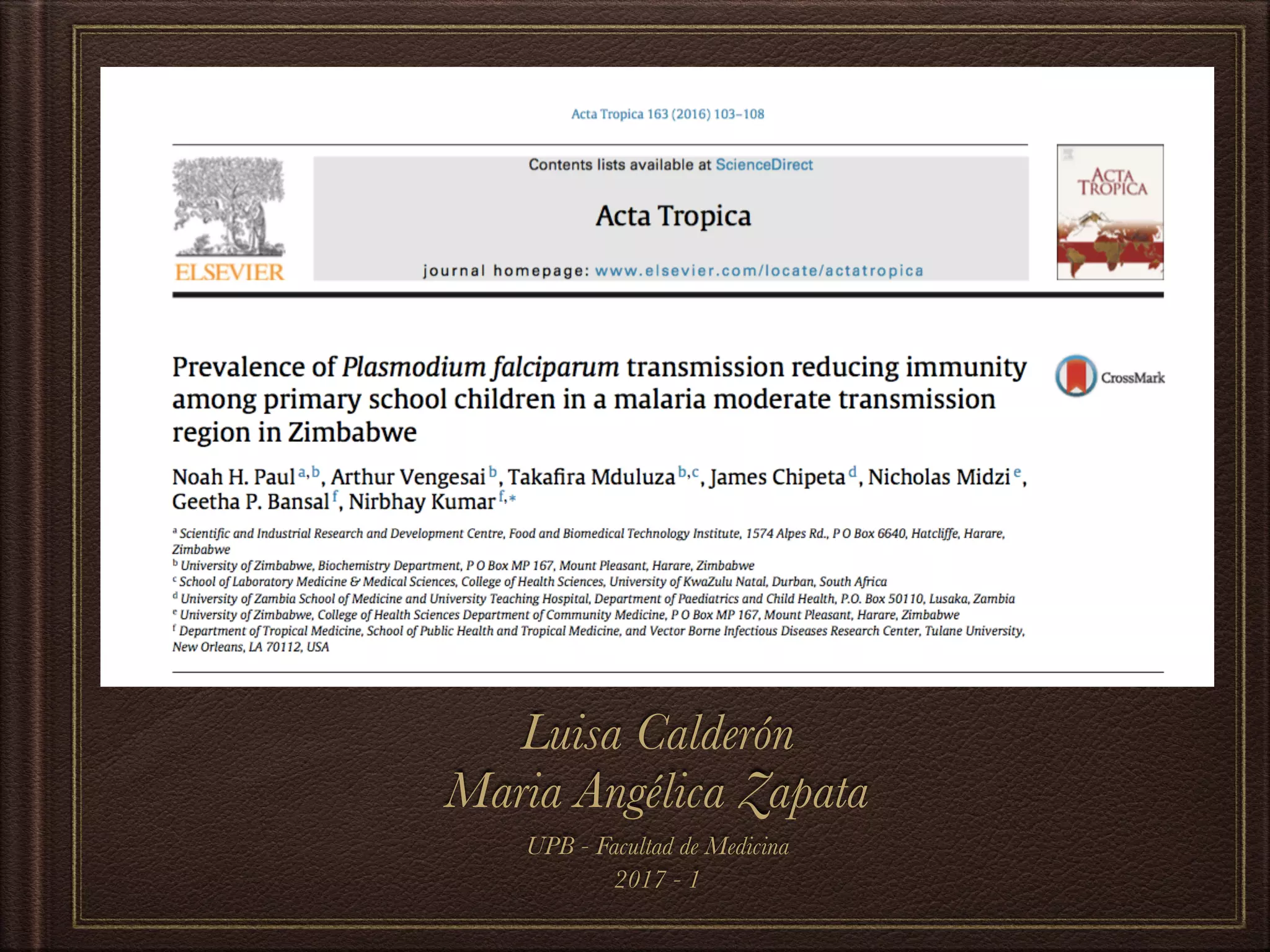
Luisa Calderón
Maria Angélica Zapata
UPB - Facultad de Medicina
2017 - 1
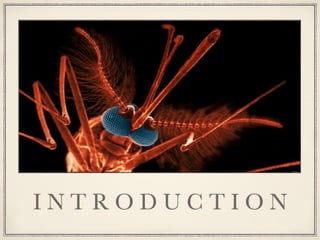
I N T R O D U C T I O N
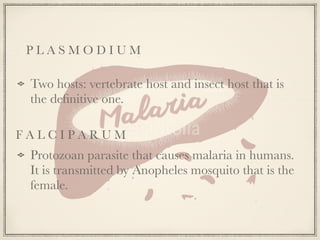
Two hosts: vertebrate host and insect host that is
the definitive one.
Protozoan parasite that causes malaria in humans.
It is transmitted by Anopheles mosquito that is the
female.
P L A S M O D I U M
F A L C I P A R U M
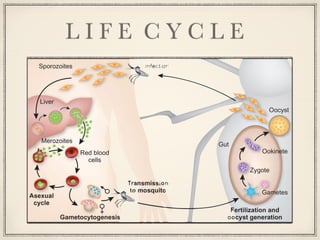
L I F E C Y C L E
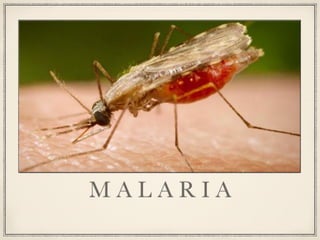
M A L A R I A
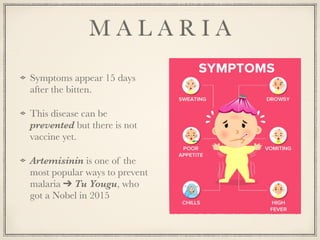
M A L A R I A
Symptoms appear 15 days
after the bitten.
This disease can be
prevented but there is not
vaccine yet.
Artemisinin is one of the
most popular ways to prevent
malaria ➔ Tu Yougu, who
got a Nobel in 2015
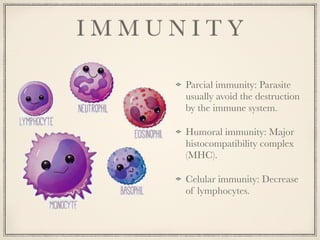
I M M U N I T Y
Parcial immunity: Parasite
usually avoid the destruction
by the immune system.
Humoral immunity: Major
histocompatibility complex
(MHC).
Celular immunity: Decrease
of lymphocytes.
G E N E R A L
O B J E C T I V E
Investigate if transmission reducing immunity
develops in children exposed to low to moderate
level of malaria transmission.
M É T O D O S
Población y área de estudio
Población: 150 niños entre los 6 y
los 16 años.
Primaria Bandanyenje, Distrito
Makone, Zimbabwe.
Criterios de inclusión:
Voluntad para la toma de muestras.
Criterios de exclusión:
Malnutrición.
Estado físico deplorable.
Enfermedades no relacionadas con
la malaria o esquistosomiasis.
Recolección de pruebas:
1. Orina y heces durante los tres días (detección infección helmintos).
2. Prueba de sangre el tercer día para diagnóstico de malaria.
3. Aislamiento del plasma para análisis inmunológico.
Tratamiento para esquistosomiasis y malaria según pruebas de
heces y orina, ft sangre.
D I A G N Ó S T I C O D E
M A L A R I A P O R P. F a l c i p a r u m
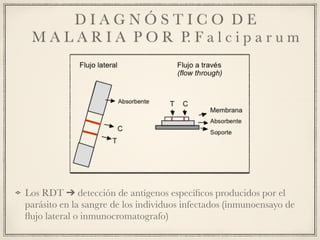
Los RDT ➔ detección de antígenos específicos producidos por el
parásito en la sangre de los individuos infectados (inmunoensayo de
flujo lateral o inmunocromatografo)
D I A G N Ó S T I C O D E
M A L A R I A P O R P. F a l c i p a r u m
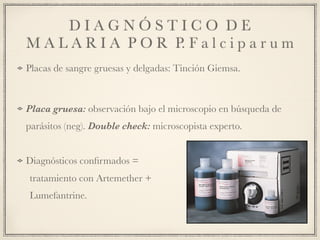
Placas de sangre gruesas y delgadas: Tinción Giemsa.
Placa gruesa: observación bajo el microscopio en búsqueda de
parásitos (neg). Double check: microscopista experto.
Diagnósticos confirmados =
tratamiento con Artemether +
Lumefantrine.
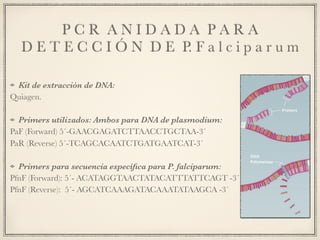
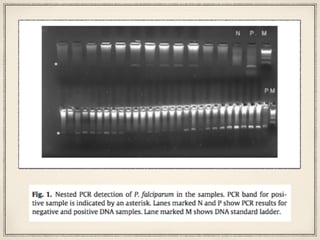
P C R A N I D A D A P A R A
D E T E C C I Ó N D E P. F a l c i p a r u m
Kit de extracción de DNA:
Quiagen.
Primers utilizados: Ambos para DNA de plasmodium:
PaF (Forward) 5´-GAACGAGATCTTAACCTGCTAA-3´
PaR (Reverse) 5´-TCAGCACAATCTGATGAATCAT-3´
Primers para secuencia específica para P. falciparum:
PfnF (Forward): 5´- ACATAGGTAACTATACATTTATTCAGT -3´
PfnF (Reverse): 5´- AGCATCAAAGATACAAATATAAGCA -3´
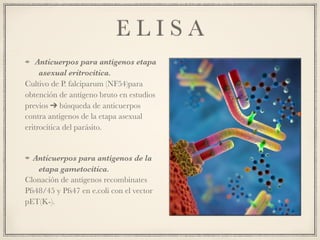
E L I S A
Anticuerpos para antígenos etapa
asexual eritrocítica.
Cultivo de P. falciparum (NF54)para
obtención de antígeno bruto en estudios
previos ➔ búsqueda de anticuerpos
contra antígenos de la etapa asexual
eritrocítica del parásito.
Anticuerpos para antígenos de la
etapa gametocítica.
Clonación de antígenos recombinates
Pfs48/45 y Pfs47 en e.coli con el vector
pET(K-).
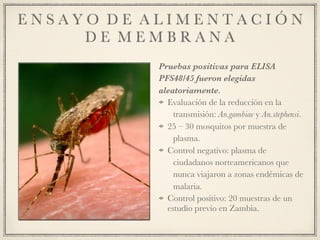
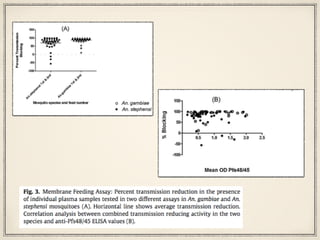
E N S A Y O D E A L I M E N T A C I Ó N
D E M E M B R A N A
Pruebas positivas para ELISA
PFS48/45 fueron elegidas
aleatoriamente.
Evaluación de la reducción en la
transmisión: An.gambiae y An.stephensi.
25 – 30 mosquitos por muestra de
plasma.
Control negativo: plasma de
ciudadanos norteamericanos que
nunca viajaron a zonas endémicas de
malaria.
Control positivo: 20 muestras de un
estudio previo en Zambia.
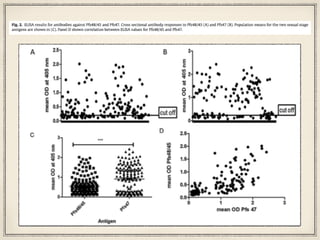
R E S U L T A D O S
D I S C U S S I O N
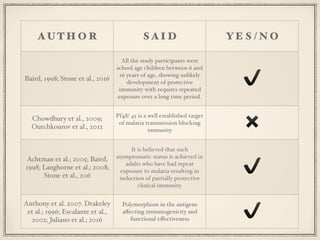
A U T H O R S A I D Y E S / N O
Baird, 1998; Stone et al., 2016
All the study participants were
school age children between 6 and
16 years of age, showing unlikely
development of protective
immunity with requires repeated
exposure over a long time period.
✔
Chowdhury et al., 2009;
Outchkourov et al., 2012
Pf48/ 45 is a well established target
of malaria transmission blocking
immunity ✖
Achtman et al.; 2005; Baird,
1998; Langhorne et al.; 2008;
Stone et al., 206
It is believed that such
asymptomatic status is achieved in
adults who have had repeat
exposure to malaria resulting in
induction of partially protective
clinical immunity.
✔
Anthony et al. 2007. Drakeley
et al.; 1996; Escalante et al.,
2002; Juliano et al.; 2016
Polymorphism in the antigens
affecting immunogenicity and
functional effectiveness ✔
C O N C L U S I O N S
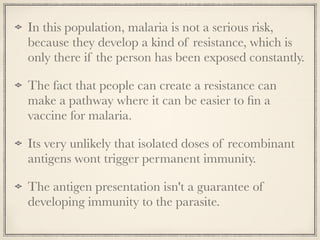
In this population, malaria is not a serious risk,
because they develop a kind of resistance, which is
only there if the person has been exposed constantly.
The fact that people can create a resistance can
make a pathway where it can be easier to fin a
vaccine for malaria.
Its very unlikely that isolated doses of recombinant
antigens wont trigger permanent immunity.
The antigen presentation isn't a guarantee of
developing immunity to the parasite.
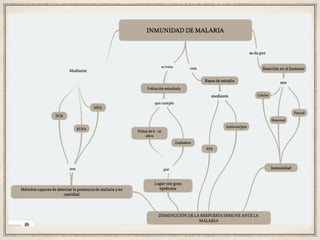
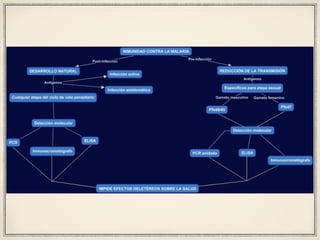
M A P A
C O N C E P T U A L
Malaria
Malaria

Malaria

  • 1.
    Luisa Calderón Maria AngélicaZapata UPB - Facultad de Medicina 2017 - 1
  • 2.
    I N TR O D U C T I O N
  • 3.
    Two hosts: vertebratehost and insect host that is the definitive one. Protozoan parasite that causes malaria in humans. It is transmitted by Anopheles mosquito that is the female. P L A S M O D I U M F A L C I P A R U M
  • 4.
    L I FE C Y C L E
  • 5.
    M A LA R I A
  • 6.
    M A LA R I A Symptoms appear 15 days after the bitten. This disease can be prevented but there is not vaccine yet. Artemisinin is one of the most popular ways to prevent malaria ➔ Tu Yougu, who got a Nobel in 2015
  • 7.
    I M MU N I T Y Parcial immunity: Parasite usually avoid the destruction by the immune system. Humoral immunity: Major histocompatibility complex (MHC). Celular immunity: Decrease of lymphocytes.
  • 8.
    G E NE R A L O B J E C T I V E Investigate if transmission reducing immunity develops in children exposed to low to moderate level of malaria transmission.
  • 9.
    M É TO D O S
  • 10.
    Población y áreade estudio Población: 150 niños entre los 6 y los 16 años. Primaria Bandanyenje, Distrito Makone, Zimbabwe. Criterios de inclusión: Voluntad para la toma de muestras. Criterios de exclusión: Malnutrición. Estado físico deplorable. Enfermedades no relacionadas con la malaria o esquistosomiasis.
  • 11.
    Recolección de pruebas: 1.Orina y heces durante los tres días (detección infección helmintos). 2. Prueba de sangre el tercer día para diagnóstico de malaria. 3. Aislamiento del plasma para análisis inmunológico. Tratamiento para esquistosomiasis y malaria según pruebas de heces y orina, ft sangre.
  • 12.
    D I AG N Ó S T I C O D E M A L A R I A P O R P. F a l c i p a r u m Los RDT ➔ detección de antígenos específicos producidos por el parásito en la sangre de los individuos infectados (inmunoensayo de flujo lateral o inmunocromatografo)
  • 13.
    D I AG N Ó S T I C O D E M A L A R I A P O R P. F a l c i p a r u m Placas de sangre gruesas y delgadas: Tinción Giemsa. Placa gruesa: observación bajo el microscopio en búsqueda de parásitos (neg). Double check: microscopista experto. Diagnósticos confirmados = tratamiento con Artemether + Lumefantrine.
  • 14.
    P C RA N I D A D A P A R A D E T E C C I Ó N D E P. F a l c i p a r u m Kit de extracción de DNA: Quiagen. Primers utilizados: Ambos para DNA de plasmodium: PaF (Forward) 5´-GAACGAGATCTTAACCTGCTAA-3´ PaR (Reverse) 5´-TCAGCACAATCTGATGAATCAT-3´ Primers para secuencia específica para P. falciparum: PfnF (Forward): 5´- ACATAGGTAACTATACATTTATTCAGT -3´ PfnF (Reverse): 5´- AGCATCAAAGATACAAATATAAGCA -3´
  • 15.
    E L IS A Anticuerpos para antígenos etapa asexual eritrocítica. Cultivo de P. falciparum (NF54)para obtención de antígeno bruto en estudios previos ➔ búsqueda de anticuerpos contra antígenos de la etapa asexual eritrocítica del parásito. Anticuerpos para antígenos de la etapa gametocítica. Clonación de antígenos recombinates Pfs48/45 y Pfs47 en e.coli con el vector pET(K-).
  • 16.
    E N SA Y O D E A L I M E N T A C I Ó N D E M E M B R A N A Pruebas positivas para ELISA PFS48/45 fueron elegidas aleatoriamente. Evaluación de la reducción en la transmisión: An.gambiae y An.stephensi. 25 – 30 mosquitos por muestra de plasma. Control negativo: plasma de ciudadanos norteamericanos que nunca viajaron a zonas endémicas de malaria. Control positivo: 20 muestras de un estudio previo en Zambia.
  • 17.
    R E SU L T A D O S
  • 21.
    D I SC U S S I O N
  • 22.
    A U TH O R S A I D Y E S / N O Baird, 1998; Stone et al., 2016 All the study participants were school age children between 6 and 16 years of age, showing unlikely development of protective immunity with requires repeated exposure over a long time period. ✔ Chowdhury et al., 2009; Outchkourov et al., 2012 Pf48/ 45 is a well established target of malaria transmission blocking immunity ✖ Achtman et al.; 2005; Baird, 1998; Langhorne et al.; 2008; Stone et al., 206 It is believed that such asymptomatic status is achieved in adults who have had repeat exposure to malaria resulting in induction of partially protective clinical immunity. ✔ Anthony et al. 2007. Drakeley et al.; 1996; Escalante et al., 2002; Juliano et al.; 2016 Polymorphism in the antigens affecting immunogenicity and functional effectiveness ✔
  • 23.
    C O NC L U S I O N S
  • 24.
    In this population,malaria is not a serious risk, because they develop a kind of resistance, which is only there if the person has been exposed constantly. The fact that people can create a resistance can make a pathway where it can be easier to fin a vaccine for malaria. Its very unlikely that isolated doses of recombinant antigens wont trigger permanent immunity. The antigen presentation isn't a guarantee of developing immunity to the parasite.
  • 25.
    M A PA C O N C E P T U A L