Servicio de Neumología del Hospital
Universitario Dr. Negrín.
Las Palmas de Gran Canaria
Carlos Cabrera López
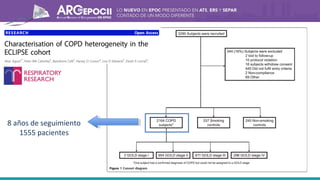
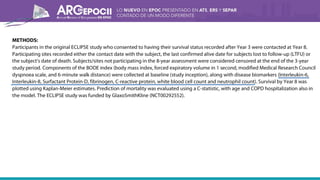
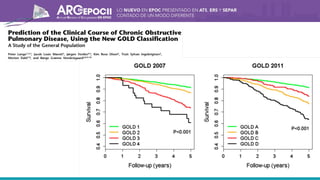
The BODE Index And BODE Plus Biomarkers As
Predictors Of Long-term Survival in COPD (ATS)
Nick Locantore, Bartolome Celli , Alvar Agusti , David Lomas , Edwin K. Silverman , MD, Emiel F.M.
Wouters , MD, Harvey Coxson, Jørgen Vestbo, Lisa Edwards, Per S. Bakke, Peter M.A. Calverley,
Stephen I. Rennard, William MacNee , MD, Bruce E. Miller , Courtney Crim, Hana Mullerova , Julie
Yates , Ruth Tal-Singer.
Mesa 1
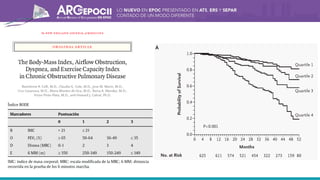
8 años de seguimiento
1555 pacientes
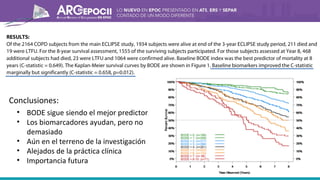
Conclusiones:
• BODE sigue siendo el mejor predictor
• Los biomarcadores ayudan, pero no
demasiado
• Aún en el terreno de la investigación
• Alejados de la práctica clínica
• Importancia futura
Characteristics and longitudinal progression of COPD GOLD B
(ERS)
Philip Lawrence, Umme Kolsum, Vandana Gupta, Gavin Donaldon, Richa Singh, Bethan
Barker, Leena George, Adam Webb, Chris Brightling, Jadwiga Wedzicha, Dave Singh
Mesa 1
Demographic n = 370
Gender (% male) 65
Age (years) 70.2 (8.8)
Smoking status (%
current)
30.0
Pack Years 46.0 [10.0-220.0]
BMI (kg/m2
) 26.2 [15.6-49.2]
Exacerbations (1 year
prior)
1.0 [0.0-15.0]
Post BD FEV1 (L) 1.4 (0.6)
Post BD FEV1 % 57.0 [20.0-117.0]
Post BD Ratio 0.5 [0.2-0.8]
GOLD A n (%) 34 (9.2)
GOLD B n (%) 107 (28.9)
GOLD C n (%) 12 (3.2)
GOLD D n (%) 217 (58.7)
>-520
-440
-360
-280
-200
-120
-40
0
40
120
200
280
360
440
0
5
10
15
∆ in FEV1
nofsubjects
Stable
(n = 51)
Unstable
(n = 19)
p
value
Patient Reported
Outcomes
SGRQ Total 40.1 [14.6-80.0] 50.0 [22.2-82.3] 0.019*
SGRQ Activity 59.3 [7.6-100.0] 79.0 [15.6-
100.0]
0.003*
CAT 14.0 [4.0-28.0] 21.0 [8.0-39.0] 0.006*
Functional Capacity
6MWD (metres) 425.3 (98.5) 361.5 (124.8) 0.06
Lung Function
Post FEV1 % 69.7 (11.7) 62.4 (9.0) 0.016*
Systemic Inflammation
CRP (mg/L) 3.0 [1.0-35.5] 4.5 [1.0-157.0] 0.06
Stable v Unstable GOLD B at Baseline
Conclusiones:
• Un 25% del grado B pasan a D
en un año.
• La disnea es un gran marcador
de gravedad.
• El grado B presenta un declinar
de FEV1% llamativo.
• El grado B precisa un
seguimiento estrecho.
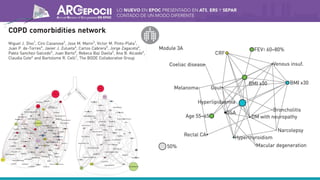
Cluster analysis of chronic obstructive pulmonary disease (COPD)
related phenotypes in the subpopulations and intermediate
outcome measures in COPD study (spiromics) (ATS)
X. Li, M. K. Han, V. E. Ortega, M. T. Dransfield, H. Li, R. G. Barr, D. J. Couper, E. A. Hoffman, R.
Kanner, E. Kleerup, F. J. Martinez, P. G. Woodruff, D. A. Meyers, E. R. Bleecker.
Mesa 1
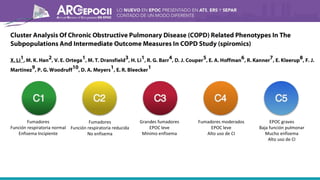
Fumadores
Función respiratoria normal
Enfisema Incipiente
Fumadores
Función respiratoria reducida
No enfisema
Grandes fumadores
EPOC leve
Mínimo enfisema
Fumadores moderados
EPOC leve
Alto uso de CI
EPOC graves
Baja función pulmonar
Mucho enfisema
Alto uso de CI
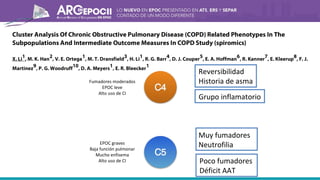
Reversibilidad
Historia de asma
Grupo inflamatorio
Muy fumadores
Neutrofilia
Poco fumadores
Déficit AAT
Fumadores moderados
EPOC leve
Alto uso de CI
EPOC graves
Baja función pulmonar
Mucho enfisema
Alto uso de CI
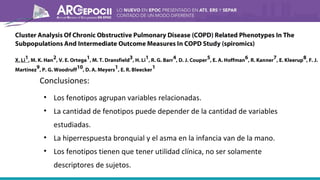
Conclusiones:
• Los fenotipos agrupan variables relacionadas.
• La cantidad de fenotipos puede depender de la cantidad de variables
estudiadas.
• La hiperrespuesta bronquial y el asma en la infancia van de la mano.
• Los fenotipos tienen que tener utilidad clínica, no ser solamente
descriptores de sujetos.
Mesa 1.2. Dr Carlos Cabrera

Mesa 1.2. Dr Carlos Cabrera

  • 1.
    Servicio de Neumologíadel Hospital Universitario Dr. Negrín. Las Palmas de Gran Canaria Carlos Cabrera López
  • 2.
    The BODE IndexAnd BODE Plus Biomarkers As Predictors Of Long-term Survival in COPD (ATS) Nick Locantore, Bartolome Celli , Alvar Agusti , David Lomas , Edwin K. Silverman , MD, Emiel F.M. Wouters , MD, Harvey Coxson, Jørgen Vestbo, Lisa Edwards, Per S. Bakke, Peter M.A. Calverley, Stephen I. Rennard, William MacNee , MD, Bruce E. Miller , Courtney Crim, Hana Mullerova , Julie Yates , Ruth Tal-Singer. Mesa 1
  • 5.
    8 años deseguimiento 1555 pacientes
  • 7.
    Conclusiones: • BODE siguesiendo el mejor predictor • Los biomarcadores ayudan, pero no demasiado • Aún en el terreno de la investigación • Alejados de la práctica clínica • Importancia futura
  • 8.
    Characteristics and longitudinalprogression of COPD GOLD B (ERS) Philip Lawrence, Umme Kolsum, Vandana Gupta, Gavin Donaldon, Richa Singh, Bethan Barker, Leena George, Adam Webb, Chris Brightling, Jadwiga Wedzicha, Dave Singh Mesa 1
  • 12.
    Demographic n =370 Gender (% male) 65 Age (years) 70.2 (8.8) Smoking status (% current) 30.0 Pack Years 46.0 [10.0-220.0] BMI (kg/m2 ) 26.2 [15.6-49.2] Exacerbations (1 year prior) 1.0 [0.0-15.0] Post BD FEV1 (L) 1.4 (0.6) Post BD FEV1 % 57.0 [20.0-117.0] Post BD Ratio 0.5 [0.2-0.8] GOLD A n (%) 34 (9.2) GOLD B n (%) 107 (28.9) GOLD C n (%) 12 (3.2) GOLD D n (%) 217 (58.7) >-520 -440 -360 -280 -200 -120 -40 0 40 120 200 280 360 440 0 5 10 15 ∆ in FEV1 nofsubjects
  • 13.
    Stable (n = 51) Unstable (n= 19) p value Patient Reported Outcomes SGRQ Total 40.1 [14.6-80.0] 50.0 [22.2-82.3] 0.019* SGRQ Activity 59.3 [7.6-100.0] 79.0 [15.6- 100.0] 0.003* CAT 14.0 [4.0-28.0] 21.0 [8.0-39.0] 0.006* Functional Capacity 6MWD (metres) 425.3 (98.5) 361.5 (124.8) 0.06 Lung Function Post FEV1 % 69.7 (11.7) 62.4 (9.0) 0.016* Systemic Inflammation CRP (mg/L) 3.0 [1.0-35.5] 4.5 [1.0-157.0] 0.06 Stable v Unstable GOLD B at Baseline Conclusiones: • Un 25% del grado B pasan a D en un año. • La disnea es un gran marcador de gravedad. • El grado B presenta un declinar de FEV1% llamativo. • El grado B precisa un seguimiento estrecho.
  • 14.
    Cluster analysis ofchronic obstructive pulmonary disease (COPD) related phenotypes in the subpopulations and intermediate outcome measures in COPD study (spiromics) (ATS) X. Li, M. K. Han, V. E. Ortega, M. T. Dransfield, H. Li, R. G. Barr, D. J. Couper, E. A. Hoffman, R. Kanner, E. Kleerup, F. J. Martinez, P. G. Woodruff, D. A. Meyers, E. R. Bleecker. Mesa 1
  • 17.
    Fumadores Función respiratoria normal EnfisemaIncipiente Fumadores Función respiratoria reducida No enfisema Grandes fumadores EPOC leve Mínimo enfisema Fumadores moderados EPOC leve Alto uso de CI EPOC graves Baja función pulmonar Mucho enfisema Alto uso de CI
  • 18.
    Reversibilidad Historia de asma Grupoinflamatorio Muy fumadores Neutrofilia Poco fumadores Déficit AAT Fumadores moderados EPOC leve Alto uso de CI EPOC graves Baja función pulmonar Mucho enfisema Alto uso de CI
  • 19.
    Conclusiones: • Los fenotiposagrupan variables relacionadas. • La cantidad de fenotipos puede depender de la cantidad de variables estudiadas. • La hiperrespuesta bronquial y el asma en la infancia van de la mano. • Los fenotipos tienen que tener utilidad clínica, no ser solamente descriptores de sujetos.

Notas del editor

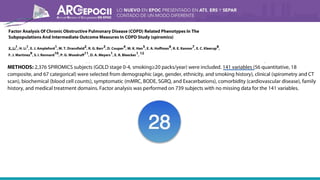
  • #17 Factor analisis. Clustering según todas las variables posibles. 28 independent factors were derived, explaining greater than 90% of total phenotypic variance. Lung function variables: (1) Pre-/post-bronchodilator % predicted FEV1, FEF25-75, and FEV1/FVC; (2) Pre-/post-bronchodilator % predicted FVC; and (3) FEV1 reversibility predominated in each of 3 factors. Two factors were represented by CT findings: (1) Total lung capacity (TLC) (2) Percentage of low attenuation area below and including -950 Hounsfield units (HU) TLC. Symptom scores: (1) FACIT physical/functional/emotional scores and HDS depression/anxiety scores; (2) SFH mental/social scores; and (3) Exacerbations, total numbers and requiring medication/HCU/ED formed 3 factors. Two factors were blood cell counts: (1) Total white blood cell, neutrophil, and monocyte counts (2) Lymphocyte and platelet counts. Three factors were related to 6-minute walk (6MW): (1) Breathlessness and Exertion scores following 6MW (2) 6MW distance (3) Pulse before/after 6MW. Comorbidities produced 6 factors: (1) Cardiovascular condition and high blood pressure (2) Heart attack, coronary artery disease, and angina (3) Pulmonary/vascular condition, lung nodules, and prior history of intubation/mechanical ventilation (4) GERD/heart burn (5) Pulmonary embolism and blood clot (6) Anemia. Family history of COPD/emphysema/bronchitis/asthma produced 2 factors for mother and father separately. Smoking history produced 2 factors (1) Ever smoked a pipe/cigars (2) Number of smoking-packs years. Other factors were chronic bronchitis, exhaled carbon monoxide (eCO), oxygen saturation (SpO2), Theophylline usage, and ethnicity.
  • #18 El análisis lo hacen en más de 2000 sujetos.