El Presente
Progresivo
¿Qué estás haciendo ahora
mismo?

1
El Presente Progresivo
pasado

hoy

futuro

The present progressive describes an action that
is in process at the moment we are talking.

¡ahora mismo!
2
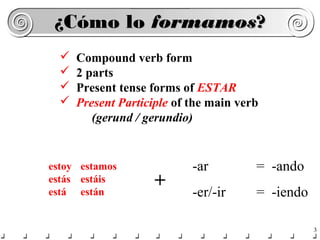
¿Cómo lo formamos?





Compound verb form
2 parts
Present tense forms of ESTAR
Present Participle of the main verb
(gerund / gerundio)

estoy estamos
estás estáis
está están

+

-ar

= -ando

-er/-ir

= -iendo
3
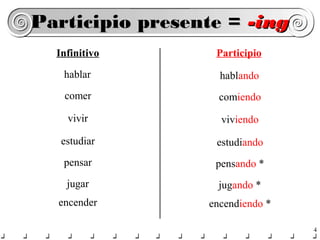
Participio presente = -ing
Infinitivo

Participio

hablar

hablando

comer

comiendo

vivir

viviendo

estudiar

estudiando

pensar

pensando *

jugar

jugando *

encender

encendiendo *
4
El Presente Progresivo
In English you would never say:
“He walking.” or “She working.”
You say:
He’s walking. or He is walking.
She’s working. or She is working.
We do the same in Spanish:
Never leave out the verb ESTAR
ESTAR

+

-ando

or

-iendo
5
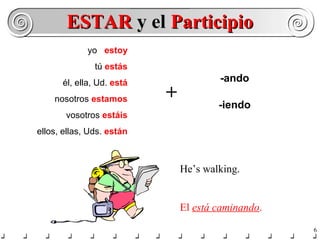
ESTAR y el Participio
yo estoy
tú estás
él, ella, Ud. está
nosotros estamos
vosotros estáis

+

-ando
-iendo

ellos, ellas, Uds. están

He’s walking.
El está caminando.
6
ESTAR y el Participio
yo estoy
tú estás
él, ella, Ud. está
nosotros estamos
vosotros estáis

+

-ando
-iendo

ellos, ellas, Uds. están

She’s working.
Ella está trabajando.
7
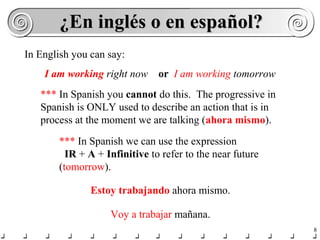
¿En inglés o en español?
In English you can say:
I am working right now

or I am working tomorrow

*** In Spanish you cannot do this. The progressive in
Spanish is ONLY used to describe an action that is in
process at the moment we are talking (ahora mismo).
*** In Spanish we can use the expression
IR + A + Infinitive to refer to the near future
(tomorrow).
Estoy trabajando ahora mismo.
Voy a trabajar mañana.
8
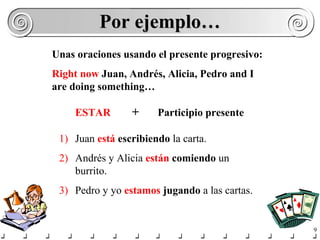
Por ejemplo…
Unas oraciones usando el presente progresivo:
Right now Juan, Andrés, Alicia, Pedro and I
are doing something…
ESTAR

+

Participio presente

1) Juan está escribiendo la carta.
2) Andrés y Alicia están comiendo un
burrito.
3) Pedro y yo estamos jugando a las cartas.

9
Más ejemplos…:
It is always necessary to use the verb estar and the
participle (–ando / –iendo) of the main (action) verb
1) Amanda y su bebé están durmiendo.
2) Amalia está lavando los platos.
3) ¿Vosotros estáis estudiando?
4) Tú estás pensando mucho en este examen.
5) Mis amigos están llamando por teléfono.
6) ¿Quién está hablando en clase?
10
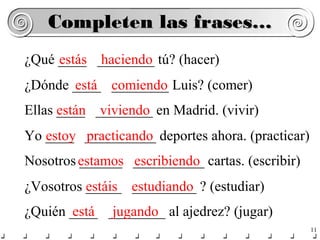
Completen las frases…
¿Qué ____ ________ tú? (hacer)
estás haciendo
¿Dónde ____ comiendo Luis? (comer)
está ________
Ellas están ________ en Madrid. (vivir)
____ viviendo
Yo ____ __________ deportes ahora. (practicar)
estoy practicando
Nosotros estamos __________ cartas. (escribir)
______ escribiendo
¿Vosotros _____ estudiando ? (estudiar)
estáis _________
¿Quién ____ ________ al ajedrez? (jugar)
está jugando
11
Verbos irregulares…
1. Pedir

• pidiendo

2. Decir

• diciendo

3. Dormir

• durmiendo

4. Servir

• sirviendo

5. Leer

• leyendo

6. Traer

• trayendo
12
Ahora les toca a Uds…
estamos viviendo
nosotros

están bailando
ellos

estás jugando
(al fútbol)
tú

13
Ahora les toca a Uds… (2)
estoy hablando
yo

está comiendo
Ud.

estáis comprando
vosotros
14

Progresivo

  • 1.
    El Presente Progresivo ¿Qué estáshaciendo ahora mismo? 1
  • 2.
    El Presente Progresivo pasado hoy futuro Thepresent progressive describes an action that is in process at the moment we are talking. ¡ahora mismo! 2
  • 3.
    ¿Cómo lo formamos?     Compoundverb form 2 parts Present tense forms of ESTAR Present Participle of the main verb (gerund / gerundio) estoy estamos estás estáis está están + -ar = -ando -er/-ir = -iendo 3
  • 4.
    Participio presente =-ing Infinitivo Participio hablar hablando comer comiendo vivir viviendo estudiar estudiando pensar pensando * jugar jugando * encender encendiendo * 4
  • 5.
    El Presente Progresivo InEnglish you would never say: “He walking.” or “She working.” You say: He’s walking. or He is walking. She’s working. or She is working. We do the same in Spanish: Never leave out the verb ESTAR ESTAR + -ando or -iendo 5
  • 6.
    ESTAR y elParticipio yo estoy tú estás él, ella, Ud. está nosotros estamos vosotros estáis + -ando -iendo ellos, ellas, Uds. están He’s walking. El está caminando. 6
  • 7.
    ESTAR y elParticipio yo estoy tú estás él, ella, Ud. está nosotros estamos vosotros estáis + -ando -iendo ellos, ellas, Uds. están She’s working. Ella está trabajando. 7
  • 8.
    ¿En inglés oen español? In English you can say: I am working right now or I am working tomorrow *** In Spanish you cannot do this. The progressive in Spanish is ONLY used to describe an action that is in process at the moment we are talking (ahora mismo). *** In Spanish we can use the expression IR + A + Infinitive to refer to the near future (tomorrow). Estoy trabajando ahora mismo. Voy a trabajar mañana. 8
  • 9.
    Por ejemplo… Unas oracionesusando el presente progresivo: Right now Juan, Andrés, Alicia, Pedro and I are doing something… ESTAR + Participio presente 1) Juan está escribiendo la carta. 2) Andrés y Alicia están comiendo un burrito. 3) Pedro y yo estamos jugando a las cartas. 9
  • 10.
    Más ejemplos…: It isalways necessary to use the verb estar and the participle (–ando / –iendo) of the main (action) verb 1) Amanda y su bebé están durmiendo. 2) Amalia está lavando los platos. 3) ¿Vosotros estáis estudiando? 4) Tú estás pensando mucho en este examen. 5) Mis amigos están llamando por teléfono. 6) ¿Quién está hablando en clase? 10
  • 11.
    Completen las frases… ¿Qué____ ________ tú? (hacer) estás haciendo ¿Dónde ____ comiendo Luis? (comer) está ________ Ellas están ________ en Madrid. (vivir) ____ viviendo Yo ____ __________ deportes ahora. (practicar) estoy practicando Nosotros estamos __________ cartas. (escribir) ______ escribiendo ¿Vosotros _____ estudiando ? (estudiar) estáis _________ ¿Quién ____ ________ al ajedrez? (jugar) está jugando 11
  • 12.
    Verbos irregulares… 1. Pedir •pidiendo 2. Decir • diciendo 3. Dormir • durmiendo 4. Servir • sirviendo 5. Leer • leyendo 6. Traer • trayendo 12
  • 13.
    Ahora les tocaa Uds… estamos viviendo nosotros están bailando ellos estás jugando (al fútbol) tú 13
  • 14.
    Ahora les tocaa Uds… (2) estoy hablando yo está comiendo Ud. estáis comprando vosotros 14