UNIVERSIDAD ETAC
MAESTRIA EN DOCENCIA
MTRA. ARACELI ACEVEDO CRUZ
MODELOS DE DISEÑO Y DESARROLLO DE ESTRATEGIAS INSTRUCCIONALES
DIDÁCTICA CRÍTICA
ESPERANZA MÉNDEZ SOLANO
MARZO 28 DE 2017
Los tiempos modernos exigen el surgimiento de nuevas formas de
enseñanza acordes a los diferentes círculos ideológicos y a la llamada
“sociedad de la información”. Los docentes de hoy deben ser asertivos en el
uso de los paradigmas educativos y aplicar el más acorde a la época actual,
pues el caer en la monotonía en el salón de clases es tan perjudicial como el
enseñar a la vieja usanza. El uso moderado de las TIC’s como invaluable
herramienta de trabajo y el aprender a aprender para que a través de la
pedagogía crítica el discente cuestione y desafié las creencias y prácticas que
se le enseñan ayudará a los alumnos a alcanzar una conciencia crítica.
• Teacher writes on the blackboard some words and asks students to help her to
form a phrase.
• Students participate and together form the phrase:
Today is going to be awesome
• Teacher remarks the comment:We are PLANNING that our day is fantastic.
• Then, she adds “I am going to see my best friend after class” “What are you
going to do?”
• Students’ answers vary and she encourages them to use “going to” in their
answers.
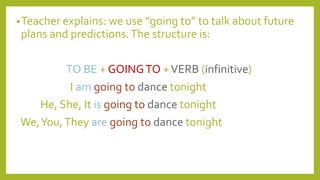
•Teacher explains: we use “going to” to talk about future
plans and predictions.The structure is:
TO BE + GOINGTO +VERB (infinitive)
I am going to dance tonight
He, She, It is going to dance tonight
We,You,They are going to dance tonight
I am going to
dance tonight
We are going
to dance
tonight
We are going
to dance
tonight
He is going to
dance tonight
In the negative form, we add not in the conjugation
of the verb “to be”
TO BE (NOT) + GOINGTO +VERB (infinitive)
I’m not going to have class next Friday
He, She, It’s not / isn’t going to have class next Friday
We,You,They’re not/ aren’t going to have class next Friday We aren’t
going to
have class
next FridayI’m not going
to have a
good time
This is the structure to form questions:
TO BE + Subject + GOINGTO +VERB (infinitive)…?
Am I going to sing tomorrow?
Is He, She, It going to sing tomorrow?
AreWe,You,They going to sing tomorrow?
Are we going to
do the same
homework next
week?
Am I going to
fail the test?
Is he going to win
the competition?
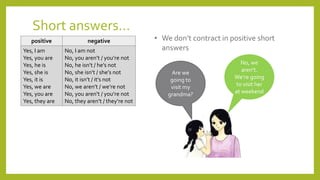
Short answers…
positive negative
Yes, I am
Yes, you are
Yes, he is
Yes, she is
Yes, it is
Yes, we are
Yes, you are
Yes, they are
No, I am not
No, you aren’t / you’re not
No, he isn’t / he’s not
No, she isn’t / she’s not
No, it isn’t / it’s not
No, we aren’t / we’re not
No, you aren’t / you’re not
No, they aren’t / they’re not
• We don’t contract in positive short
answers
Are we
going to
visit my
grandma?
No, we
aren’t.
We’re going
to visit her
at weekend
Use some of the next future time expressions to talk
about your plans.
*Tonight *Today * Next year
* Next week *Tomorrow morning * Next month
• Share your plans with a partner. Explain everything very clearly and give as much
information as you can.
I am going to study
abroad next year. I would
like to study a Master in
Spain.
La búsqueda de la excelencia en el desempeño docente implica el adentrarse en el vasto campo de
las prácticas educativas, entendiéndose como el medio por el cual la sociedad transmite saberes y
conocimientos valiéndose de formadores que forman futuros formadores. El concepto de sujeto
pedagógico que plantea Adriana Puigrós (1990); define que todo sujeto se constituye en una relación,
en la que participan el educador, el educando, el habitus y los conocimientos que se transmiten,
ubicados en un momento y un tiempo histórico determinado. Es necesario la formación integral de
las nuevas generaciones en donde tenga lugar el análisis del conocimiento, lo cual le permita al
alumno adueñarse de éste y explicar por qué hace lo que hace y sea capaz de dar razones sobre ello.
La didáctica crítica representa la búsqueda perenne que intenta relacionar al discente con las
sociedad, la institución y la situación actual.
Hay dos retos principales en la educación: conocimientos y valores, los cuales son reforzados en las
escuelas. Por eso “la profundidad del proceso de cambio social que tiene lugar actualmente nos
obliga a reformular las preguntas básicas sobre los fines de la educación, sobre quiénes asumen la
responsabilidad de formar a las nuevas generaciones y sobre qué legado cultural, qué valores, qué
concepción del hombre y de la sociedad deseamos transmitir” (Tedesco, 1995).
En el día a día, la educación es el parteaguas pues significa mayor competitividad y mayor
integración social.
REFERENCIAS
• Aliat Universidades Modelos de diseño y desarrollo de estrategias instruccionales.
Consultado el 26 de marzo de 2017, en: http://etac.clientes.tralcom.com/tc-
etac/cursos/MODELOS_DISENO_C/U4/S4_01.html?id_examen_act=1&id_inscripcion=6303
97
• PUIGRÓS, A. (1990). Sujetos, política y currículum en los orígenes del sistema educativo
argentino. Buenos Aires: Editorial Galerna.
• TEDESCO, Juan Carlos: El nuevo pacto educativo, Grupo Anaya SA, Madrid, 1995.

DIDÁCTICA CRÍTICA

  • 1.
    UNIVERSIDAD ETAC MAESTRIA ENDOCENCIA MTRA. ARACELI ACEVEDO CRUZ MODELOS DE DISEÑO Y DESARROLLO DE ESTRATEGIAS INSTRUCCIONALES DIDÁCTICA CRÍTICA ESPERANZA MÉNDEZ SOLANO MARZO 28 DE 2017
  • 2.
    Los tiempos modernosexigen el surgimiento de nuevas formas de enseñanza acordes a los diferentes círculos ideológicos y a la llamada “sociedad de la información”. Los docentes de hoy deben ser asertivos en el uso de los paradigmas educativos y aplicar el más acorde a la época actual, pues el caer en la monotonía en el salón de clases es tan perjudicial como el enseñar a la vieja usanza. El uso moderado de las TIC’s como invaluable herramienta de trabajo y el aprender a aprender para que a través de la pedagogía crítica el discente cuestione y desafié las creencias y prácticas que se le enseñan ayudará a los alumnos a alcanzar una conciencia crítica.
  • 3.
    • Teacher writeson the blackboard some words and asks students to help her to form a phrase. • Students participate and together form the phrase: Today is going to be awesome • Teacher remarks the comment:We are PLANNING that our day is fantastic. • Then, she adds “I am going to see my best friend after class” “What are you going to do?” • Students’ answers vary and she encourages them to use “going to” in their answers.
  • 4.
    •Teacher explains: weuse “going to” to talk about future plans and predictions.The structure is: TO BE + GOINGTO +VERB (infinitive) I am going to dance tonight He, She, It is going to dance tonight We,You,They are going to dance tonight
  • 5.
    I am goingto dance tonight We are going to dance tonight We are going to dance tonight He is going to dance tonight
  • 6.
    In the negativeform, we add not in the conjugation of the verb “to be” TO BE (NOT) + GOINGTO +VERB (infinitive) I’m not going to have class next Friday He, She, It’s not / isn’t going to have class next Friday We,You,They’re not/ aren’t going to have class next Friday We aren’t going to have class next FridayI’m not going to have a good time
  • 7.
    This is thestructure to form questions: TO BE + Subject + GOINGTO +VERB (infinitive)…? Am I going to sing tomorrow? Is He, She, It going to sing tomorrow? AreWe,You,They going to sing tomorrow? Are we going to do the same homework next week? Am I going to fail the test? Is he going to win the competition?
  • 8.
    Short answers… positive negative Yes,I am Yes, you are Yes, he is Yes, she is Yes, it is Yes, we are Yes, you are Yes, they are No, I am not No, you aren’t / you’re not No, he isn’t / he’s not No, she isn’t / she’s not No, it isn’t / it’s not No, we aren’t / we’re not No, you aren’t / you’re not No, they aren’t / they’re not • We don’t contract in positive short answers Are we going to visit my grandma? No, we aren’t. We’re going to visit her at weekend
  • 9.
    Use some ofthe next future time expressions to talk about your plans. *Tonight *Today * Next year * Next week *Tomorrow morning * Next month • Share your plans with a partner. Explain everything very clearly and give as much information as you can. I am going to study abroad next year. I would like to study a Master in Spain.
  • 10.
    La búsqueda dela excelencia en el desempeño docente implica el adentrarse en el vasto campo de las prácticas educativas, entendiéndose como el medio por el cual la sociedad transmite saberes y conocimientos valiéndose de formadores que forman futuros formadores. El concepto de sujeto pedagógico que plantea Adriana Puigrós (1990); define que todo sujeto se constituye en una relación, en la que participan el educador, el educando, el habitus y los conocimientos que se transmiten, ubicados en un momento y un tiempo histórico determinado. Es necesario la formación integral de las nuevas generaciones en donde tenga lugar el análisis del conocimiento, lo cual le permita al alumno adueñarse de éste y explicar por qué hace lo que hace y sea capaz de dar razones sobre ello. La didáctica crítica representa la búsqueda perenne que intenta relacionar al discente con las sociedad, la institución y la situación actual. Hay dos retos principales en la educación: conocimientos y valores, los cuales son reforzados en las escuelas. Por eso “la profundidad del proceso de cambio social que tiene lugar actualmente nos obliga a reformular las preguntas básicas sobre los fines de la educación, sobre quiénes asumen la responsabilidad de formar a las nuevas generaciones y sobre qué legado cultural, qué valores, qué concepción del hombre y de la sociedad deseamos transmitir” (Tedesco, 1995). En el día a día, la educación es el parteaguas pues significa mayor competitividad y mayor integración social.
  • 11.
    REFERENCIAS • Aliat UniversidadesModelos de diseño y desarrollo de estrategias instruccionales. Consultado el 26 de marzo de 2017, en: http://etac.clientes.tralcom.com/tc- etac/cursos/MODELOS_DISENO_C/U4/S4_01.html?id_examen_act=1&id_inscripcion=6303 97 • PUIGRÓS, A. (1990). Sujetos, política y currículum en los orígenes del sistema educativo argentino. Buenos Aires: Editorial Galerna. • TEDESCO, Juan Carlos: El nuevo pacto educativo, Grupo Anaya SA, Madrid, 1995.