SPAN 102
Definiciones:
 Hispano:
persona que
desciende de
un país
hispano
parlante
Definiciones:
 Latino: Una persona
que desciende de un
país latinoamericano.
Entonces…
¡No todos los latinos son hispanos, y no
todos los hispanos son latinos!
Latino no es una raza, sino una referencia
geográfica.
Los hispanos y latinos en Estados Unidos
pueden ser nacidos fuera o dentro del país.
*Notice that ethnicities are not capitalized in Spanish, like nationalities aren't
either: Yo soy mexicana.
¡A leer!: Noticiero Cultural de la
página 302
Pregúntense: (ask each other)
¿Conoces algún actor/actriz Hispano(a) famoso en Estados Unidos?
¿Te gusta algún cantante Hispano? ¿Quién?
¿Qué tal un deportista? ¿Qué juega?
 Vocabulario: página 320
http://www.ilrn.com/il
rn/books/nsdt06l/eboo
k/index.html
Paso 1: Weather Expressions
 ¿Qué tiempo hace hoy?
Página 322
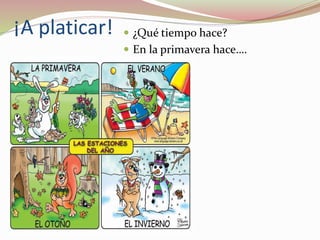
¡A platicar!  ¿Qué tiempo hace?
 En la primavera hace….
Página 298
 Hacer actividad C en parejas
Paso 1: Weather Expressions
 Tener = to have
 En español, “tener” can be used to describe how a
person feels as a result of the weather condition.
 ¡Yo tengo mucho frio!
http://letras.mus.br/tito-el-bambino/1835561/
Ahora te toca encontrar palabras
relacionadas con el clima.
¡A practicar!
1. Hace mucho ______ en el 4 de julio en Tucson.
2. En el otoño hace ______________ en Tucson.
3. Hace _______ en el Año Nuevo en Tucson.
4. ¿Qué tiempo hace hoy?
calor
buen tiempo
frío
¿Cómo está el clima en los Estados
Unidos?
https://www.youtube.com/watch?v=C5xB2XAaMwE
¿En qué estados hay lluvia?
¿Dónde está nublado?
¿Dónde hay un cielo despejado?
Describir el clima con “hacer”
Hace calor en la Navidad en Chile .
 To describe the weather we use the present form of “hacer”, hace. When
you use “hace”, you’re usually describing the temperature.
 The word “en” must go before the location you’re describing. En = In
 the word “en” must go before the definite article (either “el” or “la”
depending on the “gender” of the noun), and then directly followed by
the event.
 En el otoño hace buen tiempo en Tucson.
Describir el clima con “está”
 The present form of “estar”, está, the “state” of
NOT an actual temperature .
 Está lloviendo mucho hoy. = It is raining a lot
today.
 Está nublado el cielo. = The sky is cloudy.
 Está despejado el cielo. = The sky is clear.
 Está nevando. = It is snowing.
“Tener” y “estar” to express how someone is
affected by the weather
1. El hombre _______ calor y ________
sudando.
2. Yo _________ frío y __________ temblando.
3. Nosotros _________ sed porque __________
deshidratados.
4. Ellas _________bronceadas. (suntanned)
tiene está
tengo estoy
tenemos estamos
están
9.1: Mucho y poco
 Mucho y poco are used to express quantity
 Mucho = a lot ; Muchos (as)= many
 Poco = very little ; Pocos (as)=a few
 Mucho y poco will be altered depending on the “gender” and
singularity or plurality of the noun or verb,
 Mucho y poco = singular – male – mixed gender
 Muchos y pocos = plural – male – mixed gender
 Mucha y poca = singular –female
 Muchas y pocas – plural female
Página 323
Ejemplos:
 Yo tengo muchas amigas. = “Amigas” is
feminine because it’s a group of female
friends, and plural because it’s describing
two or more people, which is why we must
use “muchas”.
 Mi hermana tiene poco dinero. = Dinero is a
masculine noun and a single unit, which is
why we use “poco”.
¡A practicar!
1. Yo tengo ______________ tiempo en la
mañana.
2. En mi casa tenemos _______________
comida.
3. Mi mamá tiene __________________ amigas.
4. En la biblioteca hay _______________ libros.
5. El niño tiene _________________ miedo.
poco /mucho
poca /mucha
pocas /muchas
pocos /muchos
poco /mucho
¿Hay muchos o pocos?
El miércoles tenemos el rough draft de Writing #1
“Un restaurante famoso”
Traer sus class notes
No pueden usar notas, ni el libro
Pueden traer un outline con puntos importantes
Voy a firmar su papel antes y después de escribir el
rough draft.

Span102 cap9 paso 1

  • 1.
  • 2.
  • 3.
    Definiciones:  Latino: Unapersona que desciende de un país latinoamericano.
  • 4.
    Entonces… ¡No todos loslatinos son hispanos, y no todos los hispanos son latinos! Latino no es una raza, sino una referencia geográfica. Los hispanos y latinos en Estados Unidos pueden ser nacidos fuera o dentro del país. *Notice that ethnicities are not capitalized in Spanish, like nationalities aren't either: Yo soy mexicana.
  • 5.
    ¡A leer!: NoticieroCultural de la página 302 Pregúntense: (ask each other) ¿Conoces algún actor/actriz Hispano(a) famoso en Estados Unidos? ¿Te gusta algún cantante Hispano? ¿Quién? ¿Qué tal un deportista? ¿Qué juega?
  • 6.
     Vocabulario: página320 http://www.ilrn.com/il rn/books/nsdt06l/eboo k/index.html
  • 7.
    Paso 1: WeatherExpressions  ¿Qué tiempo hace hoy? Página 322
  • 8.
    ¡A platicar! ¿Qué tiempo hace?  En la primavera hace….
  • 9.
    Página 298  Haceractividad C en parejas
  • 10.
    Paso 1: WeatherExpressions  Tener = to have  En español, “tener” can be used to describe how a person feels as a result of the weather condition.  ¡Yo tengo mucho frio!
  • 12.
    http://letras.mus.br/tito-el-bambino/1835561/ Ahora te tocaencontrar palabras relacionadas con el clima.
  • 13.
    ¡A practicar! 1. Hacemucho ______ en el 4 de julio en Tucson. 2. En el otoño hace ______________ en Tucson. 3. Hace _______ en el Año Nuevo en Tucson. 4. ¿Qué tiempo hace hoy? calor buen tiempo frío
  • 14.
    ¿Cómo está elclima en los Estados Unidos? https://www.youtube.com/watch?v=C5xB2XAaMwE ¿En qué estados hay lluvia? ¿Dónde está nublado? ¿Dónde hay un cielo despejado?
  • 15.
    Describir el climacon “hacer” Hace calor en la Navidad en Chile .  To describe the weather we use the present form of “hacer”, hace. When you use “hace”, you’re usually describing the temperature.  The word “en” must go before the location you’re describing. En = In  the word “en” must go before the definite article (either “el” or “la” depending on the “gender” of the noun), and then directly followed by the event.  En el otoño hace buen tiempo en Tucson.
  • 16.
    Describir el climacon “está”  The present form of “estar”, está, the “state” of NOT an actual temperature .  Está lloviendo mucho hoy. = It is raining a lot today.  Está nublado el cielo. = The sky is cloudy.  Está despejado el cielo. = The sky is clear.  Está nevando. = It is snowing.
  • 17.
    “Tener” y “estar”to express how someone is affected by the weather 1. El hombre _______ calor y ________ sudando. 2. Yo _________ frío y __________ temblando. 3. Nosotros _________ sed porque __________ deshidratados. 4. Ellas _________bronceadas. (suntanned) tiene está tengo estoy tenemos estamos están
  • 18.
    9.1: Mucho ypoco  Mucho y poco are used to express quantity  Mucho = a lot ; Muchos (as)= many  Poco = very little ; Pocos (as)=a few  Mucho y poco will be altered depending on the “gender” and singularity or plurality of the noun or verb,  Mucho y poco = singular – male – mixed gender  Muchos y pocos = plural – male – mixed gender  Mucha y poca = singular –female  Muchas y pocas – plural female Página 323
  • 19.
    Ejemplos:  Yo tengomuchas amigas. = “Amigas” is feminine because it’s a group of female friends, and plural because it’s describing two or more people, which is why we must use “muchas”.  Mi hermana tiene poco dinero. = Dinero is a masculine noun and a single unit, which is why we use “poco”.
  • 20.
    ¡A practicar! 1. Yotengo ______________ tiempo en la mañana. 2. En mi casa tenemos _______________ comida. 3. Mi mamá tiene __________________ amigas. 4. En la biblioteca hay _______________ libros. 5. El niño tiene _________________ miedo. poco /mucho poca /mucha pocas /muchas pocos /muchos poco /mucho
  • 21.
  • 22.
    El miércoles tenemosel rough draft de Writing #1 “Un restaurante famoso” Traer sus class notes No pueden usar notas, ni el libro Pueden traer un outline con puntos importantes Voy a firmar su papel antes y después de escribir el rough draft.