Guía teórico práctica
LA FUNCIÓN VERBAL
La función verbal la desempeñan los verbos conjugados en un tiempo y modo. Existen formas
verbales que no cumplen función verbal, estas son las formas no personales.
FORMAS NO PERSONALES
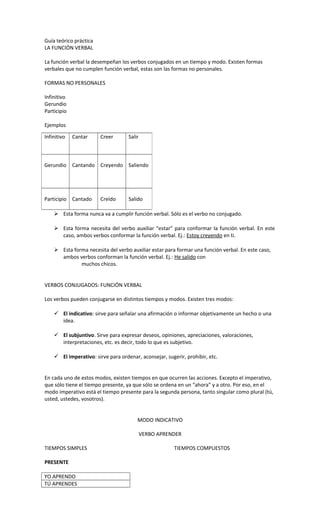
Infinitivo
Gerundio
Participio
Ejemplos
 Esta forma nunca va a cumplir función verbal. Sólo es el verbo no conjugado.
 Esta forma necesita del verbo auxiliar “estar” para conformar la función verbal. En este
caso, ambos verbos conformar la función verbal. Ej.: Estoy creyendo en ti.
 Esta forma necesita del verbo auxiliar estar para formar una función verbal. En este caso,
ambos verbos conforman la función verbal. Ej.: He salido con
muchos chicos.
VERBOS CONJUGADOS: FUNCIÓN VERBAL
Los verbos pueden conjugarse en distintos tiempos y modos. Existen tres modos:
 El indicativo: sirve para señalar una afirmación o informar objetivamente un hecho o una
idea.
 El subjuntivo. Sirve para expresar deseos, opiniones, apreciaciones, valoraciones,
interpretaciones, etc. es decir, todo lo que es subjetivo.
 El imperativo: sirve para ordenar, aconsejar, sugerir, prohibir, etc.
En cada uno de estos modos, existen tiempos en que ocurren las acciones. Excepto el imperativo,
que sólo tiene el tiempo presente, ya que sólo se ordena en un “ahora” y a otro. Por eso, en el
modo imperativo está el tiempo presente para la segunda persona, tanto singular como plural (tú,
usted, ustedes, vosotros).
MODO INDICATIVO
VERBO APRENDER
TIEMPOS SIMPLES TIEMPOS COMPUESTOS
PRESENTE
YO APRENDO
TÚ APRENDES
Infinitivo Cantar Creer Salir
Gerundio Cantando Creyendo Saliendo
Participio Cantado Creído Salido
ÉL APRENDE
NOSOTROS APRENDEMOS
USTEDES APRENDEN
ELLOS APRENDEN
PRETÉRITO IMPERFECTO (verbos terminan en
-ía o –aba)
PRETÉRITO PLUSCUAMPERFECTO (verbo haber
en pretérito imperfecto más el participio del
verbo en conjugación)
YO APRENDÍA YO HABÍA APRENDIDO
TÚ APRENDÍAS TÚ HABÍAS APRENDIDO
ÉL APRENDÍA ÉL HABÍA APRENDIDO
NOSOTROS APRENDÍAMOS NOSOTROS HABÍAMOS APRENDIDO
USTEDES APRENDÍAN USTEDES HABÍAN APRENDIDO
ELLOS APRENDÍAN ELLOS HABÍAN APRENDIDO
PRETÉRITO PERFECTO SIMPLE PRETÉRITO PERFECTO COMPUESTO (verbo
haber en presente más participio de verbo
conjugado)
YO APRENDÍ YO HE APRENDIDO
TÚ APRENDISTE TÚ HAS APRENDIDO
ÉL APRENDIÓ ÉL HA APRENDIDO
NOSOTROS APRENDIMOS NOSOTROS HEMOS APRENDIDO
USTEDES APRENDIERON USTEDEN HAN APRENDIDO
ELLOS APRENDIERON ELLOS HAN APRENDIDO
CONDICIONAL (verbos terminan en –ría) CONDICIONAL PERFECTO (verbo haber en
condicional más el participio del verbo en
conjugación)
YO APRENDERÍA YO HABRÍA APRENDIDO
TU APRENDERÍAS TÚ HABRÍAS APRENDIDO
ÉL APRENDERÍA ÉL HABRÍA APRENDIDO
NOSOTROS APRENDERÍAMOS NOSOTROS HABRÍAMOS APRENDIDO
USTEDES APRENDERÍAN USTEDES HABRÍAN APRENDIDO
ELLOS APRENDERÍAN ELLOS HABRÍAN APRENDIDO
FUTURO (verbos terminan en –ré) FUTURO PERFECTO (verbo haber en FUTURO
más el participio del verbo en conjugación)
YO APRENDERÉ YO HABRÍA APRENDIDO
TU APRENDERÁS TÚ HABRÍAS APRENDIDO
ÉL APRENDERÁ ÉL HABRÍA APRENDIDO
PRETÉRITO ANTERIOR (verbo haber en pretérito
perfecto simple más el participio del verbo en
conjugación)
YO HUBE APRENDIDO
TÚ HUBISTE APRENDIDO
ÉL HUBO APRENDIDO
NOSOTROS HUBIMOS APRENDIDO
USTEDES HUBIERON APRENDIDO
ELLOS HUBIERON APRENDIDO
NOSOTROS APRENDEREMOS NOSOTROS HABRÍAMOS APRENDIDO
USTEDES APRENDERÁN USTEDES HABRÍAN APRENDIDO
ELLOS APRENDERÁN ELLOS HABRÍAN APRENDIDO
EJERCICIOS
DETERMINA EL TIEMPO DE CADA UNO DE LOS VERBOS DE LAS SIGUIENTES ORACIONES
- Juan compró pan
- Ellos estaban escribiendo
- Hoy tuve mala suerte
- No cantaremos mañana.
- He cerrado todas las puertas.
- No lo habrías hecho si no te hubieran forzado.
- No habré dicho todo mientras siga haciendo esto.
MODO SUBJUNTIVO
VERBO APRENDER
TIEMPOS SIMPLES TIEMPOS COMPUESTOS
PRESENTE
YO APRENDA
TÚ APRENDAS
ÉL APRENDA
NOSOTROS APRENDAMOS
USTEDES APRENDAN
ELLOS APRENDAN
PRETÉRITO IMPERFECTO (verbos terminan en
-ía o –aba)
PRETÉRITO PLUSCUAMPERFECTO (verbo haber
en pretérito imperfecto más el participio del
verbo en conjugación)
YO APRENDIERA YO HUBIERA O HUBIESE APRENDIDO
TÚ APRENDIERAS TÚ HUBIERAS O HUBIESES APRENDIDO
ÉL APRENDIERA ÉL HUBIERA O HUBIESE APRENDIDO
NOSOTROS APRENDIERÁMOS NOSOTROS HUBIERÁMOS O HUBIÉSEMOS
APRENDIDO
USTEDES APRENDIERAN USTEDES HUBIERAN O HUBIESEN APRENDIDO
ELLOS APRENDIERAN ELLOS HUBIERAN O HUBIESEN APRENDIDO
PRETÉRITO PERFECTO (COMPUESTO: verbo
haber en presente de subjuntivo más participio
de verbo conjugado)
YO HAYAMOS APRENDIDO
TÚ HAYAS APRENDIDO
ÉL HAYA APRENDIDO
NOSOTROS HAYAMOS APRENDIDO
USTEDEN HAYAN APRENDIDO
ELLOS HAYAN APRENDIDO
FUTURO (verbos terminan en –ré) FUTURO PERFECTO (verbo haber en FUTURO
más el participio del verbo en conjugación)
YO APRENDIERE YO HUBIERE APRENDIDO
TÚ APRENDIERES TÚ HUBIERES APRENDIDO
ÉL APRENDIERE ÉL HUBIERES APRENDIO
NOSOTROS APRENDIÉREMOS NOSOTROS HUBIÉREMOS APRENDIO
USTEDES APRENDIEREN USTEDES HUBIEREN APRENDIDO
ELLOS APRENDIEREN ELLOS HUBIEREN APRENDIO
EJERCICIOS
SEÑALA EL TIEMPO DE CADA VERBO EN LAS SIGUIENTES ORACIONES.
- Si tú estudiaras más sacarías buenas calificaciones.
- Si hubiese sido otro, no estarías contando la historia.
- El hecho de que hayamos venido, no significa que estemos de acuerdo.
- Cuando amemos a los demás, seremos felices de verdad.
MODO IMPERATIVO
PRESENTE
Aprende tú
Aprenda usted
Aprendan ustedes

Funcion verbal

  • 1.
    Guía teórico práctica LAFUNCIÓN VERBAL La función verbal la desempeñan los verbos conjugados en un tiempo y modo. Existen formas verbales que no cumplen función verbal, estas son las formas no personales. FORMAS NO PERSONALES Infinitivo Gerundio Participio Ejemplos  Esta forma nunca va a cumplir función verbal. Sólo es el verbo no conjugado.  Esta forma necesita del verbo auxiliar “estar” para conformar la función verbal. En este caso, ambos verbos conformar la función verbal. Ej.: Estoy creyendo en ti.  Esta forma necesita del verbo auxiliar estar para formar una función verbal. En este caso, ambos verbos conforman la función verbal. Ej.: He salido con muchos chicos. VERBOS CONJUGADOS: FUNCIÓN VERBAL Los verbos pueden conjugarse en distintos tiempos y modos. Existen tres modos:  El indicativo: sirve para señalar una afirmación o informar objetivamente un hecho o una idea.  El subjuntivo. Sirve para expresar deseos, opiniones, apreciaciones, valoraciones, interpretaciones, etc. es decir, todo lo que es subjetivo.  El imperativo: sirve para ordenar, aconsejar, sugerir, prohibir, etc. En cada uno de estos modos, existen tiempos en que ocurren las acciones. Excepto el imperativo, que sólo tiene el tiempo presente, ya que sólo se ordena en un “ahora” y a otro. Por eso, en el modo imperativo está el tiempo presente para la segunda persona, tanto singular como plural (tú, usted, ustedes, vosotros). MODO INDICATIVO VERBO APRENDER TIEMPOS SIMPLES TIEMPOS COMPUESTOS PRESENTE YO APRENDO TÚ APRENDES Infinitivo Cantar Creer Salir Gerundio Cantando Creyendo Saliendo Participio Cantado Creído Salido
  • 2.
    ÉL APRENDE NOSOTROS APRENDEMOS USTEDESAPRENDEN ELLOS APRENDEN PRETÉRITO IMPERFECTO (verbos terminan en -ía o –aba) PRETÉRITO PLUSCUAMPERFECTO (verbo haber en pretérito imperfecto más el participio del verbo en conjugación) YO APRENDÍA YO HABÍA APRENDIDO TÚ APRENDÍAS TÚ HABÍAS APRENDIDO ÉL APRENDÍA ÉL HABÍA APRENDIDO NOSOTROS APRENDÍAMOS NOSOTROS HABÍAMOS APRENDIDO USTEDES APRENDÍAN USTEDES HABÍAN APRENDIDO ELLOS APRENDÍAN ELLOS HABÍAN APRENDIDO PRETÉRITO PERFECTO SIMPLE PRETÉRITO PERFECTO COMPUESTO (verbo haber en presente más participio de verbo conjugado) YO APRENDÍ YO HE APRENDIDO TÚ APRENDISTE TÚ HAS APRENDIDO ÉL APRENDIÓ ÉL HA APRENDIDO NOSOTROS APRENDIMOS NOSOTROS HEMOS APRENDIDO USTEDES APRENDIERON USTEDEN HAN APRENDIDO ELLOS APRENDIERON ELLOS HAN APRENDIDO CONDICIONAL (verbos terminan en –ría) CONDICIONAL PERFECTO (verbo haber en condicional más el participio del verbo en conjugación) YO APRENDERÍA YO HABRÍA APRENDIDO TU APRENDERÍAS TÚ HABRÍAS APRENDIDO ÉL APRENDERÍA ÉL HABRÍA APRENDIDO NOSOTROS APRENDERÍAMOS NOSOTROS HABRÍAMOS APRENDIDO USTEDES APRENDERÍAN USTEDES HABRÍAN APRENDIDO ELLOS APRENDERÍAN ELLOS HABRÍAN APRENDIDO FUTURO (verbos terminan en –ré) FUTURO PERFECTO (verbo haber en FUTURO más el participio del verbo en conjugación) YO APRENDERÉ YO HABRÍA APRENDIDO TU APRENDERÁS TÚ HABRÍAS APRENDIDO ÉL APRENDERÁ ÉL HABRÍA APRENDIDO PRETÉRITO ANTERIOR (verbo haber en pretérito perfecto simple más el participio del verbo en conjugación) YO HUBE APRENDIDO TÚ HUBISTE APRENDIDO ÉL HUBO APRENDIDO NOSOTROS HUBIMOS APRENDIDO USTEDES HUBIERON APRENDIDO ELLOS HUBIERON APRENDIDO
  • 3.
    NOSOTROS APRENDEREMOS NOSOTROSHABRÍAMOS APRENDIDO USTEDES APRENDERÁN USTEDES HABRÍAN APRENDIDO ELLOS APRENDERÁN ELLOS HABRÍAN APRENDIDO EJERCICIOS DETERMINA EL TIEMPO DE CADA UNO DE LOS VERBOS DE LAS SIGUIENTES ORACIONES - Juan compró pan - Ellos estaban escribiendo - Hoy tuve mala suerte - No cantaremos mañana. - He cerrado todas las puertas. - No lo habrías hecho si no te hubieran forzado. - No habré dicho todo mientras siga haciendo esto. MODO SUBJUNTIVO VERBO APRENDER TIEMPOS SIMPLES TIEMPOS COMPUESTOS PRESENTE YO APRENDA TÚ APRENDAS ÉL APRENDA NOSOTROS APRENDAMOS USTEDES APRENDAN ELLOS APRENDAN PRETÉRITO IMPERFECTO (verbos terminan en -ía o –aba) PRETÉRITO PLUSCUAMPERFECTO (verbo haber en pretérito imperfecto más el participio del verbo en conjugación) YO APRENDIERA YO HUBIERA O HUBIESE APRENDIDO TÚ APRENDIERAS TÚ HUBIERAS O HUBIESES APRENDIDO ÉL APRENDIERA ÉL HUBIERA O HUBIESE APRENDIDO NOSOTROS APRENDIERÁMOS NOSOTROS HUBIERÁMOS O HUBIÉSEMOS APRENDIDO USTEDES APRENDIERAN USTEDES HUBIERAN O HUBIESEN APRENDIDO ELLOS APRENDIERAN ELLOS HUBIERAN O HUBIESEN APRENDIDO PRETÉRITO PERFECTO (COMPUESTO: verbo haber en presente de subjuntivo más participio de verbo conjugado) YO HAYAMOS APRENDIDO TÚ HAYAS APRENDIDO ÉL HAYA APRENDIDO NOSOTROS HAYAMOS APRENDIDO USTEDEN HAYAN APRENDIDO ELLOS HAYAN APRENDIDO FUTURO (verbos terminan en –ré) FUTURO PERFECTO (verbo haber en FUTURO más el participio del verbo en conjugación) YO APRENDIERE YO HUBIERE APRENDIDO TÚ APRENDIERES TÚ HUBIERES APRENDIDO ÉL APRENDIERE ÉL HUBIERES APRENDIO NOSOTROS APRENDIÉREMOS NOSOTROS HUBIÉREMOS APRENDIO USTEDES APRENDIEREN USTEDES HUBIEREN APRENDIDO ELLOS APRENDIEREN ELLOS HUBIEREN APRENDIO
  • 4.
    EJERCICIOS SEÑALA EL TIEMPODE CADA VERBO EN LAS SIGUIENTES ORACIONES. - Si tú estudiaras más sacarías buenas calificaciones. - Si hubiese sido otro, no estarías contando la historia. - El hecho de que hayamos venido, no significa que estemos de acuerdo. - Cuando amemos a los demás, seremos felices de verdad. MODO IMPERATIVO PRESENTE Aprende tú Aprenda usted Aprendan ustedes