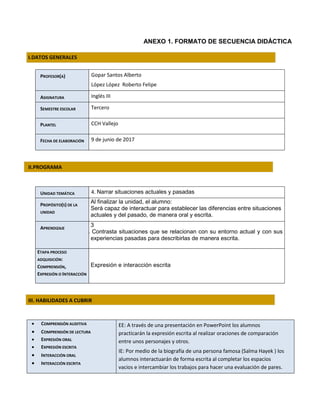
ANEXO 1. FORMATO DE SECUENCIA DIDÁCTICA
I.DATOS GENERALES
PROFESOR(A) Gopar Santos Alberto
López López Roberto Felipe
ASIGNATURA Inglés III
SEMESTRE ESCOLAR Tercero
PLANTEL CCH Vallejo
FECHA DE ELABORACIÓN 9 de junio de 2017
II.PROGRAMA
UNIDAD TEMÁTICA 4. Narrar situaciones actuales y pasadas
PROPÓSITO(S) DE LA
UNIDAD
Al finalizar la unidad, el alumno:
Será capaz de interactuar para establecer las diferencias entre situaciones
actuales y del pasado, de manera oral y escrita.
APRENDIZAJE
3
3. Contrasta situaciones que se relacionan con su entorno actual y con sus
experiencias pasadas para describirlas de manera escrita.
ETAPA PROCESO
ADQUISICIÓN:
COMPRENSIÓN,
EXPRESIÓN O INTERACCIÓN
Expresión e interacción escrita
III. HABILIDADES A CUBRIR
• COMPRENSIÓN AUDITIVA
• COMPRENSIÓN DE LECTURA
• EXPRESIÓN ORAL
• EXPRESIÓN ESCRITA
• INTERACCIÓN ORAL
• INTERACCIÓN ESCRITA
EE: A través de una presentación en PowerPoint los alumnos
practicarán la expresión escrita al realizar oraciones de comparación
entre unos personajes y otros.
IE: Por medio de la biografía de una persona famosa (Salma Hayek ) los
alumnos interactuarán de forma escrita al completar los espacios
vacios e intercambiar los trabajos para hacer una evaluación de pares.
IV. TEMÁTICAS
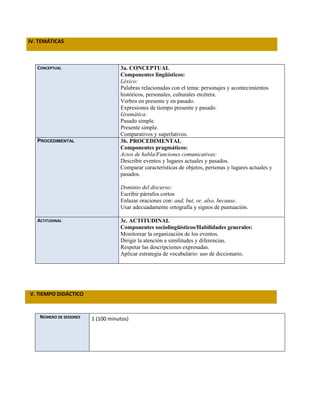
CONCEPTUAL 3a. CONCEPTUAL
Componentes lingüísticos:
Léxico:
Palabras relacionadas con el tema: personajes y acontecimientos
históricos, personales, culturales etcétera.
Verbos en presente y en pasado.
Expresiones de tiempo presente y pasado.
Gramática:
Pasado simple.
Presente simple.
Comparativos y superlativos.
PROCEDIMENTAL 3b. PROCEDIMENTAL
Componentes pragmáticos:
Actos de habla/Funciones comunicativas:
Describir eventos y lugares actuales y pasados.
Comparar características de objetos, personas y lugares actuales y
pasados.
Dominio del discurso:
Escribir párrafos cortos
Enlazar oraciones con: and, but, or, also, because.
Usar adecuadamente ortografía y signos de puntuación.
ACTITUDINAL 3c. ACTITUDINAL
Componentes sociolingüísticos/Habilidades generales:
Monitorear la organización de los eventos.
Dirigir la atención a similitudes y diferencias.
Respetar las descripciones expresadas.
Aplicar estrategia de vocabulario: uso de diccionario.
V. TIEMPO DIDÁCTICO
NÚMERO DE SESIONES 1 (100 minutos)
VI. ACTIVIDADES
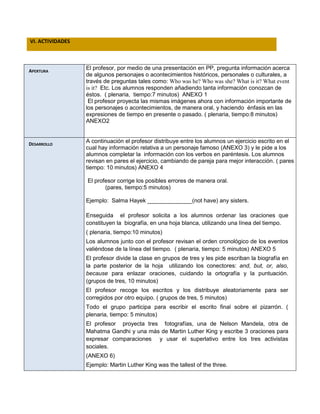
APERTURA
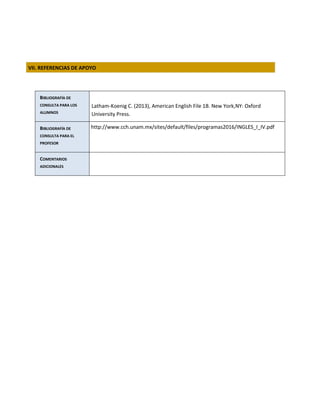
El profesor, por medio de una presentación en PP, pregunta información acerca
de algunos personajes o acontecimientos históricos, personales o culturales, a
través de preguntas tales como: Who was he? Who was she? What is it? What event
is it? Etc. Los alumnos responden añadiendo tanta información conozcan de
éstos. ( plenaria, tiempo:7 minutos) ANEXO 1
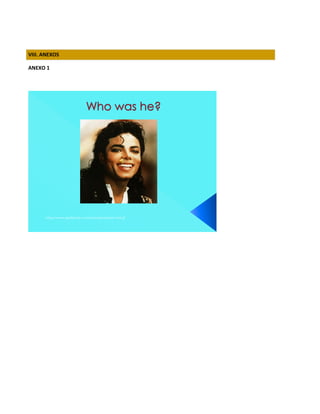
El profesor proyecta las mismas imágenes ahora con información importante de
los personajes o acontecimientos, de manera oral, y haciendo énfasis en las
expresiones de tiempo en presente o pasado. ( plenaria, tiempo:8 minutos)
ANEXO2
DESARROLLO
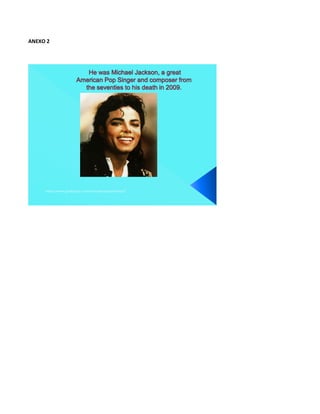
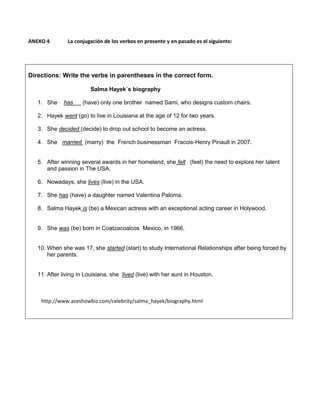
A continuación el profesor distribuye entre los alumnos un ejercicio escrito en el
cual hay información relativa a un personaje famoso (ANEXO 3) y le pide a los
alumnos completar la información con los verbos en paréntesis. Los alumnos
revisan en pares el ejercicio, cambiando de pareja para mejor interacción. ( pares
tiempo: 10 minutos) ANEXO 4
El profesor corrige los posibles errores de manera oral.
(pares, tiempo:5 minutos)
Ejemplo: Salma Hayek ______________(not have) any sisters.
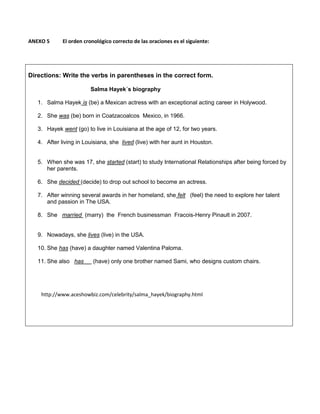
Enseguida el profesor solicita a los alumnos ordenar las oraciones que
constituyen la biografía, en una hoja blanca, utilizando una línea del tiempo.
( plenaria, tiempo:10 minutos)
Los alumnos junto con el profesor revisan el orden cronológico de los eventos
valiéndose de la línea del tiempo. ( plenaria, tiempo: 5 minutos) ANEXO 5
El profesor divide la clase en grupos de tres y les pide escriban la biografía en
la parte posterior de la hoja utilizando los conectores: and, but, or, also,
because para enlazar oraciones, cuidando la ortografía y la puntuación.
(grupos de tres, 10 minutos)
El profesor recoge los escritos y los distribuye aleatoriamente para ser
corregidos por otro equipo. ( grupos de tres, 5 minutos)
Todo el grupo participa para escribir el escrito final sobre el pizarrón. (
plenaria, tiempo: 5 minutos)
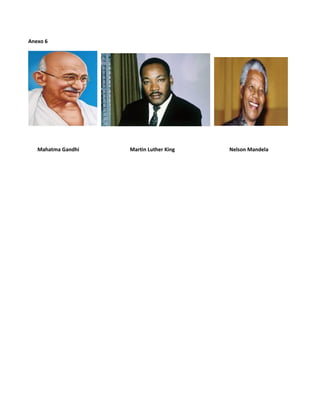
El profesor proyecta tres fotografías, una de Nelson Mandela, otra de
Mahatma Gandhi y una más de Martin Luther King y escribe 3 oraciones para
expresar comparaciones y usar el superlativo entre los tres activistas
sociales.
(ANEXO 6)
Ejemplo: Martin Luther King was the tallest of the three.
Mahatma Gandhi was more popular than Martin Luther King.
(plenaria, tiempo: 7 minutos)
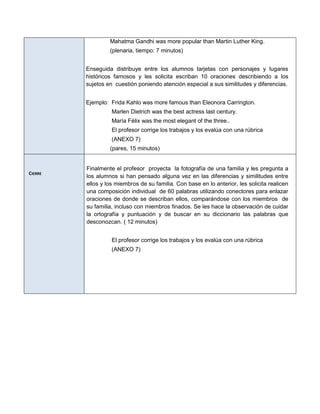
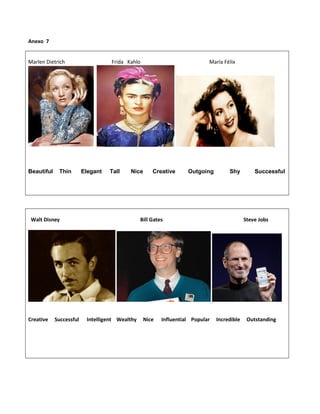
Enseguida distribuye entre los alumnos tarjetas con personajes y lugares
históricos famosos y les solicita escriban 10 oraciones describiendo a los
sujetos en cuestión poniendo atención especial a sus similitudes y diferencias.
Ejemplo: Frida Kahlo was more famous than Eleonora Carrington.
Marlen Dietrich was the best actress last century.
María Félix was the most elegant of the three..
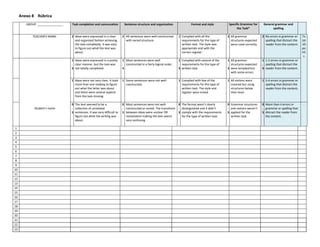
El profesor corrige los trabajos y los evalúa con una rúbrica
(ANEXO 7)
(pares, 15 minutos)
CIERRE
Finalmente el profesor proyecta la fotografía de una familia y les pregunta a
los alumnos si han pensado alguna vez en las diferencias y similitudes entre
ellos y los miembros de su familia. Con base en lo anterior, les solicita realicen
una composición individual de 60 palabras utilizando conectores para enlazar
oraciones de donde se describan ellos, comparándose con los miembros de
su familia, incluso con miembros finados. Se les hace la observación de cuidar
la ortografía y puntuación y de buscar en su diccionario las palabras que
desconozcan. ( 12 minutos)
El profesor corrige los trabajos y los evalúa con una rúbrica
(ANEXO 7)
VII. REFERENCIAS DE APOYO
BIBLIOGRAFÍA DE
CONSULTA PARA LOS
ALUMNOS
Latham-Koenig C. (2013), American English File 1B. New York,NY: Oxford
University Press.
BIBLIOGRAFÍA DE
CONSULTA PARA EL
PROFESOR
http://www.cch.unam.mx/sites/default/files/programas2016/INGLES_I_IV.pdf
COMENTARIOS
ADICIONALES
VIII. ANEXOS
ANEXO 1
https://www.gratistodo.com/michael-jackson-fotos/
ANEXO 2
https://www.gratistodo.com/michael-jackson-fotos/
ANEXO 3
Directions: Write the verbs in parentheses in the correct form.
Salma Hayek´s biography
1. She ____________(have) only one brother named Sami, who designs custom chairs.
2. Hayek _________(go) to live in Louisiana at the age of 12 for two years.
3. She __________ (decide) to drop out school to become an actress.
4. She ____________ (marry) the French businessman Fracois-Henry Pinault in 2007.
5. After winning several awards in her homeland, she ___________(feel) the need to explore
her talent and passion in The USA.
6. Nowadays, she ___________(live) in the USA.
7. She ____________(have) a daughter named Valentina Paloma.
8. Salma Hayek _______(be) a Mexican actress with an exceptional acting career in Holywood.
9. She ___________(is) born in Coatzacoalcos Mexico, in 1966.
10. When she was 17, she ___________(start) to study International Relationships after being
forced by her parents.
11. After living in Louisiana, she __________(live) with her aunt in Houston.
http://www.aceshowbiz.com/celebrity/salma_hayek/biography.html
ANEXO 4 La conjugación de los verbos en presente y en pasado es el siguiente:
Directions: Write the verbs in parentheses in the correct form.
Salma Hayek´s biography
1. She has (have) only one brother named Sami, who designs custom chairs.
2. Hayek went (go) to live in Louisiana at the age of 12 for two years.
3. She decided (decide) to drop out school to become an actress.
4. She married (marry) the French businessman Fracois-Henry Pinault in 2007.
5. After winning several awards in her homeland, she felt (feel) the need to explore her talent
and passion in The USA.
6. Nowadays, she lives (live) in the USA.
7. She has (have) a daughter named Valentina Paloma.
8. Salma Hayek is (be) a Mexican actress with an exceptional acting career in Holywood.
9. She was (be) born in Coatzacoalcos Mexico, in 1966.
10. When she was 17, she started (start) to study International Relationships after being forced by
her parents.
11. After living in Louisiana, she lived (live) with her aunt in Houston.
http://www.aceshowbiz.com/celebrity/salma_hayek/biography.html
ANEXO 5 El orden cronológico correcto de las oraciones es el siguiente:
Directions: Write the verbs in parentheses in the correct form.
Salma Hayek´s biography
1. Salma Hayek is (be) a Mexican actress with an exceptional acting career in Holywood.
2. She was (be) born in Coatzacoalcos Mexico, in 1966.
3. Hayek went (go) to live in Louisiana at the age of 12, for two years.
4. After living in Louisiana, she lived (live) with her aunt in Houston.
5. When she was 17, she started (start) to study International Relationships after being forced by
her parents.
6. She decided (decide) to drop out school to become an actress.
7. After winning several awards in her homeland, she felt (feel) the need to explore her talent
and passion in The USA.
8. She married (marry) the French businessman Fracois-Henry Pinault in 2007.
9. Nowadays, she lives (live) in the USA.
10. She has (have) a daughter named Valentina Paloma.
11. She also has (have) only one brother named Sami, who designs custom chairs.
http://www.aceshowbiz.com/celebrity/salma_hayek/biography.html
Anexo 6
Mahatma Gandhi Martin Luther King Nelson Mandela
Anexo 7
Marlen Dietrich Frida Kahlo María Félix
Beautiful Thin Elegant Tall Nice Creative Outgoing Shy Successful
Walt Disney Bill Gates Steve Jobs
Creative Successful Intelligent Wealthy Nice Influential Popular Incredible Outstanding
GROUP: ________________ Task completion and comuncation Sentence structure and organization Format and style Specific Grammar for
the Task*
General grammar and
spelling
TEACHER'S NAME: 2 Ideas were expressed in a clear
and organized fashion achieving
the task completely. It was easy
to figure out what the text was
about.
2 All sentences were well-constructed
with varied structure.
2 Complied with all the
requirements for the type of
written task. The style was
appropriate and with the
correct register.
2 All grammar
structures expected
were used correctly.
2 No errors in grammar or
spelling that distract the
reader from the content.
To
tal
10
po
int
s
Student’s name
1
.
5
Ideas were expressed in a pretty
clear manner, but the task was
not totally completed.
1
.
5
Most sentences were well
constructed in a fairly logical order,
1
.
5
Complied with several of the
requirements for the type of
written task.
1
.
5
All grammar
structures expected
were tempted but
with some errors.
1
.
5
1-2 errors in grammar or
spelling that distract the
reader from the content.
1 Ideas were not very clear. It took
more than one reading to figure
out what the letter was about
and there were several aspects
from the task missing.
1 Some sentences were not well-
constructed.
1 Complied with few of the
requirements for the type of
written task. The style and
register were mixed.
1 All notions were
covered but using
structures below
their level.
1 3-4 errors in grammar or
spelling that distract the
reader from the content.
0
.
5
The text seemed to be a
collection of unrelated
sentences. It was very difficult to
figure out what the writing was
about.
0
.
5
Most sentences were not well-
constructed or varied. The transitions
between ideas were unclear OR
nonexistent making the text seems
very confusing.
0
.
5
The format wasn’t clearly
distinguished and it didn’t
comply with the requirements
for the type of written task.
0
.
5
Grammar structures
and notions weren’t
applied for the
written task.
0
.
5
More than 4 errors in
grammar or spelling that
distract the reader from
the content.
.
1
2
3
4
5
6
7
8
9
10
11
12
13
14
15
16
17
18
19
20
21
22
23
Anexo 8 Rúbrica
24
25

Sd u4a3 Gopar-Lopez Ingles III

  • 1.
    ANEXO 1. FORMATODE SECUENCIA DIDÁCTICA I.DATOS GENERALES PROFESOR(A) Gopar Santos Alberto López López Roberto Felipe ASIGNATURA Inglés III SEMESTRE ESCOLAR Tercero PLANTEL CCH Vallejo FECHA DE ELABORACIÓN 9 de junio de 2017 II.PROGRAMA UNIDAD TEMÁTICA 4. Narrar situaciones actuales y pasadas PROPÓSITO(S) DE LA UNIDAD Al finalizar la unidad, el alumno: Será capaz de interactuar para establecer las diferencias entre situaciones actuales y del pasado, de manera oral y escrita. APRENDIZAJE 3 3. Contrasta situaciones que se relacionan con su entorno actual y con sus experiencias pasadas para describirlas de manera escrita. ETAPA PROCESO ADQUISICIÓN: COMPRENSIÓN, EXPRESIÓN O INTERACCIÓN Expresión e interacción escrita III. HABILIDADES A CUBRIR • COMPRENSIÓN AUDITIVA • COMPRENSIÓN DE LECTURA • EXPRESIÓN ORAL • EXPRESIÓN ESCRITA • INTERACCIÓN ORAL • INTERACCIÓN ESCRITA EE: A través de una presentación en PowerPoint los alumnos practicarán la expresión escrita al realizar oraciones de comparación entre unos personajes y otros. IE: Por medio de la biografía de una persona famosa (Salma Hayek ) los alumnos interactuarán de forma escrita al completar los espacios vacios e intercambiar los trabajos para hacer una evaluación de pares.
  • 2.
    IV. TEMÁTICAS CONCEPTUAL 3a.CONCEPTUAL Componentes lingüísticos: Léxico: Palabras relacionadas con el tema: personajes y acontecimientos históricos, personales, culturales etcétera. Verbos en presente y en pasado. Expresiones de tiempo presente y pasado. Gramática: Pasado simple. Presente simple. Comparativos y superlativos. PROCEDIMENTAL 3b. PROCEDIMENTAL Componentes pragmáticos: Actos de habla/Funciones comunicativas: Describir eventos y lugares actuales y pasados. Comparar características de objetos, personas y lugares actuales y pasados. Dominio del discurso: Escribir párrafos cortos Enlazar oraciones con: and, but, or, also, because. Usar adecuadamente ortografía y signos de puntuación. ACTITUDINAL 3c. ACTITUDINAL Componentes sociolingüísticos/Habilidades generales: Monitorear la organización de los eventos. Dirigir la atención a similitudes y diferencias. Respetar las descripciones expresadas. Aplicar estrategia de vocabulario: uso de diccionario. V. TIEMPO DIDÁCTICO NÚMERO DE SESIONES 1 (100 minutos)
  • 3.
    VI. ACTIVIDADES APERTURA El profesor,por medio de una presentación en PP, pregunta información acerca de algunos personajes o acontecimientos históricos, personales o culturales, a través de preguntas tales como: Who was he? Who was she? What is it? What event is it? Etc. Los alumnos responden añadiendo tanta información conozcan de éstos. ( plenaria, tiempo:7 minutos) ANEXO 1 El profesor proyecta las mismas imágenes ahora con información importante de los personajes o acontecimientos, de manera oral, y haciendo énfasis en las expresiones de tiempo en presente o pasado. ( plenaria, tiempo:8 minutos) ANEXO2 DESARROLLO A continuación el profesor distribuye entre los alumnos un ejercicio escrito en el cual hay información relativa a un personaje famoso (ANEXO 3) y le pide a los alumnos completar la información con los verbos en paréntesis. Los alumnos revisan en pares el ejercicio, cambiando de pareja para mejor interacción. ( pares tiempo: 10 minutos) ANEXO 4 El profesor corrige los posibles errores de manera oral. (pares, tiempo:5 minutos) Ejemplo: Salma Hayek ______________(not have) any sisters. Enseguida el profesor solicita a los alumnos ordenar las oraciones que constituyen la biografía, en una hoja blanca, utilizando una línea del tiempo. ( plenaria, tiempo:10 minutos) Los alumnos junto con el profesor revisan el orden cronológico de los eventos valiéndose de la línea del tiempo. ( plenaria, tiempo: 5 minutos) ANEXO 5 El profesor divide la clase en grupos de tres y les pide escriban la biografía en la parte posterior de la hoja utilizando los conectores: and, but, or, also, because para enlazar oraciones, cuidando la ortografía y la puntuación. (grupos de tres, 10 minutos) El profesor recoge los escritos y los distribuye aleatoriamente para ser corregidos por otro equipo. ( grupos de tres, 5 minutos) Todo el grupo participa para escribir el escrito final sobre el pizarrón. ( plenaria, tiempo: 5 minutos) El profesor proyecta tres fotografías, una de Nelson Mandela, otra de Mahatma Gandhi y una más de Martin Luther King y escribe 3 oraciones para expresar comparaciones y usar el superlativo entre los tres activistas sociales. (ANEXO 6) Ejemplo: Martin Luther King was the tallest of the three.
  • 4.
    Mahatma Gandhi wasmore popular than Martin Luther King. (plenaria, tiempo: 7 minutos) Enseguida distribuye entre los alumnos tarjetas con personajes y lugares históricos famosos y les solicita escriban 10 oraciones describiendo a los sujetos en cuestión poniendo atención especial a sus similitudes y diferencias. Ejemplo: Frida Kahlo was more famous than Eleonora Carrington. Marlen Dietrich was the best actress last century. María Félix was the most elegant of the three.. El profesor corrige los trabajos y los evalúa con una rúbrica (ANEXO 7) (pares, 15 minutos) CIERRE Finalmente el profesor proyecta la fotografía de una familia y les pregunta a los alumnos si han pensado alguna vez en las diferencias y similitudes entre ellos y los miembros de su familia. Con base en lo anterior, les solicita realicen una composición individual de 60 palabras utilizando conectores para enlazar oraciones de donde se describan ellos, comparándose con los miembros de su familia, incluso con miembros finados. Se les hace la observación de cuidar la ortografía y puntuación y de buscar en su diccionario las palabras que desconozcan. ( 12 minutos) El profesor corrige los trabajos y los evalúa con una rúbrica (ANEXO 7)
  • 5.
    VII. REFERENCIAS DEAPOYO BIBLIOGRAFÍA DE CONSULTA PARA LOS ALUMNOS Latham-Koenig C. (2013), American English File 1B. New York,NY: Oxford University Press. BIBLIOGRAFÍA DE CONSULTA PARA EL PROFESOR http://www.cch.unam.mx/sites/default/files/programas2016/INGLES_I_IV.pdf COMENTARIOS ADICIONALES
  • 6.
  • 7.
  • 8.
    ANEXO 3 Directions: Writethe verbs in parentheses in the correct form. Salma Hayek´s biography 1. She ____________(have) only one brother named Sami, who designs custom chairs. 2. Hayek _________(go) to live in Louisiana at the age of 12 for two years. 3. She __________ (decide) to drop out school to become an actress. 4. She ____________ (marry) the French businessman Fracois-Henry Pinault in 2007. 5. After winning several awards in her homeland, she ___________(feel) the need to explore her talent and passion in The USA. 6. Nowadays, she ___________(live) in the USA. 7. She ____________(have) a daughter named Valentina Paloma. 8. Salma Hayek _______(be) a Mexican actress with an exceptional acting career in Holywood. 9. She ___________(is) born in Coatzacoalcos Mexico, in 1966. 10. When she was 17, she ___________(start) to study International Relationships after being forced by her parents. 11. After living in Louisiana, she __________(live) with her aunt in Houston. http://www.aceshowbiz.com/celebrity/salma_hayek/biography.html
  • 9.
    ANEXO 4 Laconjugación de los verbos en presente y en pasado es el siguiente: Directions: Write the verbs in parentheses in the correct form. Salma Hayek´s biography 1. She has (have) only one brother named Sami, who designs custom chairs. 2. Hayek went (go) to live in Louisiana at the age of 12 for two years. 3. She decided (decide) to drop out school to become an actress. 4. She married (marry) the French businessman Fracois-Henry Pinault in 2007. 5. After winning several awards in her homeland, she felt (feel) the need to explore her talent and passion in The USA. 6. Nowadays, she lives (live) in the USA. 7. She has (have) a daughter named Valentina Paloma. 8. Salma Hayek is (be) a Mexican actress with an exceptional acting career in Holywood. 9. She was (be) born in Coatzacoalcos Mexico, in 1966. 10. When she was 17, she started (start) to study International Relationships after being forced by her parents. 11. After living in Louisiana, she lived (live) with her aunt in Houston. http://www.aceshowbiz.com/celebrity/salma_hayek/biography.html
  • 10.
    ANEXO 5 Elorden cronológico correcto de las oraciones es el siguiente: Directions: Write the verbs in parentheses in the correct form. Salma Hayek´s biography 1. Salma Hayek is (be) a Mexican actress with an exceptional acting career in Holywood. 2. She was (be) born in Coatzacoalcos Mexico, in 1966. 3. Hayek went (go) to live in Louisiana at the age of 12, for two years. 4. After living in Louisiana, she lived (live) with her aunt in Houston. 5. When she was 17, she started (start) to study International Relationships after being forced by her parents. 6. She decided (decide) to drop out school to become an actress. 7. After winning several awards in her homeland, she felt (feel) the need to explore her talent and passion in The USA. 8. She married (marry) the French businessman Fracois-Henry Pinault in 2007. 9. Nowadays, she lives (live) in the USA. 10. She has (have) a daughter named Valentina Paloma. 11. She also has (have) only one brother named Sami, who designs custom chairs. http://www.aceshowbiz.com/celebrity/salma_hayek/biography.html
  • 11.
    Anexo 6 Mahatma GandhiMartin Luther King Nelson Mandela
  • 12.
    Anexo 7 Marlen DietrichFrida Kahlo María Félix Beautiful Thin Elegant Tall Nice Creative Outgoing Shy Successful Walt Disney Bill Gates Steve Jobs Creative Successful Intelligent Wealthy Nice Influential Popular Incredible Outstanding
  • 13.
    GROUP: ________________ Taskcompletion and comuncation Sentence structure and organization Format and style Specific Grammar for the Task* General grammar and spelling TEACHER'S NAME: 2 Ideas were expressed in a clear and organized fashion achieving the task completely. It was easy to figure out what the text was about. 2 All sentences were well-constructed with varied structure. 2 Complied with all the requirements for the type of written task. The style was appropriate and with the correct register. 2 All grammar structures expected were used correctly. 2 No errors in grammar or spelling that distract the reader from the content. To tal 10 po int s Student’s name 1 . 5 Ideas were expressed in a pretty clear manner, but the task was not totally completed. 1 . 5 Most sentences were well constructed in a fairly logical order, 1 . 5 Complied with several of the requirements for the type of written task. 1 . 5 All grammar structures expected were tempted but with some errors. 1 . 5 1-2 errors in grammar or spelling that distract the reader from the content. 1 Ideas were not very clear. It took more than one reading to figure out what the letter was about and there were several aspects from the task missing. 1 Some sentences were not well- constructed. 1 Complied with few of the requirements for the type of written task. The style and register were mixed. 1 All notions were covered but using structures below their level. 1 3-4 errors in grammar or spelling that distract the reader from the content. 0 . 5 The text seemed to be a collection of unrelated sentences. It was very difficult to figure out what the writing was about. 0 . 5 Most sentences were not well- constructed or varied. The transitions between ideas were unclear OR nonexistent making the text seems very confusing. 0 . 5 The format wasn’t clearly distinguished and it didn’t comply with the requirements for the type of written task. 0 . 5 Grammar structures and notions weren’t applied for the written task. 0 . 5 More than 4 errors in grammar or spelling that distract the reader from the content. . 1 2 3 4 5 6 7 8 9 10 11 12 13 14 15 16 17 18 19 20 21 22 23 Anexo 8 Rúbrica
  • 14.