NIKKEIESPERÚ

LIBRO NIKEI 245 x 296 FINAL.indd 1

9/18/13 7:43 AM
una coedición de
jointly published with

Primera edición | First Edition
Octubre | October | 2013
Hecho el depósito legal
en la Biblioteca Nacional del Perú
Legal Deposit Copy
2013-14190
ISBN: 978-612-45819-2-2
Tiraje | Run | 7000
De esta edición | From this edition

© Telefónica del Perú

Todos los derechos reservados de acuerdo a ley. Prohibida la reproducción total o parcial
de este libro por cualquier medio sin permiso del propietario de los derechos de autor.
All rights reserved. No part of this book may be used or reproduced in any manner
whatosever without the written permission of the author whose rights as the owner
of this publication are recognized by law.

LIBRO NIKEI 245 x 296 FINAL.indd 2

9/19/13 8:56 PM
Mi t s uh a r u Tsumura

NIKKEIESPERÚ
Josefina Barrón

LIBRO NIKEI 245 x 296 FINAL.indd 3

9/23/13 6:38 PM
LIBRO NIKEI 245 x 296 FINAL.indd 4

9/18/13 7:43 AM
LIBRO NIKEI 245 x 296 FINAL.indd 5

9/18/13 7:20 AM
Autores Authors

Josefina Barrón
Mitsuharu Tsumura
Edición General y Textos Editor-in-Chief and Texts

Josefina Barrón
Recetas Recipes

Mitsuharu Tsumura
Edición Fotográfica Photographic Editor

Chiara Romoli

Fotógrafos Photographers

Traducción Translation

Dirección de Arte Art Director

Chiara Romoli

Diseño Editorial Design

Pocho Cáceres
Renzo Giraldo
Inés Menacho

Arturo Higa Taira

Texto Text

Patricia Elejalde
Lucas Lyndes
Recetas Recipes

Investigación Research

Josefina Barrón
Ricardo Ráez

Lorena Delgado
Daniel Huby
Simon Walter
Corrección Proofreading

Antonio Albitres
Impresión y Pre-prensa

Printing and pre-press

Cecosami
Calle Los Plateros No. 142
Urb. El Artesano, Ate, Lima

LIBRO NIKEI 245 x 296 FINAL.indd 6

9/18/13 7:21 AM
LIBRO NIKEI 245 x 296 FINAL.indd 7

9/18/13 7:21 AM
LIBRO NIKEI 245 x 296 FINAL.indd 8

9/18/13 7:21 AM
LIBRO NIKEI 245 x 296 FINAL.indd 9

9/18/13 7:21 AM
sobrevolando las estribaciones andinas | flying over the andean foothills

LIBRO NIKEI 245 x 296 FINAL.indd 10

9/18/13 7:21 AM
LIBRO NIKEI 245 x 296 FINAL.indd 11

9/18/13 7:21 AM
LIBRO NIKEI 245 x 296 FINAL.indd 12

9/18/13 7:21 AM
Cocina: comunicación universal
Javier manzanares Presidente, Grupo Telefónica en el Perú Lima, 28 de julio de 2013

L

a gastronomía es, sin lugar a dudas, la manifestación más cotidiana y democrática de la cultura. Como todo
arte, plasma la creatividad, la libertad, el amor y la riqueza del ser que la forja. Es, a la vez que única, producto
del mestizaje de culturas, del dinamismo que mueve al mundo y de la comunicación entre personas. La cocina
es espejo de los tiempos. A través de sensaciones, ella narra la historia de nuestros pueblos.
Hace cerca de veinte años, Telefónica llegó al Perú con un desafío: comunicar aún más a los peruanos entre sí y con el
mundo. En estas casi dos décadas de arduo trabajo, Telefónica ha logrado dar un impulso trascendental a las telecomunicaciones en el país. Abrir caminos para transformar posibilidades en realidades y acercar lo mejor de la tecnología a
las personas constituye nuestra visión como empresa. En esa ruta, la cocina se ha revelado como un agente de transformación, como un vehículo para llevar a la realidad los sueños y anhelos de millones de peruanos esparcidos por un
territorio cada vez más integrado. La cocina es una forma maravillosa de comunicar y conectar a las personas, por ello,
estamos comprometidos con su desarrollo y con la promoción de la imagen del Perú a través de su gastronomía.
Por todo lo anterior, Telefónica ha decidido apoyar, una vez más, los esfuerzos por plasmar en las páginas de un
libro la esencia de la identidad peruana desde el mestizaje culinario. En Nikkei es Perú, la escritora Josefina Barrón y
el cocinero nikkei Mitsuharu Tsumura nos guían a través de una aventura llena de sabor e historia. Cómo se fue gestando el inigualable rostro de la cocina nikkei del Perú, cocina que hoy conquista el especial paladar de los peruanos y
al comensal más exigente del mundo. Nikkei es Perú nos abre los ojos, y el apetito, con sus sugerentes imágenes y sus
palabras llenas de sazón, sobre la gran riqueza natural y el vasto acervo cultural que un plato peruano comunica, sin
palabras, pero con elocuencia, honestidad y fuerza.

Cuisine: global communication
Javier manzanares

President, Telefónica del Perú Lima, July 28, 2013

T

here is no question that cuisine is the most everyday and egalitarian expression of culture. Like all art, it captures the
creativity, freedom, love, and richness of the person who makes it. It is one-of-a-kind, but also a mix of cultures, of the
dynamics that make the world go round, of communication between peoples. Cuisine is a mirror of the times: through its
sensations, it narrates our different histories.
Nearly twenty years ago, Telefónica came to Peru to take on a challenge: that of helping Peruvians communicate more,
both among themselves and with the rest of the world. Over the course of two decades of arduous work, Telefónica has
provided an incredible boost to telecommunications in the country, blazing paths in order to make possibilities into a reality. Our mission as a company is to bring people the best that technology has to offer. Along the way, cuisine has proven
itself to be an agent of transformation, a vehicle to make dreams and longings come true for millions of Peruvians across
the territory of a nation that has become increasingly integrated. Cuisine is a marvelous way to communicate and to bring
people together. For this reason, we are committed to its development and the promotion of Peru’s image through its food.
As such, Telefónica has once again decided to support a project seeking to capture the essence of Peruvian identity and
its culinary fusions in the form of a book. In Nikkei es Perú, writer Josefina Barrón and Nikkei chef Mitsuharu Tsumura
guide us through an adventure full of flavor and history. They tell us about the gradual emergence of what is now the
unique taste of Peruvian Nikkei cuisine, a cuisine that has been conquering the demanding taste buds of Peruvians and
the world’s most knowledgeable diners. Nikkei es Perú opens our eyes and whets our appetites with its alluring images and
flavorful words, capturing the great natural wealth and the deep-rooted cultural heritage which a Peruvian dish is capable
of communicating—without words, but always with eloquence, sincerity, and boldness.

LIBRO NIKEI 245 x 296 FINAL.indd 13

9/18/13 7:21 AM
LIBRO NIKEI 245 x 296 FINAL.indd 14

9/18/13 7:21 AM
LIBRO NIKEI 245 x 296 FINAL.indd 15

9/18/13 7:21 AM
LIBRO NIKEI 245 x 296 FINAL.indd 16

9/18/13 7:21 AM
Perú, mi otro hogar
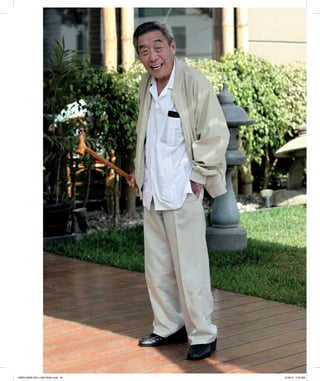
No b u Mat s u hi s a

M

i pasión por Perú continúa. Ha sido la piedra angular de mi trayectoria internacional. Cuando tuve la
oportunidad de salir de Japón por primera vez para explorar el mundo, yo era un joven y entusiasta aspirante a chef de sushi. Perú fue mi primer hogar fuera de Japón. Mi experiencia en Perú impactó mi visión
de la cocina, la cual fue fuente de inspiración para la creación de recetas peruanas al estilo Nobu, como el
cebiche, anticucho y tiradito, platos que se sirven en todos mis restaurantes alrededor del mundo.
Tal como ocurrió conmigo, los inmigrantes japoneses probaron la cocina peruana al llegar a su nuevo destino.
Perú y su gastronomía son un crisol de culturas, de inmigrantes de España, África, Japón, China, y de pueblos nativos peruanos. Los inmigrantes japoneses crearon una nueva cocina en Perú, conocida como la cocina nikkei. Es una
extraordinaria fusión de las cocinas japonesa y peruana.
Fui muy bien recibido en Perú. Muchos compartieron su cultura conmigo. Perú es un tesoro. Siempre he buscado
la manera de retribuir lo mucho que este país me ha dado. Hace catorce años tuve el privilegio de apoyar un evento
gastronómico que impulsaría el valor y prestigio de la cocina peruana a nivel mundial.
Fue un gran placer trabajar con los chefs de la cocina nikkei. Son muy activos, asimilan fácilmente las nuevas técnicas y conocimientos que aplican para crear nuevas recetas nikkei.
Estoy muy entusiasmado por la publicación de este libro pues es fruto del trabajo apasionado de los chefs nikkei,
y estoy seguro de que servirá de guía para la siguiente generación. Me siento inmensamente feliz de tener la oportunidad de ser parte de sus páginas.
Espero que muchos chefs, tanto los que cocinan en casa como los profesionales en restaurantes, no solo en Perú sino alrededor del mundo, disfruten de este libro de cocina, pleno de las ideas innovadoras y creativas de los chefs nikkei del Perú.

Peru, my other home

M

y passion for Peru continues. It was the cornerstone of my international career. As a young and aspiring sushi chef,
it was the first time to leave Japan and explore the world. Peru was my first home outside of Japan. All of my Peruvian experience impacted my culinary vision, which eventually inspired Nobu-Style Peruvian recipes. These Peruvian
recipes, Nobu-Style cebiche, anticucho, and tiradito are served in all of my restaurants throughout the world.
Similar to me many Japanese immigrated to Peru experienced Peruvian cuisine. Peru and its cuisine are a melting pot of
immigrants from Spain, Africa, Japan, China, and the native Peruvian people. Japanese immigrants created a new cuisine
in Peru called Nikkei cuisine. It is an extraordinary blend of Japanese and Peruvian cuisines.
I was welcomed in Peru. Many Peruvians shared their culture ideas with me. Peru is precious. I have always looked for
ways to give back to Peru. 14 years ago I had the privilege to support a gastronomical event and seminar that helped Peruvian cuisine to become popular worldwide.
It has been a great pleasure to work with the Nikkei cuisine chefs. They are quite active and absorb new techniques and
knowledge quite readily to apply to new Nikkei recipes.
I am excited about this Nikkei cookbook because it’s a result of passionate work by the Nikkei chefs, and I am sure this
will lead to the next-generation of Nikkei chefs. I am extremely happy to have this opportunity to be part of this Nikkei
cookbook. I hope that many chefs in the home kitchen to professionals not only in Peru but all over the world will enjoy
this cookbook that is filled with innovative and creative approaches by the Nikkei chefs in Peru.

LIBRO NIKEI 245 x 296 FINAL.indd 17

9/19/13 8:58 PM
LIBRO NIKEI 245 x 296 FINAL.indd 18

9/18/13 7:21 AM
Tradición e innovación
f e r r an & a l b er t adr i à

P

ocas veces nos ha dado tanta emoción escribir unas palabras para el libro de un compañero de profesión. Y
por una razón muy sencilla; Micha no solo es un brillante cocinero, sino una gran persona. No hay más que
ver su sonrisa maliciosa pero tremendamente honesta, que delata la calidad de quien sabe lo que hace. Para
nosotros, esto es tan importante como ser el mejor de los cocineros.
Como españoles, hace poco que conocemos la cocina peruana, mejor dicho, que empezamos a introducirnos en el conocimiento de sus productos y su cocina. No develaremos algo que es público: estamos impresionados y somos activos embajadores de sus virtudes, y por ello entendemos lo importante que es que un joven pero experimentado cocinero como
Micha publique un libro de cocina. De esta manera se convierte para el resto del mundo en el mejor representante de la
cocina nikkei, llena de mestizaje, alegría de sabores y, paradójicamente por lo que pudiera parecer, aglutinadora de raíces.
En su restaurante Maido hemos vivido la emoción de empezar a entender la cada vez más famosa cocina de Perú, así como
esa relativa y nueva variante suya, la cocina nikkei. Para nosotros fue muy importante comer en Maido para comprender toda
la teoría que, a priori, era de fácil comprensión. Según nuestro entender, no se trata únicamente de la introducción de productos peruanos en la cocina japonesa o viceversa, ni de cocina fusión, ni de un movimiento de moda. Es mucho más que esto,
estamos hablando de sensibilidad. Estamos hablando del hecho de que una persona que pertenece a una cultura determinada, pero que ha nacido y vive en otra cultura que luego se convierte en la suya, tenga la libertad y el talento de crear una combinación entre las cocinas de sus dos países, para crear una sola cocina. Estamos hablando, pues, de raíces, de autenticidad.
En nuestro caso, siempre hemos tenido en cuenta lo importante que es abrazar la tradición para intentar descubrir
la innovación. En ese sentido, nos sentimos identificados con la filosofía de cocina de Micha. Sin duda, la cocina peruana y la cocina nikkei han llegado para invadir pacíficamente el mundo, y demostrar que el lenguaje de la gastronomía
es una de las mejores maneras de dar a conocer la cultura de un país. Lo dicho, para nosotros, es un auténtico orgullo,
una satisfacción. Esperamos que disfruten de este libro tanto como nosotros.

Tradition and innovation

T

here haven’t been many times that we’ve felt this excited to write a few words for a colleague’s book. There is a simple reason for
this: Micha is not just a brilliant chef, but a great person, too. One needs to look no further than his mischievous but tremendously sincere smile, the face of a man who knows what he’s doing. To us, this is just as important as being the best chef in the world.
As Spaniards, it is only recently that we have been introduced to Peruvian cuisine—or more accurately, that we began to learn
about the country’s products and its dishes. We can’t hide what’s already public knowledge: we’ve been completely impressed, and
we serve as active ambassadors of its virtues. That’s why we understand just how important it is for a young but experienced cook
like Micha to publish a cookbook. For the rest of the world, this will make him the most visible representative of Nikkei cuisine, a
style full of mixtures, bursting with flavor, and, as paradoxical as it may seem at first, a cuisine that ties together roots.
At his restaurant, Maido, we experienced the excitement that comes when you start to understand Peru’s famous cuisine just a
little bit better, along with its relative and novel variation, Nikkei cuisine. For us, it was important to eat at Maido so that we could
completely understand a theory which seems easy to grasp from the start. As we see it, Nikkei cuisine is not merely a matter of introducing Peruvian products into Japanese cuisine or vice versa, or of mere fusion cuisine. It is not a fad; it’s much more than that.
What we have here is a sensibility. We are talking about a person from a given culture, one who was born and raised surrounded
by another culture, which later becomes his own, a person who has the freedom and talent to create a combination between the
cuisines of his two countries, blending them into a single style. We are speaking, then, about roots, about authenticity.
For our part, we have always been aware of just how important it is to embrace tradition in an effort to discover innovation. As
such, we identify deeply with Micha’s philosophy. There is no doubt that Peruvian cuisine and Nikkei cuisine have carried out a
peaceful invasion of the world by now, demonstrating that the language of food is one of the best ways to share one’s culture.
This fills us with a true sense of pride and satisfaction. We hope you enjoy this book as much as we have.

LIBRO NIKEI 245 x 296 FINAL.indd 19

9/19/13 8:58 PM
LIBRO NIKEI 245 x 296 FINAL.indd 20

9/18/13 7:21 AM
LIBRO NIKEI 245 x 296 FINAL.indd 21

9/18/13 7:21 AM
LIBRO NIKEI 245 x 296 FINAL.indd 22

9/18/13 7:21 AM
tabla de contenidos
intro: un mar de sabor

intro: AN OCEAN OF flavor

27

1 La tercera realidad

the third reality

35

2 encuentros y descubrimientos

Encounters and discoveries

73

3 una nueva lima

a new lima

101

4 la aventura del perú

a peruvian adventure

153

5 la experiencia maido

LIBRO NIKEI 245 x 296 FINAL.indd 23

table of contents

maido’s experience

187

9/18/13 7:21 AM
LIBRO NIKEI 245 x 296 FINAL.indd 24

9/18/13 7:22 AM
LIBRO NIKEI 245 x 296 FINAL.indd 25

9/18/13 7:22 AM
LIBRO NIKEI 245 x 296 FINAL.indd 26

9/18/13 7:22 AM
Un mar de sabor
Jo s e f i na bar r ó n

E

s paradójico que un navegante haya descubierto tierra, y
un soldado, un océano. Tan solo veintiún años después que
Colón alcanzase un nuevo mundo y no las Indias como él
esperaba, Núñez de Balboa da cuenta al rey de España de la
inmensidad del mar que por primera vez un europeo tenía
enfrente. No. El mar Índico no se encontraba con el Atlántico. Había otro en medio. Un océano que volvía aún más grande la
Tierra, que bañaba las costas de lejanos reinados. Cuenta la historia
que Balboa rezó el Te Deum junto a los pocos hombres que le quedaban
apenas tocó sus aguas, entre ellos el joven Francisco Pizarro. Cuatro
días antes, en la mañana del 25 de setiembre, Balboa pudo por fin divisar desde lo alto de una cordillera ese vasto mar que, como un milagro
largamente esperado, se extendía frente a sus ojos.
Son 500 años en setiembre del 2013 desde el instante en que Vasco
Núñez de Balboa parte con mil hombres y una agresiva jauría de mastines en busca del océano del que tanto le habían hablado los nativos
panameños. Atravesó bosques y ciénagas, debajo de lluvias torrenciales
y a pesar de las bajas en su ejército. Hasta ese entonces, el comercio se
había hecho a través del Mediterráneo; pero el Imperio otomano había
tomado Constantinopla y conseguido la supremacía de ese mar. Había
que buscar nuevas rutas. El descubrimiento del Nuevo Mundo trajo
consigo el del océano Pacífico. Y la caída del Imperio inca. Una nueva
visión se develaba, promovida por un fenómeno que nunca más cesaría
de impactarnos: la globalización. Puede decirse que la primera de todas
las globalizaciones que vive la humanidad se da en el momento en que
Balboa toca el Pacífico.
No contaré quiénes y cuándo viajaron, exploraron, se establecieron
y gobernaron, pero sí enfatizar en la importancia de vivir en una de
las dos capitales americanas bañadas por un océano que ocupa tres
cuartas partes del planeta, de pertenecer a una ciudad vinculada desde
sus orígenes a un puerto que se volvió eje de nuestra historia colectiva.
Callao, milenario Piti Piti, no es sino un accidente de la naturaleza a las
alturas de Lima, un regalo para una ciudad que supo albergar razas y
costumbres distintas, que hizo suyas las semillas, la fauna, los ritmos
y sabores de otras tierras, hasta volverlos parte de nuestra compleja
identidad. Es gracias a las aguas del Pacífico que nos hemos vinculado
con el mundo desde tiempos remotos. Desde que nos hacíamos a la
mar en caballitos de totora, porque madera no había en los arenales
de nuestra costa, para recoger el guano de las islas y pintar de verde la
vera de los ríos Lurín, Chillón, Rímac, hasta lograr los valles que hoy
parecieran haber estado allí siempre. Es el mar el que insufló de vida
nuestros desiertos, el que hizo estallar las lomas con toda su floresta.

LIBRO NIKEI 245 x 296 FINAL.indd 27

An ocean of flavor
t is paradoxical that it was a sailor who discovered land, and a soldier, an ocean. Only twenty-one years after Columbus reached the
New World—and not the Indies he had set out in search of—Núñez
de Balboa regaled the King of Spain with tales of the immense sea
which had been sighted by Europeans for the very first time. It
turned out that the Indian Ocean was not connected to the Atlantic;
there was another one in between: an ocean that made the Earth even vaster,
lapping at the coasts of far-off kingdoms. The story goes that when Balboa
finally touched those waters, he recited the Te Deum together with the few of
his men left standing, among them a young Francisco Pizarro. Four days prior, on the morning of September 25, Balboa had finally spied that great sea
from a mountaintop, a long-awaited miracle stretching out before his eyes.
September 2013 marks the five hundredth anniversary of the moment Vasco Núñez de Balboa set out with one thousand men and a snarling pack of mastiffs in search of the ocean he’d heard so much about from
the Panamanian natives. He crossed forests and swamps, under torrential downpours, trudging on despite heavy losses among his army. Up
until then, trade had been done via the Mediterranean. However, the
Ottoman Empire had taken Constantinople and gained control of that
sea. It was necessary to seek out new routes. The discovery of the New
World brought with it knowledge of the Pacific Ocean, and the fall of the
Inca Empire. A new vision revealed itself, fostered by a phenomenon that
would only grow more intense over time: globalization. It could be said
that one of the first steps in humanity’s globalization process took place
the moment Balboa arrived on the shores of the Pacific.
I won’t provide an exhaustive list of who set sail and when, or where they
explored, settled down, and governed. I would just like to emphasize the importance of living in one of only two capital cities in the Americas which are
situated on the shores of an ocean that occupies three quarters of the planet;
of belonging to a city that has shared a bond since its origins with a port that
became a pillar of our collective history. Callao, the age-old settlement once
known as Piti Piti, can only be described as an accident of nature that just
happened to occur near Lima: a gift to a city that harbors all different races
and customs, which has adopted the seeds, the fauna, the rhythms and flavors of other lands, to the point that they have become a part of our own
complex identity. It is the waters of the Pacific that have connected us to the
world since ancient times, ever since we set out on the waves in the reed rafts
known as caballitos de totora—because there was no wood to be found in the
sand dunes of our coasts—in order to collect guano from nearby islands and
paint the banks of the Lurín, Chillón, and Rímac Rivers a luxuriant green,
overgrown with vegetation that now seems to have always been there. It is
this sea that injected life into our deserts, which caused the hillocks to explode

9/19/13 8:58 PM
El que aparece homenajeado en los muros de la huaca Pucllana, en los
de Pachacámac, que reproducen su riqueza. Es ese mismo mar el que
consume más de la mitad del carbono que producimos, el que hizo nacer al Señor de los Milagros, el que dio a conocer al mundo la fibra de la
vicuña. Tumba de héroes, despensa y pulmón, ola perfecta, alegría de
verano, aroma y sabor que nos produce libertad, el Pacífico es inmenso
y pequeño. Porque está a nuestros pies. Y en la red de un pescador.

into magnificent glades. This same sea is praised on the walls of archaeological
sites such as Huaca Pucllana and Pachacamac, which depict its riches. It is the
sea that consumes over half of the carbon we produce, the sea that witnessed
the birth of Our Lord of Miracles, which transported vicuña wool to the world.
A tomb to heroes, larder and lungs, the perfect wave, the joy of summer, the
aroma and flavor inspired in us by freedom: the Pacific is immense and yet
tiny. Because we can find it right here, at our feet. Or in a fisherman’s net.

28

LIBRO NIKEI 245 x 296 FINAL.indd 28

9/18/13 7:22 AM
Serenidad y picardía

Serenity and Spice

Bendito el pejesapo, feo por fuera, hermoso por dentro. Los que vinieron desde Japón, ya hace más de cien años, lo adoraron; apreciaron el pulpo, la anguila, el calamar y el caracol que los limeños dejábamos abandonados en las orillas y fuera del plato. No los teníamos
en nuestras recetas. Recocinábamos largas horas el pescado en limón
y a eso le llamábamos cebiche, sabíamos más de chanfainitas que de
atunes. Los pescados eran pocos, y para pocos. Corvina, lenguado y
allí nomás paremos de contar. El langostino ni por casualidad. Y qué
decir del atún. Solo popular en el mar.
Pero el mar nos bendijo. Riqueza de vida que constantemente
redescubrimos gracias a la mirada de otros pueblos. Redibujamos
nuestra compleja identidad toda vez que la sangre se sigue mezclando. Así, atravesaron las aguas japoneses que llegaron en una, dos,

Blessed be the pejesapo fish, ugly on the outside but beautiful within. The
immigrants who came over from Japan more than one hundred years ago
adored this creature. They delighted in the octopuses, eels, squids, and
snails which Lima’s inhabitants would leave abandoned on the beaches,
shunning them from their plates. These ingredients had no place in our
recipes. We would marinate fish for hours on end in lime juice, and that is
what we called cebiche. We knew more about chanfainita than tuna fish.
The fish on our menus were few, and enjoyed by even fewer: sea bass,
flounder, and not much else. A shrimp was unworthy of a second glance,
and tuna had no other purpose than to populate the seas.
But we were blessed by the ocean, with its wealth of life which we have
constantly rediscovered with the help of outside perspectives. Our complex
identity is continually recast as our bloodlines keep mixing. The Japanese

Tumba de héroes, despensa y pulmón, ola perfecta, alegría
de verano, aroma y sabor que nos produce libertad,
el Pacífico es inmenso y pequeño. Porque está a nuestros pies.
Y en la red de un pescador.
A tomb to heroes, larder and lungs, the perfect wave, the joy of summer,
the aroma and flavor inspired in us by freedom: the Pacific is immense
and yet tiny. Because we can find it right here, at our feet.
Or in a fisherman’s net.

tres distintas etapas de nuestra historia. Pero fue la tercera vez la
decisiva. Ellos se adaptarían a la tierra peruana y echarían sus raíces
en ella. Traerían el latido intenso de su vasta cultura y asumirían,
poco a poco y todo el tiempo, en los almuerzos domingueros y en los
apurados días de semana, el sabor de la peruanidad. El ají y su picor
sería duende en los fogones de estos primeros nikkei. A alguien se le
ocurriría respetar la textura y el sabor de una buena cabrilla y servirla al momento, en dados frescos, sin mayor acompañamiento que
la frondosidad del Pacífico peruano. Descubriríamos, por accidente,
que el pulpo podía comerse en una refinadísima salsa de aceituna
botija, que la anguila no era para temer, que el caracol con un poquito de limón y algo de sillao era todo un manjar, que las algas eran
nobles compañeras del mero, que con un toque de kion hablábamos
un nuevo idioma.

LIBRO NIKEI 245 x 296 FINAL.indd 29

came from across the ocean in one, two, three different eras of our history.
But the third time was the charm. They adapted to their new Peruvian home,
setting down roots here. They brought with them the intense life’s blood of
their vast culture, gradually internalizing the essential flavors of Peruvianness during relaxed Sunday lunches and hurried weekday meals, in a nonstop learning process. The ají pepper and its spiciness were like an imp lurking in the cooking fires of the first Nikkei. Someone thought to highlight
the texture and flavor of a good Peruvian rock sea bass and serve it raw,
in freshly chopped cubes, without any other garnish than the froth of the
Peruvian Pacific. We would discover, by accident, that the octopus could be
enjoyed in a delightful black olive sauce; that the eel was nothing to be afraid
of; that even the snail, with a bit of lime juice and a sprinkling of soy sauce,
was quite a delicacy; and that seaweed made for a worthy companion to the
grouper—with a touch of ginger. We were speaking a whole new language.

9/18/13 7:22 AM
LIBRO NIKEI 245 x 296 FINAL.indd 30

9/18/13 7:22 AM
Cuando dos culturas milenarias se juntan, se abre un camino.
Nace un sabor cargado de remembranzas y de vanguardia, fruto
de almas que no son gemelas y sí dialogan en un mismo nivel. El
Japón le dio al Perú el rigor de su cocina, limpia, filigrana, pues la
mano del hombre que la produce es delicada y serena. Son sabores
quietos, emblemáticos, antiguos, que no amedrentan y sí atrapan.
Osados en su fondo y en su forma, los guisos, los ajíes, el culantro,
el chincho y huacatay, le dieron un color diferente a la culinaria de
Japón. Fue más barroco nuestro lado. Sabrosón y travieso, de seguro sin el rigor de las medidas, desmedido, para decirlo sin tapujos.
Picante y colorina, la cocina criolla se metió en medio del nikkei y
su fogón. Tacu tacus, saltados, cau caus, chanfainas y chupines sedujeron con el recutecu de su negrura mestiza. No pudieron evitarlo porque no quisieron. El cebiche se comió distinto; pescado crudo,
en trozos enormes. Había que ver las caras de los parroquianos de
La Buena Muerte. “Crudo, ¿yo?” preguntaban a Kunigami. Pero comían. Y regresaban. Siempre fuimos arroceros, eso se lo debemos a
los chinos. Por eso el maki, arroz con gutapercha como le llamaron
algunos al comienzo, fue bien recibido. Y se armó la fiesta. Nació de
a pocos y sigue naciendo la cocina nikkei; no en restaurantes cinco
estrellas, no. En La Perla, en La Victoria y en San Isidro, claro que
sí, en la casa de la señora Luchita Hosaka allá en Huaral, en las chicharronerías de Lima, porque muchas tienen su toque japonés, en
las pollerías, que también, y entre las manos de un joven de madre
francesa y padre italiano. Así es la cocina, está viva y es inquieta;
emprende su propia historia cada madrugada en el terminal pesquero, en el mercado, en las estribaciones andinas, entre los ríos
de nuestra selva, en la fantasía de algún inquieto cocinero y en el
corazón de cada comensal.
En este viaje que recién empieza, Micha, como le llamamos sus
amigos, será quien nos introduzca al mundo de la cocina nikkei peruana. Nos hará testigos del encuentro entre mundos. Como buen
cocinero, Micha es un celestino. Un alquimista. Junta, empareja,
conjura, desde la intimidad de su audaz cocina. Y yo, pues yo soy la
comensal que todo lo prueba, yo soy una peruana que tiene sangre
polaca, irlandesa, huachana, piurana. Un complejo mestizaje, como
es aquello que me mueve a escribir este libro. Como es la historia
del Perú, la de Japón, la de Micha, la de Augusto Kague, la de Arturo Higa Taira, diseñador de este libro, la de todos aquellos que han
hecho posible que estas páginas sean verdaderas historias de vida.

Mazamari, julio de 2013

LIBRO NIKEI 245 x 296 FINAL.indd 31

When two age-old cultures come together, a new path is blazed. They give
birth to a flavor that is both steeped in remembrances, and positioned on the
cutting edge: the product of two identities that may not be soul mates, but
which know how to dialogue on equal terms. Japan gave Peru the rigor of its
cuisine, orderly and intricate, as delicate and meditative as the hand of the
man who cooks it. Its flavors are quiet, emblematic, ancient: they don’t demand your attention, but you will not forget them. The sauces, chili peppers,
cilantro, chincho, and huacatay herbs of Peruvian cuisine, on the other hand,
are daring in both form and content, infusing different nuances into the culinary traditions of Japan. Our contribution was more bombastic: flavorful and
bold lacking in strict portions, unafraid to be direct. With its spice and color,
Creole cuisine took up an important place on the stoves of Nikkei cooks. Tacu
tacus, saltados, caucaus, chanfainas, and chupines seduced diners with the brazen spirit of their mixed ancestry. They couldn’t help it, but then, they didn’t
even want to. Cebiche was revolutionized: raw fish, in enormous chunks. The
faces of the clients at La Buena Muerte had to be seen to be believed. “Eat it
raw? Me?” they would ask Kunigami. But eat it they did. And they came back
for more. Peruvians have always had a fondness for rice, a habit we owe to the
Chinese. For this reason, maki sushi—or “rice with gutta-percha,” as some
people called it at first—was well-received. And then the party started. This
new Nikkei cuisine was developed over time, a formation that continues to
this day. Not in five-star restaurants, but districts such as La Perla, La Victoria, and San Isidro, too; in the home of Luchita Hosaka up in Huaral; and
in the chicharronerías of Lima, many of which have a Japanese influence. It is
there in the Peruvian rotisserie chicken restaurants, and between the hands
of a young chef with a French mother and Italian father. Thus is cuisine: it is
alive, restless. It forges its own history each dawn at the fish market, or in
the local produce markets, in the Andean foothills, among the rivers of our
jungle, in the fantasies of an imaginative chef, and in the heart of every diner.
On this journey that has only just begun, Micha, as his friends call
him, will introduce us to the world of Peruvian Nikkei cuisine. With him,
we will bear witness to the meeting of two worlds. Like all good chefs,
Micha is a matchmaker. An alchemist. He brings together ingredients,
works his magic in the intimacy of his bold cuisine. And as for me, I’m just
the dinner guest who is willing to try anything, a Peruvian with ancestors
from Poland and Ireland, Huacho and Piura. A complex mix, just like the
one we are celebrating in this book. Just like the history of Peru or Japan; like the ancestry of Micha, Augusto Kague, or Arturo Higa Taira, the
graphic designer of this book; like the history of all of those who have
helped make these pages a true life’s story.

Mazamari, July 2013

9/18/13 7:22 AM
el chinito, lima

LIBRO NIKEI 245 x 296 FINAL.indd 32

9/18/13 7:22 AM
LIBRO NIKEI 245 x 296 FINAL.indd 33

9/18/13 7:22 AM
LIBRO NIKEI 245 x 296 FINAL.indd 34

9/18/13 7:22 AM
La tercera realidad
the third reality

LIBRO NIKEI 245 x 296 FINAL.indd 35

9/18/13 7:22 AM
La vida es movimiento. Nada es estático ni absoluto.
Nadie lo es. Estamos en flujo constante, como lo están
la Tierra, las mareas, las bacterias, la luz, la sangre de
nuestros cuerpos, el color y la semilla. Las cocinas,
como los árboles genealógicos, se ven constantemente
redefinidas, enriquecidas sus identidades en una intensa
interculturalidad que es la base de la historia de toda
civilización, desde que los hombres intercambiaron
los primeros sonidos, productos, ideas, costumbres.
Cocina fusión no es sino cocina, así de elocuente es la
palabra que encierra el acto.

LIBRO NIKEI 245 x 296 FINAL.indd 36

9/18/13 7:22 AM
Life is movement. Nothing is static or absolute. No
one is. We are in a state of constant flux, just like
the Earth, the tides, bacteria, light, the blood in our
bodies, colors, seeds. Like family trees, cuisines are
constantly being redefined, their identities enriched
by an intense intercultural exchange which has
formed the basis of all civilization ever since humans
shared their first sounds, products, ideas, and customs.
Fusion cuisine is just that: cooking, an inclusive word
that perfectly encompasses it all.

LIBRO NIKEI 245 x 296 FINAL.indd 37

9/18/13 7:22 AM
LIBRO NIKEI 245 x 296 FINAL.indd 38

9/18/13 7:23 AM
E

n el fogón se conjuran las sangres. En el fogón cantan los
pueblos. En el fogón se funden las historias individuales y
colectivas. En el fogón se gesta la vida, se cohesionan los
elementos. En el fogón se promueve el diálogo, se confrontan los elementos, se atraen los opuestos. Así nació la cocina nikkei peruana, de una compleja historia conocida como
Perú y de otra de igual proporción, lejana y ajena, llamada Japón.
En estos tiempos de globalización, el reconocimiento del mestizaje
es una herramienta para proponer la interculturalidad en la multiculturalidad. Porque todo pueblo es mestizo en la medida que no está aislado
del mundo. En este sentido, la cocina peruana es mestiza desde mucho
antes de su romance con la japonesa, que también traía su propia historia de vida antes de encontrarse con la nuestra. Son dos vastos mundos
que se juntan, que se conectan, que generan una tercera realidad. No
olvidemos que estamos ante el encuentro de dos grandes civilizaciones

t

he fireplace is where bloodlines merge, where people come to
sing, individual and group histories are forged, life gestates.
The fireplace is where dialogue is fostered, the elements
meet, opposites attract. Thus was born Peruvian Nikkei cuisine: from a complex history called Peru; and another, equally complex, far-off and foreign history called Japan.
During these times of globalization, prizing this mixture of bloodlines is a
way of proposing interculturality among all this multiculturality. Because
every nation is a mix; its people are not isolated from the rest of the world.
In this regard, Peruvian cuisine has been mestizo since well before its romance with Japanese traditions—traditions which also had their own storied existence long before they merged with ours. They are two vast worlds
that have come together, fused, and created a third reality. Let’s not forget
that we are essentially witnessing the meeting of two great civilizations
which have harbored entire cultures throughout their history, making for

En el fogón se promueve el diálogo, se confrontan los elementos,
se atraen los opuestos. Así nació la cocina nikkei peruana,
de una compleja historia conocida como Perú y de otra
de igual proporción, lejana y ajena, llamada Japón.
The fireplace is where dialogue is fostered, the elements meet,
opposites attract. Thus was born Peruvian Nikkei cuisine:
from a complex history called Peru; and another, equally complex,
far-off and foreign history called Japan.

que, en su historia, han abarcado culturas, enriqueciendo su acervo. La
cocina japonesa no es tal sin la presencia de la china. La de Okinawa es
distinta a la de Tokio. La del hogar, a la ceremonial. Existe una cocina
japonesa tradicional y una contemporánea.
La peruana tiene de árabe; de ahí su exuberancia de especias y
condimentos. Recordemos nada más que los moros ocuparon España durante ochocientos años, otorgándole a la cocina española, que
hemos heredado, toda esa suntuosidad. El lado español de la cocina
peruana nos lleva a las carnes de res, los cerdos, las gallinas, los interiores, los ajos y aceites de oliva. Nuestra cocina fue afrancesada y
tiene el influjo de la italiana; de allí el menestrón que se nos hace tan
peruano y el preciosismo de ciertos sabores procurados en la nostalgia de una historia de rancia nobleza reinterpretada.
La cocina peruana es morena y nativa, por eso los recios tubérculos
abundan, así el chincho, la chicha de jora, el huacatay, el anticucho, el

LIBRO NIKEI 245 x 296 FINAL.indd 39

an incredibly rich heritage. Japanese cuisine would not be what it is without the presence of Chinese influences. Dishes from Okinawa are different
from those of Tokyo. Home cooking and ceremonial dishes are two separate things. There are traditional and contemporary Japanese cuisines.
Peruvian cuisine draws from Arab influences, giving it an abundance of
spices and seasonings. We need only recall that the Moors occupied Spain
for eight hundred years, infusing an incredible sumptuousness into the
Spanish cuisine which we have inherited. The Spanish side of our cuisine
can be detected in the beef, pork, hen, viscera, garlic, and olives. Our tradition later absorbed French and then Italian influences; nowadays, a good
minestrone soup seems utterly Peruvian to us. We have recreated subtle flavors out of nostalgia for history, reinterpreting a long-established nobility.
Peruvian cuisine is earthy and native, with its abundant and hardy
tubers, along with herbs such as chincho and huacatay, its chicha de jora,
anticuchos, chinchulín, and patita con maní. The adventure of sopa seca

9/18/13 7:23 AM
chinchulín, la patita con maní. La aventura de la sopa seca chinchana.
El olluco con su charqui, la pachamanca, la huatia, la huancaína, y
ese buñuelo licencioso, peligrosamente nuestro, como es el picarón.
La cocina peruana es atrevida, atrevidísima, de allí el aeropuerto, la
butifarra con su cebolla más, el pollo a la brasa, que de suizo ya no
tiene nada porque es más peruano que Grau. No olvidemos cómo la
cocina peruana tiene de china, que fueron ellos los que nos introdujeron al vastísimo mundo del arroz; por eso en cada casa peruana,
sobre todo en las de la costa, el chaufa es un platón semanal de rigor;
el sillao, un señor oscuro y cargado de umami que alza la voz entre el
aceite para freír y el vinagre. Ah, y el kion, aquel siempre está, solitario pero insistente, como un duende inquieto que ronda el sabor, en
el verdulero de casa, entre las cebollas rojas, los rocotos y ajíes limo,
los camotes, las caiguas, el enorme, imponente loche, el macre que
usamos para la crema cotidiana, y las papas nativas que encierran
dentro de sus pieles colores refulgentes.
Cada uno de estos dos mundos conservó su temperamento, su esencia, sin perderse en el otro. Así, Japón le dio al Perú el rigor de su cocina –monacal–, como bien dijo en una conversación Gastón Acurio. De
Japón abrigamos la técnica, la razón, lo calmo. Ello conforma la base
desde la cual, por necesidad y por instinto, se sostiene la aventura. Perú

chinchana. Olluco with charqui, pachamanca, huatia, huancaína sauce,
and that licentious fritter—so dangerously our own—which we call the
picarón. Peruvian cuisine is bold, very bold, a trait that has given us the
aeropuerto, butifarra with onion on top, and pollo a la brasa—no longer
Swiss in the least, but every bit as Peruvian as Machu Picchu. It should
not be forgotten that Peruvian cuisine also bears the influence of the
Chinese, who introduced us to the wide world of rice. Now chaufa rice
is a mandatory weekly meal in every Peruvian household, especially on
the coast; then there is sillao, a dark gentleman loaded with umami,
shouting over the din of cooking oil and vinegar. Oh, and ginger: he’s
always there, too, like a restless gnome lurking in the flavors of the vegetable bin, between the red onions, the rocotos and ají limo chili peppers,
the sweet potatos, caiguas, the enormous and imposing loche, the macre
pumpkin we use for our daily creams, and the native potatos dressed in
their radiantly-colored skins.
Each of these two worlds maintains its temperament, its essence,
without getting lost in the other. Japan has given Peru the rigor of
its cuisine, which is “monastic,” as Gastón Acurio so appropriately described it in conversation. It also gave us technique, reason, tranquility.
This provides the foundation on which the adventure has been constructed, out of necessity and instinct. Peru took up the Zen spirit of

40

LIBRO NIKEI 245 x 296 FINAL.indd 40

9/21/13 2:40 PM
asumió el espíritu zen de la cocina japonesa, y la revistió de color y
picardía. Aportó el lado festivo, lo caliente, la exuberancia.
Quizás el hecho de que fueran distintas, opuestas, generó el dinamismo, la sorpresa que todo comensal busca cuando sale a la caza de
nuevos sabores. Y es que el dashi, caldo de bonito seco y algas que es
pilar fundamental en la cocina japonesa, balanceó las intensidades
de la sazón peruana. El ají, con su atrevimiento, le puso picor a la
calma de los sabores japoneses. Japón puso el arroz blanco, sin sal,
sin ajos, como un verdadero compañero de la fogosidad peruana. Una
contraparte o contrapunto, mucho más necesario que accesorio. No
fue difícil porque somos hoy más arroceros que mazamorreros.
Un aspecto en que Micha pone énfasis es que la cocina japonesa
es diametralmente distinta a la nuestra desde las cantidades que se
sirven. Los peruanos nos hemos acostumbrado a las montañas de
cau cau, al platón de lomo saltado, a la vianda exuberante de chupe
de cangrejos, a la preponderancia de un tacu tacu bien taipá. Los
cocineros nikkei nos hicieron comprender que menos puede ser más,
que podremos apreciar el verdadero sabor de una chita siempre y
cuando no la abrumemos de salsas; que el culantro, el comino, el ají,
el ajo, la cebolla, mejor si por momentos, por dosis. Así intensificamos, los de esta parte del Pacífico, el gesto sabio que supone expresar

LIBRO NIKEI 245 x 296 FINAL.indd 41

Japanese cooking and decked it out with color and mischievousness. It
contributed the festive, spicy, exuberant side.
Perhaps the fact that they were different—opposites, in fact—created this dynamic, the pleasant surprise which every diner seeks when
hunting for new flavors. For example, dashi (preserved bonito fish and
kelp soup stock), a fundamental pillar of Japanese cooking, helped balance the intense Peruvian seasoning. The ají pepper, with its boldness,
put a little spice into the calm of Japanese flavors. Japan brought the
white rice, free of salt and garlic, as a true companion to Peru’s fieriness. A counterpart or counterpoint, much more necessary than accessory. It wasn’t hard getting Peruvians to accept this: today, we don’t
consider it a meal if it doesn’t have rice.
One aspect that Micha makes sure to emphasize is that Japanese cuisine is diametrically opposed to ours in terms of portions. Peruvians have
gotten used to mountains of cau cau, heaping plates of lomo saltado, plenteous bowls of crab chowder, preponderant lion’s helpings of tacu tacu.
Nikkei cooks helped us to understand that less can be more: that we can
appreciate the true flavor of a grunt as long as we don’t overwhelm it with
sauces; that cilantro, cumin, chili pepper, and onions are better in moderation, thoughtfully used. This is how those of us on this side of the Pacific
intensify the sage gesture of expressing the true essence of each ingredient,

9/18/13 7:23 AM
LIBRO NIKEI 245 x 296 FINAL.indd 42

9/18/13 7:23 AM
cuando el azúcar vino a exacerbar todo sabor en ese mismo plato,
allí nació nuestra cocina nikkei. Porque el gran Sato
le pone un poquito de azúcar al cebiche.

la verdadera esencia de cada insumo, de cada fruto del mar y la tierra, que en nuestro país son muchos y distintos. Tampoco fue difícil
redescubrir a qué sabían aquellos pescados, aquellos mariscos, aquellos productos del mar y la tierra. “Los peruanos tenemos una cultura
basal por el sabor”, en palabras de Isabel Álvarez. Sabemos capturar
en lo más hondo de un bocado la sutileza de una enigmática hierba.
Pocas hierbas, poca sal, nada de ajo, arroz sin sazonar y, por nuestro
lado, arroz envuelto en chicha de jora, en cerveza negra, en culantro, en
palillo, en ajo y cebolla sofritos. La cocina japonesa como tal es sobria;
la peruana, aderezada. Encontrar el punto medio es el nacimiento de lo
nikkei. El ají y el sillao fueron hechos el uno para el otro, confiesa Micha,
testigo de esos amores culinarios, y más que testigo, celestino. Juntos
fueron, son, serán dinamita. Nace el miso picante, que combina muy
bien con las hierbas peruanas como el chincho, la muña, el huacatay. Ah,
y el paico, agrega Micha, hierba que también se usa en la pachamanca.
Cada una de esas hierbas aporta aroma al dashi, caldo madre de la cocina japonesa hecho a base de pescado deshidratado, muy suave, sin sal
ni bulla, que resiste bien el toque de estas hierbas peruanas. Logramos
un dashi reforzado que un japonés no tomaría. Pero el peruano adora.
Lo mismo pasa con el sillao y el limón. Cuando los primeros cocineros nikkei empezaron a proponer el pescado crudo en el cebiche en
vez de prepararlo recocinado en limón, que es como hacíamos antes
de ellos, cuando se les dio por añadir apenas unas gotas de sillao a ese
pescado para acompañar el limón que ya estaba allí, cuando el azúcar
vino a exacerbar todo sabor en ese mismo plato, allí nació nuestra
cocina nikkei. Porque el gran Sato le pone un poquito de azúcar al
cebiche. Quién podría pensar que ese toque dulzón haría maravillas
en nuestras mesas. Sato confiesa que un matrimonio perfecto es el
de miso con leche. Así nacieron los famosos chupes de este cocinero.
Algo inconcebible en Japón y más que bien recibido, celebrado en
el Perú. Cuando Sato entra al comedor de su restaurante Costanera
700, los comensales se ponen de pie y le saludan. Es como tener a

each fruit of the land and sea, which are many and varied in our country. It
wasn’t so difficult to rediscover the taste of those fish, that seafood, those
products of the earth and oceans. “We as Peruvians have a culture based
around flavor,” in the words of Isabel Alvarez. We know how to capture the
subtlety of an enigmatic herb in a single mouthful of any dish.
A few herbs, a bit of salt, no garlic, unseasoned rice: that is Japanese cuisine. For our part, we cook our rice in chicha de jora, malt beer,
cilantro, turmeric, or with sautéed garlic and onions. Japanese cuisine
is sober, while its Peruvian counterpart goes heavy on the seasoning.
Finding a middle ground signified the birth of Nikkei cuisine. The ají
pepper and sillao were made for one another, confesses Micha, a witness
to these culinary romances—but even more than a witness, a matchmaker. Together they were, are, and will be dynamite. They have given
birth to spicy miso, which goes well with Peruvian herbs like chincho,
muña, huacatay. “Ah, and paico,” adds Micha, an herb that is also used in
pachamanca. Each one of these herbs contributes an aroma to the dashi,
the basic soup stock of Japanese cooking made from dehydrated fish,
very soft, without salt or any sort of dazzle, but which holds its ground
against these Peruvian herbs. We have created a supercharged dashi that
a Japanese diner wouldn’t touch, but which Peruvians adore.
The same thing has happened with sillao and lime. When the first Nikkei cooks began to use raw fish in their cebiche instead of marinating the
ingredient in lime juice (which is how we used to prepare it before they
came along), when they thought to add just a dash of sillao to that fish to
accompany the lime, when sugar was added to exacerbate all that flavor in
one dish—that’s when our Nikkei cuisine was born. Even the great Humberto Sato adds a little sugar to his cebiche. Who would have thought that
a slight touch of sweetness would do such wonders for our tables? Sato
admits that for him, miso and milk are a perfect marriage. That’s how his
famous chupe chowders were born. This would be inconceivable in Japan;
but in Peru, it is not only well-received, it is celebrated. When Sato enters
the dining room of his restaurant Costanera 700, his customers get up to

When sugar was added to exacerbate all that flavor in one dish—that’s
when our Nikkei cuisine was born. Even the great Humberto Sato
adds a little sugar to his cebiche.

LIBRO NIKEI 245 x 296 FINAL.indd 43

9/18/13 7:23 AM
Mandela enfrente. Se trata de un gurú, de una presencia que, con
toda su sencillez, inspira veneración y, en el mismo latido, ternura.
El tiradito conquistó los paladares peruanos un poco después.
Algunos estudiosos refieren que viene del norte, que así cortaban
y comían los pescadores piuranos. En Japón el sashimi se sirve con
shoyu y wasabi fresco, recién rallado, pero el limón y el ají peruano
le confirieron un nuevo rumbo al pescado peculiarmente sabroso
del mar peruano. Más sazonado que un sashimi. Más ligero que el
cebiche. Fundamento de nuestro nikkei.
El acebichado llegó para arrasar. Cuenta la historia que fue en el
Matsuei donde se creó este maki peruanazo. Causó sorpresas en los
paladares de los comensales acostumbrados, aún, al California roll. Y
desde el comienzo, placer. Al principio la salsa no era cremosa, tenía

greet him. It’s like having Mandela in front of you. He’s a guru, a presence
so humble it inspires veneration and, at the same time, tenderness.
The tiradito conquered Peruvian palates shortly thereafter. Some scholars say it came from the north, that this is how the fishermem of Piura
sliced and ate their fish. In Japan, sashimi is served with shoyu and fresh
wasabi, recently grated, but Peruvian lime and ají peppers added a new
facet to the singularly tasty fish of the Peruvian sea. More seasoned than
sashimi, lighter than cebiche. A fundamental dish of our Nikkei cuisine.
The acebichado roll conquered everything in its path. The story goes
that this most Peruvian of all makis was created at Matsuei. Among restaurant-goers still accustomed to the California roll, it provoked great
surprise. And, from the start, great pleasure. In the beginning, the sauce
wasn’t creamy, and the rolls had avocado and breaded scallops inside.

la palta por dentro y concha de abanico empanizada. Cuando Javier
Matsufuji deja el Matsuei y abre el Edo, deja la receta original en el
Matsuei y reinventa el maki. Se lo debía al Matsuei, su escuela, su alma
máter. Ya no pescado blanco sino atún, ahora langostino empanizado
en vez de concha de abanico, sillao, limón. La salsa de cebiche lleva mayonesa para hacerla más cremosa y corona el maki cebolla china y shichimi, ese polvillo rojo picante japonés que dentro puede tener desde
semillas de amapola hasta la piel de una mandarina. El acebichado se
ha consagrado como uno de los makis más emblemáticos de la cocina
nikkei peruana y es plato de rigor entre los comensales locales. Nunca
es igual. Cada cocinero tiene su propia variante de maki acebichado.
Las posibilidades son infinitas en un solo bocado. En un solo país.
Es un camino que recién se emprende.

When Javier Matsufuji stopped working at Matsuei and opened Edo, he
left the original recipe behind and reinvented this maki. He owed this
gesture to Matsuei, his school, his alma mater. He no longer used white
fish, but tuna, with breaded shrimp now instead of scallops, together
with sillao and lime juice. The cebiche sauce includes mayonnaise to make
it creamier, with the maki crowned by scallions and shichimi, the spicy
red Japanese powder that contains everything from poppy seeds to tangerine orange rinds. The acebichado has been consecrated as one of the
most emblematic makis of Peruvian Nikkei cuisine, and it is a must-try
dish among local aficionados. It’s never the same. Each cook has his own
variation on the acebichado maki. There are infinite possibilities in just a
single bite. In just a single country.
And this is a path we have only recently set out on.

44

LIBRO NIKEI 245 x 296 FINAL.indd 44

9/18/13 7:23 AM
Echaré raíces

Putting down roots

Cuando le hice la pregunta a Isabel Álvarez acerca de nuestra cocina
nikkei, concretamente por qué razón creía ella que se había dado de
esta manera tan profusa y dinámica entre el Perú y el Japón y no
con tanta intensidad en países donde la migración nipona fue mucho más extensa, como en el caso de Brasil, su respuesta fue breve y
concisa: compartimos con Japón una historia milenaria. Somos dos
grandes civilizaciones milenarias que hacen dos grandes cocinas. Ese
balance entre –por llamarlo de alguna manera– poderes permitió que
la adaptación deviniera en dinamismo, que el diálogo fluyese, que los
opuestos se atraigan y complementen, que ninguna de las dos partes
absorba a la otra hasta el punto de anularla.

When I asked Isabel Álvarez about our Nikkei cuisine, and specifically
why she thought this cross-cultural pollination had occurred so profusely and dynamically between Peru and Japan, but not as intensely in other
countries where Nipponese immigration was much wider-spread, such
as Brazil, her answer was quick and to the point: like Japan, Peru has a
millennia-old history. We are two great, ancient civilizations with two
major culinary traditions. That balance of powers, so to speak, allowed
for adaptation to transform into dynamism; it helped the conversation
flow, opposites attracted and complemented one another, and neither
of the two sides absorbed the other to the point where one disappeared.

Los nikkei se nutrieron de la cultura de origen de sus padres, y del espacio que los ha ido conformando como individuos: el espacio peruano. No
olvidemos que junto con las culturas maya y azteca, las culturas precolombinas que florecieron en el Perú son los grandes pilares por los cuales
ha transitado el mestizaje en América Latina. Culturas fundacionales
que alumbraron grandes cocinas. Quizás por eso, a pesar de las crisis
que el Perú vivió en épocas de una reforma agraria mal implementada,
terrorismo, hiperinflación e inestabilidad política y social, siempre brilló
la cocina. Apenas le dimos su lugar, nos dio grandes gratificaciones.
No es novedad que el Perú abraza las influencias externas y las reinterpreta. Su cocina es abierta porque su cultura lo es. La cocina peruana
es un crisol de sabores. La cocina criolla ya es fusión. Lo fue desde que
llegaron los primeros hombres y mujeres de otros mundos. Trajeron

The Nikkei nourished themselves on their parents’ culture, but also on the
surroundings that shaped them as individuals: the surroundings of Peru.
Along with the Maya and Aztec cultures, the pre-Columbian peoples who
flourished in Peru laid the foundation for the cultural crossbreeding of the
Americas. They were the original cultures that gave birth to great cuisines.
And maybe that’s why—despite the crises experienced by Peru during times
of poorly-implemented agrarian reform, terrorism, hyperinflation, and political and social instability—our country’s cuisine always shined. As soon as
we put it in its rightful place, our food paid us back a hundredfold.
It is no secret that Peru welcomes outside influences with open arms and
then reinterprets them. Its cuisine is open because its culture is open, too.
Peruvian cuisine is a melting pot of flavors. Creole cooking is already a fusion. It has been since the first men and women arrived from other worlds.

LIBRO NIKEI 245 x 296 FINAL.indd 45

9/18/13 7:23 AM
frutos distintos, especias exóticas, animales de corral que no existían
aquí. Todo ello conformó gradualmente una nueva dieta alimenticia y
forma de ver la vida. Por tanto, lo peruano, lo esencialmente peruano,
no se desvincula de los referentes foráneos que vinieron para quedarse
y sumarse a la gran cocina de nuestro país. Es más, nosotros, los peruanos, somos fruto de esa unión de sangres e historias. La cocina es el
reflejo más honesto y cotidiano de esa riqueza de sangres.
Es evidente que existen otros muchos factores que han impulsado la
feliz unión de dos cocinas para crear una nueva, distinta. El hecho que
en el Perú la migración japonesa haya sido mucho más pequeña que en
Brasil pareciera haber influido a favor del brillo del espíritu nikkei en la
gastronomía. Si bien en Brasil hay una interesante fusión entre la cocina
brasileña y la nipona, los migrantes llegaron por multitudes, se radicaron
y siguieron las mismas costumbres que tenían en Japón. No había necesidad de mezclarse intensamente porque eran muchos, muchísimos. En el
campo, e incluso en la misma ciudad de São Paulo, se habían ido agrupando en barrios como el de Liberdade, donde formaron colonias que recreaban el ambiente que habían dejado atrás. Incluso llegaron a Brasil japoneses que se dedicaron solo a fabricar sake y shoyu, que, dada la enorme
cantidad de colonos que existía, era rentable importar todo tipo de productos e insumos japoneses para la cocina. La colonia era tan grande que
siempre se cocinó comida japonesa tradicional, siempre estuvieron muy
relacionados entre ellos, no perdieron ni sus costumbres ni su lengua. Se
estaba como en Japón. Claro que eso ha cambiado en Brasil actualmente,
pues con el tiempo, la apertura, el mestizaje, se dan naturalmente.
En el Perú, en cambio, los japoneses debieron haberse sentido chocados por la enorme diferencia entre la alimentación a la que estaban
acostumbrados y los productos que consumían. Debieron adaptarse
de mil maneras. Eran el agua y el aceite. Pronto tuvieron que valerse
de lo que los chinos, venidos a Perú tiempo antes y en mucho mayor cantidad, ya habían logrado. Pudieron beneficiarse del arroz y los
vegetales que los chinos ya cultivaban pues, a diferencia de la inmigración china que arribó a Perú entre 1849 y 1874, los japoneses no
importaban de manera regular sus insumos culinarios. Los noventa
mil chinos que llegaron a Perú, también a trabajar en las haciendas
cañeras de la costa, exigieron que se les entregara diariamente arroz,
básico en su dieta alimentaria. Al arroz se le agregaba productos y condimentos que eran importados especialmente para ellos. El hecho que
los japoneses se establecieran en la costa ayudó a que el choque inicial
no fuera del todo desventurado. Podían disfrutar de la riqueza del mar
peruano, muy poco aprovechado por los peruanos en esa época.
Así preservaron lo esencial en su alimentación: arroz, vegetales y
pescado. Hay que tomar en cuenta que muchos de los inmigrantes que
llegaron lo hicieron desde lugares tan distintos en Japón como Okinawa,
Kumamoto y Fukushima, entre otros, pero en todas esas cocinas regionales, el pescado y los mariscos eran parte esencial en las preparaciones.
Al cerrarse totalmente la importación de productos japoneses, se
abre un nuevo horizonte. Cada quien debía valerse de lo que había localmente. Había que reinventar el miso, el shoyu. Entonces tuvieron
que usar el sillao, modificándolo. Sutiles pero esenciales diferencias

They brought with them a range of fruits, exotic species, domesticated
animals that didn’t exist here. All of this gradually created a new diet and
way of looking at life. Thus, what is Peruvian—essentially Peruvian—cannot be separated from those foreign reference points which came to stay,
and which were then incorporated into our country’s great cuisine. What’s
more, we as Peruvians are the fruit of these united bloodlines and histories.
Our cuisine is the most honest, everyday reflection of that rich ancestry.
Obviously, there are many other factors behind the happy marriage of
these two cuisines, which has created something new and different. The fact
that there were far fewer Japanese immigrants in Peru than in Brazil seems
to have strengthened the special aura surrounding the Nikkei spirit in our
cooking. While Brazil boasts an interesting fusion between local and Japanese cooking, immigrants there arrived in multitudes, settled, and continued to engage in the same customs they had practiced in Japan. There was
no need for intense intermingling because there were so many of their fellow countrymen. In the countryside, and even in the city of São Paulo, they
gathered together in neighborhoods such as Liberdade, where they formed
colonies that recreated the environment they had left behind. Brazil even
saw the arrival of Japanese immigrants who earned a living making sake
and shoyu: given the enormous number of settlers there, it was profitable
to import all types of Japanese cooking products and ingredients. The colony was so large that it always cooked traditional Japanese food, remained
tightknit, and its members lost neither their customs nor their language.
It was like being in Japan. Of course, things have changed in Brazil by now,
with openness and intermingling occurring naturally over time.
In Peru, on the other hand, Japanese immigrants must have been
shocked by the enormous difference between the diet they were so used
to and the new products they were consuming. They were forced to adapt
in a thousand different ways. It was like water and oil. Soon they had to
take advantage of the path which the Chinese—who had arrived in Peru
some time before and in much greater numbers—had already blazed.
They reaped the benefits of the rice and vegetables which the Chinese
grew, because unlike their Asian neighbors who came to Peru between
1849 and 1874, the Japanese did not regularly import their own culinary
products. The ninety thousand Chinese who came to Peru to work on the
coastal sugarcane plantations demanded their daily ration of rice, one
of their dietary staples. The rice was seasoned with products and condiments imported especially for them. The fact that the Japanese settled on
the coast helped ensure that their initial shock was not entirely ill-fated.
They were able to enjoy the riches of the Peruvian sea, which had been
almost completely ignored by Peruvians up until that time.
And thus they preserved the essential parts of their diet: rice, vegetables,
and fish. It should be noted that many of the immigrants came from places in
Japan as varied as Okinawa, Kumamoto, and Fukushima, among others, but
all of these regional cuisines were marked by a heavy use of fish and seafood.
The impossibility of importing Japanese products effectively opened
up new horizons. The immigrants had to make use of whatever they could
find locally. They were forced to reinvent miso and shoyu. They used Peruvian sillao, modifying it: there are subtle but essential differences that
separate sillao from the various types of shoyu. When Micha had me try

46

LIBRO NIKEI 245 x 296 FINAL.indd 46

9/18/13 7:23 AM
separan el sillao de distintos shoyus. Cuando Micha me hizo probar
los distintos tipos de shoyu que existen, quedé impresionada. Siempre había pensado que había uno, el de la mágica botellita que nunca
falta en mi alacena. Pero resulta que el peruano es sillao y su sabor
es local, que hay shoyus suaves y fuertes, más dulces y más potentes,
salados e intensos. El shoyu debe realzar el sabor de los alimentos
en vez de empañarlo. Por eso, una vez puesto, gota por gota, sobre
el pescado peruano, se abrió un largo camino.
Al verse sin insumos propios, los japoneses empezaron con mayor
intensidad a tomar en cuenta la riqueza local, desde lo que ofrecía la
geografía peruana hasta los impresionantes frutos del mar. La tierra
de los valles cercanos a Lima fue intervenida. Paseando por Huaral
con Micha y Roberto Hosaka, pude ser testigo del arduo trabajo que
los inmigrantes japoneses y sus descendientes le han puesto a sus
sembríos, y lo orgullosos que se sienten por ello: abunda el kaki, la

the different kinds of shoyu, I was impressed. I had always thought there
was only one: the sauce that comes in the magic little bottle you find in
any pantry. But it turns out that the Peruvian version is sillao and its
flavor is local, that there are mild and strong shoyus, sweet ones and more
powerful ones, salty and intense. The purpose behind shoyu is to highlight
the flavor of the food rather than overpowering it. The addition of shoyu
to Peruvian fish, drop by drop, marked the start of a long road.
Finding themselves without their own ingredients, the Japanese began to search more intensely among the local riches, the products of the
rugged Peruvian geography and the impressive bounty of its sea. The
valleys near Lima were settled. Driving through Huaral with Micha and
Roberto Hosaka, I could see the arduous work which the Japanese immigrants and their descendants have put into their crops, and how proud
they are of this fact. Japanese kaki, or persimmon, abounds; the satsuma
orange is a true delicacy. They have yamaimo, or Chinese yam; kyuri, a

La gran diversidad de climas y suelos de Perú permitió y permite a
los cocineros nikkei no solo reencontrarse con los insumos
de su tierra japonesa sino encontrar nuevos horizontes en pos
de una cocina distinta, novedosa, que sorprenda y emocione.
The great diversity of weathers and soils in Peru helped (and continues
to help) Nikkei cooks not only to look at ingredients from their native
Japan in a new way, but also to find new horizons in search
of a different, novel cuisine that surprises and excites.

mandarina satsuma es un manjar, existe el yamaimo, que es la papa
Cantón, el kiuri, pepino japonés que es fundamental en la cocina
nikkei y japonesa tradicional, sobran las berenjenas, el tororo, la balsamina. Descubrieron la yuca, vieron que podían hacer con ella mochi,
esa masa ligosa que hacían con su propio arroz, y nació así el mochi de
yuca, yucamochi, como ellos le llaman, que constituye un dulce tradicional nikkei que no existe en Japón, solo en tierra peruana. Micha
prepara un yucamochi que hace tambalear cualquier determinación
de hacer dieta. Lo digo por experiencia propia. El kaki representa de
muchas maneras la unión entre el Japón y el Perú. Es fruta japonesa
que prendió maravillosamente bien en el valle de Huaral, como muchas de las frutas y verduras que trajeron y que florecieron en suelo
huaralino. La gran diversidad de climas y suelos de Perú permitió y
permite a los cocineros nikkei no solo reencontrarse con los insumos
de su tierra japonesa sino encontrar nuevos horizontes en pos de una

LIBRO NIKEI 245 x 296 FINAL.indd 47

Japanese cucumber that is essential to Nikkei and traditional Japanese
cuisine; and plenty of eggplants, and garden balsam. They discovered the
yuca and its potential for making mochi, that sticky mass they create out
of their Japanese rice, and thus was born the yuca mochi, or yucamochi as
they call it, a traditional Nikkei sweet that doesn’t exist in Japan, only in
Peru. Micha makes a yucamochi that will break the will of even the most
determined dieter; I speak from personal experience. In many ways, the
Japanese persimmon represents the union between Japan and Peru. It is a
Japanese fruit which adapted wonderfully to the Huaral Valley, like many
fruits and vegetables that have been brought in and flourished in the local
soil. The great diversity of weathers and soils in Peru helped (and continues to help) Nikkei cooks not only to look at ingredients from their native
Japan in a new way, but also to find new horizons in search of a different,
novel cuisine that surprises and excites. Peruvian cuisine increasingly became their own. And they, in turn, became part of Peruvian cuisine.

9/18/13 7:23 AM
LIBRO NIKEI 245 x 296 FINAL.indd 48

9/18/13 7:23 AM
LIBRO NIKEI 245 x 296 FINAL.indd 49

9/18/13 7:23 AM
LIBRO NIKEI 245 x 296 FINAL.indd 50

9/18/13 7:23 AM
cocina distinta, novedosa, que sorprenda y emocione. Cada vez más,
la cocina peruana se hizo de ellos. Y ellos, de la cocina peruana.
Se interrelacionaron con los peruanos apenas dejaron las haciendas
azucareras y otros oficios agrícolas y empezaron a llegar a las ciudades.
Abrieron sus negocios, fondines, peluquerías, bodegas, cafés, sastrerías,
y empezó así el vínculo más estrecho entre estos migrantes, sus hijos y la
cotidianidad peruana. Para el año 1930 la mayoría de los establecimientos
comerciales de inmigrantes japoneses era de venta de comida. Lejos de
ofrecer comida japonesa en estos establecimientos, se dedicaron a la comida criolla. Quizás conscientes de que sus potajes podían aparecer como
demasiado extraños para los limeños, sobre todo porque los nipones comían el pescado crudo y el arroz aglutinado y, encima, con algas. Cosa
inimaginable en la dieta del peruano en aquella época. Hoy el cebiche ha
dejado de ser plato y es concepto. No tiene receta, ni siquiera forma correcta de escribirse. Es seviche, cebiche, ceviche, es abierto, sensible a la
vanguardia, a los estados de ánimo, a la osadía del paladar que lo desea
con ansias, a la biodiversidad de la tierra que lo produce, al bolsillo que lo
pretende, a la mano del cocinero que lo conjura. Caliente, lázaro, mediterráneo, nikkei, humilde, taipá o chino, de tramboyo, lisa y neoyorquino,
de muimuy, de camarón del río Ocoña, erizo, champiñón, pollo, pota y res,
el cebiche no es uno porque el Perú tampoco lo es. El lomo saltado, la patita con maní, la carapulcra, el cau cau, el aguadito y el tallarín saltado eran
los platos que los japoneses preparaban. Pero algo los hacía distintos. Un
toque exótico hizo que lo criollo supiera diferente. Menos condimento, y
el toque de ingredientes propios de la cocina japonesa. Al lomo saltado,
una pizca de sillao; a la sopa criolla, somen; al caldo de pollo, kion y miso.
Nunca faltó el pescado en estos establecimientos nipones. Si lo
preparaban sudado, se le agregaba miso. Si hacían cebiche, el kion
o el sillao eran de rigor. Me pierdo algunos toques que siguen siendo secretos, como alguna cosa que la alquimista de la cocina, Julia
Nakandakari, le pone al tiradito que prepara en el restaurante que
ella y su esposo tienen en La Perla: el legendario Ah Gusto.
Eso sí, en el interior de sus viviendas, en el seno de la familia, los
japoneses se reencontraban con las comidas tradicionales de su región,
aunque ya intervenidas por la presencia de una nueva realidad. Pero
debo decir que en los hogares de los descendientes japoneses “puros”
existe en la actualidad una curiosa mezcla de la comida criolla con la
oriental, siendo la primera preponderante. Se conservan ciertos potajes de origen japonés para las ocasiones festivas, y platos muy sencillos
–adaptaciones de la comida japonesa y china, como los de verduras “saltadas”– para el consumo cotidiano. En las preparaciones culinarias de
estos hogares pueden notarse algunos rasgos distintivos, como el mayor uso de ciertos ingredientes –por ejemplo, el ajinomoto y el sillao–
que se utilizan incluso para preparar el lomo saltado y el huevo frito. La
actual comida japonesa de las familias nikkei peruanas ha enfrentado
importantes transformaciones. Es más condimentada y con diferentes
ingredientes que la que se prepara en Japón. Por ejemplo, se suele hacer
el tradicional misoshiru (sopa de miso) con piezas de carne de pollo, lo
que resultaría inadmisible en Japón. A pesar de ello, para algunos issei
esta comida tiene mejor gusto que la comida “legítima” japonesa.

The Japanese immigrants began to intermingle with Peruvians as
soon as they left behind the sugar plantations and other agricultural jobs
and began heading to the cities. They opened their businesses—diners,
barber shops, convenience stores, cafés, tailor shops—and this was how a
bond was formed between these immigrants, their children, and their everyday life in Peru. By 1930, the majority of commercial establishments
run by Japanese immigrants sold food. Far from offering Japanese dishes
in these locales, they dedicated themselves to making Creole favorites.
Perhaps they thought their concoctions might seem too strange to Lima’s
residents, above all because the immigrants ate raw fish and sticky rice—
with seaweed, to boot. This was something unfathomable in the Peruvian
diet of those days. Nowadays, cebiche has ceased to be a dish and become
a concept. There is no recipe, or even a correct way of spelling it. It is seviche, cebiche, ceviche; it is open, sensitive to the latest trends, moods, the
daringness of the taste buds that so anxiously await it, the biodiversity
of the land that produces it, the hand of the cooks who conjure it. Warm
cebiche, Lazarus’ cebiche, Mediterranean cebiche, Nikkei cebiche, a bird’s
or a lion’s share, Chinese-style, or New York-style, made from porehead
blenny, mullet, Peruvian sand crab, shrimp from the Ocoña River, sea urchin, mushrooms, chicken, giant squid, or beef—cebiche is not just one
thing, because Peru is not just one thing. Lomo saltado, patita con maní,
carapulcra, cau cau, aguadito, and tallarín saltado were the dishes the Japanese immigrants prepared. But something set their versions apart. An
exotic touch made these Creole staples taste different: less seasoning and
a few Japanese ingredients. The lomo saltado received a hint of sillao; the
sopa criolla, somen noodles; the caldo de pollo, ginger and miso.
Fish was never absent from these Nipponese establishments. If they
prepared it in a stew, then they would add miso. When making cebiche,
ginger or sillao were par for the course. I’m leaving out a few details
which are still well-kept secrets, like some of the touches that Julia Nakandakari, that alchemist of the kitchen, adds to the tiradito she prepares in the restaurant she runs with her husband in the district of La
Perla: the legendary Ah Gusto.
At home, with their family, however, these Japanese immigrants
continued to enjoy their traditional regional foods, although prepared
with ingredients available in their new surroundings. It should be noted,
though, that the homes of “pure” Japanese descendants currently feature
an interesting mix of Creole and oriental meals, with the former taking
on a dominant role. Certain concoctions of Japanese origin have been
conserved for festive occasions, along with very simple dishes—adapted
takes on Japanese and Chinese cuisine like stir-fried vegetables—for everyday consumption. The culinary creations prepared in these households
feature a series of distinctive traits, such as an increased reliance on certain ingredients—MSG and sillao, for example—that are used even when
preparing lomo saltado or fried eggs. The Japanese food currently eaten
by Peruvian Nikkei families has undergone significant transformations.
It is more heavily seasoned, with different ingredients than those used in
Japan. For example, the traditional misoshiru (miso soup) is often made
with chicken, something that would be unthinkable in Japan. Despite
this, many Issei find this food more flavorful than “real” Japanese food.

satoimo

LIBRO NIKEI 245 x 296 FINAL.indd 51

9/18/13 7:23 AM
La aventura de Huaral

An adventure in Huaral

Muchas mujeres nikkei, madres de familia, esposas e hijas, continuaron con las tradiciones japonesas en casa, preservando para las
futuras generaciones todos esos platillos que son parte de la identidad nipona. Cocina tradicional que no necesariamente se presenta
en restaurantes, pero que, valga decirlo, es también nikkei, pues se
ha dejado contagiar del sabor de lo criollo, quizás en menor medida que la que se difunde de manos de los cocineros en constante
innovación. Escuchar a Lucha Hosaka, huaralina, nikkei, esposa de
Roberto Hosaka, decir que no puede vivir sin el ají, ilustra bien ese
ADN peruano en los nikkei.
Luchita, como cariñosamente le llaman sus amigas, me confesó
mientras comíamos un banquete que las mujeres nikkei huaralinas prepararon para mí, para Micha y todo el equipo de producción
de este libro, que “como la comida peruana no hay”. Ella dice sufrir
cuando se va de viaje a Tokio, porque extraña el tofu peruano, que
se siente más artesanal, más casero, por eso sale más rico aquí, que
le hacen una tremenda falta el ají, la sal, el pisco. Y ríe. Por último,
dice que prepara cocina peruana, estofados, secos, caiguas rellenas
con unos pimientos verdes locales. Las huaralinas, y seguramente las señoras nikkei en todo el litoral costeño, disfrutan haciendo
chicharrón de la panza del bonito. Ellas van al terminal pesquero
y piden todo tipo de pescados enteros, anguilas, pota, y los pescadores preguntan, cada día menos por supuesto, ¿qué va a hacer
con eso, señito?, viendo cómo Luchita y sus amigas llevan hasta
el hueso de pejerrey. “No hay nada como el huesito de pejerrey para
hacer un buen caldo”, suspira Luchita, “con cabeza y todo, con papita
amarilla, cebollita china y cabello de ángel”. Y sí, lo probé. Un caldo
sin una gota de grasa, transparente y revitalizante que ya algunos
peruanos hemos aprendido a hacer. Micha agrega a la conversa en
la mesa que esos huesitos son también una delicia fritos. Se hacen
como galletas. En el calor de la reunión, me di cuenta más que nunca de que los nikkei nada desperdician cuando se trata de pescados.
Ningún pescado. Y ninguna parte del pescado. El cuchillo de un
itamae se usa, definitivamente, para hacer milagros.
Un gesto puede resumir los primeros atisbos de fusión, tanto en
Huaral como en Cañete, Trujillo y Lima: añadirle sabor a las cosas.
Meterles punche, como bien dice Micha en jerga criolla. El ají sería
uno de los elementos fundamentales de esta nueva cocina nikkei.
El uchu, como es llamado el ají en quechua, es un duende que ronda
los fogones de los chinos y los nipones, trayendo hacia esta tierra
peruana lo que alguna vez fue foráneo.
En Huaral tuve el gran placer de probar el caldo de mochi, sopa
japonesa que se prepara a la llegada del Año Nuevo. Fuimos en febrero pero igual nos lo prepararon. Al tomarlo, comprobé la verdadera esencia del japonés que migró a Perú. La sobriedad del sabor,
el balance entre los ingredientes, el espíritu simbólico y estacional
de cada plato me sirvieron para comprender aún más el mundo de
Micha, el porqué de su cocina.

Many Nikkei women—mothers, wives, and daughters—carried on with
Japanese traditions at home, preserving for future generations all those
dishes that are part of their Nipponese identity. This traditional cuisine
is not necessarily found in restaurants, but there is no doubt that it is
also Nikkei: the flavor of Creole cooking has rubbed off on it, though
perhaps to a lesser extent than those dishes created by professional
cooks in search of constant innovation. The Peruvian DNA which the
Nikkei carry inside them becomes evident upon hearing Lucha Hosaka,
a Nikkei resident of Huaral and wife of Roberto Hosaka, say that she
couldn’t live without her ají peppers, for example.
Luchita, as her friends affectionately call her, confessed to me over
a feast that a group of Nikkei women from Huaral had prepared for me
and Micha, along with the entire team involved in making this book,
that “there’s nothing like Peruvian food.” She says she suffers when she
travels to Tokyo, because she misses her Peruvian tofu, which has a local,
homemade taste to it; that’s why it’s more delicious here. She adds that
she also gets cravings for ají peppers, salt, and pisco. And she laughs.
She names some of the Peruvian dishes she loves to prepare: estofados,
secos, caigua stuffed with local green peppers. Nikkei women, whether
from Huaral or elsewhere on the coast, enjoy deep-frying the belly cuts
of the bonito fish. They frequent the fish market, ordering all types of
uncut fish, eels, and giant squid. The fishermen ask them—although not
so frequently now—“What are you going to cook with that, ma’am?” as
they watch how Luchita and her friends leave nothing behind, not even
the bones of the pejerrey. “You can’t beat pejerrey bones for a good broth,”
sighs Luchita, “with head and all. Add some yellow potato, scallions, and
angel hair pasta.” In case you’re wondering, I tried it: a broth without
a drop of fat, transparent and reinvigorating, a dish that Peruvians
have started learning to prepare. Micha chimes in, noting that those
bones are also a delicacy when fried. They become crispy like crackers.
It is during this merry get-together that I realize, more than ever, that
the Nikkei let nothing go to waste when it comes to fish. They eat all
kinds of fish. And every single part of those fish. The knife of an itamae
works miracles, there is no question about it.
One small act encapsulates the first signs of fusion, whether in Huaral
or Cañete, Trujillo or Lima: adding flavor to things. “Giving them some kick,”
as Micha so aptly puts it. The ají pepper would become one of the essential
elements of this new Nikkei cuisine. The uchu, as the ají is known in Quechua, is an imp that has always lurked around the fires of the Chinese and
Japanese immigrants, ushering a once foreign flavor into Peruvian lands.
In Huaral, I had the great pleasure of trying mochi, a Japanese soup
prepared during New Year’s celebrations. We visited the town in February, but our hosts made it for us all the same. Upon tasting it, I could
feel the true essence of Japanese immigrants in Peru: the sobriety of
the flavor, the balance among the ingredients, the symbolic and seasonal
spirit of each dish they served me so that I could gain an ever-deeper
understanding of Micha’s world, of the reasons that drive him to cook.

52

LIBRO NIKEI 245 x 296 FINAL.indd 52

9/19/13 8:59 PM
LIBRO NIKEI 245 x 296 FINAL.indd 53

9/18/13 7:23 AM
LIBRO NIKEI 245 x 296 FINAL.indd 54

9/18/13 7:23 AM
LIBRO NIKEI 245 x 296 FINAL.indd 55

9/18/13 7:23 AM
Muchas mujeres nikkei, madres de familia, esposas e hijas, continuaron con las tradiciones japonesas
en casa, preservando para las futuras generaciones todos esos platillos que son parte de la identidad
nipona. Cocina tradicional que no necesariamente se presenta en restaurantes, pero que, valga
decirlo, es también nikkei, pues se ha dejado contagiar del sabor de lo criollo, quizás en menor
medida que la que se difunde de manos de los cocineros en constante innovación.

LIBRO NIKEI 245 x 296 FINAL.indd 56

9/18/13 7:23 AM
Many Nikkei women—mothers, wives, and daughters—carried on with Japanese traditions at
home, preserving for future generations all those dishes that are part of their Nipponese identity. This
traditional cuisine is not necessarily found in restaurants, but there is no doubt that it is also Nikkei: the
flavor of Creole cooking has rubbed off on it, though perhaps to a lesser extent than those dishes
created by professional cooks in search of constant innovation.

LIBRO NIKEI 245 x 296 FINAL.indd 57

9/18/13 7:24 AM
LIBRO NIKEI 245 x 296 FINAL.indd 58

9/18/13 7:24 AM
Arroceros más que mazamorreros

Rice on every plate

Arroz. Pan de cada día. Democracia de la olla, compañero insigne
de la mesa, digno representante de Perú, ración que todo lo acompaña, desde la opulencia de las conchas de abanico hasta el hambre
cuando es tacu tacu, desde el suculento pato con aromas de culantro
hasta el más casero de los locros de zapallo. Arroz graneado cuando por fin aprendemos, arroz con mango cuando la torpeza insiste,
arroz con el juguito del guiso, con el caldo del sudado, arroz con
mantequilla como lo hace la vieja guardia, con aceite de oliva del
Yauca para que resbale rico, con huevo frito cuando nada más nos
alumbra o cuando todo lo tenemos y no necesitamos nada, arroz
con choclo, harto choclo, porque Dios ha sido generoso con nuestra
tierra andina, arroz tapado con sus trocitos de huevo, las pasas que
le dan su dulzor, los pedacitos de aceituna botija y algo de carne
molida, arroz salvaje receta de siempre con gusanitos de cabellos de
ángel porque llegó Navidad y el pavo espera su guarnición de rigor,
arroz con frejoles, quizás panamitos y la salsita criolla, arroz con
kétchup porque así lo quieren los niños de dos a ochenta, arroz con
puré de papa si estamos postrados y convalecemos, arroz a la jardinera, arroz zambito, arroz verde, bien amarillo y con arvejitas, arroz
con leche me quiero casar, arroz chaufa con trocitos de hot dog, por
supuesto aeropuerto, ese contubernio culinario que tan orgullosos
nos pone. Y claro, como pasa hoy en la Lima fashion: arroz que no es
el nuestro de siempre pero aun así lo sentimos propio: uno pegajoso,
gordito y chatón, en una ruedita rellena de mar y tierra que algún
genio acebichó y llamó Peruvian roll. Touché.
El costeño, el limeño, nace arrocero y arrocero morirá. Hizo crecer su arroz en los desiertos, reto quijotesco si consideramos que el
arrozal necesita de toda el agua del mundo para producir. Debe ser su
temperamento estoico y desafiante el que lo ha llevado a querer comer
aquello que no necesariamente era natural a su entorno antes de encariñarse con la papa que sobraba tan solo unos metros más arriba de
su costa. Pero al arroz y no a la papa todo sabor se le pega, y esa es una
virtud. Tanto así que se volvió cómplice de secretas sazones, de viejas
recetas, de aromas y sensaciones que se asoman como duendes en sus
pequeños granos. El arroz lo trajeron los españoles pero fueron los
chinos los que provocaron esta revolución gastronómica e industrial.
Sec fan, que posteriormente se perennizaría como chi fan, literalmente
significa “¡ven a comer arroz!”, o simplemente “a comer”. Y es que los
chinos culíes que llegaron a trabajar en las haciendas costeñas pedían
como requerimiento en su alimentación diaria una buena cantidad de
arroz. Había que producirlo para entregarlo. Con el paso de los años,
ellos abandonaron las labores agrícolas y se instalaron en algunas ciudades de la costa, estableciendo pequeñas e innumerables fondas que
poco a poco fueron despertando el apetito de los lugareños. El arroz
fue conquistando nuestra identidad hasta volverse el alma de la fiesta.
En ningún país de Latinoamérica como en Perú el arroz ha calado
tan hondo en la identidad. Ese rasgo ayudó a abrir las puertas a la cocina japonesa. Asumirla. Recrearla.

Rice. Our daily bread. The democracy of the cooking pot, a distinguished
guest at our tables, a worthy representative of Peru: rice is the side dish that
accompanies everything, from opulent scallops to the hungry man’s tacu
tacu, from succulent duck with the aroma of cilantro to homemade pumpkin
locro. Each grain stands out when we cook our rice just right, but it might
come out mushy if you haven’t quite got the hang of it yet. We eat our rice
with the left-over juices from a stew or with fish broth; rice with butter like
our grandparents used to eat; with olive oil from the Yauca Valley to make it
nice and slippery; served with fried egg when nothing else will do the trick
or we’ve already tried everything and there’s nothing more we need; rice
with corn, mounds of corn, because God was generous to our Andean lands;
arroz tapado with its shreds of egg, raisins to add a bit of sweetness, bits of
black olive and a little ground beef; arroz salvaje, the age-old recipe with
whirling angel hair, when Christmas comes around and the turkey is waiting
for its traditional garnish; rice with beans, maybe panamitos and a traditional Creole onion garnish; rice with ketchup, a favorite among kids from ages
two to eighty; rice and mashed potatos if we’re laid up in bed, convalescing;
arroz a la jardinera; arroz sambito; arroz verde, lusciously yellow with peas on
top; arroz con leche, the traditional dessert mentioned in children’s rhymes
dating back to Colonial times; arroz chaufa with chunks of hot dog; and of
course, the aeropuerto, that culinary hodgepodge that fills us with pride.
And then, in the most fashionable parts of modern-day Lima, came a rice
that is not our good old rice, although we think of it as our own: a sticky,
fat, short rice served in a roll filled with the fruits of sea and earth, which
some genius crossed with cebiche and called it the Peruvian roll. Touché.
The inhabitants of Lima and the entire Peruvian coast are born with
a lifelong love for rice. They made rice grow in the desert, a Quixotic undertaking when you stop to think just how much water this grain needs
to grow. It must be these people’s stoic and defiant temperament that
makes them want to eat something that was never native to their environment, rather than fostering affection for the potato, a crop that grows
by the bucketful just a few meters higher up from the coastline. But unlike the potato, rice has the ability to absorb all kinds of flavors, and that
is truly a virtue. So much so that it has become an accomplice in countless secret seasonings, old recipes, aromas and sensations that lurk like
imps in its tiny grains. Rice was brought over by the Spaniards, but it was
the Chinese who ignited this gastronomic and industrial revolution. “Sec
Fan,” which would later come to be known more popularly as “Chi Fan,”
literally means “Come eat rice!” or simply, “let´s eat.” The Chinese coolies
who came to work on the coastal haciendas demanded their daily helping
of rice, and it was necessary to produce it here in order to meet this requirement. Over the years, these immigrants abandoned their agricultural labors and settled in the coastal cities, establishing countless tiny restaurants that gradually awoke the appetites of the locals. Rice ingrained
itself in our identity, eventually becoming the heart of our cuisine.
There is no country in Latin America where rice has become such a
deep part of the local identity as it has in Peru. That trait helped open
doors to Japanese cuisine. To its acceptance. To its renovation.

LIBRO NIKEI 245 x 296 FINAL.indd 59

9/18/13 7:24 AM
al toke pez, surquillo

LIBRO NIKEI 245 x 296 FINAL.indd 60

9/18/13 7:24 AM
LIBRO NIKEI 245 x 296 FINAL.indd 61

9/18/13 7:24 AM
Un mar de posibilidades

A sea of possibilities

Como acostumbra pasar, hace falta que vengan otros para hacernos
ver nuestros potenciales y riquezas. Así pasó con el mar del Perú y la
exuberancia de vida en él, observada por Humboldt y muchos otros
científicos y exploradores que llegaron a nuestras costas. Mucho antes que ellos llegaran, ya los pobladores de nuestras costas adoraban
el mar y vivían de él. Exaltaron su abundancia en vasijas ornamentales, en finos telares, en oro y piedra. El mar y el desierto fueron hermanados por estas culturas ancestrales, precolombinas, estaba lleno
de alimento, de mitos y deidades. Pero ese vínculo se fue perdiendo a
medida que la Conquista trajo sus dioses y hombres.
Es bien conocida la riqueza ictiológica de nuestras aguas marítimas,
debido a la incidencia en toda nuestra costa de factores excepcionales
como la Corriente Tropical y la Corriente Peruana o de Humboldt, la
vecindad de la cordillera de los Andes, y una
convergencia de influjos de orden geológico,
meteorológico, hidrográfico y climático que
convierte al mar del Perú en uno de los más
fértiles de la Tierra. En un territorio megadiverso. Este hecho es de suma importancia
ya que en la noción “Perú” están presentes
tres factores; humano el primero y geográficos los dos últimos: territorio y mar.
Desde los primeros pobladores que se
asentaron en la costa hace catorce mil
años, el mar desempeñó un rol primordial
en el origen y florecimiento de culturas
prehispánicas. El vínculo hombre-mar debió ser desde tiempos inmemoriales uno
cargado de religiosidad. El sesenta por
ciento de la población peruana vive a orillas de este inmenso mar, convirtiéndose
en la frontera más grande que tiene el Perú.
La riqueza del mar peruano se traduce en un mundo de especies marinas, entre peces, crustáceos, moluscos, algas y equinodermos. Pero antes
que nosotros, los inmigrantes japoneses y sus hijos observaron con gran
sorpresa la exuberancia de nuestros frutos de mar. Los limeños concentrábamos nuestra alimentación en la cocina criolla, que no contemplaba
sino algo de mar como la corvina, el lenguado, algo de conchas de abanico, camarones, y mucho de cerdo, pavo, pichones, pollo y res. Los guisos, chupes, sopas, budines y tamales y la popular chanfainita, pulmón
de res guisado con papa, abundaban en la dieta del limeño, quizás hasta
la llegada del refrigerador, aparato que se populariza a fines de los años
cuarenta y gracias al cual el limeño empezó a temer un poquito menos la
descomposición del pescado. El langostino no era muy considerado por
los limeños. Ni qué decir del pulpo, que, recuerda Sato, los pescadores
peruanos dejaban esparcido en las orillas, y venían los nikkei detrás a recogerlo. El pulpo al olivo es una de esas maravillosas consecuencias de la
experimentación, creatividad, ¡y casualidad! de la cocina nikkei peruana.

As so often happens, we need someone else to come along and show us
our own potential and wealth. This was exactly what happened with the
Peruvian sea and the exuberant life to which it was home, as observed
by Humboldt and countless other scientists and explorers who landed
on our coasts. Well before they arrived, the inhabitants of these coasts
worshipped the sea and lived off it. They depicted its abundance on
ornamental jugs, in intricate textiles, in gold and stone. The sea and the
desert were bound together by these ancestral pre-Columbian cultures,
who celebrated their foods, their myths and deities. But that bond was
lost as the Conquista brought its own gods and men.
The ichthyologic wealth of our oceans is well known. This wealth is
the result of exceptional factors such as the Tropical Current and the
Peruvian or Humboldt Current, which influence our entire coastline; as
well as the proximity of the Andes Mountains;
and a convergence of geological, meteorological, hydrographic, and climate influences that
make the Peruvian sea one of the most fertile
on Earth. Ours is a megadiverse territory. This
is a fact of the utmost importance in understanding the notion of “Peru,” which is made
up of three factors: the first being human; and
the other two geographic: land and sea.
Ever since the first inhabitants settled on
the coast fourteen thousand years ago, the
sea played a primordial role in the origin and
flourishing of pre-Hispanic cultures. The
connection between man and sea has been
steeped in religiosity since time immemorial.
Seventy percent of Peru’s population lives on
the shores of this immense ocean, making it
Peru’s most important border.
The wealth of the Peruvian sea translates into
a world of marine species: fish, crustaceans, mollusks, algae, and echinoderms. But more than Peruvians, it was Japanese immigrants and
their children who marveled at the exuberant fruits of our seas. Lima’s
residents focused on Creole cuisine, which featured only hints of seafood,
such as bass, flounder, a few scallops and shrimp, alongside the more
prevalent pork, turkey, squab, chicken, and beef. Our stews, chowders,
soups, puddings, tamales, and the ever-popular chanfainita, or cow lung
stewed with potato, were found in abundance in our diets, perhaps up until the arrival of the refrigerator. This appliance became popular around
the end of the 1940s, and helped Lima’s inhabitants to lose their fear of
fish by keeping them fresh. Shrimp were not held in high esteem in the
Peruvian capital. And forget about octopus; Sato remembers how Peruvian fishermen would leave these creatures scattered on the shore, while
the Nikkei would come along after them and pick the creatures up. Pulpo
al olivo is one of the incredible consequences of the experimentation, creativity, and coincidences that Peruvian Nikkei cuisine was founded on.

62

LIBRO NIKEI 245 x 296 FINAL.indd 62

9/18/13 7:24 AM
LIBRO NIKEI 245 x 296 FINAL.indd 63

9/18/13 7:24 AM
LIBRO NIKEI 245 x 296 FINAL.indd 64

9/18/13 7:24 AM
LIBRO NIKEI 245 x 296 FINAL.indd 65

9/18/13 7:24 AM
LIBRO NIKEI 245 x 296 FINAL.indd 66

9/18/13 7:24 AM
Recuperando, recuperándonos

Recovering a piece of ourselves

Cuando yo era chica, no sabíamos de sushi. La cocina japonesa no
estaba en nuestra cotidianidad. Cuando salíamos a comer íbamos
por pizzas, por pastas, por comida criolla y, ya cuando crecí un poquito más, por el gran embajador de la comida peruana: el cebiche.
En los primeros años de mi adolescencia, el pescado aún se recocinaba en limón. Eran los últimos latidos de la década del ochenta. El tiradito aún no aparecía en las cartas de las cebicherías. Vino después,
tanto que mis padres no tuvieron de jóvenes la suerte de disfrutarlo
como sí la tuvimos nosotros a partir de los ochenta. El boom de
los sushi bars es relativamente nuevo y no, no es necesariamente la
presencia de migración japonesa la razón de esta explosión vital de
sabores nuevos. Algo tuvo que ver, sí, el hecho que el gran Nobu y el
no menos grande Toshiro estuvieran desde mucho antes elaborando propuestas culinarias. Sin procurarlo siquiera, ambos cocineros
japoneses se vieron seducidos, envueltos, conquistados, por la gastronomía peruana, por sus platos atrevidos, sus ajíes de colores, los
frutos del Amazonas aún no descubiertos, los productos del mar,
de los Andes, de la costa, a los que ellos les concedieron una nueva
oportunidad, un espacio en la cocina contemporánea.
Nuestra cocina nikkei se empieza a desarrollar con énfasis cuando
la cocina peruana emprende su auge. Pero se trata de un proceso que
no está aislado del Perú. La revalorización de las cocinas del mundo
como fenómeno cultural, vivencial, sensorial, social y cultural, es una
tendencia que surge cuando la globalización tiende a estandarizar las
expresiones regionales de las culturas. Fue Estados Unidos uno de
los países que lideró la difusión de la comida japonesa por el mundo.
El California roll vino a conquistar el paladar de los limeños de las
clases más acomodadas, con su avocado y la extraña presencia del
queso crema, cosa que Toshiro no podía aceptar. Pero paralelamente
a la moda del sushi que fue creciendo en Lima, un fenómeno poderoso y muy nuestro estaba ocurriendo: forjábamos una cocina nueva,
contrapunto entre lo criollo y japonés; lomos saltados con toques de
shoyu, al que llamamos a lo peruano porque es un shoyu de sabor
esencialmente peruano: sillao. Pescado crudo y ya no cocinado en limón, en el cebiche, algas sobre ese pescado, tiraditos y, gracias a una
mujer de manos mágicas llamada Rosita Yimura, pulpo al olivo, ese
emblemático plato que rápidamente se convirtió en orgullo nacional.
Pero ¿cómo es que nosotros le dimos por fin una nueva oportunidad al pejesapo, cómo es que acompañamos la aceituna botija de
cada día con láminas de pulpo? ¿Por qué hoy sentimos que es natural
que nos sirvan papas nativas, chips de maíz morado, paiche coronado con hilachas de chonta, nueces de Bahuaja Sonene, camu camu?
No fue sencillo. Fue doloroso salir de la crisis existencial por la
que el peruano pasaba. Estar orgullosos de nuestra tierra, mirarla siquiera, tomó tiempo. Estábamos pasmados. Empobrecidos. Así nos
tuvo el terror durante veinte años, y antes de eso, sucesivos gobiernos
que arrastraron el impacto de una reforma agraria mal conducida que
dejó los campos devastados. El Perú era Lima. Y el plato, fiel reflejo

When I was a little girl, we knew nothing of sushi. Japanese cuisine had
no place in our everyday lives. When we went out to eat, it was for pizza,
pasta, or Creole food, and later, when I was a bit older, for that great
ambassador of Peruvian cuisine: cebiche. During the early years of my
youth, at the tail end of the 1980s, fish was still marinated in lime juice.
Tiradito was nowhere to be found on the menus of cebicherías. It came
later, so much later that my parents never had the fortune of enjoying it
in their youth like those of us who grew up in the eighties. The sushi bar
boom is relatively new; and no, the presence of a Japanese colony is not
necessarily the reason behind this vital explosion of unknown tastes. It
had more to do with the fact that the great Nobu and the equally great
Toshiro had been working away for some time now on their culinary proposals. Without being conscious of it, both Japanese chefs found themselves seduced, enveloped, conquered by Peruvian cuisine, by its bold
dishes, its colorful chili peppers, the undiscovered fruits of the Amazon,
the products of its seas, of the Andes, of the coast. They gave these ingredients a fresh start, ceding them a space in contemporary cuisine.
Our Nikkei cuisine really started to take off when the Peruvian culinary boom began. But this process is not limited to Peru alone. The
revaluation of the world’s cuisines as a cultural, experiential, sensorial,
and social phenomenon is a trend that arose when globalization began to
standardize the regional manifestations of different cultures. The United
States was one of the countries that did the most to help spread Japanese
cuisine around the world. The California roll came to conquer the taste
buds of Lima’s upper class, with its avocado and the unfamiliar presence
of cream cheese, an ingredient which Toshiro couldn’t tolerate. But as sushi came into vogue in Lima, a powerful and very Peruvian phenomenon
was occurring at the same time: we were forging a new cuisine, a middle
ground between Creole and Japanese. It featured lomo saltados with a
dash of sillao, or, more precisely, the essentially Peruvian version of the
sauce known as sillao. Raw fish, no longer marinated in lime juice, began
to be used in cebiche, topped with seaweed. There was also tiradito, and—
thanks to a woman with magical hands named Rosita Yimura—pulpo al
olivo, the emblematic dish that quickly became a source of national pride.
But how did we reach the point where we were ready to offer a second chance to the pejesapo fish? How did we decide to accompany our
familiar black olives with slices of octopus? Why do we now see it as
normal to be served native potatos, purple corn chips, paiche topped
with chonta (heart of palm), Bahuaja Sonene nuts, or camu camu?
It wasn’t easy. The existential crisis experienced by Peruvians was
painful, something difficult to leave behind. Being proud of our land,
or even looking at it, took some time. We were in shock. Impoverished.
The internal armed conflict kept us in this state for twenty years. Before
that, one government after another struggled with a poorly implemented agrarian reform that left our fields devastated. Peru was Lima. And
our plates—a faithful reflection of Peruvians’ moods—did not bring us
together the way they do today, although it should be said that we never
lost the exuberant flavors and textures so typical of our nation’s cuisine.

LIBRO NIKEI 245 x 296 FINAL.indd 67

9/18/13 7:24 AM
del estado de ánimo del peruano, no congregaba lo que hoy congrega,
aunque debo decir que nunca perdimos la exuberancia de sabores y
texturas que manifiesta la comida nacional. Pero vaya, la hoja de coca,
la kiwicha, la mashua, la oca, no existían en nuestro vocabulario. En
esas épocas de los ochenta, nadie podría haberse puesto la camiseta
de la marca Perú. Perú era un callejón sin salida. Un estado de (des)
ánimo mucho, mucho más que una nacionalidad bien llevada.
Recuperar la confianza, la autoestima, fue un proceso gradual.
Como curar una herida honda. La gastronomía, con su naturaleza democrática, atemporal, irreverente, autóctona y universal, exploradora
y seductora, nos trajo de vuelta el amor por el país. Nos hizo viajar a
Porcón y a Pacaya Samiria, al río Ocoña, a Piura, a Chiclayo y su tortilla
de raya, a la selva y su juane, a la chonta, al paiche y aquicito nomás

Suffice it to say that the coca leaf, kiwicha, mashua, or oca simply did not
exist in our vocabulary. In the 1980s, no one would have wanted to don
a T-shirt with the official logo of Peru. Peru was a dead-end street. More
a dispirited state of being than a proudly brandished nationality.
Regaining our confidence, our self-esteem, was a gradual process. Like
a deep wound healing. Gastronomy, with its democratic, timeless, irreverent, autochthonous, and universal nature, its eagerness to explore and
its ability to seduce, revived our love for our country. It motivated us to
travel to Porcón and Pacaya Samiria, to the Ocoña River, to Piura, to Chiclayo for its tortilla de raya, to the jungle for its juanes, chonta (heart of
palm), and paiche. We traveled just around the corner to Ancón, with its
leaping pejerreyes, little bites of heaven. Step by step, we cultivated the
feeling that we Peruvians could do whatever we put our minds to. With

Recuperar la confianza, la autoestima, fue un proceso gradual.
Como curar una herida honda. La gastronomía, con su naturaleza
democrática, atemporal, irreverente, autóctona y universal,
exploradora y seductora, nos trajo de vuelta el amor por el país.
Regaining our confidence, our self-esteem, was a gradual process.
Like a deep wound healing. Gastronomy, with its democratic, timeless,
irreverent, autochthonous, and universal nature, its eagerness
to explore and its ability to seduce, revived our love for our country.

en Ancón, con sus pejerreyes saltarines, bocados de cielo. Cultivamos
paso a paso el sentimiento que nosotros, los peruanos, sí podíamos.
Sin necesidad de discursos ni panfletos, en silencio y todo el tiempo, el
Perú poco a poco conquista el mundo porque se conquistó a sí mismo.
Fueron las décadas de los noventa y los primeros años del dos mil un
tiempo de efervescencia, de reencuentro con nuestra fantástica naturaleza, con nuestra vastísima cultura. Todo ese poderoso sentimiento
dejó de ser resentimiento. Le dio al cocinero nikkei, peruano de nacimiento y sabor, y también al japonés que vino desde Japón, valga la
redundancia, alas para volar. El primero asumió su compleja dualidad
y en el camino, será uno. El segundo se acriolló porque, como dice
mi amigo y crítico de gastronomía Ignacio Medina, hay algo que está
en la naturaleza de la cocina peruana a lo que él llama “vampirismo

no need for speeches or flyers, silently and unceasingly, Peru slowly began to conquer the world, because it had been able to conquer itself. The
1990s and the first few years after 2000 were heady times, a time when
we reacquainted ourselves with our incredible nature, our breathtakingly
vast culture. All those overpowering feelings ceased to take the form of
bitterness. This gave Nikkei cooks—Peruvians by birth and by flavor—
as well as Japanese cooks who came from their native land, the wings
they needed to take flight. The former accepted their complex duality,
two sides that would merge into one along their chosen path. The latter
picked up Creole customs; as my friend, the food critic Ignacio Medina,
puts it, there is something in the nature of Peruvian cuisine that he calls
culinary vampirism: an ability to absorb everything around it, swallow
it, digest it, and regurgitate it as something different. Something new.

68

LIBRO NIKEI 245 x 296 FINAL.indd 68

9/18/13 7:24 AM
culinario”. Una capacidad de absorber todo lo que pasa alrededor, deglutirlo, digerirlo, y regurgitarlo convertido en otra cosa. Algo nuevo.
Es curioso cómo esa ida y vuelta no ha ocurrido aún con el chifa.
El cebiche peruano se divierte jugando al japonés. El sushi se divierte
jugando a ser peruano. El chifa es cocina china cantonesa con algunos ingredientes peruanos, que evoluciona en cuatro o cinco platos,
y solo uno se escapa de su origen y se vuelve criollo: el lomo saltado.
Ya deberían existir dim sum rellenos de guisos peruanos, min pao
verde, pero eso no ocurre, al menos no por ahora. Pero todo tiene su
momento. A todo lo bueno le llega su hora de brillar.
Quizás pasa, como bien comenta Gastón, que el chino que se arraiga al Perú, salvo algunas contadas excepciones, no quiere ser cocinero por mucho tiempo. No existen personajes, menos aún familias

It’s strange how this transformation hasn’t occurred yet with chifa.
Peruvian cebiche flirts with its Japanese side. Sushi flirts with Peruvian
touches. Chifa is Chinese Cantonese cuisine with Peruvian ingredients,
evolved in the form of four or five dishes, of which only one has broken
free and become completely Creole: lomo saltado. There should already
be dim sums filled with Peruvian stews, min pao verde, but that hasn’t
happened, at least for now. All in due time. Goods things eventually
receive their well-deserved recognition.
Maybe, as Gastón suggests, the Chinese immigrants who have settled in Peru are not interested in working as cooks for a prolonged period of time (with a few notable exceptions). There are no famous figures—not to mention families—of Chinese cooks, as there are in Nikkei
cuisine. Japanese chefs are known as itamae, and they command great

de cocineros chinos como sí de nikkei. El cocinero nipón es llamado
itamae. Hay un respeto inmenso hacia él. Es el maestro, el sensei. Es
un honor ser itamae. Por ello existen apellidos legendarios dentro de
las familias de cocineros nikkei, como Matsufuji, Nakandakari, Otani. No es que hayan venido más japoneses. Llegaron Nobu, Toshiro,
y quizás alguien más, pero son hijos de los hijos de los hijos. Castas.
Quizás también pasa que la base de la cocina japonesa es neutra,
abierta, en un sentido irrestricto de la palabra. En cambio, los tamarindos y salsas de ostión de la comida china ya tienen su propio temperamento. En este juego de emociones que es la cocina, aparece, de
manera mucho más pensada que espontánea, el chijaucuy. Pero no es
un impulso, como lo fue dejar el pescado en su estado natural, o rociar
los trozos de lomo con un chorro de sillao y luego saltearlos en el wok.

respect. They are masters, sensei. It is an honor to be an itamae. That’s
why there are legendary last names among families of Nikkei cooks,
such as Matsufuji, Nakandakari, and Otani. That’s not to say that more
Japanese immigrants haven’t come along. We have Nobu, Toshiro, and
maybe one or two others, but these are the children of children of children of immigrants. Bloodline.
Perhaps it is the fact that the basics of Japanese cuisine are neutral,
open in the broadest sense of the term. The sweet and sour or oyster
sauces of Chinese cuisine, on the other hand, already have their own
temperament. In this game of emotions that is cuisine, we have chijaucuy, much more thought-out than spontaneous. But it is not a major
transformation, like leaving fish in its natural state, or moistening beef
strips with a dash of sillao and stir-frying them in the wok.

LIBRO NIKEI 245 x 296 FINAL.indd 69

9/19/13 8:59 PM
LIBRO NIKEI 245 x 296 FINAL.indd 70

9/18/13 7:24 AM
LIBRO NIKEI 245 x 296 FINAL.indd 71

9/18/13 7:24 AM
LIBRO NIKEI 245 x 296 FINAL.indd 72

9/18/13 7:24 AM
Encuentros
y descubrimientos
Encounters and discoveries

LIBRO NIKEI 245 x 296 FINAL.indd 73

9/18/13 7:24 AM
Rodeadas sus islas por cinco mares, los japoneses
solo tenían dos opciones: considerar esas aguas
eternas como barreras infranqueables, o verlas
como un campo listo a ser arado. Un camino por
emprender.

LIBRO NIKEI 245 x 296 FINAL.indd 74

9/18/13 7:24 AM
With their islands surrounded by five seas, the
Japanese had only two options: to view that
endless water as an insurmountable barrier, or to
see it as a field ready to be tilled. A road for them
to set out upon.

LIBRO NIKEI 245 x 296 FINAL.indd 75

9/18/13 7:24 AM
LIBRO NIKEI 245 x 296 FINAL.indd 76

9/18/13 7:24 AM
L

os primeros nipones llegaron en el siglo XVI, en la época
del Virreinato. Un documento de 1596 menciona al esclavo Francisco Xapón, en Córdoba, Argentina. Luego, un
censo de 1613 en Lima registra nipones que trabajaban,
igual que hacían los negros e indios, como servidumbre en
las casas de los españoles. También ejercían oficios particulares. Vivían en callejones, compraban sus productos en el mercado de la Plaza de Armas y seguramente cocinaron en algunas de
las esquinas de la capital. Se incorporaron tanto a nuestro territorio
que su rastro quedó perdido en el tiempo. La siguiente marea oriental llegó con contrato bajo el brazo para trabajar en haciendas azucareras a fines del siglo XIX. Eran campesinos que no pudieron ser
parte de la maquinaria originada por la revolución industrial de la
era Meiji (1868–1912). La dura realidad del trabajo en las haciendas
peruanas obligó a muchos japoneses a enrumbar hacia Lima, donde,

t

he first Japanese immigrants arrived in Peru in the sixteenth
century, during the time of the Viceroyalty. A document from
1596 mentions the slave Francisco Xapón, living in Córdoba,
Argentina. A later census in Lima from 1613 registers Japanese
immigrants who worked, alongside the indigenous peoples and
Africans, as servants in Spaniard households. They also held jobs
as freemen. They lived in passages, bought their products at the market in
the Main Square, and probably cooked food for sale on the street corners of
the capital. They blended into our territory to such an extent that all trace of
them was lost over time. The next wave from the Orient arrived carrying contracts to work on sugarcane plantations at the end of the nineteenth century.
They were peasants who could find no place for themselves in the industrial
revolution of the Meiji Era (1868–1912). The harsh reality of work on Peruvian haciendas forced many Japanese to make their ways to Lima. Here, after a
great deal of disciplined effort, they were able to set up their own businesses.

Compraban sus productos en el mercado de la Plaza de Armas
y seguramente cocinaron en algunas de las esquinas de la capital.
Se incorporaron tanto a nuestro territorio que su rastro
quedó perdido en el tiempo.
They bought their products at the market in the Main Square,
and probably cooked food for sale on the street corners of the capital.
They blended into our territory to such an extent that all trace
of them was lost over time.

tras disciplinados esfuerzos, abrieron negocios propios. La mayoría
se dedicó a las bodegas y peluquerías, pero otros prefirieron el ajetreado mundo de la cocina. Se abrieron muchas fondas, fondines y
cafés en esas épocas. Los japoneses preparaban, sobre todo, comida
criolla. Era el gusto y la costumbre del proletariado que vivía en los
alrededores de la antigua Lima colonial a principios del siglo XX.
En la intimidad, los nipones volvían a sus costumbres; y para las
mejores ocasiones no dudaban en ir al chifa, esa cocina “chinizambiacholada” de la que escribió El Corregidor Mejía. Criollos y chinos
acriollados educaron los paladares de esos pioneros de la cocina nikkei
peruana que no dejaron de lado la cocina tradicional japonesa en fechas especiales como el Año Nuevo o el día del natalicio del emperador.
El refinado olfato de los inmigrantes detectó inmediatamente la
fantástica riqueza marina con la que contaba el Perú y revaloró los
pescados y mariscos que se tiraban por la borda o eran rematados en

The majority of them ran bodegas and barber shops, but others opted for the
hectic world of the kitchen. Many small restaurants and cafés were opened
during these years. Above all else, the Japanese offered Creole food, in deference to the tastes and habits of the working classes who populated the outskirts of Lima’s historic center at the beginning of the twentieth century.
In their own homes, these Nipponese immigrants returned to their
customs, while on special occasions they would indulge in chifa, that
“Chinese-African-indigenous” cuisine written about by the journalist
Adán Felipe Mejía, better known as “El Corregidor.” Creoles and Chinese
immigrants who had adopted elements of Creole flavor educated the palates of these pioneers of Peruvian Nikkei cuisine, who nevertheless carried out preparing their traditional Japanese dishes for occasions such
as New Year’s or the Emperor’s birthday.
The immigrants’ refined sense of smell immediately led them to the fantastic marine wealth of Peru, causing a reevaluation of the fish and seafood

oke | recipiente tradicional para el arroz | traditional rice container

LIBRO NIKEI 245 x 296 FINAL.indd 77

9/18/13 7:25 AM
las esquinas de los barrios populares. Estudiantes y trabajadores se
paraban en las esquinas a comer el “pan con pescáu” –hecho con el
emblemático pero aún no valorado bonito o “bonifacio”– preparado
por japoneses, quienes también deben haberse sentido a sus anchas
fileteándolo para convertirlo en exquisito sashimi.
En una primera etapa, gran parte de la migración japonesa hacia
el Perú obedeció a un plan del gobierno nipón de ampliar su zona de
influencia económica e ideológica. Sin embargo, conforme pasaron los
años, ese deseo de algunos inmigrantes de hacer patria en el extranjero
solo para regresar se convirtió en sincero aprecio por los hombres, las
mujeres y los frutos del país que los acogió. A pesar de todos los infortunios que sufrieron los japoneses durante la II Guerra Mundial, ellos
perseveraron. Fueron parte vital de la construcción del Perú de hoy.

that were tossed back into the sea or sold dirt cheap on the corners of the
city’s working-class neighborhoods. Students and workers would line up to
order “pan con pescáu” (fish sandwiches)—made with the emblematic but
still undervalued bonito or “bonifacio” prepared by Japanese cooks, who
must have felt right at home filleting fish into exquisite sashimi.
Initially, the majority of Japanese immigrants came over as part of
the Japanese government’s plan to expand its economic and ideological
sphere of influence. However, as the years went by, some immigrants’
desire to recreate their motherland abroad only to return home was
transformed into a sincere affection for the men, women, and natural
beauty of the country that took them in. Despite all the misfortunes suffered by the Japanese during World War II, they persevered. They played
a vital part in constructing today’s Peru.

Bokuyo Maru | Día de tempestad | Stormy day | 1935

Bokuyo Maru | alegría en la travesía | joy through the trip | 1935

No es secreto que la base de la cocina nikkei es la comida que se
preparaba en las casas japonesas. Las responsables directas de ese
milagro culinario son las mujeres niponas que atravesaron un océano
y mantuvieron vivas las tradiciones gastronómicas de su tierra. Tuvo
que pasar tiempo, matrimonios e hijos, para que las costumbres peruanas calaran en los inmigrantes. Inclusive, para muchos recién
llegados, la comida criolla fue un negocio antes que gastronomía.
Se trataba de adaptarse para sobrevivir. Pero eso cambió apenas los
nikkei se dieron cuenta de que cada bocado que ellos ofrecían ejercía
en sus comensales admiración, placer, agradecimiento. Veneración.
Fueron los primeros encuentros de dos sazones, de dos mundos, de dos maneras de vivir. Una disciplinada, serena, rigurosa;
la otra, colorida, exuberante, pícara. Ambas terminarían cruzando
sus caminos.

It is no secret that the foundation of Nikkei cuisine is the food that was
prepared in Japanese households during that time. The people directly responsible for this culinary miracle are the Japanese women who crossed
an ocean and kept the gastronomic traditions of their homeland alive.
Time had to pass, with marriages and children along the way, before the
immigrants began to take up certain Peruvian customs. For many of these
newly-arrived residents, Creole cooking had more to do with business
than personal enjoyment. They had to adapt to survive. But things started
to change as soon as the Nikkei realized that each mouthful of their food
filled their clients with admiration, pleasure, gratefulness. Veneration.
These were the first encounters between two seasonings, two worlds,
two ways of life: one disciplined, serene, rigorous; the other colorful, exuberant, mischievous. The first meetings between two paths that would end
up crossing constantly.

78

LIBRO NIKEI 245 x 296 FINAL.indd 78

9/18/13 7:25 AM
Un poco de historia

A bit of history

Hacía tiempo que Rímaq ya no gobernaba en la “Huaca Grande” y la
pirámide de adobes había sido derruida completamente para hacer la
plaza Santa Ana, lugar que ahora ocupaban un hospital y una iglesia.
Cerca de allí empezaba el damero hecho por Pizarro que aguijoneaba
con las torres de sus numerosos templos el cielo plomo limeño. Para
beneplácito de la Santa Inquisición, la ciudad se había encomendado a todos los santos ante la frecuente amenaza de los piratas y los
temblores, y vibraba con las profecías apocalípticas de Santa Rosa de
Lima y los comprobados milagros de San Martín de Porres.
Los primeros años de la lujosa Lima colonial del siglo XVII fueron una consecuencia de los fabulosos descubrimientos de las minas
de Potosí –que producían dos mil quinientas toneladas de plata por
año– y las minas de azogue de Huancavelica. Esa riqueza exorbitante
nunca pudo ser controlada eficientemente por la Casa de Contratación de Sevilla y, por ello, gran parte de los lingotes destinados a España se quedaron en su virreinato más poderoso y alimentaron nuevas
fortunas. El dinero había conquistado a la ciudad y cada nuevo rico,
sea español, indio, mestizo, zambo o mulato, imponía sus lujos. Las
carrozas finísimas saltaban sobre los caminos de tierra, los virreyes
eran recibidos por calles adoquinadas, las recepciones presentaban
exóticos manjares servidos por un sinfín de esclavos, y los palacetes
brillaban con el mobiliario y las pinturas traídas de Europa y China,
que en realidad era Asia, pero debido a los limitados conocimientos
geográficos de la época, todo lo venido de Oriente era englobado en la
categoría “chino”. Es curioso cómo hasta ahora sucede.
Algunos limeños podían darse el capricho de pagar lo que fuera
por tener los artículos usados en las cortes del mundo occidental y no
dudaban en pedirlo a quien hiciese falta. Sin embargo, solo se podía
tener un proveedor porque los reyes habían determinado que nadie
en el mundo, excepto España, podía comerciar con sus colonias. Asimismo, el Callao era el único puerto al que podía llegar la mercadería
española para luego ser repartida en todo el Virreinato.
A pesar de estar, literalmente, llenos de plata, los limeños tenían
que restringir sus opciones de compra a lo que determinaba la Corona.
Es así que los convoyes de barcos partían una o dos veces al año desde la
Península hacia Veracruz, en México, y Portobelo, en Panamá, trayendo
todo lo que hacía falta para los ansiosos habitantes del Nuevo Mundo.
Los navíos de la Compañía del Mar del Sur transportaban los productos
desde Panamá hasta el Callao y los repartían entre los ávidos limeños.
Ese monopolio comercial fue el mejor incentivo para el crecimiento del mercado negro. Se calcula que, a finales del siglo XVI, dos
terceras partes del comercio en Sudamérica eran contrabando. Los
limeños se convirtieron en compradores compulsivos de ese globo
terráqueo que hacía cien años no conocían, y los comerciantes no
dudaron en arriesgar todo para cumplirles sus deseos.
Entre los barcos más esperados destacaba el Galeón de Manila, que
funcionó entre 1565 y 1821. La conquista de Filipinas por los españoles en 1563 abrió el comercio de esas islas con la Península; por ello,

It had been a long time since Rímaq governed from the Huaca Grande, and
the adobe brick pyramid had been completely torn down to make way for
Santa Ana Square, now occupied by a hospital and a church. Nearby was
Pizarro’s checkerboard street plan, the leaden sky of Lima pierced by the
turrets of its numerous churches. To the delight of the Holy Inquisition,
the city had placed itself in the hands of the saints to protect it from earthquakes and frequent pirate attacks; it vibrated with the apocalyptic prophecies of Saint Rose of Lima and the proven miracles of Saint Martin de Porres.
The boom years enjoyed by colonial Lima in the seventeenth century were the consequence of the fabulous discoveries in the mines of
Potosí, which produced 2,500 tons of silver a year, and the mercury
mines in Huancavelica. That exorbitant wealth could never by efficiently
controlled by the House of Trade in Seville, and for this reason, a large
chunk of the ingots destined for Spain remained behind in that European country’s most powerful viceroyalty, feeding new fortunes. Money
had conquered the city, and every nouveau riche—whether his blood was
Spanish, indigenous, mixed Spanish and indigenous, mixed African and
indigenous, or mixed African and Spanish—lived in opulence. Fine carriages clattered along dirt roads, viceroys were received by paved streets,
reception dinners overflowed with exotic delicacies served by an endless
supply of slaves, and miniature palaces shone with furniture and paintings brought over from Europe and China—from Asia, really, but due to
the limited geographic knowledge of the time, everything oriental was
included under the umbrella term of “Chinese.” It’s interesting to note
that the practice continues to this day in Peru.
Some of Lima’s inhabits could afford to satisfy their impulses by paying any sum named for articles used in the courts of the Western world,
and they didn’t hesitate to ask it of anyone and everyone. However, there
was only one supplier, because the king decided that no one but Spain
could trade with its colonies. Likewise, Callao was the only port where
Spanish goods could come aground; from there, they were distributed
throughout the Viceroyalty.
Despite their bulging wallets, the options of Lima’s residents as to
what they could purchase were restricted by the whims of the crown.
Convoys of ships set sail once or twice a year from the Iberian Peninsula,
headed for Veracruz, Mexico, and Portobelo, Panama, bringing back all
of life’s necessities for the anxious inhabitants of the New World. The
vessels of The South Sea Company transported goods from Panama to
Callao and quickly sold them off to the avid inhabitants of the capital.
That trade monopoly was the best incentive for a growing black market. It is estimated that by the end of the sixteenth century, two-thirds of
all trade in South America involved contraband. Lima’s residents became
impulse buyers of goods from around a globe that they hadn’t known existed just one hundred years prior, and merchants didn’t hesitate to risk
everything in their quest to fulfill their clients’ wishes.
One of the most anxiously-awaited ships was the Manila galleon, which
operated between 1565 and 1821. The Spanish conquest of the Philippines
in 1563 opened up trade between those isles and the Iberian Peninsula.

LIBRO NIKEI 245 x 296 FINAL.indd 79

9/18/13 7:25 AM
emprendiendo una nueva vida | starting a new life

80

LIBRO NIKEI 245 x 296 FINAL.indd 80

9/18/13 7:25 AM
Arribando a Cerro Azul | arriving to cerro azul

LIBRO NIKEI 245 x 296 FINAL.indd 81

9/18/13 7:25 AM
un convoy viajaba, una o dos veces al año, desde Filipinas a Acapulco,
México, llevando objetos de China, Japón, Medio Oriente y las islas de
Polinesia. Al retorno de América llevaba semillas, tabaco, cacao, frutas, vino, aceite de oliva, armas y productos de Europa; sin embargo,
por lo menos la mitad de la carga era plata, un metal que en Asia era
más valioso que el oro. Todos los años, los limeños hacían pedidos de
seda, alfombras persas, figuras en marfil tallado, algodón de la India,
abanicos, cofres, porcelana, piedras preciosas, madera, especias de las
islas Molucas y Ceylán como la pimienta, la canela y el clavo de olor,
entre otras delicadezas. Pagaban sin chistar lingote sobre lingote.
Entre los miembros de la tripulación del Galeón de Manila hubo muchos japoneses que se embarcaron desde Filipinas como ayudantes. Algunos se quedaron en México y otros siguieron el camino hasta el Perú,
tal vez buscando “El Dorado” de plata que los hiciera ricos por siempre.
Un censo hecho en 1613 durante el gobierno del virrey de Montesclaros

A convoy traveled once or twice a year from the Philippines to Acapulco,
Mexico, carrying objects from China, Japan, the Middle East, and Polynesia. On its return journey from the Americas, it would set sail loaded down
with seeds, tobacco, cocoa, fruits, wine, olive oil, arms, and products from
Europe. However, at least half the cargo was silver, a metal that was more
valuable than gold in Asia. Every year, Lima’s residents would place their orders for silk, Persian rugs, carved ivory figures, Indian cotton, fans, trunks,
porcelain, precious stones, wood, or spices from the Maluku Islands and
Ceylon, such as pepper, cinnamon, and cloves, among other delicacies. In exchange for the privilege, they paid ingot upon ingot without batting an eye.
Among the crewmembers of the Manila galleon, there were many
Japanese who would come aboard in the Philippines as deckhands. Some
of them settled in Mexico, while others continued on to Peru, perhaps in
search of a silver-lined El Dorado that would make them rich forever. A
census taken in 1613, during the government of Viceroy Montesclaros,

Comer arroz todos los días era un lujo para los inmigrantes, que
debían mezclarlo con nabo o cereales o sustituirlo por camote,
imo o trigo. Muchos de los que vivieron en haciendas pudieron
seguir su dieta ya que empezaron a cultivar sus propias verduras.
Eating rice every day was a luxury for the immigrants, who had to mix it
with daikon or grains, or substitute it with sweet potato, imo, or boiled
wheat. Many of the Japanese who lived on haciendas continued
with their old diet after they began to grow their own vegetables.

calcula mil novecientos diecisiete personas de origen indio, de las cuales
ciento catorce venían de Oriente y se dividían en treinta y ocho indios
e indias de la China; cincuenta y seis indias e indios de Portugal, de
las provincias conquistadas por dicho país, principalmente Goa en la
India y Macao en China, y veinte indios e indias del Xapón.
Los que llegaron pertenecían a las clases más bajas del período Tokugawa (1603–1868), y habían vivido la última etapa de los samuráis, el
período Sengoku (1467-1568), que fue especialmente cruento pues enfrentó a todos los jefes feudales. A fines del siglo XVI, Tokugawa Ieyasu se estableció en Edo, Tokio, el cuartel general desde donde venció a
todos sus rivales y se convirtió en shogun del bakufu, gobierno central.
Los ciudadanos menos considerados por aquella sociedad nipona eran
los hinin y los eta, clases sociales que estaban en lo más bajo de esta estructura piramidal por llevar a cabo labores consideradas impuras, como
la manipulación de carne, el curtido de pieles o el ajusticiamiento de

counted 1,917 people of Indian origin, of which 114 came from the Orient, divided up into 38 Chinese Indians; 56 Portuguese Indians from the
colonies conquered by that country, primarily Goa in India and Macao in
China; and 20 Japanese Indians.
Those who arrived here came from the lowest classes of the Tokugawa Period (1603–1868), and had lived through the last years of the samurais: the
Sengoku Period (1467-1568) was especially bloody, marked by confrontations between feudal warlords. At the end of the sixteenth century, Tokugawa leyasu set up his headquarters in Edo, Tokyo, from where he vanquished
all his rivals and became the shogun of the bakufu, or central government.
The most lowly-regarded citizens of that Nipponese society were the
hinin and the eta, social classes which formed the bottom part of that pyramidal structure. They worked jobs considered impure, such as handling
meat, tanning hides, or executing criminals. They were prohibited from
associating with members of other social classes or owning land, and they

82

LIBRO NIKEI 245 x 296 FINAL.indd 82

9/18/13 7:25 AM
criminales. Tenían prohibido relacionarse con miembros de otras clases
had their own settlements in areas separated from the rest of the populasociales, poseer tierras y tenían sus asentamientos en zonas separadas
tion. The hinin were the lowest social class, grouping together criminals
del resto de la población. Los hinin conformaban el grupo social más
and ex-convicts. The news of the wealthy new world that had been discovbajo, donde se agrupaban los criminales y exconvictos. Al lejano Edo
ered on the other side of the Pacific must have reached far-off Edo, and
debe haber llegado la noticia de ese rico nuevo mundo que se había desthe hinin and eta had nothing to lose. Maybe that is what drove them to
cubierto al otro lado del Pacífico. Los hinin y eta no tenían nada que
gather up their few earthly possessions and go island hopping until they
perder y, posiblemente, agarraron sus cuatro trastos y viajaron de isla
reached the Philippines. Once there, they set sail for Peru, arriving in a
en isla hasta llegar a Filipinas. De allí, se embarcaron al Perú y llegaron
Lima that appreciated the skills of the eta, who worked as darners, patcha esa Lima que apreció los oficios de los eta, quienes eran soleteros, es
ing up socks; and abridores de cuellos, or “collar openers,” shaping the ruffs
decir, remendaban con piezas de telas o soletas los calcetines cuando se
worn by even the mitayos, lowly Indian subjects of the crown, in that
rompían, y abridores de cuellos, es decir, les daban forma a esos cuellos
“backwards” Lima described by the chronicler Guamán Poma de Ayala.
alechugados que inclusive lucían mitayos, indios bajos y tributarios, en
The Japanese immigrants’ tastes tended toward vegetarianism,
esa Lima “al revés” que encontró el cronista Guamán Poma de Ayala.
a diet known as shojin ryori that had been practiced by the Japanese
El gusto de los inmigrantes estaba marcado por el vegetarianismo, essince the introduction of Buddhism to their country in the sixth centilo “shojin ryori” que obedecían los japonetury. Starting in the fifteenth century, their
ses desde la introducción del budismo en el
meals became more sophisticated, incorposiglo VI en ese país. A partir del siglo XV se
rating ingredients such as shoyu sauce, miso,
sofisticaron las preparaciones debido a que se
fermented bean sauce, tofu, and other soy
incluyeron ingredientes como la salsa shoyu,
by products. Japanese cuisine had already
el miso, pasta de frejol fermentado, el tofu y
been influenced by the Spanish and Portuotros derivados de la soya. Asimismo, la coguese traders who arrived starting in the
cina nipona ya había sido influenciada desde
mid-sixteenth century. It was thanks to
mediados del siglo XVI por españoles y porPortuguese Jesuit missionaries, particularly
tugueses que llegaron a Japón. Fue con los
in Nagasaki—a city which these foreigners
misioneros jesuitas portugueses, particularfounded in 1569—that tempura conquered
mente en Nagasaki, ciudad fundada por ellos
this island nation. The root of the word temen el año 1569, que el tempura conquistó la
pura is Latin, probably from the Portuguese
tierra nipona. El origen de la palabra tempura
tempero, or “seasoning.” The Jesuits introes latino, probablemente del portugués temduced the custom of eating fish and vegetapero, que en español significa condimento.
bles during periods of fasting in the CathoLos jesuitas introdujeron la costumbre de
lic liturgical calendar, known in Latin as ad
comer pescado y verdura en tiempos de vitempora quadragesimae. Despite the subsegilia del año litúrgico católico, llamados en
quent expulsion of missionaries and all other
latín tempora ad quadragesimae. A pesar de
foreigners from Japan, this custom lived on.
la expulsión de misioneros y en general exReturning to the subject of Peru, the Japatranjeros de Japón, persistió la costumbre.
Cosecha de algodón | cotton harvest | Vilcahuaura
nese census participants were predominantly
Volviendo a lo nuestro, entre los cenfreemen who could marry whomever they
sados predominaban las personas libres, que podían casarse con quien
liked, work for wages, and practice a profession. Perhaps they lived in pasquisieran, trabajaban a sueldo y podían ejercer un oficio. Tal vez vivían
sages near the black neighborhood of San Lázaro, in the present-day district
en callejones cerca del barrio de negros de San Lázaro, hoy Rímac, o en
of Rímac, or just outside the Cercado, or historical center, where the Indians
los alrededores del “Cercado”, el lugar donde se agrupó a los indios de
of Lima were grouped together under the tutelage of the Jesuits. Influenced
Lima bajo la tutela de los jesuitas. Influenciados por esa fusión racial y
by this racial fusion and inspired by the street corners overrun with mermotivados por las esquinas tomadas de pulperos, no pocos deben hachants and grocers, more than a few Japanese must have incorporated Peruberse adecuado a la sazón peruana para derrochar su clase en banquetes
vian flavors to add some flair to the banquets they prepared using products
con productos traídos desde Asia, o en alguna calle oscura de la capital.
brought over from Asia or purchased on a dark side street of the capital.
Pronto los japoneses adoptaron las costumbres de la nueva tierra:
Soon, the Japanese adopted the customs of their new land: they marse casaron con español, negro e indio, se adhirieron a la religión catóried Spaniards, blacks, and Indians, they converted to Catholicism, and
lica y adoptaron los apellidos de sus empleadores. Otros deben haber
took the last names of their employers. Others must have migrated to
migrado a distintos territorios, así como llegaron al Perú. Su rastro
other areas, just as they had arrived in Peru. Over time, all trace of them
se pierde en el tiempo.
has been lost.

LIBRO NIKEI 245 x 296 FINAL.indd 83

9/18/13 7:25 AM
LIBRO NIKEI 245 x 296 FINAL.indd 84

9/18/13 7:25 AM
LIBRO NIKEI 245 x 296 FINAL.indd 85

9/18/13 7:25 AM
La nueva ola
“Viva cerca de una playa donde nunca llueve refrescado por la brisa del
mar. Reúna dinero y regrese a casa sano y feliz”. La Compañía de Inmigración Morioka instaba así a los japoneses a trabajar en un país donde
podrían ahorrar, tendrían comida y vivienda, y, sobre todo, nunca enfrentarían tifones. Un contrato de cuatro años les permitía recuperar
los mil cuatrocientos cuarenta yenes que costaba el viaje al Perú y juntar
dinero trabajando en una hacienda para soñar con el regreso a Japón.
La oferta de Morioka era la última esperanza para miles de japoneses que no eran útiles para la industrialización que experimentó Japón
durante la era Meiji (1868–1912), cuando el país abrió sus puertas al
comercio internacional y creó una extraordinaria demanda por los productos nipones. En el puerto de Yokohama se comerciaban, en todos los
idiomas, productos de América del
Norte, China y las islas de Malasia,
mientras que la cercana ciudad de Tokio se modernizaba cuadra por cuadra. Julio Verne relata en “La vuelta
al mundo en 80 días” la llegada del
criado de Phileas Fogg a dicho puerto: “Picaporte se vio, de pronto, en
una ciudad absolutamente europea,
con casas de fachadas bajas, adornadas de cancelas, bajo las cuales se desarrollaban elegantes peristilos, y que
cubría con sus calles, sus plazas, sus
docks, sus depósitos, todo el espacio
comprendido desde el promontorio
del tratado hasta el río. Allí, como en
Hong-Kong, como en Calcuta, hormigueaba una mezcla de gentes de toda
casta, americanos, ingleses, chinos,
holandeses, mercaderes dispuestos a
importación de huevos de ee.uu. |
comprarlo y a venderlo todo.”
Durante todo el período Tokugawa,
Japón solo tuvo mínimas relaciones con Corea y el reino de Ryukyu;
todo lo contrario a la política Meiji, que abrió sus puertas al comercio
y buscó adaptarse a la moda occidental. Por ello, el gobierno adoptó
una Constitución basada en el modelo alemán y copió lo mejor de las
industrias que en ese momento dominaban el mercado. De la India
aprendió a manejar el algodón y aplicó las técnicas industriales a la
producción de seda, que se convirtió en el producto más exportado.
Asimismo, desarrolló a gran escala las industrias naval y metalúrgica.
El país sufrió una acelerada industrialización que privilegió la militarización, que se justificó en las victorias contra China (1894-95) y Rusia
(1904-05) y su participación en la I Guerra Mundial (1914-1918). El
emperador fomentó la formación de institutos de tecnología que educaron a técnicos e ingenieros, y dejó de lado la agricultura, el tradicional
sostén de la economía nipona. A pesar de que se realizó una reforma

The new wave
“Live near the beach in a land where it never rains, refreshed by a soft
sea breeze. Save money and come back home happy and healthy.” This is
how the Morioka Immigration Company urged Japanese to come work in
a country where they could save, they would have food and shelter, and,
above all, they would never have to deal with typhoons. A four-year contract
allowed them to recover the 1,440 yen that the voyage to Peru cost them,
and save money working on a hacienda, dreaming of their return to Japan.
The Morioka Company’s offer was the last hope for thousands of
Japanese who could find no purpose in the industrialization process undergone by their homeland during the Meiji Era (1868–1912), when the
country opened its doors to international trade and created an extraordinary demand for Japanese products. Trade was carried out in the port
of Yokohama in every imaginable language, buying and selling goods from
North America, China, and Malaysia,
while the nearby city of Tokyo underwent an urban renewal, block by block.
In his book Around the World in Eighty
Days, Jules Verne tells of the arrival
of Phileas Fogg’s valet, Passepartout,
in this port: “He found himself at first
in a thoroughly European quarter, the
houses having low fronts, and being
adorned with verandas, beneath which
he caught glimpses of neat peristyles.
This quarter occupied, with its streets,
squares, docks, and warehouses, all the
space between the ‘promontory of the
Treaty’ and the river. Here, as at Hong
Kong and Calcutta, were mixed crowds
of all races, Americans and English,
Chinamen and Dutchmen, mostly meregg commerce from USA | 1956
chants ready to buy or sell anything.”
During the entire Tokugawa Period,
Japan maintained only minimal relations with Korea and the Kingdom of
Ryukyu; this was the complete opposite of the Meiji policy, which opened
the doors to trade and attempted to adapt the country to Western ways.
For this purpose, the government enacted a constitution based on the
German model and copied the best parts of those industries which dominated the market at the time. Japan learned about cotton from India,
applying industrial techniques to the production of silk, which became
its most exported product. It also developed large-scale shipbuilding and
metalworking industries.
The country experienced an accelerated industrialization that prized
militarization, an attitude which it justified with its victories against China (1894–95) and Russia (1904–05), as well as its participation in World
War I (1914–1918). The Emperor encouraged the founding of technological institutes to educate specialists and engineers, ignoring agriculture,

86

LIBRO NIKEI 245 x 296 FINAL.indd 86

9/18/13 7:25 AM
agraria que destituyó a los antiguos damyo, señores que manejaban
grandes haciendas, muchos de los campesinos perdieron sus terrenos
por préstamos impagables o porque no supieron administrar sus tierras.
Para ellos, nuevamente el mar se convirtió en un camino antes que
en una barrera. En 1885, el gobierno nipón y el reino de Hawái acordaron el ingreso de veintinueve mil japoneses a lo largo de nueve años
para trabajar en sus campos. En 1924 había doscientos mil japoneses
en Hawái y el gobierno fomentó la inmigración a México, Canadá y
Estados Unidos.
Como sucedió en otros países, los primeros japoneses vinieron
al Perú como mano de obra para las haciendas de algodón y azúcar.
El Tratado de Tientsin había dado fin, en 1874, a la inmigración por
contrato de los culíes y luego de la Guerra del Pacífico (1879-1883) se
estaban recuperando una gran cantidad de tierras agrícolas. Los latifundistas costeños prefirieron traer trabajadores inmigrantes antes

which had been the traditional backbone of the Japanese economy. Despite an agrarian reform that did away with the old damyos, lords who
owned vast estates, many peasants lost their lands after defaulting on
loans or due to poor management of their fields.
For these peasants, the seas once again became a pathway rather than
a barrier. In 1885, the Japanese government and the Kingdom of Hawaii
negotiated the immigration of 29,000 Japanese over the course of nine
years to work in the fields there. By 1924, there were 200,000 Japanese
in Hawaii and the government was promoting immigration to Mexico,
Canada, and the United States.
As happened in other countries, the first Japanese came to Peru as
manual laborers on the cotton and sugar plantations. In 1874, the Treaty
of Tientsin had put an end to the indentured immigration of Chinese
coolies, and there were vast farmlands now being recovered in Peru after
the War of the Pacific (1879-1883). The coastal estate owners preferred to

Los hacendados daban carne, pero así como leche, huevos y gallina,
eran productos que los japoneses consumían muy poco o nunca
habían probado. Por ello, imitaron a los chinos y cortaron
la carne en piezas pequeñas para saltearlas con verduras.
The hacienda owners gave them beef, but the Japanese consumed very
little of these products—along with milk, eggs, and chicken—which they
had little or never before. So they imitated their Chinese coworkers,
cutting the meat into small chunks and stir-frying it with vegetables.

que trabajar con gente de la sierra, porque hubiera sido muy difícil
alterar los pactos de trabajo existentes entre gamonales e indios.
Una de las compañías que necesitaba trabajadores con urgencia
era la British Sugar Company, cuyo gerente era el futuro presidente
Augusto B. Leguía, quien también era representante de la Sociedad
Agraria del Perú y administraba varias haciendas de la costa. Leguía
era muy hábil en los negocios y vio la posibilidad de traer mano de obra
japonesa hasta Cerro Azul. Sin duda, los campesinos japoneses eran la
mejor opción para lo que buscaba Leguía, quien aprovechó su amistad
con Sadakichi Tanaka, representante de la Compañía de Inmigración
Morioka, a quien conocía desde su época de estudiante en la Universidad de Boston. Tanaka lo convenció de que el mejor negocio era traer
japoneses al Perú. Leguía le explicó al presidente Nicolás de Piérola lo
importante que era para la agricultura nacional contar con esa mano
de obra y en 1898 se firmó el tratado para facilitar la inmigración.

LIBRO NIKEI 245 x 296 FINAL.indd 87

bring in laborers rather than work with the inhabitants of the highlands,
given the extreme difficulty of altering the labor agreements existing between indigenous inhabitants and the people whose land they worked.
One of the companies in urgent need of a labor force was the British
Sugar Company, whose manager was the future president of Peru, Augusto B. Leguía. Leguía was also a representative of the Peruvian Agricultural
Association and managed several haciendas on the coast. He had a keen
business sense, and saw the advantage in bringing laborers to Cerro Azul.
There was no doubt that Japanese peasants were the best option for Leguía’s purposes. He consulted his friend Sadakichi Tanaka, representative
of the Morioka Immigration Company, whom he had known since they
were students at Boston University. Tanaka convinced him that the best
bet would be to bring Japanese over to Peru. Leguía explained to President
Nicolás de Piérola how important this labor force would be for Peruvian
agriculture, and in 1898 a treaty was signed to facilitate immigration.

9/18/13 7:25 AM
La conexión francesa

The french connection

Al día siguiente de la firma del tratado, Tanaka hizo un banquete en
el Parque de la Exposición al que estuvo invitada toda la vieja clase oligárquica que se beneficiaba con el contrato. Se puede asegurar
que el menú estuvo compuesto por platos franceses. Hacía bastante tiempo que las clases acomodadas estaban alejadas de la comida
criolla y tenían toda su atención puesta en los fogones franceses que
alimentaban a las noblezas del Viejo Mundo. En Francia se creó el
“restaurante” a mediados del siglo XVIII y las casas reales competían
por mostrar las mejores creaciones culinarias. Luego de la Revolución
Francesa, cientos de cocineros vieron cómo sus antiguos patrones
perdían la cabeza en la guillotina. Muchos de ellos hicieron sus negocios propios y en 1810 ya había más de dos mil restaurantes en París.
La revolución gastronómica francesa deslumbró a las aristocracias de todo el mundo. Los galos no solo impusieron su comida sino
también su moda, su literatura y, en general, su cultura, durante
los siglos XIX y XX. Las cartas de Lima de restaurantes como el del
Parque de la Exposición ofrecían “Canapes Suedois” y “Filet de sole
Marguery”. Lima quería ser Europa, soñaba con Europa, los intelectuales hacían de todo por llegar a París. Los inmigrantes franceses
e italianos no desaprovecharon el negocio que generaba su fama
y abrieron restaurantes en las principales calles de Lima. Chikako
Yamawaki establece las categorías de los restaurantes de principios
del siglo XX: “Los establecimientos de cocina francesa fueron clasificados como de primera clase y los de comida italiana como de segunda. Por debajo de ellos estaban las fondas o picanterías de comida peruana y, por último, las fondas administradas por los chinos”.
Un año después del banquete de Tanaka arribó a las costas peruanas el barco Sakura Maru con setecientos ochenta y siete japoneses,
quienes habían vendido todas sus cosas para viajar a ese lugar donde
les prometieron la felicidad. Según sus contratos, eran conducidos a
las haciendas de los valles de Cañete, Chancay, Zafia, Pativilca, Supe
y Lambayeque, al norte, y a los alrededores de Lima, como Puente
Piedra. Durante las cinco semanas que estuvieron en altamar consumieron comida japonesa. Es casi seguro que muchos llevaban alguna
botella con shoyu o miso entre su equipaje, sospechando que no sería
fácil encontrar esos ingredientes al otro lado del Pacífico.

The day after the treaty was signed, Tanaka threw a banquet in the
Parque de la Exposición and invited the whole of the old oligarchical
class that would benefit from the agreement. The menu most likely consisted solely of French dishes. At that point, the ruling classes had long
since distanced themselves from Creole cuisine, focusing their attention
on the French kitchens that fed the Old World royalty. In France, the
“restaurant” was created in the mid-eighteenth century, and the royal
houses competed to see who could boast of the best culinary creations.
After the French Revolution, hundreds of chefs saw their onetime patrons lose their heads to the guillotine. Many of them set up their own
businesses, and by 1810, there were over 2,000 restaurants in Paris.
The French gastronomic revolution delighted aristocracies the
world over. This European country not only exported its food, but
also its fashion, literature, and culture in general throughout the nineteenth and twentieth century. The menus of Lima, in restaurants such
as that in the Parque de la Exposición, offered canapes suedois and filet
de sole marguery. Lima wanted to be Europe; it dreamed of Europe, and
intellectuals did everything in their power to make their way to Paris.
French and Italian immigrants took advantage of the business created
by their fame, opening restaurants on Lima’s main streets. Chikako
Yamawaki describes restaurant categories at the turn of the twentieth century as follows: “French restaurants were considered first-class,
and Italian restaurants second-class. Beneath these were the small restaurants or picanterías that served Peruvian food, and last of all, the
holes in the wall run by the Chinese.”
A year after Tanaka’s banquet, the ship Sakura Maru landed on the
Peruvian coast with 787 Japanese immigrants. They had sold all their
belongings to travel to this land where they had been promised happiness. Depending on their contracts, they were sent to the haciendas
in the Cañete, Chancay, Zafia, Pativilca, Supe, and Lambayeque Valleys, north of Lima, or to areas surrounding the capital, such as Puente
Piedra. During their five-week voyage at sea, they ate Japanese food.
It is almost certain that many of them brought over a bottle of shoyu
or miso in their luggage, rightly suspecting that it wouldn’t be easy to
find such ingredients on the other side of the Pacific.

88

LIBRO NIKEI 245 x 296 FINAL.indd 88

9/18/13 7:25 AM
COLEGIO ZAMUDIO | ZAMUDIO SCHOOL

LIBRO NIKEI 245 x 296 FINAL.indd 89

9/18/13 7:25 AM
LIBRO NIKEI 245 x 296 FINAL.indd 90

9/18/13 7:25 AM
LIBRO NIKEI 245 x 296 FINAL.indd 91

9/18/13 7:25 AM
Cocinas del sol

Solar cuisines

Cuando a los recién llegados japoneses de la hacienda San Nicolás, en
Supe, ciento cincuenta kilómetros al norte de Lima, les dieron a elegir
entre recibir sus alimentos cocinados o crudos, los ciento cincuenta
inmigrantes pertenecientes a la prefectura de Yamaguchi –que habían
llegado en el Sakura Maru– tomaron la segunda opción considerando
que su arroz sin sal y sin ajo era mucho mejor que el que hacía la cocinera negra de la hacienda. Asimismo, exigieron que se les diera el
famoso arroz flor en vez del “quebrado” que se les repartía.
Comer arroz todos los días era un lujo para los inmigrantes que,
por lo general, conseguían tan poco en Japón, que debían mezclarlo
con nabo o cereales o sustituirlo por camote, imo (papa japonesa) o
trigo sancochado. Muchos de los japoneses que vivieron en haciendas
pudieron seguir su dieta ya que empezaron a cultivar sus propias verduras. Tenían variedades de arroz, como el mochigome, esencial para
hacer mochi, un pastel hecho con el arroz triturado y cocido que se
sirve en fechas especiales. Un nisei de setenta y siete años comentaba
lo que sus padres comían: “Hacían variedades de comida con shoga
(kion), satoimo, pan de árbol, kuri (castaña), cebolla china. Cultivaban
nasubi (berenjena), gobo (raíz comestible), takenoko (bambú tierno)”.
Otro ingrediente fundamental para los nipones era el pescado,
el cual consiguieron con facilidad ya que trabajaban en la costa. El
frejol crudo de soya, que era alimento para los negros, lo convirtieron en miso, la pasta de frejol fermentado con la que hacían sopas y
otros platillos. Los hacendados también daban cortes de carne de res
u oveja una vez por semana, pero así como la leche, los huevos y las
gallinas, eran productos que los japoneses consumían muy poco o
nunca habían probado. Ni siquiera sabían prepararlos. Por ello, imitaron a sus colegas chinos y cortaron la carne en piezas pequeñas
para saltearlas con verduras. En esos fogones se dio el conjuro. Nació
la cocina nikkei del Perú.
Algunos de los inmigrantes no encontraron la tierra prometida
que les anunciaban las publicidades de las cuatro compañías de inmigración que se dedicaban a traer japoneses. La okinawense Kamako
Gabe cruzó el Pacífico en 1914, pero se enfrentó a una dura realidad
cuando llegó a la hacienda donde viviría los próximos cuatro años.
Los chinos ya tenían más de sesenta años trabajando en las haciendas
peruanas y de una u otra manera guiaron el paladar de los japoneses
en el Perú. En cada hacienda, los chinos tenían uno o dos tambos
donde vendían su pequeña producción de verduras orientales y salsas
como el shoyu. Japón y China son países vecinos que no siempre se
han llevado bien. A comienzos del siglo XX se enfrentaron en más de
una guerra; sin embargo, tanto chinos como japoneses deben haber
sentido la fraternidad que se encuentra en la adversidad. Por ello, en
una primera etapa, los chinos prestaron sin reparos su cocina a los
nipones y les vendieron todo lo que necesitaban de sus tambos.
Es importante reconocer que la mayoría de inmigrantes japoneses llegó de Okinawa, el antiguo reino de Ryukyu que, recién a
fines del siglo XIX, pasó a ser parte de Japón. Dicho reino tuvo un

When the newly arrived Japanese immigrants of the Hacienda San
Nicolás—in Supe, one hundred fifty kilometers north of Lima—were
given a choice between cooked or raw food, the 150 laborers from Yamaguchi Prefecture who had come over on the Sakura Maru opted for
the latter: they preferred their rice unsalted and garlic-free, rather than
the variety made by the hacienda’s black cook. They also demanded to
be given the famous “flower” rice rather than the “broken” rice that was
handed out to them.
Eating rice every day was a luxury for the immigrants, who generally
got so little of it in Japan that they had to mix it with daikon or grains, or
substitute it with sweet potato, imo (Japanese potato), or boiled wheat.
Many of the Japanese who lived on haciendas continued with their old
diet after they began to grow their own vegetables. They had varieties
of rice such as the mochigome, essential for preparing mochi, a cake of
ground and boiled rice served on special dates. A seventy-seven year Nissei told me about what his parents would eat, saying, “They would make
different dishes with shoga (ginger), satoimo, breadfruit, kuri (chestnut),
and scallions. They grew nasubi (eggplant), gobo (an edible root), and takenoko (bamboo shoots).”
Another fundamental ingredient for the Japanese was fish, which
was easy enough to get since they worked on the coast. They used raw
soy beans, a food favored by African slaves, to make miso, the fermented
bean paste which they ate in their soups and other dishes. The hacienda
owners also gave them cuts of beef or mutton once a week, but the Japanese consumed very little of these products—along with milk, eggs, and
chicken—which they had never had before, in some cases. They didn’t
even know how to cook them. And so they imitated their Chinese coworkers, cutting the meat into small chunks and stir-frying it with vegetables. It was there over those bonfires that the spell was cast: Peruvian
Nikkei cuisine was born.
Some of the immigrants failed to find the promised land featured in
the advertisements of the four immigration companies that brought over
Japanese laborers. Kamako Gabe of Okinawa crossed the Pacific in 1914,
but she faced a harsh reality when she reached the hacienda where she
would spend the next four years. The Chinese had already been working
on Peruvian haciendas for more than sixty years by then, and this played
a part in shaping the palates of the Japanese in their new home. On every hacienda, the Chinese had one or two tambos, or small rural stores,
where they would sell their meager production of Oriental vegetables and
sauces such as shoyu. Japan and China are neighboring countries whose
relations have not always been cordial; in the early twentieth century,
they faced off in more than one war. However, both Chinese and Japanese
immigrants must have felt some type of fraternity as a result of their
shared adversity. The Chinese lent their kitchens to the Japanese, and
sold them everything the newcomers might need from their tambos.
It is important to note that the majority of Japanese immigrants
came from Okinawa, the ancient kingdom of Ryukyu that only became
part of Japan at the end of the nineteenth century. This kingdom had

92

LIBRO NIKEI 245 x 296 FINAL.indd 92

9/18/13 7:25 AM
constante intercambio con China desde el siglo XIV. Por ello, sus
habitantes tenían otras costumbres gastronómicas, entre las que se
contaba comer carne. Para muchos especialistas, la adaptación de
los okinawenses a la cocina peruana fue mucho más fácil que para el
resto de sus compatriotas.
A mediados de los años veinte ya había casi los mismos productos
que en Japón. Una issei (primera generación) que llegó a San Nicolás
en 1925 dice: “Cuando recién llegué al Perú ninguna cosa extrañaba,
porque comía lo mismo que en Nihon. En San Nicolás había un ojisan
(señor) que se llamaba Mori que vendía todo como en Nihon”.
La inmigración por contrato duró hasta 1923, año en que empezó el yobiyose o inmigración por llamado, que consistía en que los
issei invitaran a sus familiares al Perú. Según Amelia Morimoto, en
esta etapa que duró hasta 1936 se dirigió el tráfico de personas hacia las ciudades; sin embargo, así como en el siglo XVI los japoneses

traded continuously with China since the fourteenth century. For this
reason, its inhabitants had different dietary habits, including the practice of eating meat. According to experts, the Okinawans’ adapted much
faster to Peruvian food than the rest of their countrymen.
By the mid-1920s, the immigrants had access to nearly all their familiar products from home. One Issei, or first-generation immigrant, who
came to San Nicolás in 1925 says, “When I first arrived in Peru, it wasn’t
much of a shock because I ate the same things as I did back in Nihon.
At San Nicolás, there was an ojisan (gentleman) named Mori who sold
everything just like in Nihon.”
Indentured immigration lasted until 1923, when yobiyose, or immigration by invitation, began. Under this system, the Issei would invite
family members to Peru. According to Amelia Morimoto, people settled
mostly in the cities during this period, which lasted until 1936. However, just as the Japanese of the sixteenth century were present in the

Los chinos tenían cincuenta años trabajando en las haciendas
peruanas y guiaron el paladar de los japoneses. En cada
hacienda tenían uno o dos tambos donde vendían su pequeña
producción de verduras orientales y shoyu.
The Chinese had been working on Peruvian haciendas for fifty years.
They shaped the palates of the Japanese in their new home. On every
hacienda, the Chinese had one or two small stores where they sold
their meager production of Oriental vegetables and shoyu.

estuvieron en el Virreinato del Perú, en el siglo XX también se establecieron en Madre de Dios, Ayacucho, Cusco, Puno y, en general,
cualquier ciudad donde pudieran ganar algo de dinero con oficios
como la peluquería.
Muchos de los que terminaban su contrato y salían de las haciendas se dedicaron al cultivo de productos de panllevar, como sucedió en
Cañete, o incursionaron en la avicultura, rama en la que han alcanzado
gran desarrollo. Las primeras granjas en Lima se establecieron en Callejón Comuco, en Surco, así como en San Miguel. Por otra parte, los
que se instalaron en la capital y el puerto del Callao se enfrentaron a
una ciudad que ya era bulliciosa y dura; pero eso no amedrentó a los
japoneses, que empezaron desde abajo, mostrando la tenacidad y el
espíritu colectivo que siempre los ha animado a seguir adelante.
Gracias a la legendaria perseverancia nipona, muchos lograron reunir un capital y pasaron de vender a pie a tener una carretilla. En 1914,

LIBRO NIKEI 245 x 296 FINAL.indd 93

Viceroyalty of Peru, in the twentieth century, they also settled in Madre
de Dios, Ayacucho, Cusco, Puno and, in general, any city where they
could make money as barbers or take up other professional occupations.
Many of those who finished their indentured contract and left the
haciendas dedicated themselves to subsistence farming, as in Cañete,
or went into poultry breeding, an area where they had developed great
skill. The first farms in Lima were established in Callejón Comuco, in
Surco, as well as in San Miguel. Those who settled in the capital and the
neighboring port of Callao were met by a city that was already noisy and
tough, but that didn’t faze the Japanese, who had started off at the bottom. They continued to exhibit the same tenacity and collective spirit
that had always driven them.
Thanks to their legendary Japanese perseverance, many of them succeeded in saving up capital and they progressed from selling goods on
foot to setting up their own food stands. In 1914, slightly over half of

9/18/13 7:25 AM
un poco más de la mitad de los cinco mil cien japoneses que había en
el Perú trabajaban en las industrias agrícola, extractiva, o en construcción, mientras que el resto laboraba en cafés-restaurantes, vendiendo
golosinas, en bodegas, carpinterías, sirviendo en casas, entre otros negocios. El caso más exitoso fue el de los peluqueros, un oficio que no les
debe haber parecido difícil debido a su innata habilidad manual. Los

the 5,100 Japanese in Peru worked in the agriculture, mining, or construction industries, while the rest worked in cafés and restaurants,
bodegas, selling sweets, making furniture, or cooking meals in others’
homes, among other jobs. The most popular profession was that of
barber, which they mastered easily with their manual abilities. Up until 1940, the Japanese had practically monopolized on the business of

AL FINAL DE UNA JORNADA DE CAMPO | AFTER A WORKING DAY

nipones casi monopolizaron, hasta 1940, el negocio del corte de barba
y pelo en Lima. En 1920 ya eran dueños de hoteles, bazares, sastrerías,
vidrierías, panaderías, restaurantes, relojerías y estudios fotográficos.
El éxito de su desarrollo comercial se debe a que casi nunca dependieron de la banca financiera. Desde su llegada, los nipones fueron agrupados por prefecturas y pronto hicieron sus asociaciones

beard trimming and haircuts in Lima. By 1920, there were already Japanese owners of hotels, variety stores, tailor shops, glass shops, bakeries,
restaurants, watch repair shops, and photographic studios.
The success of their business forays was due to the fact that they almost never depended on bank loans. Ever since they had arrived, the
Japanese were grouped together by prefectures, and soon they formed

94

LIBRO NIKEI 245 x 296 FINAL.indd 94

9/18/13 7:25 AM
provinciales. En dichas organizaciones se mantenía la disciplinada
costumbre del “tanomoshi”, una especie de pandero en el que un
grupo reúne dinero para irlo entregando por turnos. Ese préstamo a
bajos intereses les permitió abrir pequeños negocios por toda Lima.
Los japoneses tenían como objetivo lograr el ascenso que habían
logrado chinos e italianos gracias a negocios dirigidos a la clase baja,
como pulperías, chinganas, encomenderías y establecimientos donde
combinaban la venta de abarrotes con licor. Por ello, parte de su estrategia fue comprar los negocios que iban dejando o vendiendo los otros
migrantes. Por ejemplo, en los barrios de Lima de la década del veinte
se hablaba del “italiano de la esquina”, ya que esa era la nacionalidad
que más había incursionado en el negocio de las bodegas; sin embargo,
en la década del treinta la denominación cambió a “chino de la esquina”; a pesar de que eran los japoneses los que manejaban la tercera
parte del total de bodegas de Lima, el mote quedó perennizado.
Los japoneses pronto vieron que los precios de los alimentos eran
ideales para desarrollar el negocio de comida ambulante a gran escala. Es así que tomaron el modelo de la anticuchera y la tamalera, y lo
replicaron en masa, tal como ya habían hecho los chinos en gran parte
de la ciudad. Solo era necesario un brasero, sartén, olla e imaginación
para adecuarse a la comida que más gustaba a los limeños.
El “pan con pescáu” fue una de las especialidades más requeridas
por los comensales que se refugiaban en pequeños locales donde todo
el día se freía bonito o “bonifacio”, como lo llamaba el pueblo. Un pan
tamaño, con su trozo magnífico y harta “lechuga de gallina” picada, a manera de salsa, se podía adquirir en cualquier parte.
–¡Dame un “pan con pescáu”, macaco!
–Un “golo”, cuesta!!!
Así describía Adán Felipe Mejía, El Corregidor, una escena cotidiana en la Lima de los umbrales del siglo XX.
Los japoneses que se dedicaron a administrar restaurantes solo
vendían comida criolla o china, ya que eran las preferidas por los
peruanos de entonces. Yamawaki dice que los pocos restaurantes japoneses que existían “se dirigían a los inmigrantes y por lo tanto su
mercado era muy reducido”. Los nipones sabían que la comida criolla
era de consumo masivo, sin embargo, si de gustos se trataba, preferían la comida china. La demanda era tal que el periódico escrito
en japonés, Andes Jihou, publicaba frecuentemente publicidades de
“alta cocina china” en la calle Capón del centro de Lima, en 1915.
En cuanto a las bebidas, los licores peruanos, como el pisco, fueron
aceptados desde el principio y, posteriormente, los inmigrantes mostraron especial predilección por la cerveza.
En la década de 1930, el chifa era el lugar preferido por los japoneses para celebrar cumpleaños, matrimonios y cualquier aniversario. Incluso algunos ofrecían menús especiales para japoneses.
Chifas como el Men Yut tenían capacidad para albergar a más de doscientos chinos, nipones y limeños que apreciaban los finos sabores
orientales. El chifa se convirtió para los japoneses en un elemento de
identidad donde se podía disfrutar relajadamente de la comida, sin
estar ligado al rígido protocolo de la cocina francesa.

LIBRO NIKEI 245 x 296 FINAL.indd 95

provincial associations. These organizations maintained the disciplined
custom of tanomoshi, a type of fund where a group pools its income and
takes turns giving out the money to its members. These low-interest
loans enabled them to start up small businesses throughout Lima.
The Japanese sought to imitate the upward social mobility of the
Chinese and Italians through businesses aimed at working-class customers, such as juice stands, corner bars, grocers’ shops, and establishments that combined the sale of groceries and liquor. Part of their strategy was to buy the businesses left behind or sold by other immigrants.
For example, each neighborhood in Lima in the 1920s had an “Italian
on the corner,” in reference to the nationality of the immigrants commonly found running local bodegas. However, by the 1930s, the phrase
had changed to the “Chinese on the corner.” Despite the fact that it was
really Japanese immigrants who were running a third of all bodegas in
Lima, the nickname stuck.
The Japanese soon realized that food prices made large-scale wandering food sales a profitable undertaking. Thus, they took the model set by
anticucho and tamale vendors and they replicated it on a massive scale,
just as the Chinese had done throughout the city. All they needed was a
barbecue, a pan, a pot, and lots of imagination to adapt their skill sets
to the sorts of foods that were most popular among Lima’s residents.
“Pan con pescáu” was one of the specialties most often requested
by regulars at the small locales where the Japanese would fry bonito,
or “bonifacio,” as it was known among the working class. “A good-sized
hunk of bread, with a magnificent piece of fish and lots of chopped up romaine lettuce for dressing was something that could be had anywhere.
- Give me a ‘pan con pescáu,’ macaco!
- That’ll be one ‘golo’ please!!!”
This was how Adán Felipe Mejía, “El Corregidor,” described an everyday scene in Lima at the turn of the twentieth century.
The Japanese who went into the restaurant business exclusively
sold Creole or Chinese food, the varieties preferred by the Peruvians
of the day. Yamawaki says that the few Japanese restaurants that existed “were aimed at immigrants, and thus had a very small public.”
The Japanese knew that Creole cuisine had mass appeal, but when it
came to personal taste, they preferred Chinese food. The demand was
so high that the Japanese-language newspaper, Andes Jihou, frequently
published advertisements for “Chinese haute cuisine” on Calle Capón
in downtown Lima, in 1915. As for drinks, Peruvian liquors such as
pisco were well-received from the beginning, although the immigrants
later developed a predilection for the local beer.
In the 1930s, chifas were favored by Japanese families for celebrating birthdays, weddings, and any sort of anniversary. Some of these
Chinese restaurants even offered special menus for their Japanese clientele. Chifas such as Men Yut had enough seating capacity for over
two hundred Chinese, Japanese, and Peruvians, who would come to
delight in the fine Oriental flavors. For Lima’s Japanese inhabitants,
chifas became a part of their identity, a place where they could relax
and enjoy their food without being restricted by the rigid protocol of
French cuisine.

9/18/13 7:25 AM
Poder nipón

Nippon power

La pasión japonesa por el trabajo inspiraba al peruano. Los nipones
trabajaban en todo, todo el tiempo. Cuando la mencionada señora
Gabe fugó de su hacienda y llegó al Callao, fue contratada para filetear y freír bonito por veinte soles mensuales; luego hizo raspadilla,
el dulce más vendido por los japoneses en el verano, ya que la melcocha lo era en el invierno. Después se trasladó al mercado La Aurora
del centro de Lima, donde vendía sopas y jugos y, por último, tuvo
una tienda de abarrotes.
Pero no solo la perseverancia fue la clave de su crecimiento. Sus
métodos de venta arrollaban a la competencia en la medida en que
hacían uso de la publicidad, de ofertas excepcionales, de liquidación de
existencias. Las asociaciones comerciales –en 1907 se fundó la de peluqueros; en 1914, la de comerciantes de artículos del hogar; en 1915,

The Japanese passion for work inspired Peruvians. The Nipponese
worked at everything, all the time. When Mrs. Gabe, the Okinawan immigrant, fled from her hacienda and arrived in Callao, she was hired to
fillet and fry bonito for twenty soles a month. Later, she learned to make
raspadillas, a sweet which the Japanese sold in great quantities during
the summer, while melcocha was popular in the winter. After that, she
moved to the La Aurora market in downtown Lima, where she sold soups
and juices for a while, before opening her own bodega.
But perseverance wasn’t the only key to the Japanese colony’s growth.
Their sales tactics crushed the competition, making use of advertising,
great deals, and clearance sales. Japanese trade associations—founded
by barbers in 1907; by merchants of household items in 1914; followed
by the Japanese Merchants’ Chamber of Lima in 1915—established

Naokichi y los niños regresaban en el viejo tranvía que atravesaba
el romántico Barranco, los jardines de Miraflores y las chacras
de lo que ahora es la Vía Expresa. Una vez en el centro de Lima,
caminaban hacia su casa en la calle 7 Jeringas, en Barrios Altos.
Naokichi and the boys returned home on the old tramline that crossed
through the romantic district of Barranco, the gardens of Miraflores,
and the farmlands of what is now an expressway. Once they reached
downtown Lima, they walked home by Siete Jeringas in Barrios Altos.

la Cámara de Comerciantes Japoneses de Lima– establecieron sólidas
alianzas que les permitieron mantener precios bajos respaldados en
ventas masivas. Asimismo, la compacta comunidad japonesa, determinada a seguir sus tradiciones, estableció sus escuelas en el Perú,
como la famosa Lima Nikko –que enseñaba programas japoneses diseñados en ultramar–, y fundó sus propios medios de comunicación.
Esa misma innovación se dio en sus restaurantes. Trabajaban un
promedio de diecisiete horas y algunas cafeterías atendían las veinticuatro horas del día, un horario impensable para la competencia, pero
que se adecuaba perfectamente a las jornadas de doble turno de los
obreros industriales y los trabajadores de servicios urbanos. Los locales
japoneses fueron el complemento alimenticio de ese boom industrial y
urbano de una Lima que creció de ciento cincuenta mil habitantes en
1910, a doscientos ochenta mil en 1930. Cada vez más, conquistarían
los paladares de los limeños.

strong alliances that helped them keep prices low, bolstered by massive
sales. The tight-knit Japanese community, determined to preserve its
traditions, also set up schools in Peru such as the famous Lima Nikko—
which taught Japanese programs designed across the ocean—and founded their own media outlets.
That same innovation could be seen in their restaurants, where the
Japanese immigrants worked an average of seventeen hours a day; some
cafeterias even served food around the clock, an unthinkable schedule
for their competition. However, these hours were a perfect complement
to the double-shift workdays of the industrial laborers and urban service
workers. Japanese establishments became the dietary companion to the
industrial and urban boom of a Lima that exploded from 50,000 inhabitants in 1910 to 280,000 in 1930. With every passing day, the Nikkei
succeeded in conquering more and more of Lima’s palates.

96

LIBRO NIKEI 245 x 296 FINAL.indd 96

9/18/13 7:25 AM
Familia Sato | the sato family: ROLANDO (HERMANO, BROTHER), NAOKICHI (PADRE, FATHER),
YOSHI TOMITA (MADRE, MOTHER) Y HUMBERTO. ATRÁs | back: JUANA (EMPLEADA, MAID)

LIBRO NIKEI 245 x 296 FINAL.indd 97

9/18/13 7:25 AM
LIBRO NIKEI 245 x 296 FINAL.indd 98

9/18/13 7:25 AM
LIBRO NIKEI 245 x 296 FINAL.indd 99

9/18/13 7:25 AM
LIBRO NIKEI 245 x 296 FINAL.indd 100

9/18/13 7:25 AM
una nueva lima
a new lima

LIBRO NIKEI 245 x 296 FINAL.indd 101

9/18/13 7:25 AM
LIBRO NIKEI 245 x 296 FINAL.indd 102

9/18/13 7:25 AM
Los cocineros japoneses volvieron a dedicarse a la
comida criolla que tan bien les había resultado durante
las primeras décadas del siglo XX. Ellos constituyen una
saga que hizo de su vida la cocina. Ese rol ha gestado
en ellos un orgullo inmenso. Fueron, sin saberlo, los
pioneros de toda una nueva cultura.
Japanese cooks once again dedicated themselves to
the Creole cuisine they had learned to prepare so well
in the early decades of the twentieth century. Cooking
was their life, and their role in this saga is a source of
immense pride. Without knowing it, they became the
pioneers of a whole new culture.

LIBRO NIKEI 245 x 296 FINAL.indd 103

9/18/13 7:25 AM
LIBRO NIKEI 245 x 296 FINAL.indd 104

9/18/13 7:25 AM
H

abían pasado más de tres décadas desde que llegó el Sakura
Maru y gran parte de los treinta mil issei y nisei, primera y
segunda generación japonesa, que se quedaron en el Perú
hablaban jerga, comían criollo y se tomaban sus cervezas
con las grandes amistades peruanas que habían cultivado
durante años. Lo criollo formaba parte de lo cotidiano.
La familia nikkei se fortaleció luego de la II Guerra Mundial, etapa que
en vez de separar a las culturas peruana y japonesa, las terminó uniendo. Luego del final del conflicto, los nipones retomaron sus negocios
con mucha más fuerza y continuaron con su disciplinado desarrollo
comercial. Los cocineros japoneses volvieron a dedicarse a la comida
criolla que tan bien les había resultado durante las primeras décadas
del siglo XX. Ellos constituyen una saga que hizo de su vida la cocina.
Ese rol ha gestado en ellos un orgullo inmenso. Fueron, sin saberlo, los
pioneros de toda una nueva cultura.

M

ore than three decades had passed since the Sakura
Maru arrived, and the majority of the 30,000 Issei
and Nissei, first—and second—generation Japanese immigrants, who stayed in Peru now spoke the
local slang, ate Creole food, and drank beers with
the close Peruvian friends they had made over the
years. Creole culture was now an everyday thing for them.
The Nikkei community was strengthened after World War II. Instead of
separating Peruvian and Japanese cultures, this era ended up uniting them.
After the end of the conflict, the Japanese went back to their businesses with
much more zeal, continuing with their disciplined commercial development.
Japanese cooks once again dedicated themselves to the Creole cuisine they
had learned to prepare so well in the early decades of the twentieth century. Cooking was their life, and their role in this saga is a source of immense
pride. Without knowing it, they became the pioneers of a whole new culture.

Esa efervescencia por lo nipón también se sintió en nuestra cocina.
Los japoneses modificaron los condimentos criollos
sin prejuicios y cambiaron las aves, el cerdo
y la res por pescados y mariscos.
This enthusiasm for all things Nipponese was also present in our cuisine.
The Japanese modified Creole seasoning with abandon,
swapping poultry, pork, and beef
for fresh fish and seafood.

Lima ya no era la misma a mediados del siglo XX. El dinero generado
por la venta de materia prima para sostener la II Guerra Mundial creó
una nueva clase social industrial que desplazó a los terratenientes y
atrajo a la masa campesina andina. Los inmigrantes del interior iniciaron la población de las lomas, las pampas y los tablazos con sus esteras.
La capital inició ese largo proceso de mestizaje que la convirtió en una
ciudad con más alternativas.
En esa nueva Lima, los japoneses se explayaron en todas las áreas:
Izumi Shimada llegó en 1958 y nos reveló un hecho impactante: que
el inicio de la civilización era mucho antes que Chavín. La pintora Tilsa
Tsuchiya recibía la Gran Medalla de Oro de la Promoción de Bellas Artes
en 1959. Los Doltons, con César Ichikawa, y Angélica Harada, bautizada como la Princesita de Yungay, remecieron con su música a la nación
durante los años sesenta. Olga Asato fue parte de la selección de vóley
que vencía a Brasil en su cancha en el Sudamericano de 1967 y lograba el

LIBRO NIKEI 245 x 296 FINAL.indd 105

By mid-century Lima was no longer the same city. The money earned
from the sale of raw materials during World War II created a new socialindustrial class that replaced landowners and attracted masses of Andean peasants to the city. The migrants from the provinces started to
populate the hills on the outskirts of Lima, the pampas, and the mesas
with their reed huts. The capital commenced a long process of mixing
bloodlines, transforming it into a city that offered more alternatives.
In this new Lima, the Japanese branched out into all sorts of different
areas. Izumi Shimada arrived in 1958 and revealed to us an awe-inspiring
fact: that the dawn of civilization had begun well before Chavín. The painter Tilsa Tsuchiya received the Great Medal of Gold for the Promotion of the
Fine Arts in 1959. Los Doltons, led by César Ichikawa; and Angelica Harada, baptized as the “Little Princess of Yungay,” had the country dancing
to their music in the 1960s. Olga Asato formed part of the national volleyball team that defeated Brazil in the 1967 South American championship,

9/18/13 7:25 AM
cuarto puesto en las Olimpiadas de México 68. La sensibilidad japonesa
se irradió por todo el Perú gracias a artistas, deportistas, empresarios e
intelectuales nikkei que colaboraron con el desarrollo del país.
Esa efervescencia por lo nipón también se sintió en nuestra cocina. Los japoneses modificaron los condimentos criollos sin prejuicios y cambiaron las aves, el cerdo y la res por pescados y mariscos.
En palabras del poeta Rodolfo Hinostroza, lo nikkei “hermana el
gran rigor japonés en el tratamiento de pescados y mariscos, con las
salsas ardientes y perfumadas de la cocina criolla”. Hasta ese entonces, nadie o, para ser prudente, pocos, sabían de algas. “La cocina es

despite the opponents’ home court advantage, later taking fourth place
in the 1968 Olympic Games in Mexico. A Japanese sensibility had spread
throughout Peru thanks to these Nikkei artists, athletes, businesspeople,
and intellectuals who contributed to the country’s development.
This enthusiasm for all things Nipponese was also present in our cuisine. The Japanese modified Creole seasoning with abandon, swapping
poultry, pork, and beef for fresh fish and seafood. In the words of the poet
Rodolfo Hinostroza, Nikkei food “brings together the great rigor of the
Japanese preparation of fish and seafood, and the spicy, aromatic sauces of
Creole cuisine.” Up to that point, no one—or at least, almost no one—knew

una sucesión de pequeñas revoluciones”, me dice Gastón Acurio. Se
dan en ella cambios graduales, y aquellos que son actos espontáneos
que devienen en hitos. Ella está en permanente movimiento, es dinamismo, como la propia vida. La cocina nikkei del Perú no sería la
misma sin Sato y Nobu. En términos de técnicas y hacer síntesis, y en
el proceso de redescubrimiento de insumos peruanos.
Me cuenta Toshiro cómo disfrutaba Nobu en el Mercado Central,
frente a las anguilas que estaban regadas porque nadie las quería. Se
las regalaban a un incrédulo Nobu, pues la anguila en Japón es sumamente apreciada. Por ende, costosa. Menos aún querían los caracoles,

anything about seaweed. “Cuisine is a succession of tiny revolutions,” says Gastón Acurio. These revolutions consist of gradual changes, as well as spontaneous acts that eventually turn into milestones. Cuisine is constantly in
movement; it is dynamic, like life itself. Peru’s Nikkei cuisine wouldn’t be
what it is without Sato and Nobu, with their achievements of technique
and synthesis, as well as their rediscovery of Peruvian ingredients.
Toshiro tells me how Nobu took delight in the Central Market, buying up the eels because no one else wanted them. The vendors would give
them away to Nobu, who couldn’t believe his luck; in Japan, eels are a
highly-prized—and thus costly—delicacy. Lima’s residents wanted even

106

LIBRO NIKEI 245 x 296 FINAL.indd 106

9/18/13 7:25 AM
hasta que llegaron a manos de los primeros cocineros nikkei, y a las de
los japoneses que visitaron estas tierras en calidad de itamaes. Pasó
lo mismo con el bonito, con el atún. Estaban vinculados a los sectores
de menores recursos. La corvina y el lenguado eran pescados oligarcas,
como los llamaría Velasco Alvarado. Su gobierno militar decretó la veda
de la carne, pues había una gran preocupación por parte del Estado ya
que el consumo de pescado representaba una solución a la alimentación de muchos peruanos pero no se manifestaba con la intensidad que
los recursos lo merecían. Al final, la veda, la difusión y la mano de los
nikkei en la cocina lograron que para la década del setenta se masificara

less to do with snails, until they reached the hands of the first Nikkei cooks
and Japanese visitors who came to Peru to work as itamaes. The same happened with the bonito and the tuna. They were seen as food for the lower
classes. The bass and the flounder were oligarchical fish, as Velasco Alvarado
would call them. His military government decreed a prohibition on beef;
the state was interested in the consumption of fish as a solution to the lack
of food suffered by many Peruvians, but the country’s seafood failed to inspire the enthusiasm warranted by such rich resources. Ultimately, this prohibition of beef, together with the spread of fish, and the magical hands of
the Nikkei in the kitchen, helped turn fish into a widely consumed product

el consumo de pescado. Aparecen las cebicherías. En ellas se consolida
el aprecio de frutos de mar que siempre habían estado allí pero nunca
habíamos tomado en cuenta. En ellas se forja una nueva identidad.
El artista Eduardo Tokeshi dice que lo nikkei es una vieja botella
de mimbre japonesa que en vez de shoyu (sillao) está llena de Inca
Kola. Es una imagen que nadie más que un peruano podría imaginar: la dulce y amarilla gaseosa que venció a la Coca-Cola emergiendo de una ancestral botella del indispensable shoyu, el viejo sillao.
Un símbolo de fusión con una dosis de irreverencia. Una expresión
más de ese complejo Perú de todas las sangres.

by the 1970s. Cebicherías appeared, consolidating Peruvians’ appreciation
for the fruits of the sea, which had always been around; we’d just never
noticed. These restaurants were responsible for forging a new identity.
The artist Eduardo Tokeshi says that the Nikkei spirit is represented
in an old Japanese wicker bottle filled with Inca Kola instead of shoyu
(sillao). This is an image that no one but a Peruvian could have thought
up: the sweet, yellow soda that outsold Coca Cola, emerging from an ancestral bottle designed for the essential shoyu, the forerunner of Peruvian
sillao. A symbol of fusion with a dose of irreverence. Yet another expression of the complexity of Peru, with all its mixed bloodlines.

LIBRO NIKEI 245 x 296 FINAL.indd 107

9/18/13 7:25 AM
Almuerzo bajo el acantilado

Lunch by the cliffs

“Esos chinos se están llevando un monstruo” seguramente fue lo pri“Those Chinese have got themselves a sea monster” was surely the first
mero que pensaron los bañistas que descansaban entre los restos de
thought of the beachgoers resting among the ruins of the thermal baths
los derruidos baños de Chorrillos cuando vieron a Naokichi Sato y sus
of Chorrillos when they saw Naokichi Sato and his two young boys carry
dos pequeños hijos cargar una melosa pota de un metro que habían
off a sticky, meter-long squid they had caught near the shore. Fishing
atrapado cerca de la orilla. Pescar era una actividad común entre los
was a common activity among the Issei of Lima; while they were at it,
issei de Lima; ellos también aprovechaban para capturar o recuperar
they would also capture or recover seafood that other local fishermen had
mariscos que los pescadores descartaban. Dentro del balde donde mediscarded. Inside the bucket where the man and his sons carried the molterían al molusco también tenían dos pulpos que asomaban sus tentálusks, there were two octopuses waving their tentacles about. A mix of
culos. Una mezcla de asombro y desagrado cundió entre los bañistas,
surprise and disgust crossed the faces of the sunbathers, who were only
que solo sabían de pescado frito y en cebiche. Algunos mariscos todafamiliar with fried fish and cebiche. Some seafood was still considered
vía eran “monstruos” que no cabían en el menú de los limeños.
“monstrous,” and had no place on the plates of Lima’s inhabitants.
La costa tiene una historia de diez mil años de pesca. Bandurria en
The Peruvian coast has a ten-thousand-year history of fishing. BandurHuacho y Puerto Inca en Arequipa son restos de complejas factorías que
ria in Huacho and Puerto Inca in Arequipa are the remains of complex facdistribuían pescado a todo el país. El
tories that distributed fish throughout
cronista Bernabé Cobo menciona que
the country. The chronicler Bernabé
se capturaban anchovetas, bagre, boCobo mentions how anchovy, catfish,
nito, caballa, cabrilla, cazón, chita,
bonito, mackerel, rock sea bass, tole
coco, congrio, corvina, lenguado,
shark, grunt, croaker, cusk-eel, drum,
lisa, mero, ojo de uva, peje blanco,
flounder, mullet, grouper, ruff, whitepejerrey, pez espada, robalo, sardina,
fish, silverside, swordfish, black snook,
tonino y vieja. Los mariscos, como
sardine, and wrasse were all captured
la concha de abanico, el chanque, el
there. Seafood such as scallops, abaerizo, el choro, la almeja, entre otros,
lone, sea urchin, mussels, clams, and
también eran una importante fuente
others were also an important source
de proteínas y, así como el pescado,
of protein. Just like fish, they were eatse comían crudos y con ají acomen raw, with ají pepper sauce, accompapañados de algas y mote de maíz.
nied by seaweed and corn kernels.
Los antiguos dejaron perennizaPeru’s ancient inhabitants depicted
dos en su arte los peces y mariscos
fish and shellfish in their art as some
como parte de los seres-dioses que
of the godlike beings who populated
AGUA DULCE, CHORRIlLOS
conformaban su cosmovisión y petheir worldview; in exchange, these
dían reciprocidad. Feroces cangrejos,
gods demanded offerings. Ferocious
multiduales pulpos y míticos caracoles abundan en la iconografía de
crabs, ubiquitous octopuses, and mythical snails abound in the iconoglas culturas costeras. Después de la conquista, durante el siglo XVII, se
raphy of the coastal cultures. After the Conquista, trade was actively
mantuvo un activo comercio entre los ayllus que intercambiaban pescamaintained during the seventeenth century between ayllus, or extended
do seco o fresco, como el tollo y la sardina, por otros productos.
family groups, who exchanged dried or fresh fish, such as the tole shark
Durante el Virreinato, los platos con pescado más consumidos
or the sardine, for other products.
en las ciudades eran el escabeche, una técnica mora aprendida por
During the Viceroyalty, the most popular fish dishes in cities included eslos españoles para mantener las carnes con vinagres y cítricos; y el
cabeche, a Moorish technique learned by the Spaniards by which meats were
chupe de pescado, un plato indígena al que se le aumentó leche, hueconserved using vinegar and citric juices; and chupe de pescado, a type of indigevos y productos españoles. También hubo una gran demanda por los
nous fish chowder that was augmented with milk, eggs, and Spanish products.
camarones que abundaban en los limpios ríos del ex Tahuantinsuyo.
Shrimp were also in high demand, and were easily found in the crystalline rivPero había muy pocos platos con mariscos.
ers of the former Tahuantinsuyu. But there were very few dishes with seafood.
Gracias a que nunca se desarrolló una industria pesquera virreinal,
Thanks to the fact that there was no fishing industry during the era of
los ayllus costeros sobrevivieron hasta mediados del siglo XIX, siendo
the Viceroyalty, the coastal ayllus survived up until the mid-nineteenth cenlos más importantes en Lima los de Maranga y el Piti Piti, Callao, actual
tury. The most important of these in Lima were the Maranga and the Piti
Chucuito. Como hacía siglos, casi todos los pescadores acostumbraban
Piti, who settled in Callao, in the area now known as Chucuito. Just like
a comer los pescados y mariscos crudos. En los puertos, había gustos
centuries before, almost all the fishermen ate their fish and shellfish raw.

108

LIBRO NIKEI 245 x 296 FINAL.indd 108

9/18/13 7:25 AM
más occidentales pero no se dejaron de lado los antiguos guisos: la parihuela, el sudado, el pescado frito con frejoles y el seco de pescado son
algunos platos que sobrevivieron gracias a las esposas de los pescadores
que los vendían en los puertos. Esa conocida relación de los seres de
mar con la clase baja fue el absurdo motivo para que solo algunos pescados fueran presentados en restaurantes de primera categoría.
El cebiche nació como un plato popular al que le cantaron los primeros patriotas. Al comienzo, tal vez ni siquiera era un plato y solo
acompañaba a la chicha o las cervezas, como aún se acostumbra en
el norte del país. Especialistas como Mariano Valderrama coinciden
en que siempre fue un plato hecho de pescado y que recién en las
últimas décadas aparece la versión de mariscos.
A fines del siglo XIX desaparecen los ayllus de pescadores y dan paso
a una nueva generación. En el lugar donde vivían los extintos Piti Piti se
instaló en 1905 una colonia de genoveses que se dedicó a lo mismo que
sus antecesores. Ellos traen nuevas técnicas de pesca y, seguramente,
son los que le devuelven a Lima la pasión por un marisco: las conchas de

In the ports, there were more westernized tastes, but the traditional favorites never disappeared: the parihuela, the sudado, or fried fish with beans,
and seco de pescado are just some of the dishes that survived thanks to the
fishermen’s wives, who would sell them down by the docks. That age-old relationship between sea creatures and the lower class was the absurd reason
for which only certain fish were served in first-class restaurants.
Cebiche was born as a working-class dish, and was even the subject
of songs sung by Peruvians in their newly independent country. Initially, it may not have even been a dish, just an accompaniment for chicha
or beers, as it still is to this day in the north. Experts such as Mariano
Valderrama agree that it was always a dish made from fish, and that the
seafood version appeared only in recent decades.
By the end of the nineteenth century, the fishermen’s ayllus had disappeared, giving way to a new generation. Where the extinct Piti Piti had once
lived, a colony of Genovese immigrants settled in 1905, taking up the same
job as their predecessors. They brought with them new fishing techniques,
bringing back Lima’s passion for one particular mollusk: the scallop, which

Pescar era una actividad común entre los issei de Lima;
ellos también aprovechaban para capturar o recuperar mariscos
que los pescadores descartaban.
Fishing was a common activity among the Issei of Lima; while they
were at it, they would also capture or recover seafood
that other local fishermen had discarded.

abanico, que abundaban en el mar tanto como el bonito. El Corregidor
menciona que se hacían conchitas al horno, conchas “a la mascota”, pasteles rellenos de conchitas, conchitas con arroz, picante de conchitas
guisadas, saltadito de conchas, conchitas a la chorrillana y las famosas
“señoritas al natural”, el sensual nombre que se le daba a echarle unas
gotas de limón a la suave carne del marisco, para luego embutírsela en
el acto. El Corregidor dice que toda jarana chalaca terminaba en Chucuito, donde los genoveses vendían una lata de conchas a diez cobres,
un potente reconstituyente para “continuar la francachela”.
Había abundancia de conchas y choros, que se convirtieron en el
alimento del pueblo. En El mundo es ancho y ajeno, Ciro Alegría narra
el banquete que se dan tres amigos en la playa: “Las conchas fueron
abiertas y colocadas a lo largo y ancho del muro, como en un azafate
de cuatro o cinco metros. Después, uno cogió los limones, otro la sal y
otro la pimienta —Carbonelli tenía estos ingredientes en una bolsa—
y avanzaron rociando las almejas sensibles y vibrátiles. El crepúsculo
se encargó de guisar mejor el humilde potaje.”

LIBRO NIKEI 245 x 296 FINAL.indd 109

was as abundant in the sea as the bonito. “El Corregidor” Mejía mentions
eating baked scallops, scallops “a la mascota,” scallop-filled pies, scallops
with rice, picante de conchitas guisadas, saltadito de conchas, conchitas a la
chorrillana, and the famous señoritas al natural, the sensual name for a dish
featuring the soft meat of this shellfish with just a dash of lime juice, ready
for immediate consumption. El Corregidor notes that every party in Callao
ended in Chucuito, where the Genovese sold tins of scallops for ten coppers,
a potent tonic that revelers would consume before “continuing on the binge.”
There was an abundance of scallops and mussels, which became the people’s food. In his novel Broad and Alien is the World, Ciro Alegría narrates the
feast held by three friends on the beach: “The shellfish were opened and placed
all along the wall, as if on a four- or five-meter tray. Then, one of them would
grab the limes; another, the salt; and the third, the pepper—Carbonelli carried
the ingredients in his bag—and they would go along, spraying the sensitive and
vibratile clams. The dusk took charge of better stewing their humble concoction.”
However, no one in Lima had ever been so bold as to boil octopus
in rice liquor or prepare squid tempura. That’s why everyone looked at

9/18/13 7:25 AM
LIBRO NIKEI 245 x 296 FINAL.indd 110

9/18/13 7:25 AM
Huanchaco, la victoria

LIBRO NIKEI 245 x 296 FINAL.indd 111

9/18/13 7:25 AM
Sin embargo, nadie en Lima había tenido la osadía de hervir el pulpo en licor de arroz o hacer tempura de pota. Por eso la gente miraba
a Naokichi y sus hijos más que extrañada. Pero ellos no hacían caso y
solo imaginaban los deliciosos platos que tendrían en casa. La situación
de los japoneses en el Perú de los años cuarenta era dura. Pocos conseguían un buen trabajo. Una nisei cuenta el menú de su familia: “Mucho
hemos comido ‘cantón papa’ porque no había otra cosa para comer. Comíamos hoja de lechuga con harina, daikon (nabo), somen (fideos)”.
La pobreza se acentuaba en provincias. El escultor de imágenes Harumi Watanabe vivía en Laredo, Trujillo. No quiso ser deportado, así que se
escondió en el bosque. De vez en cuando dejaba una de sus imágenes en las
encrucijadas de los caminos. Algunos de los viajeros creían ver una aparición milagrosa y dejaban unas monedas que luego servían para alimentar a la familia. Años después, su hijo José (1946-2007), uno de los más
grandes poetas que ha tenido el Perú, recuerda esa miseria en su poema

Naokichi and his sons in such surprise. But this Nikkei family paid no
mind, busy imagining the delicious meals that they would eat at home.
The situation of the Japanese in Peru was difficult in the 1940s. Few
of them could find a good job. One Nissei woman describes her family’s
meals: “We ate lots of ‘Chinese potato’ because there was nothing else.
We ate lettuce leaves with flour, daikon radish, and somen noodles.”
This poverty hit even harder outside of Lima. The sculptor Harumi Watanabe lived in Laredo, Trujillo. He didn’t want to be deported, and so he hid in
the forest. Once in a while, he would leave one of his sculptures at a crossroads.
Sometimes, the travelers who passed by would believe it to be a miraculous
apparition and would leave a few coins with which he could feed his family.
Years later, his son José (1946 -2007), one of the greatest poets in the history
of Peru, recalled that misery in his poem “Bread”: “Forgive me for saying this
so frankly, / but my mother and I lived in a town / of famines. / Our needs / led
us all to a sort of innocence / to a way of living / in the very center of ourselves.”

nadie en Lima había tenido la osadía de hervir el pulpo en licor
de arroz o hacer tempura de pota. Por eso la gente miraba a
Naokichi y sus hijos más que extrañada. Pero ellos no hacían caso
y solo imaginaban los deliciosos platos que tendrían en casa.
No one in Lima had ever been so bold as to boil octopus in rice liquor
or prepare squid tempura. That’s why everyone looked at Naokichi
and his sons in such surprise. But this Nikkei family paid no mind,
busy imagining the delicious meals that they would eat at home.

“El pan”: “Perdonen que lo diga sin pudor, / pero mi madre y yo vivíamos
en un pueblo / de hambrunas. / Las carencias / nos llevaban a todos a una
especie de inocencia / a un vivir / en el centro puro de nosotros mismos.”
En Lima, la Costa Verde era una surtida despensa de mariscos que
los japoneses adoraban porque abundaban las especies de su país. Inclusive crecían berros en la Bajada de los Baños gracias a las masivas
filtraciones de los canales prehispánicos que creaban los “chorrillos”.
La planta era parte de las ensaladas niponas que los bañistas disfrutaban en la playa. Tal vez el picnic playero comprendía una bola de
arroz, una botella de shoyu, un poco de gari, kion encurtido, algas
secas como el cochayuyo, que en Japón es el hoshi nori, y un corte de
pescado o marisco que se conseguía en el mar o con los pescadores.
Naokichi y los niños regresaban en el viejo tranvía que atravesaba
el romántico Barranco, los jardines de Miraflores y las chacras de lo
que ahora es la Vía Expresa. Una vez en el centro de Lima, caminaban

In Lima, the so-called “Costa Verde,” a cliffside stretch of coastline,
was a well-stocked storehouse of shellfish adored by the Japanese; here
they could find familiar species from back home. They even grew watercress along the Bajada de los Baños, a path down to the sea, thanks to
massive filtrations from the pre-Hispanic canals, which created chorrillos,
or trickling streams. Watercress was part of the Nipponese salads which
bathers would enjoy on the beach. An ocean-side picnic might include a
ball of rice; a bottle of shoyu; a little gari, or pickled ginger; dry seaweed
such as the cochayuyo, known in Japan as hoshi nori; and a cut of fish or
shellfish caught in the sea or bought from the fishermen.
Naokichi and the boys returned home on the old tramline that crossed
through the romantic district of Barranco, the gardens of Miraflores,
and the farmlands of what is now the Vía Expresa expressway. Once they
reached downtown Lima, they would walk to their house on Calle Siete Jeringas, now Block 8 of Jirón Ayacucho in the multiracial Barrios Altos. There

112

LIBRO NIKEI 245 x 296 FINAL.indd 112

9/18/13 7:25 AM
hacia su casa en la calle 7 Jeringas, actual cuadra 8 del jirón Ayacucho,
en el multirracial Barrios Altos. Allí los recibía Tomita, la esposa de
Naokichi, y una hora después llegaban de visita los amigos de la familia, Hydeo Sakuma y Hurio Tsudo, excelsos cocineros que llegaron
a lucir su oficio en Palacio de Gobierno.
Tomita ya no solo cocinaba nihonryori, tradicional japonés, sino
también hacía variaciones como el sashimi que bañaba en salsa de sillao, ajo rallado y limón, un antepasado del tiradito. Asimismo, aprendió de las vecinas a hacer lomo saltado y tallarín saltado, entre otros
platos. Luego conocería a Juana, una empleada que vino de Jauja y le
enseñó a apreciar el picante de cuy y el olluquito con charqui.
Esa era la cocina japonesa que se homenajeaba en miles de casas
nikkei y sorprendía gratamente a los peruanos que la probaban por
primera vez. Los más beneficiados fueron, sin duda, aquellos que se
casaron con la primera cosecha de esa sazón fusionada. Una señora nisei de sesenta y ocho años comentaba: “La gente siempre venía a saludar a mi esposo por Año Nuevo y había que preparar algo. Venían con
sus esposos o esposas peruanas. A veces yo hacía anticuchos, porque a
mi esposo mucho le gustaba. La visita decía ‘ay, caramba, si yo vengo
a comer comida japonesa, anticuchos puedo comer todos los días’. En
‘un, dos por tres’ se acababan la comida japonesa. Todos comían”.
Mientras tanto, la clase alta bañaba sus lenguados, robalos y corvinas en refinadas salsas europeas. Restaurantes como El Suizo, inaugurado en 1937 en la playa La Herradura, innovaron en algo la carta de
pescados con sus choritos al suizo, la corvina a la chorrillana y la corvina Pardo: cocida al vapor bañada en mantequilla y acompañada de una
crema de espinacas; en realidad, cualquier salsa de mantequilla y alguna
hierba que no fuera popular era genial para incitar el paladar de la sociedad limeña. El Suizo no solo era un restaurante de pescados y mariscos,
sino también ofrece, hasta hoy, comida europea y clásicos del criollismo.
La II Guerra Mundial había creado una nueva clase social deslumbrada por las costumbres estadounidenses que desplazó a los terratenientes y adoptó nuevas modas. Los hacendados vendieron sus
tierras entre el centro de Lima y Miraflores para que sus antiguas
chacras desaparecieran bajo casas y calles con condominios que emulaban al Primer Mundo. La necesidad de materias primas fomentó
la creación de empresas extractivas y es así que, por primera vez, la
pesca se convirtió en una actividad industrial y empezó la explotación
masiva del bonito y la anchoveta, su principal alimento.
El gobierno había roto relaciones con el Japón en 1942 y no volvió a establecer contacto hasta diez años después. Durante ese lapso, poco a poco,
se fueron relajando las tensiones con los japoneses y algunos pudieron volver al negocio de la comida criolla para continuar con esa mezcla de sazones que se había iniciado décadas atrás. El cocinero Humberto Sato, hijo de
Naokichi, asegura que entre los platos modificados por las fondas niponas
estaba la chanfainita, que “antes se servía con bofe solo, media papa y un
poquito de mote, sin arroz”. Para abaratar el plato y aumentar la porción,
los japoneses picaban la papa, la mezclaban con el bofe picado y en vez de
mote, que era caro y escaso en la ciudad, le echaban arroz. Lo mismo sucedía con el cau cau, que se servía con media papa entera y sin arroz.

LIBRO NIKEI 245 x 296 FINAL.indd 113

they were greeted by Tomita, Naokichi’s wife, and an hour later they would
be visited by family friends Hydeo Sakuma and Hurio Tsudo, sublime cooks
whose skills were later put to use in the Palace of Government.
Tomita no longer cooked only nihonryori, or traditional Japanese cuisine; she also prepared variations such as sashimi bathed in soy sauce,
grated garlic, and lime juice, a predecessor of the tiradito. She learned
from her neighbors how to make lomo saltado and tallarín saltado, among
other dishes. Later, the household would dine on meals cooked by Juana,
a maid originally from Jauja who taught Tomita to appreciate picante de
cuy and olluquito with charqui.
That was the Japanese cuisine which held sway over thousands of Nikkei
homes, pleasantly surprising those Peruvians who had the chance to try it
for the first time. Those who benefited the most were most likely the Peruvians who married the sons and daughters of these immigrants. A sixty-eightyear-old Nissei woman told me: “People always came over to wish my husband a happy New Year, and we had to prepare them something. They would
come with their Peruvian husbands and wives. Sometimes I would make
anticuchos, because my husband loved them. Our guests would say, “Darn it,
I came to eat Japanese food! I can have anticuchos any time I want.” Before you
could count to three, the Japanese food was gone. Everyone ate it.
Meanwhile, the upper classes bathed their flounder, snooks, and sea
bass in the fine European sauces. Restaurants such as El Suizo, which
opened in 1937 on La Herradura beach, made certain innovations to the
fish menu with their choritos al suizo; corvina a la chorrillana; and corvina
Pardo, a steamed sea bass bathed in butter and accompanied with cream
of spinach. In reality, any butter sauce and a relatively unused herb was
enough to excite the palates of Lima’s high society. El Suizo was not just
a fish and seafood restaurant; it also continues to offer European cuisine
and Creole classics to this day.
World War II created a new social class, dazzled by trends from the
United States; this class gradually replaced the landholders and adopted
new fashions. The estate owners sold off their lands in the center of Lima
and Miraflores, and their old fields disappeared beneath houses and streets
filled with condominiums built in emulation of the first world. The need
for raw materials bolstered the creation of extractive companies; fishing
became an industrial activity for the first time, and thus began the mass
processing and consumption of its primary products, bonito and anchovy.
The government had broken off ties with Japan in 1942, and didn’t
reestablish them until ten years later. During this period, tensions with
the Japanese gradually relaxed and some of them were able to return
to the business of cooking Creole cuisine, continuing with that experimentation with seasonings they had commenced decades before. Chef
Humberto Sato, Naokichi’s son, says that one of the dishes modified
by Japanese restaurants in that era was the chanfainita, which “used to
be served with just lung, half a potato, and a few corn kernels, without
rice.” In order to make the dish cheaper and increase the portion, the
Japanese would chop up the potato, mix it with the pieces of lung, and
use rice instead of corn kernels, which were expensive and hard to find
in the city. The same thing happened with cau cau, which was originally
served with half an unsliced potato and no rice.

9/18/13 7:25 AM
LIBRO NIKEI 245 x 296 FINAL.indd 114

9/18/13 7:25 AM
el atlántico, la victoria

LIBRO NIKEI 245 x 296 FINAL.indd 115

9/18/13 7:25 AM
Larga vida a La Buena Muerte

Long live the Buena Muerte

Todo imperio necesita un fundador y ese podría ser Minoru Kunigami
(1918–2004), un cocinero que cautivó con su propuesta de pescados y
mariscos a una población acostumbrada al pollo y la carne. Kunigami
reeducó el paladar limeño y popularizó los alimentos crudos, a la parrilla (yakimono), al vapor (mushimono), las pastas (menrui), las frituras
(agemono) y los guisos (nabemono). A pesar de que muchos no lo sabían,
su comida era balanceada, escasa en aceites y mínima en colesterol. Kunigami se preguntaba ¿por qué no podemos meterle a la carapulcra un
poquito de miso? ¿Por qué no podemos hacer el cebiche al momento? Él
no tenía miedo; hacía sus inventos, a veces mezclaba platos criollos entre
sí. Sus amigos le decían que él estaba loco. Se hizo amigo de mucha gente
vecina de su zona en Barrios Altos, y lo querían mucho, decía “la comida
no se bota”, regalaba la comida a los mendigos, era un cocinero adelantado a su tiempo, inventaba tamalitos,
tamalitos de masa de pescado con
chuño, como una suerte de homenaje al kamaboko, sin nada de maíz, bañados en una sala nikkei que tuve el
placer de probar hace unos días en el
local de La Buena Muerte, donde su
hija Elena me recibió con una sonrisa
enorme. Ya él creaba y no se imaginaba que estaba creando una cocina
que a futuro sería la nikkei, recuerda
Elena con algo de nostalgia. Se dice
que La Buena Muerte era la primera cebichería como tal, más antigua
que el local de Sato, desde fines de la
década del sesenta. La Buena Muerte
en realidad tenía otro nombre, pero
fue bautizado así por los comensales, ya que estuvo muchísimo tiempo
frente a la Plaza de la Buena Muerte.
En 1958, el Perú tenía plenas relaciones con Japón y le vendía las materias primas que necesitaba para crecer. A cambio, ellos invertían en el país
y nos proveían con tecnología de vanguardia. Los nikkei apostaban plenamente por el Perú. En 1964 abría sus puertas Importaciones Hiraoka en
Lima luego de haber enseñado la importancia del crédito a los campesinos
de Huanta. Mitsuyoshi Furukawa y Kamekichi Miyasato modernizaban la
noción de lo que era una ventana, y Julio Soichi Ikeda mejoraba las técnicas de crianza y distribución en Avícola San Fernando. El orgullo japonés
había crecido y eso promovía la inversión y el compromiso de los nikkei.
El padre de Kunigami había sido cocinero y su hijo no quería desperdiciar ese legado, así que alquiló un local en la esquina de los jirones
Paruro y Áncash, en Barrios Altos, que adentro tenía un salón. Oficiales que laboraban en el cercano Estado Mayor del Ejército eran asiduos
clientes que se reunían para beber pisco acompañado de queso cortado.
Un día Minoru decidió romper la rutina e hizo caldo de choros y choritos.

Every empire needs a founder. In this case, that role might belong to Minoru Kunigami (1918–2004), a cook who used his fish and seafood creations
to captivate a population accustomed to chicken and beef. Kunigami reeducated Lima’s palates and popularized ingredients used raw, grilled (yakimono), and steamed (mushimono), as well as noodles (menrui), fried foods
(agemono), and stews (nabemono). Although many didn’t realize it, his food
was balanced, with little oil and minimal cholesterol. Kunigami wondered:
Why can’t we put a bit of miso in carapulcra? Why can’t we make cebiche on
the spot? He had no fear. He simply prepared his inventions, sometimes
mixing Creole dishes together. His friends thought he was crazy. He became well-known among his neighbors in Barrios Altos, who felt a great affection for him. He would tell them that food should never go to waste, giving it away to the homeless. He was a cook ahead of his time. He invented
tamales made from fish dough with
chuño, bathed in a Nikkei sauce—as a
sort of tribute to the kamaboko, without using corn—which I had the pleasure of tasting not long ago at La Buena Muerte, where his daughter Elena
received me with an enormous smile.
He simply created; he never imagined
he was inventing a style that would go
on to become Nikkei cuisine, recalls
Elena with nostalgia. They say that La
Buena Muerte was the first proper cebichería, even older than Sato’s place,
having opened in the late 1960s. In
truth, La Buena Muerte had another
name, but it was redubbed by its clients due to the fact that it was located
for a long time across from the Plaza
de la Buena Muerte, or the “Square of
the Good Death.”
By 1958, Peru had reestablished full relations with Japan and sold it the raw
materials the Eastern country needed to grow. In exchange, Japan invested
in Peru, providing us with cutting-edge technology. The Nikkei put their full
effort into helping Peru progress. In 1964, Importaciones Hiraoka opened its
doors in Lima, after teaching the farmers of Huanta the importance of credit.
Mitsuyoshi Furukawa and Kamekichi Miyasato modernized the idea of what
a window could be, while Julio Soichi Ikeda improved poultry breeding and
distribution techniques at Avícola San Fernando. Japanese pride had grown,
and this fostered investments and commitment among the Nikkei.
Kunigami’s father was a cook, and his son didn’t want to let that
legacy go to waste. So he rented a space on the corner of Jirón Paruro
and Jirón Ancash, in Barrios Altos, which had a hall inside. Officers who
worked at the nearby Army General Staff Office were assiduous customers who gathered to drink pisco accompanied by cubes of cheese. One day,
Minoru decided to break up the routine and made a mussel soup. Word

116

LIBRO NIKEI 245 x 296 FINAL.indd 116

9/18/13 7:25 AM
Pronto se hicieron famosas las maravillas de pescado preparadas en esa
tienda frente a La Buena Muerte, una modesta iglesia que descansa sobre una elevación que, sin duda, es la base de una pirámide prehispánica.
Trabajadores del Estado, comerciantes, empresarios, intelectuales,
todo el Centro de Lima se invitaba a comer a La Buena Muerte, a pesar
de que Kunigami había bautizado el local como La Nueva Ola, debido
a esa movida de rock sudamericano en español que copiaba el modelo
inglés a fines de los años cincuenta. Asiduos y recién llegados hacían
largas colas para disfrutar de la “petit mort” que provocaba ese cebiche
que, más que comida, era un manifiesto de identidad nikkei porque tenía una cocción rápida, “a la inglesa” como la bautizó Minoru, es decir,
casi crudo, a la nipona, y porque incluía tres ingredientes impensados
en un cebiche: nabo, rábano y pepino japonés. El kiuri, ese pepino que
siempre estuvo en la comida casera de los nikkei, encurtido o fresco,
también acompañó los platos de Kunigami. Es extraño que no haya

soon spread of the marine wonders prepared in that locale across from
the La Buena Muerte, a modest church that sits on a hillock, no doubt the
foundation of a pre-Hispanic pyramid.
Government employees, merchants, businessmen, intellectuals, and
all of downtown Lima came in droves to eat at La Buena Muerte, despite
the fact that Kunigami had named his locale La Nueva Ola, after the South
American rock style sung in Spanish which copied English groups of the
late 1950s. Regulars and first-timers waited in long lines to enjoy the petit
mort brought on by that cebiche, which—more than food—was a manifesto on Nikkei identity. It involved a quick preparation, “à l’anglaise” as
Minoru put it, meaning almost raw, Japanese-style. It included three ingredients unheard of in a cebiche: daikon, radish, and Japanese cucumber. The kyuri, a cucumber that had always been present in homemade
Nikkei meals, whether pickled or fresh, was also featured in Kunigami’s
dishes. It’s strange how it never caught on, that it has not continued to

Kunigami fue un transgresor, de esos que sí son reconocidos
como tales en su tiempo. Su éxito fue tal que llegó a preparar cien
kilos de pescado al día. Su sánguche de tempura de pejerrey
era tan rico que se agotaba en cuestión de minutos.
Kunigami was a rule-breaker, one of those who are recognized as such in
their own lifetime. He was so successful that he reached a point where he
was preparing one hundred kilograms of fish a day. His pejerrey tempura
sandwich was so delicious that it would sell out in a matter of minutes.

trascendido, que no haya seguido estando allí para los comensales limeños y se haya quedado en la intimidad de las familias de origen nipón.
Lo preparaba con ají “pipilín de mono” de la selva, rojo y amarillo; luego
usó el limo. También le añadía un poquito de kion, ajinomoto y ajo.
Kunigami fue un transgresor, de esos que sí son reconocidos
como tales en su tiempo. Su éxito fue tal que llegó a preparar cien
kilos de pescado al día. Su sánguche de tempura de pejerrey era tan
rico que se agotaba en cuestión de minutos.
Esa declaración de principios gastronómicos, esa revelación culinaria, fue mucho más fácil porque la gente clasificó a esos restaurantes
fusión en el rubro de cebicherías; ello motivó a que la propuesta fuera
replicada rápidamente en otros lugares. Juan Kutotomila preparaba
bateas de cebiches de bonito y pejerrey en su local de Las Américas en
Balconcillo, y fue uno de los primeros en preparar cebiche de mariscos
con conchas de abanico, chanque y, de vez en cuando, lapas; también

LIBRO NIKEI 245 x 296 FINAL.indd 117

be enjoyed by Lima’s restaurant-goers, reserved instead for families of
Japanese origin. He prepared it with a red and yellow ají pepper known as
“pipilín de mono,” or “monkey pee-pee,” from the jungle; later he switched
to ají limo. He would also add a bit of ginger, MSG, and garlic.
Kunigami was a rule-breaker, one of those who are recognized as such
in their own lifetime. He was so successful that he reached a point where
he was preparing one hundred kilograms of fish a day. His pejerrey tempura
sandwich was so delicious that it would sell out in a matter of minutes.
That declaration of gastronomic principles, that culinary revelation,
was better received because people thought of these fusion restaurants
as cebicherías. This aided in the rapid spread of such proposals to other
establishments. Juan Kutotomila prepared trays of bonito and pejerrey
cebiches in his locale Las Américas in Balconcillo, and he was one of the
first to prepare a shellfish cebiche with scallops, abalones, and occasionally, limpets. His fish soups were also sought-after items. The expert

9/18/13 7:25 AM
la buena muerte, lima

LIBRO NIKEI 245 x 296 FINAL.indd 118

9/19/13 8:59 PM
LIBRO NIKEI 245 x 296 FINAL.indd 119

9/19/13 9:00 PM
era requerido por sus sopas de pescado. El especialista Mariano Valderrama menciona a otros pioneros como los hermanos Maruyama y
sus cebicherías El Tiburón, en República de Panamá; El Tramboyo, en
la avenida Arica; y La Perla, de la calle Dante en Surquillo.
Minoru fue seguido de una estela de cocineros míticos que dieron rienda suelta a esa imaginación que había estado casi prohibida
durante medio siglo. Valderrama también destaca a la familia Matsumoto y la cebichería de Augusto Kague, quien está casado con una de
las mujeres del clan Nakandakari, lo que le asegura al restaurante Ah
Gusto la mano mágica de la buena cocina. Los caracoles a la piedra y
el tiradito conquistando los paladares de los limeños.
Lorenzo Kanashiro hacía, en el cruce de Nicolás Arriola con Canadá, un cebiche que llevaba soya, wasabi y nabo. Takashi Otani y Octavio
Otani son los patriarcas de una familia cebichera que preparaba en sus
restaurantes El Encuentro de Otani y Lobo de Mar un delicioso pescado al

Mariano Valderrama mentions other pioneers such as the Maruyama
brothers and their cebicherías El Tiburón, on República de Panamá; El
Tramboyo, on Avenida Arica; and La Perla, on Calle Dante in Surquillo.
A series of mythical cooks followed in Minoru’s wake, giving free rein
to the imagination that had been practically prohibited for half a century. Valderrama also mentioned the Matsumoto family and the cebichería
run by Augusto Kague, who is married to one of the women from the
Nakandakari clan, ensuring that the restaurant Ah Gusto will continue
in the magic hands of a good cook. Caracoles a la piedra and tiradito conquered the palates of Lima’s residents.
At the intersection of Nicolás de Arriola and Avenida Canadá, Lorenzo
Kanashiro made a cebiche with soy sauce, wasabi, and daikon. Takashi
and Octavio Otani are the patriarchs of a cebiche-making family that
owns two restaurants, El Encuentro de Otani and Lobo de Mar, where
they prepare a delicious steamed fish with oriental touches, and cebiches

Hoy, cada vez que entra en una chicharronería como El Chinito,
Micha evoca los sabores y aromas de su hogar, de su familia,
de su niñez. Y es que en las cocinas de esas chicharronerías
la sazón nikkei le ha conferido un carácter especial a la comida.
Today, whenever he walks into a chicharronería (a restaurant specializing in
deep-fried pork dishes), such as El Chinito, Micha recalls the flavors and aromas
of his home, his family, his childhood. That’s because the kitchens of these
chicharronerías have a special touch that comes from their Nikkei flavors.

vapor con toques orientales y cebiches de pintadilla, cabrilla, lorna y bonito. Oh Calamares continúa preparando cebiches, calamares y pota saltada. El tallarín saltado con pescado de este establecimiento en Balconcillo
es, a decir de Micha y de mi paladar que no sabe mentir, el mejor de todos.
Otro establecimiento que destaca es el restaurante Huanchaco, producto de las familias Hatada y Morita, que vinieron a Lima desde Trujillo y siguen sorprendiendo con su variedad de platos norteños, especialmente los tiraditos. Mariano Valderrama señala: “Como especialidad de
la casa nos sirvieron unos exquisitos cangrejos reventados y un tierno
cabrito a la norteña. Ahora, si se quiere recomponer el cuerpo tras los
desórdenes nocturnos, puede pedir leche de tigre o si prefiere algo más
tonificante pida leche de puma con ron o leche de pantera con vodka.”
Todos estos pioneros de la cocina nikkei fueron fundamentales
para aumentar el consumo de productos marinos en Lima, entre un
público no acostumbrado a ellos.

made from morwong, bass, lorna drum, and bonito. Oh Calamares continues to prepare cebiches, calamari, and sautéed giant squid. The tallarín
saltado with fish at this Balconcillo restaurant is the best around, according to Micha, as well as my own taste buds, which cannot tell a lie.
Another outstanding establishment is the restaurant Huanchaco,
which resulted from the union of the Hatada and Morita families, who
came to Lima from Trujillo and continue to surprise with their variety of
northern dishes, especially the tiraditos. Mariano Valderrama says: “As
the house specialty, they served us exquisite cangrejos reventados and a
tender cabrito a la norteña. Now, if you’re looking to reinvigorate yourself
after a night out, you could order leche de tigre, or if that’s not enough for
you, there’s the leche de puma with rum or leche de pantera with vodka.”
All of these pioneers of Nikkei cuisine were fundamental in increasing the consumption of marine products in Lima among a public previously unaccustomed to them.

120

LIBRO NIKEI 245 x 296 FINAL.indd 120

9/18/13 7:26 AM
El Chinito, Lima

LIBRO NIKEI 245 x 296 FINAL.indd 121

9/18/13 7:26 AM
LIBRO NIKEI 245 x 296 FINAL.indd 122

9/18/13 7:26 AM
Augusto Kague, Ah Gusto, Callao

LIBRO NIKEI 245 x 296 FINAL.indd 123

9/18/13 7:26 AM
124

LIBRO NIKEI 245 x 296 FINAL.indd 124

9/18/13 7:26 AM
El mago Sato

Sato, the Magician

Cuando llegué a conversar con don Humberto Sato, reparé en una
foto donde aparecía Naruhito, el hijo del emperador Akihito, rodeado
por otros japoneses en una gran mesa redonda. Había llegado a Perú
y quiso ir a probar las delicias de aquel cocinero nikkei del que tanto
le habían hablado. Al japonés no se le puede dar comida japonesa en
Perú, me dijo Sato. “Hicimos lo nuestro. Nos dijeron que sirvamos poquito porque no se quería arriesgar la salud del hijo del emperador. Le
dimos chupe de camarones, albóndigas de langostinos y algunas otras
cosas. Naruhito no dejó ni un arroz en el plato”, ríe Sato.
El padre de don Humberto, Naokichi Sato, había tenido que cerrar sus tres bazares porque la dictadura de Juan Velasco Alvarado,
que duró desde 1968 hasta 1975, prohibió las importaciones y lo
dejó sin proveedores. Uno de sus vendedores era su hijo Humberto,
que había estudiado mecánica, pero se dedicaba a la venta en los
bazares. Cuando se quedó sin trabajo, quiso practicar su especialidad, que era creación de maquinaria, pero se dio cuenta de que los
materiales eran muy caros. Por ello se dedicó a su pasatiempo de
siempre: la cocina. La leyenda relata que el primer lomo saltado de
Sato fue hecho con el fuego de un soplete. Luego utilizó la mecánica
para fabricar sus propios fogones.
En 1968, Humberto abrió el restaurante El Coral en La Parada, un
barrio que en esa época era un babel de culturas andinas que administraban el Mercado Mayorista de Lima. Allí trató de innovar, pero
sus clientes lo frenaron en seco y lo hicieron volver a lo tradicional.
Un año después, un amigo lo convenció para que hiciera el bufé de su
matrimonio y a partir de allí se dedicó al catering.
La crisis desatada por el primer gobierno de Alan García obligó a
que Sato cerrara su negocio de banquetes y abriera, en su taller de
San Miguel, el restaurante Costanera 700. En la carta puso lo clásico: patita de chancho, seco de cabrito, lechón al ajo seco, carapulcra,
entre otros. Sin embargo, los mismos clientes, conocedores de la
sazón de Sato, le pedían platos con pescados y mariscos. Recién allí
empezó a hacer magia y transformó a los seres de mar en manjares
épicos, como esa chita a la pimienta que desató la emoción de un
poseído Rodolfo Hinostroza: “¡Esto es sabor nikkei!”.
Kunigami y Sato no solo se dedicaron a promover su sazón oriental sino que también trabajaron bajo los principios de la gastronomía
nipona. Desde un primer momento, sus platos respetaron al cliente
y nunca mintieron en cuanto al pescado que se preparaba; trabajaron
de sol a sol sin quejarse; siempre ofrecieron productos de temporada
y, cuando pudieron, ayudaron con un plato de comida a quien lo necesitara. Kunigami regalaba la leche de tigre y siempre le recordaba
a su hija Elena, que hoy administra el local de La Buena Muerte de
la cuadra cuatro de Paruro, que sus precios no eran altos porque “la
gente necesita comer”. Sato daba de comer a los “pirañitas”, jóvenes
ladronzuelos de La Parada, con lo que sobraba del día. Una vez se le
perdió una licuadora y les preguntó si la podían buscar. Sato dice que
al final del día acabó con cinco licuadoras en su negocio.

When I had the fortune of speaking with Don Humberto Sato, I noticed
a photo of Naruhito, Emperor Akihito’s son, surrounded by other Japanese at a big round table. He had come to Peru and wanted to try out the
delicacies of the Nikkei chef he’d heard so much about. “You can’t give a
Japanese man Japanese food in Peru,” Sato told me. “We did our thing.
They told us to serve small portions, because they didn’t want to pose
a risk to the health of the Emperor’s son. We gave him a chupe de camarones, shrimp meatballs, and a few other things. Naruhito didn’t leave a
grain of rice on his plate,” laughs Sato.
Don Humberto’s father, Naokichi Sato, had to close his three variety
stores because it was prohibited to import goods under the dictatorship
of Juan Velasco Alvarado, which lasted from 1968 to 1975, leaving Sato
without suppliers. One of Sato’s salespeople was his son Humberto, who
had studied to be a mechanic, but worked as a clerk in the stores. When
Humberto was left without a job, he wanted to work in his field, designing machinery, but he realized that the materials were too expensive.
So he resorted to his old hobby: cooking. Legend has it that Sato’s first
lomo saltado was made over the fire from a blowtorch. He later used his
knowledge of mechanics to make his own stoves.
In 1968, Humberto opened his restaurant El Coral in La Parada, a
neighborhood which, at the time, was a Babel of Andean cultures overseen by the Lima Wholesale Market Association. There, he tried to innovate, but his clients stopped him short, forcing him to return to tradition. A year later, a friend convinced Sato to prepare the buffet for his
wedding, and from then on Humberto began to work as a caterer.
The crisis experienced during Alan García’s first government forced
Sato to close his banquet business and open the restaurant Costanera
700 in his workshop in San Miguel. The menu included all the classics:
patita de chancho, seco de cabrito, lechón al ajo seco, and carapulcra, among
others. However, the clients themselves, connoisseurs of Sato’s seasoning, requested dishes with fish and shellfish. Only then did the magic
start, as Sato transformed marine life into epic delicacies, like that chita
a la pimienta which drove an awestruck Rodolfo Hinostroza to exclaim,
“Now that’s Nikkei flavor!”
Kunigami and Sato not only worked to promote their Oriental seasoning; they also worked under the principles of Japanese gastronomy.
From the very first, their dishes were made with respect for the client,
and they never lied about the fish they used. They worked from sunup
to sundown without complaining. They always offered seasonal products, and when they could, they would give a plate of food to those who
needed it. Kunigami would give away his leche de tigre, always reminding his daughter Elena—who now runs La Buena Muerte on Block 4
of Paruro—that his prices were low because “people have to eat.” Sato
would give the day’s leftovers to the “pirañitas,” young pickpockets
from La Parada. One time, a blender went missing and he asked them if
they could look for it. Sato says that by the end of the day, he had five
blenders in his restaurant.

LIBRO NIKEI 245 x 296 FINAL.indd 125

9/18/13 7:26 AM
La leyenda cuenta que el primer lomo saltado de Sato fue hecho
con el fuego de un soplete. Luego utilizó la mecánica
para fabricar sus propios fogones.
Legend has it that Sato’s first lomo saltado was made over the fire
from a blowtorch. He later used his knowledge
of mechanics to make his own stoves.

Don Humberto me cuenta que desde los primeros platos que hacía gustó a los limeños. Eso sí, al comienzo los makis no eran bien
recibidos. Dice Sato que eran llamados arroz con gutapercha; el nori
simplemente se les quedaba pegado al paladar. Pero reconocían el sabor del alga y poco a poco empezaron a recibirla de mejor ánimo. Sato
empezó a enrollar los makis al revés, con el alga por dentro, algo que
en Japón es llamado uramaki. El hombre recuerda cómo reaccionaban
los comensales cuando él le echaba un chorrito de sillao al cebiche, y
más cuando le metía una pizca de azúcar. Hasta en los guisos agregó
un poquito de azúcar, me confiesa. El toquecito de sillao, que es dulzón
y salado a la vez, realza los sabores de los alimentos. El shoyu japonés
no es igual al chino; el primero es menos denso que el chino, es dulce
y salado a la vez; el chino es salado y más denso. El japonés, me dice
Sato, subdivide su shoyu: intensidad, color y sabor. Esa distinción fue
para mí, ingenua en temas gastronómicos pero con un paladar curioso,
una revelación. A la hora de comentar con Micha sobre este tema, tuve
una gran sorpresa: me sacó no dos, sino ocho distintos tipos de shoyu, desde chinos hasta japoneses, y me hizo probar cada uno de ellos.
Comprendí que generalizar, cuando de cocina se trata, es un pecado.
Don Humberto Sato hizo alquimia en su cocina: misoshiru, caldo de
miso, con leche y fideos, cosa impensable en Japón, le puso cebolla china
y en vez de añadirle shichimi, el polvo que usan los nipones para darle
picor a su cocina, le puso una rodajita de ají limo flotando. A los japoneses les encantó la sutil irreverencia. A los peruanos, también. Eso hace
ya cuarenta años. “Era una cosa de locos”, exclama, bastón en mano,
sonriente. “Es más, la comida peruana en Japón es muy aceptada. Lo
único que no les gusta es el culantro. Pero el perejil sí”. Recuerda cómo
su papá adoraba el cau cau, y cómo lloró la primera vez que probó pan
con mantequilla, caleteando por San Francisco hacia las costas de Perú.
Hay una constante en Sato. Nunca pensó en lo que estaba generando. Simplemente le parecía que quedaría rico. No tuvo prejuicios
para crear. Él hacía todos los almuerzos y cenas importantes para la
colonia japonesa. Se enamoró del aceite de oliva, cosa inimaginable
en Japón. Creó su legendaria chita a la sal que deja tostar en el horno, sillao, limón, cebolla china y un chorro de aceite de ajonjolí caliente sobre la piel de la chita. Este plato le ha hecho ganar el fervor
de muchas generaciones de líderes de opinión del Perú y el mundo.

Don Humberto notes that from the very first dishes, his food was
always appreciated by Lima’s residents. It’s true that the makis weren’t
so well-received at first, though. Sato says they called them “rice with
gutta-percha”; the nori stuck to their palates. They recognized the flavor
of the seaweed, however, and gradually learned to like it. Sato started to
roll his makis inside out, with the seaweed on the inside, a style known
as uramaki in Japan. He remembers how diners reacted when he added a
splash of sillao to the cebiche, and even more so when he threw in a pinch
of sugar. He even adds sugar to his stews, he confesses. A touch of sillao,
which is both sweet and salty, highlights the flavors of the foods. Japanese shoyu is not the same as its Chinese counterpart: the former is less
dense, both sweet and salty, while Chinese shoyu is saltier and thicker.
The Japanese, says Sato, subdivide their shoyu by intensity, color, and
flavor. For me, a novice in culinary topics with an adventurous palate,
this distinction was a revelation. When I mentioned the topic to Micha,
he had a big surprise waiting for me: he took out not two, but eight types
of shoyu, both Chinese and Japanese, and made me try each one of them.
I understood then that when it comes to food, generalizing is a sin.
Don Humberto Sato performed a sort of alchemy in his kitchen: he
made his misoshiru, a miso broth with milk and noodles, using scallions—something unthinkable in Japan—and instead of sprinkling in
some shichimi, the powder used by the Japanese to add a bit of spice to
their food, he left a strip of ají limo floating in the soup. The Japanese were
thrilled with this subtle irreverence. Peruvians, too. That was forty years
ago now. “It was just crazy!” he exclaims, cane in hand and a smile on his
face. “What’s more, Peruvian food is a big favorite in Japan. The only thing
they don’t like is cilantro; parsley is okay, though.” He recalls how his father
adored caucau, and how he cried the first time he tasted bread and butter,
when his ship made port in San Francisco on the way to the coasts of Peru.
There is one constant in Sato: he never overanalyzed what he was
creating. He just thought it would be delicious. He showed no prejudices
when it came to his cuisine. He prepared all the special lunches and dinners for the Japanese colony. He fell in love with olive oil, something
unimaginable in Japan. He created his legendary chita a la sal, consisting of oven-roasted grunt with sillao, lime, scallion, and a dash of hot
sunflower seed oil on the fish’s skin, winning him the devotion of many
generations of opinion leaders in Peru and the rest of the world.

126

LIBRO NIKEI 245 x 296 FINAL.indd 126

9/18/13 7:26 AM
LIBRO NIKEI 245 x 296 FINAL.indd 127

9/18/13 7:26 AM
LIBRO NIKEI 245 x 296 FINAL.indd 128

9/18/13 7:26 AM
Rosita hace milagros

Rosita works miracles

A pesar de ser una de las pioneras del sabor nikkei, Rosita Yimura demoró bastante en hacer su ingreso al mundo de los fogones. Ella aprendió
junto a sus hermanas Yolanda y Julia los secretos culinarios de su madre
Carmen Yamashiro y su padre Carlos Nakandakari, quienes atendían
una bodega en el jirón Cochrane del Callao donde la especialidad de Carmen era el kamaboko, pastel de pescado, al que agregaba una salsa criolla; las especialidades de Carlos eran el “chimbombo” (pan con bonito
frito) y el “combinado” (plato de mitad cau cau y mitad tallarín saltado).
Rosita no abrió su restaurante hasta 1982, mucho después que
sus hermanas, quienes administraban el Ah Gusto, en La Perla, y
el Salón Joy, en Santa Catalina. Su esposo nunca había apoyado su
idea y ella era muy tímida para enfrentarlo. Luego de ser peluquera
durante veinticuatro años, trabajó un tiempo en el restaurante de

Despite being one of the pioneers of Nikkei flavor, Rosita Yimura’s entry into the world of the kitchen was belated. Together with her sisters
Yolanda and Julia, she learned the culinary secrets of her mother, Carmen Yamashiro, and her father, Carlos Nakandakari, who ran a bodega
on Jirón Cochrane in Callao. Carmen’s specialty was kamaboko, or fishcake, to which she added a traditional onion-based Creole garnish; while
Carlos excelled at making chimbombo (bread with fried bonito) and combinado (half a plate of cau cau and half a plate of tallarín saltado).
Rosita didn’t open her own restaurant until 1982, much later than her
sisters, who ran Ah Gusto, in La Perla, and Salón Joy, in Santa Catalina. Her
husband had never supported her dream, and she was too timid to stand up
to him. After working as a hairdresser for twenty-four years, she spent some
time at the restaurant of her sister Julia, who encouraged her to open her own

Rosita Yimura experimentó sin prejuicios, criollizando lo japonés
y japonizando lo criollo. ‘Los que descubran el secreto
de que hay que entrar también en el corazón
de la gente, esos se quedarán’.
Rosita Yimura experimented without prejudice, adding Creole touches
to Japanese food and Japanese details to Creole dishes. ‘The ones
who figure out that the secret is to touch people’s hearts,
those are the ones who’ll stick around.’

su hermana Julia, quien la animó a abrir su propio local. Es así que
convirtió el primer piso y el patio de su casa de la urbanización La Taboadita, Callao, en un restaurante de veinte mesas a puerta cerrada
donde llegaban grandes empresarios, políticos, artistas, deportistas,
intelectuales y gente de a pie. Todos celebraban los exitosos platos de
Rosita, que siempre preguntaba: “¿carne, pescado o pollo?”, antes de
atender a cualquier comensal.
“Casi no tengo copias, salvo cosas como el cebiche, que es algo que se
estila, pero prefiero crear mis propios platos y así me siento mejor”, dice
la cocinera en el libro que hizo sobre ella el periodista inglés Jonathan
Cavanagh en 2005. Allí le explicó que la costra de su tempura era de
pollo o lenguado triturado con almendras y que en casi todos sus saltados sustituía pollo, carne u hongos, por mariscos. Mariano Valderrama
añade que su cebiche llevaba ají limo, ajo, apio y culantro. El libro de
Cavanagh reúne algunas de las cientos de recetas que tuvo Yimura, entre

LIBRO NIKEI 245 x 296 FINAL.indd 129

place. And so Rosita turned the first floor and the yard of her house in Urbanización La Taboadita, in Callao, into a closed-door restaurant with twenty
tables, frequented by famous businessmen, politicians, athletes, intellectuals,
and everyday people. All of them celebrated Rosita’s smash hit dishes. Before
taking a diner’s order, she would always ask: “Beef, fish, or chicken?”
“I don’t have too many copied recipes, except for things like cebiche, which
is something you add your own style to. I prefer to create my own dishes; I
feel better that way,” says Rosita in the book which the English journalist
Jonathan Cavanagh wrote about her in 2005. There, she explained that
the crust of her tempura was made from ground-up chicken or flounder with almonds, and that almost all her saltados substituted chicken,
beef, or mushrooms with seafood. Mariano Valderrama adds that her
cebiche was made with ají limo, garlic, celery, and cilantro. Cavanagh’s
book includes some of the hundreds of recipes which Yimura created,
most notably her classic pulpo al olivo (mayonnaise made with two eggs

9/18/13 7:26 AM
las que destacan el clásico pulpo al olivo (una mayonesa de dos huevos
más dieciocho aceitunas), el souflé de pulpa de cangrejos y el shangay
de lenguado con duraznos, que desataba elogios entre la concurrencia.
Yimura era muy risueña. Cuando inauguró su local su principal
deseo no era lograr un millón de dólares sino “un millón de amigos”.
Su personalidad fue esencial para convertir al Salón Restaurante Rosita en un éxito. Ella quería darles a sus clientes la mejor emoción
de sus vidas. La historia de sus platos está llena de retos del sabor.
Por ejemplo, su chita sudada es consecuencia del capricho de un médico que un día llegó al negocio y le pidió ese plato, pero quería el
pescado entero con cabeza y cola. Rosita prosigue el sabroso relato:
“Yo decía ‘sí, doctor; ya, doctor’, y no tenía ni la sartén con que freír. Solo
tenía un ejemplar de dos kilos como para seis personas. Recordé que tenía

and eighteen olives), the souflé de pulpa de cangrejos, and the shangay de
lenguado con duraznos, which drew high praise from her customers.
Yimura was a cheerful person. When she opened her restaurant, her
main goal wasn’t to make a million dollars; it was to make “a million
friends.” Her personality played an essential part in ensuring the success
of Salón Restaurante Rosita. She wanted to give her clients the thrill of
a lifetime. The history of her dishes is full of flavorful challenges. For example, her chita sudada was created at the whim of a doctor who came in
to her place one day and asked for the dish, but he wanted the fish whole,
head and tail included. Rosita continues the tasty tale: “I said, ‘Sure, doctor.
Alright, doctor,’ but I didn’t even have a pan big enough to fry it in. The only
thing I had on hand was a two-kilo grunt that was enough for six people. Then
I remembered that I had a long cake mold, and I got the idea to put the fish in

130

LIBRO NIKEI 245 x 296 FINAL.indd 130

9/18/13 7:26 AM
un molde largo de torta y se me ocurrió que allí podía poner el pescado y
decidí sofreírlo y enharinarlo para que no se parta. Pero después, cuando
le di un corte vi, que el pescado sangraba y yo transpiraba de angustia
y decía y ahora ¿qué hago, qué hago? Además me di cuenta de que el
pescado no sabía a nada y allí fue que le agregué un poco de chicha de
jora. Entonces el sabor fue excelente, pero ¿dónde terminar de cocer un
pescado tan grande? Y dije ¡el horno! Allí lo puse”.
Así como Humberto Sato, Rosita Yimura experimentó sin prejuicios, criollizando lo japonés y japonizando lo criollo. “Los que descubran el secreto de que hay que entrar también en el corazón de la
gente, esos se quedarán”, decía sobre su competencia, como dando la
explicación de su suceso, que sobrevivió hasta su muerte en 2005. Hoy
su legado gastronómico lo continúa su hijo Akira en la misma casa.

LIBRO NIKEI 245 x 296 FINAL.indd 131

there and I decided to fry it a bit and cover it in flour so it wouldn’t crumble into
pieces. But then, when I went to cut it, I realized it was still bloody, and I was
sweating I was so anxious. I was thinking, ‘Now what am I going to do? What
am I going to do?’ I also realized the fish had no taste, so I added a bit of chicha
de jora. That gave it some excellent flavor, but where was I supposed to finish
cooking such a big fish? And I thought, ‘In the oven!’ So that’s where I put it.”
Just like Humberto Sato, Rosita Yimura experimented without prejudice, adding Creole touches to Japanese food and Japanese details to
Creole dishes. “The ones who figure out that the secret is to touch people’s
hearts, those are the ones who’ll stick around,” she said about her competitors, as if explaining her own success, which she enjoyed right up until
she passed away in 2005. Today, her culinary legacy is carried on by her
son Akira in the very same house.

9/18/13 7:26 AM
LIBRO NIKEI 245 x 296 FINAL.indd 132

9/18/13 7:26 AM
Nobu: Lo nikkei en Hollywood

Nobu: Nikkei goes Hollywood

“Irasshai” gritaron los tres itamaes cuando vieron entrar al joven Nobuyuki Matsuhisa y su hermano mayor, dándoles la bienvenida al tradicional restaurante. Los jóvenes comensales se quedaron entre sorprendidos y asustados, así que pronto buscaron una mesa. El pedido fue
dos porciones de sushi que los itamaes hicieron con una destreza que
sorprendió a Nobu. Ninguno sospechaba que su habilidad culinaria haría soñar al niño con ser el mejor itamae del mundo. Sería un gigante y
gritaría “Irasshai” sobre una ciudad que caería rendida ante sus sushis.
Años más tarde, el joven Nobu sentiría que había cumplido parte de
ese sueño cuando su severo maestro, Tadayuki Nakame, tras hacerlo
esperar tres años lavando platos y cortando verduras, le dio la oportunidad de reemplazar a uno de los cocineros en su restaurante Matsuei,
que significa “pino frondoso” en japonés. Es conocida la reverencia que
deben tener los aprendices con sus maestros en las cocinas japonesas.
Los sensei solo hablan lo necesario y el resto se aprende observando.
Tras siete años con Nakame, Nobu abrió su propio local en el barrio
de Shinjuku, Tokio, donde conoció al nikkei Luis Matsufuji, un empresario que comía allí dos veces por año y con quien siempre conversaba.
Un día, Matsufuji le confesó que su carta era sensacional y le propuso
abrir un restaurante japonés en Perú. Nobu tenía muy poco que aprender en Japón luego de su riguroso entrenamiento con Nakame. La fiebre de sushi era imparable en ese país. En 1958, Yoshiaki Shiraishi
inauguró Genroku Sushi, el primer restaurante que trasladaba sobre
una cinta transportadora distintos tipos de sushis, nigiris, sashimis,
entre otras especialidades japonesas, para que los comensales tomen
la que deseen; era la culminación de la industrialización del sushi.
La fiebre cruzó el océano Pacífico y seis años después, Rocky Aoki
se convirtió en el primer itamae star y abrió Benihana, un restaurante que ofrecía comida teppanyaki hecha por chefs malabaristas
que hacían volar los cuchillos y los ingredientes sobre una plancha;
dos años después ya había un restaurante netamente japonés en Los
Ángeles y en 1973 se creó el California roll, un plato que representa
la estadounidización del sushi y la sushificación de Estados Unidos.
Nobu hizo esperar cuatro años a Robert De Niro para aceptar abrir
con él un local en Nueva York en 1994, pero a Matsufuji le dio el sí casi
inmediatamente. No solo porque era un buen contrato, sino también
porque viviría en Perú, un país que no era tan desconocido para los
japoneses: había peleado el puesto de potencia mundial pesquera con
Japón durante los años sesenta, un tercio de las exportaciones peruanas fueron a Japón entre 1965 y 1984; además, el país albergaba una
gran inversión japonesa en petróleo y minas, sobre todo en la extracción del cobre. Asimismo, ya no era un secreto que, luego de Brasil, la
comunidad nikkei en Perú era la más populosa de Sudamérica. Por último, y esto era tal vez lo más importante, era la oportunidad de Nobu
para emular a su padre, quien era un maderero que hizo largos viajes
por Asia y Europa. Padre que murió cuando su hijo tenía siete años.
Por otra parte, Matsufuji había vivido los éxitos inmejorables de
los cocineros nikkei en Lima. Estaba seguro de que el paladar limeño

“Irasshai,” shouted the three itamaes when they saw a young Nobuyuki
Matsuhisa and his older brother come in, welcoming them to the traditional restaurant. The young diners were surprised and startled, and
headed straight to a table. They ordered two portions of sushi, which the
itamaes made with a skill that impressed Nobu. No one suspected that
these cooks’ culinary abilities would lead this boy to dream of being the
best itamae in the world. He would become a giant, shouting “Irasshai”
over a city that would bow down to his sushi.
Years later, young Nobu would feel that he had achieved part of that
dream when his strict teacher, Tadayuki Nakame, gave him the opportunity to replace one of the cooks at his restaurant Matsuei (Japanese
for “luxuriant pine”), after three years of washing dishes and chopping
vegetables. The reverence which apprentices must exhibit to their teachers in Japanese kitchens is well-known. A sensei only speaks when necessary, and the rest is learned by watching.
After seven years with Nakame, Nobu opened his own restaurant in the
neighborhood of Shinjuku, in Tokyo, where he met the Nikkei businessman Luis Matsufuji, who ate there twice a year. Matsufuji always struck
up a conversation on those occasions. One day, he confessed to Nobu that
the menu was sensational, and he said he should open a Japanese restaurant in Peru. Nobu had very little left to learn in Japan after his rigorous
training with Nakame. Sushi fever was unstoppable in that country. In
1958, Yoshiaki Shiraishi opened Genroku Sushi, the first restaurant which
transported different types of sushi, nigiri, sashimi, and other Japanese
specialties along a conveyor belt, so that diners could select whatever they
wanted. It was the culmination of sushi’s industrialization.
Sushi fever crossed the Pacific Ocean, and six years later, Rocky Aoki
became the first famous itamae when he opened Benihana, a restaurant
that offered teppanyaki cuisine prepared by acrobatic chefs who juggled
their knives and their ingredients over a griddle. Two years later, there
was a completely authentic Japanese restaurant in Los Angeles, and 1973
saw the creation of the California roll, a dish that represents the Americanization of sushi and the “sushification” of the United States.
Nobu made Robert De Niro wait four years before he agreed to open
the restaurant they co-own in New York in 1994, but he accepted Matsufuji’s offer almost immediately. Not only because it was a good contract,
but because he would also live in Peru, a country that was familiar to
the Japanese: it had fought for the title of international fishing power
with Japan in the 1960s; a third of Peruvian exports were destined for
Japan between 1965 and 1984; and the Andean country was home to
large Japanese investments in oil and mines, especially copper deposits.
It was also well-known that Peru ranked second only to Brazil in terms
of the largest Nikkei population in South America. Lastly, and perhaps
most importantly, it was Nobu’s opportunity to emulate his father, who
was a lumber salesman who made long trips around Asia and Europe. His
father had died when Nobu was only seven years old.
For his part, Matsufuji had witnessed the enviable success of the Nikkei chefs of Lima. He was sure that the taste buds of Lima’s inhabitants

tobiko

LIBRO NIKEI 245 x 296 FINAL.indd 133

9/18/13 7:26 AM
Trying Peruvian cebiche was an epiphany for Nobu. With his chef’s soul,
he realized that raw fish could be accompanied by more than just
shoyu and wasabi; it tasted perfect with lime juice and ají pepper.

se adecuaría con facilidad a los sabores nipones que causaban furor
en Asia y Estados Unidos. Otros pensaban igual que él, y el 1 de abril
de 1973, en el distrito de Jesús María en Lima, abrió sus puertas el
restaurante Fuji, del chef de Shizuoka, Muneaki Fukasawa, con el objetivo de “compartir la cultura y el arte culinario japonés con el público
peruano”. Unos meses después abrió Matsuei, un pequeño homenaje a
Nakame, maestro de Nobu. El Matsuei tuvo como eslogan: “Arte japonés hecho cocina”. Con los años, Matsuei se convertiría en la principal
escuela de los itamaes que hoy dominan el panorama culinario nikkei.
Para Nobu fue una epifanía probar el cebiche peruano. Su alma cocinera se dio cuenta de que el pescado crudo no solo se podía acompañar
con shoyu y wasabi, sino también con limón y ají. Ese sabor quebró sus
postulados y su imaginación propuso cortes más delgados danzando en
jugo de yuzu, un cítrico japonés parecido a la naranja agria. Ese primer
tiradito le dio la certeza de que sería el itamae más famoso del mundo.
El japonés se paseaba extasiado por los mercados. Un día descubrió unas anguilas en el terminal pesquero y preguntó:
–¿Cuánto por las anguilas?
–¡¡¡¿Qué?!!! ¿Eso quieres?
–Ehhh, sí –respondió tímidamente–. Es para mi perrito que ha
venido de Japón. Está mal porque hace tiempo que no come anguilas.
El pescador no dejaba de reír mientras le daba todas las anguilas
por unos cuantos soles. Con esa materia prima, Nobu hizo tempura y sushis que empezaron a ser famosos entre los trabajadores de
la Embajada de Japón y los empresarios de las firmas japonesas en
Perú que invitaban a sus pares locales. Nobu regresaba tan seguido al
terminal por anguilas que un día el pescador le preguntó al “chino”:
–¿Cómo es tu perro, ah?
Nobu no supo qué responder y el pescador le contó que otro chef
había ido buscando el mismo producto y que, a partir de ese momento, ya no iba a ser tan barato.
Durante su estadía, los sentidos de Nobu se educaron con los aromas del culantro, el huacatay, el ajo, los ajíes. Empezó a disfrutar de
los antiguos platos de los pescadores peruanos, como la parihuela.
Su obsesión por la perfección lo obligaba a elegir los mejores productos de estación y enseñó a sus aprendices esa filosofía. Hoy las cartas
de los veintidós restaurantes Nobu, en ciudades como Nueva York,
Dubái, Londres y Milán, incluyen variantes de tiraditos y cebiches.
Las principales estrellas de Hollywood van a comer a sus locales, y se
ha visto a Madonna esperar más de treinta minutos por una mesa.

would easily adapt to the Nipponese flavors that were causing a furor in
Asia and the United States. There were others who had the same idea. On
April 1, 1973, Chef Muneaki Fukasawa from Shizuoka opened the doors
of his restaurant, Fuji, in the district of Jesús María, Lima, so he could
“share the culture and culinary arts of Japan with the Peruvian public.”
Several months later, Nobu inaugurated Matsuei, named as a small tribute to his teacher Nakame. Matsuei’s slogan was: “Japanese art made
cuisine.” Over the years, Matsuei would become the main school for the
itamaes who now dominate the Nikkei culinary scene.
Trying Peruvian cebiche was an epiphany for Nobu. With his chef’s
soul, he realized that raw fish could be accompanied by more than just
shoyu and wasabi; it tasted perfect with lime juice and ají pepper. That
flavor demolished all his theories, and his imagination proposed thinner
cuts dancing in yuzu juice, made from a Japanese citrus fruit similar to
bitter orange. That first tiradito convinced him that he would become the
most famous itamae in the world.
The Japanese chef wandered ecstatically through Lima’s markets. One
day, he discovered eels for sale in the fish market and asked:
“How much for the eels?”
“What?!!! You want to buy them?”
“Um, yes,” he responded timidly. “It’s for my dog. I brought him over
from Japan and he’s very sick because he hasn’t eaten eels in so long.”
The fisherman couldn’t stop laughing as he sold the chef all the eels he
had for just a few soles. With those ingredients, Nobu made tempura and
sushi that became famous among the employees of the Japanese embassy
and the executives from Japanese companies in Peru, who would take their
fellow businessmen out to lunch at Matsuei. Nobu returned to the fish market so often to buy eels that one day the fisherman asked the “Chinaman”:
“How’s your dog, anyway?”
Nobu was at a loss for words, and the fisherman told him that another chef had come along looking for the same product. From then on,
he wouldn’t be selling those eels so cheaply.
During his stay, Nobu educated his senses with the aromas of cilantro,
huacatay, garlic, and ají peppers. He began to enjoy the old dishes prepared
by Peruvian fishermen, such as parihuela. His obsession with perfection
drove him to select the best seasonal products, and he passed that philosophy on to his apprentices. Nowadays, the menu in the twenty-two Nobu
restaurants in cities such as New York, Dubai, London, and Milan includes
variations on tiradito and cebiche. Hollywood’s biggest stars eat at his locales,
and Madonna has even been known to wait over thirty minutes for a table.

134

LIBRO NIKEI 245 x 296 FINAL.indd 134

9/18/13 7:26 AM
Lenguas de erizo | sea urchins

Para Nobu fue una epifanía probar el cebiche peruano. Su alma
cocinera se dio cuenta de que el pescado crudo no solo se podía
acompañar con shoyu y wasabi, sino también con limón y ají.

LIBRO NIKEI 245 x 296 FINAL.indd 135

9/18/13 7:26 AM
LIBRO NIKEI 245 x 296 FINAL.indd 136

9/18/13 7:26 AM
Toshiro en el camino

Toshiro makes his way

Por otro lado, Matsuei quedó a cargo de Toshiro Konishi, un itamae
que también trabajó en Matsuei de Tokio y siguió a Nobu en esta
aventura peruana. Toshiro se adecuó con rapidez a la cultura criolla
y comprendió ciertos comportamientos que en Japón serían inaceptables. Él se volvió popular en la televisión de los ochenta cuando
tenía un programa de “arte culinario japonés” e hizo diversas propagandas; la más popular era sobre los descuentos de una compañía
donde gritaba “¡Achica precio!” y demostraba su depurada técnica
de corte. Ha sido sindicado por algunos historiadores como el inventor del tiradito, o en todo caso, el que le dio identidad al que conocemos. Toshiro nunca dejó de aprender.
Se paseó por el país buscando sabores
nuevos y no dudó en ser aprendiz de
maestros del cebiche como Pedrito Solari, el insigne cocinero de Jesús María.
Konishi ha paseado por ferias de
todo el mundo promoviendo su arte y,
por supuesto, la cocina nikkei peruana. Él dice que la cocina del Perú puede triunfar en Japón siempre y cuando
moderemos su intensidad. En Japón
la base de la comida son los alimentos
frescos, naturales, de la estación, y por
eso se siente el sabor natural. “En Perú
la base es la sazón. Hay que pensar en
eso”, propone. Él ha resaltado la presencia del umami, el quinto sabor, en nuestro país desde que los incas lo descubrieron, cuando echaban sal a los alimentos
y los dejaban secar al sol para poder almacenarlos. El umami, que es captado
por la parte central de la lengua, armoniza con los otros cuatro sabores y los
refuerza. Fue descubierto en 1908 por el
químico japonés Kikunae Ikeda, quien
estudió las algas marinas, muy comunes
en las sopas japonesas, y logró aislar el
ácido glutámico, base del umami. Este sabor se encuentra presente en
alimentos como la salsa de soya, el queso parmesano, las anchoas, el
jamón serrano, los espárragos y los tomates. Como él mismo dice, en
Perú el umami no tiene nombre, ni siquiera saben que existe y cuando
la gente lo siente en el paladar, lo describe diciendo: “Está rico”.
Hoy es considerado uno de los maestros más reconocidos de las
nuevas generaciones. En una charla que tuve con él, destacó lo abierta
que es la cocina nikkei y cómo él también sufrió una transformación
cuando llegó al Perú, pues al principio su cocina era ortodoxa. Todo es
bienvenido, siempre y cuando se aprenda lo básico. Las conchas con
leche de tigre y maca son un ejemplo de ese encuentro entre culturas.

After Nobu’s departure, Matsuei was left in the hands of Toshiro Konishi,
an itamae who had also worked at Matsuei in Tokyo and followed Nobu on
his Peruvian adventure. Toshiro adapted quickly to Creole culture, picking up certain behaviors that would be considered unacceptable in Japan.
He became popular on television in the 1980s, with his program on “the
Japanese culinary arts,” and he even appeared in various advertisements.
The most popular of these promoted a company’s bargains, with Toshiro
yelling: “Chop price!” and showing off his flawless technique with a knife.
He has been named by some historians as the inventor of the tiradito, or
at the least the chef who gave it its current form. Toshiro never stopped
learning. He traveled around the country
in search of new flavors, and even apprenticing with cebiche masters such as
Pedrito Solari, the distinguished cook
from Jesús María.
Konishi has been to fairs all over the world
promoting his arts, and, of course, Peruvian Nikkei cuisine. He says that Peru’s
cuisine could triumph in Japan, as long as
we moderated its intensity. In Japan, food
is built around fresh, natural, seasonal ingredients, and that is why it has a natural
flavor. “In Peru, the foundation is seasoning. That’s something you have to take into
account,” he says. He notes the presence of
umami, the so-called “fifth taste,” which
has been in our country ever since the Incas discovered it when salting their foods
and drying them in the sun, later storing
them away. Umami, which is sensed by
the taste buds in the middle of the tongue,
harmonizes with and reinforces the other
four flavors. It was discovered in 1908 by
the Japanese chemist Kikunae Ikeda, while
studying seaweed, commonly used in Japanese soups. Ikeda eventually succeeded in
isolating glutamic acid, the basis of umami. This flavor can be found in foods such as soy sauce, parmesan cheese,
anchovies, Serrano ham, asparagus, and tomatoes. As Toshiro himself says,
umami has no name in Peru; Peruvians don’t even know it exists, and when
people get a taste of it, they merely describe it by saying, “That’s delicious!”
Today, Toshiro is considered one of the most renowned masters of recent generations. When I had the opportunity to talk with him, he noted
just how open Nikkei cuisine is, and how he too underwent a transformation when he came to Peru; in the beginning, his cooking was orthodox. Everything is welcome, as long as you take the time to learn the
basics. Mussels with leche de tigre (a citrus marinade used to make cebiche)
and maca are one example of the meeting of these two cultures.

LIBRO NIKEI 245 x 296 FINAL.indd 137

9/18/13 7:26 AM
LIBRO NIKEI 245 x 296 FINAL.indd 138

9/18/13 7:27 AM
toshiro’s, san isidro

LIBRO NIKEI 245 x 296 FINAL.indd 139

9/18/13 7:27 AM
LIBRO NIKEI 245 x 296 FINAL.indd 140

9/18/13 7:27 AM
Roger Arakaki, Sushi Ito, Surco

LIBRO NIKEI 245 x 296 FINAL.indd 141

9/18/13 7:27 AM
LIBRO NIKEI 245 x 296 FINAL.indd 142

9/18/13 7:27 AM
Itamaes del siglo XXI

Twenty-first century itamaes

En este siglo, una nueva generación, encabezada por nombres como Micha, Roger Arakaki, Hajime Kasuga, Tomás e Iván Matsufuji, Norio Takeda, Yaquir Sato, Luis Arévalo, Jorge Muñoz, Diego Oka y muchos otros,
reinventó, como hace años hicieron sus ancestros, la cocina nikkei. Esa
impetuosa atracción tuvo uno de sus mejores momentos en el Festival
de Girotonno en 2007 en Italia, una competencia internacional que le
rinde homenaje al atún rojo. Allí, Diego Oka y Hajime Kasuga lograron
el primer lugar por su “texturas de atún a la criolla”, una degustación
de tres platos compuesta por cebiche agridulce, anticucho de atún con
causa y atún con crocante de quinua sobre pepián dulce. Los jueces lo
definieron como “un fino ejemplo de cocina fusión y no de confusión”.
Hablando con el prestigioso crítico de gastronomía Ignacio Medina, me dice sobre la evolución de cocineros como Hajime, que tuvo

In the present century, a new generation headed by names such as Micha,
Roger Arakaki, Hajime Kasuga, Tomás and Iván Matsufuji, Norio Takeda,
Yaquir Sato, Luis Arévalo, Jorge Muñoz, Diego Oka, and many others
have reinvented Nikkei cuisine, just like their ancestors did so many
years ago. One of the highpoints of this passionate interplay came at
the 2007 Girotonno Festival in Italy, an international competition which
pays homage to the Atlantic bluefin tuna. There, Diego Oka and Hajime
Kasuga took first place for their “texturas de atún a la criolla,” a threecourse tasting menu made up of a sweet and sour cebiche, tuna anticucho
with causa, and tuna with crocante de quinua over pepián dulce. The judges
defined it as “a fine example of fusion, and not confusion, cuisine.”
Speaking with the prestigious food critic Ignacio Medina, he tells me
that Hajime’s evolution had a lot to do with a visit to Madrid Fusión,

ahora sí, abre la puerta a una cocina diferente y a menudo
deslumbrante que fusiona lo peruano y lo japonés, lo imbrica
con las técnicas culinarias de un mundo que apenas
se ha comenzado a explorar.
Now, he has opened the door to a different and often dazzling fusion
of Peruvian and Japanese traditions. Backed by culinary
technique, it is blazing a path into a world that has
just begun to be explored.

mucho que ver con una visita que hizo a Madrid Fusión, donde grabó
todas las ponencias, no se perdió una palabra de lo que se planteó
durante el congreso, visitó restaurantes, entró en las cocinas para conocer productos nuevos y al acabar hizo una gira con Pedro Miguel
Schiaffino por San Sebastián que conmocionó su forma de afrontar la
cocina. El trabajo realizado de vuelta a Lima durante el siguiente año
fue decisivo para crear las bases de esa nueva corriente culinaria que,
ahora sí, abre la puerta a una cocina diferente y a menudo deslumbrante que fusiona lo peruano y lo japonés, lo imbrica con las técnicas
culinarias de un mundo que apenas se ha comenzado a explorar.
Un tiempo antes que estos nuevos cocineros, Lorenzo Kanashiro
inauguró un restaurante en la avenida Manco Cápac, La Victoria.
Hoy sigue operando bajo el nombre El Atlántico en la cuadra siete
de la avenida Nicolás Arriola, esquina con Canadá. Entre los platos
fuertes de Kanashiro están el tiradito a la crema y un cebiche nikkei

LIBRO NIKEI 245 x 296 FINAL.indd 143

where he taped all the presentations, making sure not to miss a word that
was spoken during the conference; he visited restaurants, peeking into
their kitchens to learn about new products; and finally, he toured San Sebastián with Pedro Miguel Schiaffino, an experience that revolutionized
his approach to cooking. The work he did during the first year after returning to Lima was decisive in laying the foundation of that new culinary
current that has now opened the door to a different and often dazzling fusion of Peruvian and Japanese traditions. Backed by culinary technique, it
is blazing a path into a world that has just begun to be explored.
A while before these new chefs came along, Lorenzo Kanashiro
opened a restaurant on Avenida Manco Capac, in La Victoria. It continues today under the name “El Atlántico”, located on Block 7 of Avenida
Nicolás Arriola, at the intersection with Canadá. Among Kanashiro’s
specialties is the tiradito a la crema and a Nikkei cebiche that includes
soy sauce, wasabi, and daikon. Another Nikkei cook with a well-earned

9/18/13 7:27 AM
Diego Oka y Hajime kasuga lograron el primer lugar por su
‘texturas de atún a la criolla’, una degustación de tres platos
compuesta por cebiche agridulce, anticucho de atún con causa
y atún con crocante de quinua sobre pepián dulce.
Los jueces lo definieron como ‘un fino ejemplo
de cocina fusión y no de confusión’.

que lleva soya, wasabi y nabo. Otro cocinero nikkei de trayectoria es
Darío, quien fuera uno de los fundadores del Matsuei y que condujo
el restaurante La Cocina de Darío, en la cuadra 53 de la avenida Petit Thouars en Miraflores. Ofrecía excelentes tiraditos, carpaccios y
sashimis de lenguado. Su hijo, Tomás, es uno de los cocineros más
espectaculares que existen en Lima. Desde su sencillez, atrapa con
platos donde lo japonés y lo peruano han sabido coexistir. Tomás
siempre está detrás de la barra de Al Toke Pez, en Surquillo.
Una cocina de fusión particular es la que ofrece el restaurante
Huanchaco, en donde encontramos cierto sincretismo entre la comida marina trujillana y la nikkei. Hace dos generaciones, las familias Hatada y Morita, hijos de inmigrantes japoneses, se establecieron en Trujillo y aprendieron los secretos de la comida norteña,
transmitida de generación en generación. En 1987 se mudaron a
Lima y abrieron el restaurante Huanchaco en la urbanización Santa
Catalina. Su menú incluye una variedad de tiraditos, de lenguado,
corvina, pulpo, erizo, camarones, mixto y mixto especial con cangrejo. Cuando hay disponibilidad, Huanchaco ofrece un inmejorable
cebiche de ojo de uva. Nosotros saboreamos un impecable tiradito
de lenguado con unas lengüitas frescas de erizo. Como especialidad
de la casa nos sirvieron unos exquisitos cangrejos reventados y un
tierno cabrito a la norteña. No existe mejor levantamuerto que su

reputation is Darío, who was one of the founders of Matsuei and ran
the restaurant La Cocina de Darío, on Block 53 of Avenida Petit Thouars
in Miraflores. There, he served up excellent flounder tiraditos, carpaccios, and sashimi. His son Tomás is one of the most spectacular chefs
in Lima, a humble man with great skill in managing the harmonious
coexistence of Japanese and Peruvian elements in his dishes. Tomás can
always be found behind the bar at Al Toke Pez in Surquillo.
A singular version of fusion cuisine can be found at the restaurant
Huanchaco, with its syncretism of seafood from Trujillo and Nikkei
dishes. Two generations ago, the Hatada and Murita families—children
of Japanese immigrants—settled in Trujillo and learned the secrets of
norteña (or northern) cuisine, transmitting them from generation to
generation. In 1987, they moved to Lima and opened their restaurant
Huanchaco in Urbanización Santa Catalina. The menu there includes
a variety of tiraditos, made from flounder, bass, octopus, sea urchin,
or shrimp, as well as a mixto and a mixto especial with crab. When the
ingredients are available, Huanchaco offers an unbeatable grape-eye
sea bass cebiche. We savored an impeccable flounder tiradito with fresh
sea urchin lengüitas. They also served us the house special, an exquisite
plate of cangrejos reventados and a tender cabrito a la norteña. There is
no better way to beat a hangover than their leche de tigre, or the even
more powerful leche de puma with rum, or leche de pantera with vodka.

Diego Oka and Hajime Kasuga took first place for their ‘texturas
de atún a la criolla,’ a three-course tasting menu made up of a sweet
and sour cebiche, tuna anticucho with causa, and tuna
with crocante de quinua over pepián dulce. The judges defined
it as ‘a fine example of fusion, and not confusion, cuisine.’

144

LIBRO NIKEI 245 x 296 FINAL.indd 144

9/18/13 7:27 AM
Hajime Kasuga, Ache, MIraflores

LIBRO NIKEI 245 x 296 FINAL.indd 145

9/18/13 7:27 AM
LIBRO NIKEI 245 x 296 FINAL.indd 146

9/18/13 7:27 AM
LIBRO NIKEI 245 x 296 FINAL.indd 147

9/18/13 7:27 AM
Tomás Matsufuji, Al Toke Pez

LIBRO NIKEI 245 x 296 FINAL.indd 148

9/21/13 2:42 PM
Tomás es uno de los cocineros más espectaculares que existen
en Lima. Desde su sencillez, atrapa con platos donde lo japonés
y lo peruano han sabido coexistir. Tomás siempre está detrás
de la barra de Al Toke Pez, en Surquillo.

leche de tigre o las aún más tonificantes leche de puma con ron o de
pantera con vodka.
Para Iván Matsufuji, el Matsuei fue una gran escuela. Muchos
Matsufuji pasaron por él. Luis Matsufuji iba mucho a un restaurante
en Japón que se llamaba Matsuei donde trabajaba Nobu. Por eso el
nombre. Eran los Matsufuji vendedores de retroexcavadores y tractores japoneses. Venían muchas visitas de japoneses a Perú y ellos
no tenían nunca dónde llevarlos. Los cocineros japoneses que eran
migrantes estaban en lo criollo. Solo existía el Mikasa. Sabemos que
nadie va a ir, pensaban los socios, pero al menos irán los nikkei,
los japoneses que vienen. Así es como Lucho le dice a Nobu “quiero
abrir un restaurante en Perú”. Se abrió en la avenida Canadá, en La
Victoria. Pero, con el tiempo, el barrio se puso sabrosón. Lo curioso
es que una familia peruana tradicional como los Alzamora decida
meterse en ese negocio, pero la amistad que mantenían César Matsufuji y Pepe Alzamora, a través del golf, los lleva a hacerse socios.
Y el Matsuei se mudó a San Isidro. Pepe, siendo dueño del Matsuei,
al principio no comía sushi. Prefería los pescados cocinados. Iván
Matsufuji, quien luego abriera el Edo, recuerda cómo en el Matsuei
se inventó el Inka Maki y luego el Matsuei Maki, que eran toda una
revolución. Luego vino el acebichado, que revolucionaría las barras
de sushi de todo el país.

For Iván Matsufuji, Matsuei was an incomparable school, a place that
many members of the Matsufuji family share a bond with. Luis Matsufuji
would visit the original Matsuei restaurant in Japan, when Nobu worked
there. When Nobu came to Peru, he named his new venture after the
place where the two men had met. The Matsufujis originally ran a business selling Japanese backhoes and tractors. They received many visitors
from Japan in Peru, but they had no place to take them out to eat; the
Japanese immigrants of the time were focused on Creole cuisine. There
was only Mikasa. “We know nobody will show up,” thought the business
partners, “but at least there’s the Nikkei of Lima and their Japanese visitors.” That’s when Luis told Nobu, “I’m thinking of opening a restaurant
in Peru.” They set up shop on Avenida Canadá, in La Victoria. But over
time, the neighborhood became dangerous. It’s interesting to see traditional Peruvian families such as the Alzamoras get into the restaurant industry, but the friendship between golf buddies César Matsufuji and Pepe
Alzamora led them to become business partners. Later, Matsuei moved
to the district of San Isidro. Even though he was part-owner of Matsuei,
Pepe would not eat sushi at first. He preferred fish that were more familiar to him. Iván Matsufuji, who would go on to open Edo, recalls how they
invented the Inka Maki at Matsuei, followed by the Matsuei Maki, which
was a complete revolution. Later on came the acebichado, which would
sweep through sushi bars across the country.

Tomás is one of the most spectacular chefs in Lima, a humble man
with great skill in managing the harmonious coexistence of Japanese
and Peruvian elements in his dishes. Tomás can always be found
behind the bar at Al Toke Pez in Surquillo.

LIBRO NIKEI 245 x 296 FINAL.indd 149

9/18/13 7:27 AM
El umami, que es captado por la parte central de la lengua, armoniza con los otros cuatro sabores y
los refuerza. Fue descubierto en 1908 por el químico japonés Kikunae Ikeda, quien estudió las algas
marinas, muy comunes en las sopas japonesas, y logró aislar el ácido glutámico, base del umami. En
Perú el umami no tiene nombre, ni siquiera saben que existe y cuando la gente lo siente en el paladar,
lo describe diciendo: “¡Está rico!”.

LIBRO NIKEI 245 x 296 FINAL.indd 150

9/18/13 7:27 AM
Umami, which is sensed by the taste buds in the middle of the tongue, harmonizes with and reinforces
the other four flavors. It was discovered in 1908 by the Japanese chemist Kikunae Ikeda, while studying
seaweed, commonly used in Japanese soups. Ikeda eventually succeeded in isolating glutamic
acid, the basis of umami. Umami has no name in Peru; Peruvians don’t even know it exists, and when
people get a taste of it, they merely describe it by saying, “That’s delicious!”

LIBRO NIKEI 245 x 296 FINAL.indd 151

9/18/13 7:27 AM
la aventura del perú
a peruvian adventure
maca

LIBRO NIKEI 245 x 296 FINAL.indd 154

9/18/13 7:28 AM
No existe cocina nikkei en Japón. Nikkei es peruano,
nikkei es del mundo; su sello redefine otras cocinas
alrededor del planeta. Pero en Perú, nikkei cada día es
más Perú, aunque el sello japonés no se irá nunca. Está
en el ADN de nuestra cocina. Pero esa manera festiva,
pícara, exuberante, nunca vertical y sí democrática
de sentir el sabor de la vida, hará su parte.

There is no such thing as Nikkei cuisine in Japan. Nikkei is
Peruvian, Nikkei belongs to the world. Its stamp redefines
other cuisines from all over the planet. But in Peru, Nikkei
is becoming more Peruvian every day, although the
Japanese roots will never disappear. They are in the
DNA of our food. But that festive, mischievous, exuberant
way–never vertical and always democratic–of savoring
life’s flavor will have its effect.

LIBRO NIKEI 245 x 296 FINAL.indd 155

9/18/13 7:28 AM
LIBRO NIKEI 245 x 296 FINAL.indd 156

9/18/13 7:28 AM
C

ada vez que converso con Micha, que me aventuro
por su menú de degustación o entro a su cocina,
me queda más claro aquello que desde los primeros encuentros me confesó: que la cocina peruana
es sushiable. Que lo criollo puede ser reconceptualizado en clave nikkei.
Está claro que uno de los puentes ha sido el arroz. Los peruanos, empezando por los de la costa, somos arroceros. El arroz es infaltable
compañero en nuestra canasta familiar, en nuestra mesa del diario.
Acompañamos cada plato de la cocina criolla con arroz. Incluso disfrutamos de la salsita de aquello que ponemos al lado del arroz a la
que llamamos juguito. Juguito de seco, de lomo saltado, de adobo;
inclusive hacemos algo que en otras realidades sería sacrilegio culinario: le metemos arroz al plato que ya tiene la presencia de un carbohidrato. Por eso acompañamos los frejoles, la papita frita, la yuca,
el choclo y el camote con una interesante montaña de arroz.

W

henever I talk with Micha, or take one of his
tasting menu adventures, or just walk into
his kitchen, I get a better understanding of
the claim he has made ever since we first met:
that Peruvian cuisine is sushi-able. That Creole
cooking can be revamped in a Nikkei style.
Of course, one of the bridges between these two cultures is rice. Peruvians, especially those from coastal areas, are rice eaters. Rice is an
essential element of our family shopping basket, our day-to-day meals.
We accompany each Creole dish with rice. We enjoy combining it with
the juguito of the cooking process itself: the juices of a good seco, lomo
saltado, or adobo. We even do something that would be considered
culinary sacrilege elsewhere: we serve rice on our plates when there’s
already another starchy item. We prefer our beans, French fries, yuca,
corn, and sweet potatos alongside a mountain of rice.

Micha comprende cómo siente el peruano a la hora de comer
porque él mismo es uno. Con todo lo japonés que luce,
es criollazo. No necesita forzar fusiones.
Micha knows what Peruvians like when it comes to their food,
because he, too, is Peruvian. He may look like he hails from Japan,
but he’s as Creole as anyone. He doesn’t need to force fusions.

Micha comprende cómo siente el peruano a la hora de comer porque
él mismo es uno. Con todo lo japonés que luce, es criollazo. No necesita
forzar fusiones. Él es producto del mestizaje cultural. La cocina criolla
es parte de su vida. Micha dice que se inspira en los platos peruanos,
pero reservándose el derecho a proponerlos nuevamente. ¿Por qué? Las
cantidades, me responde. La cocina nikkei es un vehículo perfecto para
hacer de ese medio kilo de ají de gallina que estamos acostumbrados a
comer, cinco grupos de cien, y en esos cinco grupos de cien gramos, integrar una serie de platos inspirados en lo criollo. Una degustación, un
viaje por el Perú, una historia que se va narrando desde lo sensorial. Hoy
Micha está pensando cómo hacer todo un menú criollo en clave nikkei.
Desde el chupe de camarones hasta el adobo, pasando por la patita con
maní, el chicharrón de calamares, el seco de cabrito, el arroz con pato.
Quiero poner énfasis en algo que Micha me dijo en una de nuestras
conversaciones: que se trata de abstracciones y no de pequeñas porciones. Micha puede sintetizar los frejoles que acompañan el sushi de

LIBRO NIKEI 245 x 296 FINAL.indd 157

Micha knows what Peruvians like when it comes to their food, because he, too, is Peruvian. He may look like he hails from Japan, but he’s
as Creole as anyone. He doesn’t need to force fusions. He is the product
of a cultural mixture. Creole cuisine is part of his life. Micha says he
takes inspiration from Peruvian dishes, but he always feels free to offer
a fresh new take. Why? “The quantities,” he responds. Nikkei cuisine is
the perfect vehicle for taking that half kilo of ají de gallina we’re so accustomed to eating and breaking it down into five portions of one hundred grams, and integrating a series of dishes inspired by Creole tradition into each portion. A tasting menu, a journey around Peru, a story
narrated by the senses. Today, Micha is trying to think up a Creole menu
done Nikkei-style. From chupe de camarones to adobo, not to mention
patita con maní, chicharrón de calamares, seco de cabrito, and arroz con
pato. There was a comment Micha made in one of our conversations that
seemed to me especially important: he says his creations are abstractions, not merely undersized portions. Micha can synthesize the beans

9/19/13 9:13 PM
Recuerda Micha cómo Maura exclamaba, con una enorme sonrisa en la cara:
‘¡Ay, este chiquito cómo se mete a mi cocina!’.
Micha recalls how Maura would exclaim, with an enormous smile on her face:
‘My, would you just look at how this boy comes into my kitchen!’

Maura & micha, Maido, miraflores

seco de cabrito que está pensando crear, y hacer una galleta a base
de esos frejoles. El arroz sigue siendo blanco, sin sal, sin ajo, sin intervención, porque la esencia de la cocina japonesa está allí. Hasta
ahora, porque la cocina, como los hijos, labra su propio destino.
“Para mí la cocina japonesa es como la música clásica; es armónica,
pero hay que saber escucharla. La cocina peruana, en cambio, es como
la salsa dura. Las dos son perfectas, cada cual en lo suyo. Cuando la
salsa dura entra en los platos japoneses, el peruano tiene la oportunidad de encontrarse dentro del mundo japonés, de identificarse en él”.

that accompany the seco de cabrito sushi he wants to create and make
a cracker out of them. The rice is still white, free of salt and garlic, untouched, because the essence of Japanese cuisine is there. So far, anyway; because cuisine—like children—forges its own destiny.
“For me, Japanese cuisine is like classical music: it’s harmonious, but
you have to know how to listen to it. Peruvian cuisine, on the other hand,
is like salsa music. Both of them are perfect, each one on its own. When
salsa is added to Japanese dishes, Peruvians are given the opportunity to
see a bit of themselves in a Japanese world, to identify with it.”

158

LIBRO NIKEI 245 x 296 FINAL.indd 158

9/18/13 7:28 AM
Fiebre de sábados por la mañana

Saturday morning fever

No había esa opción en el test vocacional que Micha tomaba para elegir
su carrera. Tenía quince años y aún había pocas escuelas de cocina en
el Perú. Pero él estaba seguro de que eso era lo que quería para su vida.
Su padre, japonés que llegó a Perú hace treinta y cinco años, concibe la
cocina como una vocación de respeto, que exige entrega, honestidad,
sacrificio. De eso le habló a su hijo apenas él le dijo que quería dedicarse
a ser cocinero. El padre lo apoyó y Micha viajó a estudiar a Johnson &
Wales, en Rhode Island. “¿Qué? ¿Te vas a aprender a cocinar a Estados
Unidos?”, le preguntaban sus amigos, sorprendidos. “Sí, porque la sazón la tengo adentro pero la técnica debo aprenderla”, respondía.
Pero para nadie era sorpresa que Micha eligiese ser, como en su momento se decía, chef. Desde chiquillo, a los ocho años, prefería atornillarse al televisor para ver los programas de Teresa Ocampo antes que salir
a jugar fútbol con los amigos. Anotaba
las recetas, hacía los postres que a Teresa siempre le salían bien, pero a Micha
no. Aun así persistía y esperaba con la
comida hecha a sus padres, ayudaba
a su madre a cocinar japonés para el
papá que prefería su comida natal que
los platos criollos que también se preparaban en casa. La madre de Micha es
nikkei y Angélica Kozono, la abuela materna, una gran cocinera de la cual Micha heredó secretos. Le decían Rumi de
cariño, agrega Micha. Fue Maura, la señora que trabajaba con la abuela y luego
con la madre, quien transmitió todo ese
legado culinario a Micha. Maura venía
los sábados a cocinar a la casa de la familia Tsumura. Dejaba toda la comida
de la semana. Y su madre cocinaba los
domingos para la familia. Sabía ponerle
miso, sillao y canela china al chancho, kion y sillao al cebiche, sashimi
con shoyu, kion y limón. Maura y su madre lo introdujeron a lo criollo,
pero en ese criollismo ya estaba metido lo nikkei. Maura, la madre y la
abuela formaron en la cocina al pequeño aprendiz. Hoy, cada vez que entra en una chicharronería como Palermo, Kio o El Chinito, Micha evoca
los sabores y aromas de su hogar, de su familia, de su niñez. Y es que en
las cocinas de esas chicharronerías, como en muchas otras que abundan
en Lima, la sazón nikkei le ha conferido un carácter especial a la comida.
Despertar los sábados es algo que Micha nunca más olvidará. A las
ocho y media de la mañana ya la casa estaba invadida por los aromas
frondosos del ajo, los ajíes y cebollas que se sofreían para los guisos.
Micha no sabía si estaba soñando o estaba despierto. Se levantaba de la
cama directo a la cocina, donde Maura lo esperaba. Entonces empezaba
la aventura. A deshojar culantro, a picar cebolla, a cortar tomate, a tomar

Being a cook wasn’t an option on the vocational test Micha took to help
decide on a career. He was fifteen years old, and there were still very few
culinary schools in Peru. But he was sure that was what he wanted to do
with his life. His father, a Japanese immigrant who came to Peru thirtyfive years ago, views cooking as a respectable profession which demands
hard work, honesty, and sacrifice. That’s what he told his son when Micha announced that he wanted to become a cook. His father supported
his decision, and Micha went to study at Johnson & Wales in Rhode Island. “What? You’re going to learn how to cook in the United States?” his
friends asked him in surprise. “Yes, because flavor is something I carry inside me, but technique is something that must be learned,” he responded.
But no one was surprised by Micha’s decision to become a chef. Ever
since he was a young boy of eight, he
would sit there glued to the television, watching Teresa Ocampo’s cooking shows while his friends went out
to play soccer. He would jot down the
recipes and try his hand at those desserts which Teresa always made to perfection, although Micha wasn’t always
so successful. Even so, he persisted,
waiting with food in hand for his parents to come home. He would help his
mother cook Japanese dishes, which
his father preferred over the Creole
meals which they also prepared at
home. Micha’s mother is Nikkei, and
his maternal grandmother, Angélica
Kozono, was a great cook who passed
on her secrets to Micha. The family
nicknamed her Rumi, says Micha. It
was Maura, the woman who worked
for his grandmother and later for his
mother, who transmitted the Creole
culinary legacy to Micha. Maura would come to the Tsumura household every Saturday and cook for them. She left meals prepared for the
whole week. And his mother would cook for the family on Sundays.
She would add miso, soy sauce, and five-spice to the pork; ginger and
soy sauce to the cebiche; and sashimi with soy sauce, ginger, and lime.
Maura and his mother introduced Micha to the world of Creole cooking, but these plates already had a Nikkei influence in them. Maura,
his mother, and his grandmother trained their little apprentice in the
art of cooking. Today, whenever he walks into a chicharronería (a restaurant specializing in deep-fried pork dishes), such as Palermo, Kio
or El Chinito, Micha recalls the flavors and aromas of his home, his
family, his childhood. That’s because the kitchens of these chicharronerías, like so many others throughout Lima, have a special touch that
comes from their Nikkei flavors.

LIBRO NIKEI 245 x 296 FINAL.indd 159

9/19/13 9:13 PM
Cuando regresó
al país quiso abrir
su propio restaurante.
Pero el padre, sabio
como buen oriental,
le hizo ver que no
estaba listo para
tremendo paso
y Micha, tras
pensarlo mucho,
tomó sus cosas
y partió a Osaka.
hirai san & micha, seto sushi, osaka

When he returned home after graduating, he wanted to open his own restaurant. But his father,
with his Oriental wisdom, helped Micha realize that he was unready for such a monumental
step, and after thinking it over a great deal he packed his things and took off for Osaka.

la cuchara de palo, mover la olla y buscar la sazón anhelada. Se fue haciendo costumbre y para los quince años, él había tomado la cocina e impuesto su ley. Recuerda Micha cómo Maura exclamaba, con una enorme
sonrisa en la cara: “¡Ay, este chiquito cómo se mete a mi cocina!”.
“Los primeros dos meses en Estados Unidos fueron un desmadre”,
me confiesa. Pero apenas agarró el ritmo, ya nada lo extravió de su
norte. Cuatro horas de teoría y cuatro horas de práctica en una sola
clase, cada día. Aprendió de técnicas, de sazones de otros territorios,
de disciplina, de higiene, de almacenamiento. Los profesores fueron
grandes inspiradores, todos mayores, cargados de anécdotas y experiencias que compartían en clase. Micha preparó una causa para cuatrocientas personas, porque en la universidad no se simulaba nada. Se
hacían eventos, había un hotel, un restaurante, todo era real. Micha se
lució con el escabeche, el tacu tacu y el arroz con pollo. Viajaba cargado
de ajíes, limones, rocotos y mejunjes criollos que no sé cómo los americanos no detectaron en la aduana. Desde ese primer momento, se
encargó de dar a conocer el Perú a través de su cocina. Cuando regresó
al país quiso abrir su propio restaurante. Pero el padre, sabio como
buen oriental, le hizo ver que no estaba listo para tremendo paso y
Micha, tras pensarlo mucho, tomó sus cosas y partió a Osaka. Se escribía un nuevo capítulo en su vida, en su cocina, en la cocina del Perú.

Waking up on Saturday mornings is something Micha will never forget. By eight thirty, the house was already invaded by the abundant
aromas of sautéed garlic, chili peppers, and onions. Micha wasn’t sure
if he was dreaming or awake. He would get out of bed and head straight
for the kitchen, where Maura was waiting for him. Then the adventure
would begin. He would start to pluck cilantro leaves, chop up onions,
dice tomatoes, grab the wooden spoon and stir the pot, or achieve the
perfect seasoning. After a while it became a habit, and by the time he
turned fifteen he had taken over the kitchen and imposed his own rules.
Micha recalls how Maura would exclaim, with an enormous smile on her
face: “My, would you just look at how this boy comes into my kitchen!”
“My first two months in the United States were a disaster,” he confesses. But as soon as he found his footing, nothing could distract him
from his goal. Four hours of theory and four hours of practice in a
single class, every day. He learned about techniques, seasoning from
other cultures, discipline, hygiene, storage practices. His professors
were highly inspirational, all of them older, with an endless supply of
anecdotes and experiences they would share in class. Micha prepared
a causa for four hundred people, because there was no such thing as a
“trial run” at school. They put on events: there was a hotel, a restaurant, everything was real. Micha made a big splash with his escabeche,

160

LIBRO NIKEI 245 x 296 FINAL.indd 160

9/18/13 7:28 AM
En Japón, Micha lavó más platos de los que jamás había imaginado. No tocó un solo cuchillo por tres meses, y si lo hizo fue solo para
lavarlo, pero eso le enseñó a no pasar al siguiente nivel sin estar listo.
Le ayudó a consolidar su vocación, enriqueció su filosofía de vida y
de hecho hizo más eficiente su metodología de trabajo. Ya una vez en
Lima fue llamado a trabajar en el hotel Sheraton en calidad de cocinero japonés. Fue en esos seis años, tres de cocina y tres como gerente
de alimentos y bebidas, cuando Micha aprendió aún mucho más. Los

cocineros antiguos, tradicionales, lo introdujeron de lleno al mundo
de lo criollo. Al lomo saltado y a la sopa criolla, clásicos del hotel,
amén de todo tipo de platos peruanos. Micha siente especial aprecio
por José Montes, chef del Sheraton del cual aprendió mucho de la cultura gastronómica peruana. También recuerda con gran cariño a Héctor Solís y Teresa Izquierdo, quien guardaba sus aderezos especiales
en un bolsillo, como los conjuros de una alquimista. Aun así, Teresa
siempre compartió sus secretos culinarios con el joven cocinero.

Vilma arévalo
José montes
sonia guardia
luis alfredo contreras
Sonia Bahamonde
teresa izquierdo
augusto kague
santos cabrera
micha
sebastián cavenecia
héctor solís

tacu tacu and arroz con pollo. He would travel back and forth from home
loaded down with chili peppers, limes, rocotos and Creole concoctions.
Who knows how he never got stopped by U.S. Customs. Right from the
start, he took it upon himself to introduce Peru to the world through
his cooking. When he returned home after graduating, he wanted to
open his own restaurant. But his father, with his Oriental wisdom,
helped Micha realize that he was unready for such a monumental step,
and after thinking it over a great deal he packed his things and took off
for Osaka. There, he would write a new chapter in his life, in his cooking, in Peruvian cuisine.
In Japan, Micha washed more dishes than he ever could have imagined. He didn’t touch a single knife for three months, except to wash
them. This experience taught him that a cook does not move on to the

LIBRO NIKEI 245 x 296 FINAL.indd 161

next level until he is truly ready. It helped him consolidate his calling,
enriched his outlook on life, and, above all, made him more efficient in
his approach to work. Upon returning to Lima, Micha got a job at the
Sheraton Hotel as a Japanese cook. He spent six years there: three as a
cook, and three as the food and beverages manager, where he learned
even more. The old, traditional cooks there launched him headfirst into
the world of Creole cooking. To the lomo saltado and the Creole soup, the
hotel’s most famous dishes, as well as all types of Peruvian dishes. Micha feels a particular affection for José Montes, the chef at the Sheraton
who taught him so much about Peruvian culinary culture. He also fondly recalls Héctor Solís, as well as Teresa Izquierdo, who kept her special
seasonings in her pockets, like an alchemist and her secrets. Even so,
Teresa always shared her cooking tips with the young cook.

9/18/13 7:28 AM
filetes de pejerrey | silverside fillets

LIBRO NIKEI 245 x 296 FINAL.indd 162

9/18/13 7:28 AM
LIBRO NIKEI 245 x 296 FINAL.indd 163

9/18/13 7:28 AM
Pescando ilusión

Fishing for dreams

Terminal Pesquero de Villa María del Triunfo. Cuatro de la mañana.
Amaneciendo se llama la cumbia que el taxista escucha en la radio.
Pero aún no amanece, aunque apenas uno entra al galpón se sacude
del marasmo. Abrimos los ojos y tomamos conciencia de la exuberancia del mar peruano, de su frágil generosidad disfrazada de infinita. En estos ambientes surrealistas y cotidianos, cargados de un
aroma frondoso que se vuelve piel sobre nuestra piel, las criaturas
del azul muestran sus figuras bizarras, sus rostros caprichosísimos,
sus tamaños diminutos, sus cuerpos de gigantes, sus armaduras de
guerreros. El pez se inmola porque así lo quiso el pescador, sobre la
mesa de acero del filetero. El camarón dejó el río y yace dentro de
su coraza, noble. El cangrejo aún quiere defenderse y es un ejército
de millares entre escarchas de hielo. El destino del mero se trazó
apenas lo sorprendió un anzuelo: será alimento, será esperanza,
será salud y sabor, por supuesto será creatividad, cultura, fusión,
fuego. Identidad.
La pesca arranca. La segunda pesca que es a pie y al alba. El mar
es una ola de texturas y sabores que envuelven los pasadizos del
terminal. De ahí en adelante esa ola enorme alcanzará los cerros,
los asentamientos humanos, el cinco tenedores, la cocina de la señito y la carretilla cebichera, el plato frugal de una familia numerosa, la vianda diaria del obrero, el huarique que resultó ser paraíso
gastronómico, la jalea de una mano arcana, el delicado cuchillo del
nikkei. Fileteros, cobradores, caseritas, camioneros, cocineros con
harta calle y harto mundo, proveedores y amas de casa que negocian hasta el último de los centavos de la canasta familiar, se congregan en un bullicioso intercambio comercial. Cada quien pesca
en el mercado lo que puede con lo que tiene en el bolsillo. Y en el
espíritu. El chanque, el yuyo, la pintadilla, el choro, la palabrita,
el pejerrey, el pampanito, el caracolito, el camotito y la cachema
muestran la nobleza de sus pequeñas existencias. Devienen manjar. Y subsistencia. El tramboyo, feo como es, fue galardonado el
mejor en los cebiches en alguna Mistura. El pejesapo es sabroso
sudado, dice mi gran amigo Mitsuharu, alquimista de la cocina que
esta mañana me guía y enseña.
Son las cuatro de la mañana. Los acopiadores llegaron desde Pucusana, desde Pisco, desde el lejano norte y el de aquicito nomás, desde
el Amazonas con sus doncellas, pacos y carachamas porque por fin la
selva tiene un espacio aquí. María Barrantes no madruga porque no
ha dormido. Lo suyo es la carretera, el terminal y su puesto. Tiene sesenta y cinco años, nueve hijos, muchos nietos y su camión bautizado
en honor al Cristo Moreno, con el que viaja diariamente desde Pisco
hasta Villa María del Triunfo y de ahí nuevamente a Pisco, es su hogar
rodante y seguro. Ella recuerda cómo la orilla de San Andrés botaba
pescados y mariscos. Pero las fábricas han impactado negativamente.
Y aquí está, como una diosa de la fertilidad, detrás de sus bateas naranjas colmadas de buenos augurios, estoica. Luchadora.

The fish market in Villa María del Triunfo. Four in the morning. “Sunrise”
is the name of the cumbia tune the cab driver is listening to on the radio.
Although the sun’s not up yet, we can’t help but shake off the remains of
sleep when entering the warehouse. We open our eyes and wake to the
exuberance of the Peruvian sea, its fragile generosity disguised as infinite
supply. In these surreal yet quotidian environs, laden with a deep aroma
like a second skin, the creatures of the deep exhibit their bizarre figures,
their whimsical expressions, their diminutive sizes or gigantic bodies,
their warriors’ armor. The fish has sacrificed itself because that is what
the fisherman asked of it, resting now on the steel table where it will be
filleted. The shrimp has left behind the river and lies there nobly inside its
shell. The crab struggles to defend itself yet, an army of thousands among
the glittering ice. The grouper’s fate was determined as soon as it was surprised by a hook: it will be food, it will be hope, it will be health and flavor;
without a doubt, it will be creativity, culture, fusion, fire. Identity.
The catch has begun: the second catch, on foot and at dawn. The sea is a
wave of textures and flavors that envelope the passageways of the market.
From there, that enormous wave will spread to the city’s outskirts, the
slums, the five-star restaurants, the neighbor’s kitchen and the cebiche
seller’s street cart, the frugal plates of large families, the worker’s lunch
pail, the hole-in-the-wall that doubles as a culinary paradise, the jalea
made by magical hands, the delicate knife of a Nikkei. Filleters, bus ticket
takers, regular customers, truck drivers, cooks who have been around
the block and the world, suppliers and housewives who haggle down to
the last cent of their family shopping basket: all of them congregate in
a bustling exchange of goods and money. Everyone catches what he can
in the market, with whatever is available in his pocket, and whatever his
own personal taste dictates. Abalones, seaweed, morwongs, mussels, bean
clams, silversides, pompanos, snails, sand perches, and cachamas exhibit
the nobility of their meek existences. They are turned into a delicacy. And
into subsistence. The porehead blenny, as ugly as it is, received an award
for best cebiche at the culinary festival Mistura. The pejesapo fish is flavorful when stewed, says my good friend Mitsuharu, alchemist of the kitchen
who is here with me this morning to guide and teach me.
It’s four a.m. The middlemen have arrived from Pucusana, from
Pisco, from the far north and from beaches nearby, even from the Amazon, with its long-whiskered and suckermouth armored catfishes, its
Amazonian pacu, because the jungle has its place here, too. María Barrantes hasn’t gotten up early; she just hasn’t slept. She is dedicated to
the road, to the fish market, to her stand here. She is sixty-five years
old, with nine children, many grandchildren, and a truck baptized in
honor of the Black Christ, which she uses to travel each day from Pisco
to Villa María del Triunfo and back again. It is her home on wheels, a
place where she feels safe. She remembers how the San Andrés River used
to toss fish and seafood up onto its banks. But the factories have had a
negative impact. And here she is, like a goddess of fertility behind her
orange trays piled high with good omens, standing stoically. Like a fighter.

164

LIBRO NIKEI 245 x 296 FINAL.indd 164

9/19/13 9:13 PM
Dejo el terminal. Llevo una bolsa llena de ilusión y el corazón en
un puño: ojalá todo lo que hasta aquí llegue haya cumplido su ciclo
de vida. Ojalá nada se haya arrebatado al mar a destiempo. Ojalá
nos sepamos hijos del mar y dejemos la indolencia en tierra firme.
Ojalá aprendamos a buscar en las aguas los carajitos, el pez diablo
que nada tiene que envidiarle al mero, el mismis, el zorro y el murique. No quiera el Perú que las redes arrastren pequeños lenguados,
chitas, peces espada y atunes que nunca dejaron hijos.
Ya en el carro de regreso, Micha me cuenta cómo pescaba mojarrillas, pejerreyes y pejesapos. Iba a una playa poco más de cien kilómetros en la Panamericana Sur, donde era amigo de los pescadores,
quienes lo introdujeron en esas artes. Allá aprendió a sacar muimuyes, a atrapar maruchas con tubos de PVC con los que succionaba la
arena. La marucha parece un escorpión pero es una de las carnadas
favoritas de los peces, aunque ellos también tienen sus caprichos y

I leave the fish market, carrying a bag full of dreams and my heart in
one fist: hopefully everything that makes it this far has fulfilled its life
cycle. Hopefully nothing has been snatched from the sea before its time.
Hopefully we recognize our responsibilities as children of the sea, leaving our indifference on terra firma. Hopefully we learn to scan the waters
for sand perch; the common pleco - every bit as savory as the grouper; the
snakehead kingcroaker; the common thresher; and the starry grouper, too.
It would be tragic if the fishing nets in Peru brought up only tiny flounders, grunts, swordfish, and tuna that never had the chance to reproduce.
In the car on the way home, Micha tells me how he used to fish for minor
stardrums, silversides, and pejesapo fish. He would go to a beach just over
a hundred kilometers away on the South Pan-American Highway, where he
was friends with the fishermen. There, they introduced him to the art of
fishing. He learned to dig up Pacific sand crabs and trap burrowing shrimp
using a PVC pipe to suction up the sand. The burrowing shrimp looks like

Abrimos los ojos y tomamos conciencia de la exuberancia del mar
peruano, de su frágil generosidad disfrazada de infinita. En estos
ambientes surrealistas y cotidianos, cargados de un aroma
frondoso que se vuelve piel sobre nuestra piel.
We open our eyes and wake to the exuberance of the Peruvian sea,
its fragile generosity disguised as infinite supply. In these surreal
yet quotidian environs, laden with a pungent
odor like a second skin.

no siempre comen lo mismo, recuerda Micha. Uno de los pocos peces que comen de todo es la chita, me cuenta, hasta muimuyes con
caparazones duros, y sonríe. En esas épocas en que Micha era un jovencito e iba a esta playa, se hizo de las peñas que estaban cerca de la
orilla y allí supo del mar y su generosidad. ¿Y el pejesapo? pregunto
curiosa, porque debo decir que es un pez que me intriga. Es cierto
que el pejesapo es feo, feísimo, pero no tienes idea, Josefina, cómo
es de sabroso. Espectacular, me dice, y los ojos le brillan. Cuando iba
a esas peñas había cientos de pejasapos pegados a las rocas. Eran
manchas grises que a simple vista no se distinguían; se camuflaban
con el entorno. Pero él aprendió rápidamente a ir a por sus presas. Es
curiosa la forma de pescar pejesapos, porque no comen pescaditos,
no son de carnadas; solo plancton, algas, choritos y otros marisquitos pegados en las peñas. Hay que atraparlos con mallas. Entre los

LIBRO NIKEI 245 x 296 FINAL.indd 165

a scorpion, but it makes great bait for fishing. Even fish can be capricious,
however, and they don’t always eat the same thing, Micha remarks. “One of
the few types of fish that will eat anything is the grunt,” he tells me. “Even
Pacific sand crabs with their hard shells,” he smiles. Back when Micha would
visit this beach as a young man, he spent hours on the craggy rocks of the
shore, learning about the sea and its generosity. “And the pejesapo fish?” I
ask out of curiosity. I have to admit I find this fish intriguing. “It’s true the
pejesapo fish is ugly—very ugly—but you have no idea, Josefina, how tasty
it is. Spectacular,” he says, with a twinkle in his eyes. Back when he used to
visit those craggy shores, there were hundreds of pejesapo fish stuck to the
rocks. They were gray spots that couldn’t be distinguished at first sight, camouflaged as they were among their surroundings. But Micha quickly learned
to pick them out. Catching pejesapo fish is a curious thing, because they
don’t eat smaller fish. They don’t like bait, only plankton, algae, mussels, and

9/18/13 7:28 AM
Dejo el terminal. Llevo una bolsa llena de ilusión y el corazón en un puño: ojalá todo lo que hasta aquí
llegue haya cumplido su ciclo de vida. Ojalá nada se haya arrebatado al mar a destiempo. Ojalá
nos sepamos hijos del mar y dejemos la indolencia en tierra firme.

LIBRO NIKEI 245 x 296 FINAL.indd 166

9/18/13 7:28 AM
I leave the fish market, carrying a bag full of dreams and my heart in one fist: hopefully everything that
makes it this far has fulfilled its life cycle. Hopefully nothing has been snatched from the sea before its
time. Hopefully we recognize our responsibilities as children of the sea, leaving our indifference on
terra firma.

LIBRO NIKEI 245 x 296 FINAL.indd 167

9/18/13 7:28 AM
peruanos, son los nikkei los que más aprecian su piel gelatinosa y
sin escamas, su carne blanca, más blanca que cualquier otro pescado,
mantequillosa cuando está cocida. Micha, y en general los cocineros
nikkei, lo preparan al vapor, sudado o en fritura. Le pedí probarlo y
terminamos en la cocina del Maido, en un banquete espontáneo que
fue un viaje alucinado de sabores, texturas y sentimientos nuevos:
había conocido mi nuevo pescado favorito. Gracias, Micha, por eso.

other shellfish stuck to the rocks. They have to be trapped in nets. Among
Peruvians, the Nikkei are the ones who most enjoy its gelatinous, scale-free
skin, its white flesh, whiter than any other fish, buttery when cooked. Micha, like most Nikkei cooks, prefers to serve it steamed, in stew, or fried. I
asked to try some and we ended up in the kitchen at Maido, in a spontaneous banquet; a stunning journey of unfamiliar flavors, textures, and feelings: I’d found my new favorite fish. Thank you for that, Micha.

‘Es cierto que el pejesapo es feo, feísimo, pero no tienes idea, Josefina,
cómo es de sabroso. Espectacular’, me dice, y los ojos le brillan.
‘It’s true the pejesapo fish is ugly—very ugly—but you have no idea,
Josefina, how tasty it is. Spectacular,’ he says, with a twinkle in his eyes.

168

LIBRO NIKEI 245 x 296 FINAL.indd 168

9/18/13 7:28 AM
La hora (peruana) de la vanguardia

The rise of the (peruvian) avant-garde

Debemos reconocer que una buena parte de la responsabilidad de
la propuesta nikkei peruana recae en manos de gastrónomos o simplemente promotores de la comida y los productos andinos; gente
culta y sibarita, de gran sensibilidad hacia la tierra del Perú. Bernardo Roca Rey fue uno de ellos. Recuerdo cuando recién abrieron
los restaurantes Pantagruel y El Comensal. Mirábamos el coca sour
con insuperable estupor. No entendíamos bien qué hacía el olluco
en nuestro plato, ya que su presencia estaba limitada a la cocina de
casa. Igual nos pasó con la quinua. El quinotto no fue un boom, fue
un aprendizaje lento, promovido por aquellos peruanos valientes
que supieron que, tarde o temprano, aprenderíamos a colocar en
su verdadero lugar el producto peruano de los Andes. Me viene a la
memoria la mano arcana de Isabel Álvarez y sus carapulcras en olla
de barro, sus piscos macerados, sus huatias y olluquitos. Isabel es
una gran antropóloga de la cocina peruana que supo ver el enorme
potencial que tenían las comidas criollas y andinas. Igual que Cucho
La Rosa. La selva vino luego a conquistar espacios en nuestra febril gastronomía. Cuando me topé con un ají de cocona en la carta,
con un filete de paiche o una salsa de camu camu, supe que por fin
algo realmente nos integraba a los peruanos. La comida. Democrática como es, no precisa de grandes discursos para unir, estimular
sentimientos de amor y orgullo hacia la patria, de descentralizar la
mirada y volver los ojos hacia aquellos lugares que siempre fueron
recónditos y por ende, inaccesibles. La gastronomía es mucho más
efectiva que la política. Me atrevo a decir que es más política que la
que se ejerce en los pasadizos del Congreso, en los elegantes salones
de Torre Tagle, y en el mismísimo Palacio de Gobierno.
A la par que el cocinero busca nuevas sensaciones que entregar al
comensal, existe en él una tendencia a la responsabilidad social; se
convierte así en un portavoz de la situación de los recursos naturales
y culturales del Perú, vocero de toda la cadena productiva que termina
en la mesa. Desarrollador de conciencia sobre el origen, la crianza, el
cultivo de los productos que propone en sus platos. De dónde vienen,
cómo crecieron, si la forma de producirlos es sostenible o no, si existe,
al extraerlos, peligro de sobreexplotación. El cocinero tiene la posibilidad no solo de estimular paladares; también, y sobre todo, conciencias.
Por eso un plato, hoy en el Perú, no tiene solamente que ser rico. Las
historias, que siempre estuvieron detrás, hoy encabezan las propuestas culinarias. El placer, para nosotros, está en el (re)descubrimiento
de un país asombrosamente escarpado, megadiverso, riquísimo en su
naturaleza como es el nuestro. Micha, y muchos otros cocineros que
destellan en esta nueva etapa, nos guía, nos da a conocer el Perú a
través de cada uno de sus platos. Cada bocado deviene en excitante
viaje del cual no queremos retornar sino para emprender uno nuevo.
Ahora bien, ¿qué es la vanguardia? Aquello que está más avanzado
con relación a su tiempo. Al menos eso dicen los diccionarios. Pero la
vanguardia peruana es distinta de la europea, también de la asiática.
Si fuera igual a las otras, ya no sería vanguardia; sería tributaria de

It is notable that most of those responsible for the Peruvian Nikkei
style have been gastronomes or simply promoters of Andean food and
products: sensitive, educated sybarites with a close connection to Peru
and its land. Bernardo Roca Rey was one of them. I remember when
the restaurants Pantagruel and El Comensal were newly opened. We
would gaze at the coca sour in an unshakable stupor. We weren’t quite
sure why there was olluco on our plates, something that had previously
been relegated to home cooking. The same went for quinoa. The quinoa risotto wasn’t a boom, but a slow learning process, promoted by
brave Peruvians who knew that sooner or later we would learn to put
this product of the Peruvian Andes in its rightful place. I can recall the
magical hand of Isabel Alvarez and her carapulcras in clay pots, her
mashed piscos, her huatia stew, and her olluquito. Isabel is a great anthropologist of Peruvian cuisine who always recognized the enormous
potential of Creole and Andean dishes. So is Cucho La Rosa. The jungle
came later, conquering spaces in our feverish gastronomic landscape.
When I first encountered a spicy cocona or camu camu fruit sauce on the
menu with a paiche fillet, I knew that something had finally brought
Peruvians together: their food. Food is truly democratic; it requires no
great speeches to unite, to stimulate feelings of love and pride for our
country, to call our gaze to the furthest corners of the land and turn
our eyes upon those places that have always been recondite and inaccessible. Cuisine is much more effective than politics. You might even
say it’s more political than the activities that take place in the halls of
Congress, the elegant salons of the Ministry of Foreign Affairs at Torre
Tagle, or in the Palace of Government itself.
While cooks search for new sensations to wow diners, there is also
a tendency toward social responsibility. As such, cooks act as ambassadors of Peru’s natural and cultural resources and the plights they face;
they are spokespeople for the entire production chain which ends on
the table. They raise awareness about the origin, breeding, and cultivation of the products they incorporate into their dishes. Where they
come from, how they are grown, whether or not these methods are
sustainable, whether there is a risk of overexploitation when they are
picked, caught, or harvested. The cook is not only skilled in stimulating
taste buds, but above all, consciousness. For this reason, a dish in Peru
cannot be merely tasty these days. The stories that were always there
behind the scenes now play a leading role in the culinary proposals we
see. The pleasure, for us, is in the (re)discovery of a country marked by
precipitous peaks, megadiversity, with a vast wealth to be found in its
nature. Micha -along with many other cooks who have come to shine
in this new era- guides us, introducing us to Peru through each one of
his dishes. Each bite becomes an exciting voyage from which we return
with the urgent desire to set out once more.
So then, what is the avant-garde? “That which is further advanced
with regard to time.” At least, that’s what the dictionary has to say.
But the Peruvian avant-garde is much different from its European or
Asian counterparts. If it were just like the others, it would no longer be

LIBRO NIKEI 245 x 296 FINAL.indd 169

9/18/13 7:28 AM
LIBRO NIKEI 245 x 296 FINAL.indd 170

9/18/13 7:29 AM
una tendencia. No es pues la cocina molecular, ni las espumas de nitrógeno y esos procesos ultramodernos que han brindado nuevos soportes y texturas a los sabores, aromas y colores con que proponemos.
Micha y yo discutimos mucho acerca de la vanguardia peruana. Estamos de acuerdo en algo: se trata de un territorio fragmentado, pero
no necesariamente dividido. La gran cadena montañosa no ha hecho
sino crear pequeños espacios, suelos especiales, separados unos de
otros por abismos, ríos, quebradas y cañones. Espacios donde crecen
productos distintos. Donde se desarrollan culturas distintas. Al igual
que pasó con el arte popular, con las expresiones artísticas y el folclor, así también la naturaleza hizo su parte. Nos entrega productos
que representan con excelencia su región, su suelo. La vanguardia
peruana vendría a significar el cambio de actitud en nosotros: mirar,
reconocer, difundir, apreciar lo nuestro, encontrar de cada rincón lo
especial, lo único, la excelencia, y ponerla en el mundo. La vanguardia

avant-garde; it would be a tributary of a trend. It has nothing to do with
molecular cuisine, or nitrogen foams, or any of those ultramodern processes that have brought new forms and textures to the flavors, aromas,
and colors of each dish we propose.
Micha and I had a long discussion about the avant-garde in Peru.
There is one thing we agreed on: that ours is a fragmented territory,
but not necessarily a divided one. The great mountain chain that crosses our country has created small spaces, special soil types, separated
from one another by sheer drops, winding rivers, ravines, and canyons.
Spaces where different products grow. Where different cultures have
developed. Just as with folk art, with its unique artistic expressions
and motifs, nature also played its part. It gives us products that serve
as unsurpassed representatives of their regions, their soils. The Peruvian avant-garde signifies a change in our attitude: we know how to
see, recognize, share, and appreciate what is ours, to find what makes

La vanguardia peruana vendría a significar el cambio de actitud
en nosotros: mirar, reconocer, difundir, apreciar lo nuestro,
encontrar de cada rincón lo especial, lo único,
la excelencia, y ponerla en el mundo.
The Peruvian avant-garde signifies a change in our attitude: we know
how to see, recognize, share, and appreciate what is ours,
to find what makes each isolated corner so special,
unique, marvelous, and show it to the world.

peruana sería mirar aquello que siempre estuvo allí y quizás por eso
mismo insistimos en desdeñar. La vanguardia peruana sería abandonar la indolencia y banderizar aquello de lo cual debemos sentirnos
orgullosos. Y eso no solo para la culinaria. Eso se aplica a todas las
manifestaciones de nuestra diversidad natural y acervo cultural. Eso
también puede aplicarse a nuestros vestigios arqueológicos, a nuestras danzas, a nuestra música y artes en general. Un reto a través del
cual se esboza una verdadera actitud vanguardista. Innovar ya no
sería más mirar hacia afuera sino viajar al Perú profundo.
Lo que estamos buscando no es imitar la tecnología con que los
europeos han superado las tendencias culinarias de su tiempo. Estamos encontrando nuestra propia vanguardia. Y tiene que ver con
que la oca, el olluco, el charqui, estén en los cinco tenedores. Que
los neoyorquinos mueran por nuestra quinua, los franceses adoren
nuestras papas nativas, que los productos peruanos se posicionen en

each isolated corner so special, unique, marvelous, and show it to the
world. The Peruvian avant-garde means seeing what was always there,
what we may have disdained for that very reason. It means abandoning
our indifference and shining a spotlight on things that should make
us feel proud. And that doesn’t just go for cuisine. That applies to all
manifestations of our natural diversity and cultural heritage. It can also
be applied to our archaeological sites, our dances, our music, and all the
rest of our art. A challenge which hints at a truly avant-garde attitude.
Innovating no longer means looking abroad, but traveling to the deepest, less visible parts of Peru.
What we seek is not to imitate the technology which Europeans
have used to dominate the culinary trends of their times. We are discovering our own avant-garde. It has to do with the presence of oca, olluco, and charqui in five-star restaurants. We have New Yorkers craving
our quinoa, the French praising our native potatos; Peruvian products

hongos porcón | porcon mushrooms

LIBRO NIKEI 245 x 296 FINAL.indd 171

9/18/13 7:29 AM
loche

LIBRO NIKEI 245 x 296 FINAL.indd 172

9/18/13 7:29 AM
LIBRO NIKEI 245 x 296 FINAL.indd 173

9/18/13 7:29 AM
el mundo como productos boutique. Suena pretencioso pero expresa
con elocuencia la naturaleza de los productos peruanos. Y es que lo
nuestro no es necesariamente masivo. Al tener una cordillera que
nos fragmenta, tenemos muchos suelos distintos. Por eso lo que producimos no es masivo ni lo será. Se trata de hallazgos, de tesoros que
brotan en cada uno de los pisos ecológicos que componen nuestra
geografía. “La vanguardia peruana es ponerle nombre y apellido a
todos esos insumos que recién descubrimos, que son tantos que no
tienen nombre aún”, agrega Micha. Contaremos historias de los insumos peruanos que presentamos en cada plato. Nos aventuraremos
a Bahuaja Sonene al presentar su castaña, y comentaremos sobre la

are positioning themselves around the world as boutique items. It may
sound pretentious, but it eloquently expresses the nature of our products. What we have to offer is not necessarily apt for mass consumption. With the cordillera fragmenting our country, we have many different soil types. That’s why our products are not mass produced, nor
will they ever be. They are discoveries, treasures that sprout up in each
of the ecological strata that comprise our geography. “The Peruvian
avant-garde means giving a name to all those ingredients we are just
barely discovering; there are so many of them that we don’t even have
words for yet,” adds Micha. We will tell stories about the Peruvian ingredients we present in each dish. We will take an adventure to Bahuaja

quinua | quinoa

minería informal que amenaza los árboles donde esta castaña crece.
Lo mismo haremos con el loche lambayecano, el pejerrey de Ancón,
el hongo de Porcón y la chirimoya de Cumbe. Porque este es un país
lleno de tesoros y detrás de cada uno hay una historia compleja.
Yo diría que más que una historia es una excitante aventura.
Regresando al concepto de vanguardia, mientras los europeos
buscan por el lado de la técnica y la tecnología, la vanguardia japonesa, en palabras de Micha, es un cuchillo, un buen pescado, una
buena tabla y un buen fondo de dashi. La cocina japonesa sintetiza.
Es poesía. Se inspira en las estaciones del año, las cuales marcan la
vida de los japoneses. Uno de los acontecimientos más importantes

Sonene when we introduce its chestnuts, remarking on the informal
mining which threatens the trees where these chestnuts grow. We will
do the same for the loche of Lambayeque, the pejerrey of Ancón, the
mushrooms of Porcón, and the chirimoya from Cumbe. Because this is
a country brimming with treasures, and behind each one of them is a
fascinating and complex story.
More than a story, I would say it’s a thrilling adventure.
Returning to the concept of the avant-garde: while Europeans channel their search into technique and technology, the cutting edge in Japan is -in Micha’s words- “a knife, a good fish, a good cutting board,
and a good dashi stock.” Japanese cuisine synthesizes. It is poetry. It is

174

LIBRO NIKEI 245 x 296 FINAL.indd 174

9/18/13 7:29 AM
del año es la floración de los primeros cerezos. Los cocineros se
inspiran en el cielo, en los paisajes, en la posición de la luna, en el
vuelo de las aves. Los alimentos de temporada, tanto los cultivados
como los productos salvajes, son apasionadamente festejados. El
mejor momento del año en que un alimento se encuentra se llama
shun y los japoneses lo aguardan con ilusión e impaciencia. Setas
de otoño, brotes de bambú de primavera, pescado de verano. Como
herencia milenaria de su cultura agraria, se conserva un profundo
culto a la Naturaleza. Los platos son construidos como los haikus.
Ese rasgo de la cocina nipona ha sido fundamental en la forja de la
cocina nikkei peruana, la contemporánea vale decir. Cada plato es

inspired by the seasons, which mark the rhythm of Japanese life. One of
the most important events of the year is the blooming of the first cherry blossoms. Cooks are inspired by the sky, the landscapes, the position
of the moon, birds in flight. Seasonal foods, whether farmed or found in
the wild, are passionately celebrated. The part of each year when a given
food is at the height of its season is known as shun, and the Japanese
wait for it eager and impatient. Mushrooms in autumn, bamboo sprouts
in spring, fish in summer. Like a centuries-old inheritance from their
agrarian culture, they maintain a profound devotion to Nature. Their
dishes are constructed like haikus. This trait of Nipponese cuisine has
been fundamental in forging Peruvian Nikkei cooking as we know it

presentado como un pequeño (gran) monumento, así de hierático,
con la veneración que inspiran los elementos naturales.
Qué mejor espacio para rendir homenaje, para ensalzar, para difundir, para abrir apetitos a la vez que mostrar el país, que valiéndonos
de la estética japonesa a la hora de sintetizar y presentar lo nuestro.
Allí, la chonta, el cushuro, la muña, el aguaje, el lulo, el wagyu, la cecina, la chalaquita, la pota, el caracol, el zapallo loche, las algas, el erizo,
el tramboyo, lucen como estrellas en la alfombra roja. Debo decir que
mientras desarrollamos las páginas del libro, nuevos insumos vienen a
la mesa. Es un viaje sin final, una búsqueda permanente. Eso produce
en nosotros un sentimiento de profunda emoción.

today. Each dish is presented like a tiny (great) monument, inscrutable,
with that veneration inspired by the elements.
What better way to pay homage, to sing praises, to share, to whet appetites while also introducing our country, than embracing a Japanese
aesthetic as a form of summarizing and presenting Peruvian products?
Here, chonta (heart of palm), cushuro seaweed, muña, aguaje palm, lulo,
wagyu cattle, salted cecina meat, chalaquita, the Humboldt squid, snails,
loche, seaweed, sea urchins, and porehead blenny are all stars on the
red carpet. Even as we were writing this book, new ingredients were
brought to the table. It is an endless journey, a constant quest. That, for
us, is a truly exciting prospect.

LIBRO NIKEI 245 x 296 FINAL.indd 175

9/18/13 7:29 AM
Un nuevo lenguaje

A new language

Cuando le pregunté a don Humberto Sato si creía que la cocina nikkei
peruana había llegado a su madurez, yo sabía de antemano cuál sería
su respuesta. Todavía falta definirla, encontrarle su color, crearle su
propio mundo. Estamos conscientes de que es un fenómeno nuevo,
aunque provenga de dos culturas milenarias. Conversando con Micha y Gastón Acurio, intentamos imaginar cómo sería ese mundo
nikkei peruano, cuál sería el lenguaje de su vajilla, la música que sonaría en los ambientes donde se cocina y se sirve, los nombres de los
platos, el color de sus paredes. Es difícil recrear ese mundo; el arte
es sinuoso. Toma rumbos inesperados. Es interesante la observación
de Gastón en torno a la cocina y el idioma: los peruanos tenemos
muchas palabras que no existen sino en la comida, palabras como cau
cau, chanfainita, tacu tacu. Muchas más palabras de platos de lo que

When I asked Humberto Sato whether he believed Peruvian Nikkei cuisine had reached maturity, I knew his answer before he even spoke. “It
still lacks definition; we have to find its colors, create its own world.
We know it’s a new phenomenon, even if it comes from two age-old cultures.” While talking with Micha and Gastón Acurio, we tried to imagine what this Peruvian Nikkei world might be like: how the language of
its crockery might sound, the music playing in the kitchen and dining
room, the names of the dishes, the colors of the walls. It’s difficult to
recreate that world. Art is something sinuous; it takes unexpected directions. Gastón’s comment about cuisine and language is interesting:
we Peruvians have many words that only exist to name foods, words
like cau cau, chanfainita, tacu tacu. Far more words than other cuisines
can boast of. That detail reveals to us the vast imaginary on which our

La juventud debe perderle el miedo a lo desconocido, a aquello
que no está lejos sino dentro de uno. Debe aventurarse
por caminos nunca recorridos, desaprender
para abrirse paso, ser libres, osar.
Our young men and women must shake off their fear of the unknown,
that which is not far away but inside them. They must venture
down untrodden roads, unlearn so that they may blaze
their own path, be free, act audaciously.

ostentan otras cocinas. Este detalle nos revela el vastísimo imaginario que se nutre de nuestra gastronomía, imaginario que alumbra
historias, sensaciones, apodos, adjetivos, categorías.
Son estos los albores de una nueva cocina. La juventud debe perderle el miedo a lo desconocido, a aquello que no está lejos sino dentro
de uno. Debe aventurarse por caminos nunca recorridos, desaprender
para abrirse paso, ser libres, osar. Ellos heredaron un país relativamente pacificado, recuperado del terror, del albur de la hiperinflación, de
las guerras internas y de los traumáticos shocks económicos que nos
abatieron en décadas pasadas. Los nuevos cocineros ya pueden crear en
paz, viajar a lo más alto de los Andes y a lo más enmarañado de la selva
en busca de la fruta sin nombre en español, encontrar el oro en un grano de cacao y hacer brillar lo nativo. A ellos les toca escribir el siguiente
capítulo, que no será el último pero sí el siguiente, porque la cocina está
viva, respira con nosotros, muta, se transforma. Y transforma.

176

LIBRO NIKEI 245 x 296 FINAL.indd 176

gastronomy nourishes itself, an imaginary that has given birth to stories, sensations, nicknames, adjectives, entire categories.
This is the dawn of a new cuisine. Our young men and women must
shake off their fear of the unknown, that which is not far away but inside them. They must venture down untrodden roads, unlearn so that
they may blaze their own path, be free, act audaciously. They have inherited a relatively pacified country, recovered from the times of terror,
the fate of hyperinflation, the internal wars and traumatic economic
shocks that held us down in decades past. Today’s cooks can now create in peace, travel to the heights of the Andes or the deepest jungle
in search of fruits with no Spanish name, searching for gold in a cocoa
bean, letting our native products shine. It is their responsibility to write
the next chapter: it will not be the last, but only the next, because cuisine lives and breathes alongside us. It mutates and transforms itself.
And along the way, it transforms us.

cushuro

9/18/13 7:29 AM
LIBRO NIKEI 245 x 296 FINAL.indd 177

9/18/13 7:29 AM
Micha y un círculo subvertido

Micha and the subverted circle

Cuando vi por primera vez a Micha, salía por televisión. Era parte de
una campaña que vinculaba la gastronomía con la banca. Micha era
uno de los tres chefs hot de un conocido banco que se ha posicionado
como promotor de la cocina peruana. Aparecía a toda pantalla, entre
sensuales ostras, delicadas hierbas, mariscos sugerentes. El violín y el
piano acompañaban las provocativas escenas. El gran atractivo de las
imágenes lo ponían los alimentos crudos, las frutas frescas, jugosas,
que Micha tomaba con cuidado y cortaba. Era difícil no sentir cómo se
aguaba la boca ante la provocación. Recuerdo haber pensado que esas
imágenes deliciosas, preciosistas, perfectamente producidas para despertar los apetitos más dormidos, quizás no hubieran tenido éxito hace
cincuenta años. Los limeños de antaño simplemente no podrían haber
aceptado un pescado o marisco crudo. Hay toda una nueva manera de
excitar los paladares. Y el intelecto.
Al ir a su encuentro, resolví preguntarle el porqué del símbolo que
representa su restaurante Maido.
Un círculo sin cerrar, trazado de
manera irregular. Con la mano. Es
un enso, me responde. Una vez que
conversamos sobre el significado
de este antiguo símbolo japonés,
montados en la carretera rumbo a
Cerro Azul, comprendí cómo es que
el cuerpo manifiesta su existencia
a través de la caligrafía, cómo la
mano, con toda su vibración y su
energía, realiza el acto cotidiano
de expresar un gesto vital, imperfecto, como la humanidad, como
la existencia. Durante la conversa,
tres aspectos fueron fundamentales
a la hora de reflexionar y elaborar
conclusiones sobre lo japonés en lo
peruano, sobre Micha y Maido, sobre el alma de su cocina y vida: no
solo se trata de un círculo esencialmente imperfecto, expresado con la
pasión del cuerpo, que gestualiza en cada uno de los dibujos que traza
con absoluta libertad y autonomía; quizás por ello perfecto. Perfectamente humano, único cada vez, individual, orgánico. También se trata
de un círculo que no se cierra, que no tiene fin, que se abre y conecta
con el espacio donde es dibujado. Simetría rota o simplemente el principio de la existencia humana, matérica, corporal, terrenal, elemental.
Micha agrega que su enso no es negro como acostumbran ser estos símbolos. El de este cocinero es rojo. Es un enso sazonado, divertido, intervenido, subvertido. En él, Micha ha logrado plasmar
el espíritu de esta nueva cocina nikkei peruana, fruto del encuentro
entre dos grandes filosofías de vida.

The first time I saw Micha was on a television show. It was part of an ad
campaign that united the culinary boom with banking. Micha was one
of the three “it” chefs chosen by a well-known bank that has positioned
itself as a promoter of Peruvian cuisine. He filled up the screen, surrounded by sensual oysters, delicate herbs, enticing shellfish. A violin
and piano provided the musical backdrop to the alluring scenes. The
main attraction of these images consisted of raw ingredients, fresh and
juicy fruits which Micha picked up carefully and sliced into pieces. It
was hard not to notice how the ad made my mouth water in the face of
such provocation. I remember thinking that those delicious and glossy
images, perfectly produced to awaken even the most dormant attitude,
could not have existed fifty years ago. Lima’s inhabitants of yesteryear
simply wouldn’t have accepted raw
fish or seafood. There is a whole new
way of exciting our taste buds. And
our intellect.
On my way to meet him, I decided
to ask Micha about the symbol that
represents his restaurant, Maido:
an open circle, imperfectly shaped.
Drawn by hand. “It’s an enso,” he responds. It was after talking about the
meaning behind this ancient Japanese symbol, as we drove along the
road to Cerro Azul, that I understood
how the body manifests its existence
through calligraphy, how the hand,
with its vibrations and energy, performs the day-to-day act of expressing a vital gesture, imperfect like
humanity, like existence. After our
conversation, three aspects proved
fundamental when it came to reflecting and drawing conclusions about
the Japanese influence in Peru, about
Micha and Maido, about the soul of his cuisine and his life: it is not just
an essentially imperfect circle, expressed with the passion of the body,
which manifests itself in each one of the drawings made with absolute
liberty and autonomy- perhaps perfect because of this. Perfectly human, unique every time, individual, organic. It is also a circle that never
closes, that has no end, that remains open and connected to the space in
which it is drawn. A broken symmetry or simply the beginning of existence: human, material, corporeal, earthly, elemental.
Micha adds that his enso is not black, as the symbol typically is. This
cook’s enso is red. It is an enso with seasoning: playful, customized, subverted. With it, Micha has succeeded in capturing the spirit of this new
Peruvian Nikkei cuisine, the result of a meeting between two great outlooks on life.

178

LIBRO NIKEI 245 x 296 FINAL.indd 178

9/18/13 7:29 AM
Conclusiones finales

Final conclusions

No existe cocina nikkei en Japón. Nikkei es peruano, nikkei es del
mundo; su sello redefine otras cocinas alrededor del planeta. Pero
en Perú, nikkei cada día es más Perú, aunque el sello japonés no se
irá nunca. Está en el ADN de nuestra cocina. Pero esa manera festiva, pícara, exuberante, nunca vertical y sí democrática de sentir el
sabor de la vida, hará su parte. Construir el mundo de nuestra cocina nikkei no significa destruir el otro. Porque uno puede alimentarse de la tradición y entenderla como algo que nunca fue estático,
que está en permanente movimiento, que se adapta, que se abre,
que recoge con orgullo el pasado pero vive el presente, porque la
creatividad nunca es un ingrediente antagónico de la tradición, y sí
parte esencial de ella. No se trata de continuar la tradición en tanto
es añoranza del pasado.
Recapitulando, se da en tres etapas la evolución de la cocina
nikkei del Perú. Hace más de cincuenta años se abren restaurantes
como La Buena Muerte y Otani y, un poco después, Ah Gusto y la
casa donde la gran Rosita Yimura preparaba platillos de su creación.
Estos restaurantes tuvieron estilos parecidos: eran criollos. Ellos no
sabían que eran pioneros de una nueva manera de cocinar. Se trataba de sobrevivir haciendo lo mejor que sabían hacer. El sabor nipón
se fue colando en la sazón criolla. Hace aproximadamente treinta
años podemos hablar de cocina japonesa ortodoxa: el sushi. Vienen
empresas japonesas y necesitan tener su propia cocina, tan acostumbrados como están a su dieta, su técnica y sabores. Son contados con
los dedos de las manos los peruanos que iban a comer a restaurantes
japoneses. Estas cocinas, la primera, de esencia criolla, y la japonesa
que se hace en el Perú, van desarrollándose paralelas durante esta
segunda etapa. Es en esos tiempos que llegan Nobu y Toshiro.
La tercera etapa es en la que ambas vertientes se juntan. Lo japonés y lo criollo con toques japoneses. Hasta el Matsuei, siempre ortodoxo, se aventura y propone fusiones con rasgos peruanos. Estados
Unidos y el mundo imponen la moda del sushi. El Perú no es ajeno a
las tendencias gastronómicas. Así nace el sushi nikkei. Edo es uno de
los mejores representantes de este tiempo. Edo llevó el mundo de los
makis a más limeños, a un precio menor y con sabores muy criollos.
Luego se abrió Hanzo, Osaka, y vinieron muchos otros. Junto con el
boom de lo japonés con fuertes influencias peruanas, los pollos a la
brasa y las sangucherías con sabor nikkei empezaron a ser mirados
con otros ojos en la capital del Perú. Ya tenían tiempo funcionando
y tomaron nuevos bríos. En todos estos años, han abierto sus puertas Hikari, Lyky’s, Dallas, Hilton, El Chinito, Kio, Shanghay, Palermo, entre otras sangucherías, chicharronerías y pollerías con toques
nikkei que hacen las delicias de los peruanos. Norky’s y Roky’s, las
cadenas más importantes de restaurantes de pollos a la brasa a nivel
nacional, fueron fundados y siguen siendo de familias nikkei. La primera cadena de la familia Tamashiro. La segunda, de la familia Kiyan.
Hay un cuarto momento: este, que aún es incierto, que aparece
con su brillo por aquí y por allá, que trasciende fronteras y conquista

There is no such thing as Nikkei cuisine in Japan. Nikkei is Peruvian, Nikkei belongs to the world. Its stamp redefines other cuisines from all over
the planet. But in Peru, Nikkei is becoming more Peruvian every day, although the Japanese roots will never disappear. They are in the DNA of
our food. But that festive, mischievous, exuberant way -never vertical and
always democratic- of savoring life’s flavor will have its effect. Building a
world for our Nikkei cuisine does not mean that we have to destroy the old
world. Because we can nourish ourselves on tradition, understanding it
as something that was never static, that is constantly in movement, that
adapts itself, that is open, that proudly takes from the past while living in
the present; because creativity is not an ingredient that clashes with tradition: it is an essential part of it. It is not so much an effort to continue on
with tradition as it is a longing for the past.
To sum things up, the evolution of Nikkei cuisine in Peru occurred in
three stages. Over fifty years ago, restaurants such as La Buena Muerte
and Otani opened, followed shortly after by Ah Gusto and the house
where the great Rosita Yimura prepared her own dishes. These restaurants had similar styles: they were Creole. They didn’t know they were
the pioneers of a new way of cooking. They were just trying to survive
by doing what they knew best. The Nipponese flavor started to creep
into Creole seasoning. Approximately thirty years ago, orthodox Japanese cuisine appeared in the form of sushi. Japanese companies came
to Peru, creating a demand for their own food, as accustomed as they
are to their diet, their techniques and flavors. The Peruvians who ate at
these Japanese restaurants were few and far between. The two cuisines
-Creole, and Japanese cooking in Peru- developed separately during this
second stage. It was then that Nobu and Toshiro arrived.
The third stage was when both styles merged: the Japanese and
the Creole with Japanese touches. Even Matsuei, always so orthodox,
dared to propose fusions with a Peruvian influence. The United States
and the rest of the world went crazy for sushi, and Peru was no stranger to these gastronomic trends. And so Nikkei sushi was born. Edo was
one of the best representatives of this era. The restaurant introduced
makis to more of Lima’s residents at a lower price, with a Creole flavor. Then came Hanzo, Osaka, and many more. Along with this boom
in Japanese cuisine with a heavy Peruvian influence, charcoal-grilled
rotisserie chicken and sandwich shops with Nikkei flavors began to
be viewed in a different way in the Peruvian capital. They had been
open for some time, and now they received a second wind. Over the
years, restaurants such as Hikari, Lyky’s, Dallas, Hilton, El Chinito,
Kio, Shanghay, Palermo, and other sandwich shops, chicharronerías and
chicken restaurants have opened their doors, adding Nikkei touches
to Peruvian delicacies. Norky’s and Roky’s, the two biggest rotisserie
chicken chains in the country, were founded and continue to be run by
Nikkei families: the first chain is owned by the Tamashiro family, and
the second by the Kiyan family.
There is a fourth moment: right now- although it is still unclear,
marked by a glimmer here and there that transcends borders and is

LIBRO NIKEI 245 x 296 FINAL.indd 179

9/18/13 7:29 AM
180

LIBRO NIKEI 245 x 296 FINAL.indd 180

9/18/13 7:29 AM
el mundo. Es cuando la cocina nikkei peruana deja la adolescencia y
enfrenta la madurez. Armamos discursos culinarios, estéticos, conceptuales, en torno a nuestro patrimonio. Salen a relucir las cocinas de autor inspiradas en un pasado de fusiones, en una naturaleza
exuberante, en un proyecto cultural que se llama Perú, exportable,
maleable, por ello, con un gran futuro. Pakta, en Barcelona, es un
ejemplo de ello. Este restaurante, de los afamados artífices de El
Bulli, los hermanos Albert y Ferran Adrià, ofrece una singular propuesta nikkei, resultado de la fusión entre la gastronomía peruana
y la japonesa. Priman los bocados, como ocurre en Tickets, el bar de
tapas también de los hermanos Adrià. En el caso de Pakta, se trata de
una versión étnica de Tickets. La sucesión de bocados tiene un toque
bulliniano. No hay carta y sí dos menús: Fujiyama y Machu-Picchu.
El Pakta es un espacio inspirado en la fusión de las culturas peruana y japonesa. Jorge Muñoz, trujillano, se sumó para transmitir

beginning to conquer the world. This is when Peruvian Nikkei cuisine
leaves behind its adolescence and enters adulthood. We create culinary,
aesthetic, and conceptual discourses around our heritage. The limelight is captured by auteur chefs inspired by a past of fusions, exuberant nature, a cultural project called Peru: exportable and malleable,
making for a promising future. Pakta, in Barcelona, is one example.
This restaurant from the renowned names behind El Bulli, brothers
Albert and Ferrán Adriá, offers a singular Nikkei proposal, a result of
the fusion of Peruvian and Japanese cuisine. Appetizers predominate,
as in Tickets, the tapas bar opened by the Adrià brothers. Pakta is like
an ethnic version of Tickets. The succession of bite-sized morsels has
a Bulli-esque touch. There are no dishes a la carte, just two set menus:
Fujiyama and Machu-Picchu.
Pakta is inspired by the Peruvian and Japanese cultures. Jorge Muñoz, from Trujillo, Peru, joined the team here in an attempt at capturing

Armamos discursos culinarios, estéticos, conceptuales, en torno
a nuestro patrimonio. Salen a relucir las cocinas de autor
inspiradas en un pasado de fusiones, en una naturaleza
exuberante, en un proyecto cultural que se llama Perú.
We create culinary, aesthetic, and conceptual discourses around
our heritage. The limelight is captured by auteur chefs
inspired by a past of fusions, exuberant nature,
a cultural project called Peru.

todo el acervo peruano a la carta. Los menús arrancan con ‘snacks’
como el Crujiente de mar con kimchi y polvo de algas (un cucurucho
de chanquetes), antes de pasar a bocados crudos, con toques ácidos,
a ratos ahumados y de moderada potencia picante, como el Cebiche
de tomate con granizado de leche de tigre de naranja sanguina y
remolacha; la Caballa ahumada con jugo de alga codium y ensalada de algas o el Nigiri de anguila. Los menús concluyen con platos
calientes como el Lomo saltado, servido con patatas suflé y pan de
maíz. De postre, se pasa del cremoso Mochi de chantilly a la vainilla
y fresas, a los Picarones de boniato.
No hay duda del permanente intercambio cultural, el mestizaje, la
identidad renovada, que la cocina auspicia con alegría. Pasará con lo
nikkei, quién sabe, como con la marinera: habremos creado nuestra
propia danza, nuestro propio traje, nuestra propia música, a partir, sí,
del pasado, de raíces distintas, pero en un nuevo, poderoso lenguaje.

LIBRO NIKEI 245 x 296 FINAL.indd 181

all that Peru has to offer in the restaurant’s dishes. The menus start
off with snacks such as the Ocean Crunch with kimchi and seaweed
powder (a cone of whitebait), before moving on to raw appetizers with
an acidic touch, sometimes smoked or moderately spicy, such as the
tomato cebiche with blood orange and beet juice “tiger’s milk” granita;
the smoked mackerel with codium seaweed juice and seaweed salad; or
the eel nigiri. The menus conclude with hot dishes, such as the lomo
saltado, served with potato soufflé and cornbread. For dessert, diners
are invited to savor the vanilla and strawberry cream mochi and sweet
potato picarones.
There is no doubt about the constant intercultural exchange, the
intermingling that cuisine so joyously promotes. Who knows? Nikkei
cuisine may turn out to be like the marinera: we may have created our
own dance, our own outfit, our own music, all based on the past, on
different roots, but combined into a new and powerful language.

9/18/13 7:29 AM
LIBRO NIKEI 245 x 296 FINAL.indd 182

9/18/13 7:29 AM
LIBRO NIKEI 245 x 296 FINAL.indd 183

9/18/13 7:29 AM
LIBRO NIKEI 245 x 296 FINAL.indd 184

9/18/13 7:29 AM
LIBRO NIKEI 245 x 296 FINAL.indd 185

9/18/13 7:29 AM
LIBRO NIKEI 245 x 296 FINAL.indd 186

9/18/13 7:29 AM
la experiencia maido
maido’s experience

LIBRO NIKEI 245 x 296 FINAL.indd 187

9/18/13 7:29 AM
Quiero poner énfasis en algo que Micha me dijo en
una de nuestras conversaciones: que se trata de
abstracciones y no de pequeñas porciones. El arroz
sigue siendo blanco, sin sal, sin ajo, sin intervención,
porque la esencia de la cocina japonesa está allí.
Hasta ahora, porque la cocina, como los hijos, labra
su propio destino.
There was a comment Micha made in one of our
conversations that seemed to me especially important:
he says his creations are abstractions, not merely
undersized portions. The rice is still white, free of salt and
garlic, untouched, because the essence of Japanese
cuisine is there. So far, anyway; because cuisine–like
children–forges its own destiny.

LIBRO NIKEI 245 x 296 FINAL.indd 188

9/18/13 7:29 AM
LIBRO NIKEI 245 x 296 FINAL.indd 189

9/18/13 7:29 AM
LIBRO NIKEI 245 x 296 FINAL.indd 190

9/18/13 7:29 AM
English version
p. 282

Porciones

1

Cebiche nikkei
erizos, KION, AJÍ LIMO, PONZU

Un cebiche mixto y muy nikkei. Tiene ponzu y dashi para bajar la intensidad
del limón y el ají. Dos actitudes se encuentran y complementan aquí: la
calma y la picardía.

Preparación
Leche de tigre (RB33: 328)
(mezcla de limón
para cebiche)
Concha de abanico limpia
Cola de camarón limpia
y blanqueada
Lenguas de erizos
Cabrilla o cualquier pescado
blanco muy fresco cortado
en cubos de 2 x 2 cm
¼ unid.	
Ají limo picado en brunoise
4 hojas	Culantro
20 ml	
Ponzu (RB39: 330)
Cebolla roja en juliana
20 g	
C/n	
Ajo rallado
C/n	
Kion rallado
C/n	Sal
1 cubo	Hielo

100 ml	
	
	
1 unid.	
1 unid.	
	
2 unid.	
70 g	

LIBRO NIKEI 245 x 296 FINAL.indd 191

Emplatado

1.	 Con la ayuda de un soplete, dorar la concha
de abanico a fuego muy fuerte rápidamente
para no recocerla. Luego sumergir el cayo en
agua con hielo por 5 segundos y retirarla.
Reservar.
2.	 En un tazón, añadir los cubos de pescado,
la cola de camarón y la concha de abanico.
Condimentar con sal, agregar el ajo y el kion.
3.	 A la mezcla anterior añadir la salsa de
cebiche y el ponzu junto con el cubo de
	 hielo, mezclar bien para que los sabores
	 se integren.
4.	 Agregar el ají limo y el culantro.
5.	 Antes de servir, añadir las lenguas de erizo.

1.	 En un caparazón limpio de erizo, servir
la preparación sin el jugo.
2.	 Agregar la cebolla y luego añadir el jugo
del cebiche.
3.	 Servirlo bien frío.

Tip
El hielo se utiliza para bajar la temperatura,
también se puede preparar el cubo de hielo
utilizando el dashi y colocándolo en una
cubeta para darle la forma de cubo de hielo.

9/19/13 9:00 PM
LIBRO NIKEI 245 x 296 FINAL.indd 192

9/18/13 7:31 AM
English version
p. 282

unidades

24

Caracoles al sillao
sillao, NABO

Uno de los platos emblemas de la cocina nikkei. Simple y casero, el objetivo
es realzar un producto sabrosísimo como el caracol del mar peruano.

Preparación
24 unid.	
Caracoles enteros
1 l	
Shoyu tamari
400 g	
Azúcar blanca
4 l aprox.	Agua
150 g	
Nabo limpio cortado
	
en trozos grandes

LIBRO NIKEI 245 x 296 FINAL.indd 193

Emplatado

1.	 En una cacerola a fuego medio, hervir los
caracoles con agua durante 30 minutos.
Colar. Separar los caracoles del caparazón y
limpiarlos bien.
2.	 En otra cacerola a fuego medio colocar 2
litros de agua y el resto de los ingredientes,
agregar los caracoles y cocinar por 4 horas
aproximadamente hasta que estén suaves.
Añadir agua si es necesario. Tener en cuenta
que siempre tienen que estar cubiertos
	 del líquido.
3.	 Luego de cocinar, retirar de la cacerola y
reservar el líquido y los caracoles. Dejar
enfriar y guardar en frío.

1.	 Una vez fríos los caracoles, introducirlos
en sus caparazones sobre un plato.
2.	 Agregar el líquido de la cocción en su
interior y pinchar los caracoles con una
ramita o un tenedor pequeño.

9/18/13 7:31 AM
194

LIBRO NIKEI 245 x 296 FINAL.indd 194

9/18/13 7:31 AM
English version
p. 283

Pulpo al olivo
ACEITUNA BOTIJA, ROCOTO

Todo plato emblemático es reinterpretado. En este caso el de Rosita Yimura,
el pulpo al olivo, pero esta vez las láminas cortadas muy delgadas, largamente
cocinadas para lograr suavidad extrema. Y sobre el pulpo, un chimichurri
de aceitunas botija con un final de aceite de oliva iqueño y por supuesto la
famosa salsa de olivo.

Porciones

5

Preparación
1 tentáculo	
	
30 ml	
20 g	
10 ml	
C/n	

Cocción de pulpo
(RB19: 322)
Salsa de olivo (RB48: 334)
Chimichurri de aceituna
(RB16: 320)
Aceite de oliva
Sal de Maras

LIBRO NIKEI 245 x 296 FINAL.indd 195

1.	 Con ayuda de un cuchillo, quitarle la piel al
tentáculo, dejando solamente la parte blanca
y las ventosas.
2.	 Con ayuda de un cuchillo filudo, cortar el
pulpo a lo largo en 5 láminas de 5 x 2 cm.
3.	 Sobre una piedra colocar los cortes de pulpo.
En un extremo del pulpo acomodar una línea
de chimichurri, agregar sal y un poco de
aceite de oliva utilizando una mamadera.
	 A cada lado colocar salsa de olivo.

9/18/13 7:31 AM
English version
p. 283

Porciones

1

Pejesapo al vapor
culantro, ají amarillo, shoyu

Uno de los pescados más sabrosos para comer entero es el pejesapo. Los
nikkei lo sabemos y lo adoramos. En mi cocina, él tiene un lugar especial.

Preparación
Infusión de culantro
700 ml	Agua
50 g	Culantro
Pejesapo al vapor
Pejesapo (600 g)
1 unid.	
Chicha de jora
375 ml	
125 ml	
Shoyu tamari
½ unid.	
Ají limo cortado en aros
Ají amarillo cortado en aros
1 unid.	
4 tallos	
Cebolla china
10 ml	
Aceite de ajonjolí
1 unid.	
Limón de Chulucanas
Emplatado
C/n	
Negi cortado en juliana
C/n	
Hojas de culantro

Emplatado

Infusión de culantro

1.	 En un plato caliente hondo acomodar
el pejesapo en el centro y con la ayuda
de un cucharón agregar el fondo de
cocción. Decorar con negi japonés, hojas
de culantro y ají amarillo.

1.	 En una cacerola a fuego medio colocar el
agua junto con el culantro por 15 minutos.
Retirar del fuego, colar y reservar.
Pejesapo al vapor

1.	 Con un cuchillo filudo, eviscerar con mucho
cuidado el pejesapo y lavar con abundante
agua.
2.	 En una cacerola colocar la infusión de
culantro, añadir el pejesapo y cocinar a fuego
medio con la chicha de jora, shoyu, los aros
de ají limo, ají amarillo, cebolla china y el
aceite de ajonjolí de 15 a 20 minutos.
3.	 Cortar el limón por la mitad y exprimirlo
evitando que el jugo esté amargo. Agregarlo
a la preparación anterior.

Tip
El pejesapo puede ser reemplazado por otro
pez de roca con alto contenido de grasa
y colágeno.

196

LIBRO NIKEI 245 x 296 FINAL.indd 196

9/18/13 7:31 AM
LIBRO NIKEI 245 x 296 FINAL.indd 197

9/18/13 7:31 AM
LIBRO NIKEI 245 x 296 FINAL.indd 198

9/18/13 7:32 AM
English version
p. 284

Porciones

4

Tallarín saltado
panceta, tomate, ají amarillo

A pesar de que es de origen oriental, el sillao que se fabrica en el Perú tiene
un saborcito especial que va perfecto con los famosos saltados. No es shoyu,
¡es sillao! No lograríamos el sabor del saltado con el shoyu japonés. He
querido homenajear uno de los platos más queridos de la cocina peruana:
el tallarín saltado.

Preparación
120 g	
Cebolla roja cortada
	
en juliana gruesa
4 tallos	
Cebolla china (parte verde)
Ají amarillo cortado
40 g	
	
en juliana
140 g	
Tomate italiano cortado
	
en juliana gruesa
8 hojas	Culantro
4 g	
Orégano en polvo
Vino blanco
100 ml	
600 g	
Panceta de cerdo
Tallarín sancochado al dente
800 g	
80 ml	
Aderezo para saltado
	(Rb3: 314)
80 ml	
Fondo de res (RB26: 324)
C/n	
Pimienta negra molida
C/n	Sal

LIBRO NIKEI 245 x 296 FINAL.indd 199

Emplatado

1.	 Con un cuchillo, cortar la panceta en
tiras delgadas, llevarlas a un tazón y
salpimentarlas. En un wok a fuego alto con
aceite agregar las tiras y saltear hasta lograr
un término medio. Retirar y reservar.
2.	 En el mismo wok, saltear las verduras y
flambear con el vino. Añadir el tallarín
sancochado, mezclar con las verduras y
agregar la panceta nuevamente. Añadir el
aderezo de saltado, el fondo de res y agregar
el orégano.

1.	 En un plato o una plancha caliente,
servir el tallarín saltado y decorar con
hojas de culantro.

9/18/13 7:32 AM
English version
p. 285

Porciones

6

Yucamochi
YUCA, KION, AJONJOLÍ, COCO

Yucamochi es un postre creado por los inmigrantes okinawenses en tierras
peruanas. En Japón el mochi se elabora a base de arroz. En Perú lo
reemplazamos por yuca y es un postre tradicional entre las señoras nikkei.
Por ello, va de generación en generación.

Preparación
Yucamochi
Yuca pelada
220 g	
266 g	
Leche condensada
266 ml	
Leche evaporada
Azúcar blanca
150 g	
4 unid.	Huevo
40 g	
Mantequilla sin sal
2 cdta.	
Esencia de vainilla
Piña al kion
200 g	
Piña Golden (limpia)
160 ml	Agua
20 g	
Kion pelado
50 g	
Azúcar blanca
Tapioca de leche de coco
16 g	Tapioca
60 g	
Leche de coco
30 ml	
Almíbar (RB10: 316)
Emplatado
10 g	
Ajonjolí blanco
10 g	
Ajonjolí negro

Emplatado

Yucamochi

1.	 En un plato colocar la porción de
yucamochi al centro, y a un lado la piña
bruleada.
2.	 En la base del yucamochi colocar la
tapioca y decorar con ajonjolí blanco
	 y negro.

1.	 Cortar la yuca en trozos pequeños.
2.	 En la Thermomix, procesar la yuca junto con la
leche evaporada, la leche condensada, el azúcar
y la mantequilla derretida, agregar los huevos
uno por uno y por último la esencia de vainilla,
hasta obtener una mezcla homogénea. Colar.
3.	 Verter la preparación en un molde rectangular
de 18 x 9 x 5 cm enmantecado y enharinado.
4.	 Hornear a 150 ºC por 25 minutos.
5.	 Retirar, enfriar y desmoldar.
6.	 Cortar en 6 partes iguales y reservar.
Piña al kion

Tip
Preparar la tapioca antes de empezar la
receta porque esta debe reposar al menos
2 horas con la leche de coco para que los
sabores se integren.

1.	 Cortar la piña con ayuda de un aro de 3.5 cm
	 de diámetro.
2.	 En una cacerola, llevar a fuego medio el agua con
la mitad del azúcar hasta obtener un almíbar.
3.	 Añadir el kion y cocinar por 5 minutos a
fuego lento. Retirar.
4.	 Agregar la piña y dejar reposar por una hora.
Reservar.
5.	 Pasar la piña por el azúcar restante y brulear
con ayuda de un soplete.
Tapioca de leche de coco

1.	 Cocinar la tapioca en abundante agua durante
10 minutos. Enfriar.
2.	 Mezclar la leche de coco con el almíbar, añadir
la tapioca y reposar mínimo por 2 horas.

200

LIBRO NIKEI 245 x 296 FINAL.indd 200

9/18/13 7:32 AM
LIBRO NIKEI 245 x 296 FINAL.indd 201

9/18/13 7:32 AM
LIBRO NIKEI 245 x 296 FINAL.indd 202

9/18/13 7:32 AM
LIBRO NIKEI 245 x 296 FINAL.indd 203

9/18/13 7:32 AM
LIBRO NIKEI 245 x 296 FINAL.indd 204

9/18/13 7:33 AM
English version
p. 286

Nigiri de pejerrey
con salsa de nori
y leche de tigre
Pejerrey de Ancón, tobiko con wasabi

Un auténtico encuentro de dos mundos: nori y leche de tigre. Con esa mezcla
acompaño el pejerrey, uno de los pescados más ricos que tenemos en nuestro
mar. El que yo prefiero viene de Ancón y me lo trae el señor Chancallano
tres veces por semana. A este acebichado de pejerrey le agrego huevas de
pez volador infusionadas con wasabi.

unidades

2

Preparación
2 filetes	
10 ml	
24 g	
C/n	
	
C/n	

Pejerrey sin piel
Salsa de nori (RB47: 334)
Shari (RB52: 336)
Tobiko saborizado
con wasabi
Kion rallado

1.	 Al centro y a lo largo del pejerrey realizar un
corte de 2 cm de largo aprox.
2.	 Mojarse ligeramente las manos con un poco
de agua y retirar el exceso; con la ayuda de
los dedos índice, anular y medio, formar
una bola de shari ovalada. En la otra mano,
acomodar el pejerrey en la primera falange,
colocarlo sobre la bola de shari y presionar
con los dedos índices y medio, dándole
forma.

Emplatado
1.	 Sobre una piedra fría colocar los nigiris.
2.	 Sobre el corte de pejerrey colocar un punto
de kion rallado y media cucharadita de
tobiko verde.
3.	 A un lado de cada nigiri colocar la salsa
	 de nori.

LIBRO NIKEI 245 x 296 FINAL.indd 205

9/18/13 7:33 AM
English version
p. 286

unidades

2

Gunkan de sarza de patita
MASA primavera CRUJIENTE, HIERBABUENA, AJÍ LIMO

La sarza de patita es un plato típico de la cocina criolla. Lo que hice fue
prepararla en un gunkan y llevarla al mundo del sushi. La textura de la
patita junto con el aderezo clásico de esta preparación montada sobre el
arroz de sushi (shari) y la masa crujiente dan una experiencia única.

Preparación
Pata de cerdo cocida
(RB38: 330)
Vinagre blanco
Masa primavera de 12 x 3 cm
Shari (RB52: 336)
Aceite vegetal
Cebolla roja
Hierbabuena picada
finamente
10 g	
Tomate pelado y picado
	
en brunoise
C/n	
Culantro picado
C/n	
Rocoto picado en brunoise
C/n	Sal
30 g	
	
20 ml	
2 tiras	
24 g	
20 ml	
4 julianas	
3 hojitas	

1.	 Formar con la pasta primavera dos cilindros
de 3 cm de diámetro, la masa debe dar dos
vueltas al cilindro para tener una textura
más resistente. Pegar los bordes con yema
de huevo y freírlos hasta que estén dorados,
tener cuidado a la hora de freírlos ya que se
pueden deformar, ayudarse con un palito
de metal para ir moviendo en forma circular
desde el centro del cilindro en los primeros
instantes de la fritura para asegurarnos que
no se deforme.
2.	 Cortar la pata de cerdo en cubos pequeños y
mezclar con el aceite, el culantro, el rocoto,
la hierbabuena, el tomate, el vinagre y la sal.
Reservar.
3.	 Rellenar los aros de masa primavera con el
shari hasta la mitad del aro.

Emplatado
1.	 Sobre una piedra colocar los aros de masa
primavera.
2.	 Rellenar los aros con la mezcla de la patita.
3.	 Decorar con la cebolla y la hierbabuena
picada sobre cada gunkan.

206

LIBRO NIKEI 245 x 296 FINAL.indd 206

9/18/13 7:33 AM
LIBRO NIKEI 245 x 296 FINAL.indd 207

9/18/13 7:33 AM
LIBRO NIKEI 245 x 296 FINAL.indd 208

9/18/13 7:33 AM
English version
p. 287

unidades

2

De la selva su nigiri
CECINA, CHONTA, AJÍ DE COCONA, yuca

Un homenaje a los productos de la selva. Un nigiri que reúne cecina de
Tarapoto, yuca, chonta y ají de cocona. En este plato, cada sabor y textura
tienen un momento en la boca.

Preparación
24 g	
Shari (RB52: 336)
2 bastones	 Cecina de 5 x 1 cm
2 cintas	Chonta
2 tiras	
Nori (9 cm de largo x 1.5
de ancho)
6 ml	
Ají de cocona (RB6: 316)
Huevo de codorniz
2 unid.	
2 unid.	
Yuca crujiente (RB57: 338)

1.	 En una sartén bien caliente, freír dos huevos
de codorniz a la inglesa, luego retirarlos de
la sartén cuidadosamente y con la ayuda de
un aro cortar solo la yema. Paralelamente, en
otra sartén con poco aceite freír los bastones
de cecina a 180 ºC hasta que estén bien
dorados. Retirar del aceite y colocar sobre
papel absorbente.	
2.	 Mojarse ligeramente las manos con un poco
de agua y retirar el exceso; con la ayuda de
los dedos índice, anular y medio, formar
una bola de shari ovalada sin ejercer mucha
presión para no dañar el shari. Colocar la
bolita ovalada de shari sobre una tabla y
acomodar la cecina y la yuca sobre el arroz
una junto a la otra, enrollar con la tira de
nori para asegurar que la yuca y la cecina
queden montadas sobre la bolita de shari.

Emplatado
1.	 En una superficie de madera colocar los
nigiris, sobre estos acomodar el huevo,
	 la chonta y el ají de cocona.

LIBRO NIKEI 245 x 296 FINAL.indd 209

9/19/13 9:00 PM
English version
p. 287

Nigiri de espárragos
EspÁrrago blanco de virú, panca miso, tenkatsu

Un cliente me sugirió que creara un nigiri con vegetales. Encontré unos
espárragos blancos en el norte, enormes, maravillosos. ¿Qué hice? Encurtí
los espárragos en una salsa de anticucho y para contrastar agregué un
crujiente de tempura encima. Mi cliente quedó feliz. ¡Y yo más!

unidades

2

Preparación
24 g	
20 g	
2 g	
2 g	
40 g	
15 ml	
2 cdta.	
2 tiras	
	
½ cdta.	

Shari (RB52: 336)
Espárragos blancos pasados
por agua caliente
Ají de cocona (RB6: 316)
Cebolla china picada
finamente en aros
Panca miso (RB36: 330)
Emulsión de pimientos
(RB24: 324)
Tenkatsu (RB54: 338)
Nori (cada tira de 9 cm
de largo por 1.5 de ancho)
Cebolla roja en brunoise

1.	 Cortar el espárrago en 2 bastones de 5 cm
de largo x 1.5 cm de ancho. Marinar los
bastones en la salsa de panca miso por 24
horas. Reservar.
2.	 Mojarse ligeramente las manos con un poco
de agua y retirar el exceso; con la ayuda
	 de los dedos índice, anular y medio,
	 formar una bola de shari ovalada.
3.	 Colocar los espárragos marinados sobre
	 las bolitas de shari.
4.	 Enrollar con una tira de nori para asegurarse
que el espárrago quede montado sobre la
bolita de shari.

Emplatado
1.	 Sobre una piedra colocar los nigiris.
	 Agregar la emulsión de pimientos,
	 utilizando una mamadera, de forma lineal,
	 sobre el espárrago.
2.	 Con mucho cuidado, sobre la emulsión
	 de pimientos colocar el ají de cocona,
	 el tenkatsu y las cebollas.

210

LIBRO NIKEI 245 x 296 FINAL.indd 210

9/18/13 7:33 AM
LIBRO NIKEI 245 x 296 FINAL.indd 211

9/18/13 7:33 AM
LIBRO NIKEI 245 x 296 FINAL.indd 212

9/18/13 7:33 AM
English version
p. 288

El salmón y el ají
Leche de tigre al ají amarillo

¿A quién no le gusta el tiradito con ají amarillo? Lo que hice fue llevar al
mundo del sushi el tiradito de pescado. En vez de poner la salsa encima, hice
una emulsión de leche de tigre con ají amarillo que expuse al nitrógeno para
que congele. Cuando uno lo come, la emulsión se derrite en la boca. Un juego
de temperaturas muy interesante.

unidades

2

Preparación
24 g	
10 ml	
	
26 g	
	
6 granos	
200 ml	

Shari (RB52: 336)
Ají amarillo para nigiri
(RB5: 314)
Salmón limpio en láminas
de 6 x 3 cm (corte de nigiri)
Sal de Maras
Nitrógeno líquido

1.	 Mojarse ligeramente las manos con un poco
de agua y retirar el exceso; con la ayuda de
los dedos índice, anular y medio, formar una
bola de shari ovalada. En la mano contraria
acomodar el salmón en la primera falange,
colocar el salmón sobre la bola de shari y
presionar con los dedos índices y medio,
dándole forma.
2.	 En un tazón especial para nitrógeno colocar
200 ml de nitrógeno y con ayuda de una
mamadera verter la salsa de ají amarillo
sobre el nitrógeno formando 2 rulos. Hacerlo
con mucho cuidado, usar pinzas.

Emplatado
1.	 Sobre una piedra fría colocar los nigiri y sobre
cada uno acomodar los rulos de ají amarillo.
2.	 Agregar tres granos de sal de Maras
	 a cada nigiri.
3.	 Es importante esperar 1 minuto antes
	 de comer los nigiris para que la temperatura
sea la adecuada.

LIBRO NIKEI 245 x 296 FINAL.indd 213

9/18/13 7:33 AM
LIBRO NIKEI 245 x 296 FINAL.indd 214

9/18/13 7:33 AM
English version
p. 288

Nigiri a lo pobre
Entraña wagyu, yema inyectada con ponzu

Este es un ícono de Maido, el primero que creé. Soy fanático de la entraña,
y me dije ‘hagamos un sushi a lo pobre, pero con la entraña’, que es un corte
que me encanta. El lomo a lo pobre lleva un huevo encima, así que le puse
huevo de codorniz. Me inspiré en mi gran amigo y extraordinario cocinero
Eneko Atxa, que inyecta las yemas con fondo de trufas. Yo le añadí ponzu
caliente y allí nació este nigiri, que ya es un clásico entre mis platos.

unidades

2

Preparación
24 g	
4 ml	
2 unid.	
2 láminas	
C/n	

Shari (RB52: 336)
Ponzu (RB39: 330)
Yemas de huevo de codorniz
Entraña Wagyu de 6 x 3 cm
Sal de Maras

LIBRO NIKEI 245 x 296 FINAL.indd 215

Emplatado

1.	 Con ayuda de una jeringa sin aguja y con
muchísimo cuidado, extraer la cuarta parte
del líquido de las yemas. Paralelamente,
calentar el ponzu a 80 ºC y rellenar la jeringa
con el ponzu caliente, inyectar esta mezcla
por el mismo orificio por donde se extrajo
la yema. Es importante que el ponzu esté
caliente a la hora de ingresar a la yema para
que se cueza un poco y no se salga el líquido.
Reservar.
2.	 Mojarse ligeramente las manos con un poco
de agua y retirar el exceso; con la ayuda de
los dedos índice, anular y medio, formar una
bola de shari ovalada. En la mano contraria,
acomodar la entraña en la primera falange,
colocar la entraña sobre la bola de shari
	 y presionar con los dedos índices y medio,
dándole forma. Es importante que el corte
de entraña sea sumamente delgado,
	 de aproximadamente 2 mm.
3.	 Sopletear la entraña hasta que esté dorada.

1.	 Sobre una piedra colocar los nigiris.
2.	 Espolvorear con sal de Maras.
3.	 Con mucho cuidado, acomodar cada
yema de huevo sobre cada uno de los
nigiris, tener cuidado que las yemas
	 no se resbalen.

9/18/13 7:33 AM
English version
p. 289

Gunkan de caracoles
al sillao
Palta, pepino

unidades

2

Hemos llevado un plato emblemático de la cocina nikkei al mundo de los
nigiris: los caracoles al sillao. Por fuera el pepino y la palta punta peruana,
y por dentro el caracol cortado en trozos pequeños cocinado por horas
hasta quedar muy suave, con el refuerzo del ají cerezo y todo el sabor que le
aportan el nabo y el sillao.

Preparación
4 unid.	
Caracoles al sillao
	
(ver receta, p. 193)
30 ml	Mayonesa
Ponzu (RB39: 330)
20 ml	
10 g	
Cebolla roja cortada
	
en brunoise
2 g	
Ají cerezo cortado
	
en brunoise
24 g	
Shari (RB52: 336)
2 láminas	 Palta fuerte cortada
	
en láminas de 12 x 3 cm
2 láminas	 Kiuri (pepino japonés)
cortado en láminas
	
de 12 x 3 cm
12 semillas	 Ajonjolí negro

Emplatado

1.	 Cortar el kiuri en rodajas de 3 cm de alto,
con la ayuda de un cuchillo muy filudo
de preferencia delgado empezar a cortar
en forma circular el pepino, primero
quitándole la piel, la cual descartaremos, y
luego cortando de la misma manera hasta
conseguir una lámina delgada de las medidas
indicadas en la receta.
2.	 Partir la palta por la mitad, pelarla, quitarle
la pepa y hacer un corte de 12 x 3 cm
empezando en la parte superior de la palta y
bordeando la superficie. El corte debe ser lo
más delgado posible.
3.	 Cortar los caracoles en cubos de 0.5 cm,
mezclar con la mayonesa y el ponzu.
Reservar.
4.	 Mojarse ligeramente las manos con un poco
de agua y retirar el exceso; con la ayuda de
los dedos índice, anular y medio, formar una
bola de shari ovalada, luego con la ayuda
de las dos manos formar un rectángulo y
colocarlo encima de una tabla. Una vez que
el rectángulo esté listo, coger una lámina de
pepino y enrollarla alrededor del rectángulo
de arroz; una vez finalizada esta operación,
hacer lo mismo con la lámina de kiuri.

1.	 Sobre una piedra colocar los gunkan
	 y rellenarlos con la mezcla de
	 los caracoles.
2.	 Decorar con la cebolla roja, ají cerezo
	 y las semillas de ajonjolí.

216

LIBRO NIKEI 245 x 296 FINAL.indd 216

9/18/13 7:33 AM
LIBRO NIKEI 245 x 296 FINAL.indd 217

9/18/13 7:33 AM
LIBRO NIKEI 245 x 296 FINAL.indd 218

9/18/13 7:34 AM
English version
p. 289

unidades

2

Nigiri characato
Chicha, ajÍ colorado, pimienta de chapa

Un nigiri que es un ejemplo de cómo quiero sintetizar en el mundo del sushi
la diversidad de la cocina del Perú. Nada se lleva mejor que el arroz con los
guisos. Entre los guisos, el adobo arequipeño es uno de mis preferidos. Ha
servido como inspiración para la creación del nigiri characato.

Preparación
Shari (RB52: 336)
Papada de cerdo
(RB37: 330) de 3 x 5 cm
y 0.5 cm de grosor
2 cucharadas	 Salsa de papada

24 g	
2 láminas	
	

Tip

1.	 Mojarse ligeramente las manos con un poco
de agua y retirar el exceso; con la ayuda de
los dedos índice, anular y medio, formar una
bola de shari ovalada.
2.	 Calentar la salsa de la papada. Colar.
Reservar.
3.	 En una placa colocar la papada y sopletearla
hasta que obtenga un color dorado.

Servir bien caliente.

Emplatado
1.	 Sobre una piedra colocar la bolita de shari
y acomodar la papada sobre esta. A un lado
pincelear un poco de salsa sobre la piedra.
2.	 Sopletear la papada.

LIBRO NIKEI 245 x 296 FINAL.indd 219

9/18/13 7:34 AM
220

LIBRO NIKEI 245 x 296 FINAL.indd 220

9/18/13 7:34 AM
English version
p. 290

unidades

2

Nigiri de Ferran
Oca, erizos, ají amarillo ahumado

Oca y erizo. Dos insumos que coincidieron en un almuerzo que ofrecía
Gastón a Ferran Adrià. Había un cebiche bar y, por otro lado, pachamanca.
Ferran agarró la oca de la pachamanca, erizo del cebiche bar, ají molido
y creó este concepto. La oca, dentro de mi propuesta, viene a reemplazar
al arroz y sostiene el nigiri. En homenaje a ese lindo momento en que este
nigiri fue creado le pusimos el “nigiri de Ferran”.

Preparación
1 unid.	
Oca limpia
½ hoja	
Pasta primavera
10 ml	
Ají amarillo para nigiri
	
(RB5: 314)
6 g	
Azúcar blanca
2 unid.	
Lenguas de erizos
1 hoja	Nori
1 unid.	
Ají limo en hilos finos
1 tallo	
Cebolla china (parte verde)
2 g	Sal
1 lámina	
Papel aluminio

LIBRO NIKEI 245 x 296 FINAL.indd 221

Emplatado

1.	 Colocar la oca en papel aluminio, agregar
sal y azúcar. Envolver y llevarla al horno.
Cocinar por 15 minutos a 120 ºC hasta que
esté cocido.
2.	 Cortar la oca en 2 bastones de 4 x 2 cm.
Reservar.
3.	 Cortar el tallo de la cebolla china a lo largo,
solamente la parte inferior, dejando la parte
superior sin cortar. Y luego cortar de manera
sesgada formando cortes en forma de ‘‘V’’
para obtener rulos de cebolla china. Reservar
en agua muy fría.
4.	 Cortar la pasta primavera en hilos y freírlos
hasta que estén dorados. Reservar.
5.	 Cortar el nori en cuatro. Utilizar un cuarto
de la hoja y cortar dos cintas de 9 cm de largo
por 1.5 de ancho utilizando un cuchillo muy
filudo o una tijera. Con el resto de la hoja y
con la ayuda de una tijera cortar el nori en
hilos finos, solo la cantidad necesaria para
decorar los dos nigiris.
6.	 Sobre cada bastón de oca colocar las
lenguas de erizo y enrollar con el nori para
asegurarse que el erizo quede montado sobre
la oca.

1.	 Sobre un espejo colocar los nigiris
	 y sobre este colocar los hilos de pasta
primavera junto con la cebolla china,
	 los hilos de ají limo y los de nori.
2.	 A un lado de cada nigiri colocar tres
gotas de la salsa de ají amarillo de
diferentes tamaños.

9/18/13 7:34 AM
English version
p. 290

Porciones

2

Nigiri de arroz con pato
loche, culantro, criolla

Aquí entra el tema de fusión y no confusión. Hay que cuidar la esencia de
la cocina nikkei. Por eso he preferido no poner el arroz verde tradicional
del arroz con pato. Si hiciera eso, tan solo lograría un arroz con pato en
miniatura. En mi caso, intento conceptualizar el plato criollo picando el
culantro con el loche y mezclándolo con el arroz de sushi.

Preparación
24 g	
Shari (RB52: 336)
2 hojas	
Culantro picado
Ají limo picado en brunoise
1 unid.	
80 g	
Loche limpio
1 pierna	
Cocción de pato (RB18: 320)
10 g	Sal
5 g	Azúcar
C/n	
Sarza criolla (RB51: 336)

1.	 En una placa colocar el loche y agregarle la
sal y el azúcar, llevar al horno precalentado
a 140 ºC durante 15 minutos. Retirar y dejar
enfriar. Luego que el loche esté frío cortar
	 en brunoise.
2.	 Cortar la pierna de pato en dos en
forma sesgada, cada corte debe pesar
aproximadamente 20 gramos, imitando
	 un corte para nigiri, con mucho cuidado
	 y con un cuchillo muy filudo, evitando
	 que se desarme. Reservar.
3.	 En un tazón, mezclar el shari con las
verduras hasta que se integren
	 los ingredientes.
4.	 Mojarse ligeramente las manos con un poco
de agua y retirar el exceso; con la ayuda
	 de los dedos índice, anular y medio, formar
una bola de shari ovalada. Sobre cada bolita
	 de shari acomodar los cortes de pato.

Emplatado
1.	 Sobre una piedra colocar el nigiri
	 y acompañarlo con sarza criolla.

222

LIBRO NIKEI 245 x 296 FINAL.indd 222

9/18/13 7:34 AM
LIBRO NIKEI 245 x 296 FINAL.indd 223

9/18/13 7:34 AM
LIBRO NIKEI 245 x 296 FINAL.indd 224

9/18/13 7:34 AM
English version
p. 291

unidades

2

Qué tal concha
emulsión de maca, cushuro, chalaca

Tres insumos peruanos por excelencia: la concha de Paracas, por el dulzor
que tiene al final; la maca, que es el wasabi peruano; y el cushuro, una
bacteria altoandina que tiene la propiedad de ser neutra y absorber sabores.
En este caso, el jugo del cebiche. Cuando el cushuro está en la boca, estalla
y causa gran placer.

Preparación
2 unid.	
Conchas de abanico limpias
10 ml	
Emulsión de maca
	
(RB22: 322)
8 unid.	Cushuro
30 ml	
Leche de tigre (RB33: 328)
24 g	
Shari (RB52: 336)
C/n	Shichimi

1.	 En un tazón, marinar el cushuro en la leche
de tigre por 1 hora.
2.	 Colocar la concha de forma lateral y con la
ayuda de un cuchillo cortar la concha a lo
largo hasta formar un rectángulo.
3.	 Mojarse ligeramente las manos con un poco
de agua y retirar el exceso; con la ayuda de
los dedos índice, anular y medio, formar
una bola de shari ovalada. En la otra mano,
acomodar la concha sobre la bola de shari
y presionar con los dedos índices y medio,
dándole forma.

Emplatado
1.	 Acomodar sobre una piedra los nigiris,
colocar una esfera de cushuro sobre la
concha y en el plato acomodar las restantes.
A un lado colocar salsa de maca
	 y agregar shichimi.

LIBRO NIKEI 245 x 296 FINAL.indd 225

9/18/13 7:34 AM
LIBRO NIKEI 245 x 296 FINAL.indd 226

9/18/13 7:34 AM
LIBRO NIKEI 245 x 296 FINAL.indd 227

9/18/13 7:34 AM
228

LIBRO NIKEI 245 x 296 FINAL.indd 228

9/18/13 7:34 AM
English version
p. 291

Usuzukuri de cabrilla
Ponzu, rocoto, aceite de oliva Iqueño

Si hay algo que Japón aporta al Perú, es el corte del pescado. En este caso,
hemos hecho un corte más delgado llamado usuzukuri para presentar la
cabrilla, a la que hemos agregado aceite de oliva, rocoto y tomate. Me
gusta porque es un ejemplo de lo que uno puede hacer con un formato de
toppings y fantasear. Un concepto interesante y divertido.

cortes

8

Preparación
10 ml	
½ unid.	
	
15 ml	
4 g	
80 g	
8 láminas	
1 unid.	
1 pizca	
1 tallo	
C/n	

Aceite de oliva extra virgen
sin filtrar
Tomate italiano sin piel
y rallado
Ponzu (RB39: 330)
Rocoto parrillero (RB41: 332)
Pez de roca
Ajo crocante (RB7: 316)
Brotes de maíz
Sal de Maras
Cebolla china (parte verde)
Brotes de maíz

LIBRO NIKEI 245 x 296 FINAL.indd 229

Emplatado

1.	 Cortar la parte verde de la cebolla china en
aros muy finos. Reservar en agua fría.
2.	 Utilizando un cuchillo muy filudo, cortar el
pescado en láminas muy finas de 6 x 3 cm.

1.	 Sobre una piedra colocar los cortes de
pescado, agregar la sal de Maras y sobre
cada uno de ellos añadir un cuarto de
cucharadita de tomate rallado. A un lado
del tomate colocar rocoto parrillero y un
poco de cebolla china. Agregar el aceite
de oliva y el ponzu.
2.	 Terminar colocando láminas de ajo
crocante sobre cada corte de pescado.
3.	 Decorar con brotes de maíz.

9/19/13 9:01 PM
LIBRO NIKEI 245 x 296 FINAL.indd 230

9/18/13 7:34 AM
English version
p. 292

Porciones

4

Tofu de loche
Quinua negra, leche de soya

Me gusta mucho la cocina lambayecana, y si hay un insumo norteño que
me fascina, es el loche. Aquí lo he convertido en un falso tofu con una salsa
agridulce y quinua crujiente. Un plato muy nikkei, muy peruano.

Preparación
13 g	
Colapez en láminas
320 g	
Loche limpio sin piel
200 ml	
Leche de soya
Fondo de verduras
200 ml	
	
(RB27: 326)
10 ml	
Shoyu usukuchi
40 g	
Quinua negra
20 ml	
Salsa agridulce (RB44: 332)
50 ml	Agua
C/n	
Aceite vegetal
C/n	Sal
C/n	
Flores y brotes comestibles

LIBRO NIKEI 245 x 296 FINAL.indd 231

Emplatado

1.	 En una cacerola desde agua fría a fuego
medio, cocinar la quinua por 12 minutos,
colar y secar con papel absorbente. Estirar
	 en una placa y dejar secar por un día.
	 Una vez seca, freír en aceite caliente hasta
que la quinua reviente y esté crocante.
Escurrir y colocar en papel absorbente
	 y reservar en un lugar fresco.
2.	 En un tazón, hidratar las hojas de colapez
con agua.
3.	 Cortar el loche en cubos medianos y pasarlo
por un extractor de alimentos. Llevar el
líquido a una cacerola a fuego bajo y cocinar
hasta que se vea el fondo de la olla. Remover
constantemente. Probar para asegurarnos
que el almidón del loche está cocido. Añadir
a la cacerola la leche de soya, el fondo
	 de verduras y el shoyu hasta que se integren
	 los sabores, agregar sal y retirar del fuego.
4.	 Escurrir las hojas de colapez y verterlas
	 a la cacerola. Mezclar.
5.	 Colocar la mezcla en moldes rectangulares
de silicona con una medida de 8 x 3 x 2
cm. Llevar al frío por espacio de 2 horas
aproximadamente hasta que cuaje.
	 Retirar y desmoldar.

1.	 En una piedra formar un espejo con
	 la salsa agridulce y sobre esta acomodar
el tofu de loche.
2.	 Con mucho cuidado, sobre el tofu
esparcir la quinua crocante.
3.	 Decorar con flores y brotes.

9/18/13 7:34 AM
232

LIBRO NIKEI 245 x 296 FINAL.indd 232

9/18/13 7:35 AM
English version
p. 292

Se salió el mar y se hizo
ensalada
ALGAS, CHOROS, EMULSIÓN DE NABO CON Sachatomate

Porciones

1

Un homenaje a nuestra biodiversidad marina. Algas, erizo, calamar, choro,
mejillón, almeja, chanque. Juntamos los sabores de la tradicional salsa
shoga dressing japonesa con el sachatomate del Perú.

Preparación
15 g	
Wakame salad
15 g	
Yuyo blanqueado
12 g	Cushuro
6 ml	
Ponzu (RB39: 330)
Emulsión de nabo con
50 ml	
sachatomate (RB23: 324)
8 g	
Kombu blanqueado y
cortado en hilos
10 g	
Fueru wakame hidratado
½ cabeza	 Calamar limpio
1 unid.	
Chanque pequeño
Lengua de erizo limpia
1 unid.	
1 unid.	
Choro limpio y blanqueado
1 unid.	
Concha de abanico limpia
C/n	
Sal de Maras

LIBRO NIKEI 245 x 296 FINAL.indd 233

1.	 En un tazón, mezclar todas las algas.
Reservarlas en frío.
2.	 Cortar el chanque en láminas delgadas.

Emplatado
1.	 Sobre un espejo formar una cama de algas,
sobre esta colocar todos los mariscos,
agregar la sal de Maras, el ponzu
	 y la emulsión de nabo con sachatomate.

9/18/13 7:35 AM
English version
p. 293

Conchas de Paracas
con leche de castañas
de Bahuaja Sonene
cushuro, mandarina Huaral, cebolla deshidratada

Porciones

1

Este es un homenaje a un maravilloso producto: la castaña de la Reserva
Nacional de Bahuaja Sonene. La encontré en un viaje organizado por el
CSA (Centro de Sostenibilidad Ambiental) de la Universidad Cayetano
Heredia para conocer la magnitud de lo que significa esta reserva para el
medio ambiente. Fuimos con un grupo de artistas, biólogos y cocineros. En
homenaje a este viaje hice un plato.

Preparación
Leche de castañas de
Bahuaja Sonene (RB32: 328)
Concha de abanico limpia
1 unid.	
3 cortes	
Ají limo picado en brunoise
1 unid.	
Cebolla deshidratada
	
(RB15: 320)
4 granos	
Sal de Maras
1 gajo	
Mandarina sin pepa
	
y sin piel
C/n	
Maíz chulpi tostado
	
(RB34: 328)
3 unid.	Cushuro
15 g	

1.	 Con la ayuda de un soplete, dorar la concha de
abanico a fuego muy fuerte rápidamente para
no recocerla. Luego sumergir el cayo en agua
con hielo por 5 segundos y retirarla. Reservar.
2.	 Con la ayuda de un mortero, romper el maíz
chulpi tostado, solo un poco, no necesitamos
convertirlo en polvo. Reservar.

Emplatado 	
1.	 Sobre una hoja seca colocar la leche de
castañas, sobre esta acomodar los cortes de ají
limo, cushuro y el maíz chulpi tostado.
2.	 Colocar la concha sobre la leche de castañas,
sobre esta colocar un gajo de mandarina
	 y un hilo de cebolla deshidratada.
3.	 Espolvorear sal de Maras sobre la concha.

234

LIBRO NIKEI 245 x 296 FINAL.indd 234

9/18/13 7:35 AM
LIBRO NIKEI 245 x 296 FINAL.indd 235

9/18/13 7:35 AM
236

LIBRO NIKEI 245 x 296 FINAL.indd 236

9/18/13 7:35 AM
English version
p. 293

porciones

1 (8 cortes)

Tiradito crocante de atún
Leche de tigre, ponzu, tenkatsu

He juntado dos conceptos: el tataki japonés con el tiradito peruano. El tataki
se consigue sellando el pescado por fuera a fuego vivo y dejándolo crudo por
dentro. A este tataki le he puesto una crema de ají amarillo y tenkatsu para
aportar una textura crujiente. Al final se consigue un sabor intenso, pero
delicado a la vez.

Preparación
Filete de atún cola amarilla
(Tenmi)
2 tallos	
Negi (parte blanca)
40 ml	
Leche de tigre (RB33: 328)
40 g	
Tenkatsu (RB54: 338)
60 ml	
Base de ají amarillo
	
(RB13: 318)
C/n	
Sal de Maras
C/n	Shiso
1 unid.	
Yuyo (Alga marina)
200 g	

LIBRO NIKEI 245 x 296 FINAL.indd 237

Emplatado

1.	 Cortar un filete de atún para lograr una
forma rectangular de 10 cm de largo, 5 cm de
ancho y 2.5 cm de alto, con un peso de 160 g.
2.	 Cubrir completamente el rectángulo de atún
con sal y dejar reposar por 10 minutos.
3.	 Sopletear el filete hasta que quede
completamente dorado, inmediatamente
sumergir el atún en agua con hielo para
cortar la cocción y retirar el exceso de sal.
Con la ayuda de un papel secante, retirar el
exceso de agua y dejar reposar en frío por 10
minutos antes de cortarlo. Esto ayudará a
que sea más fácil cortar las láminas del atún.
4.	 Cortar en hilos finos la parte blanca del negi
y colocarla en agua helada.
5.	 Mezclar la base de ají amarillo con la leche
	 de tigre. Reservar.
6.	 Cortar el filete de atún en láminas delgadas
de 8 x 4 cm, realizando un corte sesgado
	 con un cuchillo muy filudo. El primer
	 y el último corte los descartaremos
	 por temas de presentación.
7.	 Colocar los 8 cortes sobre una tabla
	 y al centro de cada lámina colocar
	 una porción de negi y enrollar.

1.	 Sobre una piedra fría, formar
	 un pequeño espejo con la mezcla del ají
	 y colocar encima el enrollado,
	 decorar con tenkatsu y yuyo.
2.	 Espolvorear shiso y sal de Maras
	 sobre cada rollito.

9/18/13 7:35 AM
238

LIBRO NIKEI 245 x 296 FINAL.indd 238

9/18/13 7:35 AM
English version
p. 294

Tiradito Wagyu
wagyu, maca, nori

Cuando voy a Japón siempre como sashimi de carne Kobe, en la misma
ciudad de Kobe. Aquí la preparo con maca rallada y una emulsión de maca.
Eso es todo lo que necesita este plato para ser perfecto. La maca da el mismo
efecto del wasabi cuando está recién rallada. En el restaurante servimos los
sashimis con wasabi, pero también con maca. Nuevamente Perú y Japón
uniendo sus sabores.

Porciones

1

Preparación
40 g	
	
8 láminas	
50 g	
¼ hoja	
80 g	
C/n	
C/n	
C/n	

Emulsión de maca
(RB22: 322)
Ajo crocante (RB7: 316)
Cebolla roja en juliana
Nori en juliana
Asado de tira wagyu
(infiltración de 9 a 10)
Sal de Maras
Aceite vegetal
Maca rallada

LIBRO NIKEI 245 x 296 FINAL.indd 239

Emplatado

1.	 Cortar el wagyu en 8 láminas de 6 x 3 cm
	 lo más delgado, utilizando un cuchillo
	 muy filudo.
2.	 En una placa, sopletear las láminas de wagyu
solo por un lado, asegurándonos de que el
lado opuesto se vea crudo todavía.

1.	 Sobre un plato, formar un espejo con la
emulsión de maca y acomodar el wagyu
sobre esta teniendo en cuenta que la
parte sopleteada debe quedar hacia
abajo. Terminar con los granos de sal.
2.	 Colocar sobre cada corte las julianas de
cebolla roja y los hilos de nori. Terminar
con las láminas de ajo sobre cada uno
	 de los cortes.

9/19/13 9:01 PM
English version
p. 294

Wrap de lechuga
con punta de costilla
en 3 cocciones
AJO CROCANTE, ARROZ INFLADO, AJÍ LIMO

porciones

4

Yo soy fanático de las costillas agridulces y del chicharrón estilo oriental,
que desde muy chico he disfrutado. Este plato es un poquito de ambos. Lo
dulce, lo oriental, lo criollo, lo fresco y lo graso se combinan muy bien en
este wrap de lechuga.

Preparación
Cocción de punta de costilla
500 g	
Punta de costilla
Pimienta negra molida
1 pizca	
2 dientes	 Ajos cortados en brunoise
C/n	Sal

Cocción de punta de costilla

Preparación de punta de costilla
5 dientes	 Ajos cortados en brunoise
½ unid.	
Ají limo cortado en brunoise
20 g	
Kion cortado en brunoise
150 ml	
Salsa agridulce (RB44: 332)
Aceite vegetal
50 ml	
35 g	
Chuño

Preparación de punta de costilla

Emplatado
15 g	
Arroz crocante (RB12: 318)
4 láminas	 Ajo crocante (RB7: 316)
4 hojas	
Lechuga americana

1.	 En un tazón, macerar las costillas
	 con la pimienta, el ajo y sal por una hora.
2.	 Envasar al vacío con una presión de 80 %.
3.	 Llevar al Roner por 25 horas a 68 ºC.

1.	 Utilizando un cuchillo filudo, cortar la punta
de costilla en 4 porciones, pasar por chuño
y freír en una sartén con abundante aceite
hasta que estén crocantes. Reservar.
2.	 En un wok a fuego medio agregar el aceite
	 y saltear el kion, ajo y ají limo.
3.	 Añadir las porciones y bañarlas con la salsa
agridulce.
4.	 Retirar y reservar.

Emplatado
1.	 Con una tijera, cortar la lechuga dándole
forma circular aproximadamente del tamaño
de la palma de una mano. Colocar al centro
una porción de punta de costilla, a un
costado el arroz crocante y encima
	 el ajo crocante.

240

LIBRO NIKEI 245 x 296 FINAL.indd 240

9/18/13 7:35 AM
LIBRO NIKEI 245 x 296 FINAL.indd 241

9/18/13 7:35 AM
LIBRO NIKEI 245 x 296 FINAL.indd 242

9/18/13 7:35 AM
English version
p. 295

Harumaki norteño
de cola de buey
culantro, shoyu, chicha

porciones

20

Nuevamente me voy al norte. Envuelvo la cola de buey con toques de culantro
y chicha típicos del seco de esa región del Perú. Lo japonés predomina en
la envoltura, tipo harumaki. Por fuera nipón, por dentro criollo. Un plato
esencialmente nikkei.

Preparación
Relleno de harumaki de cola de buey
2 kg	
Cola de buey
300 g	
Cebolla roja cortada
	
en brunoise
100 g	
Ajo cortado en brunoise
Loche rallado
150 g	
200 ml	
Vinagre de arroz
Shoyu tamari
200 ml	
1.5 l	
Chicha de jora
100 ml	Aceite
120 g	
Culantro sin tallo procesado
(en pasta)
C/n	Sal
Armado
10 unid.	
Pasta primavera en cuadrados
	
de 17 x 15 cm
1 unid.	
Huevo (yema)
700 ml	Aceite
Emplatado
350 ml	
Ají amarillo de la casa
	(Rb4: 314)

Relleno de harumaki de cola de buey

1.	 Lavar la cola de buey en abundante agua,
retirando venas y nervios.
2.	 En una sartén con aceite caliente, sellar la
cola de buey. Reservar.
3.	 En otra cacerola a fuego lento agregar aceite
vegetal, cebolla roja, ajos y loche.
4.	 Añadir la cola de buey sellada, chicha de jora
y el agua.
5.	 Dejar hervir por 4 horas hasta que esté
sumamente suave y se pueda retirar la carne
del hueso.
6.	 Agregar el shoyu, el vinagre y la sal y dejar
cocinar a fuego lento por 1 hora más.
7.	 Deshuesar y colocar en una placa de 1 cm
de alto por 22 cm de largo y 15 de ancho.
Llevar la placa al frío por el lapso de 2 horas
aproximadamente o hasta que
	 se pueda cortar.
8.	 Retirar la placa del frío, desmoldar el
contenido y cortar en bastones de 7 x 2 cm,
de una placa nos saldrán 20 unidades.

2.	 Colocar un rectángulo de cola de buey
en la parte central inferior de la masa
y doblar la punta inferior enrollando
la cola de buey, juntar los dos laterales
hacia el centro y seguir enrollando hasta
la parte superior hasta formar el rollo.
3.	 Precalentar el aceite a 180 ºC y freír
los harumakis hasta que estén dorados
y calientes. Retirar los harumakis del
aceite y colocar en una placa con papel
absorbente para retirar el exceso
	 de aceite.

Emplatado
1.	 Sobre un plato de paja servir
	 los harumakis fritos y acompañar
	 con salsa de ají amarillo de la casa.

Armado

1.	 En una tabla estirar una lámina de masa
primavera de 17 x 15 cm y con las yemas
de los dedos untar la yema del huevo en los
bordes de la lámina. La punta superior de
la masa primavera debe estar a las 12 y la
punta inferior debe estar a las 6.

LIBRO NIKEI 245 x 296 FINAL.indd 243

9/18/13 7:36 AM
English version
p. 296

porciones

10

Pan con pescado
pan al vapor, chicharrÓn de pejesapo, criolla

¿Quién no se ha comido un pan con pejerrey en el Perú? En este caso,
chicharrón de pejesapo dentro de un pan al vapor. Un sanguchito muy
criollo y oriental. Chicharrón a base de sillao, salsa de ostión, ajo y kion,
con su cebollita más.

Preparación
Pan
150 g	
Harina sin preparar
50 g	Azúcar
Polvo de hornear
4 g	
50 ml	
Leche fresca
Agua tibia 45 0C
120 g	
30 g	
Manteca vegetal
6 g	
Levadura fresca
C/n	Sal
Tártara nikkei
Huevo sancochado y rallado
1 unid.	
finamente
150 ml	Mayonesa
30 g	
Zanahoria cortada
	
y sancochada en brunoise
50 g	
Cebolla blanca cortada
	
en brunoise
1 tallo	
Cebolla china cortada
	
en aros delgados
C/n	Sal
Chicharrón de pejesapo
10 ml	
Jugo de kion
2 unid.	
Clara de huevo
10 g	
Salsa ostión
50 ml	
Shoyu tamari
300 g	
Filete de pejesapo
10 g	
Ajo procesado
100 g	
Harina s/p
30 g	Chuño
C/n	
Aceite vegetal
C/n	Sal
C/n	Pimienta

Pan

Chicharrón de pejesapo

1.	 En un tazón, mezclar agua tibia a 45 ºC,
azúcar y levadura fresca. Dejar reposar por
10 minutos.
2.	 Cernir todos los ingredientes secos y formar
un volcán.
3.	 Agregar el agua intercalando con la leche
	 en el volcán y mezclar hasta formar
	 una masa homogénea.
4.	 Amasar durante 20 minutos como mínimo
	 y añadir la manteca vegetal en tres
	 partes iguales.
5.	 Aceitar un tazón y agregar la masa para que
repose por 30 minutos.
6.	 Dividir la masa en porciones de 40 g
	 y bolearlas.
7.	 Dejar reposar la masa boleada por 15 minutos.
8.	 Cocinar los panes en la vaporera por
	 8 minutos.

1.	 En un tazón, marinar el pejesapo con
el jugo de kion, salsa de ostión, shoyu,
pasta de ajo, sal y pimienta por
	 10 minutos.
2.	 Añadir al tazón las dos claras de huevo.
3.	 En otro tazón, mezclar el chuño con la
harina y agregar a la mezcla los pescados
marinados. Asegurarnos que estén bien
enharinados.
4.	 Freír los pescados en abundante aceite a
180 ºC por 2 minutos. Retirar del aceite
por 30 segundos, subir la temperatura
del aceite a 190 ºC y volver a freír
	 por 2 minutos más.

Tártara nikkei

1.	 En un tazón, mezclar todos los ingredientes.
Reservar en frío.

Emplatado
4 porciones		
4 unid.		
		

Emplatado
1.	 Cortar el pan por la mitad y untar
tártara nikkei en ambas tapas.
2.	 Colocar en la tapa inferior la lechuga,
luego el chicharrón de pejesapo y
encima la sarza criolla. Cubrir con la
otra tapa.

Sarza criolla (RB51: 336)
Hojas pequeñas
de lechuga orgánica

244

LIBRO NIKEI 245 x 296 FINAL.indd 244

9/19/13 9:01 PM
LIBRO NIKEI 245 x 296 FINAL.indd 245

9/18/13 7:36 AM
LIBRO NIKEI 245 x 296 FINAL.indd 246

9/18/13 7:36 AM
English version
p. 297

Porciones

4

Cuy-san
Harusame helado, rocoto

Cuy y harusame. Perú y Japón al encuentro. El cuy está confitado, deshuesado
y envuelto como un canelón, pasado por chuño, frito, crujiente por fuera y
montado sobre una ensalada fría de harusame, que son fideos de arroz. El
contraste de temperaturas es importante: los fideos harusame están helados,
y el cuy está caliente.

Preparación
Cuy confitado
800 g	
Cuy entero
7 g	
Semillas de culantro
10 unid.	
Pimienta chapa
2 g	
Canela entera
Anís estrella
2 unid.	
2 unid.	
Rama de huacatay
10 dientes	 Ajo pelado
700 g	
Manteca de pato
20 g	Chuño
C/n	
Sal de Maras
Ensalada de harusame
Harusame grueso
40 g	
4 unid.	
Holantao en juliana
16 g	
Zanahoria en juliana
20 g	
Cebolla roja cortada
	
en brunoise
20 g	
Cebolla china
	
cortada finamente
Rocoto parrillero (RB41: 332)
40 g	
120 ml	
Salsa agridulce (RB44: 332)

LIBRO NIKEI 245 x 296 FINAL.indd 247

Cuy confitado

Ensalada de harusame

1.	 En un recipiente colocar el cuy y cubrirlo
	 con salmuera por dos horas, retirar y enjuagar
con abundante agua.
2.	 En una cacerola colocar la manteca de pato,
semillas de culantro, canela, anís, huacatay
	 y ajo pelado. Cocinar a 60 ºC hasta que se
funda la manteca, agregar el cuy y cocinar
	 por diez horas manteniendo la temperatura
	 de cocción siempre a 60 ºC.
3.	 Retirar el cuy y limpiar el exceso de manteca
con un paño seco, dejar enfriar y deshuesar
desde su interior teniendo mucho cuidado
	 de no romper la piel.
4.	 Estirar el cuy y cortar los bordes formando
un cuadrado. Dividirlo en cuatro cuadrados
pequeños, enrollar cada uno y envolverlos
individualmente en papel film. Refrigerar
	 por dos horas.
5.	 Retirar el papel film, pasar el cuy por chuño
	 y freír en aceite a 200 ºC hasta que quede bien
dorado y crocante.

1.	 En una cacerola, cocer el harusame por
5 minutos en agua hirviendo con sal,
retirar y cortar la cocción colocando
	 los harusames en agua fría. Reservar.
2.	 Blanquear el holantao y zanahoria
sumergiéndolos en agua hirviente por
cinco segundos y cortar cocción en agua
fría. Reservar.
3.	 En un tazón, mezclar todos
	 los ingredientes.

Emplatado
1.	 En un plato hondo, previamente
enfriado, colocar la ensalada y el cuy.

9/18/13 7:36 AM
English version
p. 298

Tacuchaufa
TACU TACU DE CHAUFA, KAKUNI DE PANCETA, CRIOLLA NIKKEI, AJÍ LIMO

Porciones

4

Preparación
Frejoles cocidos*
100 g	
Frejol canario
50 g	
Cebolla roja cortada
	
en brunoise
2 dientes	 Ajo en brunoise
20 ml	
Aceite vegetal
50 g	
Panceta deshuesada
C/n	Sal
Yakibuta
Panceta deshuesada sin piel
1600 g	
Aceite vegetal
200 ml	
Shoyu tamari
120 ml	
60 ml	
Shoyu kikoman
4 dientes	 Ajo pelado
20 g	
Kion pelado entero limpio
25 ml	Mirin
25 ml	
Cooking sake
6 l	Agua
180 g	
Azúcar blanca
C/n	Sal
C/n	Pabilo
Salsa kakuni
180 g	
Azúcar blanca
Tacu tacu
1 receta	
Frejoles cocidos*
350 g	
Arroz base para tacuchaufa
(RB11: 318)
50 g	
Cebolla roja en brunoise
4 dientes	 Ajo en brunoise
50 g	
Pasta de ají amarillo
30 ml	
Aceite vegetal
Emplatado
125 ml	
Base de ají amarillo
	
(RB13: 318)
4 porciones	 Sarza criolla (RB51: 336)
C/n	
Ajonjolí negro

Frejoles cocidos

Tacu tacu

1.	 En un tazón colocar los frejoles y dejarlos
remojar de un día para otro.
2.	 En una sartén, freír la cebolla y los ajos
	 con la panceta. Reservar.
3.	 Sancochar dos veces el frejol, cambiando
el agua, luego cocinar y añadir el aderezo.
Mezclar.
4.	 Dividir en dos mitades, una de ellas procesarla
hasta obtener una pasta y luego agregársela
	 al resto de la preparación.

1.	 En una sartén a fuego bajo con aceite
caliente agregar la cebolla, el ajo y el ají
amarillo por 15 minutos hasta obtener
un aderezo.
2.	 En un tazón colocar los frejoles cocidos,
arroz base y el aderezo. Mezclar hasta
obtener una mezcla compacta.
3.	 Dividir en 4 porciones con la ayuda de
una espátula, formar rectángulos con
cada una. Reservar por dos horas.
4.	 En una sartén a fuego medio con aceite
caliente, dorar ambos lados por 4
minutos cada lado. Retirar y reservar.

Yakibuta

1.	 Con la ayuda de un cuchillo filudo, abrir
	 la panceta del lado de la carne hasta que nos
quede con 1 cm de espesor. Añadir sal, enrollar
y atarla con pabilo. En una sartén a fuego
medio-alto agregar aceite y sellar la panceta.
Reservar.
2.	 En una cacerola añadir agua, el kion, mirin,
sake, azúcar y ajo, cocer por dos horas.
Agregar el shoyu por una hora más o hasta que
esté bien cocida la panceta. Retirar, colar el
líquido y reservarlo para la salsa kakuni.
3.	 Cortar con una tijera el pabilo de la panceta,
envolver en film y refrigerar por 5 horas hasta
que obtenga una consistencia más sólida.
Retirar el film, cortar transversalmente y
luego en medias lunas de 3 cm de ancho.

Emplatado
1.	 En un plato caliente colocar el tacu tacu
como base, montar dos porciones de
yakibuta, añadir al centro de ambas una
porción de sarza criolla y con la ayuda
de una mamadera bañar con la salsa
kakuni.
2.	 A un lado del plato, con la ayuda de una
mamadera, formar una línea con la base
de ají amarillo, colocar sobre esta las
semillas de ajonjolí negro y en la punta
superior decorar con una flor.

Salsa kakuni

1.	 En una cacerola a fuego medio añadir el
líquido reservado de la preparación del
yakibuta junto con azúcar. Dejar reducir hasta
que la preparación nape la parte trasera
	 de una cuchara.

248

LIBRO NIKEI 245 x 296 FINAL.indd 248

9/18/13 7:36 AM
El tacuchaufa nació por casualidad durante un almuerzo en el restaurante Huanchaco, en Santa Catalina, al que
voy hace más de veinticinco años. Hace seis años fuimos a almorzar con el chef del Hotel Sheraton, José Montes, y
pedimos platos al centro, entre ellos su famoso seco de cabrito a la norteña con frejoles y arroz y arroz chaufa con
chicharrón de calamares. En un momento se mezcló en el bocado el chaufa con el frejol y me pareció superinteresante.

LIBRO NIKEI 245 x 296 FINAL.indd 249

9/18/13 7:36 AM
250

LIBRO NIKEI 245 x 296 FINAL.indd 250

9/27/13 12:59 PM
English version
p. 299

Huevo onsen
60 grados, papa leona crujiente, panceta ahumada,
ankake cítrico, sal de shoyu

Un manjar japonés: huevo onsen. Los japoneses cocinaban los huevos en
baños termales (onsen), a sesenta grados por veinte minutos. Yo hago lo
mismo pero, claro, no en baños termales. Le he agregado papa nativa leona,
de un color morado intenso, la cual confito en aceite, congelo y finalmente
frío para lograr un crujiente perfecto; aparte, una panceta de cerdo ahumada,
sal de shoyu y una salsa ankake cítrica.

Porciones

4

Preparación
50 g	
4 unid.	

Panceta de cerdo
Huevo de corral

Emplatado
Tocino crocante
4 g	
4 g	
Cebolla china picada
finamente
100 g	
Papas leonas fritas
	
en cubos de 1 x 1 cm
100 ml	
Salsa ankake cítrica
	
(RB46: 334)
4 g	
Sal de shoyu (RB43: 332)
8 ml	
Aceite de shichimi (RB1: 314)

Panceta

1.	 En un recipiente, cubrir la panceta con sal,
dejar reposar por 1 hora.
2.	 Colocar la panceta en una bolsa de empaque al
vacío, sellar al 70 % y cocer a baja temperatura
por 5 horas a 68 ºC. Retirar y enfriar.
3.	 En un tazón colocar la panceta, tapar con
papel film y dejar un espacio sin cerrar,
ahumar introduciendo por la abertura la
manguera de la pistola ahumadora. Una vez
introducido el humo, dejar ahumar por 20
minutos y repetir la operación 3 veces (en
total una hora). Cortar en láminas de 5 cm
de largo por 3 de ancho y 1 de grosor. En una
sartén a fuego caliente sellar las láminas.
Reservar.
Huevo

1.	 Llevar los huevos al Roner por 22 minutos
	 a 60 ºC. Retirar.

LIBRO NIKEI 245 x 296 FINAL.indd 251

2.	 Retirar del cascarón el contenido
rompiendo solo la parte superior
del huevo, haciendo un orificio de
aproximadamente 3 cm de diámetro,
voltear el contenido sobre un recipiente
cuidadosamente y este caerá. No pelar
totalmente el huevo ya que al estar
cocido a baja temperatura podría
romperse. Reservar.

Emplatado
1.	 En un plato hondo caliente colocar
de base la panceta ahumada, montar
el huevo y los cubos de papas fritas.
Agregar el aceite de shichimi al lado.
2.	 Decorar con la cebolla china
	 y el tocino crocante.
3.	 Con la ayuda de una jarra agregar la
salsa ankake cítrica.

9/19/13 9:02 PM
LIBRO NIKEI 245 x 296 FINAL.indd 252

9/18/13 7:36 AM
English version
p. 300

Mollejitas de ternera
a la brasa
teriyaki picante, pastel de nabo

Porciones

4

Siempre voy al Barrio Chino a tomar desayuno. Hay un plato que me encanta,
que es el pastel de nabo. Lo he traído al mundo nikkei de Maido montándolo
con unas mollejitas de ternera a la parrilla con una salsa teriyaki picante.
Nació así un sabor entre chino, japonés y peruano. Dulce, salado y picante.

Preparación
Molleja de ternera cocida
400 g	Molleja
15 g	
Ajo pelado entero
200 ml	Agua
Cebolla blanca cortada
50 g	
	
en mirepoix
C/n	Sal
Salsa teriyaki picante
160 ml	
Salsa teriyaki (RB50: 336)
10 g	
Ajo pelado cortado
	
en brunoise
½ unid.	
Ají limo cortado en brunoise
Pastel de nabo
85 g	Maicena
500 ml	
Dashi (RB21: 322)
35 g	
Shiitake hidratado cortado
en brunoise
85 g	
Cabeza de cebolla china
picada finamente
15 ml	
Shoyu tamari
Aceite de ajonjolí
25 ml	
15 g	
Salchicha china cortada
	
en brunoise
15 g	
Azúcar blanca
835 g	
Nabo japonés limpio rallado
170 g	
Harina de arroz
C/n	
Pimienta negra molida
C/n	Sal
C/n	Agua

LIBRO NIKEI 245 x 296 FINAL.indd 253

Pastel de nabo

Molleja de ternera cocida

1.	 En una sartén a fuego medio, cocinar el nabo
con agua hasta eliminar el amargor y obtener
una mezcla homogénea.
2.	 En una sartén a fuego medio, realizar un
aderezo con cebolla china, shiitake y la salchicha.
	 Agregar el nabo hervido, la harina de arroz,
	 la maicena, el aceite de ajonjolí, sal y shoyu.
3.	 En un molde de 1 cm de alto, 28 cm de largo
y 16 cm de ancho esparcir aceite, añadir la
mezcla anterior y forrar con film. Tapar con
papel platino y llevar a una vaporera por
1 hora con 30 minutos aproximadamente.
Cortar el molde en 4 porciones iguales.
4.	 En una sartén con aceite bien caliente, sellar
los rectángulos hasta que estén dorados por
todos los lados.

1.	 En una cacerola a fuego medio agregar
agua y hervir el ajo pelado, la cebolla
y sal. Cuando rompa hervor añadir
las mollejas limpias por 2 a 3 minutos
aproximadamente. Retirar.
2.	 Con abundante agua, lavar las mollejas,
colocarlas en empaques al vacío y
sellarlas a presión de 70 % y luego
colocarlas en el Roner a 68 ºC por 10
horas. Retirar y reservar en frío.
3.	 Previo al emplatado, sellar las mollejas a
la parrilla y pincelar con la salsa teriyaki.

Salsa de molleja

1.	 En una cacerola a fuego medio colocar la
salsa teriyaki con el ají limo y los ajos. Cocinar
a fuego bajo por 20 minutos. Colar.

Emplatado
1.	 En un plato caliente colocar al centro
	 el rectángulo de pastel de nabo
	 y montar las mollejitas y sobre estas
	 los brotes aliñados.
2.	 Con la ayuda de una mamadera, a un
lado del pastel realizar una línea con
	 la salsa teriyaki picante y decorar con
dados de ají limo.

Emplatado
4 brotes	Rabanito
8 brotes	Maíz
20 ml	
Aliño de shiso (RB9: 316)

9/18/13 7:36 AM
English version
p. 301

Porciones

1

Jalea nikkei
Lenguado de Huarmey, pulpo, calamar, criolla

Algo muy japonés es comerse todo el pescado. En este caso, hemos presentado
una típica jalea en un lenguado de criadero entero. Aunque debo decir que
el macerado de los mariscos tiene kion, salsa de ostión y sillao, como se
preparó desde siempre en los restaurantes nikkei de antaño. Una jalea
atempurada, típicamente nikkei, en una presentación nipona.

Preparación
1 unid.	
Lenguado de criadero (500 g)
1 tentáculo	 Cocción de pulpo cortado en
aros de 1 cm (RB19: 322)
Calamar mediano
1 unid.	
10 g	
Salsa de ostión
1 unid.	
Huevo (clara)
5 ml	Sake
Aceite vegetal
3 l	
5 g	
Pimienta blanca
C/n	
Kion rallado
C/n	Sal
1 unid.	
Palito de bambú
Mezcla
100 g	Harina
25 g	Chuño
Emplatado
1 receta	
Sarza criolla (RB51: 336)
10 g	
Maíz chulpi tostado
	
(RB34: 328)
10 g	Yuyo
C/n	Sal
C/n	Agua

Emplatado

1.	 Con la ayuda de un batidor de mano, batir la
clara. Reservar.
2.	 En un tazón, mezclar la harina y el chuño
hasta que integren. Reservar.
3.	 Retirar la cabeza del cuerpo del calamar
y cortar a la altura de los ojos, lavar con
abundante agua, con la ayuda de un cuchillo
filudo retirar la piel y cortar en aros. Reservar.
4.	 Con la ayuda de un cuchillo, filetear el pescado
cuidadosamente separando el espinazo (con
cabeza y cola) del filete. Cortar el filete de
pescado en cubos de 2 x 3 cm. Reservar el
espinazo (con cabeza y cola).
5.	 En una cacerola con agua hirviente, blanquear
el yuyo por 2 segundos y reservar.
6.	 En un tazón, marinar los cubos de pescado,
los aros de pulpo y calamar con el kion rallado,
salsa de ostión, ajos, sake y limón por 5
minutos. Retirar y pasarlos por la clara batida,
la mezcla de harina y chuño.
7.	 Salpimentar el espinazo (con cabeza y cola),
pasarlo por clara batida y la mezcla de harina
y chuño. Con la ayuda de un palito de bambú,
incrustar el espinazo de la cabeza a la cola.
Freír a 180 ºC hasta que quede crocante.
8.	 En un perol con abundante aceite, freír los
cubos de pescado y los aros de pulpo
	 y calamar a 180 ºC hasta que estén crujientes.

1.	 Colocar en un plato en forma de
canastilla el pescado con los trozos
fritos, los aros de calamar y de pulpo
fritos. Acompañar con sarza criolla,
maíz chulpi tostado y yuyo blanqueado.

254

LIBRO NIKEI 245 x 296 FINAL.indd 254

9/18/13 7:36 AM
LIBRO NIKEI 245 x 296 FINAL.indd 255

9/18/13 7:36 AM
256

LIBRO NIKEI 245 x 296 FINAL.indd 256

9/18/13 7:36 AM
English version
p. 302

Porciones

4

Panceta crujiente
reducción de ramen, papa nativa

En este plato también quise jugar con las temperaturas, porque la sensación de
sabores va amarrada a la sensación de texturas y temperaturas. Una panceta
de cerdo cocida por treinta y seis horas a baja temperatura con ajo, sal y
cebolla. Al lado, una crema fría de papas nativas que nace de una ensalada de
papas que preparaba desde niño en mi casa, especialmente en las Navidades.

Preparación
Panceta
4 dientes	Ajo
Aceite vegetal
800 ml	
600 g	
Panceta de cerdo
C/n	Sal
Salsa
Reducción de ramen
600 ml	
	
(RB40: 332)
Aderezo de loche
120 g	
	(Rb2: 314)
20 ml	
Shoyu tamari
4 ramitas	 Hojas de culantro picadas
finamente
Guarnición
480 g	
Crema helada de papas
(RB20: 322)
80 ml	
Aliño de manzanas
	
(RB8: 316)
120 ml	Mayonesa
Emplatado
16 unid.	
Chips de papas (RB17: 320)
C/n	
Hojas de huerto

Emplatado

Panceta

1.	 En un plato tendido, con la ayuda de
una cuchara, colocar como base la salsa,
acomodar al medio la panceta, a un lado
servir la crema de papas fría en forma
lineal, montar los chips de papa y hojas
de huerto con el aliño de manzanas.

1.	 Con un cuchillo filudo, cortar cuidadosamente
la panceta en 4 cuadrados iguales.
2.	 Con un martillo de cocina, aplastar los ajos.
3.	 En un recipiente colocar las piezas de
panceta con el ajo previamente aplastado y
cubrir con salmuera por 2 horas. Retirar.
4.	 Colocar las piezas en empaques al vacío y
sellarlos a presión de 70 % y luego colocarlos
en el Roner a 68 ºC por 36 horas. Retirar y
reservar en frío.
5.	 En un perol con aceite colocar las piezas y
llevarlas a fritura profunda a 140 ºC por 4
minutos. Retirar.
6.	 En una sartén antiadherente a fuego medio
alto colocar las piezas por el lado de la piel,
bajar el fuego y dejar hasta que esté crocante.
Reservar.
Salsa

1.	 En una cacerola a fuego medio, realizar un
aderezo de loche, shoyu y la reducción de
ramen. Agregar sal y las hojas de culantro
picado. Retirar y reservar.
Guarnición

1.	 En un tazón colocar la crema de papas fría
con la mayonesa hasta obtener una mezcla
homogénea.
2.	 En un tazón colocar el aliño y mezclar las
hojas de huerto.

LIBRO NIKEI 245 x 296 FINAL.indd 257

9/18/13 7:36 AM
LIBRO NIKEI 245 x 296 FINAL.indd 258

9/18/13 7:37 AM
English version
p. 303

Cachema misoyaki
crema de camotillo, tierra de maíz morado, tocino

Uno de los peces mas sabrosos del norte del Perú es la cachema. Recuerdo
haber pescado cachemas, también conocidas como ayanques, de niño. Hemos
llevado la cachema al mundo nikkei marinándola en la clásica salsa para
misoyaki la cual le aporta el aroma del miso y un ligero dulzor. Jugamos
con maíz morado y la papa camotillo. Sabor japonés, ¡insumos peruanos!

Porciones

4

Preparación
600 g	
200 ml	
	

Cachema limpia en 4 filetes
de 150 g
Salsa para misoyaki
(RB49: 334)

Puré de papa camotillo
500 g	
Papa camotillo entera
7 g	
Ajo procesado
30 g	
Mantequilla sin sal
Leche evaporada
30 ml	
200 ml	Agua
C/n	Sal
C/n	
Aceite vegetal
Emplatado
4 g	
Tocino crocante
C/n	
Tierra de maíz morado
(RB55: 338)

LIBRO NIKEI 245 x 296 FINAL.indd 259

Emplatado

Cachema

1.	 En un plato de madera colocar el puré
como base, acomodar la cachema
encima y a un lado realizar una línea con
la tierra de maíz morado. Rociar en la
parte inferior tocino crocante.

1.	 Colocar los filetes de cachema junto con la
salsa misoyaki en bolsas de empaque al vacío
y sellarlas a presión a 70 %. Dejar marinar
por 12 horas y llevarlos al Roner por 12
minutos a 68 ºC. Retirar los filetes de los
empaques y llevarlos al gratinador por 10
minutos (5 por cada lado), empezando por el
lado de la carne y terminando por el lado de
la piel, hasta que estén dorados.
Puré de papa camotillo

1.	 En una cacerola con agua agregar las papas
peladas, sal y sancocharlas por 25 minutos.
Con la ayuda de un tenedor, pinchar para
verificar que estén cocidas. Retirar y pelar.
2.	 En una sartén añadir aceite y colocar los ajos
procesados hasta que doren. Reservar.
3.	 Colocar en una Thermomix la papa, la leche,
agua, ajo procesado dorado y sal, hasta
obtener una mezcla homogénea y cremosa.
4. 	En una cacerola a fuego medio, calentar
la mezcla del puré, agregando leche y
mantequilla hasta conseguir una textura
ligeramente cremosa. 

9/19/13 9:02 PM
English version
p. 304

Pan con cola
Cola de buey, SHOYU, pan

Otro plato inspirado por la cocina de mi amigo Eneko Atxa, gran cocinero,
dueño del famoso Azurmendi. Solo teníamos tiempo libre el día que él
cerraba. Tuvo el maravilloso gesto de abrir su restaurante para nosotros.
Preparó un plato que tenía rabo de toro envuelto en un pan de maíz tostado.
Un balance perfecto entre la alta cocina y la comida casera.

Porciones

4

Preparación
Cola de buey
Cola de buey
1.3 kg	
140 ml	
Vino tinto
35 ml	
Shoyu tamari
80 g	
Zanahoria cortada mirepoix
Cebolla roja cortada
80 g	
mirepoix
100 g	
Azúcar blanca
8 dientes	 Ajos cortados brunoise
Kion pelado
20 g	
35 ml	
Aceite vegetal
1.5 l	Agua

Cola de buey

1.	 Lavar con abundante agua la cola de buey
antes de utilizar, retirando impurezas.
En una cacerola a fuego medio colocar la
cola de buey y llevar a cocción junto con
agua. Agregar la cebolla, la zanahoria, el
ajo y el kion y dejar cocinar por 5 horas
aproximadamente. Retirar.
2.	 En una tabla, con la ayuda de un tenedor,
con mucho cuidado retirar la carne del
hueso. Reservar.
Salsa

Salsa
2 l	
Base de ramen (RB14: 318)
10 g	
Ajo procesado
15 ml	Shoyu
C/n	Sal
Armado
4 láminas	
	
8 tallos	

Pan de molde blanco
sin corteza
Cebolla china

Emplatado
10 g	
Germinado de nabo
20 ml	
Aliño de shiso (RB9: 316)

1.	 En una cacerola, llevar a cocción la base
	 de ramen con el ajo procesado y dejar reducir
	 a un 50 %. Añadir shoyu y retirar del fuego.
Armado

1.	 En una sartén a fuego lento, cocinar la carne
de cola de buey, mover constantemente
procurando que no se pegue y retirar cuando
se haya reducido todo el líquido.
2.	 En moldes de 7 x 4 cm colocar por dentro
papel film y sobre estos la cola de buey.
Llevar al congelador por 1 hora hasta que
esté compacta. Retirar con mucho cuidado
del molde. Reservar en frío.
3.	 Con la ayuda de un cuchillo, dividir a lo largo
las láminas del pan de molde en dos
	 y aplanar ambas partes con un rodillo.

4.	 Envolver la cola de buey moldeada
	 con una de las láminas de pan por todo
el ancho. Reservar en frío por 1 hora.
5.	 En una sartén a fuego medio con aceite,
dorar los lados del pan con la cola
	 de buey, 5 minutos por lado.
6.	 Blanquear los tallos de cebolla china
sumergiéndolos 5 segundos en agua
hirviendo. Retirar y escurrir.
7.	 Humedecer los tallos con aceite y
grillarlos 2 minutos por lado.

Emplatado
1.	 En un tazón pequeño colocar la salsa
	 y humedecer cuidadosamente
	 el germinado.
2.	 En un plato caliente semiplano, con
la ayuda de una cuchara, servir la
reducción de ramen en forma circular
simulando un espejo. Agregar al centro
el pan con cola y a un lado colocar
dos tallos grillados de cebolla china
uno sobre otro. Montar el germinado
aliñado sobre el pan con cola.

260

LIBRO NIKEI 245 x 296 FINAL.indd 260

9/18/13 7:37 AM
LIBRO NIKEI 245 x 296 FINAL.indd 261

9/18/13 7:37 AM
LIBRO NIKEI 245 x 296 FINAL.indd 262

9/18/13 7:37 AM
English version
p. 305

Porciones

4

Asado de tira 50 horas
Aderezo, loche, shoyu

Un homenaje al seco norteño. Lleva sillao, sake, su respectivo aderezo
criollo y un asado de tira cocinado por cincuenta horas, pues algo que me
gusta de los estofados es lo largo de las cocciones. Es un guiso de sabores
japoneses y norteños, un plato bandera de Maido que no necesita cuchillo:
se come con cuchara.

Preparación
Asado de tira
4 piezas	
Asado de tira con hueso
(350 g aprox.)
1 kg	
Cebolla roja cortada
	
en brunoise
15 dientes	 Ajo cortado en brunoise
Pasta de ají amarillo
70 g	
200 g	
Culantro (sin tallo)
Loche rallado
60 g	
1 cucharada	 Aceite vegetal
60 ml	
Shoyu tamari
C/n	
Pimienta negra molida
C/n	Sal
Arroz salteado
15 ml	
Aceite ajonjolí
10 g	
Cebolla china cortada
finamente en aros
4 unid.	Huevo
50 ml	
Aceite vegetal
850 g	
Arroz blanco cocido
100 g	
Zapallo italiano cortado
	
en brunoise
50 g	
Zanahoria cortada
	
en brunoise
C/n	
Pimienta negra molida
C/n	Sal
Crema de loche
100 g	
Zapallo macre rallado
40 g	
Loche rallado
30 g	
Cebolla blanca cortada
	
en brunoise

LIBRO NIKEI 245 x 296 FINAL.indd 263

Asado de tira

Arroz salteado

1.	 Lavar con abundante agua las porciones de
asado de tira antes de utilizar y con la ayuda
de un cuchillo filudo limpiar eliminando
impurezas. Colocarlas sobre una placa
	 y salpimentarlas.
2.	 En una sartén con aceite caliente, sellarlas
por ambos lados. Retirar y reservar.
3.	 En una cacerola a fuego lento con aceite
caliente, cocinar los ajos, la cebolla, la pasta
de ají amarillo, culantro y el loche alrededor
de 1 hora hasta obtener una salsa. Retirar
y reservar. Colocar en una Thermomix el
aderezo. Reservar.
4.	 Colocar las porciones de asado en empaques
al vacío y sellarlas a presión de 70 % y luego
colocarlas en el Roner a 68 ºC por 50 horas.
Retirar y reservar en frío.
5.	 En una sartén colocar las porciones de asado
a fuego medio junto con la salsa hasta que
unifiquen sabores.

1.	 En un wok a fuego alto con aceite
caliente, saltear el zapallo, la zanahoria
y el huevo.
2.	 Agregar el arroz y el aceite de ajonjolí,
continuar salteando y antes de retirar
añadir los aros de cebolla china.

1 diente	
2 g	
30 ml	

Ajo pelado y rallado
Kion pelado y rallado
Crema de leche

Crema de loche

1.	 En una cacerola a fuego medio, cocer
la cebolla, el ajo, el kion, el loche y el
zapallo macre hasta formar un aderezo
bien cocido.
2.	 En una licuadora, procesar el aderezo
hasta obtener una pasta homogénea,
agregar la crema de leche y reservar.

Emplatado
1.	 En un plato caliente acomodar el asado
de tira con su salsa, y a un lado montar
el arroz, el benishoga y con la ayuda
de una cuchara, hacer una línea con la
crema de loche.

Emplatado
10 g	Benishoga
Cebolla china picada finamente
20 g	

9/18/13 7:37 AM
LIBRO NIKEI 245 x 296 FINAL.indd 264

9/18/13 7:37 AM
English version
p. 306

Porciones

4

Dobin mushi
umami dashi, hongo de porcÓn, sachatomate

Cuando estaba en Japón, uno de los platos que preparábamos era el dobin
mushi. Dobin es el nombre de la tetera que se usa para esta preparación a
base de dashi y un hongo que es el matsutake, tremendamente aromático
y difícil de conseguir. Imaginé que era como un chilcano y fue así como
encontré el nexo. Yo le agrego limón, sachatomate y reemplazo el matsutake
con el hongo de Porcón, este maravilloso hongo que encontramos en los
bosques de Cajamarca.

Preparación
1 unid.	Zanahoria
20 g	
Negi en corte sesgado
4 rodajas	Kamaboko
500 ml	
Umami dashi (RB56: 338)
4 unid.	
Langostinos con cabeza
10 g	
Sachatomate deshidratado
(RB42: 332)
100 g	
Congrio limpio
C/n	Sal

Emplatado

1.	 Limpiar y pelar la zanahoria, con la ayuda de
un cuchillo cortar los bordes dándole forma
de flor. Cortar 3 flores por porción.
2.	 Con ayuda de un cuchillo filudo, cortar
cuidadosamente el congrio en dados
	 de 3 x 2 cm.

1.	 En teteras especiales para Dobin mushi
colocar flores de zanahoria, un poco
de negi, una rodaja de kamaboko, tres
dados de congrio, añadiendo al final
	 el dashi.
2.	 Llevar la tetera a fuego lento por 10
minutos. Retirar.
3.	 Acompañar con rodajas de limón.

Emplatado
2 unid.	
Limón de Chulucanas (verde
con ligeros tonos amarillos)

LIBRO NIKEI 245 x 296 FINAL.indd 265

9/18/13 7:37 AM
English version
p. 306

Porciones

4

Misoshiru de camarones
Camarones de Ocoña, miso, wakame

Hay muchas maneras de hacer misoshiru, la sopa japonesa más cotidiana
por excelencia. Entonces me pregunté: ¿por qué no prepararla como un
chupe de camarones? Y eso fue lo que hice. Agregándole el coral, que en
Japón no se utiliza, y el ají colorado. Esto le aporta un contrapunto bastante
interesante: ya no es tan sutil como el típico misoshiru, pero tampoco tan
potente como el chupe de camarones.

Preparación
10 g	
Fueru wakame rehidratado
80 g	Tofu
4 unid.	
Cola grande de camarón
(limpia)
10 g	
Cebolla china picada
finamente en aros
20 g	Chuño
80 ml	
Crema de leche
Shiro miso
40 g	
1 l	
Fondo de chupe (RB25: 324)
C/n	Sal
C/n	Aceite

1.	 Cortar el bloque de tofu en 20 cubos
	 de 1 x 1 cm. En un tazón colocar chuño,
pasar los cubos y freírlos en una sartén
	 con abundante aceite caliente. Reservar
sobre papel absorbente.
2.	 Agregarle sal a las colas de camarón,
colocarlas en la parrilla y grillarlas de 2 a 3
minutos por lado.
3.	 En una cacerola a fuego lento añadir el fondo
de chupe hasta que rompa hervor, agregar el
miso y para retirar añadir la crema de leche.

Emplatado
1.	 En un plato hondo caliente acomodar en el
centro una cola de camarón, agregar cubos
de tofu frito, cebolla china y fueru wakame.
2.	 Con la ayuda de una jarra, incorporar
	 el misoshiru.

266

LIBRO NIKEI 245 x 296 FINAL.indd 266

9/18/13 7:37 AM
LIBRO NIKEI 245 x 296 FINAL.indd 267

9/18/13 7:37 AM
LIBRO NIKEI 245 x 296 FINAL.indd 268

9/18/13 7:37 AM
English version
p. 307

Porciones

4

Sudado acebichado
miso, yuyo, ají panca

El encuentro del sudado con el miso y el cebiche. Un plato de invierno,
levantamuertos. El pescado va a la parrilla para que agarre un ligero
ahumado. Eso se complementa de maravilla con el fondo del sudado, el
limón y el miso.

Preparación
Fondo de pescado
6 l	Agua
Espinazo de pescado
3 kg	
Cebolla roja cortada
2 unid.	
	
en mirepoix
Zanahoria cortada
2 unid.	
	
en mirepoix
Salsa
½ kg	
Cebolla roja picada
200 g	
Pasta de ají panca
¼ kg	
Tomate italiano picado
	
en brunoise
200 g	
Ajos cortados
	
en brunoise
150 ml	
Aceite vegetal
Shiro miso
50 g	
30 ml	
Ponzu (RB39: 330)
60 g	
Arroz sancochado
C/n	Sal
Shoyu tamari
50 ml	
2 unid.	
Limón de Chulucanas
	
(verdes con tonos amarillos)
Pescado y pulpo
160 g	
Congrio limpio
C/n	Sal
4 tentáculos	Cocción de pulpo
	
(RB19: 322)
C/n	Aceite

LIBRO NIKEI 245 x 296 FINAL.indd 269

Emplatado

Fondo de pescado

1.	 En una olla de piedra colocar como base
el pescado y el pulpo. A los costados
colocar los hilos crujientes de papa
satoimo y yuyo blanqueado. Con la
ayuda de una tetera, agregar la salsa.

1.	 En una cacerola con agua, cocinar a fuego
lento todos los ingredientes hasta reducir
	 en un 20 % el líquido. Colar y reservar.
Salsa

1.	 En una sartén a fuego medio con aceite,
realizar un aderezo con cebolla, pasta de
ají panca, tomate y ajo. Cocinar hasta que
integren los ingredientes.
2.	 En una cacerola agregar el aderezo y el fondo
de pescado, dejar reducir.
3.	 Con la ayuda de un cuchillo, cortar los
limones a la mitad y exprimirlos, evitando
que el jugo de estos esté amargo.
4.	 En un tazón, mezclar todos los ingredientes
y añadir el zumo de los limones.
Pescado y el pulpo

1.	 Con un cuchillo filudo, cortar el filete de
congrio en cubos de 3 x 2 cm.
2.	 Llevar el pulpo y los cubos de pescado a
la parrilla por 5 minutos hasta que estén
dorados. Retirar y reservar caliente.

Emplatado
40 g	
Hilos crujientes de papa
satoimo (RB30: 326)
C/n	Yuyo

9/18/13 7:37 AM
English version
p. 308

Porciones

4

Kansai yakimeshi
TORTILLA DE ERIZOS, GOHAN, NORI, ANKAKE

Si hay algo maravilloso cuando se prepara un arroz, es raspar el fondo de la
olla cuando se quema un poquito y comer el “concolón”. En Japón se llama
okoge. Encontré que ambos eran el mismo concepto y de allí partí para
crear este chaufa de mariscos con concolón y una tortilla de erizos encima.
El erizo peruano es de dos a tres veces más grande que cualquier otro, es
menos yodado y muy cremoso, definitivamente una mantequilla de mar.

Preparación
1ra. mezcla
Gohan (RB28: 326)
800 g	
4 unid.	
Huevo (yema)

1ra. mezcla

Tortilla

1.	 En un tazón, mezclar el gohan con las yemas
	 de huevo.

2da. mezcla
600 ml	
Salsa ankake (RB45: 334)
10 g	
Kion en brunoise
80 g	
Zanahoria cortada
	
en brunoise
80 g	
Cebolla roja cortada
	
en brunoise
200 g	
Cocción de pulpo
	
(RB19: 322)
1 tallo	
Cebolla china
	
finamente picada
4 dientes	 Ajo cortado en brunoise
3 g	Hondashi
C/n	Sal
C/n	
Pimienta blanca

2da. mezcla

1.	 En el mismo wok utilizado, hacer una
tortilla con el huevo, lenguas de erizo, el
salmón desmenuzado y la cebolla china.
Retirar del fuego.

Tortilla
8 unid.	Huevo
Salmón cocido
140 g	
	
y desmenuzado
24 lenguas	 Erizos limpios
C/n	
Aceite vegetal
C/n	Sal

1.	 En un wok a fuego alto agregar la mezcla
anterior y añadir el kion, ajos, zanahoria,
cebolla y pulpo. Sazonar con hondashi,
pimienta y sal.
2.	 En una olla pequeña de fierro forjado agregar
el aceite en el fondo de la olla con la ayuda
de un papel absorbente. Una vez aceitado el
fondo, añadir la mezcla anterior y la salsa
ankake alrededor del arroz, dejar a fuego
medio hasta que se forme una costra en
	 la parte inferior (concolón).

Emplatado	
1.	 Montar la tortilla sobre el arroz y
terminar con el nori y la cebolla china.
Servir de preferencia en la misma ollita
con una base con fuego para que se siga
formando el concolón.

Emplatado
1 hoja	
Nori cortado en tiras muy
delgadas (kizanda nori)
2 tallos	
Cebolla china finamente
picada (parte verde)

270

LIBRO NIKEI 245 x 296 FINAL.indd 270

9/18/13 7:38 AM
LIBRO NIKEI 245 x 296 FINAL.indd 271

9/18/13 7:38 AM
LIBRO NIKEI 245 x 296 FINAL.indd 272

9/18/13 7:38 AM
English version
p. 309

Paiche y dashi
Umami dashi, chonta, clara de huevo

Este es el último plato de mi menú de degustación. Ligero como es el dashi, al
que le he agregado paiche y chonta, dos insumos emblemas de la Amazonía.
El paiche es un pescado muy gelatinoso y de una textura impresionante. Por
eso cuando se prepara al vapor ¡queda buenazo!

Porciones

4

Preparación
20 g	Chuño
4 unid.	
Cubos de paiche limpio
	
de 2 x 3 cm
2 unid.	
Huevo (clara)
Dashi (RB21: 322)
800 ml	
5 ml	Sake
20 ml	Agua
C/n	Sal
Emplatado
10 g	
1 tallo	
60 g	
	

Kion cortado en juliana
Cebolla china (parte verde)
Chonta deshilachada
en tiras gruesas

1.	 En un tazón, mezclar chuño junto con
	 el agua. Reservar.
2.	 En una cacerola a fuego medio, calentar
	 el dashi y el sake. Agregar los cubos de paiche
	 y la sal, dejar cocer por 4 minutos.
3.	 En un tazón, batir las claras y añadirlas
a la cacerola en forma de hilo batiendo
constantemente. Finalmente, ligar con
la mezcla de chuño hasta obtener una
consistencia que cubra la parte posterior
	 de una cuchara. Retirar del fuego.

Emplatado
1.	 Cortar el tallo de la cebolla china a lo largo,
solamente la parte inferior, dejando la parte
superior sin cortar. Y luego cortar de manera
sesgada formando cortes en forma de ‘‘V’’
para obtener rulos de cebolla china. Reservar
en agua muy fría.
2.	 Agregar el dashi en una tetera especial
caliente para conservar el calor. Reservar.
3.	 En un plato hondo caliente colocar al centro
el cubo de paiche ya cocido, alrededor
acomodar la chonta en hilos, al costado
colocar el kion en juliana y los rulos
	 de cebolla china superpuestos.
4.	 Con ayuda de la tetera, servir el dashi
alrededor de la preparación anterior.

LIBRO NIKEI 245 x 296 FINAL.indd 273

9/18/13 7:38 AM
English version
p. 310

Clásicos a mi manera
ranfañote, galleta de arroz, sorbet de chicha,
arroz con leche, espuma de avellanas

Porciones

8

Preparación
Arroz con leche
70 g	Arroz
800 ml	Agua
200 g	
Leche evaporada
200 g	
Leche condensada
1 rama	
Canela entera de 10 cm
Clavo de olor
2 unid.	
1 cdta.	
Esencia de vainilla
Canasta de maracuyá
40 g	
Azúcar blanca
Mantequilla sin sal
20 g	
20 g	
Harina sin preparar
30 ml	
Zumo de maracuyá
Espuma de avellanas
400 ml	
Leche fresca
60 g	Avellanas
100 g	
Azúcar blanca
8 g	
Lecitina de soya
Ranfañote
40 g	
Queso fresco en cuadrados
30 g	Pecanas
30 g	
Pasas rubias
20 g	
Coco rallado
30 g	Almendras
30 g	
Pan de molde
Mantequilla sin sal
10 g	
Sorbet de chicha morada
250 ml	
Infusión de maíz morado
(RB31: 326)
75 g	
Almíbar (RB10: 316)
13 ml	
Zumo de limón
Emplatado
80 ml	
Miel de chancaca
	
(RB35: 328)
Arroz crocante (RB12: 318)
32 g	

Arroz con leche

1.	 En una cacerola, cocer el arroz junto con
el agua, la canela y el clavo de olor, llevar
a fuego medio y dejar cocinar hasta que el
grano esté cocido.
2.	 Una vez que el arroz esté cocido, añadir la
leche evaporada y la leche condensada, bajar
el fuego y dejar tomar punto.
3.	 Retirar la cacerola del fuego y agregar la
esencia de vainilla. Reservar.

3.	 Mezclar todos los ingredientes con
	 la miel de chancaca. Reservar.
Sorbet de chicha morada

1.	 En un tazón, mezclar la infusión
	 de maíz morado, el almíbar y el zumo
	 de limón.
2.	 Turbinar en la máquina de helados
20 a 30 minutos hasta obtener una
consistencia de sorbet, llevar al
congelador mínimo 3 horas.

Canasta de maracuyá

1.	 Con la ayuda de un batidor, mezclar la
mantequilla con el azúcar, añadir la harina y
el zumo de maracuyá. Mezclar hasta obtener
una mezcla homogénea. Dejar reposar por
una hora en frío.
2.	 Con ayuda de una cuchara, formar láminas
circulares de 8 x 8 cm en un silpat y hornear
a 150 ºC por 5 minutos.
3.	 Retirar del horno y moldear inmediatamente
sobre la base de un vaso de 4 cm de
diámetro, dándoles forma de una canasta.
4.	 Dejar enfriar y reservar.
Espuma de avellanas

1.	 En una licuadora verter la leche fresca, agregar
las avellanas, el azúcar y la lecitina, licuar.
2.	 Colar y dejar reposar por 20 minutos.
3.	 Con la ayuda de un mixer de mano,
incorporar aire a la preparación hasta
obtener una espuma. Reservar.
Ranfañote

1.	 Cortar el pan en cuadrados de 1 x 1 cm,
incorporar la mantequilla en pequeños
trozos, llevar al horno a 150 ºC por 10
minutos, hasta que el pan se dore, retirar.
2.	 Picar finamente los frutos secos.

Emplatado
1.	 En un plato colocar una base de
ranfañote, encima acomodar la canasta
de maracuyá.
2.	 En la canasta de maracuyá, verter
el arroz con leche y agregar el arroz
crocante.
3.	 Con la ayuda de un boleador pequeño,
formar una bola de sorbet y colocarla
sobre el arroz crocante, agregar la
espuma de avellanas alrededor de la
canasta de maracuyá.

Esta es una reinterpretación
de lo que son los postres clásicos
del Perú. Ranfañote, que es la
base, una galleta de arroz con
maracuyá rellena de arroz con
leche, un sorbet de chicha
y una espuma de avellanas.

274

LIBRO NIKEI 245 x 296 FINAL.indd 274

9/19/13 9:03 PM
LIBRO NIKEI 245 x 296 FINAL.indd 275

9/18/13 7:38 AM
LIBRO NIKEI 245 x 296 FINAL.indd 276

9/18/13 7:38 AM
English version
p. 311

Porciones

3

Crema helada
FLORES COMESTIBLES, TIERRA DE CHOCOLATE, FRUTAS

Tiene papaya, mango, una tierra de chocolate, maracuyá, flores; es un
postre de cuchara, donde te vas encontrando desde abajo hasta arriba con
un sabor distinto, es el mundo de los jugos llevado al postre.

Preparación
Sopa de fruta
200 g	
Pulpa de mango
50 ml	
Jugo de maracuyá
100 g	Damasco
50 g	
Frambuesas frescas
Agua de coco
100 g	
Papaya pelada y despepitada
100 g	
Espuma de yogur natural
100 ml	
Yogur natural
10 ml	
Leche fresca
50 ml	
Crema de leche
20 g	
Chocolate blanco
10 g	
Azúcar blanca
2 g	
Colapez (gelatina) en lámina
2 cargas	
CO2
Helado de hierbaluisa
175 ml	
Crema de leche
Leche fresca
75 ml	
3 unid.	
Yemas de huevo
50 g	
Azúcar blanca
18 g	
Hierbaluisa fresca
Jalea de maracuyá y naranja
75 ml	
Jugo de maracuyá
50 ml	
Zumo de naranja
Azúcar blanca
40 g	
2 unid.	
Clavo de olor
½ ramita	Canela
Arenilla de chocolate
100 g	
Harina sin preparar
25 g	Mantequilla
200 g	
Azúcar blanca
20 g	
Yemas de huevo
10 g	Cocoa

LIBRO NIKEI 245 x 296 FINAL.indd 277

Sopa de fruta

1.	 Licuar todos los ingredientes hasta obtener una
mezcla homogénea. Colar y reservar en frío.
Espuma de yogur natural

1.	 En un tazón, hidratar la colapez con agua que
la cubra. Retirar.
2.	 En una cacerola a fuego medio, calentar
la leche y disolver la colapez, agregar el
chocolate
	 y mover hasta que se derrita, añadir el azúcar
	 y mezclar hasta que se disuelva. Retirar.
3.	 En un tazón, mezclar la preparación anterior
con el yogur y la crema de leche. Pasar la
mezcla por un colador fino.
4.	 Verter la mezcla en el sifón, agregar 2 cargas
de CO2 y agitar enérgicamente por 1 minuto.
Reservar en frío mínimo 1 hora.
Helado de hierbaluisa

1.	 En una cacerola, infusionar la leche con la
hierbaluisa 10 minutos a 60 ºC. Colar.
2.	 En un tazón, blanquear las yemas con el
azúcar, verter la preparación anterior sin
dejar de mezclar.
3.	 Llevar la mezcla a fuego medio sin dejar de
mover hasta que nape la base de una cuchara,

retirar. En un tazón, dejar enfriar en
baño maría invertido.
4.	 Turbinar en una máquina de helados
de 20 a 30 minutos hasta que tome
la consistencia de helado. Llevar al
congelador mínimo 3 horas.
Jalea de maracuyá y naranja

1.	 En una cacerola a fuego medio, mezclar
todos los ingredientes hasta que tome
punto de jalea. Retirar y reservar.
Arenilla de chocolate

1.	 En un tazón, mezclar todos los
ingredientes con la yema de los dedos
hasta formar una masa arenosa.
2.	 Sobre un silpat, colocar la mezcla
estirada y hornear a 160 ºC por 7
minutos.
3.	 Retirar, enfriar y reservar.

Emplatado
1.	 En un vaso distribuir las frutas frescas,
verter la sopa de fruta y al centro
acomodar una bola de helado.
2.	 Sobre el helado agregar una cucharada
de jalea y sobre esta la espuma de yogur.
Decorar con la arenilla y las flores.

Emplatado
C/n	
Mango picado de 1 x 1 cm
C/n	
Frambuesas partidas por la mitad
C/n	
Flores comestibles

9/18/13 7:38 AM
LIBRO NIKEI 245 x 296 FINAL.indd 278

9/18/13 7:38 AM
English version
p. 312

Porciones

6

Huevo y nido
CHIRIMOYA, AGUAYMANTO, COCOA

Queremos jugar a que los salados son postres. Una clara de sorbet de chirimoya,
una yema de aguaymanto y un nido de cocoa.

Preparación
Nido de cocoa
30 g	Cocoa
60 g	
Almíbar (RB10: 316)
10 g	Glucosa
Algodón de azúcar
Azúcar blanca
40 g	
Huevo de chocolate
Cobertura de chocolate blanco
100 g	
Sorbet de chirimoya
300 g	 Pulpa de chirimoya
10 ml	 Zumo de limón
100 ml	 Almíbar (RB10: 316)
Mousse de queso
Queso crema
30 g	
½ unid.	 Clara de huevo
2.5 g	
Hoja de colapez
10 g	
Azúcar blanca
20 ml	 Crema de leche

Esferificación de aguaymanto
40 g	
Pulpa de aguaymanto
15 g	
Azúcar blanca
80 ml	Agua
½ g	Algin
¼ g	Xantana
½ g	Gluco
Galleta de ajonjolí
30 g	
Harina sin preparar
12 g	
Azúcar blanca
18 g	
Mantequilla sin sal
Semillas de ajonjolí blanco
10 g	
	
y negro

Nido de cocoa

1.	 En un procesador colocar todos los ingredientes
y procesar hasta obtener una pasta homogénea.
2.	 Colocar la preparación anterior en una manga
y formar cordones de 30 cm de largo por 2 mm
de ancho sobre un silpat. Hornear a 160 ºC
por 5 minutos.
3.	 Retirar del horno y con las manos darles
forma de nidos. Reservar.
Algodón de azúcar

1.	 En una máquina de algodón, preparar el
algodón de azúcar y reservar.
Huevo de chocolate

Emplatado
C/n	
Flores comestibles

1.	 Derretir la cobertura a baño maría.
2.	 En un molde en forma de huevo, verter el
chocolate derretido hasta el borde, voltear y
vaciar sobre una rejilla hasta retirar todo el
excedente, limpiar los bordes y llevar al frío
hasta que se endurezca, desmoldar y reservar.
Sorbet de chirimoya

1.	 Con la ayuda de una licuadora, procesar la
pulpa de chirimoya, el zumo de limón y el
almíbar hasta obtener una mezcla homogénea.
2.	 Turbinar en la máquina de helados de 20 a 30
minutos hasta que tome la consistencia de un
sorbet. Reservar en el congelador.

LIBRO NIKEI 245 x 296 FINAL.indd 279

9/19/13 9:03 PM
Huevo y nido
Preparación

Emplatado

Mousse de queso

1.	 En un plato colocar un copo de algodón.
2.	 Sobre el algodón acomodar el nido.
3.	 Armar el huevo colocando pequeños trozos de
galleta de ajonjolí en la base, añadir el mousse
de queso y por último agregar una capa de
sorbet de chirimoya, llenando por completo el
cascarón.
4.	 Realizar un pequeño agujero en el medio
	 del huevo y colocar la esferificación
	 de aguaymanto.
5.	 Colocar el huevo ya armado encima del nido.
6.	 Decorar con la galleta de ajonjolí trozada
alrededor del huevo y flores comestibles.

1.	 En una batidora, colocar las claras y el azúcar,
batir hasta obtener un merengue.
2.	 Agregar el queso crema enpomado
	 y seguir batiendo.
3.	 En un tazón con agua hidratar la colapez,
retirar y derretir a baño maría e incorporar
en forma de hilo a la preparación anterior.
Mezclar.
4.	 Con la ayuda de un batidor de mano, batir la
crema de leche hasta que tome punto yogur,
añadir a la mezcla anterior. Reservar en frío.
Esferificación de aguaymanto

1.	 Mezclar el azúcar con la pulpa de aguaymanto
hasta que se disuelva, agregar el gluco y la
xantana, mezclar hasta obtener una mezcla
homogénea y dejar reposar 1 hora en frío.
2.	 Licuar el agua y el algin y dejar reposar 1 hora
en el frío.
3.	 Con la ayuda de una cucharita medidora de
1.25 ml, tomar una medida de la mezcla de
aguaymanto y verter suavemente en la mezcla
del algin, dejar reposar 5 segundos, retirar y
sumergir en agua por 10 segundos. Retirar
	 y reservar.
Galleta de ajonjolí

1.	 En un tazón colocar la harina sin preparar, el
azúcar, la mantequilla en cubos pequeños y las
semillas de ajonjolí. Mezclar con la yema de los
dedos hasta obtener una masa arenosa.
2.	 Sobre un silpat colocar la mezcla estirada
	 y hornear a 160 ºC por 7 minutos.
3.	 Retirar, enfriar y reservar.

280

LIBRO NIKEI 245 x 296 FINAL.indd 280

9/19/13 9:14 PM
LIBRO NIKEI 245 x 296 FINAL.indd 281

9/18/13 7:38 AM
p. 191

Nikkei Cebiche

Makes 1 portion

“A very Nikkei cebiche mixto. It has ponzu and dashi to counter the intensity of the lime
and the ají. Two attitudes meet and complement each other here: serenity and spice.”

Cebiche sauce
(BR33: 329)
Scallop, cleaned
River prawn tail, de-veined
and blanched
Sea urchin tongues
2 x 2 cms cubes of fresh
cabrilla or any rock fish
¼	
Limo hot pepper brunoise cut
4 leaves	 Cilantro, chopped
20 ml	
Ponzu (RB39: 330)
20 g	
Red onion julienne cut
1 unit	
Ice cube
As needed	 Grated garlic
As needed	 Grated ginger
As needed	Salt

100 ml	
	
1 unit	
1 unit	
	
2 unit	
70 g	

p. 193

Preparation	

Plating
	

1.	Brulée the scallop with a kitchen torch until
golden brown only for a few seconds to avoid
overcooking. Sink in icy water for 5 seconds.
Set aside.
2.	 Put the fish cubes in a bowl together with
the prawn tail and scallop. Season with salt,
garlic and ginger.
3.	 Add the cebiche sauce and ponzu.
	 Mix thouroughly.
4.	 Add the limo hot pepper and cilantro leaves.
5.	 Add the sea urchin tongues before serving.

1.	 Place the preparation without juice in a
sea urchin shell.
2.	 Add the onion, then the cebiche juice.
3.	 Serve chilled.

Whelks in Soy Sauce

Tip
The ice is used as a cooler. You can also use
the dashi to prepare the ice cube in an ice
bucket.

Makes 24 units

“One of the most emblematic dishes of Nikkei cuisine. Simple and homemade, the
goal is to highlight the flavor of an absolutely delicious ingredient: Peruvian whelk.”
24 units	 Whole whelks
1 l	
Tamari shoyu
400 g	
White sugar
4 l	Water
150 g	
Daikon radish (cut into
	
thick pieces)

Preparation	

Plating
	

1.	 Boil the whelks in medium-high heat for 30
minutes. Strain.
2.	 Separate the whelks from the shells and
clean them.
3.	 In another saucepan, in medium-high heat,
add 2 liters of water and the rest of the
ingredients. Add the whelks and cook for
	 4 hours approximately until they are tender.
Add water if necessary. Be aware that they
must be covered in stock the whole time.
4.	 After cooking the whelks, remove them from
the saucepan and save the stock. Let cool
and store in the refrigerator.

1.	 Once the whelks are chilled place the
shells in a plate, and introduce the meat
in the shell.
2.	 Add the cooking stock and use a branch
or small fork to pinch the whelks.

282

LIBRO NIKEI 245 x 296 FINAL.indd 282

9/18/13 7:38 AM
p. 195

OCTOPUS IN OLIVo SAUCE

Makes 5 portions

“Every classic dish is eventually reinterpreted—in this case, Rosita Yimura’s creation,
pulpo al olivo, which we prepare with thin slices of octopus, cooked for a long time
to make sure they’re nice and tender, with a botija olive chimichurri beneath, and
topped of with olive oil from Ica. And, of course, the famous olivo sauce.”

1 tentacle	 Octopus cooking method
(BR19: 323)
30ml	
Olivo sauce (salsa de olivo)
(BR48: 335)
20 g	
Olive chimichurri sauce
	
(BR16: 321)
10 ml	
Olive oil
As needed	 Maras salt

p. 196

Cilantro infusion
700 ml	
water
cilantro
50 g	
Steamed pejesapo fish
1 unit 	
pejesapo fish (600g)
375 ml	
chicha de jora
tamari shoyu
125 ml	
½ unit	
limo hot pepper cut into rings
yellow hot pepper cut
1 unit	
	
into rings
4 stalks	 scallion
10 ml	
sesame oil
1 unit	Chulucanas lime
Plating
As needed	 negi julienne cut
As needed	 cilantro leaves

LIBRO NIKEI 245 x 296 FINAL.indd 283

Plating
1.	 Using a sharp knife, remove the tentacle’s
skin leaving only white parts and suckers.
2.	 Using a sharp knife, cut the octopus
lengthwise into 5 very thin slices of 5 x 2 cm.
3.	 Place the octopus slices over a stone plate.
Place a line of chimichurri at one side of the
octopus, add salt and drizzle olive oil. Add
olivo sauce on each side of the plate.

STEAMED pejesapo fish

Makes 1 portion

“One of the tastiests fishes to eat whole is the pejesapo fish. We, Nikkei people, know
it and love it. In my kitchen, it holds a very special place.”

Preparation	
	

Cilantro infusion

1.	 Put water and cilantro in a medium-heat pot
for 15 minutes. Remove from heat, strain
	 and set aside.
Steamed pejesapo fish

1.	 Gut the fish using a sharp knife. Wash with
plenty of water.
2.	 Place cilantro infusion in a pot, add the
pejesapo fish, chicha, shoyu, limo hot pepper
rings, yellow hot pepper rings, scallion and
sesame oil. Cook for 15-20 minutes.
3.	 Cut lime in half and squeeze the juice into
the cooking stock.

Plating
1.	 Place the pejesapo fish in center of
the plate. Using a big spoon, drizzle
the cooking stock. Garnish with negi
juliennes and cilantro leaves and yellow
hot pepper rings.

Tip
If you can’t find pejesapo fish, you can use
a rock fish with a high concentration of fat
and colagen.

9/19/13 9:04 PM
p. 199

tallarin saltado

Makes 4 portions

“Despite its Oriental origins, the sillao made in Peru has its own special flavor that
goes perfectly with saltado dishes. It’s not shoyu; it’s sillao! We couldn’t get the flavor
of a Peruvian saltado right with Japanese shoyu. Here, I sought to pay tribute to one
of the Creole dishes which the Nikkei have made their own: tallarin saltado.”

red onion julienne (thick cut)
scallion
yellow hot peppers julienne
(thick cut)
140 g	
italian tomato julienne
	
(thick cut)
8 leaves	 cilantro
4 g	
powdered oregano
100 ml	
white wine
600 g	
pork panceta
800 g	
Spaghetti, cooked al dente
80 ml	
stir-fry base (Br3: 315)
80 ml	
beef stock (BR26: 325)
As needed	 grounded black pepper
As needed	 salt

120 g	
4 stalks	
40 g	

Preparation	
1.	 Using a thin knife, cut the panceta into thin
strips, season with salt and pepper in a bowl.
Fry the strips on a high-heat wok with oil.
Remove and set aside.
2.	 Using the same wok, fry and flambé
vegetables using white wine. Mix spaghetti
with vegetables and add panceta. Add stirfry base, beef stock and oregano.

Plating
1.	 Serve stir-fry in a hot plate or bowl
	 and garnish with cilantro leaves.

284

LIBRO NIKEI 245 x 296 FINAL.indd 284

9/19/13 9:14 PM
p. 200

YUCAMOCHI

Makes 6 portions

“Yucamochi is a dessert created by Okinawan immigrants who came to Peru. It doesn’t
exist in Okinawa, in Japan mochi is made with rice, whereas in Peru we use yuca and
it’s become a signature dish among Nikkei women, passed down from generation to
generation by Peru’s Nikkei families.”

Yucamochi
220 g	
yuca (peeled and cored)
266 g	
condensed milk
266 ml	
evaporated milk
150 g	
white sugar
4 units	
eggs
40 g	
Unsalted butter
2 tsp.	
vanilla essence
Gingered pineapple
200 g	
pineapple, peeled and cored
160 ml	
water
20 g	
fresh ginger, peeled
50 g	
white sugar
Coconut milk tapioca pearls
16 g	
tapioca pearls
60 g	
coconut milk
syrup (BR10: 317)
30 ml	
Decoration
10 g	
white sesame seeds
10 g	
black sesame seeds

Preparation

Plating
	

Yucamochi

1.	 Place the caramelized pineapple to the
side and a portion of yucamochi on the
other side.
2.	 Spoon some tapioca pearls next to
	 the yucamochi.
3.	 Decorate the yucamochi with black and
white sesame seeds.

1.	 Chop the yuca into small pieces.
2.	 Mix the yuca, evaporated milk, condensed
milk, sugar and melted butter in a
Thermomix, adding the eggs one at a time,
	 and finally the vanilla essence. Strain.
3.	 Pour the mix into a greased and dusted with
flour rectangular baking tin (18 x 9 x 5 cm).
4.	 Bake for 25 minutes at 150 ºC.
5.	 Remove the tin from the oven, let cool
	 and remove from the tin.
6.	 Trim the edges and cut into three
	 equal parts.

Tip
Make sure you prepare the tapioca pearls
2 hours in advance, since they need this
amount of time for the flavors to infuse.

Gingered pineapple

1.	 Cut the pineapple into 3.5 cm
	 diameter circles.
2.	 Make a syrup using half the water and sugar.
3.	 Add the ginger and cook slowly for 5
minutes over a low heat. Remove.
4.	 Immediately add the pineapple cylinders and
let stand for an hour. Remove.
5.	 Coat the pineapple with the remaining sugar
and brulée all sides until golden brown using
a kitchen torch.
Coconut milk tapioca pearls

1.	 Boil the tapioca pearls in plenty of water
	 for 10 minutes. Set aside to chill.
2.	 Mix the coconut milk with the cool syrup,
add the tapioca pearls and let stand for
	 2 hours.

LIBRO NIKEI 245 x 296 FINAL.indd 285

9/18/13 7:38 AM
p. 205

pejerrey AND NORI NIGIRI

Makes 2 portions

“An authentic meeting of two worlds: nori and leche de tigre. I complement that
mixture with pejerrey, one of the most delicious fish in the Peruvian sea. I prefer the
pejerrey from Ancón, and Mr. Chancallano delivers this product to us three times a
week. I add flying fish roe infused with wasabi to this pejerrey acebichado.”

2 fillets	 pejerrey, cleaned
10 ml	
nori sauce (BR47: 335)
2 g	
ginger, grated
24 g	
shari (BR52: 337)
As needed	 green tobiko

p. 206

Preparation

Plating

1.	 Make a 2 cm cut lengthwise in the
	 siverside fillets.
2.	 Dampen your hands. With the help of your
index, ring and middle fingers, form an
oval-shaped shari ball. Using your free hand,
place the pejerrey on your first phalange.
Place silverfish over the shari ball and press
using your index fingers while giving
	 them shape.

1.	 Place the nigiris on a plate.
2.	 On each nigiri place a very small
amount of grated ginger
	 and green tobiko.
3.	 Put a drop of nori sauce next to
	 each nigiri.

pork TROTTER GUNKAN

Makes 2 portions

“Sarza de patitas is a typical Creole dish. What I did here was prepare it in a gunkan
and introduce it into the world of sushi. The texture of the pork trotter together with
the classic seasoning used in this dish, placed on top of the sushi rice (shari), along
with the crispy crust, make this a one-of-a-kind experience.”

30 g	
Cooked pork trotter
	
(BR38: 330)
20 ml	
White vinegar
2 strips	 Spring roll pasta sheets,
	
12 x 3 cm
24 g	
Shari (BR52: 337)
20 ml	
Vegetable oil
4 units	
Red onion julienne cut
10 g	
Tomato, peeled
	
and brunoise cut
3 leaves	 Hierbabuena (mint),
	
finely chopped
As needed	 Cilantro, chopped
As needed	 Limo hot pepper brunoise cut
As needed	Salt

Preparation

Plating

1.	 Form two 3 cm diameter cylinders using the
spring roll pasta sheets. The pasta should go
over the cylinder twice in order to assure a
strong consistency. Seal edges with egg yolk
and fry until golden brown. Be careful when
frying as these could loose their shape. Use a
metal stick to move the cylinder in a circular
motion to avoid it losing its shape.
2.	 Dice trotters into small cubes and mix
them with oil, cilantro, limo hot pepper,
hierbabuena, tomato and vinegar, adding
salt to taste. Set aside.
3.	 Half fill the spring roll pasta rings with shari.

1.	 Arrange the spring roll pasta rings on
	 a plate.
2.	 Fill the rings the rest of the way up with
the trotter mix.
3.	 Top each gunkan with the red onion
juliennes and chopped lemongrass.

286

LIBRO NIKEI 245 x 296 FINAL.indd 286

9/18/13 7:38 AM
p. 209

amazon-style NIGIRI

Makes 2 portions

“A tribute to the ingredients of the Amazon region. A nigiri that brings together

cecina (slightly dried and smoked pork) from Tarapoto, yuca, chonta (heart of palm),
and ají de cocona. As soon as you bite into this nigiri, the yolk explodes and mixes
with the yuca. In this dish, each flavor and texture has its moment in your mouth.”

24 g	
2 sticks 	
2 ribbons	
2 ribbons	
6 ml	
2 units	
2 sticks	
	

shari (BR52: 337)
Cecina (5 x 1 cm)
chonta (heart of palm)
nori (9 x 1.5 cm)
cocona hot sauce (BR6: 317)
quail eggs
Crispy yuca (BR57: 339)
(5 x 1 cm)

p. 210

Preparation	
1.	 Fry the 2 quail eggs in a hot frying pan.
Carefully remove from pan. Using a ring,
gently cut-out yolk. Fry cecina sticks in
a separate pan with oil at 180 ºC or until
golden brown. Remove from oil and place on
blotting paper.
2.	 Dampen your hands. With the help of your
index, ring and middle fingers, form an ovalshaped shari ball. Place the ball over a board
and place cecina and yuca over the rice, side

ASPARAGUS NIGIRI

to side. Wrap around using nori ribbon,
making sure that the yuca and the
cecina are placed over the shari ball.

Plating
	
1.	 Arrange the nigiris on a plate. Place the
fried quail egg on top.
2.	 Arrange the heart of palm ribbons on
the nigiris and top both with some
cocona hot sauce.

Makes 2 portions

“One of my customers suggested I create a nigiri with vegetables. I found a type of
enormous white asparagus in the north of Peru, a truly wonderful ingredient. What
did I do? I pickled the asparagus in anticucho sauce, and then added a tenkatsu on
top for contrast. My customer was happy, but I was even happier!”

24 g	
20 g	
2 g	
2 g	
40 g	
	
15 ml	
2 tsp.	
2 strips	
½ tsp.	

shari (BR52: 337)
blanched white asparagus
cocona hot sauce (BR6: 317)
green onion, finely chopped
panca miso sauce
(BR36: 331)
pepper emulsion (BR24: 325)
tenkatsu (BR54: 339)
nori cut into 9 x 1.5 cm
red onion brunoise cut

LIBRO NIKEI 245 x 296 FINAL.indd 287

Preparation	

Plating 	

1.	 Cut the asparagus into 2 pieces of 5 x 1.5 cm.
Marinate them in panca miso sauce for one
day. Set aside.
2.	 Using your middle, index and ring fingers,
form an oval-shaped shari ball.
3.	 Place marinated asparagus over shari.
4.	 Wrap using nori sheets, making sure the
asparagus stays over the shari.

1.	 Put the nigiris on a white plate
	 and add some sweet pepper emulsion
	 to each one.
2.	 Carefully place the tenkatsu on top of
the pepper emulsion making sure it
does not fall off.
3.	 Add a small amount of cocona hot sauce
to each nigiri and then some green
	 and red onion using tweezers.

9/19/13 9:04 PM
p. 213

SALMON with yellow HOT
PEPPER sauce NIGIRI

Makes 2 portions

“Who doesn’t like tiradito with ají amarillo? Instead of putting the sauce on top, I
made a leche de tigre emulsion with ají amarillo, which I exposed to nitrogen in order
to freeze it. When you eat it, the emulsion melts in your mouth. A very interesting
way of playing with temperatures.”

24 g	
10 ml	
	
26 g	
	
6 grains	
200 ml	

shari (BR52: 337)
yellow hot pepper sauce
for nigiri (BR5: 315)
salmon fillet
(6 x 3 cm nigiri cuts)
Maras salt
liquid nitrogen

p. 215

Preparation	

Plating 	

1.	 Dampen your hands. Using your middle, ring
and index fingers, form an oval-shaped shari
ball. Using your free hand, place salmon cut
on first phalange. Place salmon over the
shari ball, use your index and middle fingers
to press and give it shape.
2.	 Using a special liquid-nitrogen resistant bowl,
pour the pepper sauce on the liquid nitrogen
using a baby’s bottle, to obtain curls of yellow
hot pepper sauce. Be careful, use tongs.

1.	 Arrange the nigiris on a plate.
2.	 Place the yellow hot pepper curls on
each nigiri. Add Maras salt on top.
3.	 It is important to wait 1 minute before
eating the nigiris for them to reach an
adequate temperature.

“A LO POBRE” NIGIRI

Makes 2 portions

“The first one I created. I’m a huge fan of skirt steak, which is a cut I love. Lomo a lo
pobre comes with an egg on top, so I used a quail egg. It was inspired in a good friend of
mine and an extraordinary cook, Eneko Atxa, who injects the yolks with a liquid truffle
base. I added hot ponzu, and thus was created this nigiri, now one of my classic dishes.”

24 g	
shari (BR52: 337)
4 ml	
ponzu (BR39: 331)
2 units	
quail egg yolks
2 cuts	
Wagyu skirt steak
	
(6 x 3 cm nigiri cuts)
As needed	 Maras salt

Preparation	
1.	 Using a syringe, carefully extract a quarter of
the liquid from the yolks. Heat ponzu at 80 ºC
and fill syringe with heated ponzu. Inject this
mix through the same orifice that yolk was
extracted from. It’s important that ponzu is
hot when injected back into the yolk.
2.	 Dampen your hands. Using your middle, ring
and index fingers, form an oval-shaped shari
ball. Using your free hand, place the skirt
cut on your first phalange, then place it over
the shari ball, using your middle and index
fingers to press and give it shape. The skirt
must be very thin (approx. 2 mm).

3.	 Using a kitchen torch slightly brulée the
skirt steak cuts.

Plating 	
1.	 Place the nigiris on a plate.
2.	 Sprinkle Maras salt on top.
3.	 Very carefully set an injected quail’s
egg yolk on top of each of the nigiris,
making sure they do not slide off.

288

LIBRO NIKEI 245 x 296 FINAL.indd 288

9/18/13 7:38 AM
p. 216

WHELK GUNKAN

Makes 2 portions

“We have taken one of the most emblematic dishes of Nikkei cuisine: caracoles al
sillao, transported into the world of nigiris. On the outside, cucumber and Peruvian
punta avocado, and on the inside, whelks chopped into small pieces and cooked for
hours until it’s nice and tender, underscored by the force of cerezo hot pepper and the
flavor contributed by the daikon and the sillao.”

4 units	
	
30 ml	
20 ml	
10 g	
2 g	
	
24 g	
2 slices	
2 slices	
	
12 seeds	

whelks in soy sauce
(go to recipe in p. 282)
mayonnaise
ponzu (BR39: 331)
red onion brunoise cut
cerezo hot pepper
brunoise cut
shari (BR52: 337)
avocado 12 x 3 cm
kiuri (Japanese cucumbers)
12 x 3 cm
black sesame

p. 219

Preparation	
1.	 Cut the kiuri into 3 cm wide slices. Using
a very sharp, preferably thin knife, start
cutting the cucumber in a circular manner,
first removing its skin and then giving it a
thin shape as indicated on the recipe.
2.	 Cut avocado in half, pit it and make a
	 12 x 3 cm cut, starting at the top part
	 of the avocado and bordering its surface.
This cut must be done as thin as possible.
3.	 Cut whelks into ½ cm cubes, mix with
mayonnaise and ponzu. Set aside.

CHARACATO NIGIRI

4.	 Dampen your hands. Using you middle,
ring and index finger, form an ovalshaped shari ball. Using both hands,
shape it into a rectangle and place on
top of a board. Wrap avocado around
rice, do the same with kiuri.

Plating
	
1.	 Place gunkan on a stone plate and top
with whelk mix.
2.	 Garnish with red onion, cerezo hot
peppers and sesame seeds.

Makes 2 portions

“Nigiri is one example of how I want to synthesize the diversity of Peruvian cuisine in
a sushi setting. Nothing goes better with rice than guisos (a type of Peruvian stew).
Of all the different guisos, adobo arequipeño is one of my favorites. It inspired me to
create my nigiri characato.”

24 g	
2 cuts	
	
2 tbsp	

shari (BR52: 337)
Pork jowl (BR37: 331)
(3 x 5 cm by ½ cm thick)
jowl sauce

Preparation	

Plating

1.	 Dampen your hands. Using your middle,
index and ring finger, form an oval-shaped
shari ball.
2.	 Heat the jowl sauce. Strain and set aside.
3.	 Put the pork jowl cuts on a plate and brulée
them with a kitchen torch until
	 golden brown.

1.	 Place the shari balls on a plate and put
jowls on top. Brush a bit of sauce over
the plate.
2.	 Brulée the jowls again.

Tip
Serve very hot.

LIBRO NIKEI 245 x 296 FINAL.indd 289

9/18/13 7:38 AM
p. 221

FERRAN’S NIGIRI

Makes 2 portions

“Oca and sea urchin. Two ingredients that showed up on the menu one day when
Gastón made lunch for Ferran Adrià. There was a cebiche bar, and then there was
pachamanca. Ferran grabbed the oca from the pachamanca, sea urchin from the
cebiche bar, yellow hot pepper sauce, and created this concept. In my dish, the oca
acts as a replacement for rice and holds up the nigiri.”

1 unit	
1/2 sheet	
10 ml	
	
6 g	
2 unit	
1 sheet	
1 unit	
1 stalk	
2 g	
1 sheet	

oca (Peruvian tubercule) clean
spring roll pasta sheets
yellow hot pepper sauce
for nigiri (BR5: 315)
white sugar
sea urchin tongues
nori julienne cut
limo hot pepper julienne cut
scallion
salt
aluminum foil

p. 222

Preparation
	
1.	 Season the oca with salt and sugar and wrap
it with tin foil. Place it on a baking tray.
2.	 Bake in an oven for 15 minutes at 120 ºC.
3.	 Cut the oca into 4 x 2 cm sticks and set aside.
4.	 Cut the scallion stalk lengthwise leaving the
top part uncut. Cut at an angle foming a “V”
to obtain scallion curls. Set aside
	 on cold water.
5.	 Cut the spring roll pasta into threads and fry
until golden brown. Set aside.
6.	 Cut nori into 4 equal parts. Use one part and

DUCK AND RICE NIGIRI

cut into two 9 x 1.5 cm ribbons using a
sharp knife or a pair of scissors.
7.	 Place a sea urchin tongue on each piece
of oca and tie them with the nori.

Plating
	
1.	 Place the nigiri on a plate and arrange the
fried spring roll pasta threads on top.
2.	 Very carefully place the julienne of limo
hot pepper, green onion, and nori on top.
3.	 Put drops of yellow hot pepper sauce for
nigiri next to each nigiri.

Makes 2 portions

“This is where we have to make sure we’re creating fusion, and not confusion. I
decided not to use the traditional arroz verde served with this dish. If I’d done that,
all I would have ended up with is a miniature arroz con pato. In this case, I tried to
conceptualize the Creole dish by chopping up the cilantro with loche and mixing it
into the sushi rice.”

24 g	
shari (BR52: 337)
2 leaves	 Cilantro, chopped
1 unit	
limo hot pepper brunoise cut
80 g	
clean loche
1 leg	
duck cooking method
	
(BR18: 321)
10 g	
salt
sugar
5 g	
As needed	sarza criolla (RB51: 337)

Preparation
1.	 Pre-heat oven to 140 ºC. Place loche in a
baking tray, add salt and sugar. Put loche in
oven for 15 minutes. Remove and let cool.
After loche cools, cut in brunoise.
2.	 Using a very sharp knife, cut duck leg in two
at an angle, imitating a nigiri cut and making
sure it stays in place. Each cut should weigh
approx. 20 g. Set aside.
3.	 Mix shari and vegetables in a bowl until all
ingredients are well mixed.

4.	 Make an oval-shaped shari ball using
your thumb and middle-finger. Place a
duck cut onto every shari ball.

Plating
1. Place nigiri on a stone plate and add
sarza criolla on the side.

290

LIBRO NIKEI 245 x 296 FINAL.indd 290

9/18/13 7:38 AM
p. 225

Que tal concha

Makes 2 portions

“Three wonderful Peruvian ingredients: the Paracas scallop, with its sweet aftertaste;
maca, the Peruvian wasabi; and cushuro, a bacteria found in the high Andean lakes.”

2 units	Scallop
10 ml	
maca emulsion (BR22: 323)
cushuro
8 units	
30 ml	
cebiche sauce (BR33: 329)
24 g	
shari (BR52: 337)
As needed	 shichimi

p. 229

Preparation

Plating

1.	 Marinate cushuro with cebiche sauce in a
bowl for an hour.
2.	 Place the scallop on its side and using a
knife, cut it lengthwise, creating a rectangle.
3.	 With one hand, use your thumb, middle and
index finger to make an oval-shaped shari
ball. Using your other hand, place scallop
over the first phalange and press it against
the shari ball, using your index fingers to
give it shape.

1.	 Place nigiris on a stone plate. Put a
cushuro over each scallop and some
more on the side. Add maca emulsion
and shichimi on the side.

cabrilla USUZUKURI

Makes 1 portion of 8 cuts

“If Japan has given anything to Peru, it’s the way the fish is cut. In this case, we use a
cut called usuzukuri to present the cabrilla, to which we have added rocoto and tomato.
I like it because it’s an example of what you can do with a toppings format and a bit of
imagination. An interesting and fun concept.”

10 ml	
unfiltered extra virgin olive oil
½ unit	
Italian tomato, peeled
	
and grated
15 ml	
ponzu (BR39: 331)
4 g	
rocoto hot sauce (BR41: 333)
80 g	
cabrilla
8 slices	
crispy garlic (BR7: 317)
1 g	
Maras salt
1 stalk	
scallion
As needed	corn sprouts

LIBRO NIKEI 245 x 296 FINAL.indd 291

Preparation
1.	 Chop the scallion as finely as possible. Set
aside in cold water.
2.	 Cut the cabrilla into 6 x 3 cm. slices, as thin
	 as possible.

Plating	
1.	 Place the cabrilla slices on a cold plate.
2.	 Add Maras salt to the slices, then put a little
grated tomato on top of each.

3.	 Put some rocoto hot sauce and scallions
next to the tomato.
4.	 Drizzle the cabrilla slices with olive oil,
then add the ponzu.
5.	 Finally, place a slice of crispy garlic
on each usuzukuri and top with corn
sprouts to garnish.

Tip	
If you can not find cabrilla, you could use
any rock fish.

9/18/13 7:38 AM
p. 231

LOCHE TOFU

Makes 4 portions

“I really love the cuisine of Lambayeque, and if there is one norteño ingredient that
stands out to me, it’s the loche. We have transformed the loche into a fake tofu and serve
with a sweet and sour sauce and crispy quinoa. A very Nikkei, very Peruvian dish.”

13 g	
unflavored gelatin
loche, peeled
320 g	
200 ml	
soy milk
200 ml	
vegetable stock (BR27: 327)
10 ml	
usukuchi shoyu
40 g	
black quinoa
20 ml	
sweet and sour sauce
	
(BR44: 333)
50 ml	
water
As needed	 salt
As needed	 vegetable oil
As needed	 edible sprouts and flowers

p. 233

Preparation
1.	 Cook quinoa in a medium heat pot with
water for 12 minutes. Strain and dry using
blotter paper. Spread on a tray and let dry
overnight. Once it dries, fry it using a high
heat pan with oil until quinoa pops and is
crispy. Drain and place on blotter paper. Set
aside on a dry place.
2.	 Rehydrate the unflavored gelatin in a bowl
with water.
3.	 Cut the loche into small cubes and process
in a food extractor. Bring the extract to a
low heat pot and cook until you can see the
bottom of the pot. Mix constantly. Taste it
and make sure loche is cooked. Add soy milk,

vegetable stock and shoyu and mix well.
Add salt and set aside.
4.	 Drain unflavored gelatin and pour into
the mix. Mix well.
5.	 Pour the mix into rectangular 8 x 3 x
2 centimeter silicon molds. Leave in
the fridge for approximately 2 hours or
until it curdles. Remove from fridge and
from the molds. Set aside.

Plating	
1.	 Put some sweet and sour sauce on a
plate and place the tofu over the sauce.
2.	 Sprinkle the crispy quinoa on top
	 of the tofu.
3.	 Garnish with edible sprouts and flowers.

IT CAME FROM THE SEA
AND TURNED INTO A SALAD

Makes 1 portion

“Seaweed, sea urchin, squid, mussels, clams, and abalone. To this assortment, we
add the flavors of traditional Japanese shoga dressing and Peruvian sachatomate.”

wakame salad
blanched seaweed (yuyo)
cushuro
ponzu (BR39: 331)
daikon and sachatomate
emulsion (BR23: 325)
8 g	
cooked kombu, cut into strands
10 g	
rehydrated fueru wakame
As needed	 Maras salt
½ head	 squid, cleaned
1 unit	
small abalone
1 unit	
sea urchin tongue
1 unit	
mussel, cleaned and blanched
1 unit	
scallop, cleaned

15 g	
15 g	
12 g	
6 ml	
50 ml	

Preparation
	
1.	 Mix the wakame, yuyo, cushuro, kombu and
fueru in a bowl and store in a refrigerator.
2.	 Slice the abalone into thin slices.

Plating 	
1.	 Mix up the seaweed and arrange on a plate.
2.	 Arrange all the seafood over the bed of
seaweed, then sprinkle with Maras salt and
the ponzu sauce.
3.	 Add some daikon and sachatomate emulsion
next to the salad. Eat chilled.

292

LIBRO NIKEI 245 x 296 FINAL.indd 292

9/19/13 9:04 PM
p. 234

SCALLOPS IN BAHUAJA sonene
NUT MILK

Makes 1 portion

“This is a tribute to a marvelous product: the nut from the Bahuaja Sonene National
Reserve. I first tried it on a trip organized by the Center for Environmental
Sustainability (CSA) of Universidad Cayetano Heredia, designed to highlight the
importance of this reserve to the environment. We went with a group of artists,
biologists, and cooks. As a result of this trip, I created a dish.”

Bahuaja Sonene nut milk
(BR32: 329)
1 unit	
scallop, cleaned
3 cubes	 limo hot pepper brunoise cut
1 unit	
dehydrated onion (BR15: 321)
As needed	 Maras salt
1 wedge	 tangerine, pitted and peeled
As needed	 Toasted chulpi corn
	
(BR34: 329)
3 units	
cushuro
15 g	

p. 237

Preparation	
1.	 Brulée the scallop with a kitchen torch
until golden brown. Dip in cold water for 5
seconds. Chill in refrigerator.
2.	 Using a mortar and pestle, grind the toasted
chulpi corn. Set aside.

Crispy tuna tiradito

Plating
	
1.	 Pour the nut milk on the plate, arrange
the chopped pepper, cushuro
	 and ground corn on top.
2.	 Place the scallop over the milk, then
place a tangerine wedge on top, and
	 a strand of dehydrated onion.
3.	 Add Maras salt on the scallop.

Makes 1 portion (8 units)

“Here I combined two concepts: the Japanese tataki with the Peruvian tiradito. Tataki
is made by searing the fish on the outside over high heat and leaving it raw inside.
I put ají amarillo and tenkatsu on this tataki to give it a crispy texture. In the end, it
gives you an intense yet delicate flavor.”

yellowfin tuna fillet (tenmi)
negi (white part) julienne cut
cebiche sauce (BR33: 329)
tenkatsu (BR54: 339)
yellow hot pepper base
(BR13: 319)
1 unit	
seaweed (yuyo)
As needed	 Maras salt
As needed	 shiso

160 g	
2 stalks	
40 ml	
40 ml	
60 ml	

LIBRO NIKEI 245 x 296 FINAL.indd 293

Preparation	
1.	 Cut the yellowfin tuna into 10 x 5 x 2.5 cm
rectangles.
2.	 Cover the tuna fillet with salt and let stand
for 10 minutes.
3.	 Brulée the fillet with a kitchen torch until
golden brown. Immediately dip it in cold
water to avoid it from overcooking and
remove excess salt. Lay on a cloth and let dry
for 10 minutes.
4.	 Cut the white part of the negi in julienne
and place in cold water.
5.	 Mix the yellow hot pepper base with the
cebiche sauce and set aside.

6.	 Cut the tuna fillet into slices measuring
8 x 4 cm, then roll them with the negi
julienne. Remove first and last cuts.
7.	 Place the 8 cuts on a board, top each one
with a piece of negi and roll them.

Plating
	
1.	 Spoon the yellow hot pepper base
mixture onto a cold stone plate. Place
the roll on top with the tenkatsu
	 and seaweed.
2.	 Sprinkle Maras salt on every roll.

9/18/13 7:38 AM
p. 239

WAGYU BEEF TIRADITO

Makes 1 portion of 8 cuts

“Whenever I go to Japan, I always eat Kobe beef sashimi. Here, I prepare it with
grated maca and a maca emulsion. That’s all this dish needs to achieve perfection.
Maca has the same effect as wasabi when it’s freshly grated. At the restaurant, we
serve our sashimis not only with wasabi, but also with maca. Yet another example of
Peru and Japan combining their flavors.”

40 g	
maca emulsion (BR22: 323)
8 slices	 crispy garlic (BR7: 317)
50 g	
red onion julienne cut
¼ sheet	 Nori julienne cut
20 g	
rocoto hot sauce (BR41: 333)
80 g	
wagyu short ribs
As needed	 Maras salt
As needed	 grated maca
As needed	 vegetable oil

p. 240

Baby back ribs cooking procedure
500 g	
pork baby back ribs
ground black pepper
1 pinch	
2 cloves	 garlic brunoise cut
As needed	 salt
Baby back ribs preparation
5 cloves	 garlic brunoise cut
½ unit	
limo hot pepper brunoise cut
20 g	
ginger brunoise cut
150 ml	
sweet and sour sauce
	
(BR44: 333)
50 ml	
vegetable oil
35 g	
chuño (freeze-dried
	
potato powder)
Plating
15 g	
4 slices	
4 leaves	

crispy rice (BR12: 319)
crispy garlic (BR7: 317)
american lettuce

Preparation
	
1.	 Cut the wagyu into 8 slices of 6 x 3 cm, as
thin as possible.
2.	 On a separate plate brulée the wagyu beef
slices only on one side, leaving the other side
raw. Set aside.

Plating
1.	 Add the maca emulsion on a plate and
place wagyu on top, the uncooked part
facing up. Season with Maras salt.
2.	 Place red onion and nori juliennes over
each wagyu cut. Finish with a crispy
garlic slice on top of each cut.

baby back rib LETTUCE wrap

Makes 4 portions

“I’m a fan of sweet and sour ribs and Oriental-style chicharrón, two dishes I’ve loved
since I was a kid. This dish takes a little bit from both of them. The different aspects
—sweet, Oriental, Creole, fresh—all combine extremely well over the lettuce wrap.”

Preparation	
Baby back ribs cooking procedure

1.	 Marinate the ribs with pepper, garlic and salt
for an hour in a bowl. Keep refrigerated.
2.	 Vacuum seal at an 80% pressure point.
3.	 Leave the bag in Roner for 25 hours at 68 ºC.
Baby back ribs preparation

1.	 Using a sharp knife debone the rib and cut
into 4 equal portions. Add chuño and fry in a
pan with plenty of oil until crispy. Set aside.
2.	 Add oil to a wok over medium heat and
sautée ginger, garlic and limo hot pepper.

3.	 Add the ribs and the sweet and sour
sauce and sautée until the sauce
	 is incorporated with the ribs.
4.	 Remove and set aside.

Plating
1.	 Using a pair of scissors, cut the lettuce
in a circular shape, approximately the
size of a palm of a hand. Place a portion
of the rib in the center of the lettuce
leave, add the rice on the side and crispy
garlic on top.

294

LIBRO NIKEI 245 x 296 FINAL.indd 294

9/19/13 9:05 PM
p. 243

NORTHERN style HARUMAKI

Makes 20 portions

“I headed north once more, this time rolling up oxtail, with its touches of cilantro
and chicha typical of the seco from that part of Peru. The Japanese element is found
mainly in the harumaki-style wrapping. Japanese on the outside, Creole on the inside.
An essentially Nikkei dish.”

Oxtail harumaki stuffing
2 kg	
oxtail
300 g	
red onion brunoise cut
100 g	
garlic brunoise cut
150 g	
grated loche
200 ml	
rice vinegar
tamari shoyu
200 ml	
1.5 l	
chicha de jora
oil
100 ml	
120g	
processed cilantro,
	
without stalk (paste)
As needed	 salt
Assembling
10 units	 17 x 15 cm squares of spring
roll pasta sheets
1 unit	
egg yolk
700 ml	
oil
Plating
350 ml	

special yellow hot pepper
sauce (BR4: p.315)

Preparation

Plating

	
Oxtail harumaki stuffing

1.	 Wash oxtail with plenty of water and remove
all nerves and veins.
2.	 Sear oxtail in a pan with hot oil. Set aside.
3.	 Using a medium-heat pot, add oil, onion,
garlic and loche.
4.	 Add seared oxtail, chicha de jora and water.
5.	 Boil for 4 hours until meat is very tender and
can be removed from bone.
6.	 Add soy sauce, vinegar and salt. Let it cook
over low-heat for an hour.
7.	 Debone and place in a 1 cm tall x 22 cm
long x 15 cm wide metal plate. Place it in
a refrigerator for approximately 2 hours
or until hard enough to cut. Remove the
plate from the refrigerator and take out its
contents. Cut them into 7 x 2 cm rectangles.
One plate should yield 20 units.

1.	 Serve harumakis with the special yellow
hot pepper sauce on the side.

Assembling

1.	 Place a 17x15 cm sheet of spring roll pasta
sheets on a board and using your fingertips,
spread egg yolks onto the edges. The top
tip of the spring roll sheet should be facing
your 12 O’ clock and the bottom tip should
be facing your 6 O’ clock. Place an oxtail
rectangle on the lower-center part of the
spring roll sheet and fold the bottom tip of
the sheet onto the oxtail. Adjoin both lateral
tips to the center of the sheet. Keep rolling
towards the top tip until the roll is complete.
2.	 Pre-heat oil at 180 ºC and fry harumakis
until crisp and golden brown. Remove them
from oil and place in a metal plate with
blotting paper to remove excess oil.

LIBRO NIKEI 245 x 296 FINAL.indd 295

9/18/13 7:38 AM
p. 244

FISH SANDWICH

Makes 10 portions

“Our interpretation of the traditional pan con pescado (bread with fish). We have
added Nikkei touches to this preparation. ”

Bread
150 g	
All-purpose flour
sugar
50 g	
4 g	
baking powder
50 ml	
fresh milk
120 g	
lukewarm water (45 0C)
30 g	
vegetable fat
6 g	
fresh yeast
As needed	 salt
Nikkei tartar
1 unit	
hard boiled egg,
	
finely chopped
150 ml	
mayonnaise
30 g	
steamed carrot brunoise cut
white onion brunoise cut
50 g	
1 stalk	
scallion, finely chopped
As needed	 salt
Pejesapo fish chicharron
10 ml	
ginger juice
2 units	
Egg white
oyster sauce
10 g	
50 ml	
tamari shoyu
300 g	
pejesapo fish fillet
10 g	
processed garlic
100 g	
all-purpose flour
30 g	
chuño (freeze-dried
	
potato powder)
As needed	 vegetable oil
As needed	 salt
As needed	Black pepper
Plating
4 portions	Sarza criolla (BR51: 337)
4 units	Small organic lettuce 		
leaves

Preparation	

Plating	

Bread

1.	 Cut bread in half and spread Nikkei
tartar on both ends.
2.	 Place lettuce on bottom end, followed
by pejesapo fish chicarron and sarza
criolla on top. Place other bread end
	 on top.

1.	 Using a bowl, mix lukewarm water (45 ºC),
sugar and fresh yeast. Let it rest for
	 10 minutes.
2.	 Sift all dry ingredients, forming a volcano.
3.	 Pour water, alternating with milk, into the
volcano. Mix until forming a homogeneous
dough.
4.	 Knead dough for a minimum of 20 minutes
adding the vegetable fat in three equal
portions.
5.	 Place dough in an oiled bowl and let it rest
for 30 minutes.
6.	 Divide dough in equal 40 g portions and
shape them into balls.
7.	 Let balls rest for 15 minutes.
8.	 Cook buns in a steamer for 8 minutes.
Nikkei tartar

1.	 Mix all ingredients in a bowl. Let it rest in
the refrigerator.
Pejesapo fish chicharron

1.	 Marinate pejesapo fish in a bowl with ginger
juice, oyster sauce, shoyu, processed garlic,
salt and pepper for 10 minutes.
2.	 Add two egg whites to the bowl.
3.	 In another bowl, add the chuño and allpurpose flower. Add to the marinated fish
mixture. Make sure they are covered in
plenty of flour.
3.	 Fry fish for 2 minutes, using plenty of oil
at 180 ºC. Remove from oil for 30 seconds,
increase the oil temperature to 190 ºC and
fry again for 2 more minutes.

296

LIBRO NIKEI 245 x 296 FINAL.indd 296

9/19/13 9:06 PM
p. 247

CUY SAN

Makes 4 portions

“Cuy and harusame. A meeting between Peru and Japan. The cuy is confited, deboned,
and wrapped up like cannelloni, then dipped in potato starch and fried, leaving it
crispy on the outside. Finally, it is placed over a cold salad of harusame, a kind of rice
noodles. The contrast between the temperatures is important: the harusame noodles
are cold, and the cuy is hot.”

Cuy confit
800 g	
whole cuy
7 g	
cilantro seeds
10 units	 allspice (pimienta de chapa)
2 g	
whole cinammon
2 units	
star anise
2 units	
huacatay branches
10 cloves	 peeled garlic
duck lard
700 g	
20 g	
chuño (freeze-dried
	
potato powder)
As needed	 Maras salt
Salad
40 g	
4 units	
16 g	
20 g	
20 g	
40 g	
120 ml	
	

thick harusame
snowpeas julienne cut
carrots julienne cut
red onion brunoise cut
scallion, finely chopped
rocoto hot sauce (BR41: 333)
sweet and sour sauce
(BR44: 333)

Preparation
Cuy confit

1.	 Place cuy in a container and cover it in brine
for 2 hours. Remove and wash with plenty
	 of water.
2.	 Place duck lard, cilantro seeds, star anise,
huacatay and peeled garlic in a pot. Heat at
60 ºC until lard melts, add cuy and cook for
10 hours, maintaining temperature at 60 ºC.
3.	 Remove cuy and using a dry cloth, remove
excess lard. Let cool and debone carefully
trying not to tare the skin.
4.	 Stretch out cuy and cut out the edges to
form a square. Divide in 4 equal small
squares and individually wrap each one in a
cylindric shape. Refrigerate for 2 hours.
5.	 Remove plastic wrap, mix cuy with chuño
and fry in 200 ºC oil until golden brown
	 and crispy.
Harusame salad

1.	 Cook harusame in a pot with boiling water
and salt for 5 minutes. Remove and place
harusame in cold water. Set aside.
2.	 Cook snowpeas and carrots in boiling water.
Remove and place in cold water. Set aside.
3.	 Mix with all the remaining ingredients in
	 a bowl.

Plating
1.	 Place the harusame salad in a cold glass plate
and top it with the crispy cuy.

LIBRO NIKEI 245 x 296 FINAL.indd 297

9/18/13 7:38 AM
p. 248

TACUCHAUFA

Makes 4 portions

“The tacuchaufa was born accidentally while having lunch at Huanchaco restaurant.
About six years ago, I went for lunch with José Montes, the Sheraton Hotel chef, and
we ordered platters to share, including the famous seco de cabrito a la norteña with
beans and rice, and arroz chaufa with chicharrón de calamares. At one point, I ate a
mouthful of chaufa with beans, which I found extremely interesting. ”

Cooked beans*
100 g	
canario beans
50 g	
red onion brunoise cut
2 clover	 garlic brunoise cut
20 ml	
vegetable oil
50 g	
boneless panceta
As needed	 salt
Yakibuta
1.6 kg	
boneless, skinless panceta
200 ml	
vegetable oil
120 ml	
tamari shoyu
kikoman soy sauce
60 ml	
4 cloves	 peeled garlic
20 g	
whole peeled ginger
25 ml	
mirin
25 ml	
Sake
6 l	
water
180 g	
white sugar
As needed	salt
As needed	 string
Tacu tacu (bean and rice patty)
1 recipe	 Cooked beans*
350 g	
rice base for tacuchaufa
(BR11: 319)
50 g	
red onion brunoise cut
4 cloves	 garlic red onion brunoise cut
50 g	
yellow hot pepper base
(BR13: 319)
30 ml	
vegetable oil

Preparation	
Yakibuta

Tacu Tacu

1.	 Using a sharp knife make a butterfly cut
on the panceta until you are left with a 1
cm. thick slice. Add salt, roll and tie it with
string. Sear panceta in a pan over mediumhigh heat. Set aside.
2.	 Bring water to the boil in a pot. Add ginger,
mirin, sake, sugar and garlic. Cook for 2
hours. Add shoyu and cook for an extra hour
or until panceta is nice and tender. Remove,
strain the stock and save for kakuni sauce.
3.	 Cut the string with a pair of scissors and
wrap panceta in plastic wrap. Refrigerate
for 5 hours until you get a more solid
consistency. Remove plastic wrap and cut
lengthwise and then in 3 cm. thick
	 crescent shapes.

1.	 Add onion, garlic and yellow hot pepper
base to a low-heat pan for 15 minutes
until the onion is translucent.
2.	 Place cooked beans, rice base and the
previous preparation in a bowl.
	 Mix well.
3.	 Using a spatula, divide into 4 equal
rectangular portions. Set aside for
	 2 hours.
4.	 Brown each side for 4 minutes using a
medium-high frying pan with oil.
	 Set aside.

Cooked beans

1.	 Soak beans in a bowl overnight.
2.	 Fry onion, garlic and panceta in a frying pan.
Set aside.
3.	 Parboil the beans twice, changing the water.
Cook beans with water and add the onion,
garlic and panceta mix.
4.	 Divide in two halves. Process one half until
it turns into a paste and then mix it with the
other half, to get a creamy texture.

Plating
1.	 Place tacu tacu on the base of a hot
plate. Put two portions of yakibuta on
top and garnish with sarza criolla. Using
a baby’s bottle, add the kakuni sauce.
2.	 Make a line of yellow hot pepper base
on the side of the plate with the help of
a baby’s bottle. Place the sesame seeds
on pepper line and decorate with a
flower at the tip.

Kakuni sauce
Kakuni sauce
180 g	
white sugar
Plating
125 ml	

1.	 Add the remaining sauce saved from the
yakibuta preparation into a pot over medium
heat and add sugar. Let it reduce until it
coats the back of the spoon.

yellow hot pepper base
(BR13: 319)
4 portions	 sarza criolla (BR51: 337)
As needed	Black sesame seeds
As needed	 Edible flowers

298

LIBRO NIKEI 245 x 296 FINAL.indd 298

9/19/13 9:07 PM
p. 251

ONSEN EGG

Makes 4 portions

“A Japanese delicacy. My favorite breakfast. ‘Onsen’ is the Japanese word for
thermal baths; the Japanese cooked their eggs in thermal baths, at a temperature
of sixty degrees Celsius for twenty minutes. We have used this technique and added
Peruvian ingredients such as the beautiful purple Leona potato.”

50 g	
4 units	

pork panceta
free-range eggs

Preparation 	
Panceta

Plating
4 g	
4 g	
100 g	
	
100 ml	
	
4 g	
8 ml	

crispy bacon
scallion, finely chopped
1 x 1 cm cubes of fried
Leona potatos
citric ankake sauce
(BR46: 335)
shoyu salt (BR43 : 333)
shichimi oil (BR1: 315)

1.	 Cover panceta with salt in a container and
let it sit for an hour.
2.	 Place panceta in a vacuum sealed bag at
	 a 70% pressure point. Cook for 5 hours
	 at 68 ºC. Remove and let cool.
3.	 Place panceta in a container and cover with
plastic wrap leaving a small opening. Smoke
panceta by placing a smoke gun through the
opening. Let it smoke for 20 minutes, repeat
this step 3 times (for an hour total). Cut in 5
cm long x 3 cm wide x 1 cm thick slices. Sear
slices using a hot pan. Set aside.
4. 	Fry the Leona potato cubes over a mediumheat pan with oil until crispy.
Egg

1.	 Place the eggs in Roner for 22 minutes
	 at 60 ºC. Remove.
2.	 Remove the insides of the egg by making a
3cm-diameter hole on the top part of the
shell. Gently turn egg over a container to
allow the contents to pour out. Do not peel
egg entirely as it could break since it has
been cooked at a low heat. Set aside.

Plating
1.	 Place the panceta in a deep, hot plate, as
a base. Add eggs and fried potatos on top.
Place schichimi oil on the side.
2.	 Garnish with crispy bacon and scallion.
3.	 Using a small jar, gently pour the citric
	 ankake sauce.

LIBRO NIKEI 245 x 296 FINAL.indd 299

9/18/13 7:38 AM
p. 253

Veal Sweetbreads

Makes 4 portions

“I often have breakfast in Lima’s Chinatown neighborhood. There, they serve a
dish I really love: daikon cake. I’ve brought it into Maido’s world of Nikkei cuisine,
mounting it on top of grilled veal sweetbread with a spicy teriyaki sauce. Thus was
born a flavor that is Chinese, Japanese, and Peruvian all at the same time: sweet,
salty, and spicy.”

Daikon cake
85 g	
cornstarch
500 ml	
dashi (BR21: 323)
35 g	
Rehydrated shiitake mushroom
brunoise cut
scallion (white part),
85 g	
	
finely chopped
15 ml	
tamari shoyu
25 ml	
sesame oil
15 g	
chinese sausage brunoise cut
white sugar
15 g	
835 g	
grated daikon
170 g	
rice flour
As needed	 ground black pepper
As needed	 salt
As needed	 water

Preparation	

Plating

Daikon cake

1.	 Place the daikon cake on the center of a
hot plate. Put the sweetbreads and add
the sprouts on top.	
2.	 With the help of a baby’s bottle, make
	 a line at the side of the cake with the
spicy teriyaki sauce and garnish with
dices of limo hot pepper.

Spicy teriyaki sauce
160ml	
teriyaki sauce (BR50: 337)
garlic brunoise cut
10 g	
½ unit	
limo hot pepper brunoise cut

Sauce

Veal sweetbreads
400 g	
veal sweetbreads
whole peeled garlic
15 g	
200 ml	
water
50 g	
white onion mirepoix cut
As needed	 salt

Veal sweetbreads

Plating
4 units	
4 units	
20 ml	

radish sprouts
corn sprouts
shiso dressing (BR9: 317)

1.	 Cook daikon over medium heat in a frying
pan with water and the mix is homogeneous.
2.	 Make a sofrito in a medium hot pan using
scallion, shiitake and sausage. Add cooked
daikon, rice flour, cornstarch, sesame oil, salt
and soy sauce.
3.	 Slightly grease a 1 cm tall x 28 cm long x 16
cm wide pan, add the mix and wrap in plastic
	 wrap. Cover in aluminum foil and place in
steamer for approximately 1 hour and 30
	 min. Let cool and cut into four even portions.
4.	 Sear the pieces in a pan with very hot oil
until golden brown on every side.

1.	 Place teriyaki sauce, limo hot pepper and
garlic in a pot over medium heat. Cook over
low heat for 20 minutes. Strain.

1.	 Heat water in a pot over medium heat. Add
garlic, onion and salt. Once water starts
boiling, add sweetbreads for approximately
2-3 minutes. Set aside.
2.	 Wash sweetbreads with plenty of water.
Place sweetbreads in individual vacuum
sealed bags at a 70% pressure point, place in
Roner for 10 hours at 68 ºC. Remove and set
aside in the fridge.
3.	 Before plating, sear the sweetbreads in the
grill brushing them with teriyaki sauce.

300

LIBRO NIKEI 245 x 296 FINAL.indd 300

9/18/13 7:38 AM
p. 254

NIKKEI Jalea

Makes 1 portion

“Eating the entire fish is a very Japanese thing to do. In this case, we’ve presented
a typical jalea with a farm-raised whole sole, although the seafood marinade has
ginger, oyster sauce, and sillao, just like it was prepared in the Nikkei restaurants of
olden days. A tempura-style jalea, typically Nikkei, with a Japanese presentation.”

1 unit	
farm raised sole (500 g)
1 tentacle	 octopus cooking method
(BR19: 329) chopped into
	
1 cm rings
1 unit	
medium sized squid
10 g	
oyster sauce
1 unit	
egg white
5 ml	
sake
3 l	
vegetable oil
5 g	
white pepper
As needed	 grated ginger
As needed	 salt
1 unit 	
bamboo stick
Mixture
100 g	
25 g	
	

flour
chuño (freeze-dried
potato powder)

Plating
1 recipe	
10 g	

sarza criolla (BR51: 336)
toasted chulpi corn (maíz
chulpi tostado) (BR34: 329)
10 g	
Seaweed (yuyo)
As needed	 salt
As needed	 water

LIBRO NIKEI 245 x 296 FINAL.indd 301

Preparation

Plating	

1.	 Put the egg whites in a bowl. Set aside.
2.	 Mix chuño and flour in a bowl until
incorporated. Set aside.
3.	 Remove the squid’s head. Wash with plenty
of water. Remove skin using a sharp knife
and cut into rings. Set aside
4.	 Using a knife, fillet the fish, carefully
removing the backbone (head and tail
included) from the fish. Cut into 2 x 3 cm
cubes. Put backbone (head and tail included)
to the side.
5.	 Blanch seaweed in a pot with boiling water
for 2 seconds. Then inmerse in cold water.
Set aside.
6.	 Using a bowl, marinate the fish cubes,
octopus, squid rings, grated ginger, oyster
sauce, garlic, sake and lime for 5 minutes.
Remove and dip in the egg whites first and
then in the flour and chuño mix.
7.	 Season fish backbone (head and tail
included) with salt and pepper. Dip first
in egg whites and then in flour and chuño
mix. Using the bamboo stick, inlay the fish
backbone from head to the tail, giving it a
curved shape. Deep fry the backbone in oil at
180 ºC until crispy.
8.	 Fry the fish, octopus and squid rings in a
large saucepan with plenty of oil at 180 ºC
until crispy.

1.	 Place the backbone on a plate and fill it
with the fried squid, fish and octopus.
Garnish with sarza criolla, toasted
chulpi corn (maíz chulpi tostado) and
the seaweed on the side.

9/19/13 9:08 PM
p. 257

CRISPY Panceta

Makes 4 portions

“This dish was another effort at playing with temperatures. Pork belly cooked for
thirty six hours at low temp with garlic, salt, and onions. On the side, a cold cream
of native potatos inspired a potato salad that my family has prepared at home ever
since I was a child, specially on Christmas. The Japanese touch is the sauce, which is
prepared using a reduction of tonkotsu ramen soup stock.”

Panceta
4 clove	
garlic
800 ml	 vegetable oil
600 g	
pork panceta
As needed	 salt
Sauce
600 ml	 ramen reduction (BR40: 332)
120 g	
loche base (BR2: 315)
20 ml	
tamari shoyu
4 branches	cilantro leaves, finely chopped
For the side
cold potato cream (BR20: 323)
480 g	
80 ml	
apple dressing (BR8: 317)
120 ml	
mayonnaise

Preparation
Panceta

1.	 Carefully cut panceta into 4 equal squares.
2.	 Crush garlic cloves using a kitchen mallet.
3.	 Place panceta and garlic in a container and
slightly cover with salt for 2 hours. Remove.
4.	 Place pieces in vacuum sealed bags at a 70%
pressure point. Leave in Roner for 36 hours
at 68 ºC. Remove and set aside in the fridge.
5.	 Deep-fry pieces in a frying pan at 140 ºC for
4 minutes. Remove.
6.	 Fry panceta, skin-side facing down, on a
medium-high non-stick pan. Lower heat and
let it fry until skin is crispy. Set aside.
Sauce

Plating
16 units 	 potato chips (BR17: 321)
As needed	 mixed greens

1.	 Add loche base, shoyu soy sauce and ramen
reduction into a medium-heat pot. Add salt
and cilantro. Remove and set aside.
For the side

1.	 Mix cold potato cream and mayonnaise in a
bowl until you reach a homogeneous cream.
2.	 Mix the greens and dressing in a bowl.

Plating
1.	 Spoon the sauce as a base on a plate and
place panceta on top. Serve a dash of cold
potato cream on the side, top with potato
chips, mixed greens and apple dressing.

302

LIBRO NIKEI 245 x 296 FINAL.indd 302

9/18/13 7:38 AM
p. 259

CACHEMA MISOYAKI

Makes 4 portions

“The cachema fish is one of the tastiest fish that northern Peru has to offer. I have
childhood memories of catching this fish (also known as ayanques). We have introduced
the cachema fish to the world of Nikkei cuisine, marinating it with the classic misoyaki
sauce, which gives it a light sweetness and the aroma of miso. We’ve played with
purple corn and camotillo potato. Japanese flavors with Peruvian ingredients!”

600 g	
	
200 ml	

cachema fillets,
cut in four 150 g pieces
misoyaki sauce (BR49: 335)

Camotillo potato cream
500 g	
camotillo potato
7 g	
processed garlic
30 g	
unsalted butter
30 ml	
evaporated milk
200 ml	
water
As needed	 salt
As needed	 vegetable oil
Plating
4 g	
crispy bacon
As needed	 purple corn powder
	
(BR55: 339)

LIBRO NIKEI 245 x 296 FINAL.indd 303

Preparation

Plating

Fish

1.	 Place the potato cream as a base on a
plate and set the fish on top. Make a
line of purple corn powder on the side.
2.	 Sprinkle crispy bacon across.

1.	 Place the cachema fillets and misoyaki sauce
in vacuum sealed bags at a 70% pressure
point. Marinate for 12 hours and place
them in the Roner for 12 minutes at 68 °C.
Remove the fillets from the bags and using
a salamander at high temperature finish
cooking the fish starting on the meat side
and ending on the skin side until golden
brown.
Camotillo potato cream

1.	 Cook the potatos for 25 minutes. Using
a fork pinch them to make sure they are
cooked. Set aside.
2.	 In a pan, add some oil and cook the garlic
until golden brown. Set aside.
3.	 Put the potato, milk, water, garlic and salt
in a Thermomix and blend until a creamy,
homogeneous mix is obtained.
4. 	In a pot over medium heat, place the potato
mix, adding milk and butter as needed to
obtain a light creamy texture.

9/18/13 7:38 AM
p. 260

BREAD AND OXTAIL

Makes 4 portions

“Another dish inspired by the cuisine of my friend Eneko Atxa. I went to the San
Sebastián Gastronomika event with Gastón Acurio, Héctor Solís, and Pedro Miguel
Schiaffino, and Eneko invited us to his restaurant, the famous Azurmendi. Our only
free day was the one day a week that Azurmendi was closed, but Eneko opened
up just for us. He made a dish with oxtail wrapped in toasted cornbread and a
reduction that had a homemade flavor, but was steeped in technique. A perfect
balance between gourmet and homemade food.”

Oxtail
1.3 kg	
140 ml	
35 ml	
80 g	
80 g	
100 g	
8 cloves	
20 g	
35 ml	
1.5 l	

oxtail
red wine
tamari shoyu
carrot mirepoix cut
red onion mirepoix cut
white sugar
garlic brunoise cut
peeled ginger
vegetable oil
water

Preparation

Plating

Oxtail

1.	 In a small bowl place the shiso dressing
and carefully moisten the sprouts.
2.	 With a spoon, pour the ramen reduction
in a circular motion onto a hot, semiflat plate. Place the bread and oxtail in
the center. Arrange two grilled scallion
stems to one side, one on top of the
other. Place the daikon sprouts with the
dressing on top of the bread and oxtail.

1.	 Wash the oxtail with plenty of water, getting
rid of any impurities. Cook the oxtail in a pot
with water over medium heat. Add the onion,
carrot, garlic and ginger, and allow to cook for
5 hours approximately. Remove from heat.
2.	 On a cutting board, using a knife, carefully
take apart the meat from the bone. Set aside.
Sauce

Sauce
ramen base (BR14: 319)
2 l	
10 g	
processed garlic
15 ml	
soy sauce
As needed	 salt
Assembling
4 sheets	 white sliced bread, no crust
8 stalks	 scallion
Plating
10 g	
20 ml	

daikon sprouts
shiso dressing (BR9: 317)

1.	 In a pot, cook the ramen base and processed
garlic and allow it to reduce to 50%. Add soy
sauce and remove from heat.
Assembling

1.	 In a pan over low heat cook the oxtail meat,
moving constantly to make sure it doesn’t
stick. When all the liquid has been reduced,
remove from heat.
2.	 Line the inside of 7 x 4 cm molds with plastic
wrap and place the oxtail in them. Place in
freezer for 1 hour until the meat is compact.
Carefully remove from the oxtail from the
mold and let it rest in the fridge.
3.	 Use a knife to divide the sliced bread sheets
lengthwise in half and flatten them with
	 a rolling pin.
4.	 Wrap the the molded oxtail widthwise with
one of the bread sheets. Let it rest in the
fridge for 1 hour.
5.	 Brown the sides of the bread in a pan over
medium heat, for 5 minutes on each side.
6.	 Blanch the scallion stems, submerging them
for 5 minutes in boiling water. Remove
	 and drain.
7.	 Moisten the stems with oil and grill them for
two minutes on each side.

304

LIBRO NIKEI 245 x 296 FINAL.indd 304

9/18/13 7:38 AM
p. 263

SHORT RIB stew

Makes 4 portions

“A tribute to the seco norteño. Since my favorite thing about estofado dishes is how
long they are cooked for, we cook the short ribs for fifty hours. This is a guiso-type
stew with Japanese and norteño flavors, one of Maido’s signature dishes. You don’t
even need a knife to eat it—just a spoon!”

Short ribs
4 pieces	 bone-in short ribs (350 g
approx. each)
1 kg	
red onion brunoise cut
15 cloves	 garlic brunoise cut
70 g	
yellow hot pepper paste
200 g	
cilantro (without stem)
60 g	
grated loche
1 tsp	
vegetable oil
60 ml	
tamari shoyu
As needed	 ground black pepper
As needed	 salt
Sautéed rice
15 ml	
sesame oil
scallion, cut into fine rings
10 g	
4 units	
egg
50 ml	
vegetable oil
850 g	
cooked white rice
100 g	
zucchini brunoise cut
50 g	
carrot brunoise cut
As needed	 ground black pepper
As needed	 salt
Loche cream
100 g	
grated macre pumpkin
40 g	
grated loche
30 g	
white onion brunoise cut
1 clove	
garlic, peeled and grated
2 g	
ginger, peeled and grated
30 ml	
heavy cream
Plating
10 g	
20 g	

benishoga
scallion, finely chopped

LIBRO NIKEI 245 x 296 FINAL.indd 305

Preparation

Plating

Short ribs

1.	 Place on a hot plate the short ribs
and sauce, the rice on the side, the
benishoga and, using a spoon, add the
loche cream next to it.

1.	 Wash the short ribs with plenty of water
and, using a sharp knife, clean it getting
rid of any impurities. Place on a plate and
season with salt and pepper.
2.	 On a pan with hot oil, sear the short ribs on
both sides. Remove from heat and set aside.
3.	 In a pot with oil, over low heat, cook the
garlic, onion, yellow hot pepper paste,
cilantro and loche for about 1 hour until a
sauce is obtained. Remove and set aside. Put
the dressing in a Thermomix. Set aside.
4.	 Put the short rib portions in bags and seal
them at a pressure point of 70%. Place them
in the Roner at 68 ºC for 50 hours. Remove
and set aside.
5.	 Place the short rib portions and sauce in a
pan over medium heat until flavors combine.
Sautéed rice

1.	 Sautée the zucchini, carrot and eggs in a wok
over high heat. Add the rice and sesame oil
and continue to sauté. Before removing from
the heat, add the scallion rings.
Loche cream

1.	 In a pot over medium heat cook the onion,
garlic, ginger, loche and macre pumpkin
until all the elements are cooked.
2.	 Blend until a homogeneous cream is
obtained. Then add the heavy cream
	 and set aside.

9/19/13 9:08 PM
p. 265

DOBIN MUSHI

Makes 4 portions

“Dobin is the name of the teapot used to cook this dish. It is prepared using dashi and
matsutake mushrooms, which are incredibly aromatic and difficult to find. I thought
of it like a chilcano, and that’s how I made the connection. I add a little lime and
replace the matsutake with Porcón mushrooms, a marvelous product found in the
forests of Cajamarca during rainy season.”

1 unit 	
carrot
20 g	
negi, thin cuts
4 slices	
kamaboko
500 ml	
umami dashi (BR56: 339)
4 units	
wild shrimps
10 g	
Dehydrated sachatomate
	
(BR42: 333)
100 g	
conger eel, clean
As needed	 salt

Preparation

Plating

1.	 Clean and peel the carrots. Using a Sharp
knife, give it the shape of a flower. Cut 3
flowers per portion.
2.	 Carefully cut conger eel into 3 x 2 cm cubes.

1.	 On a special dobin mushi pot, place
carrot-flowers, a bit of negi, a slice of
kamaboko and three conger eel cubes.
	 Pour dashi.
2.	 Cook at low-heat for 10 minutes.
	 Set aside.
3.	 Garnish with lime wedges.

Plating
2 units	Chulucanas lime
	
(green with hints of yellow)

p. 266

Camaron MISOSHIRU

Makes 4 portions

“There are many ways to make misoshiru, the day-to-day Japanese soup for excellence.
So I thought, ‘Why not prepare it like a chupe de camarones?’ And that’s just what I did.”

10 g	
rehydrated fueru wakame
80 g	
tofu
Big size camaron (river prawn)
4 units	
10 g	
scallion, cut into fine rings
20 g	
chuño (freeze-dried
	
potato powder)
80 ml	
heavy cream
40 g	
shiro miso
1 l	
chupe stock (BR25: 325)
As needed	 salt
As needed	 oil

Preparation

Plating

1.	 Cut the tofu into 20 1 x 1cm cubes. Place the
chuño in a bowl. Dip the cubes and fry them
in a pan with plenty of hot oil. Set aside on
blotting paper.
2.	 Add salt to the prawn tails and grill them for
2 to 3 minutes on each side.
3.	 Add the chupe stock to a pot over low heat
and wait until it boils. Add the miso and the
heavy cream. Remove from heat.

1.	 Place the prawn tail in the center of a
hot deep plate and add the fried tofu
cubes, scallion rings and fueru wakame.
2.	 Using a jar, pour the misoshiru.

306

LIBRO NIKEI 245 x 296 FINAL.indd 306

9/19/13 9:08 PM
p. 269

CEBICHE IN A POT

Makes 4 portions

“A winter dish, so hearty it could raise the dead. The fish goes on the grill to give it a
slightly smoky flavor, complemented with the sudado broth, lime, and miso.”

Fish stock
6 l	
3 kg	
2 units	
2 units	

water
fish backbone
red onion mirepoix cut
carrot mirepoix cut

Sauce
½ kg	
red onion, chopped
200 g	
panca pepper paste
¼ kg	
italian tomato brunoise cut
200 g	
garlic brunoise cut
150 ml	
vegetable oil
50 g	
shiro miso
ponzu (BR39: 331)
30 ml	
60 g	
boiled rice
50 ml	
tamari shoyu
2 units	
Chulucanas lime
	
(green with yellow tones)
As needed	 salt
Fish and octopus
160 g	
clean rock fish fillet
4 tentacles	octopus cooking method
(BR19: 323)
As needed	 salt
As needed	 oil
Plating
40 g	
40 g	

Preparation

Plating

Fish stock

1.	 Place fish and octopus in a bowl. Place
the crispy satoimo potato threads and
yuyo on the sides. Using a teapot, add
the sauce.

1.	 In a pot filled with water, cook all the
ingredients over low heat until 20% of the
liquid is reduced. Strain and set aside.
Sauce

1.	 Prepare a sofrito with onion, panca pepper
paste, tomato and garlic over a medium-heat
pan with oil. Cook until the onions
	 are translucent.
2.	 Add the sofrito and fish base to a pot.
Reduce.
3.	 Mix all ingredients in a bowl and add the
lime juice.
Fish and octopus

1.	 Using a sharp knife cut the rock fish into
	 3 x 2 cm cubes.
2.	 Grill the octopus and fish cubes for 5
minutes. Remove from the grill and set
aside, at a warm temperature.

crispy satoimo potato threads
(BR30: 327)
blanched seaweed (yuyo)

LIBRO NIKEI 245 x 296 FINAL.indd 307

9/18/13 7:38 AM
p. 270

KANSAI YAKIMESHI

Makes 4 portions

“One of the best parts about making rice is scraping the bottom of the pot and eating
the ‘concolón,’ as we call it in Peru. In Japan, it’s known as okoge. I realized that
both were the same concept, and so I created this seafood chaufa with concolón, with
a sea urchin tortilla on top. The Peruvian sea urchin is two or three times bigger
than any other, contains less iodine, and has a great creamy texture, like butter
from the sea.”

First mix
800 g	
4 units	

Preparation
gohan (BR28: 327)
egg yolks

First Mix

1.	 Mix gohan and egg yolks in a bowl.
Second mix
600 ml	 ankake sauce (BR45: 335)
10 g	
ginger brunoise cut
80 g	
carrot brunoise cut
80 g	
red onion brunoise cut
200 g	
octopus cooking method
(BR19: 323)
1 stalk	
scallion, finely chopped
4 cloves	 garlic brunoise cut
3 g	
hondashi
As needed	 salt
As needed	 fresh white pepper
Omelet
8 units	
eggs
140 g	
shredded cooked salmon
24 tongues	clean sea urchins
As needed	 salt
As needed	 vegetable oil
Plating
1 leave	
2 stalks	

Second mix

1.	 Add previous mix on a high-heat wok,
adding ginger, garlic, carrots, onions and
octopus. Season with hondashi, pepper
	 and salt.
2.	 Pour oil into a small iron pot. Add rice and
then the ankake sauce. Let it cook over
medium-heat until a crispy crust is formed
on the bottom.
Omelet

1.	 In the same wok, make an omelet using eggs,
sea urchin tongues, salmon and scallion.
	 Set aside.

Plating
1.	 Place the omelet over the rice and top with
nori and scallion. Serve preferably in the
same pot.

nori, cut into thin strips
(kizanda nori)
Scallion, finely chopped
(green part)

308

LIBRO NIKEI 245 x 296 FINAL.indd 308

9/18/13 7:38 AM
p. 273

PAICHE AND DASHI

Makes 4 portions

“This is the final course of my tasting menu. It uses the lightness of dashi, combined
with paiche and chonta (heart of palm), two emblematic ingredients from the
Peruvian Amazon. The paiche is a very gelatinous fish, with an impressive texture.
When steamed, it’s truly a treat for the taste buds!”

20 g	
chuño (freeze-dried
	
potato powder)
4 units	
2 x 3 cm paiche cubes
egg white
2 units	
800 ml	 dashi (BR21: 323)
5 ml	
sake
20 ml	
water
As needed	 salt
Plating
10 g	
1 stalk	
60 g	

ginger julienne cut
scallion
thick strips of shredded chonta
(heart of palm)

Preparation
1.	 Mix the chuño and water in a bowl.
	 Set aside.
2.	 Heat dashi and sake in a pot over low heat.
Add paiche cubes and salt. Let it cook
	 for 4 minutes.
3.	 In a bowl, beat the egg whites and pour
them into the pot, beating constantly.
Combine with the chuño mix until you
obtain a consistency that coats the back
	 of a spoon. Remove from heat.

Plating
1.	 Cut the lower part of the stem of the
scallion lengthwise, leaving the upper part
uncut. Then cut unevenly, creating V-shape
cuts to obtain scallion curls. Keep in very
cold water.
2.	 Pour dashi into a heat-preserving teapot.
Set aside.
3.	 Place the cooked paiche cube in the center
of a deep plate and arrange the shredded
chonta (heart of palm) around it. Place the
ginger julienne on the side and top them
with the scallion.
4.	 Using a teapot, pour the dashi.

LIBRO NIKEI 245 x 296 FINAL.indd 309

9/18/13 7:38 AM
p. 274

CLASSICS MY WAY

Makes 8 portions

“This is a reinterpretation of classic Peruvian desserts. Ranfañote, a rice cracker with
passion fruit, is used as the base, and filled with arroz con leche, a chicha sorbet, and
hazelnut foam.”

Arroz con leche
rice
70 g	
800 ml	 water
200 g	
evaporated milk
200 g	
condensed milk
1 unit	
10 cm cinnamon stick
2 units	
cloves
1 tbsp.	
vanilla essence
Passion fruit nest
40 g	
white sugar
20 g	
unsalted butter
20 g	
all-purpose flour
30 ml	
passion fruit juice
Hazelnut air
400 ml	 Fresh milk
60 g	Hazelnuts
100 g	
White sugar
Soy lecithin
8 g	
Ranfañote
fresh cheese, in cubes
40 g	
30 g	
pecans
golden raisins
30 g	
20 g	
grated coconut
almonds
30 g	
30 g	
sliced white bread
10 g	
unsalted butter
80 ml	
chancaca honey (BR35: 329)
Chicha sorbet
250 ml	
purple corn infusion
	
(BR31: 327)
75 g	
syrup (BR10: 317)
13 ml	
lime juice
Plating
32 g	

crispy rice (BR12: 319)

Preparation
Arroz con leche

1.	 Cook rice in a pot with water, cinnamon and
cloves. Bring to a medium heat and cook
until rice is done.
2.	 Add evaporated milk and condensed milk.
Lower heat while still mixing until a creamy
thick consistency is achieved.
3.	 Remove from heat and add vanilla essence.
Set aside.
Passion fruit nest

1.	 Using a mixing bowl, mix butter and sugar.
Add flour and passion fruit juice. Mix until
you reach a homogenous batter. Set aside for
an hour in the fridge.
2.	 Spoon 8 x 8 cm circular sheets onto a silicon
sheet and bake for 15 minutes at 150 ºC.
3.	 Remove from oven and immediately place
them in the base of a glass with a 4 cm
diameter and form them into a nest shape.
4.	 Set aside and let cool.

Chicha sorbet

1.	 Mix purple corn infusion, syrup and
lime juice in a bowl.
2.	 Twirl in an ice cream maker for 20-30
	 minutes or until it reaches sorbet
consistency. Set aside for 3 hours in
	 the freezer.

Plating
1.	 Place ranfañote on a plate and set the
passion fruit nest on top.
2.	 Fill the nest with arroz con leche and
add the crispy rice.
3.	 Scoop a ball sorbet and place it on top
of crispy rice. Add 2 tablespoons of the
hazelnut air around the nest.

Hazelnut air

1.	 Blend hazelnuts, fresh milk, sugar
	 and lecithin.
2.	 Strain and set aside for 20 minutes.
3.	 Using a hand mixer, beat mix allowing air to
get in, in order for bubbles to form.
	 Set aside.
Ranfañote

1.	 Cut bread into 1 x 1 cm squares. Top squares
with butter nubs. Place bread in an oven at
150 ºC for 10 minutes or until it toasts.
2.	 Finely chop dried fruits.
3.	 Mix all ingredients with chancaca honey.
	 Set aside.

310

LIBRO NIKEI 245 x 296 FINAL.indd 310

9/18/13 7:38 AM
p. 277

FROZEN CREAM

Makes 3 portions

“With papaya, mamey, passion fruit, and flowers, this is a dessert to be eaten with
a spoon. You’ll find a different flavor in each mouthful, like a mix of fresh juices in
the form of a dessert.”

Fruit soup
200 g	
50 ml	
100 g	
50 g	
100 g	
100 g	

mango pulp
passion fruit juice
apricots
fresh raspberry
coconut water
peeled and pitted papaya

Natural yogurt foam
100 ml	
natural yogurt
10 m	
fresh milk
50 ml	
heavy cream
20 g	
white chocolate
10 g	
white sugar
2 g	
sheets of unflavored gelatin
Lemongrass ice cream
heavy cream
175 ml	
75 ml	
fresh milk
egg yolks
3 units	
50 g	
white sugar
fresh lemongrass
18 g	
Chocolate crumble
100 g	
all purpose flour
25 g	
butter
white sugar
200 g	
20 g	
egg yolks
10 g	
cocoa
Orange and passion fruit jam
75 ml	
passion fruit juice
50 ml	
orange juice
40 g	
white sugar
2 units	
cloves
½ stick	Cinnamon
Plating
As needed	 mango (1 x 1 cm dice)
As needed	 raspberrie halfs
As needed	 edible flowers

LIBRO NIKEI 245 x 296 FINAL.indd 311

Preparation

Orange and passion fruit jam

Fruit soup

1.	 Bring all the ingredients to a mediumheat pot and cook until they reach a jam
consistency.

1.	 Blend until all ingredients form a
homogeneous mix. Strain and set aside.

Plating

Natural yogurt foam

1.	 Submerge the gelatin in a bowl with water.
Set aside.
2.	 Cook the milk in a medium-heat pan.
Dissolve the gelatin in milk and add
chocolate, stirring until it melts. Add sugar
and mix until it dissolves. Set aside.
3.	 In a separate bowl, add mix, yogurt and
heavy cream. Strain.
5.	 Pour mix into a siphon and add 2 CO2
charges and shake vigorously for 1 minute.
Leave in fridge for a minimum of 1 hour.

1.	 Place fresh fruits on a glass. Pour fruit
soup into the glass. Top it with an ice
cream scoop.
2.	 Top the ice cream with orange and
passion fruit jelly and add foam on
top. Garnish with crumble and edible
flowers.

Lemongrass ice cream

1.	 Infuse lemongrass with milk in a pot for 10
minutes at 60 ºC. Strain.
2.	 Beat the egg yolks and sugar until it turns
pale. Pour previous preparation into it while
still beating the mix.
3.	 Cook the mixture over low heat and keep
stirring until it covers the back of a spoon.
Let it cool in a bowl in a reverse bain marie.
4.	 Twirl mix in an ice cream machine for
	 20-30 minutes or until it reaches an ice
cream consistency. Place in freezer for a
minimum of 3 hours.
Chocolate crumble

1.	 Using your fingertips, knead all the
ingredients in a bowl until they reach a
grainy consistency.
2.	 Spread the mix on non-stick grease paper
and cook at 160 ºC for 7 minutes.
3.	 Remove, cool and set aside.

9/18/13 7:38 AM
p. 279

EGG AND NEST

Makes 3 portions

“It’s not an egg: the egg white is a chirimoya sorbet, the egg yolk an aguaymanto sphere.”

Cocoa nest
60 g	
cocoa powder
60 g	
syrup (BR10: 317)
glucose
10 g	
Cotton candy
40 g	
white sugar
Chocolate egg
100 g	
white chocolate couverture

Preparation 	
Cocoa nest

1.	 Mix all the ingredients evenly in a food
processor. 	
2.	 Using a pastry bag, draw fine, 2 mm x 30 cm
lines on a silicone baking mat. Bake in an
oven for 5 minutes at 160 ºC.
3.	 Detach the strips from the baking mat and
arrange them in a nest shape before they cool.

2.	 Blend water and algin. Set aside for 1
hour in refrigerator.
3.	 With a 1.25 ml measuring spoon,
slowly drip the aguaymanto into the
algin solution, leave for 5 seconds,
remove, submerge in water in a separate
container for 10 seconds, remove, then
set on one side. It should have the shape
and size of a quail egg yolk.
Sesame seed cracker

Chirimoya sorbet
300 g	
chirimoya pulp
10 ml	
lime juice
100 ml	
syrup (BR10: 317)

Cotton candy

1.	 Prepare cotton candy in the machine.
	 Put aside.
Chocolate egg

Cheese mousse
30 g	
cream cheese
½ unit	
egg white
unflavored gelatin sheet
2.5 g	
10 g	
white sugar
20 ml	
heavy cream

1.	 Melt the white chocolate in a bain-marie.
2.	 Pour chocolate over egg-shaped mold. Flip
over a container until all excess is removed.
Clean the edges and refrigerated until solid.
Remove from mold and set aside.
Chirimoya sorbet

Spherified aguaymanto
aguaymanto juice
40 g	
15 g	
white sugar
80 ml	
water
½ g	
algin
¼ g	
xanthan
½ g	
gluco

1.	 Blend the chirimoya pulp with the lime-juice
and syrup until all the elements integrate.
Strain.
2.	 Twirl in an ice cream machine for 20-30
	 minutes until a sorbet consistency is achieved.
3.	Freeze.
Cheese mousse

Sesame seed cracker
30 g	
all purpose flour
12 g	
white sugar
18 g	
unsalted butter
12 g	
white and black sesame
	
seed flour
Plating
As needed	 edible flowers

1.	 Beat the egg white and sugar into a firm
meringue.
2.	 Add the cream cheese while still mixing.
3.	 Rehydrate the unflavored gelatin sheet and
melt in a bain-marie.
4.	 Beat the heavy cream until it reaches a
yogurt consistency. Add to previous mix.
	 Set aside in the fridge.

1.	 Sift the flour, then mix with the sesame
seed flour and sugar.
2.	 Add the soft butter and make a dough.
3.	 Using a rolling pin, roll out the dough
on a silicone baking mat, then bake in
an oven for 10 minutes at 150 ºC.
4.	 Let cool and break into small pieces.
	 Set on one side.

Plating	
1.	 Place the cotton candy on a plate.
2.	 Add the nest on top.
3.	 To make the egg, use sesame seed
cracker pieces as the base, add the
cheese mousse. Top with a layer of
chirimoya sorbet, completely filling
	 the shell.
4.	 Make a small hole in the middle of
the egg and introduce the spherified
aguaymanto.
5.	 Place the assembled egg on top of
	 the nest.
6.	 Decorate with pieces of sesame seed
cracker and flowers.

Spherified aguaymanto

1.	 Dissolve the sugar in the aguaymanto juice.
Add the gluco and xanthane, mix evenly,
	 then leave to stand for 1 hour in a refrigerator.

312

LIBRO NIKEI 245 x 296 FINAL.indd 312

9/18/13 7:38 AM
LIBRO NIKEI 245 x 296 FINAL.indd 313

9/18/13 7:38 AM
Recetas básicas
1 - ACEITE DE SHICHIMI
100 g	
750 ml	
250 ml	
10 g	

Shichimi
Aceite vegetal
Aceite de ajonjolí
Pimienta negra entera

Preparación

	
1.	
2.	
3.	
4.	

Rinde 1 l

En una cacerola a fuego medio, tostar ligeramente el shichimi.
Mover constantemente para evitar que se pegue.
Agregar los aceites y la pimienta negra hasta que el aceite llegue a una temperatura de 70 ºC.
Dejar reposar por 2 horas. Colar utilizando una gasa para obtener un aceite limpio.

2 - ADEREZO DE LOCHE
220 g	
600 g	
150 g 	
260 g	
100 ml	

Pasta de ají amarillo
Cebolla roja cortada en brunoise
Ajo procesado
Loche rallado
Aceite vegetal

Preparación

Rinde 500 g

1.	 En una sartén con aceite vegetal, sofreír la cebolla, el loche y los ajos a fuego bajo, agregar la
pasta de ají amarillo y dejarlos cocinar por 30 minutos. Retirar.

3 - ADEREZO PARA SALTADO
10 g	
15 g	
200 ml	
950 ml	
15 g	
100 g	

Orégano seco molido
Comino molido
Vinagre tinto
Sillao (salsa de soya peruana)
Pimienta negra molida
Ajo procesado

Preparación	

Rinde 1 l

1.	 En un tazón colocar todos los ingredientes y mezclar.

4 - AJÍ AMARILLO DE LA CASA
850 g	
90 g	
	
20 g	
750 ml	
20 ml	
75 ml	
10 g	
C/n	

Ají amarillo entero
Cebolla roja cortada
en mirepoix
Ajo pelado
Aceite vegetal
Shoyu tamari
Vinagre de arroz
Cebolla china picada en aros
delgados
Sal

Preparación

Rinde 1 kg

1.	 Con un cuchillo, cortar por la mitad el ají, limpiar con la ayuda de una cuchara retirando las
venas y las pepas. Sancochar hasta que se pueda retirar la piel fácilmente con la mano.
2.	 En un wok a fuego muy fuerte agregar el aceite, saltear la cebolla, los ajos y el ají por 2 minutos,
luego bajar el fuego y cocinar lentamente hasta que la cebolla, los ajos y el ají se empiecen a
deshacer.
3.	 En una Thermomix licuar añadiendo la sal, el shoyu y el aceite al hilo hasta que tome
consistencia cremosa. Retirar, colar y dejar enfriar.
4.	 Agregar la cebolla china. Reservar.

5 - AJÍ AMARILLO PARA NIGIRI
90 ml	
25 ml	

Base de ají amarillo (RB13: 318)
Leche de tigre (RB33: 328)

Preparación	

Rinde 115 ml

1.	 En un tazón mezclar los ingredientes hasta obtener una mezcla homogénea. Reservar en frío.

314

LIBRO NIKEI 245 x 296 FINAL.indd 314

9/18/13 7:38 AM
Basic recipes
1 - SHICHIMI OIL
100 g	
750 ml	
250 ml	
10 g	

shichimi
vegetable oil
sesame oil
whole black pepper

Preparation	
1.	
2.	
3.	
4.	

Makes 1 l

Place the shichimi in a pot over medium heat and slightly toast it.
Stir constantly to prevent from sticking.
Add the oils and black pepper until the oil reaches a temperature of 70 ºC.
Set aside for two hours. Strain using a cheesecloth to obtain a clean oil.

2 - LOCHE base
220 g	
600 g	
150 g 	
260 g	
100 ml	

yellow hot pepper paste
red onion brunoise cut
processed garlic
grated loche
vegetable oil

Preparation

Makes 500 g

Preparation

Makes 1 l

	
1.	 Stir-fry the onion, loche and garlic in a pan with vegetable oil over low heat. Add the hot pepper
paste and cook for 30 minutes. Remove from heat.

3 - STIR-FRY base
10 g	
15 g	
200 ml	
950 ml	
15 g	
100 g	

oregano, dry and grounded
cumin, ground
red wine vinegar
sillao (Peruvian soy sauce)
ground black pepper
minced garlic

1.	 Mix all ingredients in a bowl.

4 - special yellow hot pepper sauce
850 g	
90 g	
20 g	
750 ml	
20 ml	
75 ml	
10 g	
As needed	

yellow hot pepper
red onion mirepoix cut
garlic, peeled
vegetable oil
tamari shoyu
rice vinegar
scallion, cut into fine rings
salt

Preparation

Makes 1 kg

	
1.	 Cut pepper in half and remove all it’s seeds and veins. Parboil until skin can be easily removed.
2.	 Fry onion, garlic and pepper over a very high heat wok with oil for 2 minutes. Lower
temperature and let ingredients cook. Remove once garlic, onion and pepper are totally cooked.
3.	 Blend ingredients in a Thermomix. Add salt and shoyu, and slowly pour in oil until you get a
creamy consistency. Remove, strain and let cool.
4. 	Add scallion and set aside.

5 - YELLOW HOT PEPPER SAUCE FOR NIGIRI
90 ml	
	
25 ml	

yellow hot pepper base
(BR13: 319)
cebiche sauce (BR33: 329)

LIBRO NIKEI 245 x 296 FINAL.indd 315

Preparation

Makes 115 ml

1.	 Mix the ingredients in a bowl until you reach a homogenous sauce. Refrigerate.

9/18/13 7:38 AM
6 - AJÍ DE COCONA
¼ unid.	
	
½ unid.	
	
10 unid.	
	
100 ml	
12 g	
2 unid.	

Cebolla roja cortada
petit brunoise
Cocona limpia cortada
petit brunoise
Ají charapita cortado
petit brunoise
Leche de tigre (RB33: 328)
Sal
Hojas de sachaculantro picadas

Preparación

Rinde 200 g

Preparación

Rinde 500 g

Preparación

Rinde 500 ml

	
1.	 En un tazón mezclar todos los ingredientes. Refrigerar.

7 - AJO CROCANTE
1 kg	
1 l	

Ajo pelado
Aceite vegetal

	
1.	 Cortar los dientes de ajo en láminas.
2.	 En un perol agregar aceite vegetal y calentar a 150 ºC.
3.	 Incorporar las láminas de ajo y freírlas hasta que estén doradas. Debemos tener cuidado en no
pasarnos en la cocción ya que pueden amargar.
4.	 Retirarlas y ponerlas en papel absorbente. Guardar en un recipiente hermético.

8 - ALIÑO DE MANZANAS
½ unid.	
	
4 dientes	
75 g	
25 ml	
50 ml	
70 ml	
4 unid.	
4 unid.	

Cebolla roja cortada
en brunoise
Ajo cortado en brunoise
Azúcar blanca
Sake
Mirin
Aceite vegetal
Ají amarillo
Manzana delicia

1.	 Con la ayuda de un cuchillo, cortar a lo largo y por la mitad los ajíes. Con una cuchara retirar las
venas y pepas. En una cacerola con agua caliente colocar los ajíes limpios y cambiar de agua 3
veces hasta que se pueda fácilmente retirar la piel. Reservar.
2.	 Pelar, retirar el corazón y cortar las manzanas en cubos medianos. Reservar.
3.	 En una cacerola a fuego bajo con aceite, hacer un aderezo con la cebolla y el ajo, agregar la
manzana y el ají amarillo limpio, sofreír por 15 minutos, añadir el sake, el mirin, el azúcar y
dejar en el fuego por 10 minutos más. Reservar.
4.	 Llevar la preparación a una Thermomix y procesar.

9 - ALIÑO DE SHISO
285 ml	
10 g	
75 ml	
75 ml	
C/n	

Vinagre de arroz
Shiso en polvo
Shoyu tamari
Aceite vegetal
Sal

Preparación	

Rinde 500 ml

1.	 En un tazón agregar vinagre, shiso, el shoyu y la sal. Con la ayuda de un batidor incorporar el
aceite en forma de hilo haciendo una emulsión.

10 - ALMÍBAR
200 g	
200 g	

Azúcar
Agua

Preparación

Rinde 250 g

	
1.	 En una cacerola a fuego medio, mezclar los ingredientes hasta que se llegue a punto almíbar.
Retirar y reservar.

316

LIBRO NIKEI 245 x 296 FINAL.indd 316

9/18/13 7:38 AM
6 - COCONA HOT sauce
¼ unit	
½ unit	
10 units	
100 ml	
12 g	
2 units	

red onion petit brunoise cut
cocona, clean petit brunoise cut
charapita hot pepper petit
brunoise cut
cebiche sauce (BR33: 329)
salt
sacha cilantro leaves, chopped

Preparation	

Makes 200 g

1.	 Mix all ingredients in a bowl. Refrigerate.

7 - CRISPY GARLIC
1 kg	
1 l	

garlic, peeled
vegetable oil

Preparation	

Makes 500 g

1.	 Cut the garlic cloves in fine slices.
2.	 Put vegetable oil in a pot and heat to 150 ºC.
3.	 Add the garlic slices and fry them until golden brown, making sure not to overcook them as
they can become bitter.
4.	 Remove from oil and place them on blotting paper. Keep in a sealed container.

8 - APPLE DRESSING
½ unit	
4 cloves	
75 g	
25 ml	
50 ml	
70 ml	
4 units	
4 units	

red onion brunoise cut
garlic brunoise cut
white sugar
sake
mirin
vegetable oil
yellow hot pepper
Delicia apple

Preparation

Makes 500 ml

Preparation

Makes 500 ml

	
1.	 Cut the peppers in half lengthwise and remove the veins and seeds using a spoon. Place the
clean peppers in a pot with hot water, changing the water 3 times until the skin can be peeled
off easily. Set aside.
2.	 Peel, core the apples and cut into medium size cubes. Set aside.
3.	 Cook the onion and garlic over a low heat pan with oil. Add the apple and yellow hot pepper and
stir-fry for 15 minutes. Add the sake, mirin, sugar and let cook for 10 extra minutes. Set aside.
4.	 Place the mix in a Thermomix and blend.

9 - SHISO DRESSING
285 ml	
10 g	
75 ml	
75 ml	
As needed	

rice vinegar
shiso powder
tamari shoyu
vegetable oil
salt

1.	 Place vinegar, shiso, soy sauce and salt in a bowl. Stirring constantly with a mixer, pour the oil
in slowly to make an emulsion.

10 - SYRUP
200 g	
200 g	

sugar
water

Preparation	

Makes 250 g

1.	 Mix the ingredients in a pot over medium heat until it turns into syrup. Remove from heat and
set aside.

LIBRO NIKEI 245 x 296 FINAL.indd 317

9/18/13 7:38 AM
11 - ARROZ BASE PARA TACUCHAUFA
C/n	
5 ml	
3 unid.	
3 tallos	
	
6 ml	
700 g	
45 g	
	
25 g	
1 g	
C/n	

Aceite vegetal
Sillao
Huevo de corral
Cebolla china cortada
en aros delgados
Aceite de ajonjolí
Arroz blanco cocido
Zapallo italiano cortado
en brunoise
Zanahoria cortada en brunoise
Pimienta negra molida
Sal

Preparación

Rinde 1 kg

1.	 Con la ayuda de una batidora de mano, batir los huevos en un tazón. Reservar.
2.	 En un wok a fuego alto con aceite vegetal, saltear la zanahoria y el zapallito italiano.
3.	 En el mismo wok caliente, incorporar los huevos batidos y dejar cocinar, removiendo
constantemente sin recocinar los huevos.
4.	 Añadir el arroz cocido, el aceite de ajonjolí, la cebolla china y saltear a fuego alto. Agregar el
sillao, la sal y la pimienta, y mezclar hasta que se integren. Retirar y reservar.

12 - ARROZ CROCANTE
500 g	
4 l	
1 l	

Arroz
Agua
Aceite

Preparación	

Rinde 450 g

1.	 En una olla con agua hirviente agregar el arroz y cocinar por 1 hora, moviendo constantemente
con la ayuda de una espátula de goma hasta que reviente el grano.
2.	 Colar y con abundante agua lavar el arroz ya cocido hasta extraer todo el almidón.
3.	 Luego estirar en una placa y llevar al deshidratador por 24 horas a 60 ºC hasta que esté
totalmente deshidratado.
4.	 En un perol, freír en aceite bien caliente a 200 ºC por 2 segundos. Retirar y reservar.

13 - BASE DE AJÍ AMARILLO
160 ml	
Ají amarillo de la casa
	(Rb4: 314)
Mayonesa
90 g	

Preparación

Rinde 250 ml

1.	 En un tazón mezclar los ingredientes hasta que se integren. Reservar en frío.

14 - BASE DE RAMEN
2 kg	
2 kg	
1 unid.	
1 unid.	
1 kg	
250 g	
300 g	
50 g 	
10 dientes	
300 g 	
175 g 	
15 l	

Hueso manzano
Hueso con tuétano
Cabeza de cerdo mediano
Gallina negra
Pata de cerdo
Zanahoria cortada en mirepoix
Col china cortada en mirepoix
Kion pelado
Ajo pelado
Col corazón cortada en mirepoix
Cebolla roja cortada en mirepoix
Agua

Preparación

Rinde 5 l

	
1.	 Hervir agua en una olla, agregar los huesos, la cabeza de cerdo, la gallina y las patas de cerdo,
dejar por 15 minutos. Retirar y enjuagar para eliminar impurezas.
2.	 En una olla con agua fría colocar los huesos, la cabeza de cerdo, la gallina y las patas de cerdo.
Añadir los demás ingredientes y dejarlo hervir por 48 horas. Colar, enfriar y refrigerar.

318

LIBRO NIKEI 245 x 296 FINAL.indd 318

9/18/13 7:38 AM
11- RICE BASE FOR TACUCHAUFA
As needed	
5 ml	
3 units	
3 stalks	
6 ml	
700 g	
45 g	
23 g	
1 g	
As needed	

vegetable oil
Peruvian soy sauce
free-range eggs
scallion, cut in fine rings
sesame oil
cooked white rice
zucchini brunoise cut
carrot brunoise cut
ground black pepper
salt

Preparation

Makes 1 kg

Preparation

Makes 450 g

	
1.	 Using a hand whisk beat the eggs in a bowl. Set aside.
2.	 Sautée the carrot and zucchini over high heat in a wok with vegetable oil.
3.	 Add the beaten eggs to the wok and let it cook, stirring constantly and making sure not to
overcook the eggs.
4.	 Add the cooked rice, sesame oil and scallion and sautée over high heat. Add the soy sauce, salt
and pepper, and mix. Remove from fire and set aside.

12 - CRISPY RICE
500 g	
4 l	
1 l	

rice
water
oil

1.	 Cook rice for 1 hour in a pot with boiling water. Stir constantly with a rubber spatula until the
grains pop.
2.	 Strain and wash the cooked rice with plenty of water until all the starch is removed.
3.	 Stretch the rice out on a tray and place it in the dehydrator for 24 hours at 60 ºC, until totally
dehydrated.
4.	 Fry for 2 seconds in a pot with oil at 200 ºC. Remove and set aside.

13 - YELLOW HOT PEPPER BASE
160 ml	
90 g	

special yellow hot pepper sauce
(Br4: 315)
mayonnaise

Preparation

Makes 250 ml

Preparation	

Makes 5 l

	
1.	 Mix all ingredients in a bowl until we obtain an homogeneous preparation. Refrigerate.

14 - RAMEN BASE
2 kg	
2 kg	
1 unit	
1 unit	
1 kg	
250 g	
300 g	
50 g	
10 cloves	
300 g	
175 g	
15 l	

knuckle bone
bone (with marrow)
medium pork head
black hen
pork leg
carrot mirepoix cut
Chinese cabbage mirepoix cut
ginger, peeled
garlic, peeled
Cabbage mirepoix cut
red onion mirepoix cut
water

LIBRO NIKEI 245 x 296 FINAL.indd 319

1.	 Boil water in a pot. Add the bones, pork head, hen and pork leg. Cook for 15 minutes. Remove
from heat and rinse to remove any impurities.
2.	 Place the bones, pork head, hen and pork legs in a pot with cold water. Add the remaining
ingredients and boil for 48 hours. Strain and let it cool. Store refrigerated.

9/18/13 7:38 AM
15 - CEBOLLA DESHIDRATADA
90 g	

Cebolla roja cortada en juliana

Preparación	

Rinde 10 g

1.	 En un deshidratador colocar la cebolla a 50 ºC por intervalo de 2 días hasta que esté
completamente deshidratada.
2.	 Reservar en un envase hermético.

16 - CHIMICHURRI DE ACEITUNA
80 g	
¼ unid.	
	
¼ unid.	
20 ml	
10 ml	
3 tallos	
C/n	

Aceituna botija sin pepa
cortada en brunoise
Cebolla roja cortada
en brunoise
Rocoto cortado en brunoise
Aceite vegetal
Aceite de oliva
Cebolla china picada en aros
Sal

Preparación

Rinde 200 g

	
1.	 En un tazón agregar las aceitunas, los aros de cebolla china, rocoto, cebolla roja y sal. Incorporar
los aceites hasta que cubran, mezclar hasta que se integren. Reservar en refrigerador.

Tip

	
De preferencia, dejar que la preparación repose como mínimo 2 horas para que los sabores
se integren.

17 - CHIPs DE PAPAS
125 g	
1 l	

Papa nativa huayro macho
Aceite vegetal

Preparación

Rinde 25 chips

1.	 Con ayuda de una mandolina, cortar en láminas las papas. Lavarlas bien y secarlas con un papel
absorbente.
2.	 En un perol agregar el aceite y con la ayuda de un termómetro llevar a 125 ºC. Blanquear las
láminas de papa por 4 minutos. Retirar.
3.	 Colocar las láminas de papa en una placa con papel absorbente para retirar el exceso de grasa.
Reservar en frío por 2 horas. Freírlas en un perol con aceite a 150 ºC hasta que estén crujientes.

18 - COCCIÓN DE PATO
5 unid.	
80 g	
200 g	
	
200 g	
100 g	
20 g	
50 g	
1 unid.	
8 l	
10 unid.	
C/n	
C/n	

Piernas de pato
Shiro miso
Cebolla roja cortada
en mirepoix
Zanahoria cortada en mirepoix
Dientes de ajo pelados
Pimienta negra en granos
Comino entero
Ají amarillo
Agua
Ramas de culantro
Sal
Aceite vegetal

Preparación	

Rinde 5 unidades

1.	 En una sartén tostar el comino entero y la pimienta negra entera, llevar al moledor y moler
ligeramente.
2.	 Encender una hornilla a fuego alto obteniendo una llama grande, soasar con la ayuda de unas
pinzas colocando el ají sobre la rejilla, girando hasta que toda la piel esté tostada. Dejar enfriar y
cuidadosamente retirar la piel con los dedos. Una vez que esté pelado colocarlo en una tabla de
cortar y con la ayuda de un cuchillo extraer las semillas y la membrana blanca.
3.	 En una sartén caliente a fuego medio (sin grasa), sellar las piernas de pato y reservar.
4.	 En una sartén con aceite a fuego alto, saltear la zanahoria, la cebolla y el ajo por 2 minutos.
5.	 En una cacerola a fuego medio agregar agua, las piernas de pato, el comino y pimienta molida,
ají soasado, las ramas de culantro y la preparación anterior. Dejar cocinar hasta que rompa
hervor y añadir el miso. Bajar el fuego y cocinar por 5 a 6 horas aproximadamente o hasta que
las piernas de pato estén suaves y se pueda retirar el hueso.
6.	 Con la ayuda de unas pinzas, retirar el hueso, enfriar y reservar en frío por 2 horas.

320

LIBRO NIKEI 245 x 296 FINAL.indd 320

9/18/13 7:38 AM
15 - Dehydrated onion
90 g	

red onion julienne cut

Preparation

Makes 10 g

1.	 Place onion in a dehydrator at 50 ºC for 2 days or until completely dry.
2.	 Store in a sealed container.

16 - OLIVE CHIMICHURRI
pitted botija olives (black olives)
brunoise cut
¼ unit	
Red onion brunoise cut
¼ unit	
Rocoto hot pepper brunoise cut
20 ml	
Vegetable oil
10 ml	
Olive oil
3 stems	
Scallion, cut into fine rings
As needed	 Salt
80 g	

Preparation	

Makes 200 g

1.	 Place the olives, scallion rings, rocoto hot pepper, red onion and salt in a bowl. Mix thoroughly.
Add the olive oil and vegetable oil until they cover the ingredients and mix well. Set aside
	 in the fridge.

Tip
Preferably let the mixture rest in the fridge for at least 2 hours. This will bring the flavors together.

17 - POTATO CHIPS
125 g	
1 l	

native huayro macho potato
vegetable oil

Preparation

Makes 25 chips

	
1.	 Using a mandoline, cut the potatos in fine slices. Wash thoroughly and dry them with blotting
paper.
2.	 Place the oil in a pot and heat to 125 ºC. Blanch the potato slices for 4 minutes. Remove
	 from heat.
3.	 Place the potato slices in a tray with blotting paper to remove the excess fat and then keep in
the fridge for 2 hours. Remove and fry them in a pot with oil at 150 ºC, until crispy.

18 - duck cOOKING METHOD
5 units	
80 g	
200 g	
200 g	
100 g	
20 g	
50 g	
1 unit	
8 l	
10	
As needed	
As needed	

duck legs
shiro miso
red onion mirepoix cut
carrot mirepoix cut
garlic cloves, peeled
whole black pepper
whole cumin
yellow hot pepper
water
cilantro stems
salt
vegetable oil

LIBRO NIKEI 245 x 296 FINAL.indd 321

Preparation

Makes 5 portions

1.	 Toast the whole cumin and black pepper in a pan. Place in grinder and grind lightly.
2.	 Light a burner to high heat obtaining a large flame. Using tongs, lightly roast the yellow hot
pepper over the burner, turning until the skin is toasted. Let it cool and carefully remove the
skin using your fingers. Once peeled, place on a chopping block and remove the seeds and white
membrane using a knife.
3.	 Sear the duck legs in a pan over medium heat (without fat). Set aside.
4.	 Sautée the onion, carrot and garlic for 2 minutes in a pan over high heat.
5.	 Place the water, duck legs, ground cumin and pepper, roasted yellow hot pepper, cilantro stems
and previous mix in a pot. Bring to a boil and add the miso. Lower the heat and cook for 5 to 6
hours until the duck legs are tender and can be easily deboned using tongs.
6.	 Cool and set aside in the fridge for at least 2 hours.

9/18/13 7:38 AM
19 - COCCIóN DE PULPO
160 g	
	
6 tallos	
175 g	
	
3 dientes	
150 g	
50 g	
480 g	
2 kg	
8 l	
C/n	

Cebolla roja cortada
en mirepoix
Culantro cortado en mirepoix
Tomate italiano cortado
en mirepoix
Ajos enteros
Shoyu tamari
Arroz de grano largo
Nabo cortado en rodajas
Pulpo limpio
Agua
Sal

Preparación
1.	 Con la ayuda de un cuchillo, retirar la cabeza del pulpo, colocarlo en un colador y frotarlo con sal
hasta retirarle toda la baba. Lavar con abundante agua.
2. 	Usando un martillo de cocina, golpear el pulpo para ablandarlo. Colocar el pulpo en un tazón y
llevarlo al congelador por 24 horas. Descongelarlo antes de iniciar la cocción.
3.	 En una cacerola con agua a fuego medio agregar la cebolla, el culantro, el tomate, los ajos, las
rodajas de nabo, el arroz y el shoyu tamari. Una vez que rompa el hervor añadir el pulpo y dejar
en fuego medio bajo por unas cuatro horas o hasta obtener una textura suave en el pulpo.

Tip
El pulpo se golpea y se congela para ayudar a que quede más suave.

20 - CREMA HELADA DE PAPAs
835 g	
	
225 g	
50 g	
150 ml	
5 g	
C/n	

Papa camotillo sancochada
y pelada
Cebolla blanca
Apio
Mayonesa
Ajo procesado
Sal

Preparación

Rinde 1 kg

1.	 Procesar todos los ingredientes en una Thermomix hasta obtener una mezcla homogénea.
Refrigerar hasta que la mezcla esté bien fría.

21 - DASHI
22 g	
12 g	
1 l	

Katsuobushi
Kombu
Agua

Preparación	

Rinde 1 l

1.	 Dejar el kombu en el litro de agua por 12 horas aproximadamente.
2.	 En una cacerola a fuego bajo colocar el agua con el kombu.
3.	 Levantar la temperatura a 80 ºC. Una vez alcanzada esta temperatura, agregar el katsuobushi,
apagar el fuego y dejar infusionar por 20 minutos con la tapa puesta.
4.	 Luego de trancurridos los 20 minutos, colar la preparación en un colador fino y una gasa para
evitar que se filtre cualquier sedimento.

22 - EMULSIÓN DE MACA
215 g	
275 g	
170 ml	

Maca limpia rallada
Mayonesa
Ponzu (RB39: 330)

Preparación

Rinde 500 ml

1.	 Mezclar los tres ingredientes en una Thermomix a velocidad media, hasta que se incorporen.

322

LIBRO NIKEI 245 x 296 FINAL.indd 322

9/18/13 7:38 AM
19 - OCTOPUS COOKING METHOD
160 g	
red onion mirepoix cut
6 stems	
cilantro mirepoix cut
175 g	
italian tomato mirepoix cut
3 cloves	
garlic
150 g	
tamari shoyu
50 g	
long grain rice
480 g	
daikon, sliced
2 kg	
octopus
8 l	
water
As needed	salt

Preparation	
1.	 Using a knife, remove the octopus head and place it in a strainer. Rub it with salt until all the
slime is removed and rinse with plenty of water.
2.	 Using a kitchen mallet, pound the octopus to tenderize it. Place it in a bowl and store in the
freezer for 24 hours.
3.	 Place the onion, cilantro, tomato, daikon slices, rice and soy sauce in a pot with water. Once
the mix boils add the octopus and cook for approximately 4 hours over low heat or until the
octopus is tender.
Tip
The pounding and freezing of the octopus helps to tenderize it.

20 - COLD POTATO CREAM
835 g	
	
225 g	
50 g	
150 ml	
5 g	
As needed	

camotillo potato, boiled
and peeled
white onion
celery
mayonnaise
processed garlic
salt

Preparation

Makes 1 kg

Preparation

Makes 1 l

	
1.	 Blend all ingredients in a Thermomix until a homogeneous mix is obtained. Refrigerate until
the mix is cold.

21 - DASHI
22 g	
12 g	
1 l	

katsuobushi
kombu
water

1.	 Soak kombu in a liter of water for 12 hours.
2.	 Place water and kombu over a low-heat pot.
3.	 Once the temperature reaches 80 ºC, add katsuobushi. Turn off the heat and let the mix infuse
for 20 minutes, leaving the lid on.
4.	 Strain through a fine sift using a gauze to prevent any sediments from filtering through.

22 - MACA EMULSION
215 g	
275 g	
170 ml	

maca, clean and grated
mayonnaise
ponzu (BR39: 331)

LIBRO NIKEI 245 x 296 FINAL.indd 323

Preparation	

Makes 500 ml

1.	 Mix the 3 ingredients in a Thermomix at medium speed until they come together.

9/18/13 7:38 AM
23 - Emulsión de nabo con sachatomate
70 g	
20 g	
40 ml	
30 ml	
10 g	
230 ml	
35 g	
	
95 g	

Cebolla roja cortada en mirepoix
Kion pelado
Vinagre de arroz
Sillao Kikkoman
Sal
Aceite vegetal
Sachatomate limpio sin piel
ni pepa
Nabo japonés cortado en cubos

Preparación	

Rinde 500 ml

1.	 Licuar en una Thermomix, primero a velocidad media y finalmente al máximo de velocidad,
todos los ingredientes excepto el aceite. Agregar este en forma de hilos hasta lograr una
emulsión homogénea. Reservar en frío.

24 - EMULSIÓN DE PIMIENTOS
110 g	
Pimiento rojo morroneado
1 unid.	Huevo
400 ml	
Aceite vegetal
30 ml	
Ponzu (RB39: 330)
C/n	
Sal

Preparación

Rinde 500 g

1.	 En una licuadora agregar el pimiento, el huevo y el ponzu. Licuar a velocidad media y añadir el
aceite en hilos hasta que se forme la emulsión. Agregar sal y refrigerar.

25 - FONDO DE CHUPE
150 g	
Cebolla roja cortada en brunoise
50 g	
Ajo pelado cortado en brunoise
18 unid.	 Cabeza de camarón
100 g	
Pasta de tomate
3 l	Agua
C/n	Aceite

Preparación

Rinde 2 l

1.	 En una cacerola a fuego medio agregar aceite, realizar un aderezo con los ajos y la cebolla, y
luego añadir la pasta de tomate.
2.	 En otra cacerola a fuego medio colocar agua y hervir las cabezas de camarón, agregar el aderezo,
mezclar y dejar por 40 min. Dejar enfriar, licuar, colar y refrigerar.

26 - FONDO DE RES
50 ml	
6 unid.	
750 g	
1.25 kg	
25 g	
125 g	
150 g	
50 ml	
75 g	
500 ml	
25 g	
4 unid.	
6 dientes	
4.5 l	

Shoyu tamari
Pimienta negra entera
Hueso con tuétano
Hueso manzano
Apio cortado en mirepoix
Zanahoria cortada en mirepoix
Cebolla roja cortada en mirepoix
Aceite vegetal
Pasta de tomate
Vino tinto
Harina sin preparar
Hojas de laurel
Ajo pelado
Agua

Preparación	

Rinde 1 l

1.	 En un tazón colocar los huesos, enharinarlos y untarlos con la pasta de tomate. Retirar. Colocar
en una placa y llevar al horno a 200 ºC por 25 min. Agregar el vino a la placa aún caliente y
desglasar.
2.	 En un wok a fuego medio con aceite saltear la cebolla con los dientes de ajo, la zanahoria y el
apio por 4 minutos hasta que se doren.
3.	 En una sartén, tostar los granos de pimienta.
4.	 En una cacerola con agua añadir todas las preparaciones, las hojas de laurel y cocinar a fuego
lento hasta reducir el 80 % del líquido, añadir el shoyu tamari. Colar y reservar.

324

LIBRO NIKEI 245 x 296 FINAL.indd 324

9/18/13 7:38 AM
23 - daikon and sachatomate emulsion
70 g	
20 g	
40 ml	
30 ml	
10 g	
230 ml	
35 g	
	
95 g	

red onion mirepoix cut
ginger, peeled
rice vinegar
kikkoman soy sauce
salt
vegetable oil
sachatomate, clean, peeled
and pitted
daikon, cut in cubes

Preparation

Makes 500 ml

1.	 Using a Thermomix, blend the ingredients (except oil) at a medium speed. Finish off at max
speed while dripping the oil until reaching a homogeneous emulsion. Store in a cool place.

24 - PEPPER EMULSION
110 g	
red peppers, fire roasted
1 unit	
egg
400 m	
vegetable oil
30 ml	
ponzu (BR39: 331)
As needed	salt

Preparation

Makes 500 g

Preparation

Makes 2 l

	
1.	 Blend peppers, egg and ponzu at a medium speed while slowly adding oil until reaching a
homogeneous emulsion. Add salt and refrigerate.

25 - CHUPE stock
150 g	
50 g	
18 units	
100 g	
3 l	
As needed	

red onion brunoise cut
garlic, peeled, brunoise cut
Shrimp head
tomato paste
water
vegetable oil

1.	 Add the garlic and onions to a medium heated pot with oil to make a sofrito, then add the
tomato paste.
2.	 Boil the shrimp heads in a separate pot, add the sofrito, mix and let boil for 40 minutes. Let it
cool, then blend the mix and strain it. Refrigerate.

26 - BEEF STOCK
50 ml	
6 units	
750 g	
1.25 kg	
25 g	
125 g	
150 g	
50 ml	
75 g	
500 ml	
25 g	
4 units	
6 cloves	
4.5 l	

tamari shoyu
black pepper, whole
bone (with marrow)
knuckle bone
celery mirepoix cut
carrot mirepoix cut
red onion mirepoix cut
vegetable oil
tomato paste
red wine
all-purpose flour
bay leaves
garlic, peeled
water

LIBRO NIKEI 245 x 296 FINAL.indd 325

Preparation

Makes 1 l

1.	 Place the bones in a bowl, flour them and daub them with tomato paste. Remove. Place on a
tray and in the oven at 200 ºC for 25 minutes. Add the red wine to the tray while still hot and
deglaze.
2.	 Sautée the carrot, onion, garlic and celery for 4 minutes in a wok over medium heat, until
golden brown.
3.	 Roast the black peppercorns in a pan.
4.	 Add all the previous preparations and the bay leaves into a pot with water over low heat and
allow for 80% of the liquid to reduce, then add the tamari shoyu. Strain and set aside.

9/18/13 7:38 AM
27 - FONDO DE VERDURAS
200 g	
Poro cortado en mirepoix
200 g	
Cebolla roja cortada en mirepoix
150 g	
Col cortada en mirepoix
350 g	
Zanahoria cortada en mirepoix
1.5 l	Agua

Preparación

Rinde 1 l

1.	 En una cacerola a fuego medio colocar todas las verduras, cubrirlas de agua y hacerlas cocinar
por intervalo de una hora.
2.	 Luego de pasado el tiempo de cocción, retirar del fuego y colar. Reservar el líquido en frío.

28 - GOHAN (arroz blanco japonés)
490 g	
Arroz silver
590 ml	Agua

Preparación

Rinde 1 kg

1.	 Lavar el arroz las veces que sea necesario hasta que el agua salga transparente.
2.	 En una olla arrocera japonesa agregar el arroz y el agua, dejar cocinar hasta que la máquina
indique que el arroz está listo.

29 - Harina para tempura
750 g	
250 g	

Harina sin preparar
Harina preparada

Preparación

Rinde 1 kg

1.	 En un tazón, mezclar las dos harinas hasta que se integren.

30 - Hilos crujientes de papa satoimo
1 unid.	

Papa satoimo mediana

Preparación
1.	 Pelar la papa y con la ayuda de una mandolina realizar cortes en rodajas lo más finas posibles,
retirar y cortar las rodajas en juliana fina.
2.	 En un tazón con agua colocar las julianas de papa para que bote su almidón. Retirar.
3.	 En una sartén con aceite a 180 ºC, freír las julianas de papa hasta que tomen
	 consistencia crocante.

31 - INFUSIÓN DE MAÍZ MORADO
500 g	
1 l	
1 rama 	
1 unid.	
1 unid.	
1 unid.	
80 g	

Maíz morado en mazorca
Agua
Canela entera de 2.5 cm
Clavo de olor
Membrillo mediano entero
picado
Manzana chilena mediana
verde picada
Pulpa de piña Golden en trozos

Preparación

Rinde 500 ml

1.	 En una cacerola a fuego bajo, agregar todos los ingredientes y dejar cocinar hasta reducir el 50%
de la preparación.
2.	 Retirar, colar y enfriar.

326

LIBRO NIKEI 245 x 296 FINAL.indd 326

9/18/13 7:38 AM
27 - Vegetable stock
200 g	
200 g	
150 g	
350 g	
1.5 l	

leeks mirepoix cut
red onion mirepoix cut
cabbage mirepoix cut
carrots mirepoix cut
water

Preparation

Recipe for 1 l

1.	 Cook all vegetables over a medium heat pot with water for 1 hour.
2.	 Remove from heat and strain. Refrigerate.

28 - GOHAN (white Japanese rice)
490 g	
590 ml	

silver rice
water

Preparation	

Makes 1 kg

1.	 Rinse rice until water runs clear.
2.	 Add rice and water to a rice cooker. Cook until rice is ready.

29 - Tempura flour mix
750 g	
250 g	

all-purpose flour
cake flour

Preparation

Makes 1 kg

1. 	Mix both ingredients in a bowl until they are integrated.

30 - crispy satoimo potato threads
1 unit	

medium satoimo potato

Preparation
1.	 Peel the satoimo potato. Using a mandoline, cut into very thin slices and then into julienne
cuts.
2.	 Place the potato juliennes in a bowl with water to remove the starch. Dry them with blotting
paper.
3.	 Fry the potato juliennes in oil at 180 ºC until crispy.

31 - PURPLE CORN INFUSION
500 g	
1 l	
1 stick	
1 unit	
1 unit	
1 unit	
80 g	
	

purple corn
water
whole cinnamon (2.5cm)
clove
medium quince, chopped
medium green Delicia Apple,
chopped
Golden pineapple pulp,
in pieces

LIBRO NIKEI 245 x 296 FINAL.indd 327

Preparation	

Makes 500 ml

1.	 Add all ingredients in a pot over low heat until 50% of the preparation is reduced.
2.	 Remove, strain and let it cool.

9/18/13 7:38 AM
32 - LECHE DE CASTAÑAS DE BAHUAJA SONENE
300 g	
500 ml	
25 g	
30 g	
2 tallos	
140 g	
10 granos	

Castañas de Bahuaja Sonene
Agua
Ajo pelado
Kion
Culantro limpio
Azúcar blanca
Pimienta rosada

Preparación	

Rinde 500 ml

1.	 En una licuadora, procesar las castañas con el agua a velocidad alta durante un intervalo de 1
minuto. Pasar por un colador fino para obtener la leche de castañas. Reservar el líquido.
2.	 Con ayuda de un martillo de cocina, aplastar los ajos y reservar.
3.	 En una cacerola a fuego bajo, calentar la leche de castañas y agregar el resto de los ingredientes
(ajo, kion, tallos de culantro, azúcar blanca, pimienta rosada) uno por uno para que suelten sus
sabores en la leche. Cocinar hasta que tome la consistencia de una leche condensada. Colar y
dejar enfriar. Reservar en frío.

33 - LECHE DE TIGRE
6 g	
2 ramas	
30 unid.	
	
	
525 ml	
17 g	
25 g	

Ajo pelado rallado
Apio limpio
Limón de Chulucanas
(de color verde con ligeros
tonos amarillos)
Dashi (RB21: 322)
Sal
Pescado blanco

Preparación	

Rinde 880 ml (aprox.)

1.	 Cortar los limones por la mitad y exprimirlos, evitando que el jugo de estos esté amargo.
2.	 En un tazón agregar el jugo de los limones, el dashi y el ajo rallado. Mezclar bien y añadir la sal.
3.	 Cortar el pescado en cubos pequeños y agregarlos a la mezcla anterior para que suelte su sabor.
Si se tienen retazos de pescado, usarlos, ya que solo se utilizan para dar sabor a la preparación.
4.	 Golpear con un martillo de cocina los tallos de apio para que suelten su sabor y añadirlos a la
mezcla anterior. Reservar en frío (vida útil 6 horas).

Tip
Para que los limones no amarguen no exprimirlos por completo, solo hasta la mitad, y hacerlo
a mano.

34 - MAíZ CHULPI TOSTADO
200 g	
C/n	
C/n	

Maíz chulpi
Aceite vegetal
Sal

Preparación

Rinde 100 g

1.	 Lavar el maíz con abundante agua corriente, colocarlo en un colador y eliminar el exceso de agua.
2.	 Una vez que el maíz esté seco, ponerlo en una sartén a fuego medio y freírlo en abundante aceite
hasta que reviente y esté tostado. Remover constantemente. De preferencia usar una tapa.
3.	 Dejar enfriar y agregar sal. Reservar en un envase hermético.

35 - MIEL DE CHANCACA
250 g	
Chancaca en trozos
500 ml	Agua
250 g	
Azúcar blanca
1 unid. 	
Naranja de jugo mediana
	
en trozos
1 rama	
Canela entera de 5 cm
1 unid.	
Clavo de olor
1 unid.	
Hoja de higo
1 unid.	
Membrillo mediano en trozos

Preparación

Rinde 500 ml

1.	 En una cacerola a fuego medio, mezclar todos los ingredientes con excepción del azúcar, llevar a
ebullición por 40 minutos. Retirar, colar y reservar el líquido.
2.	 Agregar el azúcar a la preparación previa y dejar reducir por aproximadamente 1 hora más hasta
que cubra la parte trasera de una cuchara.

328

LIBRO NIKEI 245 x 296 FINAL.indd 328

9/18/13 7:38 AM
32 - BAHUAJA sonene NUT MILK
300 g	
Bahuaja Sonene nuts
500 ml	
water
25 g	
garlic, peeled
30 g	
ginger
2 stalks	
cilantro, clean
140 g	
white sugar
10 grains	pink pepper

Preparation

Makes for 500 ml

1.	 Blend the nuts with water at a high speed for a minute. Strain with a cheese cloth. Keep liquid.
2.	 Crush garlic with a kitchen hammer.
3.	 Pour milk into a low-heat pan. Add garlic, ginger, cilantro, white sugar and pink pepper
individually, allowing milk to absorb each flavor at a time. Cook until it reaches a condensed
milk consistency. Strain and let cool. Refrigerate.

33 - CEBICHE SAUCE
6 g	
2 sticks	
30 units	
525 ml	
17 g	
25 g	

garlic, peeled and grated
celery, clean
Chulucanas lime (they must be
green with yellow hues)
dashi (BR21: 323)
salt
white fish trimmings

Preparation

Makes 880 ml (approx.)

1.	 Cut the limes in half. Squeeze them making sure their juice isn’t bitter.
2.	 Put lime juice, dashi and garlic in a bowl. Mix well and add salt.
3.	 Cut the fish into small cubes and add them to the mix. If you have fish trimmings, use them.
The purpose of the fish in this case is only to add flavor.
4.	 Crush celery stalks with a kitchen mallet and add them to the mix. Refrigerate (6 hour
	 shelf life).

Tip
To keep the lime juice from going bitter, make sure you only squeeze half of it using your hand.

34 - TOASTED CHULPI CORN
200 g	

chulpi corn

As needed	 vegetable oil
As needed	 salt

Preparation	

Makes 100 g

1.	 Rinse corn with plenty of water. Strain.
2.	 Once corn dries, fry over a medium-heat pan with plenty of oil until kernel pop and are toasted.
Stir constantly. If possible, use a lid.
3.	 Add salt and let cool. Set aside in a sealed container.

35 - CHANCACA HONEY
250 g	
500 ml	
250 g	
1 unit	
1 stick	
1 unit	
1 unit	
1 unit	

chancaca, in pieces
water
white sugar
medium orange, in pieces
whole cinnamon (5 cm)
clove
fig leave
medium quince, in pieces

LIBRO NIKEI 245 x 296 FINAL.indd 329

Preparation

Makes 500 ml

	
1.	 Mix all ingredients, except the sugar, in a pot over medium heat. Boil for 40 minutes, remove,
strain and set the liquid aside.
2.	 Add sugar to the previous preparation and let reduce for approximately 1 hour or until it coats
the back of a spoon.

9/18/13 7:38 AM
36 - PANCA MISO
185 g	
130 ml	
40 ml	
55 g	
75 ml	
25 g	
3 g	
1 g	
1 g	
C/n 	

Pasta de ají panca
Vinagre de arroz
Shoyu tamari
Miso rojo
Aceite vegetal
Ajo procesado
Orégano
Comino
Pimienta negra molida
Sal

Preparación	

Rinde 500 g

1.	 En un tazón agregar todos los ingredientes hasta obtener una mezcla homogénea.

37 - PAPADA DE CERDO
130 g	
65 g	
125 g	
6 dientes	
100 ml	
80 g	
1.5 kg	
50 ml	
10 g	
C/n	
20 ml	

Pasta de ají mirasol
Pasta de ají panca
Pasta de ají amarillo
Ajo en brunoise
Ponzu (RB39: 330)
Cebolla roja en brunoise
Papada de cerdo
Chicha de jora
Sal
Pimienta de chapa
Aceite vegetal

Preparación

Rinde 1 kg

1.	 Colocar la papada en salmuera por 20 minutos. Retirar y reservar.
2.	 En una cacerola a fuego lento agregar el aceite, la cebolla y los ajos, cocinar hasta que la cebolla
esté transparente, añadir las tres pastas de ají y dejar cocinar por aproximadamente 20 minutos
a fuego lento, cuidando que no se queme el aderezo.
3.	 Agregar la chicha de jora, el ponzu y la pimienta de chapa y cocinar por intervalo de 10 minutos
más. Dejar enfriar y reservar.
4.	 En una bolsa al vacío colocar la papada previamente puesta en salmuera y añadir la salsa a las
bolsas hasta que cubran la papada.
5.	 Sellar al vacío al 90 % y llevar a cocción por 48 horas a 68 ºC en un Roner.
6.	 Luego de 48 horas, enfriar las bolsas con las papadas en agua con hielo durante intervalo de 1 hora.
7.	 Abrir las bolsas y retirar la papada. Separar la salsa de la papada.

38 - PATA DE CERDO COCIDA
40 g	
80 g	
400 g	
600 g	
C/n	
C/n	

Hierbabuena limpia
Ajo pelado
Cebolla roja cortada en mirepoix
Pata de cerdo limpia
Agua
Sal

Preparación

Rinde 200 g

1.	 Con ayuda de una pinza coger la pata de cerdo, prender una hornilla y pasarla directamente por
el fuego para eliminar los pelos que puedan haber quedado. Lavar la pata con agua corriente.
2.	 En una cacerola a fuego medio, hervir la pata de cerdo con agua para eliminar las impurezas.
Repetir este procedimiento dos veces más cambiando el agua.
3.	 En una cacerola a fuego medio, hervir la pata de cerdo con la cebolla y hierbabuena, aplastar los
ajos con ayuda de un martillo de cocina y agregarlos a la mezcla junto con la sal.
4.	 Dejar hervir 4 horas aproximadamente hasta que esté suave. Añadir agua cada vez que se
necesite, procurando que la pata de cerdo siempre esté cubierta. Retirarla de la cacerola y
deshuesar cuidando que no se pase ningún cartílago. Reservar.

39 - PONZU
100 ml	
70 ml	
100 ml	
100 ml	
80 ml	
50 ml 	
2 unid.	

Vinagre de arroz
Mirin (con el alcohol evaporado
previamente)
Shoyu usukuchi
Shoyu tamari
Dashi (RB21: 322)
Jugo de limón
Cáscara de lima

Preparación	

Rinde 500 ml

1.	 En un tazón, mezclar todos los ingredientes y reservar en el refrigerador.

330

LIBRO NIKEI 245 x 296 FINAL.indd 330

9/18/13 7:38 AM
36 - PANCA MISO sauce
185 g	
130 ml	
40 ml	
55 g	
75 ml	
25 g	
3 g	
1 g	
1 g	
As needed	

panca hot pepper paste
rice vinegar
tamari shoyu
red miso
vegetable oil
garlic, minced
oregano
cumin
ground black pepper
salt

Preparation

Makes 500 g

1.	 Mix all ingredients in a bowl until incorporated.

37 - PORK JOWL
130 g	
65 g	
125 g	
6 cloves	
100 ml	
80 g	
1.5 kg	
50 ml	
10 g	
As needed	
20 ml	

mirasol hot pepper paste
panca hot pepper paste
yellow hot pepper paste
garlic brunoise cut
ponzu (BR39: 331)
red onion brunoise cut
pork jowl
chicha de jora
salt
allspice (pimienta de chapa)
vegetable oil

Preparation	

Makes 1 kg

1.	 Place jowls in brine for 20 minutes. Remove and set aside.
2.	 Add onion and garlic over a medium heat pot with oil. Cook until onion is transparent. Add the
three pepper pastes and cook for 20 minutes over a low-heat. Make sure mix does not burn.
3.	 Add chicha de jora, pepper and ponzu. Cook for an extra 10 minutes. Let cook and set aside.
4.	 Place jowl in vacuum sealed bags and add previous mix, making sure it completely covers jowls.
5.	 Vacuum seal at a 90% pressure point and cook in Roner at 68 ºC for 48 hours.
6.	 Cool bags in icy water for an hour.
7.	 Separate the sauce from the jowls and store refrigerated.

38 - COOKED PORK trotter
Hierbabuena or mint leaves
40 g	
80 g	
Garlic, peeled
400 g	
Red onion mirepoix cut
600 g	
Pork trotter, cleaned
As needed	salt
As needed	 water

Preparation

Makes 200 g

Preparation

Makes 500 ml

	
1.	 Burn off any remaining hairs on the pork trotter by passing it through an open-flamed stovetop
(use tongs). Rinse thoroughly with water.
2.	 Boil the trotter over a medium-heat pan with water to remove any impurities. Repeat this
process at least twice, making sure you change the water each time.
3.	 Boil the trotter over a medium heat pot with water. Add onion and mint (or hierbabuena).
Crush the garlic and salt together using a kitchen mallet and add to mix.
4.	 Boil for 4 hours (approx.) until tender. The trotter must always be covered in water. Remove
from pot. Debone the trotter making sure all cartilage is removed. Set aside.

39 - PONZU
100 ml	
70 ml	
100 ml	
100 ml	
80 ml	
50 ml 	
2 unit	

Rice vinegar
Mirin (evaporate the alcohol
before using)
Usukuchi shoyu
Tamari shoyu
Dashi (RB21: 323)
Lime juice
Lima zest

LIBRO NIKEI 245 x 296 FINAL.indd 331

1.	 Mix all ingredients in a bowl and refrigerate.

9/18/13 7:38 AM
40 - REDUCCIóN DE RAMEN
2 l	
3 g	

Base de ramen (RB14: 318)
Pimienta negra molida

Preparación

Rinde 1 l

1.	 En una cacerola a fuego medio agregar los ingredientes y dejar reducir hasta la mitad. Colar
	 y refrigerar.

41 - ROCOTO PARRILLERO
75 g	
30 g	
15 ml	
6 g	
100 g	
5 ml	
6 g	
1 unid.	

Cebolla roja cortada en
brunoise
Ajo picado cortado en brunoise
Shoyu usukuchi
Sal
Rocoto limpio cortado en
brunoise
Aceite vegetal
Cebolla china finamente picada
en aros
Jugo de limón

Preparación
1.	
2.	
	
3.	
4.	

Rinde 250 g

En un tazón mezclar el rocoto, la cebolla y el ajo. Añadir el shoyu y seguir mezclando.
Calentar el aceite a fuego medio hasta que llegue a 60º y agregar a la mezcla anterior sin dejar
de remover.
Luego añadir la cebolla china picada y el jugo de limón.
Mezclar bien y agregar sal. Dejar enfriar y refrigerar.

42 - Sachatomate DESHIDRATADO
175 g	

Sachatomate

Preparación	

Rinde 10 g

1.	 Lavar los sachatomates. Con la ayuda de un cuchillo, cortarlos en cuartos en forma vertical,
retirar las pepas y secarlos con un papel absorbente.
2.	 Colocar los tomates en un deshidratador a 45 ºC por 48 horas, o hasta que estén
	 completamente deshidratados.

43 - SAL DE SHOYU
150 g	
100 ml	

Sal de Maras
Shoyu tamari

Preparación
1.	
	
2.	
3.	
	

Rinde 150 g

En una placa colocar la sal y el shoyu. Con la ayuda de una cuchara, mezclar hasta que
se integren.
Llevar al deshidratador por 24 horas aproximadamente.
Con la ayuda de un mortero, triturar la sal. Reservar en un recipiente hermético para que
no se humedezca.

44 - SALSA AGRIDULCE
300 ml	
300 g	
300 ml	
1 unid.	

Vinagre de arroz
Azúcar blanca
Shoyu tamari
Ají limo

Preparación
1.	
2.	


Rinde 900 ml

En una parrilla, quemar el ají limo hasta que la piel tome un color oscuro. Retirar.
En una cacerola a fuego lento, mezclar el vinagre, el azúcar y el shoyu. Calentar hasta que
se disuelva el azúcar sin dejar que rompa el hervor. Una vez que el azúcar esté disuelta apagar
el fuego y agregar el ají limo. Dejar enfriar, retirar el ají y reservar.

332

LIBRO NIKEI 245 x 296 FINAL.indd 332

9/19/13 9:10 PM
40 - RAMEN REDUCTION
2 l	
3 g	

ramen base (BR14: 319)
ground black pepper

Preparation	

Makes 1 l

1.	 Add the ingredients in a pot over medium heat and let mix reduce to half. Strain, let cool
	 and refrigerate.

41 - rOCOTO HOT SAUCE
75 g	
30 g	
15 ml	
6 g	
100 g	
	
5 ml	
6 g	
1 unit	

red onion brunoise cut
garlic brunoise cut
usukuchi shoyu
salt
rocoto hot pepper,
clean brunoise cut
vegetable oil
scallion, cut into fine rings
lime juice

Preparation
	
1.	
2.	
3.	
4.	

Makes 250 g

Mix rocoto hot pepper, onion and garlic in a bowl. Add soy sauce and keep mixing.
Heat oil in a pan until it reaches 60 ºC. Add previous mix while still stirring.
Add scallion and lime juice.
Mix well and add salt. Let cool and refrigerate.

42 - DEHYDRATED Sachatomate
175 g	

sachatomate

Preparation

Makes 10 g

1.	 Wash the sachatomates and cut them in four. Remove the seeds and dry them with
	 blotting paper.
2.	 Place the sachatomates in a deshydrating machine at 45 ºC for 48 hours, or until they are
completely dehydrated.

43 - Shoyu SALT
150 g	
100 ml	

Maras salt
Tamari shoyu

Preparation	

Makes 150 g

1.	 Place the salt and soy sauce in a bowl. Use a spoon to mix them until they are integrated.
2.	 Place mix in a dehydrator for approximately 24 hours.
3.	 Crush the salt in a mortar. Keep in a sealed container.

44 - SWEET AND SOUR SAUCE
300 ml	
300 gr	
300 ml	
1 unit	

rice vinegar
white sugar
tamari shoyu
limo hot pepper

LIBRO NIKEI 245 x 296 FINAL.indd 333

Preparation

Makes 900 ml

	
1.	 Burn limo hot pepper over an open-flame stove top until the skin slightly burns.
2.	 Mix vinegar, sugar and soy sauce over a low heat pot. Cook until sugar dissolves, do not let boil.
Once sugar dissolves, remove mix from heat and add limo hot pepper. Let cool, remove limo hot
pepper and set aside.

9/19/13 9:14 PM
45 - SALSA ANKAKE
25 g	
830 ml	
50 ml	
100 ml	
50 ml	
50 ml 	
50 g	
C/n	

Salsa de ostión
Dashi (RB21: 322)
Mirin
Sake
Shoyu Kikkoman
Agua
Chuño
Sal

Preparación
1.	
2.	
	
3.	

Rinde 1 l

En una cacerola a fuego medio añadir el dashi, la salsa de ostión, el sake, el shoyu y el mirin.
Agregar el chuño mezclado con un poco de agua en forma de hilo e ir moviendo para evitar
que se formen grumos.
Dejar hervir por 1 minuto y retirar.

46 - SALSA ANKAKE CíTRICA
100 ml	
Dashi (RB21: 322)
2 g	
Salsa de ostión
15 ml	
Ponzu (RB39: 330)
5 ml	Sake
5 ml	Mirin
5 ml	
Shoyu Kikkoman
5 ml	
Shoyu tamari
Chuño
5 g	
5 ml	
Agua
C/n	
Sal

Preparación	

Rinde 150 ml

1.	 En un tazón pequeño mezclar agua con chuño. Reservar.
2.	 En una cacerola a fuego medio agregar el dashi, la salsa de ostión, el sake, el shoyu y el mirin
hasta llegar a punto de ebullición.
3.	 Añadir en forma de hilo la mezcla de chuño e ir moviendo para evitar que se formen grumos.
Dejar hervir por 1 minuto y agregar el ponzu. Retirar y reservar.

47 - SALSA DE NORI
20 g	
10 ml	

Nori tsukudani
Leche de tigre (RB33: 328)

Preparación

Rinde 30 ml

1.	 En un tazón, mezclar los ingredientes hasta que se obtenga una pasta homogénea.
	 Reservar en frío.

48 - SALSA DE OLIVO
1 unid.	
100 g	
150 ml	
50 ml	
2 g	

Huevo de gallina de corral
Aceitunas botija sin pepa
Aceite vegetal
Aceite de oliva
Sal

Preparación	

Rinde 300 ml

1.	 En una licuadora colocar las aceitunas y el huevo, licuar los ingredientes a velocidad media
	 y añadir los aceites en hilo hasta que emulsionen. Agregar sal. Reservar en el refrigerador.

49 - SALSA PARA MISOYAKI
45 ml	
Dashi (RB21: 322)
20 g	
Azúcar blanca
95 g	
Miso blanco
25 ml	
Sake
65 ml	Mirin

Preparación

Rinde 200 ml

1.	 En una cacerola, mezclar todos los ingredientes y calentar a fuego lento hasta que el azúcar
	 se disuelva y el alcohol del sake y el mirin se evapore.
2.	 Utilizando un baño maría invertido, enfriar rápidamente la mezcla y reservar.

334

LIBRO NIKEI 245 x 296 FINAL.indd 334

9/18/13 7:38 AM
45 - ANKAKE SAUCE
25 g	
830 ml	
50 ml	
100 ml	
50 ml	
50 ml 	
50 g	
	
As needed	

oyster sauce
dashi (BR21: 323)
mirin
sake
shoyu Kikkoman
water
chuño (freeze-dried
potato powder)
salt

Preparation	
1.	
2.	
	
3.	

Makes 1 l

Heat the dashi, oyster sauce, sake, soy sauce and mirin in a pot over medium heat.
Slowly pour the chuño with a little water, stirring constantly to prevent any lumps
from forming.
Let boil for 1 minute and remove from heat.

46 - CITRIC ANKAKE SAUCE
100 ml	
dashi (BR21: 323)
2 g	
oyster sauce
15 ml	
ponzu (BR39: 331)
5 ml	Sake
5 ml	Mirin
5 ml	
Kikkoman soy sauce
5 ml	
tamari shoyu
chuño (freeze-dried
5 g	
	
potato powder)
5 ml	
water
As needed	 salt

Preparation
1.	
2.	
	
3.	

Makes 150 ml

Mix the water and chuño in a small bowl. Set aside.
Place the dashi, oyster sauce, sake, soy sauce and mirin in a pot over medium heat and bring
to a boil.
Pour the chuño mix in slowly and stirring constantly to prevent any lumps from forming. Boil
for 1 minute and add the ponzu. Remove from heat and set aside.

47 - NORI SAUCE
20 g	
10 ml	

nori tsukudani
cebiche sauce (BR33: 329)

Preparation

Makes 30 ml

Preparation

Makes 300 ml

	
1. Mix the ingredients until they incorporate together. Store refrigerated.

48 - OLIVO SAUCE
1 unit	
100 g	
150 ml	
50 ml	
2 g	

free-range egg
pitted botija olives (black olive)
vegetable oil
olive oil
salt

1.	 Place the olives and egg in a blender. Start blending at medium speed and then at high speed.
Slowly pour in the olive and vegetable oils until an emulsion is obtained. Add the salt. Set aside
in the fridge.

49 - MISOYAKI SAUCE
45 ml	
20 g	
95 g	
25 ml	
65 ml	

dashi (BR21: 323)
white sugar
white miso
sake
mirin

LIBRO NIKEI 245 x 296 FINAL.indd 335

Preparation	

Makes 200 ml

1.	 Mix all ingredients over a low-heat pot until sugar dissolves and alcohol from sake
	 and mirin evaporates.
2.	 Using an inverted bain marie, quickly cool mix and set aside.

9/18/13 7:38 AM
50 - SALSA TERIYAKI
100 g	
1 l	
1 kg	
1 l	
120 ml	
2.5 kg	
150 g	
3 tallos	
3.5 l	

Kion
Shoyu tamari
Azúcar blanca
Mirin
Sake
Huesos de pollo
Negi
Cebolla china
Agua

Preparación

Rinde 1 l

1.	 Con abundante agua, lavar los huesos hasta eliminar impurezas, colocarlos en la parrilla por 20
minutos hasta que tomen color dorado. Reservar.
2.	 En una cacerola grande agregar el agua, incorporar los huesos, los demás ingredientes y hervir a
fuego medio bajo por 4 horas aproximadamente hasta reducir a una tercera parte y tome punto.
Colar y reservar.

51 - SARZA CRIOLLA
¼ unid.	
4 hojas	
½ unid.	
	
40 ml	
C/n	
1 unid.	

Cebolla roja
Culantro picado
Ají limo pequeño cortado
en brunoise
Ponzu (RB39: 330)
Sal
Limón de Chulucanas (verde con
tonalidades amarillas)

Preparación	

Rinde 2 porciones

1.	 Cortar la cebolla en juliana, lavarla con agua fría y escurrir en un colador hasta que no contenga
nada de agua.
2.	 En un tazón agregar los ingredientes y sazonar con sal y ají al gusto.
3.	 Cortar el limón por la mitad y exprimirlo, evitando que el jugo esté amargo.
	 Añadirlo a la preparación.
4.	 Agregar el culantro picado y el ponzu.

52 - SHARI (arroz para sushi)
1.8 kg	
2.25 l	
550 ml	

Arroz japonés
Agua
Su (RB53: 338)

Preparación

Rinde 4.24 kg

1.	 En un recipiente grande, lavar el arroz usando la yema de los dedos con mucho cuidado y
abundante agua, evitando que el agua caiga directamente a los granos de arroz. Lavar las veces
que sea necesario hasta que el agua salga transparente.
2.	 Llevar el arroz lavado a un colador para quitarle el exceso de agua. Luego de escurrido, llevar
a cocción en una olla arrocera a gas, especial para preparar arroz. La olla tiene un termostato
que apagará el fuego después de 14 minutos. Una vez transcurrido este tiempo, dejar el piloto
prendido por 5 minutos más y luego apagarlo.
3.	 Dejar reposar en la olla por 20 minutos sin destaparla en ningún momento. Paralelamente, en
una cacerola calentar el Su, evitando que este hierva. Sobre un hangiri (recipiente especial de
madera para mezclar el arroz de sushi), voltear el arroz sin romper el molde y con una espátula
de madera (shamoji) agregar la mezcla de Su en forma de lluvia a todo el arroz, procurando que
se integre con el arroz.
4.	 Con la ayuda del shamoji, esparcir el arroz de tal forma que se mezcle por completo, evitando
que se formen grumos. Primero mezclar formando un montículo hacia un lado y luego con la
espátula estirar hacia el otro lado. Repetir el procedimiento tres veces.
5.	 Enfriar con ayuda de un ventilador y voltear el shari cada cinco minutos para que se enfríe
homogéneamente. Reservar en una olla sin tapar colocando paños húmedos sobre el shari para
que no se seque.

Tip
Si no se cuenta con una olla arrocera especial, se puede utilizar una olla grande, de preferencia
ancha y con fondo grueso.

336

LIBRO NIKEI 245 x 296 FINAL.indd 336

9/18/13 7:38 AM
50 - TERIYAKI SAUCE
100 g	
1 l	
1 kg	
1 l	
120 ml	
2.5 kg	
150 g	
3 stalks	
3.5 l	

ginger
tamari shoyu
white sugar
mirin
sake
chicken bones
negi
scallion
water

Preparation

Makes 1 l

	
1.	 Clean the bones in plenty of water until any impurities are removed. Grill them for 20 minutes
until golden brown. Remove from grill and set aside.
2.	 Add the water, bones and the rest of ingredients to a big pot. Boil over medium heat for
approximately 4 hours and let it reduce two thirds of the way. Strain and set aside.

51 - SARZA CRIOLLA (Peruvian creole sauce)
red onion julienne cut
cilantro, chopped
small limo hot pepper
brunoise cut
ponzu (RB39: 331)
Chulucanas lime (green with
yellow hues)
As needed	 salt

¼ unit	
4 leaves	
½ unit	
	
40 ml	
1 unit	

Preparation
1.	
2.	
3.	
4.	

Makes 2 portions

Wash the onion with cold water and drain in a strainer until no water is left.
Place the ingredients in a bowl and season with salt and limo hot pepper to taste.
Cut the lime in half and squeeze, making sure the juice isn’t bitter, and add to the mix.
Add the chopped cilantro and ponzu.

52 - SHARI (sushi rice)
1.8 kg	
2.25 l	
550 ml	

sushi rice
water
Su (BR53: 339)

Preparation	

Makes 4.24 kg

1.	 Wash the rice, using your fingertips in a big container with plenty of water. The water should
not hit the rice grains directly. Repeat until water runs clearly.
2.	 Strain rice to reduce any water excess. Cook in a gas rice cooker. The cooker should stop cooking
rice after 14 minutes automatically. Leave pilot running for an extra 5 minutes before
	 turning it off.
3.	 Let rice rest in cooker for 20 minutes without removing the lid. Heat Su in a pot without letting
it boil. Place the rice over a hangiri (special wooden container used to mix sushi rice) and using
a wooden spoon (shamoji) sprinkle Su over all the rice, making sure that it mixes well.
4.	 Using the shamoji, spread out the rice so that it mixes well while avoiding any clots. Mix by
mounting it all towards the side and then using the wooden spoon, spread it towards the
opposite side. Repeat process three times.
5.	 Cool down using a fan. Flip shari every 5 minutes so that it cools evenly. Set aside on a pot with
the lid off. Cover with wet cloths.

Tip
If you don’t have a gas rice cooker, you can use a large pot, preferably wide and with
a thick bottom.

LIBRO NIKEI 245 x 296 FINAL.indd 337

9/18/13 7:38 AM
53 - SU (mezcla de vinagre para shari)
550 g	
750 ml	
120 g	

Azúcar blanca
Vinagre de arroz
Sal

Preparación

Rinde 1.1 l

1.	 Mezclar todos los ingredientes en una olla y calentar a fuego medio.
2.	 Durante todo el tiempo se debe estar revolviendo la mezcla para que el azúcar se disuelva
	 por completo. No hervir la mezcla.

54 - TENKATSU
1 unid.	
900 ml 	
3 unid.	
520 g 	
	
2 l	

Huevo (yema)
Agua
Cubos de hielo
Harina para tempura
(RB29: 326)
Aceite vegetal

Preparación

Rinde 700 g

1.	 En un tazón con agua agregar la yema y los cubos de hielo y mezclar con la ayuda de un batidor
de mano hasta que la yema se incorpore con el agua.
2.	 Añadir la harina para tempura y batir ligeramente, hasta que quede una masa homogénea.
3.	 En un perol agregar el aceite, llevarlo a 180 ºC, añadir la masa de tempura en forma de lluvia
	 y freír por 20 segundos hasta que quede crujiente. Retirar.

55 - Tierra de maíz morado
250 g	
½ l	
4 l	
C/n	

Maíz morado
Aceite vegetal
Agua
Sal

Preparación	

Rinde 125 g

1.	 En una cacerola a fuego medio colocar el maíz con el agua, dejar hervir hasta que el grano
reviente. Colar, desgranar y colocar el maíz en una placa.
2.	 En un deshidratador a 50 ºC llevar el maíz por 48 horas hasta seque por completo.
3.	 En una sartén con aceite caliente freír los granos de maíz a 180 ºC hasta que revienten
	 y escurrir en una placa con papel absorbente para extraer todo el aceite.
4.	 Con la ayuda de una Thermomix procesar con sal hasta que se pulvericen y tenga contextura
	 de tierra. Reservar.

56 - UMAMI DASHI
6 g	
25 g	
20 g	
625 ml	
175 g	
2 unid.	

Kombu
Shiitake deshidratado
Sachatomate deshidratado
(RB42: 332)
Agua
Pechuga de pollo molida
Hongos de Porcón secos

Preparación

Rinde 500 ml

1.	 En un tazón agregar el agua e incorporar el kombu, el shiitake, los hongos de Porcón secos
	 y el sachatomate. Dejar rehidratar por 12 horas en el refrigerador.
2.	 Retirar el tazón del frío y añadir la pechuga de pollo molida. Con la ayuda de un batidor de
mano asegurarnos de que esté totalmente incorporada en la preparación. Llevar la preparación
a hervor por 15 minutos, apagar el fuego, retirar, colar con la ayuda de una gasa para eliminar
cualquier impureza y dejar enfriar.

57 - YUCA CRUJIENTE
200 g	
10 g	
C/n	
C/n	

Yuca pelada
Sal
Agua
Aceite vegetal

Preparación

Rinde 8 unidades

1.	 Sancochar la yuca desde agua fría a fuego medio durante 20 minutos, evitando que se desarme.
Dejar enfriar y luego cortar en bastones de 5 x 1 cm.
2.	 Llevar al congelador durante 2 horas aproximadamente.
3.	 Retirar los bastones de yuca del congelador y freírlos en aceite hasta que estén dorados
	 y crujientes a 180 ºC aproximadamente. Añadir la sal y servir.

338

LIBRO NIKEI 245 x 296 FINAL.indd 338

9/18/13 7:38 AM
53 - SU (vinegar mix for shari)
550 g	
750 ml	
120 g	

white sugar
rice vinegar
salt

Preparation	

Makes 1.1 l

1.	 Mix ingredients over a medium heat pot.
2.	 Stir thoroughly until sugar is completely dissolved. Do not let it boil.

54 - TENKATSU
1 unit	
900 ml	
3 units	
520 g	
2 l	

egg yolk
water
ice cubes
tempura flour mix (BR29: 327)
vegetable oil

Preparation

Makes 700 g

Preparation

Makes 125 g

	
1.	 Place the egg yolk and the ice cubes in a bowl with water. Beat with a hand whisk until the egg
yolk mixes with the water.
2.	 Add the tempura flour and mix lightly until a homogeneous batter is obtained.
3.	 Heat oil to 180 ºC in a pot. Pour in the tempura batter in a rain-like manner and fry for 20
seconds until crispy. Remove from heat and place it over a paper towel to remove excess oil.

55 - PURPLE CORN POWDER
250 g	
½ l	
4 l	
As needed	

purple corn
vegetable oil
water
salt

1.	 Place the corn and water in a pot over medium heat and boil until the grain pops. Strain,
remove the grains and place them on a tray.
2.	 Place corn in a dehydrator at 50 ºC for 48 hours, until completely dry.
3.	 Fry the corn kernels in a pan with oil at 180 ºC until they pop. Place on a tray and strain with
blotting paper until all the oil is removed.
4.	 Using a Thermomix, blend with the salt until a dust-like powder is obtained. Set aside.

56 - UMAMI DASHI
6 g	
25 g	
20 g	
	
625 ml	
175 g	
2 units	

kombu
dehydrated shiitake
dehydrated sachatomate
(BR42: 333)
water
chicken breast, grounded
Dehydrated Porcon mushrooms

Preparation	

Makes 500 ml

1.	 Add kombu, shiitake, dehydrated Porcon mushrooms and sachatomate in a bowl with water.
Soak for 12 hours in the fridge.
2.	 Remove bowl from the fridge and add the grounded chicken breast. Use a whisk to incorporate
the chicken to the mix. Let it boil for 15 minutes. Remove from heat and strain using a
cheesecloth. Let cool.

57 - CRISPY YUCA
200 g	
10 g	
As needed	
As needed	

yuca, peeled
salt
Water
Vegetable oil

LIBRO NIKEI 245 x 296 FINAL.indd 339

Preparation

Makes 8 portions

	
1.	 Place yuca in a pot with cold water. Bring to a boil and let it cook for 20 minutes over medium
heat. Make sure they don’t fall apart. Remove from water and let cool. Cut in 5 x 1 cm sticks.
2.	 Freeze for 2 hours
3.	 Remove from the freezer and fry in a pan with oil at 180 ºC until golden brown and crispy. Add
salt and serve.

9/18/13 7:38 AM
LIBRO NIKEI 245 x 296 FINAL.indd 340

9/18/13 7:39 AM
LIBRO NIKEI 245 x 296 FINAL.indd 341

9/18/13 7:39 AM
Índice
A

E

Aceite de shichimi 314
Aderezo de loche 314
Aderezo para saltado 314
Ají amarillo de la casa 314
Ají amarillo para nigiri 314
Ají de cocona 316
Ajo crocante 316
Aliño de manzanas 316
Aliño de shiso 316
Almíbar 316
Arroz base para tacuchaufa 318
Arroz crocante 318
Asado de tira 50 horas 263

Emulsión de maca 322
Emulsión de nabo con sachatomate 324
Emulsión de pimientos 324
El salmón y el ají 213

B
Base de ají amarillo 318
Base de ramen 318

C
Cachema misoyaki 259
Caracoles al sillao 193
Cebiche nikkei 191
Cebolla deshidratada 320
Chimichurri de aceituna 320
Chips de papas 320
Clásicos a mi manera 274
Cocción de pato 320
Cocción de pulpo 322
Conchas de Paracas con leche
de castañas de Bahuaja Sonene 234
Crema helada 277
Crema helada de papas 322
Cuy-san 247

F
Fondo de chupe 324
Fondo de res 324
Fondo de verduras 326

G
Gohan (arroz blanco japonés) 326
Gunkan de caracoles al sillao 216
Gunkan de sarza de patita 206

H
Harina para tempura 326
Harumaki norteño de cola de buey 243
Hilos crujientes de papa satoimo 326
Huevo onsen 251
Huevo y nido 279

I
Infusión de maíz morado 326

J
Jalea nikkei 254

D

K

De la selva su nigiri 209
Dobin mushi 265

Kansai yakimeshi 270

LIBRO NIKEI 245 x 296 FINAL.indd 342

9/18/13 7:39 AM
Index
A
Amazon-style nigiri 287
Ankake sauce 335
“A lo pobre” nigiri 288
Apple dressing 317
Asparagus nigiri 287

B
Baby back rib lettuce wrap 294
Bahuaja Sonene nut milk 329
Beef stock 325
Bread and oxtail 304

C
Cabrilla usuzukuri 291
Cachema misoyaki 303
Camaron misoshiru 306
Cebiche in a pot 307
Cebiche sauce 329
Chancaca honey 329
Characato nigiri 289
Chupe stock 325
Citric ankake sauce 335
Classics my way 310
Cocona hot sauce 317
Cold potato cream 323
Cooked pork trotter 331
Crispy garlic 317
Crispy panceta 302
Crispy rice 319
Crispy satoimo potato threads 327
Crispy tuna tiradito 293
Crispy yuca 339
Cuy san 297

D

Dehydrated onion 321
Dehydrated sachatomate 333
Dobin mushi 306
Duck and rice nigiri 290
Duck cooking method 321

E
Egg and nest 312

F
Ferran’s nigiri 290
Fish sandwich 296
Frozen cream 311

G

Gohan (white japanese rice) 327

I
It came from the sea and turned into a salad 292

K
Kansai yakimeshi 308

L
Loche base 315
Loche tofu 292

M
Maca emulsion 323
Misoyaki sauce 335

Daikon and sachatomate emulsion 325
Dashi 323

LIBRO NIKEI 245 x 296 FINAL.indd 343

9/18/13 7:39 AM
L

S

Leche de castañas de Bahuaja Sonene 328
Leche de tigre 328

Sachatomate deshidratado 332
Sal de shoyu 332
Salsa agridulce 332
Salsa ankake 334
Salsa ankake cítrica 334
Salsa de nori 334
Salsa de olivo 334
Salsa para misoyaki 334
Salsa teriyaki 336
Sarza criolla 336
Se salió el mar y se hizo ensalada 233
Shari (arroz para sushi) 336
Su (mezcla de vinagre para shari) 338
Sudado acebichado 269

M
Maíz chulpi tostado 328
Miel de chancaca 328
Misoshiru de camarones 266
Mollejitas de ternera a la brasa 253

N
Nigiri a lo pobre 215
Nigiri characato 219
Nigiri de arroz con pato 222
Nigiri de espárragos 210
Nigiri de Ferran 221
Nigiri de pejerrey con salsa de nori
y leche de tigre 205

P
Pan con cola 260
Pan con pescado 244
Panca miso 330
Panceta crujiente 257
Paiche y dashi 273
Papada de cerdo 330
Pata de cerdo cocida 330
Pejesapo al vapor 196
Ponzu 330
Pulpo al olivo 195

Q
Qué tal concha 225

R

T
Tacuchaufa 248
Tallarín saltado 199
Tenkatsu 338
Tierra de maíz morado 338
Tiradito crocante de atún 237
Tiradito wagyu 239
Tofu de loche 231

U
Umami dashi 338
Usuzukuri de cabrilla 229

W
Wrap de lechuga con punta de costilla
en 3 cocciones 240

Y
Yuca crujiente 338
Yucamochi 200

Reducción de ramen 332
Rocoto parrillero 332

LIBRO NIKEI 245 x 296 FINAL.indd 344

9/18/13 7:39 AM
N
Nikkei cebiche 282
Nikkei jalea 301
Nori sauce 335
Northern style harumaki 295

O
Octopus cooking method 323
Octopus in olivo sauce 283
Onsen egg 299
Olive chimichurri 321
Olivo sauce 335

P
Paiche and dashi 309
Panca miso sauce 331
Pejerrey and nori nigiri 286
Pepper emulsion 325
Pork trotter gunkan 286
Ponzu 331
Pork jowl 331
Potato chips 321
Purple corn infusion 327
Purple corn powder 339

Shari (sushi rice) 337
Shichimi oil 315
Shiso dressing 317
Short rib stew 305
Shoyu salt 333
Special yellow hot pepper sauce 315
Steamed pejesapo fish 283
Stir-fry base 315
Su (vinegar mix for shari) 339
Sweet and sour sauce 333
Syrup 317

T
Tacuchaufa 298
Tallarin saltado 284
Tempura flour mix 327
Tenkatsu 339
Teriyaki sauce 337
Toasted chulpi corn 329

U
Umami dashi 339

V

Q

Veal sweetbreads 300
Vegetable stock 327

Que tal concha 291

W

R
Ramen base 319
Ramen reduction 333
Rice base for tacuchaufa 319
Rocoto hot sauce 333

S

Wagyu beef tiradito 294
Whelks in soy sauce 282
Whelk gunkan 289

Y
Yellow hot pepper sauce for nigiri 315
Yellow hot pepper base 319
Yucamochi 285

Salmon with yellow hot Pepper sauce nigiri 288
Sarza criolla (Peruvian creole sauce) 337
Scallops in Bahuaja Sonene nut milk 293

LIBRO NIKEI 245 x 296 FINAL.indd 345

9/18/13 7:39 AM
LIBRO NIKEI 245 x 296 FINAL.indd 346

9/18/13 7:39 AM
LIBRO NIKEI 245 x 296 FINAL.indd 347

9/18/13 7:39 AM
348

LIBRO NIKEI 245 x 296 FINAL.indd 348

9/18/13 7:39 AM
Sabor a futuro
raúl di ez c anse co t e r r y

C

uando uno está fuertemente vinculado con el arte
de la cocina, reconoce en ella su verdadera dimensión y capacidad seductora para agitar emociones.
Motor de desarrollo, despertar de conciencias y
emblema de identidad, la cocina integra y fusiona
proyectos y sueños, ilusiona con su sabor, anima
con su vitalidad, descentraliza y reconoce el brillo de un fruto de
la tierra en los parajes más recónditos. La cocina es un fenómeno
antropológico, cultural y emocional que debe ser atendido con hondura y espíritu analítico para conquistar más almas y paladares.
En esta directriz, la Universidad San Ignacio de Loyola y quien
escribe estas líneas elegimos emprender por el camino nikkei peruano, aventurarnos a través de su larga historia, tan brillantemente
relatada en las páginas de nuestro libro. Nikkei es una palabra de
amplia significación, pues abarca raza, origen, cultura, pensamiento y sentimiento.
Nikkei peruano es el gran poeta José Watanabe; la maestra de la
pintura Tilsa Tsuchiya; los señores Amano, promotores de una de
las más cuidadas y prolijas colecciones de nuestra tradición textil
precolombina. Nikkei son muchos y destacados empresarios, emprendedores que han dejado huella, peruanos que construyeron el
país al que llamamos Perú, y que han redefinido nuestra identidad.
Nikkei fue Rosita Yimura, entrañable mujer de sonrisa larga y cadenciosa que inventó la gran receta, como si Dios se la hubiera dictado al oído, de ese delicioso pulpo al olivo que hoy nos hace agua
la boca y enorgullece el corazón. Nikkei es el sillao, que ya no es
shoyu, pues tiene sabor peruano y rememora momentos de unión
en familia cada vez que derrama su lisura sobre un exquisito tallarín saltado. Nikkei es ese cebiche de generosos trozos de pescado
que buscamos apenas llegamos de un largo viaje al exterior. Nikkei
es mucho más de lo que imaginamos: en esa cocina convergen, cada
vez más, los suelos y climas peruanos que con tanta precisión y
sabiduría describió en su momento Javier Pulgar Vidal.
Nuestra Universidad apuesta por ese camino lleno de sabor,
sabor a futuro, porque esta historia recién empieza, una historia
salpicada de deliciosos capítulos que se irán revelando en el tiempo. Reconocemos en esta decisión editorial las ganas de destacar
el valor artístico y creativo de la cocina nikkei peruana. Este proyecto constituye el reto de la vanguardia que los protagonistas han
decidido enfrentar: vanguardia que involucra el inmenso desafío
de proponer alimentos más sanos, de buscar en la pureza de los
insumos peruanos el secreto de una mejor conquista del mundo, de

LIBRO NIKEI 245 x 296 FINAL.indd 349

A taste of future

W

hen having a strong bond with the art of
cooking, one recognizes in it its true dimension and seductive ability to arouse emotions. Acting as a driving force of development, that awakens consciences and is a
symbol of identity, cooking integrates and
fuses projects and dreams, it fascinates with its taste, encourages
with its vitality, decentralizes and recognizes the radiance in products from this planet in the most remote locations. Cooking is an
anthropological, cultural and emotional phenomenon that needs
to be tended to with depth and an analytical spirit in order to conquer more souls and palates.
In such context, San Ignacio de Loyola University and I, have
chosen to set out on the Peruvian Nikkei path, venturing along its
rich history, brilliantly described on the pages of our book. Nikkei
is a word with an ample meaning as it covers race, origin, culture,
thought and emotion.
Peruvian Nikkei is the great poet José Watanabe; the painting
master Tilsa Tsuchiya; the Amanos, promoters of one of the most
looked after and large collections of our pre-Columbian textile
tradition. Nikkei are many and prominent businessmen, entrepreneurs who have left a mark, Peruvians who built the country we
call Peru and who have redefined our identity. Nikkei was Rosita
Yimura, an endearing woman with a cadenced smile who invented
the great recipe, as if God had whispered it to her ear, of that delicious octopus in olive sauce that today waters our mouth and fills
our heart with pride. Nikkei is sillao that is no longer shoyu, as it
has a Peruvian flavor that evokes moments of family union each
time it pours its smoothness over an exquisite plate of tallarin
saltado. Nikkei is that cebiche with generous pieces of fish we seek
out as soon as we get back from a trip overseas. Nikkei embarks on
more than we can imagine: it’s in the kitchen that Peruvian soils
and climates meet each other like Javier Pulgar Vidal so accurately
described once.
Our university goes for a path full of flavor, A taste of future, because our history is only starting, a history speckled with delicious
chapters that will reveal themselves in time. We acknowledge with
this editorial decision the desire to highlight the artistic and creative value of the Peruvian Nikkei cuisine. This project constitutes
the challenge of being cutting-edge, that the protagonists have decided to undertake: a challenge that involves the immense task of
advocating healthier food, seeking out in the purity of Peruvian

9/18/13 7:39 AM
aceptar que nuestra biodiversidad y pluriculturalidad son las bases
del desarrollo sustentable y por eso mismo deben verse reflejadas
en una receta. Las manos que cocinan y atizan fogones son las que
forjan el destino del país, pero solo cuando trabajan junto con las
manos que siembran y cosechan, las que transportan, las que comercializan y las que compran. Allí, en el sentido de comunidad,
está el sabor del futuro.
Todas estas páginas estimulantes por las que hemos viajado confirman una idea que siempre he tenido: “Si bien somos distintos,
si bien vivimos separados por un amasijo de montañas enormes,
algo une a los peruanos: nuestro afán de salir adelante, superar las
cadencias, ser exitosos y consolidarnos como una nación libre, soberana, progresista”.
Por ello, este libro en el que hemos colaborado en su edición,
producto de una ardua investigación y mucho amor por el Perú, es
una suerte de partida de nacimiento. Sabemos, eso sí, que somos
herederos de una milenaria cultura que se caracterizó por cultivar,
entre otros valores, la laboriosidad, la disciplina y la solidaridad.
También supo enfrentar con sabiduría los diversos ciclos de recesión y crisis económicas.
A través de nuestra historia, registramos sorprendentes aportes que reflejan creatividad e innovación. Nuestra cocina y nuestra
cultura, sin duda, se han visto enriquecidas. Lo que pase de ahora
en adelante depende de nosotros, quienes forjamos el futuro. Sin
tregua y con ese espíritu crítico que nos hace siempre salir del desánimo, arribaremos a buen puerto, el puerto de la esperanza y el
progreso, al que solo llegaremos conservando nuestra identidad, espíritu hacedor y actitud perseverante. Sin duda, valores distintivos
de un sello inconfundible de un país emprendedor como el Perú.

Raúl Diez Canseco Terry
Fundador y Presidente de la
Corporación Educativa San Ignacio de Loyola

ingredients, the secret to a better world conquest, accepting that
our biodiversity and multiculturalism are the bases of sustainable
development and, as such, need to be reflected in a recipe. The
hands that cook and stoke the stoves shape the fate of the country,
but only when they work together with the hands that sow and
reap, the hands that transport, commercialize and buy. There, in
the sense of community, is where the taste of future is.
These stimulating pages that have traveled with us confirm an
idea that has always been with me: “Even though we are different,
even though we live separated by enormous mountains, something
brings Peruvians together: our eagerness to progress, overcome obstacles, be successful and establish as a free, sovereign and progressive nation”.
Therefore, this book, which we have assisted editing, product of
arduous investigation and much love for Peru, is in a way a birth
certificate. We know that we are heir to a millenary culture characterized by cultivating, amongst other ideals, hard work, discipline
and solidarity. It has also faced wisely the various cycles of recession and economic crisis.
Throughout our history, we can observe surprising contributions that reflect creativity and innovation. Our cuisine and our
culture, undoubtedly, have been enriched. What happens from now
onwards depends on us, who are shaping the future. Without rest
and with that critical spirit that pulls us out from despondency, we
will arrive to a successful stage of hope and progress, which we will
only achieve if we maintain our identity, hard-working spirit and
persevering attitude. Without a doubt, distinctive values of the unmistakable stamp of an enterprising country such as Peru.

Raúl Diez Canseco Terry
Founder and President of the
Educational Corporation San Ignacio de Loyola

350

LIBRO NIKEI 245 x 296 FINAL.indd 350

9/18/13 7:39 AM
LIBRO NIKEI 245 x 296 FINAL.indd 351

9/18/13 7:39 AM
LIBRO NIKEI 245 x 296 FINAL.indd 352

9/18/13 7:39 AM
LIBRO NIKEI 245 x 296 FINAL.indd 353

9/18/13 7:39 AM
Josefina Barrón Mifflin
Escritora y editora. Tuvo a su cargo la dirección y conducción de
dos programas de televisión: Talleres y La madre del cordero. En
el primero, transmitido por Cable Mágico Cultural, los creadores
más prestigiosos del país expresaban su punto de vista sobre el
vínculo entre el arte y la vida. El segundo, emitido por TNP Canal
7, fue un espacio de entrevistas a conocidas personalidades del
país y el extranjero. En el campo de la prensa escrita, Josefina
Barrón ha colaborado con reportajes, crónicas, ensayos y entrevistas para distintos diarios y revistas del Perú y Latinoamérica.
Su libro Malabares en taco aguja (Editorial Norma, 2009) ocupó el
primer lugar de ventas en el mercado peruano por varias semanas
y actualmente se distribuye en Latinoamérica. Yo no soy tú (Planeta, 2011) también abarca el tema de género.
Su creciente interés por el país la ha llevado a publicar varios libros en los últimos años. Entre los más recientes, Desiertos vivos
(Colección APU, AFP Integra, 2004), Los vuelos de Kon (Editorial
Andes y Mares, 2006), Colección Nuestra Fauna (Editorial Norma,
2006), Ausencias (Save the Children UK, 2007), El arte de vivir
(Banco Interamericano de Finanzas, 2008) y Tinkuy, la tierra hace
al hombre (Universidad de San Martín, 2010). Sus libros Uf! Salsas y otras pócimas (BBVA, 2010) y Qué rico estar contigo (Alicorp,
2012) desarrollan temas vinculados al placer de la cocina desde el
punto de vista testimonial y literario. Actualmente, Barrón escribe una columna sobre Lima en el diario El Comercio los domingos
y sigue publicando libros sobre el país y su patrimonio.

LIBRO NIKEI 245 x 296 FINAL.indd 354

Writer and editor. Josefina has directed and hosted two television
programs, “Talleres” and “La madre del cordero”. On the first, broadcast
via Cablemágico Cultural, the country’s most prestigious artists were
invited to talk about their ideas on the relationship between art
and life. The second, broadcast via TNP Channel 7, was an interview
program featuring well-known figures from Peru and abroad. In the
written media, Ms. Barrón has contributed feature stories, chronicles,
essays, and interviews to different newspapers and magazines in Peru
and throughout Latin America. Her book Malabares en taco aguja
(Juggling in Stiletto Heels) (Editorial Norma, 2009) ranked first on
the Peruvian bestseller list for several weeks, and is currently available
throughout Latin America. Yo no soy tú (I’m Not You) (Planeta, 2011)
also addresses gender issues.
Her growing interest in her country has led her to publish a string of
books in the last few years. The most recent of these include Desiertos
vivos (Living Deserts) (Colección APU, AFP Integra, 2004); Los vuelos
de Kon (The Flights of Kon) (Editorial Andes y Mares, 2006); Colección
Nuestra Fauna (Our Fauna: A Collection) (Editorial Norma, 2006);
Ausencias (Absences) (Save the Children UK, 2007); El arte de vivir (The
Art of Living) (Banco Interamericano de Finanzas, 2008); and Tinkuy,
la tierra hace al hombre (Tinkuy: Man forges the land) (Universidad de
San Martín, 2010). Her books UF! Salsas y otras pócimas (Oof! Sauces
and Other Concoctions) (BBVA, 2010), and Qué rico estar contigo (How
Delicious It Is to Be with You) (Alicorp, 2012), talk about the pleasures
of cooking from an anecdotal and literary perspective. Currently, Ms.
Barrón writes a column on life in Lima for the nationally-circulated
newspaper El Comercio every Sunday, and continues to publish books
about Peru and its heritage.

9/18/13 7:39 AM
Mitsuharu Tsumura Noda
Jefe de cocina y propietario del restaurante Maido. Estudió Artes
Culinarias y Administración de Alimentos y Bebidas en la Universidad
Johnson & Wales, en Providence, Rhode Island, EE. UU. Practicó en
hoteles como el Swissôtel y el Sheraton, ambos en Lima. Al graduarse,
decidió ir a Osaka, Japón, para especializarse en cocina japonesa. A
su regreso al Perú, trabajó en el Hotel Sheraton por cinco años, donde
se inició como cocinero de línea, luego ascendió a jefe de partida y
souschef, hasta que asumió la Gerencia de Alimentos y Bebidas. Pero
fue su pasión por las cocinas japonesa y peruana lo que lo llevó a crear
Maido (2009), un espacio en el cual plasma su talento de la mano de
nuevas tendencias culinarias y en el cual conviven de forma armoniosa
la comida peruana y nipona. En el 2010 fue premiado como el mejor
chef en los premios Luces del diario El Comercio y luego Maido se
alzó por dos años consecutivos como el mejor restaurante de cocina
japonesa en el Perú (2012-2013), así también ingresó al top ten de los
mejores restaurantes, ocupando el puesto Nº 7 (2013), reconocimiento
entregado por la guía Súmmum.
Por otro lado, fue jurado en el programa de televisión “Master Chef
Perú” (2012), además se estrenaron bajo su conducción “Perú. Cocina
nikkei, chifa y criolla” (2013) en el canal de cable elgourmet.com y
“Maestros de la gastronomía” en Fusión, el canal de la gastronomía
(2013). Su destreza como expositor lo llevó a ser invitado a San
Sebastián Gastronomika (España, 2011) y a dar una conferencia
en el Festival Internacional de la Imagen en Manizales (Colombia,
2013), donde habló sobre los nexos entre el arte y la cocina. También
formó parte del equipo peruano que preparó el almuerzo de Madrid
Fusión (2011), y fue invitado para cocinar en el White Guide Global
Gastronomy Award (Estocolmo, 2013).
El trabajo de Mitsuharu se centra en investigar técnicas, productos
y platos de la cocina nikkei y a su vez inspirarse en la maravillosa
biodiversidad que tiene el Perú.

LIBRO NIKEI 245 x 296 FINAL.indd 355

Executive chef and owner of the restaurant Maido. Mitsuharu studied
Culinary Arts and Food and Beverage Management at Johnson & Wales
University in Providence, Rhode Island, USA. He performed internships
at hotels such as the Swissotel and the Sheraton, both in Lima. After
graduating, he decided to travel to Osaka, Japan, to specialize in Japanese cuisine. Upon his return to Peru, he worked at the Hotel Sheraton
for five years, where he began as a line cook, later rising to chef de partie
and sous chef, until finally becoming Food and Beverage Manager. But
it was his passion for Japanese and Peruvian cuisines which led him to
create Maido (2009), a space where he could demonstrate his talent,
working with the latest culinary trends in an effort to enable Peruvian
and Japanese food to coexist in harmony. In 2010, he was named top
chef in the Luces awards, given out by the newspaper El Comercio. Maido took top honors two years in a row as the best Japanese restaurant
in Peru (2012-2013), and entered the Top Ten Restaurants ranking at
number seven (2013), according to the prestigious Súmmum guide.
Mitsuharu was also a judge on the television program “Master Chef
Perú” (2012), as well as hosting “Perú. Cocina Nikkei, Chifa y Criolla”
(“Peru: Nikkei, Chifa, and Creole Cuisine”) (2013) on the cable channel
elgourmet.com, and ‘‘Maestros de la Gastronomía’’ (“Masters of Gastronomy”) on Fusión, the culinary channel (2013). His skills as a speaker earned him an invitation to “San Sebastián Gastronomika” (Spain,
2011). He also gave a conference at the International Festival of the Image in Manizales, Colombia (2013), where he spoke about the connections between art and cuisine. He was part of the Peruvian team that
prepared the lunch menu at Madrid Fusión (2011), and was invited to
cook at the White Guide Global Gastronomy Awards (Stockholm, 2013).
Mitsuharu’s work is focused on the investigation of the techniques,
ingredients, and dishes of Nikkei cuisine, while also taking inspiration
from Peru’s incredible biodiversity.

9/19/13 9:14 PM
Chiara Romoli
Italiana establecida en Perú muchos años atrás, antes de dedicarse
exclusivamente a la edición de libros, ha sido directora de arte
de las revistas Cásate y Punto y Gourmet Latino. Ha dirigido la
producción y styling de decenas de libros gastronómicos, como
Dulce pasión (1 y 2) y Verde pasión de Sandra Plevisani, dos libros
de Pisco para Johnny Schuler, Tinkuy y otros títulos con Josefina
Barrón y más editores. Ahora está embarcada en el ambicioso
proyecto que tiene usted entre manos.
Originally from Italy, Chiara has lived in Peru for many years now.
Before working full-time in the publishing industry, she was the
art director for the magazines Cásate y Punto and Gourmet Latino.
She has been in charge of the production and styling of dozens of
culinary books, such as Dulce Pasión 1 and 2 and Verde Pasión by
Sandra Plevisani; two books on pisco for Johnny Schuler; Tinkuy
and other titles with Josefina Barrón and other editors. Most
recently, she has been involved in the ambitious project you are
now holding in your hands.

ACUARIO DEL ENCUENTRO DE OTANI | el ENCUENTRO DE OTANI’S AQUARIUM

LIBRO NIKEI 245 x 296 FINAL.indd 356

9/18/13 7:39 AM
Arturo Higa Taira
Editor y diseñador. Dirige desde el 2002 la colección de poesía
Álbum del Universo Bakterial. En el 2003 fue productor gráfico
de la Comisión de la Verdad y Reconciliación. Dirige desde el 2007
Sputnik, espacio de diseño editorial, creado para compartir procesos
creativos junto a empresas culturales, comerciales o independientes,
con especial interés en el desarrollo de libros, soportes impresos y
lectura de contenidos. Es profesor en el Centro de la Imagen de la
ciudad de Lima, y autor del libro Cieloextenso (AUB, 2002).
Editor and designer. Since 2002, he has directed the poetry
collection “Álbum del Universo Bakterial” In 2003, he was the
graphic producer for the Commission of Truth and Reconciliation.
Since 2007, he has been in charge of Sputnik, an editorial design
space formed for the purpose of sharing creative processes together
with cultural, commercial, or independent companies, with a special
interest in developing books, printed materials, and publishing
consultancy. He is a professor at the Centro de la Imagen in Lima,
and author of the book Cieloextenso (AUB, 2002).

LIBRO NIKEI 245 x 296 FINAL.indd 357

9/19/13 9:14 PM
LIBRO NIKEI 245 x 296 FINAL.indd 358

9/18/13 7:39 AM
LIBRO NIKEI 245 x 296 FINAL.indd 359

9/18/13 7:39 AM
Créditos fotográficos Photo credits
Renzo Giraldo: 4-5, 12-13, 14-15, 24-25, 26, 28, 30, 32-33, 38, 41, 48-49, 50, 58, 63, 66, 69, 90-91, 110-111, 114-115, 121, 128, 130-131, 140-141, 142,
158, 182-183, 184-185, 186-187, 188-189, 313, 340-341, 346-347, 352-353, 354, 355, 356-357, 358-359
Pocho Cáceres: 6-7, 16-17, 18-19, 22-23, 34-35, 36-37, 621 72-73, 76, 100-101, 102-103, 104, 132, 135, 152-153, 154-155, 156, 162-163, 168, 170,
172-173, 174-175, 177, 190-191, 192, 194, 197, 198-199, 201, 204, 207, 208, 211, 212, 214, 217, 218, 220, 223, 224, 228-229, 230, 232, 235, 236, 238239, 241, 242, 245, 246, 249, 250, 252, 255, 256, 258, 261, 262, 264-265, 267, 268, 271, 272, 275, 276, 278, 280-281, 348, 351
Inés Menacho: 8-9, 42, 44-45, 53, 54-55, 56-57, 60-61, 64-65, 70-71, 106, 107, 118-119, 122-123, 124, 127, 136, 137, 138-139, 145, 146-147, 148,
150-151, 166-167, 202-203, 226-227
Lorry Salcedo: 10-11
Jorge Esquiroz: 20-21
Archivo Museo de la Inmigración Japonesa al Perú: 74-75, 78, 80, 81, 83, 84-85, 86, 94, 98-99
Archivo familia Sato: 89, 97, 108
Archivo familia Kunigami: 116
Archivo familia Tsumura: 159, 160, 161

Agradecimientos Acknowledgements
Gastón Acurio, Albert Adrià, Ferran Adrià, Javier Alva, Isabel Álvarez, Roger Arakaki, Rocío del Pilar Chinen Minami, Luis Cieza, Lorena
Delgado, Duilio Delsante, Karina Escobar de Hosaka, Alfredo Ferrero, Héctor Gonzales Sabogal, Cecilia Hatada, Roberto y Luisa Hosaka,
Fátima Hosaka Escobar, Miryam Hosaka de Suzuki, Luisa Itokazu Vda. de Matsumoto, Augusto Kague, Hajime Kasuga, Toshiro Konishi, Iván
Matsufuji, Tomás Matsufuji, Nobu Matsuhisa, Roberto Matsumoto, Ignacio Medina, Lucila Minami de Chinen, Amelia Morimoto, Federico
Nakachi, Margarita Nakamura de Nikaydo, Julia Nakandakari de Kague, Elena Nakandakari, Harumi Nako, Julia Nishisaka, Carmen Noda
de Tsumura, Alicia Sánchez Carlessi, Paola Salinas de Pando, Humberto Sato, Yaquir Sato, Teresa Shimizu, Alberto Somaruga, María Myla
Suzuki, Pamela Suzuki Hosaka, Andrea Tregear, Toshio Yanagida.
Empresas y entidades Companies and Entities
Cecosami, Centro Cultural Peruano Japonés, Héctor Gonzales Sandi S.A., Mármoles y Granitos S.A. (MYGSA), Ministerio de Relaciones Exteriores del Perú, Museo de la Inmigración Japonesa al Perú, Telefónica del Perú, Universidad San Ignacio de Loyola.
Restaurantes Restaurants
Ache, Ah Gusto, Al Toke Pez, Costanera 700, Edo, El Atlántico, El Chinito, El Encuentro de Otani, Huanchaco, La Buena Muerte, Maido,
Nakachi, Oh! Calamares, Palermo, Pollos Hilton, Sushi Ito, Toshiro’s.

LIBRO NIKEI 245 x 296 FINAL.indd 360

9/21/13 3:11 PM
Nikkei es Peru - Josefina Barrón, y Mitsuharu Tsumura.

Nikkei es Peru - Josefina Barrón, y Mitsuharu Tsumura.

  • 2.
    NIKKEIESPERÚ LIBRO NIKEI 245x 296 FINAL.indd 1 9/18/13 7:43 AM
  • 3.
    una coedición de jointlypublished with Primera edición | First Edition Octubre | October | 2013 Hecho el depósito legal en la Biblioteca Nacional del Perú Legal Deposit Copy 2013-14190 ISBN: 978-612-45819-2-2 Tiraje | Run | 7000 De esta edición | From this edition © Telefónica del Perú Todos los derechos reservados de acuerdo a ley. Prohibida la reproducción total o parcial de este libro por cualquier medio sin permiso del propietario de los derechos de autor. All rights reserved. No part of this book may be used or reproduced in any manner whatosever without the written permission of the author whose rights as the owner of this publication are recognized by law. LIBRO NIKEI 245 x 296 FINAL.indd 2 9/19/13 8:56 PM
  • 4.
    Mi t suh a r u Tsumura NIKKEIESPERÚ Josefina Barrón LIBRO NIKEI 245 x 296 FINAL.indd 3 9/23/13 6:38 PM
  • 5.
    LIBRO NIKEI 245x 296 FINAL.indd 4 9/18/13 7:43 AM
  • 6.
    LIBRO NIKEI 245x 296 FINAL.indd 5 9/18/13 7:20 AM
  • 7.
    Autores Authors Josefina Barrón MitsuharuTsumura Edición General y Textos Editor-in-Chief and Texts Josefina Barrón Recetas Recipes Mitsuharu Tsumura Edición Fotográfica Photographic Editor Chiara Romoli Fotógrafos Photographers Traducción Translation Dirección de Arte Art Director Chiara Romoli Diseño Editorial Design Pocho Cáceres Renzo Giraldo Inés Menacho Arturo Higa Taira Texto Text Patricia Elejalde Lucas Lyndes Recetas Recipes Investigación Research Josefina Barrón Ricardo Ráez Lorena Delgado Daniel Huby Simon Walter Corrección Proofreading Antonio Albitres Impresión y Pre-prensa Printing and pre-press Cecosami Calle Los Plateros No. 142 Urb. El Artesano, Ate, Lima LIBRO NIKEI 245 x 296 FINAL.indd 6 9/18/13 7:21 AM
  • 8.
    LIBRO NIKEI 245x 296 FINAL.indd 7 9/18/13 7:21 AM
  • 9.
    LIBRO NIKEI 245x 296 FINAL.indd 8 9/18/13 7:21 AM
  • 10.
    LIBRO NIKEI 245x 296 FINAL.indd 9 9/18/13 7:21 AM
  • 11.
    sobrevolando las estribacionesandinas | flying over the andean foothills LIBRO NIKEI 245 x 296 FINAL.indd 10 9/18/13 7:21 AM
  • 12.
    LIBRO NIKEI 245x 296 FINAL.indd 11 9/18/13 7:21 AM
  • 13.
    LIBRO NIKEI 245x 296 FINAL.indd 12 9/18/13 7:21 AM
  • 14.
    Cocina: comunicación universal Javiermanzanares Presidente, Grupo Telefónica en el Perú Lima, 28 de julio de 2013 L a gastronomía es, sin lugar a dudas, la manifestación más cotidiana y democrática de la cultura. Como todo arte, plasma la creatividad, la libertad, el amor y la riqueza del ser que la forja. Es, a la vez que única, producto del mestizaje de culturas, del dinamismo que mueve al mundo y de la comunicación entre personas. La cocina es espejo de los tiempos. A través de sensaciones, ella narra la historia de nuestros pueblos. Hace cerca de veinte años, Telefónica llegó al Perú con un desafío: comunicar aún más a los peruanos entre sí y con el mundo. En estas casi dos décadas de arduo trabajo, Telefónica ha logrado dar un impulso trascendental a las telecomunicaciones en el país. Abrir caminos para transformar posibilidades en realidades y acercar lo mejor de la tecnología a las personas constituye nuestra visión como empresa. En esa ruta, la cocina se ha revelado como un agente de transformación, como un vehículo para llevar a la realidad los sueños y anhelos de millones de peruanos esparcidos por un territorio cada vez más integrado. La cocina es una forma maravillosa de comunicar y conectar a las personas, por ello, estamos comprometidos con su desarrollo y con la promoción de la imagen del Perú a través de su gastronomía. Por todo lo anterior, Telefónica ha decidido apoyar, una vez más, los esfuerzos por plasmar en las páginas de un libro la esencia de la identidad peruana desde el mestizaje culinario. En Nikkei es Perú, la escritora Josefina Barrón y el cocinero nikkei Mitsuharu Tsumura nos guían a través de una aventura llena de sabor e historia. Cómo se fue gestando el inigualable rostro de la cocina nikkei del Perú, cocina que hoy conquista el especial paladar de los peruanos y al comensal más exigente del mundo. Nikkei es Perú nos abre los ojos, y el apetito, con sus sugerentes imágenes y sus palabras llenas de sazón, sobre la gran riqueza natural y el vasto acervo cultural que un plato peruano comunica, sin palabras, pero con elocuencia, honestidad y fuerza. Cuisine: global communication Javier manzanares President, Telefónica del Perú Lima, July 28, 2013 T here is no question that cuisine is the most everyday and egalitarian expression of culture. Like all art, it captures the creativity, freedom, love, and richness of the person who makes it. It is one-of-a-kind, but also a mix of cultures, of the dynamics that make the world go round, of communication between peoples. Cuisine is a mirror of the times: through its sensations, it narrates our different histories. Nearly twenty years ago, Telefónica came to Peru to take on a challenge: that of helping Peruvians communicate more, both among themselves and with the rest of the world. Over the course of two decades of arduous work, Telefónica has provided an incredible boost to telecommunications in the country, blazing paths in order to make possibilities into a reality. Our mission as a company is to bring people the best that technology has to offer. Along the way, cuisine has proven itself to be an agent of transformation, a vehicle to make dreams and longings come true for millions of Peruvians across the territory of a nation that has become increasingly integrated. Cuisine is a marvelous way to communicate and to bring people together. For this reason, we are committed to its development and the promotion of Peru’s image through its food. As such, Telefónica has once again decided to support a project seeking to capture the essence of Peruvian identity and its culinary fusions in the form of a book. In Nikkei es Perú, writer Josefina Barrón and Nikkei chef Mitsuharu Tsumura guide us through an adventure full of flavor and history. They tell us about the gradual emergence of what is now the unique taste of Peruvian Nikkei cuisine, a cuisine that has been conquering the demanding taste buds of Peruvians and the world’s most knowledgeable diners. Nikkei es Perú opens our eyes and whets our appetites with its alluring images and flavorful words, capturing the great natural wealth and the deep-rooted cultural heritage which a Peruvian dish is capable of communicating—without words, but always with eloquence, sincerity, and boldness. LIBRO NIKEI 245 x 296 FINAL.indd 13 9/18/13 7:21 AM
  • 15.
    LIBRO NIKEI 245x 296 FINAL.indd 14 9/18/13 7:21 AM
  • 16.
    LIBRO NIKEI 245x 296 FINAL.indd 15 9/18/13 7:21 AM
  • 17.
    LIBRO NIKEI 245x 296 FINAL.indd 16 9/18/13 7:21 AM
  • 18.
    Perú, mi otrohogar No b u Mat s u hi s a M i pasión por Perú continúa. Ha sido la piedra angular de mi trayectoria internacional. Cuando tuve la oportunidad de salir de Japón por primera vez para explorar el mundo, yo era un joven y entusiasta aspirante a chef de sushi. Perú fue mi primer hogar fuera de Japón. Mi experiencia en Perú impactó mi visión de la cocina, la cual fue fuente de inspiración para la creación de recetas peruanas al estilo Nobu, como el cebiche, anticucho y tiradito, platos que se sirven en todos mis restaurantes alrededor del mundo. Tal como ocurrió conmigo, los inmigrantes japoneses probaron la cocina peruana al llegar a su nuevo destino. Perú y su gastronomía son un crisol de culturas, de inmigrantes de España, África, Japón, China, y de pueblos nativos peruanos. Los inmigrantes japoneses crearon una nueva cocina en Perú, conocida como la cocina nikkei. Es una extraordinaria fusión de las cocinas japonesa y peruana. Fui muy bien recibido en Perú. Muchos compartieron su cultura conmigo. Perú es un tesoro. Siempre he buscado la manera de retribuir lo mucho que este país me ha dado. Hace catorce años tuve el privilegio de apoyar un evento gastronómico que impulsaría el valor y prestigio de la cocina peruana a nivel mundial. Fue un gran placer trabajar con los chefs de la cocina nikkei. Son muy activos, asimilan fácilmente las nuevas técnicas y conocimientos que aplican para crear nuevas recetas nikkei. Estoy muy entusiasmado por la publicación de este libro pues es fruto del trabajo apasionado de los chefs nikkei, y estoy seguro de que servirá de guía para la siguiente generación. Me siento inmensamente feliz de tener la oportunidad de ser parte de sus páginas. Espero que muchos chefs, tanto los que cocinan en casa como los profesionales en restaurantes, no solo en Perú sino alrededor del mundo, disfruten de este libro de cocina, pleno de las ideas innovadoras y creativas de los chefs nikkei del Perú. Peru, my other home M y passion for Peru continues. It was the cornerstone of my international career. As a young and aspiring sushi chef, it was the first time to leave Japan and explore the world. Peru was my first home outside of Japan. All of my Peruvian experience impacted my culinary vision, which eventually inspired Nobu-Style Peruvian recipes. These Peruvian recipes, Nobu-Style cebiche, anticucho, and tiradito are served in all of my restaurants throughout the world. Similar to me many Japanese immigrated to Peru experienced Peruvian cuisine. Peru and its cuisine are a melting pot of immigrants from Spain, Africa, Japan, China, and the native Peruvian people. Japanese immigrants created a new cuisine in Peru called Nikkei cuisine. It is an extraordinary blend of Japanese and Peruvian cuisines. I was welcomed in Peru. Many Peruvians shared their culture ideas with me. Peru is precious. I have always looked for ways to give back to Peru. 14 years ago I had the privilege to support a gastronomical event and seminar that helped Peruvian cuisine to become popular worldwide. It has been a great pleasure to work with the Nikkei cuisine chefs. They are quite active and absorb new techniques and knowledge quite readily to apply to new Nikkei recipes. I am excited about this Nikkei cookbook because it’s a result of passionate work by the Nikkei chefs, and I am sure this will lead to the next-generation of Nikkei chefs. I am extremely happy to have this opportunity to be part of this Nikkei cookbook. I hope that many chefs in the home kitchen to professionals not only in Peru but all over the world will enjoy this cookbook that is filled with innovative and creative approaches by the Nikkei chefs in Peru. LIBRO NIKEI 245 x 296 FINAL.indd 17 9/19/13 8:58 PM
  • 19.
    LIBRO NIKEI 245x 296 FINAL.indd 18 9/18/13 7:21 AM
  • 20.
    Tradición e innovación fe r r an & a l b er t adr i à P ocas veces nos ha dado tanta emoción escribir unas palabras para el libro de un compañero de profesión. Y por una razón muy sencilla; Micha no solo es un brillante cocinero, sino una gran persona. No hay más que ver su sonrisa maliciosa pero tremendamente honesta, que delata la calidad de quien sabe lo que hace. Para nosotros, esto es tan importante como ser el mejor de los cocineros. Como españoles, hace poco que conocemos la cocina peruana, mejor dicho, que empezamos a introducirnos en el conocimiento de sus productos y su cocina. No develaremos algo que es público: estamos impresionados y somos activos embajadores de sus virtudes, y por ello entendemos lo importante que es que un joven pero experimentado cocinero como Micha publique un libro de cocina. De esta manera se convierte para el resto del mundo en el mejor representante de la cocina nikkei, llena de mestizaje, alegría de sabores y, paradójicamente por lo que pudiera parecer, aglutinadora de raíces. En su restaurante Maido hemos vivido la emoción de empezar a entender la cada vez más famosa cocina de Perú, así como esa relativa y nueva variante suya, la cocina nikkei. Para nosotros fue muy importante comer en Maido para comprender toda la teoría que, a priori, era de fácil comprensión. Según nuestro entender, no se trata únicamente de la introducción de productos peruanos en la cocina japonesa o viceversa, ni de cocina fusión, ni de un movimiento de moda. Es mucho más que esto, estamos hablando de sensibilidad. Estamos hablando del hecho de que una persona que pertenece a una cultura determinada, pero que ha nacido y vive en otra cultura que luego se convierte en la suya, tenga la libertad y el talento de crear una combinación entre las cocinas de sus dos países, para crear una sola cocina. Estamos hablando, pues, de raíces, de autenticidad. En nuestro caso, siempre hemos tenido en cuenta lo importante que es abrazar la tradición para intentar descubrir la innovación. En ese sentido, nos sentimos identificados con la filosofía de cocina de Micha. Sin duda, la cocina peruana y la cocina nikkei han llegado para invadir pacíficamente el mundo, y demostrar que el lenguaje de la gastronomía es una de las mejores maneras de dar a conocer la cultura de un país. Lo dicho, para nosotros, es un auténtico orgullo, una satisfacción. Esperamos que disfruten de este libro tanto como nosotros. Tradition and innovation T here haven’t been many times that we’ve felt this excited to write a few words for a colleague’s book. There is a simple reason for this: Micha is not just a brilliant chef, but a great person, too. One needs to look no further than his mischievous but tremendously sincere smile, the face of a man who knows what he’s doing. To us, this is just as important as being the best chef in the world. As Spaniards, it is only recently that we have been introduced to Peruvian cuisine—or more accurately, that we began to learn about the country’s products and its dishes. We can’t hide what’s already public knowledge: we’ve been completely impressed, and we serve as active ambassadors of its virtues. That’s why we understand just how important it is for a young but experienced cook like Micha to publish a cookbook. For the rest of the world, this will make him the most visible representative of Nikkei cuisine, a style full of mixtures, bursting with flavor, and, as paradoxical as it may seem at first, a cuisine that ties together roots. At his restaurant, Maido, we experienced the excitement that comes when you start to understand Peru’s famous cuisine just a little bit better, along with its relative and novel variation, Nikkei cuisine. For us, it was important to eat at Maido so that we could completely understand a theory which seems easy to grasp from the start. As we see it, Nikkei cuisine is not merely a matter of introducing Peruvian products into Japanese cuisine or vice versa, or of mere fusion cuisine. It is not a fad; it’s much more than that. What we have here is a sensibility. We are talking about a person from a given culture, one who was born and raised surrounded by another culture, which later becomes his own, a person who has the freedom and talent to create a combination between the cuisines of his two countries, blending them into a single style. We are speaking, then, about roots, about authenticity. For our part, we have always been aware of just how important it is to embrace tradition in an effort to discover innovation. As such, we identify deeply with Micha’s philosophy. There is no doubt that Peruvian cuisine and Nikkei cuisine have carried out a peaceful invasion of the world by now, demonstrating that the language of food is one of the best ways to share one’s culture. This fills us with a true sense of pride and satisfaction. We hope you enjoy this book as much as we have. LIBRO NIKEI 245 x 296 FINAL.indd 19 9/19/13 8:58 PM
  • 21.
    LIBRO NIKEI 245x 296 FINAL.indd 20 9/18/13 7:21 AM
  • 22.
    LIBRO NIKEI 245x 296 FINAL.indd 21 9/18/13 7:21 AM
  • 23.
    LIBRO NIKEI 245x 296 FINAL.indd 22 9/18/13 7:21 AM
  • 24.
    tabla de contenidos intro:un mar de sabor intro: AN OCEAN OF flavor 27 1 La tercera realidad the third reality 35 2 encuentros y descubrimientos Encounters and discoveries 73 3 una nueva lima a new lima 101 4 la aventura del perú a peruvian adventure 153 5 la experiencia maido LIBRO NIKEI 245 x 296 FINAL.indd 23 table of contents maido’s experience 187 9/18/13 7:21 AM
  • 25.
    LIBRO NIKEI 245x 296 FINAL.indd 24 9/18/13 7:22 AM
  • 26.
    LIBRO NIKEI 245x 296 FINAL.indd 25 9/18/13 7:22 AM
  • 27.
    LIBRO NIKEI 245x 296 FINAL.indd 26 9/18/13 7:22 AM
  • 28.
    Un mar desabor Jo s e f i na bar r ó n E s paradójico que un navegante haya descubierto tierra, y un soldado, un océano. Tan solo veintiún años después que Colón alcanzase un nuevo mundo y no las Indias como él esperaba, Núñez de Balboa da cuenta al rey de España de la inmensidad del mar que por primera vez un europeo tenía enfrente. No. El mar Índico no se encontraba con el Atlántico. Había otro en medio. Un océano que volvía aún más grande la Tierra, que bañaba las costas de lejanos reinados. Cuenta la historia que Balboa rezó el Te Deum junto a los pocos hombres que le quedaban apenas tocó sus aguas, entre ellos el joven Francisco Pizarro. Cuatro días antes, en la mañana del 25 de setiembre, Balboa pudo por fin divisar desde lo alto de una cordillera ese vasto mar que, como un milagro largamente esperado, se extendía frente a sus ojos. Son 500 años en setiembre del 2013 desde el instante en que Vasco Núñez de Balboa parte con mil hombres y una agresiva jauría de mastines en busca del océano del que tanto le habían hablado los nativos panameños. Atravesó bosques y ciénagas, debajo de lluvias torrenciales y a pesar de las bajas en su ejército. Hasta ese entonces, el comercio se había hecho a través del Mediterráneo; pero el Imperio otomano había tomado Constantinopla y conseguido la supremacía de ese mar. Había que buscar nuevas rutas. El descubrimiento del Nuevo Mundo trajo consigo el del océano Pacífico. Y la caída del Imperio inca. Una nueva visión se develaba, promovida por un fenómeno que nunca más cesaría de impactarnos: la globalización. Puede decirse que la primera de todas las globalizaciones que vive la humanidad se da en el momento en que Balboa toca el Pacífico. No contaré quiénes y cuándo viajaron, exploraron, se establecieron y gobernaron, pero sí enfatizar en la importancia de vivir en una de las dos capitales americanas bañadas por un océano que ocupa tres cuartas partes del planeta, de pertenecer a una ciudad vinculada desde sus orígenes a un puerto que se volvió eje de nuestra historia colectiva. Callao, milenario Piti Piti, no es sino un accidente de la naturaleza a las alturas de Lima, un regalo para una ciudad que supo albergar razas y costumbres distintas, que hizo suyas las semillas, la fauna, los ritmos y sabores de otras tierras, hasta volverlos parte de nuestra compleja identidad. Es gracias a las aguas del Pacífico que nos hemos vinculado con el mundo desde tiempos remotos. Desde que nos hacíamos a la mar en caballitos de totora, porque madera no había en los arenales de nuestra costa, para recoger el guano de las islas y pintar de verde la vera de los ríos Lurín, Chillón, Rímac, hasta lograr los valles que hoy parecieran haber estado allí siempre. Es el mar el que insufló de vida nuestros desiertos, el que hizo estallar las lomas con toda su floresta. LIBRO NIKEI 245 x 296 FINAL.indd 27 An ocean of flavor t is paradoxical that it was a sailor who discovered land, and a soldier, an ocean. Only twenty-one years after Columbus reached the New World—and not the Indies he had set out in search of—Núñez de Balboa regaled the King of Spain with tales of the immense sea which had been sighted by Europeans for the very first time. It turned out that the Indian Ocean was not connected to the Atlantic; there was another one in between: an ocean that made the Earth even vaster, lapping at the coasts of far-off kingdoms. The story goes that when Balboa finally touched those waters, he recited the Te Deum together with the few of his men left standing, among them a young Francisco Pizarro. Four days prior, on the morning of September 25, Balboa had finally spied that great sea from a mountaintop, a long-awaited miracle stretching out before his eyes. September 2013 marks the five hundredth anniversary of the moment Vasco Núñez de Balboa set out with one thousand men and a snarling pack of mastiffs in search of the ocean he’d heard so much about from the Panamanian natives. He crossed forests and swamps, under torrential downpours, trudging on despite heavy losses among his army. Up until then, trade had been done via the Mediterranean. However, the Ottoman Empire had taken Constantinople and gained control of that sea. It was necessary to seek out new routes. The discovery of the New World brought with it knowledge of the Pacific Ocean, and the fall of the Inca Empire. A new vision revealed itself, fostered by a phenomenon that would only grow more intense over time: globalization. It could be said that one of the first steps in humanity’s globalization process took place the moment Balboa arrived on the shores of the Pacific. I won’t provide an exhaustive list of who set sail and when, or where they explored, settled down, and governed. I would just like to emphasize the importance of living in one of only two capital cities in the Americas which are situated on the shores of an ocean that occupies three quarters of the planet; of belonging to a city that has shared a bond since its origins with a port that became a pillar of our collective history. Callao, the age-old settlement once known as Piti Piti, can only be described as an accident of nature that just happened to occur near Lima: a gift to a city that harbors all different races and customs, which has adopted the seeds, the fauna, the rhythms and flavors of other lands, to the point that they have become a part of our own complex identity. It is the waters of the Pacific that have connected us to the world since ancient times, ever since we set out on the waves in the reed rafts known as caballitos de totora—because there was no wood to be found in the sand dunes of our coasts—in order to collect guano from nearby islands and paint the banks of the Lurín, Chillón, and Rímac Rivers a luxuriant green, overgrown with vegetation that now seems to have always been there. It is this sea that injected life into our deserts, which caused the hillocks to explode 9/19/13 8:58 PM
  • 29.
    El que aparecehomenajeado en los muros de la huaca Pucllana, en los de Pachacámac, que reproducen su riqueza. Es ese mismo mar el que consume más de la mitad del carbono que producimos, el que hizo nacer al Señor de los Milagros, el que dio a conocer al mundo la fibra de la vicuña. Tumba de héroes, despensa y pulmón, ola perfecta, alegría de verano, aroma y sabor que nos produce libertad, el Pacífico es inmenso y pequeño. Porque está a nuestros pies. Y en la red de un pescador. into magnificent glades. This same sea is praised on the walls of archaeological sites such as Huaca Pucllana and Pachacamac, which depict its riches. It is the sea that consumes over half of the carbon we produce, the sea that witnessed the birth of Our Lord of Miracles, which transported vicuña wool to the world. A tomb to heroes, larder and lungs, the perfect wave, the joy of summer, the aroma and flavor inspired in us by freedom: the Pacific is immense and yet tiny. Because we can find it right here, at our feet. Or in a fisherman’s net. 28 LIBRO NIKEI 245 x 296 FINAL.indd 28 9/18/13 7:22 AM
  • 30.
    Serenidad y picardía Serenityand Spice Bendito el pejesapo, feo por fuera, hermoso por dentro. Los que vinieron desde Japón, ya hace más de cien años, lo adoraron; apreciaron el pulpo, la anguila, el calamar y el caracol que los limeños dejábamos abandonados en las orillas y fuera del plato. No los teníamos en nuestras recetas. Recocinábamos largas horas el pescado en limón y a eso le llamábamos cebiche, sabíamos más de chanfainitas que de atunes. Los pescados eran pocos, y para pocos. Corvina, lenguado y allí nomás paremos de contar. El langostino ni por casualidad. Y qué decir del atún. Solo popular en el mar. Pero el mar nos bendijo. Riqueza de vida que constantemente redescubrimos gracias a la mirada de otros pueblos. Redibujamos nuestra compleja identidad toda vez que la sangre se sigue mezclando. Así, atravesaron las aguas japoneses que llegaron en una, dos, Blessed be the pejesapo fish, ugly on the outside but beautiful within. The immigrants who came over from Japan more than one hundred years ago adored this creature. They delighted in the octopuses, eels, squids, and snails which Lima’s inhabitants would leave abandoned on the beaches, shunning them from their plates. These ingredients had no place in our recipes. We would marinate fish for hours on end in lime juice, and that is what we called cebiche. We knew more about chanfainita than tuna fish. The fish on our menus were few, and enjoyed by even fewer: sea bass, flounder, and not much else. A shrimp was unworthy of a second glance, and tuna had no other purpose than to populate the seas. But we were blessed by the ocean, with its wealth of life which we have constantly rediscovered with the help of outside perspectives. Our complex identity is continually recast as our bloodlines keep mixing. The Japanese Tumba de héroes, despensa y pulmón, ola perfecta, alegría de verano, aroma y sabor que nos produce libertad, el Pacífico es inmenso y pequeño. Porque está a nuestros pies. Y en la red de un pescador. A tomb to heroes, larder and lungs, the perfect wave, the joy of summer, the aroma and flavor inspired in us by freedom: the Pacific is immense and yet tiny. Because we can find it right here, at our feet. Or in a fisherman’s net. tres distintas etapas de nuestra historia. Pero fue la tercera vez la decisiva. Ellos se adaptarían a la tierra peruana y echarían sus raíces en ella. Traerían el latido intenso de su vasta cultura y asumirían, poco a poco y todo el tiempo, en los almuerzos domingueros y en los apurados días de semana, el sabor de la peruanidad. El ají y su picor sería duende en los fogones de estos primeros nikkei. A alguien se le ocurriría respetar la textura y el sabor de una buena cabrilla y servirla al momento, en dados frescos, sin mayor acompañamiento que la frondosidad del Pacífico peruano. Descubriríamos, por accidente, que el pulpo podía comerse en una refinadísima salsa de aceituna botija, que la anguila no era para temer, que el caracol con un poquito de limón y algo de sillao era todo un manjar, que las algas eran nobles compañeras del mero, que con un toque de kion hablábamos un nuevo idioma. LIBRO NIKEI 245 x 296 FINAL.indd 29 came from across the ocean in one, two, three different eras of our history. But the third time was the charm. They adapted to their new Peruvian home, setting down roots here. They brought with them the intense life’s blood of their vast culture, gradually internalizing the essential flavors of Peruvianness during relaxed Sunday lunches and hurried weekday meals, in a nonstop learning process. The ají pepper and its spiciness were like an imp lurking in the cooking fires of the first Nikkei. Someone thought to highlight the texture and flavor of a good Peruvian rock sea bass and serve it raw, in freshly chopped cubes, without any other garnish than the froth of the Peruvian Pacific. We would discover, by accident, that the octopus could be enjoyed in a delightful black olive sauce; that the eel was nothing to be afraid of; that even the snail, with a bit of lime juice and a sprinkling of soy sauce, was quite a delicacy; and that seaweed made for a worthy companion to the grouper—with a touch of ginger. We were speaking a whole new language. 9/18/13 7:22 AM
  • 31.
    LIBRO NIKEI 245x 296 FINAL.indd 30 9/18/13 7:22 AM
  • 32.
    Cuando dos culturasmilenarias se juntan, se abre un camino. Nace un sabor cargado de remembranzas y de vanguardia, fruto de almas que no son gemelas y sí dialogan en un mismo nivel. El Japón le dio al Perú el rigor de su cocina, limpia, filigrana, pues la mano del hombre que la produce es delicada y serena. Son sabores quietos, emblemáticos, antiguos, que no amedrentan y sí atrapan. Osados en su fondo y en su forma, los guisos, los ajíes, el culantro, el chincho y huacatay, le dieron un color diferente a la culinaria de Japón. Fue más barroco nuestro lado. Sabrosón y travieso, de seguro sin el rigor de las medidas, desmedido, para decirlo sin tapujos. Picante y colorina, la cocina criolla se metió en medio del nikkei y su fogón. Tacu tacus, saltados, cau caus, chanfainas y chupines sedujeron con el recutecu de su negrura mestiza. No pudieron evitarlo porque no quisieron. El cebiche se comió distinto; pescado crudo, en trozos enormes. Había que ver las caras de los parroquianos de La Buena Muerte. “Crudo, ¿yo?” preguntaban a Kunigami. Pero comían. Y regresaban. Siempre fuimos arroceros, eso se lo debemos a los chinos. Por eso el maki, arroz con gutapercha como le llamaron algunos al comienzo, fue bien recibido. Y se armó la fiesta. Nació de a pocos y sigue naciendo la cocina nikkei; no en restaurantes cinco estrellas, no. En La Perla, en La Victoria y en San Isidro, claro que sí, en la casa de la señora Luchita Hosaka allá en Huaral, en las chicharronerías de Lima, porque muchas tienen su toque japonés, en las pollerías, que también, y entre las manos de un joven de madre francesa y padre italiano. Así es la cocina, está viva y es inquieta; emprende su propia historia cada madrugada en el terminal pesquero, en el mercado, en las estribaciones andinas, entre los ríos de nuestra selva, en la fantasía de algún inquieto cocinero y en el corazón de cada comensal. En este viaje que recién empieza, Micha, como le llamamos sus amigos, será quien nos introduzca al mundo de la cocina nikkei peruana. Nos hará testigos del encuentro entre mundos. Como buen cocinero, Micha es un celestino. Un alquimista. Junta, empareja, conjura, desde la intimidad de su audaz cocina. Y yo, pues yo soy la comensal que todo lo prueba, yo soy una peruana que tiene sangre polaca, irlandesa, huachana, piurana. Un complejo mestizaje, como es aquello que me mueve a escribir este libro. Como es la historia del Perú, la de Japón, la de Micha, la de Augusto Kague, la de Arturo Higa Taira, diseñador de este libro, la de todos aquellos que han hecho posible que estas páginas sean verdaderas historias de vida. Mazamari, julio de 2013 LIBRO NIKEI 245 x 296 FINAL.indd 31 When two age-old cultures come together, a new path is blazed. They give birth to a flavor that is both steeped in remembrances, and positioned on the cutting edge: the product of two identities that may not be soul mates, but which know how to dialogue on equal terms. Japan gave Peru the rigor of its cuisine, orderly and intricate, as delicate and meditative as the hand of the man who cooks it. Its flavors are quiet, emblematic, ancient: they don’t demand your attention, but you will not forget them. The sauces, chili peppers, cilantro, chincho, and huacatay herbs of Peruvian cuisine, on the other hand, are daring in both form and content, infusing different nuances into the culinary traditions of Japan. Our contribution was more bombastic: flavorful and bold lacking in strict portions, unafraid to be direct. With its spice and color, Creole cuisine took up an important place on the stoves of Nikkei cooks. Tacu tacus, saltados, caucaus, chanfainas, and chupines seduced diners with the brazen spirit of their mixed ancestry. They couldn’t help it, but then, they didn’t even want to. Cebiche was revolutionized: raw fish, in enormous chunks. The faces of the clients at La Buena Muerte had to be seen to be believed. “Eat it raw? Me?” they would ask Kunigami. But eat it they did. And they came back for more. Peruvians have always had a fondness for rice, a habit we owe to the Chinese. For this reason, maki sushi—or “rice with gutta-percha,” as some people called it at first—was well-received. And then the party started. This new Nikkei cuisine was developed over time, a formation that continues to this day. Not in five-star restaurants, but districts such as La Perla, La Victoria, and San Isidro, too; in the home of Luchita Hosaka up in Huaral; and in the chicharronerías of Lima, many of which have a Japanese influence. It is there in the Peruvian rotisserie chicken restaurants, and between the hands of a young chef with a French mother and Italian father. Thus is cuisine: it is alive, restless. It forges its own history each dawn at the fish market, or in the local produce markets, in the Andean foothills, among the rivers of our jungle, in the fantasies of an imaginative chef, and in the heart of every diner. On this journey that has only just begun, Micha, as his friends call him, will introduce us to the world of Peruvian Nikkei cuisine. With him, we will bear witness to the meeting of two worlds. Like all good chefs, Micha is a matchmaker. An alchemist. He brings together ingredients, works his magic in the intimacy of his bold cuisine. And as for me, I’m just the dinner guest who is willing to try anything, a Peruvian with ancestors from Poland and Ireland, Huacho and Piura. A complex mix, just like the one we are celebrating in this book. Just like the history of Peru or Japan; like the ancestry of Micha, Augusto Kague, or Arturo Higa Taira, the graphic designer of this book; like the history of all of those who have helped make these pages a true life’s story. Mazamari, July 2013 9/18/13 7:22 AM
  • 33.
    el chinito, lima LIBRONIKEI 245 x 296 FINAL.indd 32 9/18/13 7:22 AM
  • 34.
    LIBRO NIKEI 245x 296 FINAL.indd 33 9/18/13 7:22 AM
  • 35.
    LIBRO NIKEI 245x 296 FINAL.indd 34 9/18/13 7:22 AM
  • 36.
    La tercera realidad thethird reality LIBRO NIKEI 245 x 296 FINAL.indd 35 9/18/13 7:22 AM
  • 37.
    La vida esmovimiento. Nada es estático ni absoluto. Nadie lo es. Estamos en flujo constante, como lo están la Tierra, las mareas, las bacterias, la luz, la sangre de nuestros cuerpos, el color y la semilla. Las cocinas, como los árboles genealógicos, se ven constantemente redefinidas, enriquecidas sus identidades en una intensa interculturalidad que es la base de la historia de toda civilización, desde que los hombres intercambiaron los primeros sonidos, productos, ideas, costumbres. Cocina fusión no es sino cocina, así de elocuente es la palabra que encierra el acto. LIBRO NIKEI 245 x 296 FINAL.indd 36 9/18/13 7:22 AM
  • 38.
    Life is movement.Nothing is static or absolute. No one is. We are in a state of constant flux, just like the Earth, the tides, bacteria, light, the blood in our bodies, colors, seeds. Like family trees, cuisines are constantly being redefined, their identities enriched by an intense intercultural exchange which has formed the basis of all civilization ever since humans shared their first sounds, products, ideas, and customs. Fusion cuisine is just that: cooking, an inclusive word that perfectly encompasses it all. LIBRO NIKEI 245 x 296 FINAL.indd 37 9/18/13 7:22 AM
  • 39.
    LIBRO NIKEI 245x 296 FINAL.indd 38 9/18/13 7:23 AM
  • 40.
    E n el fogónse conjuran las sangres. En el fogón cantan los pueblos. En el fogón se funden las historias individuales y colectivas. En el fogón se gesta la vida, se cohesionan los elementos. En el fogón se promueve el diálogo, se confrontan los elementos, se atraen los opuestos. Así nació la cocina nikkei peruana, de una compleja historia conocida como Perú y de otra de igual proporción, lejana y ajena, llamada Japón. En estos tiempos de globalización, el reconocimiento del mestizaje es una herramienta para proponer la interculturalidad en la multiculturalidad. Porque todo pueblo es mestizo en la medida que no está aislado del mundo. En este sentido, la cocina peruana es mestiza desde mucho antes de su romance con la japonesa, que también traía su propia historia de vida antes de encontrarse con la nuestra. Son dos vastos mundos que se juntan, que se conectan, que generan una tercera realidad. No olvidemos que estamos ante el encuentro de dos grandes civilizaciones t he fireplace is where bloodlines merge, where people come to sing, individual and group histories are forged, life gestates. The fireplace is where dialogue is fostered, the elements meet, opposites attract. Thus was born Peruvian Nikkei cuisine: from a complex history called Peru; and another, equally complex, far-off and foreign history called Japan. During these times of globalization, prizing this mixture of bloodlines is a way of proposing interculturality among all this multiculturality. Because every nation is a mix; its people are not isolated from the rest of the world. In this regard, Peruvian cuisine has been mestizo since well before its romance with Japanese traditions—traditions which also had their own storied existence long before they merged with ours. They are two vast worlds that have come together, fused, and created a third reality. Let’s not forget that we are essentially witnessing the meeting of two great civilizations which have harbored entire cultures throughout their history, making for En el fogón se promueve el diálogo, se confrontan los elementos, se atraen los opuestos. Así nació la cocina nikkei peruana, de una compleja historia conocida como Perú y de otra de igual proporción, lejana y ajena, llamada Japón. The fireplace is where dialogue is fostered, the elements meet, opposites attract. Thus was born Peruvian Nikkei cuisine: from a complex history called Peru; and another, equally complex, far-off and foreign history called Japan. que, en su historia, han abarcado culturas, enriqueciendo su acervo. La cocina japonesa no es tal sin la presencia de la china. La de Okinawa es distinta a la de Tokio. La del hogar, a la ceremonial. Existe una cocina japonesa tradicional y una contemporánea. La peruana tiene de árabe; de ahí su exuberancia de especias y condimentos. Recordemos nada más que los moros ocuparon España durante ochocientos años, otorgándole a la cocina española, que hemos heredado, toda esa suntuosidad. El lado español de la cocina peruana nos lleva a las carnes de res, los cerdos, las gallinas, los interiores, los ajos y aceites de oliva. Nuestra cocina fue afrancesada y tiene el influjo de la italiana; de allí el menestrón que se nos hace tan peruano y el preciosismo de ciertos sabores procurados en la nostalgia de una historia de rancia nobleza reinterpretada. La cocina peruana es morena y nativa, por eso los recios tubérculos abundan, así el chincho, la chicha de jora, el huacatay, el anticucho, el LIBRO NIKEI 245 x 296 FINAL.indd 39 an incredibly rich heritage. Japanese cuisine would not be what it is without the presence of Chinese influences. Dishes from Okinawa are different from those of Tokyo. Home cooking and ceremonial dishes are two separate things. There are traditional and contemporary Japanese cuisines. Peruvian cuisine draws from Arab influences, giving it an abundance of spices and seasonings. We need only recall that the Moors occupied Spain for eight hundred years, infusing an incredible sumptuousness into the Spanish cuisine which we have inherited. The Spanish side of our cuisine can be detected in the beef, pork, hen, viscera, garlic, and olives. Our tradition later absorbed French and then Italian influences; nowadays, a good minestrone soup seems utterly Peruvian to us. We have recreated subtle flavors out of nostalgia for history, reinterpreting a long-established nobility. Peruvian cuisine is earthy and native, with its abundant and hardy tubers, along with herbs such as chincho and huacatay, its chicha de jora, anticuchos, chinchulín, and patita con maní. The adventure of sopa seca 9/18/13 7:23 AM
  • 41.
    chinchulín, la patitacon maní. La aventura de la sopa seca chinchana. El olluco con su charqui, la pachamanca, la huatia, la huancaína, y ese buñuelo licencioso, peligrosamente nuestro, como es el picarón. La cocina peruana es atrevida, atrevidísima, de allí el aeropuerto, la butifarra con su cebolla más, el pollo a la brasa, que de suizo ya no tiene nada porque es más peruano que Grau. No olvidemos cómo la cocina peruana tiene de china, que fueron ellos los que nos introdujeron al vastísimo mundo del arroz; por eso en cada casa peruana, sobre todo en las de la costa, el chaufa es un platón semanal de rigor; el sillao, un señor oscuro y cargado de umami que alza la voz entre el aceite para freír y el vinagre. Ah, y el kion, aquel siempre está, solitario pero insistente, como un duende inquieto que ronda el sabor, en el verdulero de casa, entre las cebollas rojas, los rocotos y ajíes limo, los camotes, las caiguas, el enorme, imponente loche, el macre que usamos para la crema cotidiana, y las papas nativas que encierran dentro de sus pieles colores refulgentes. Cada uno de estos dos mundos conservó su temperamento, su esencia, sin perderse en el otro. Así, Japón le dio al Perú el rigor de su cocina –monacal–, como bien dijo en una conversación Gastón Acurio. De Japón abrigamos la técnica, la razón, lo calmo. Ello conforma la base desde la cual, por necesidad y por instinto, se sostiene la aventura. Perú chinchana. Olluco with charqui, pachamanca, huatia, huancaína sauce, and that licentious fritter—so dangerously our own—which we call the picarón. Peruvian cuisine is bold, very bold, a trait that has given us the aeropuerto, butifarra with onion on top, and pollo a la brasa—no longer Swiss in the least, but every bit as Peruvian as Machu Picchu. It should not be forgotten that Peruvian cuisine also bears the influence of the Chinese, who introduced us to the wide world of rice. Now chaufa rice is a mandatory weekly meal in every Peruvian household, especially on the coast; then there is sillao, a dark gentleman loaded with umami, shouting over the din of cooking oil and vinegar. Oh, and ginger: he’s always there, too, like a restless gnome lurking in the flavors of the vegetable bin, between the red onions, the rocotos and ají limo chili peppers, the sweet potatos, caiguas, the enormous and imposing loche, the macre pumpkin we use for our daily creams, and the native potatos dressed in their radiantly-colored skins. Each of these two worlds maintains its temperament, its essence, without getting lost in the other. Japan has given Peru the rigor of its cuisine, which is “monastic,” as Gastón Acurio so appropriately described it in conversation. It also gave us technique, reason, tranquility. This provides the foundation on which the adventure has been constructed, out of necessity and instinct. Peru took up the Zen spirit of 40 LIBRO NIKEI 245 x 296 FINAL.indd 40 9/21/13 2:40 PM
  • 42.
    asumió el espírituzen de la cocina japonesa, y la revistió de color y picardía. Aportó el lado festivo, lo caliente, la exuberancia. Quizás el hecho de que fueran distintas, opuestas, generó el dinamismo, la sorpresa que todo comensal busca cuando sale a la caza de nuevos sabores. Y es que el dashi, caldo de bonito seco y algas que es pilar fundamental en la cocina japonesa, balanceó las intensidades de la sazón peruana. El ají, con su atrevimiento, le puso picor a la calma de los sabores japoneses. Japón puso el arroz blanco, sin sal, sin ajos, como un verdadero compañero de la fogosidad peruana. Una contraparte o contrapunto, mucho más necesario que accesorio. No fue difícil porque somos hoy más arroceros que mazamorreros. Un aspecto en que Micha pone énfasis es que la cocina japonesa es diametralmente distinta a la nuestra desde las cantidades que se sirven. Los peruanos nos hemos acostumbrado a las montañas de cau cau, al platón de lomo saltado, a la vianda exuberante de chupe de cangrejos, a la preponderancia de un tacu tacu bien taipá. Los cocineros nikkei nos hicieron comprender que menos puede ser más, que podremos apreciar el verdadero sabor de una chita siempre y cuando no la abrumemos de salsas; que el culantro, el comino, el ají, el ajo, la cebolla, mejor si por momentos, por dosis. Así intensificamos, los de esta parte del Pacífico, el gesto sabio que supone expresar LIBRO NIKEI 245 x 296 FINAL.indd 41 Japanese cooking and decked it out with color and mischievousness. It contributed the festive, spicy, exuberant side. Perhaps the fact that they were different—opposites, in fact—created this dynamic, the pleasant surprise which every diner seeks when hunting for new flavors. For example, dashi (preserved bonito fish and kelp soup stock), a fundamental pillar of Japanese cooking, helped balance the intense Peruvian seasoning. The ají pepper, with its boldness, put a little spice into the calm of Japanese flavors. Japan brought the white rice, free of salt and garlic, as a true companion to Peru’s fieriness. A counterpart or counterpoint, much more necessary than accessory. It wasn’t hard getting Peruvians to accept this: today, we don’t consider it a meal if it doesn’t have rice. One aspect that Micha makes sure to emphasize is that Japanese cuisine is diametrically opposed to ours in terms of portions. Peruvians have gotten used to mountains of cau cau, heaping plates of lomo saltado, plenteous bowls of crab chowder, preponderant lion’s helpings of tacu tacu. Nikkei cooks helped us to understand that less can be more: that we can appreciate the true flavor of a grunt as long as we don’t overwhelm it with sauces; that cilantro, cumin, chili pepper, and onions are better in moderation, thoughtfully used. This is how those of us on this side of the Pacific intensify the sage gesture of expressing the true essence of each ingredient, 9/18/13 7:23 AM
  • 43.
    LIBRO NIKEI 245x 296 FINAL.indd 42 9/18/13 7:23 AM
  • 44.
    cuando el azúcarvino a exacerbar todo sabor en ese mismo plato, allí nació nuestra cocina nikkei. Porque el gran Sato le pone un poquito de azúcar al cebiche. la verdadera esencia de cada insumo, de cada fruto del mar y la tierra, que en nuestro país son muchos y distintos. Tampoco fue difícil redescubrir a qué sabían aquellos pescados, aquellos mariscos, aquellos productos del mar y la tierra. “Los peruanos tenemos una cultura basal por el sabor”, en palabras de Isabel Álvarez. Sabemos capturar en lo más hondo de un bocado la sutileza de una enigmática hierba. Pocas hierbas, poca sal, nada de ajo, arroz sin sazonar y, por nuestro lado, arroz envuelto en chicha de jora, en cerveza negra, en culantro, en palillo, en ajo y cebolla sofritos. La cocina japonesa como tal es sobria; la peruana, aderezada. Encontrar el punto medio es el nacimiento de lo nikkei. El ají y el sillao fueron hechos el uno para el otro, confiesa Micha, testigo de esos amores culinarios, y más que testigo, celestino. Juntos fueron, son, serán dinamita. Nace el miso picante, que combina muy bien con las hierbas peruanas como el chincho, la muña, el huacatay. Ah, y el paico, agrega Micha, hierba que también se usa en la pachamanca. Cada una de esas hierbas aporta aroma al dashi, caldo madre de la cocina japonesa hecho a base de pescado deshidratado, muy suave, sin sal ni bulla, que resiste bien el toque de estas hierbas peruanas. Logramos un dashi reforzado que un japonés no tomaría. Pero el peruano adora. Lo mismo pasa con el sillao y el limón. Cuando los primeros cocineros nikkei empezaron a proponer el pescado crudo en el cebiche en vez de prepararlo recocinado en limón, que es como hacíamos antes de ellos, cuando se les dio por añadir apenas unas gotas de sillao a ese pescado para acompañar el limón que ya estaba allí, cuando el azúcar vino a exacerbar todo sabor en ese mismo plato, allí nació nuestra cocina nikkei. Porque el gran Sato le pone un poquito de azúcar al cebiche. Quién podría pensar que ese toque dulzón haría maravillas en nuestras mesas. Sato confiesa que un matrimonio perfecto es el de miso con leche. Así nacieron los famosos chupes de este cocinero. Algo inconcebible en Japón y más que bien recibido, celebrado en el Perú. Cuando Sato entra al comedor de su restaurante Costanera 700, los comensales se ponen de pie y le saludan. Es como tener a each fruit of the land and sea, which are many and varied in our country. It wasn’t so difficult to rediscover the taste of those fish, that seafood, those products of the earth and oceans. “We as Peruvians have a culture based around flavor,” in the words of Isabel Alvarez. We know how to capture the subtlety of an enigmatic herb in a single mouthful of any dish. A few herbs, a bit of salt, no garlic, unseasoned rice: that is Japanese cuisine. For our part, we cook our rice in chicha de jora, malt beer, cilantro, turmeric, or with sautéed garlic and onions. Japanese cuisine is sober, while its Peruvian counterpart goes heavy on the seasoning. Finding a middle ground signified the birth of Nikkei cuisine. The ají pepper and sillao were made for one another, confesses Micha, a witness to these culinary romances—but even more than a witness, a matchmaker. Together they were, are, and will be dynamite. They have given birth to spicy miso, which goes well with Peruvian herbs like chincho, muña, huacatay. “Ah, and paico,” adds Micha, an herb that is also used in pachamanca. Each one of these herbs contributes an aroma to the dashi, the basic soup stock of Japanese cooking made from dehydrated fish, very soft, without salt or any sort of dazzle, but which holds its ground against these Peruvian herbs. We have created a supercharged dashi that a Japanese diner wouldn’t touch, but which Peruvians adore. The same thing has happened with sillao and lime. When the first Nikkei cooks began to use raw fish in their cebiche instead of marinating the ingredient in lime juice (which is how we used to prepare it before they came along), when they thought to add just a dash of sillao to that fish to accompany the lime, when sugar was added to exacerbate all that flavor in one dish—that’s when our Nikkei cuisine was born. Even the great Humberto Sato adds a little sugar to his cebiche. Who would have thought that a slight touch of sweetness would do such wonders for our tables? Sato admits that for him, miso and milk are a perfect marriage. That’s how his famous chupe chowders were born. This would be inconceivable in Japan; but in Peru, it is not only well-received, it is celebrated. When Sato enters the dining room of his restaurant Costanera 700, his customers get up to When sugar was added to exacerbate all that flavor in one dish—that’s when our Nikkei cuisine was born. Even the great Humberto Sato adds a little sugar to his cebiche. LIBRO NIKEI 245 x 296 FINAL.indd 43 9/18/13 7:23 AM
  • 45.
    Mandela enfrente. Setrata de un gurú, de una presencia que, con toda su sencillez, inspira veneración y, en el mismo latido, ternura. El tiradito conquistó los paladares peruanos un poco después. Algunos estudiosos refieren que viene del norte, que así cortaban y comían los pescadores piuranos. En Japón el sashimi se sirve con shoyu y wasabi fresco, recién rallado, pero el limón y el ají peruano le confirieron un nuevo rumbo al pescado peculiarmente sabroso del mar peruano. Más sazonado que un sashimi. Más ligero que el cebiche. Fundamento de nuestro nikkei. El acebichado llegó para arrasar. Cuenta la historia que fue en el Matsuei donde se creó este maki peruanazo. Causó sorpresas en los paladares de los comensales acostumbrados, aún, al California roll. Y desde el comienzo, placer. Al principio la salsa no era cremosa, tenía greet him. It’s like having Mandela in front of you. He’s a guru, a presence so humble it inspires veneration and, at the same time, tenderness. The tiradito conquered Peruvian palates shortly thereafter. Some scholars say it came from the north, that this is how the fishermem of Piura sliced and ate their fish. In Japan, sashimi is served with shoyu and fresh wasabi, recently grated, but Peruvian lime and ají peppers added a new facet to the singularly tasty fish of the Peruvian sea. More seasoned than sashimi, lighter than cebiche. A fundamental dish of our Nikkei cuisine. The acebichado roll conquered everything in its path. The story goes that this most Peruvian of all makis was created at Matsuei. Among restaurant-goers still accustomed to the California roll, it provoked great surprise. And, from the start, great pleasure. In the beginning, the sauce wasn’t creamy, and the rolls had avocado and breaded scallops inside. la palta por dentro y concha de abanico empanizada. Cuando Javier Matsufuji deja el Matsuei y abre el Edo, deja la receta original en el Matsuei y reinventa el maki. Se lo debía al Matsuei, su escuela, su alma máter. Ya no pescado blanco sino atún, ahora langostino empanizado en vez de concha de abanico, sillao, limón. La salsa de cebiche lleva mayonesa para hacerla más cremosa y corona el maki cebolla china y shichimi, ese polvillo rojo picante japonés que dentro puede tener desde semillas de amapola hasta la piel de una mandarina. El acebichado se ha consagrado como uno de los makis más emblemáticos de la cocina nikkei peruana y es plato de rigor entre los comensales locales. Nunca es igual. Cada cocinero tiene su propia variante de maki acebichado. Las posibilidades son infinitas en un solo bocado. En un solo país. Es un camino que recién se emprende. When Javier Matsufuji stopped working at Matsuei and opened Edo, he left the original recipe behind and reinvented this maki. He owed this gesture to Matsuei, his school, his alma mater. He no longer used white fish, but tuna, with breaded shrimp now instead of scallops, together with sillao and lime juice. The cebiche sauce includes mayonnaise to make it creamier, with the maki crowned by scallions and shichimi, the spicy red Japanese powder that contains everything from poppy seeds to tangerine orange rinds. The acebichado has been consecrated as one of the most emblematic makis of Peruvian Nikkei cuisine, and it is a must-try dish among local aficionados. It’s never the same. Each cook has his own variation on the acebichado maki. There are infinite possibilities in just a single bite. In just a single country. And this is a path we have only recently set out on. 44 LIBRO NIKEI 245 x 296 FINAL.indd 44 9/18/13 7:23 AM
  • 46.
    Echaré raíces Putting downroots Cuando le hice la pregunta a Isabel Álvarez acerca de nuestra cocina nikkei, concretamente por qué razón creía ella que se había dado de esta manera tan profusa y dinámica entre el Perú y el Japón y no con tanta intensidad en países donde la migración nipona fue mucho más extensa, como en el caso de Brasil, su respuesta fue breve y concisa: compartimos con Japón una historia milenaria. Somos dos grandes civilizaciones milenarias que hacen dos grandes cocinas. Ese balance entre –por llamarlo de alguna manera– poderes permitió que la adaptación deviniera en dinamismo, que el diálogo fluyese, que los opuestos se atraigan y complementen, que ninguna de las dos partes absorba a la otra hasta el punto de anularla. When I asked Isabel Álvarez about our Nikkei cuisine, and specifically why she thought this cross-cultural pollination had occurred so profusely and dynamically between Peru and Japan, but not as intensely in other countries where Nipponese immigration was much wider-spread, such as Brazil, her answer was quick and to the point: like Japan, Peru has a millennia-old history. We are two great, ancient civilizations with two major culinary traditions. That balance of powers, so to speak, allowed for adaptation to transform into dynamism; it helped the conversation flow, opposites attracted and complemented one another, and neither of the two sides absorbed the other to the point where one disappeared. Los nikkei se nutrieron de la cultura de origen de sus padres, y del espacio que los ha ido conformando como individuos: el espacio peruano. No olvidemos que junto con las culturas maya y azteca, las culturas precolombinas que florecieron en el Perú son los grandes pilares por los cuales ha transitado el mestizaje en América Latina. Culturas fundacionales que alumbraron grandes cocinas. Quizás por eso, a pesar de las crisis que el Perú vivió en épocas de una reforma agraria mal implementada, terrorismo, hiperinflación e inestabilidad política y social, siempre brilló la cocina. Apenas le dimos su lugar, nos dio grandes gratificaciones. No es novedad que el Perú abraza las influencias externas y las reinterpreta. Su cocina es abierta porque su cultura lo es. La cocina peruana es un crisol de sabores. La cocina criolla ya es fusión. Lo fue desde que llegaron los primeros hombres y mujeres de otros mundos. Trajeron The Nikkei nourished themselves on their parents’ culture, but also on the surroundings that shaped them as individuals: the surroundings of Peru. Along with the Maya and Aztec cultures, the pre-Columbian peoples who flourished in Peru laid the foundation for the cultural crossbreeding of the Americas. They were the original cultures that gave birth to great cuisines. And maybe that’s why—despite the crises experienced by Peru during times of poorly-implemented agrarian reform, terrorism, hyperinflation, and political and social instability—our country’s cuisine always shined. As soon as we put it in its rightful place, our food paid us back a hundredfold. It is no secret that Peru welcomes outside influences with open arms and then reinterprets them. Its cuisine is open because its culture is open, too. Peruvian cuisine is a melting pot of flavors. Creole cooking is already a fusion. It has been since the first men and women arrived from other worlds. LIBRO NIKEI 245 x 296 FINAL.indd 45 9/18/13 7:23 AM
  • 47.
    frutos distintos, especiasexóticas, animales de corral que no existían aquí. Todo ello conformó gradualmente una nueva dieta alimenticia y forma de ver la vida. Por tanto, lo peruano, lo esencialmente peruano, no se desvincula de los referentes foráneos que vinieron para quedarse y sumarse a la gran cocina de nuestro país. Es más, nosotros, los peruanos, somos fruto de esa unión de sangres e historias. La cocina es el reflejo más honesto y cotidiano de esa riqueza de sangres. Es evidente que existen otros muchos factores que han impulsado la feliz unión de dos cocinas para crear una nueva, distinta. El hecho que en el Perú la migración japonesa haya sido mucho más pequeña que en Brasil pareciera haber influido a favor del brillo del espíritu nikkei en la gastronomía. Si bien en Brasil hay una interesante fusión entre la cocina brasileña y la nipona, los migrantes llegaron por multitudes, se radicaron y siguieron las mismas costumbres que tenían en Japón. No había necesidad de mezclarse intensamente porque eran muchos, muchísimos. En el campo, e incluso en la misma ciudad de São Paulo, se habían ido agrupando en barrios como el de Liberdade, donde formaron colonias que recreaban el ambiente que habían dejado atrás. Incluso llegaron a Brasil japoneses que se dedicaron solo a fabricar sake y shoyu, que, dada la enorme cantidad de colonos que existía, era rentable importar todo tipo de productos e insumos japoneses para la cocina. La colonia era tan grande que siempre se cocinó comida japonesa tradicional, siempre estuvieron muy relacionados entre ellos, no perdieron ni sus costumbres ni su lengua. Se estaba como en Japón. Claro que eso ha cambiado en Brasil actualmente, pues con el tiempo, la apertura, el mestizaje, se dan naturalmente. En el Perú, en cambio, los japoneses debieron haberse sentido chocados por la enorme diferencia entre la alimentación a la que estaban acostumbrados y los productos que consumían. Debieron adaptarse de mil maneras. Eran el agua y el aceite. Pronto tuvieron que valerse de lo que los chinos, venidos a Perú tiempo antes y en mucho mayor cantidad, ya habían logrado. Pudieron beneficiarse del arroz y los vegetales que los chinos ya cultivaban pues, a diferencia de la inmigración china que arribó a Perú entre 1849 y 1874, los japoneses no importaban de manera regular sus insumos culinarios. Los noventa mil chinos que llegaron a Perú, también a trabajar en las haciendas cañeras de la costa, exigieron que se les entregara diariamente arroz, básico en su dieta alimentaria. Al arroz se le agregaba productos y condimentos que eran importados especialmente para ellos. El hecho que los japoneses se establecieran en la costa ayudó a que el choque inicial no fuera del todo desventurado. Podían disfrutar de la riqueza del mar peruano, muy poco aprovechado por los peruanos en esa época. Así preservaron lo esencial en su alimentación: arroz, vegetales y pescado. Hay que tomar en cuenta que muchos de los inmigrantes que llegaron lo hicieron desde lugares tan distintos en Japón como Okinawa, Kumamoto y Fukushima, entre otros, pero en todas esas cocinas regionales, el pescado y los mariscos eran parte esencial en las preparaciones. Al cerrarse totalmente la importación de productos japoneses, se abre un nuevo horizonte. Cada quien debía valerse de lo que había localmente. Había que reinventar el miso, el shoyu. Entonces tuvieron que usar el sillao, modificándolo. Sutiles pero esenciales diferencias They brought with them a range of fruits, exotic species, domesticated animals that didn’t exist here. All of this gradually created a new diet and way of looking at life. Thus, what is Peruvian—essentially Peruvian—cannot be separated from those foreign reference points which came to stay, and which were then incorporated into our country’s great cuisine. What’s more, we as Peruvians are the fruit of these united bloodlines and histories. Our cuisine is the most honest, everyday reflection of that rich ancestry. Obviously, there are many other factors behind the happy marriage of these two cuisines, which has created something new and different. The fact that there were far fewer Japanese immigrants in Peru than in Brazil seems to have strengthened the special aura surrounding the Nikkei spirit in our cooking. While Brazil boasts an interesting fusion between local and Japanese cooking, immigrants there arrived in multitudes, settled, and continued to engage in the same customs they had practiced in Japan. There was no need for intense intermingling because there were so many of their fellow countrymen. In the countryside, and even in the city of São Paulo, they gathered together in neighborhoods such as Liberdade, where they formed colonies that recreated the environment they had left behind. Brazil even saw the arrival of Japanese immigrants who earned a living making sake and shoyu: given the enormous number of settlers there, it was profitable to import all types of Japanese cooking products and ingredients. The colony was so large that it always cooked traditional Japanese food, remained tightknit, and its members lost neither their customs nor their language. It was like being in Japan. Of course, things have changed in Brazil by now, with openness and intermingling occurring naturally over time. In Peru, on the other hand, Japanese immigrants must have been shocked by the enormous difference between the diet they were so used to and the new products they were consuming. They were forced to adapt in a thousand different ways. It was like water and oil. Soon they had to take advantage of the path which the Chinese—who had arrived in Peru some time before and in much greater numbers—had already blazed. They reaped the benefits of the rice and vegetables which the Chinese grew, because unlike their Asian neighbors who came to Peru between 1849 and 1874, the Japanese did not regularly import their own culinary products. The ninety thousand Chinese who came to Peru to work on the coastal sugarcane plantations demanded their daily ration of rice, one of their dietary staples. The rice was seasoned with products and condiments imported especially for them. The fact that the Japanese settled on the coast helped ensure that their initial shock was not entirely ill-fated. They were able to enjoy the riches of the Peruvian sea, which had been almost completely ignored by Peruvians up until that time. And thus they preserved the essential parts of their diet: rice, vegetables, and fish. It should be noted that many of the immigrants came from places in Japan as varied as Okinawa, Kumamoto, and Fukushima, among others, but all of these regional cuisines were marked by a heavy use of fish and seafood. The impossibility of importing Japanese products effectively opened up new horizons. The immigrants had to make use of whatever they could find locally. They were forced to reinvent miso and shoyu. They used Peruvian sillao, modifying it: there are subtle but essential differences that separate sillao from the various types of shoyu. When Micha had me try 46 LIBRO NIKEI 245 x 296 FINAL.indd 46 9/18/13 7:23 AM
  • 48.
    separan el sillaode distintos shoyus. Cuando Micha me hizo probar los distintos tipos de shoyu que existen, quedé impresionada. Siempre había pensado que había uno, el de la mágica botellita que nunca falta en mi alacena. Pero resulta que el peruano es sillao y su sabor es local, que hay shoyus suaves y fuertes, más dulces y más potentes, salados e intensos. El shoyu debe realzar el sabor de los alimentos en vez de empañarlo. Por eso, una vez puesto, gota por gota, sobre el pescado peruano, se abrió un largo camino. Al verse sin insumos propios, los japoneses empezaron con mayor intensidad a tomar en cuenta la riqueza local, desde lo que ofrecía la geografía peruana hasta los impresionantes frutos del mar. La tierra de los valles cercanos a Lima fue intervenida. Paseando por Huaral con Micha y Roberto Hosaka, pude ser testigo del arduo trabajo que los inmigrantes japoneses y sus descendientes le han puesto a sus sembríos, y lo orgullosos que se sienten por ello: abunda el kaki, la the different kinds of shoyu, I was impressed. I had always thought there was only one: the sauce that comes in the magic little bottle you find in any pantry. But it turns out that the Peruvian version is sillao and its flavor is local, that there are mild and strong shoyus, sweet ones and more powerful ones, salty and intense. The purpose behind shoyu is to highlight the flavor of the food rather than overpowering it. The addition of shoyu to Peruvian fish, drop by drop, marked the start of a long road. Finding themselves without their own ingredients, the Japanese began to search more intensely among the local riches, the products of the rugged Peruvian geography and the impressive bounty of its sea. The valleys near Lima were settled. Driving through Huaral with Micha and Roberto Hosaka, I could see the arduous work which the Japanese immigrants and their descendants have put into their crops, and how proud they are of this fact. Japanese kaki, or persimmon, abounds; the satsuma orange is a true delicacy. They have yamaimo, or Chinese yam; kyuri, a La gran diversidad de climas y suelos de Perú permitió y permite a los cocineros nikkei no solo reencontrarse con los insumos de su tierra japonesa sino encontrar nuevos horizontes en pos de una cocina distinta, novedosa, que sorprenda y emocione. The great diversity of weathers and soils in Peru helped (and continues to help) Nikkei cooks not only to look at ingredients from their native Japan in a new way, but also to find new horizons in search of a different, novel cuisine that surprises and excites. mandarina satsuma es un manjar, existe el yamaimo, que es la papa Cantón, el kiuri, pepino japonés que es fundamental en la cocina nikkei y japonesa tradicional, sobran las berenjenas, el tororo, la balsamina. Descubrieron la yuca, vieron que podían hacer con ella mochi, esa masa ligosa que hacían con su propio arroz, y nació así el mochi de yuca, yucamochi, como ellos le llaman, que constituye un dulce tradicional nikkei que no existe en Japón, solo en tierra peruana. Micha prepara un yucamochi que hace tambalear cualquier determinación de hacer dieta. Lo digo por experiencia propia. El kaki representa de muchas maneras la unión entre el Japón y el Perú. Es fruta japonesa que prendió maravillosamente bien en el valle de Huaral, como muchas de las frutas y verduras que trajeron y que florecieron en suelo huaralino. La gran diversidad de climas y suelos de Perú permitió y permite a los cocineros nikkei no solo reencontrarse con los insumos de su tierra japonesa sino encontrar nuevos horizontes en pos de una LIBRO NIKEI 245 x 296 FINAL.indd 47 Japanese cucumber that is essential to Nikkei and traditional Japanese cuisine; and plenty of eggplants, and garden balsam. They discovered the yuca and its potential for making mochi, that sticky mass they create out of their Japanese rice, and thus was born the yuca mochi, or yucamochi as they call it, a traditional Nikkei sweet that doesn’t exist in Japan, only in Peru. Micha makes a yucamochi that will break the will of even the most determined dieter; I speak from personal experience. In many ways, the Japanese persimmon represents the union between Japan and Peru. It is a Japanese fruit which adapted wonderfully to the Huaral Valley, like many fruits and vegetables that have been brought in and flourished in the local soil. The great diversity of weathers and soils in Peru helped (and continues to help) Nikkei cooks not only to look at ingredients from their native Japan in a new way, but also to find new horizons in search of a different, novel cuisine that surprises and excites. Peruvian cuisine increasingly became their own. And they, in turn, became part of Peruvian cuisine. 9/18/13 7:23 AM
  • 49.
    LIBRO NIKEI 245x 296 FINAL.indd 48 9/18/13 7:23 AM
  • 50.
    LIBRO NIKEI 245x 296 FINAL.indd 49 9/18/13 7:23 AM
  • 51.
    LIBRO NIKEI 245x 296 FINAL.indd 50 9/18/13 7:23 AM
  • 52.
    cocina distinta, novedosa,que sorprenda y emocione. Cada vez más, la cocina peruana se hizo de ellos. Y ellos, de la cocina peruana. Se interrelacionaron con los peruanos apenas dejaron las haciendas azucareras y otros oficios agrícolas y empezaron a llegar a las ciudades. Abrieron sus negocios, fondines, peluquerías, bodegas, cafés, sastrerías, y empezó así el vínculo más estrecho entre estos migrantes, sus hijos y la cotidianidad peruana. Para el año 1930 la mayoría de los establecimientos comerciales de inmigrantes japoneses era de venta de comida. Lejos de ofrecer comida japonesa en estos establecimientos, se dedicaron a la comida criolla. Quizás conscientes de que sus potajes podían aparecer como demasiado extraños para los limeños, sobre todo porque los nipones comían el pescado crudo y el arroz aglutinado y, encima, con algas. Cosa inimaginable en la dieta del peruano en aquella época. Hoy el cebiche ha dejado de ser plato y es concepto. No tiene receta, ni siquiera forma correcta de escribirse. Es seviche, cebiche, ceviche, es abierto, sensible a la vanguardia, a los estados de ánimo, a la osadía del paladar que lo desea con ansias, a la biodiversidad de la tierra que lo produce, al bolsillo que lo pretende, a la mano del cocinero que lo conjura. Caliente, lázaro, mediterráneo, nikkei, humilde, taipá o chino, de tramboyo, lisa y neoyorquino, de muimuy, de camarón del río Ocoña, erizo, champiñón, pollo, pota y res, el cebiche no es uno porque el Perú tampoco lo es. El lomo saltado, la patita con maní, la carapulcra, el cau cau, el aguadito y el tallarín saltado eran los platos que los japoneses preparaban. Pero algo los hacía distintos. Un toque exótico hizo que lo criollo supiera diferente. Menos condimento, y el toque de ingredientes propios de la cocina japonesa. Al lomo saltado, una pizca de sillao; a la sopa criolla, somen; al caldo de pollo, kion y miso. Nunca faltó el pescado en estos establecimientos nipones. Si lo preparaban sudado, se le agregaba miso. Si hacían cebiche, el kion o el sillao eran de rigor. Me pierdo algunos toques que siguen siendo secretos, como alguna cosa que la alquimista de la cocina, Julia Nakandakari, le pone al tiradito que prepara en el restaurante que ella y su esposo tienen en La Perla: el legendario Ah Gusto. Eso sí, en el interior de sus viviendas, en el seno de la familia, los japoneses se reencontraban con las comidas tradicionales de su región, aunque ya intervenidas por la presencia de una nueva realidad. Pero debo decir que en los hogares de los descendientes japoneses “puros” existe en la actualidad una curiosa mezcla de la comida criolla con la oriental, siendo la primera preponderante. Se conservan ciertos potajes de origen japonés para las ocasiones festivas, y platos muy sencillos –adaptaciones de la comida japonesa y china, como los de verduras “saltadas”– para el consumo cotidiano. En las preparaciones culinarias de estos hogares pueden notarse algunos rasgos distintivos, como el mayor uso de ciertos ingredientes –por ejemplo, el ajinomoto y el sillao– que se utilizan incluso para preparar el lomo saltado y el huevo frito. La actual comida japonesa de las familias nikkei peruanas ha enfrentado importantes transformaciones. Es más condimentada y con diferentes ingredientes que la que se prepara en Japón. Por ejemplo, se suele hacer el tradicional misoshiru (sopa de miso) con piezas de carne de pollo, lo que resultaría inadmisible en Japón. A pesar de ello, para algunos issei esta comida tiene mejor gusto que la comida “legítima” japonesa. The Japanese immigrants began to intermingle with Peruvians as soon as they left behind the sugar plantations and other agricultural jobs and began heading to the cities. They opened their businesses—diners, barber shops, convenience stores, cafés, tailor shops—and this was how a bond was formed between these immigrants, their children, and their everyday life in Peru. By 1930, the majority of commercial establishments run by Japanese immigrants sold food. Far from offering Japanese dishes in these locales, they dedicated themselves to making Creole favorites. Perhaps they thought their concoctions might seem too strange to Lima’s residents, above all because the immigrants ate raw fish and sticky rice— with seaweed, to boot. This was something unfathomable in the Peruvian diet of those days. Nowadays, cebiche has ceased to be a dish and become a concept. There is no recipe, or even a correct way of spelling it. It is seviche, cebiche, ceviche; it is open, sensitive to the latest trends, moods, the daringness of the taste buds that so anxiously await it, the biodiversity of the land that produces it, the hand of the cooks who conjure it. Warm cebiche, Lazarus’ cebiche, Mediterranean cebiche, Nikkei cebiche, a bird’s or a lion’s share, Chinese-style, or New York-style, made from porehead blenny, mullet, Peruvian sand crab, shrimp from the Ocoña River, sea urchin, mushrooms, chicken, giant squid, or beef—cebiche is not just one thing, because Peru is not just one thing. Lomo saltado, patita con maní, carapulcra, cau cau, aguadito, and tallarín saltado were the dishes the Japanese immigrants prepared. But something set their versions apart. An exotic touch made these Creole staples taste different: less seasoning and a few Japanese ingredients. The lomo saltado received a hint of sillao; the sopa criolla, somen noodles; the caldo de pollo, ginger and miso. Fish was never absent from these Nipponese establishments. If they prepared it in a stew, then they would add miso. When making cebiche, ginger or sillao were par for the course. I’m leaving out a few details which are still well-kept secrets, like some of the touches that Julia Nakandakari, that alchemist of the kitchen, adds to the tiradito she prepares in the restaurant she runs with her husband in the district of La Perla: the legendary Ah Gusto. At home, with their family, however, these Japanese immigrants continued to enjoy their traditional regional foods, although prepared with ingredients available in their new surroundings. It should be noted, though, that the homes of “pure” Japanese descendants currently feature an interesting mix of Creole and oriental meals, with the former taking on a dominant role. Certain concoctions of Japanese origin have been conserved for festive occasions, along with very simple dishes—adapted takes on Japanese and Chinese cuisine like stir-fried vegetables—for everyday consumption. The culinary creations prepared in these households feature a series of distinctive traits, such as an increased reliance on certain ingredients—MSG and sillao, for example—that are used even when preparing lomo saltado or fried eggs. The Japanese food currently eaten by Peruvian Nikkei families has undergone significant transformations. It is more heavily seasoned, with different ingredients than those used in Japan. For example, the traditional misoshiru (miso soup) is often made with chicken, something that would be unthinkable in Japan. Despite this, many Issei find this food more flavorful than “real” Japanese food. satoimo LIBRO NIKEI 245 x 296 FINAL.indd 51 9/18/13 7:23 AM
  • 53.
    La aventura deHuaral An adventure in Huaral Muchas mujeres nikkei, madres de familia, esposas e hijas, continuaron con las tradiciones japonesas en casa, preservando para las futuras generaciones todos esos platillos que son parte de la identidad nipona. Cocina tradicional que no necesariamente se presenta en restaurantes, pero que, valga decirlo, es también nikkei, pues se ha dejado contagiar del sabor de lo criollo, quizás en menor medida que la que se difunde de manos de los cocineros en constante innovación. Escuchar a Lucha Hosaka, huaralina, nikkei, esposa de Roberto Hosaka, decir que no puede vivir sin el ají, ilustra bien ese ADN peruano en los nikkei. Luchita, como cariñosamente le llaman sus amigas, me confesó mientras comíamos un banquete que las mujeres nikkei huaralinas prepararon para mí, para Micha y todo el equipo de producción de este libro, que “como la comida peruana no hay”. Ella dice sufrir cuando se va de viaje a Tokio, porque extraña el tofu peruano, que se siente más artesanal, más casero, por eso sale más rico aquí, que le hacen una tremenda falta el ají, la sal, el pisco. Y ríe. Por último, dice que prepara cocina peruana, estofados, secos, caiguas rellenas con unos pimientos verdes locales. Las huaralinas, y seguramente las señoras nikkei en todo el litoral costeño, disfrutan haciendo chicharrón de la panza del bonito. Ellas van al terminal pesquero y piden todo tipo de pescados enteros, anguilas, pota, y los pescadores preguntan, cada día menos por supuesto, ¿qué va a hacer con eso, señito?, viendo cómo Luchita y sus amigas llevan hasta el hueso de pejerrey. “No hay nada como el huesito de pejerrey para hacer un buen caldo”, suspira Luchita, “con cabeza y todo, con papita amarilla, cebollita china y cabello de ángel”. Y sí, lo probé. Un caldo sin una gota de grasa, transparente y revitalizante que ya algunos peruanos hemos aprendido a hacer. Micha agrega a la conversa en la mesa que esos huesitos son también una delicia fritos. Se hacen como galletas. En el calor de la reunión, me di cuenta más que nunca de que los nikkei nada desperdician cuando se trata de pescados. Ningún pescado. Y ninguna parte del pescado. El cuchillo de un itamae se usa, definitivamente, para hacer milagros. Un gesto puede resumir los primeros atisbos de fusión, tanto en Huaral como en Cañete, Trujillo y Lima: añadirle sabor a las cosas. Meterles punche, como bien dice Micha en jerga criolla. El ají sería uno de los elementos fundamentales de esta nueva cocina nikkei. El uchu, como es llamado el ají en quechua, es un duende que ronda los fogones de los chinos y los nipones, trayendo hacia esta tierra peruana lo que alguna vez fue foráneo. En Huaral tuve el gran placer de probar el caldo de mochi, sopa japonesa que se prepara a la llegada del Año Nuevo. Fuimos en febrero pero igual nos lo prepararon. Al tomarlo, comprobé la verdadera esencia del japonés que migró a Perú. La sobriedad del sabor, el balance entre los ingredientes, el espíritu simbólico y estacional de cada plato me sirvieron para comprender aún más el mundo de Micha, el porqué de su cocina. Many Nikkei women—mothers, wives, and daughters—carried on with Japanese traditions at home, preserving for future generations all those dishes that are part of their Nipponese identity. This traditional cuisine is not necessarily found in restaurants, but there is no doubt that it is also Nikkei: the flavor of Creole cooking has rubbed off on it, though perhaps to a lesser extent than those dishes created by professional cooks in search of constant innovation. The Peruvian DNA which the Nikkei carry inside them becomes evident upon hearing Lucha Hosaka, a Nikkei resident of Huaral and wife of Roberto Hosaka, say that she couldn’t live without her ají peppers, for example. Luchita, as her friends affectionately call her, confessed to me over a feast that a group of Nikkei women from Huaral had prepared for me and Micha, along with the entire team involved in making this book, that “there’s nothing like Peruvian food.” She says she suffers when she travels to Tokyo, because she misses her Peruvian tofu, which has a local, homemade taste to it; that’s why it’s more delicious here. She adds that she also gets cravings for ají peppers, salt, and pisco. And she laughs. She names some of the Peruvian dishes she loves to prepare: estofados, secos, caigua stuffed with local green peppers. Nikkei women, whether from Huaral or elsewhere on the coast, enjoy deep-frying the belly cuts of the bonito fish. They frequent the fish market, ordering all types of uncut fish, eels, and giant squid. The fishermen ask them—although not so frequently now—“What are you going to cook with that, ma’am?” as they watch how Luchita and her friends leave nothing behind, not even the bones of the pejerrey. “You can’t beat pejerrey bones for a good broth,” sighs Luchita, “with head and all. Add some yellow potato, scallions, and angel hair pasta.” In case you’re wondering, I tried it: a broth without a drop of fat, transparent and reinvigorating, a dish that Peruvians have started learning to prepare. Micha chimes in, noting that those bones are also a delicacy when fried. They become crispy like crackers. It is during this merry get-together that I realize, more than ever, that the Nikkei let nothing go to waste when it comes to fish. They eat all kinds of fish. And every single part of those fish. The knife of an itamae works miracles, there is no question about it. One small act encapsulates the first signs of fusion, whether in Huaral or Cañete, Trujillo or Lima: adding flavor to things. “Giving them some kick,” as Micha so aptly puts it. The ají pepper would become one of the essential elements of this new Nikkei cuisine. The uchu, as the ají is known in Quechua, is an imp that has always lurked around the fires of the Chinese and Japanese immigrants, ushering a once foreign flavor into Peruvian lands. In Huaral, I had the great pleasure of trying mochi, a Japanese soup prepared during New Year’s celebrations. We visited the town in February, but our hosts made it for us all the same. Upon tasting it, I could feel the true essence of Japanese immigrants in Peru: the sobriety of the flavor, the balance among the ingredients, the symbolic and seasonal spirit of each dish they served me so that I could gain an ever-deeper understanding of Micha’s world, of the reasons that drive him to cook. 52 LIBRO NIKEI 245 x 296 FINAL.indd 52 9/19/13 8:59 PM
  • 54.
    LIBRO NIKEI 245x 296 FINAL.indd 53 9/18/13 7:23 AM
  • 55.
    LIBRO NIKEI 245x 296 FINAL.indd 54 9/18/13 7:23 AM
  • 56.
    LIBRO NIKEI 245x 296 FINAL.indd 55 9/18/13 7:23 AM
  • 57.
    Muchas mujeres nikkei,madres de familia, esposas e hijas, continuaron con las tradiciones japonesas en casa, preservando para las futuras generaciones todos esos platillos que son parte de la identidad nipona. Cocina tradicional que no necesariamente se presenta en restaurantes, pero que, valga decirlo, es también nikkei, pues se ha dejado contagiar del sabor de lo criollo, quizás en menor medida que la que se difunde de manos de los cocineros en constante innovación. LIBRO NIKEI 245 x 296 FINAL.indd 56 9/18/13 7:23 AM
  • 58.
    Many Nikkei women—mothers,wives, and daughters—carried on with Japanese traditions at home, preserving for future generations all those dishes that are part of their Nipponese identity. This traditional cuisine is not necessarily found in restaurants, but there is no doubt that it is also Nikkei: the flavor of Creole cooking has rubbed off on it, though perhaps to a lesser extent than those dishes created by professional cooks in search of constant innovation. LIBRO NIKEI 245 x 296 FINAL.indd 57 9/18/13 7:24 AM
  • 59.
    LIBRO NIKEI 245x 296 FINAL.indd 58 9/18/13 7:24 AM
  • 60.
    Arroceros más quemazamorreros Rice on every plate Arroz. Pan de cada día. Democracia de la olla, compañero insigne de la mesa, digno representante de Perú, ración que todo lo acompaña, desde la opulencia de las conchas de abanico hasta el hambre cuando es tacu tacu, desde el suculento pato con aromas de culantro hasta el más casero de los locros de zapallo. Arroz graneado cuando por fin aprendemos, arroz con mango cuando la torpeza insiste, arroz con el juguito del guiso, con el caldo del sudado, arroz con mantequilla como lo hace la vieja guardia, con aceite de oliva del Yauca para que resbale rico, con huevo frito cuando nada más nos alumbra o cuando todo lo tenemos y no necesitamos nada, arroz con choclo, harto choclo, porque Dios ha sido generoso con nuestra tierra andina, arroz tapado con sus trocitos de huevo, las pasas que le dan su dulzor, los pedacitos de aceituna botija y algo de carne molida, arroz salvaje receta de siempre con gusanitos de cabellos de ángel porque llegó Navidad y el pavo espera su guarnición de rigor, arroz con frejoles, quizás panamitos y la salsita criolla, arroz con kétchup porque así lo quieren los niños de dos a ochenta, arroz con puré de papa si estamos postrados y convalecemos, arroz a la jardinera, arroz zambito, arroz verde, bien amarillo y con arvejitas, arroz con leche me quiero casar, arroz chaufa con trocitos de hot dog, por supuesto aeropuerto, ese contubernio culinario que tan orgullosos nos pone. Y claro, como pasa hoy en la Lima fashion: arroz que no es el nuestro de siempre pero aun así lo sentimos propio: uno pegajoso, gordito y chatón, en una ruedita rellena de mar y tierra que algún genio acebichó y llamó Peruvian roll. Touché. El costeño, el limeño, nace arrocero y arrocero morirá. Hizo crecer su arroz en los desiertos, reto quijotesco si consideramos que el arrozal necesita de toda el agua del mundo para producir. Debe ser su temperamento estoico y desafiante el que lo ha llevado a querer comer aquello que no necesariamente era natural a su entorno antes de encariñarse con la papa que sobraba tan solo unos metros más arriba de su costa. Pero al arroz y no a la papa todo sabor se le pega, y esa es una virtud. Tanto así que se volvió cómplice de secretas sazones, de viejas recetas, de aromas y sensaciones que se asoman como duendes en sus pequeños granos. El arroz lo trajeron los españoles pero fueron los chinos los que provocaron esta revolución gastronómica e industrial. Sec fan, que posteriormente se perennizaría como chi fan, literalmente significa “¡ven a comer arroz!”, o simplemente “a comer”. Y es que los chinos culíes que llegaron a trabajar en las haciendas costeñas pedían como requerimiento en su alimentación diaria una buena cantidad de arroz. Había que producirlo para entregarlo. Con el paso de los años, ellos abandonaron las labores agrícolas y se instalaron en algunas ciudades de la costa, estableciendo pequeñas e innumerables fondas que poco a poco fueron despertando el apetito de los lugareños. El arroz fue conquistando nuestra identidad hasta volverse el alma de la fiesta. En ningún país de Latinoamérica como en Perú el arroz ha calado tan hondo en la identidad. Ese rasgo ayudó a abrir las puertas a la cocina japonesa. Asumirla. Recrearla. Rice. Our daily bread. The democracy of the cooking pot, a distinguished guest at our tables, a worthy representative of Peru: rice is the side dish that accompanies everything, from opulent scallops to the hungry man’s tacu tacu, from succulent duck with the aroma of cilantro to homemade pumpkin locro. Each grain stands out when we cook our rice just right, but it might come out mushy if you haven’t quite got the hang of it yet. We eat our rice with the left-over juices from a stew or with fish broth; rice with butter like our grandparents used to eat; with olive oil from the Yauca Valley to make it nice and slippery; served with fried egg when nothing else will do the trick or we’ve already tried everything and there’s nothing more we need; rice with corn, mounds of corn, because God was generous to our Andean lands; arroz tapado with its shreds of egg, raisins to add a bit of sweetness, bits of black olive and a little ground beef; arroz salvaje, the age-old recipe with whirling angel hair, when Christmas comes around and the turkey is waiting for its traditional garnish; rice with beans, maybe panamitos and a traditional Creole onion garnish; rice with ketchup, a favorite among kids from ages two to eighty; rice and mashed potatos if we’re laid up in bed, convalescing; arroz a la jardinera; arroz sambito; arroz verde, lusciously yellow with peas on top; arroz con leche, the traditional dessert mentioned in children’s rhymes dating back to Colonial times; arroz chaufa with chunks of hot dog; and of course, the aeropuerto, that culinary hodgepodge that fills us with pride. And then, in the most fashionable parts of modern-day Lima, came a rice that is not our good old rice, although we think of it as our own: a sticky, fat, short rice served in a roll filled with the fruits of sea and earth, which some genius crossed with cebiche and called it the Peruvian roll. Touché. The inhabitants of Lima and the entire Peruvian coast are born with a lifelong love for rice. They made rice grow in the desert, a Quixotic undertaking when you stop to think just how much water this grain needs to grow. It must be these people’s stoic and defiant temperament that makes them want to eat something that was never native to their environment, rather than fostering affection for the potato, a crop that grows by the bucketful just a few meters higher up from the coastline. But unlike the potato, rice has the ability to absorb all kinds of flavors, and that is truly a virtue. So much so that it has become an accomplice in countless secret seasonings, old recipes, aromas and sensations that lurk like imps in its tiny grains. Rice was brought over by the Spaniards, but it was the Chinese who ignited this gastronomic and industrial revolution. “Sec Fan,” which would later come to be known more popularly as “Chi Fan,” literally means “Come eat rice!” or simply, “let´s eat.” The Chinese coolies who came to work on the coastal haciendas demanded their daily helping of rice, and it was necessary to produce it here in order to meet this requirement. Over the years, these immigrants abandoned their agricultural labors and settled in the coastal cities, establishing countless tiny restaurants that gradually awoke the appetites of the locals. Rice ingrained itself in our identity, eventually becoming the heart of our cuisine. There is no country in Latin America where rice has become such a deep part of the local identity as it has in Peru. That trait helped open doors to Japanese cuisine. To its acceptance. To its renovation. LIBRO NIKEI 245 x 296 FINAL.indd 59 9/18/13 7:24 AM
  • 61.
    al toke pez,surquillo LIBRO NIKEI 245 x 296 FINAL.indd 60 9/18/13 7:24 AM
  • 62.
    LIBRO NIKEI 245x 296 FINAL.indd 61 9/18/13 7:24 AM
  • 63.
    Un mar deposibilidades A sea of possibilities Como acostumbra pasar, hace falta que vengan otros para hacernos ver nuestros potenciales y riquezas. Así pasó con el mar del Perú y la exuberancia de vida en él, observada por Humboldt y muchos otros científicos y exploradores que llegaron a nuestras costas. Mucho antes que ellos llegaran, ya los pobladores de nuestras costas adoraban el mar y vivían de él. Exaltaron su abundancia en vasijas ornamentales, en finos telares, en oro y piedra. El mar y el desierto fueron hermanados por estas culturas ancestrales, precolombinas, estaba lleno de alimento, de mitos y deidades. Pero ese vínculo se fue perdiendo a medida que la Conquista trajo sus dioses y hombres. Es bien conocida la riqueza ictiológica de nuestras aguas marítimas, debido a la incidencia en toda nuestra costa de factores excepcionales como la Corriente Tropical y la Corriente Peruana o de Humboldt, la vecindad de la cordillera de los Andes, y una convergencia de influjos de orden geológico, meteorológico, hidrográfico y climático que convierte al mar del Perú en uno de los más fértiles de la Tierra. En un territorio megadiverso. Este hecho es de suma importancia ya que en la noción “Perú” están presentes tres factores; humano el primero y geográficos los dos últimos: territorio y mar. Desde los primeros pobladores que se asentaron en la costa hace catorce mil años, el mar desempeñó un rol primordial en el origen y florecimiento de culturas prehispánicas. El vínculo hombre-mar debió ser desde tiempos inmemoriales uno cargado de religiosidad. El sesenta por ciento de la población peruana vive a orillas de este inmenso mar, convirtiéndose en la frontera más grande que tiene el Perú. La riqueza del mar peruano se traduce en un mundo de especies marinas, entre peces, crustáceos, moluscos, algas y equinodermos. Pero antes que nosotros, los inmigrantes japoneses y sus hijos observaron con gran sorpresa la exuberancia de nuestros frutos de mar. Los limeños concentrábamos nuestra alimentación en la cocina criolla, que no contemplaba sino algo de mar como la corvina, el lenguado, algo de conchas de abanico, camarones, y mucho de cerdo, pavo, pichones, pollo y res. Los guisos, chupes, sopas, budines y tamales y la popular chanfainita, pulmón de res guisado con papa, abundaban en la dieta del limeño, quizás hasta la llegada del refrigerador, aparato que se populariza a fines de los años cuarenta y gracias al cual el limeño empezó a temer un poquito menos la descomposición del pescado. El langostino no era muy considerado por los limeños. Ni qué decir del pulpo, que, recuerda Sato, los pescadores peruanos dejaban esparcido en las orillas, y venían los nikkei detrás a recogerlo. El pulpo al olivo es una de esas maravillosas consecuencias de la experimentación, creatividad, ¡y casualidad! de la cocina nikkei peruana. As so often happens, we need someone else to come along and show us our own potential and wealth. This was exactly what happened with the Peruvian sea and the exuberant life to which it was home, as observed by Humboldt and countless other scientists and explorers who landed on our coasts. Well before they arrived, the inhabitants of these coasts worshipped the sea and lived off it. They depicted its abundance on ornamental jugs, in intricate textiles, in gold and stone. The sea and the desert were bound together by these ancestral pre-Columbian cultures, who celebrated their foods, their myths and deities. But that bond was lost as the Conquista brought its own gods and men. The ichthyologic wealth of our oceans is well known. This wealth is the result of exceptional factors such as the Tropical Current and the Peruvian or Humboldt Current, which influence our entire coastline; as well as the proximity of the Andes Mountains; and a convergence of geological, meteorological, hydrographic, and climate influences that make the Peruvian sea one of the most fertile on Earth. Ours is a megadiverse territory. This is a fact of the utmost importance in understanding the notion of “Peru,” which is made up of three factors: the first being human; and the other two geographic: land and sea. Ever since the first inhabitants settled on the coast fourteen thousand years ago, the sea played a primordial role in the origin and flourishing of pre-Hispanic cultures. The connection between man and sea has been steeped in religiosity since time immemorial. Seventy percent of Peru’s population lives on the shores of this immense ocean, making it Peru’s most important border. The wealth of the Peruvian sea translates into a world of marine species: fish, crustaceans, mollusks, algae, and echinoderms. But more than Peruvians, it was Japanese immigrants and their children who marveled at the exuberant fruits of our seas. Lima’s residents focused on Creole cuisine, which featured only hints of seafood, such as bass, flounder, a few scallops and shrimp, alongside the more prevalent pork, turkey, squab, chicken, and beef. Our stews, chowders, soups, puddings, tamales, and the ever-popular chanfainita, or cow lung stewed with potato, were found in abundance in our diets, perhaps up until the arrival of the refrigerator. This appliance became popular around the end of the 1940s, and helped Lima’s inhabitants to lose their fear of fish by keeping them fresh. Shrimp were not held in high esteem in the Peruvian capital. And forget about octopus; Sato remembers how Peruvian fishermen would leave these creatures scattered on the shore, while the Nikkei would come along after them and pick the creatures up. Pulpo al olivo is one of the incredible consequences of the experimentation, creativity, and coincidences that Peruvian Nikkei cuisine was founded on. 62 LIBRO NIKEI 245 x 296 FINAL.indd 62 9/18/13 7:24 AM
  • 64.
    LIBRO NIKEI 245x 296 FINAL.indd 63 9/18/13 7:24 AM
  • 65.
    LIBRO NIKEI 245x 296 FINAL.indd 64 9/18/13 7:24 AM
  • 66.
    LIBRO NIKEI 245x 296 FINAL.indd 65 9/18/13 7:24 AM
  • 67.
    LIBRO NIKEI 245x 296 FINAL.indd 66 9/18/13 7:24 AM
  • 68.
    Recuperando, recuperándonos Recovering apiece of ourselves Cuando yo era chica, no sabíamos de sushi. La cocina japonesa no estaba en nuestra cotidianidad. Cuando salíamos a comer íbamos por pizzas, por pastas, por comida criolla y, ya cuando crecí un poquito más, por el gran embajador de la comida peruana: el cebiche. En los primeros años de mi adolescencia, el pescado aún se recocinaba en limón. Eran los últimos latidos de la década del ochenta. El tiradito aún no aparecía en las cartas de las cebicherías. Vino después, tanto que mis padres no tuvieron de jóvenes la suerte de disfrutarlo como sí la tuvimos nosotros a partir de los ochenta. El boom de los sushi bars es relativamente nuevo y no, no es necesariamente la presencia de migración japonesa la razón de esta explosión vital de sabores nuevos. Algo tuvo que ver, sí, el hecho que el gran Nobu y el no menos grande Toshiro estuvieran desde mucho antes elaborando propuestas culinarias. Sin procurarlo siquiera, ambos cocineros japoneses se vieron seducidos, envueltos, conquistados, por la gastronomía peruana, por sus platos atrevidos, sus ajíes de colores, los frutos del Amazonas aún no descubiertos, los productos del mar, de los Andes, de la costa, a los que ellos les concedieron una nueva oportunidad, un espacio en la cocina contemporánea. Nuestra cocina nikkei se empieza a desarrollar con énfasis cuando la cocina peruana emprende su auge. Pero se trata de un proceso que no está aislado del Perú. La revalorización de las cocinas del mundo como fenómeno cultural, vivencial, sensorial, social y cultural, es una tendencia que surge cuando la globalización tiende a estandarizar las expresiones regionales de las culturas. Fue Estados Unidos uno de los países que lideró la difusión de la comida japonesa por el mundo. El California roll vino a conquistar el paladar de los limeños de las clases más acomodadas, con su avocado y la extraña presencia del queso crema, cosa que Toshiro no podía aceptar. Pero paralelamente a la moda del sushi que fue creciendo en Lima, un fenómeno poderoso y muy nuestro estaba ocurriendo: forjábamos una cocina nueva, contrapunto entre lo criollo y japonés; lomos saltados con toques de shoyu, al que llamamos a lo peruano porque es un shoyu de sabor esencialmente peruano: sillao. Pescado crudo y ya no cocinado en limón, en el cebiche, algas sobre ese pescado, tiraditos y, gracias a una mujer de manos mágicas llamada Rosita Yimura, pulpo al olivo, ese emblemático plato que rápidamente se convirtió en orgullo nacional. Pero ¿cómo es que nosotros le dimos por fin una nueva oportunidad al pejesapo, cómo es que acompañamos la aceituna botija de cada día con láminas de pulpo? ¿Por qué hoy sentimos que es natural que nos sirvan papas nativas, chips de maíz morado, paiche coronado con hilachas de chonta, nueces de Bahuaja Sonene, camu camu? No fue sencillo. Fue doloroso salir de la crisis existencial por la que el peruano pasaba. Estar orgullosos de nuestra tierra, mirarla siquiera, tomó tiempo. Estábamos pasmados. Empobrecidos. Así nos tuvo el terror durante veinte años, y antes de eso, sucesivos gobiernos que arrastraron el impacto de una reforma agraria mal conducida que dejó los campos devastados. El Perú era Lima. Y el plato, fiel reflejo When I was a little girl, we knew nothing of sushi. Japanese cuisine had no place in our everyday lives. When we went out to eat, it was for pizza, pasta, or Creole food, and later, when I was a bit older, for that great ambassador of Peruvian cuisine: cebiche. During the early years of my youth, at the tail end of the 1980s, fish was still marinated in lime juice. Tiradito was nowhere to be found on the menus of cebicherías. It came later, so much later that my parents never had the fortune of enjoying it in their youth like those of us who grew up in the eighties. The sushi bar boom is relatively new; and no, the presence of a Japanese colony is not necessarily the reason behind this vital explosion of unknown tastes. It had more to do with the fact that the great Nobu and the equally great Toshiro had been working away for some time now on their culinary proposals. Without being conscious of it, both Japanese chefs found themselves seduced, enveloped, conquered by Peruvian cuisine, by its bold dishes, its colorful chili peppers, the undiscovered fruits of the Amazon, the products of its seas, of the Andes, of the coast. They gave these ingredients a fresh start, ceding them a space in contemporary cuisine. Our Nikkei cuisine really started to take off when the Peruvian culinary boom began. But this process is not limited to Peru alone. The revaluation of the world’s cuisines as a cultural, experiential, sensorial, and social phenomenon is a trend that arose when globalization began to standardize the regional manifestations of different cultures. The United States was one of the countries that did the most to help spread Japanese cuisine around the world. The California roll came to conquer the taste buds of Lima’s upper class, with its avocado and the unfamiliar presence of cream cheese, an ingredient which Toshiro couldn’t tolerate. But as sushi came into vogue in Lima, a powerful and very Peruvian phenomenon was occurring at the same time: we were forging a new cuisine, a middle ground between Creole and Japanese. It featured lomo saltados with a dash of sillao, or, more precisely, the essentially Peruvian version of the sauce known as sillao. Raw fish, no longer marinated in lime juice, began to be used in cebiche, topped with seaweed. There was also tiradito, and— thanks to a woman with magical hands named Rosita Yimura—pulpo al olivo, the emblematic dish that quickly became a source of national pride. But how did we reach the point where we were ready to offer a second chance to the pejesapo fish? How did we decide to accompany our familiar black olives with slices of octopus? Why do we now see it as normal to be served native potatos, purple corn chips, paiche topped with chonta (heart of palm), Bahuaja Sonene nuts, or camu camu? It wasn’t easy. The existential crisis experienced by Peruvians was painful, something difficult to leave behind. Being proud of our land, or even looking at it, took some time. We were in shock. Impoverished. The internal armed conflict kept us in this state for twenty years. Before that, one government after another struggled with a poorly implemented agrarian reform that left our fields devastated. Peru was Lima. And our plates—a faithful reflection of Peruvians’ moods—did not bring us together the way they do today, although it should be said that we never lost the exuberant flavors and textures so typical of our nation’s cuisine. LIBRO NIKEI 245 x 296 FINAL.indd 67 9/18/13 7:24 AM
  • 69.
    del estado deánimo del peruano, no congregaba lo que hoy congrega, aunque debo decir que nunca perdimos la exuberancia de sabores y texturas que manifiesta la comida nacional. Pero vaya, la hoja de coca, la kiwicha, la mashua, la oca, no existían en nuestro vocabulario. En esas épocas de los ochenta, nadie podría haberse puesto la camiseta de la marca Perú. Perú era un callejón sin salida. Un estado de (des) ánimo mucho, mucho más que una nacionalidad bien llevada. Recuperar la confianza, la autoestima, fue un proceso gradual. Como curar una herida honda. La gastronomía, con su naturaleza democrática, atemporal, irreverente, autóctona y universal, exploradora y seductora, nos trajo de vuelta el amor por el país. Nos hizo viajar a Porcón y a Pacaya Samiria, al río Ocoña, a Piura, a Chiclayo y su tortilla de raya, a la selva y su juane, a la chonta, al paiche y aquicito nomás Suffice it to say that the coca leaf, kiwicha, mashua, or oca simply did not exist in our vocabulary. In the 1980s, no one would have wanted to don a T-shirt with the official logo of Peru. Peru was a dead-end street. More a dispirited state of being than a proudly brandished nationality. Regaining our confidence, our self-esteem, was a gradual process. Like a deep wound healing. Gastronomy, with its democratic, timeless, irreverent, autochthonous, and universal nature, its eagerness to explore and its ability to seduce, revived our love for our country. It motivated us to travel to Porcón and Pacaya Samiria, to the Ocoña River, to Piura, to Chiclayo for its tortilla de raya, to the jungle for its juanes, chonta (heart of palm), and paiche. We traveled just around the corner to Ancón, with its leaping pejerreyes, little bites of heaven. Step by step, we cultivated the feeling that we Peruvians could do whatever we put our minds to. With Recuperar la confianza, la autoestima, fue un proceso gradual. Como curar una herida honda. La gastronomía, con su naturaleza democrática, atemporal, irreverente, autóctona y universal, exploradora y seductora, nos trajo de vuelta el amor por el país. Regaining our confidence, our self-esteem, was a gradual process. Like a deep wound healing. Gastronomy, with its democratic, timeless, irreverent, autochthonous, and universal nature, its eagerness to explore and its ability to seduce, revived our love for our country. en Ancón, con sus pejerreyes saltarines, bocados de cielo. Cultivamos paso a paso el sentimiento que nosotros, los peruanos, sí podíamos. Sin necesidad de discursos ni panfletos, en silencio y todo el tiempo, el Perú poco a poco conquista el mundo porque se conquistó a sí mismo. Fueron las décadas de los noventa y los primeros años del dos mil un tiempo de efervescencia, de reencuentro con nuestra fantástica naturaleza, con nuestra vastísima cultura. Todo ese poderoso sentimiento dejó de ser resentimiento. Le dio al cocinero nikkei, peruano de nacimiento y sabor, y también al japonés que vino desde Japón, valga la redundancia, alas para volar. El primero asumió su compleja dualidad y en el camino, será uno. El segundo se acriolló porque, como dice mi amigo y crítico de gastronomía Ignacio Medina, hay algo que está en la naturaleza de la cocina peruana a lo que él llama “vampirismo no need for speeches or flyers, silently and unceasingly, Peru slowly began to conquer the world, because it had been able to conquer itself. The 1990s and the first few years after 2000 were heady times, a time when we reacquainted ourselves with our incredible nature, our breathtakingly vast culture. All those overpowering feelings ceased to take the form of bitterness. This gave Nikkei cooks—Peruvians by birth and by flavor— as well as Japanese cooks who came from their native land, the wings they needed to take flight. The former accepted their complex duality, two sides that would merge into one along their chosen path. The latter picked up Creole customs; as my friend, the food critic Ignacio Medina, puts it, there is something in the nature of Peruvian cuisine that he calls culinary vampirism: an ability to absorb everything around it, swallow it, digest it, and regurgitate it as something different. Something new. 68 LIBRO NIKEI 245 x 296 FINAL.indd 68 9/18/13 7:24 AM
  • 70.
    culinario”. Una capacidadde absorber todo lo que pasa alrededor, deglutirlo, digerirlo, y regurgitarlo convertido en otra cosa. Algo nuevo. Es curioso cómo esa ida y vuelta no ha ocurrido aún con el chifa. El cebiche peruano se divierte jugando al japonés. El sushi se divierte jugando a ser peruano. El chifa es cocina china cantonesa con algunos ingredientes peruanos, que evoluciona en cuatro o cinco platos, y solo uno se escapa de su origen y se vuelve criollo: el lomo saltado. Ya deberían existir dim sum rellenos de guisos peruanos, min pao verde, pero eso no ocurre, al menos no por ahora. Pero todo tiene su momento. A todo lo bueno le llega su hora de brillar. Quizás pasa, como bien comenta Gastón, que el chino que se arraiga al Perú, salvo algunas contadas excepciones, no quiere ser cocinero por mucho tiempo. No existen personajes, menos aún familias It’s strange how this transformation hasn’t occurred yet with chifa. Peruvian cebiche flirts with its Japanese side. Sushi flirts with Peruvian touches. Chifa is Chinese Cantonese cuisine with Peruvian ingredients, evolved in the form of four or five dishes, of which only one has broken free and become completely Creole: lomo saltado. There should already be dim sums filled with Peruvian stews, min pao verde, but that hasn’t happened, at least for now. All in due time. Goods things eventually receive their well-deserved recognition. Maybe, as Gastón suggests, the Chinese immigrants who have settled in Peru are not interested in working as cooks for a prolonged period of time (with a few notable exceptions). There are no famous figures—not to mention families—of Chinese cooks, as there are in Nikkei cuisine. Japanese chefs are known as itamae, and they command great de cocineros chinos como sí de nikkei. El cocinero nipón es llamado itamae. Hay un respeto inmenso hacia él. Es el maestro, el sensei. Es un honor ser itamae. Por ello existen apellidos legendarios dentro de las familias de cocineros nikkei, como Matsufuji, Nakandakari, Otani. No es que hayan venido más japoneses. Llegaron Nobu, Toshiro, y quizás alguien más, pero son hijos de los hijos de los hijos. Castas. Quizás también pasa que la base de la cocina japonesa es neutra, abierta, en un sentido irrestricto de la palabra. En cambio, los tamarindos y salsas de ostión de la comida china ya tienen su propio temperamento. En este juego de emociones que es la cocina, aparece, de manera mucho más pensada que espontánea, el chijaucuy. Pero no es un impulso, como lo fue dejar el pescado en su estado natural, o rociar los trozos de lomo con un chorro de sillao y luego saltearlos en el wok. respect. They are masters, sensei. It is an honor to be an itamae. That’s why there are legendary last names among families of Nikkei cooks, such as Matsufuji, Nakandakari, and Otani. That’s not to say that more Japanese immigrants haven’t come along. We have Nobu, Toshiro, and maybe one or two others, but these are the children of children of children of immigrants. Bloodline. Perhaps it is the fact that the basics of Japanese cuisine are neutral, open in the broadest sense of the term. The sweet and sour or oyster sauces of Chinese cuisine, on the other hand, already have their own temperament. In this game of emotions that is cuisine, we have chijaucuy, much more thought-out than spontaneous. But it is not a major transformation, like leaving fish in its natural state, or moistening beef strips with a dash of sillao and stir-frying them in the wok. LIBRO NIKEI 245 x 296 FINAL.indd 69 9/19/13 8:59 PM
  • 71.
    LIBRO NIKEI 245x 296 FINAL.indd 70 9/18/13 7:24 AM
  • 72.
    LIBRO NIKEI 245x 296 FINAL.indd 71 9/18/13 7:24 AM
  • 73.
    LIBRO NIKEI 245x 296 FINAL.indd 72 9/18/13 7:24 AM
  • 74.
    Encuentros y descubrimientos Encounters anddiscoveries LIBRO NIKEI 245 x 296 FINAL.indd 73 9/18/13 7:24 AM
  • 75.
    Rodeadas sus islaspor cinco mares, los japoneses solo tenían dos opciones: considerar esas aguas eternas como barreras infranqueables, o verlas como un campo listo a ser arado. Un camino por emprender. LIBRO NIKEI 245 x 296 FINAL.indd 74 9/18/13 7:24 AM
  • 76.
    With their islandssurrounded by five seas, the Japanese had only two options: to view that endless water as an insurmountable barrier, or to see it as a field ready to be tilled. A road for them to set out upon. LIBRO NIKEI 245 x 296 FINAL.indd 75 9/18/13 7:24 AM
  • 77.
    LIBRO NIKEI 245x 296 FINAL.indd 76 9/18/13 7:24 AM
  • 78.
    L os primeros niponesllegaron en el siglo XVI, en la época del Virreinato. Un documento de 1596 menciona al esclavo Francisco Xapón, en Córdoba, Argentina. Luego, un censo de 1613 en Lima registra nipones que trabajaban, igual que hacían los negros e indios, como servidumbre en las casas de los españoles. También ejercían oficios particulares. Vivían en callejones, compraban sus productos en el mercado de la Plaza de Armas y seguramente cocinaron en algunas de las esquinas de la capital. Se incorporaron tanto a nuestro territorio que su rastro quedó perdido en el tiempo. La siguiente marea oriental llegó con contrato bajo el brazo para trabajar en haciendas azucareras a fines del siglo XIX. Eran campesinos que no pudieron ser parte de la maquinaria originada por la revolución industrial de la era Meiji (1868–1912). La dura realidad del trabajo en las haciendas peruanas obligó a muchos japoneses a enrumbar hacia Lima, donde, t he first Japanese immigrants arrived in Peru in the sixteenth century, during the time of the Viceroyalty. A document from 1596 mentions the slave Francisco Xapón, living in Córdoba, Argentina. A later census in Lima from 1613 registers Japanese immigrants who worked, alongside the indigenous peoples and Africans, as servants in Spaniard households. They also held jobs as freemen. They lived in passages, bought their products at the market in the Main Square, and probably cooked food for sale on the street corners of the capital. They blended into our territory to such an extent that all trace of them was lost over time. The next wave from the Orient arrived carrying contracts to work on sugarcane plantations at the end of the nineteenth century. They were peasants who could find no place for themselves in the industrial revolution of the Meiji Era (1868–1912). The harsh reality of work on Peruvian haciendas forced many Japanese to make their ways to Lima. Here, after a great deal of disciplined effort, they were able to set up their own businesses. Compraban sus productos en el mercado de la Plaza de Armas y seguramente cocinaron en algunas de las esquinas de la capital. Se incorporaron tanto a nuestro territorio que su rastro quedó perdido en el tiempo. They bought their products at the market in the Main Square, and probably cooked food for sale on the street corners of the capital. They blended into our territory to such an extent that all trace of them was lost over time. tras disciplinados esfuerzos, abrieron negocios propios. La mayoría se dedicó a las bodegas y peluquerías, pero otros prefirieron el ajetreado mundo de la cocina. Se abrieron muchas fondas, fondines y cafés en esas épocas. Los japoneses preparaban, sobre todo, comida criolla. Era el gusto y la costumbre del proletariado que vivía en los alrededores de la antigua Lima colonial a principios del siglo XX. En la intimidad, los nipones volvían a sus costumbres; y para las mejores ocasiones no dudaban en ir al chifa, esa cocina “chinizambiacholada” de la que escribió El Corregidor Mejía. Criollos y chinos acriollados educaron los paladares de esos pioneros de la cocina nikkei peruana que no dejaron de lado la cocina tradicional japonesa en fechas especiales como el Año Nuevo o el día del natalicio del emperador. El refinado olfato de los inmigrantes detectó inmediatamente la fantástica riqueza marina con la que contaba el Perú y revaloró los pescados y mariscos que se tiraban por la borda o eran rematados en The majority of them ran bodegas and barber shops, but others opted for the hectic world of the kitchen. Many small restaurants and cafés were opened during these years. Above all else, the Japanese offered Creole food, in deference to the tastes and habits of the working classes who populated the outskirts of Lima’s historic center at the beginning of the twentieth century. In their own homes, these Nipponese immigrants returned to their customs, while on special occasions they would indulge in chifa, that “Chinese-African-indigenous” cuisine written about by the journalist Adán Felipe Mejía, better known as “El Corregidor.” Creoles and Chinese immigrants who had adopted elements of Creole flavor educated the palates of these pioneers of Peruvian Nikkei cuisine, who nevertheless carried out preparing their traditional Japanese dishes for occasions such as New Year’s or the Emperor’s birthday. The immigrants’ refined sense of smell immediately led them to the fantastic marine wealth of Peru, causing a reevaluation of the fish and seafood oke | recipiente tradicional para el arroz | traditional rice container LIBRO NIKEI 245 x 296 FINAL.indd 77 9/18/13 7:25 AM
  • 79.
    las esquinas delos barrios populares. Estudiantes y trabajadores se paraban en las esquinas a comer el “pan con pescáu” –hecho con el emblemático pero aún no valorado bonito o “bonifacio”– preparado por japoneses, quienes también deben haberse sentido a sus anchas fileteándolo para convertirlo en exquisito sashimi. En una primera etapa, gran parte de la migración japonesa hacia el Perú obedeció a un plan del gobierno nipón de ampliar su zona de influencia económica e ideológica. Sin embargo, conforme pasaron los años, ese deseo de algunos inmigrantes de hacer patria en el extranjero solo para regresar se convirtió en sincero aprecio por los hombres, las mujeres y los frutos del país que los acogió. A pesar de todos los infortunios que sufrieron los japoneses durante la II Guerra Mundial, ellos perseveraron. Fueron parte vital de la construcción del Perú de hoy. that were tossed back into the sea or sold dirt cheap on the corners of the city’s working-class neighborhoods. Students and workers would line up to order “pan con pescáu” (fish sandwiches)—made with the emblematic but still undervalued bonito or “bonifacio” prepared by Japanese cooks, who must have felt right at home filleting fish into exquisite sashimi. Initially, the majority of Japanese immigrants came over as part of the Japanese government’s plan to expand its economic and ideological sphere of influence. However, as the years went by, some immigrants’ desire to recreate their motherland abroad only to return home was transformed into a sincere affection for the men, women, and natural beauty of the country that took them in. Despite all the misfortunes suffered by the Japanese during World War II, they persevered. They played a vital part in constructing today’s Peru. Bokuyo Maru | Día de tempestad | Stormy day | 1935 Bokuyo Maru | alegría en la travesía | joy through the trip | 1935 No es secreto que la base de la cocina nikkei es la comida que se preparaba en las casas japonesas. Las responsables directas de ese milagro culinario son las mujeres niponas que atravesaron un océano y mantuvieron vivas las tradiciones gastronómicas de su tierra. Tuvo que pasar tiempo, matrimonios e hijos, para que las costumbres peruanas calaran en los inmigrantes. Inclusive, para muchos recién llegados, la comida criolla fue un negocio antes que gastronomía. Se trataba de adaptarse para sobrevivir. Pero eso cambió apenas los nikkei se dieron cuenta de que cada bocado que ellos ofrecían ejercía en sus comensales admiración, placer, agradecimiento. Veneración. Fueron los primeros encuentros de dos sazones, de dos mundos, de dos maneras de vivir. Una disciplinada, serena, rigurosa; la otra, colorida, exuberante, pícara. Ambas terminarían cruzando sus caminos. It is no secret that the foundation of Nikkei cuisine is the food that was prepared in Japanese households during that time. The people directly responsible for this culinary miracle are the Japanese women who crossed an ocean and kept the gastronomic traditions of their homeland alive. Time had to pass, with marriages and children along the way, before the immigrants began to take up certain Peruvian customs. For many of these newly-arrived residents, Creole cooking had more to do with business than personal enjoyment. They had to adapt to survive. But things started to change as soon as the Nikkei realized that each mouthful of their food filled their clients with admiration, pleasure, gratefulness. Veneration. These were the first encounters between two seasonings, two worlds, two ways of life: one disciplined, serene, rigorous; the other colorful, exuberant, mischievous. The first meetings between two paths that would end up crossing constantly. 78 LIBRO NIKEI 245 x 296 FINAL.indd 78 9/18/13 7:25 AM
  • 80.
    Un poco dehistoria A bit of history Hacía tiempo que Rímaq ya no gobernaba en la “Huaca Grande” y la pirámide de adobes había sido derruida completamente para hacer la plaza Santa Ana, lugar que ahora ocupaban un hospital y una iglesia. Cerca de allí empezaba el damero hecho por Pizarro que aguijoneaba con las torres de sus numerosos templos el cielo plomo limeño. Para beneplácito de la Santa Inquisición, la ciudad se había encomendado a todos los santos ante la frecuente amenaza de los piratas y los temblores, y vibraba con las profecías apocalípticas de Santa Rosa de Lima y los comprobados milagros de San Martín de Porres. Los primeros años de la lujosa Lima colonial del siglo XVII fueron una consecuencia de los fabulosos descubrimientos de las minas de Potosí –que producían dos mil quinientas toneladas de plata por año– y las minas de azogue de Huancavelica. Esa riqueza exorbitante nunca pudo ser controlada eficientemente por la Casa de Contratación de Sevilla y, por ello, gran parte de los lingotes destinados a España se quedaron en su virreinato más poderoso y alimentaron nuevas fortunas. El dinero había conquistado a la ciudad y cada nuevo rico, sea español, indio, mestizo, zambo o mulato, imponía sus lujos. Las carrozas finísimas saltaban sobre los caminos de tierra, los virreyes eran recibidos por calles adoquinadas, las recepciones presentaban exóticos manjares servidos por un sinfín de esclavos, y los palacetes brillaban con el mobiliario y las pinturas traídas de Europa y China, que en realidad era Asia, pero debido a los limitados conocimientos geográficos de la época, todo lo venido de Oriente era englobado en la categoría “chino”. Es curioso cómo hasta ahora sucede. Algunos limeños podían darse el capricho de pagar lo que fuera por tener los artículos usados en las cortes del mundo occidental y no dudaban en pedirlo a quien hiciese falta. Sin embargo, solo se podía tener un proveedor porque los reyes habían determinado que nadie en el mundo, excepto España, podía comerciar con sus colonias. Asimismo, el Callao era el único puerto al que podía llegar la mercadería española para luego ser repartida en todo el Virreinato. A pesar de estar, literalmente, llenos de plata, los limeños tenían que restringir sus opciones de compra a lo que determinaba la Corona. Es así que los convoyes de barcos partían una o dos veces al año desde la Península hacia Veracruz, en México, y Portobelo, en Panamá, trayendo todo lo que hacía falta para los ansiosos habitantes del Nuevo Mundo. Los navíos de la Compañía del Mar del Sur transportaban los productos desde Panamá hasta el Callao y los repartían entre los ávidos limeños. Ese monopolio comercial fue el mejor incentivo para el crecimiento del mercado negro. Se calcula que, a finales del siglo XVI, dos terceras partes del comercio en Sudamérica eran contrabando. Los limeños se convirtieron en compradores compulsivos de ese globo terráqueo que hacía cien años no conocían, y los comerciantes no dudaron en arriesgar todo para cumplirles sus deseos. Entre los barcos más esperados destacaba el Galeón de Manila, que funcionó entre 1565 y 1821. La conquista de Filipinas por los españoles en 1563 abrió el comercio de esas islas con la Península; por ello, It had been a long time since Rímaq governed from the Huaca Grande, and the adobe brick pyramid had been completely torn down to make way for Santa Ana Square, now occupied by a hospital and a church. Nearby was Pizarro’s checkerboard street plan, the leaden sky of Lima pierced by the turrets of its numerous churches. To the delight of the Holy Inquisition, the city had placed itself in the hands of the saints to protect it from earthquakes and frequent pirate attacks; it vibrated with the apocalyptic prophecies of Saint Rose of Lima and the proven miracles of Saint Martin de Porres. The boom years enjoyed by colonial Lima in the seventeenth century were the consequence of the fabulous discoveries in the mines of Potosí, which produced 2,500 tons of silver a year, and the mercury mines in Huancavelica. That exorbitant wealth could never by efficiently controlled by the House of Trade in Seville, and for this reason, a large chunk of the ingots destined for Spain remained behind in that European country’s most powerful viceroyalty, feeding new fortunes. Money had conquered the city, and every nouveau riche—whether his blood was Spanish, indigenous, mixed Spanish and indigenous, mixed African and indigenous, or mixed African and Spanish—lived in opulence. Fine carriages clattered along dirt roads, viceroys were received by paved streets, reception dinners overflowed with exotic delicacies served by an endless supply of slaves, and miniature palaces shone with furniture and paintings brought over from Europe and China—from Asia, really, but due to the limited geographic knowledge of the time, everything oriental was included under the umbrella term of “Chinese.” It’s interesting to note that the practice continues to this day in Peru. Some of Lima’s inhabits could afford to satisfy their impulses by paying any sum named for articles used in the courts of the Western world, and they didn’t hesitate to ask it of anyone and everyone. However, there was only one supplier, because the king decided that no one but Spain could trade with its colonies. Likewise, Callao was the only port where Spanish goods could come aground; from there, they were distributed throughout the Viceroyalty. Despite their bulging wallets, the options of Lima’s residents as to what they could purchase were restricted by the whims of the crown. Convoys of ships set sail once or twice a year from the Iberian Peninsula, headed for Veracruz, Mexico, and Portobelo, Panama, bringing back all of life’s necessities for the anxious inhabitants of the New World. The vessels of The South Sea Company transported goods from Panama to Callao and quickly sold them off to the avid inhabitants of the capital. That trade monopoly was the best incentive for a growing black market. It is estimated that by the end of the sixteenth century, two-thirds of all trade in South America involved contraband. Lima’s residents became impulse buyers of goods from around a globe that they hadn’t known existed just one hundred years prior, and merchants didn’t hesitate to risk everything in their quest to fulfill their clients’ wishes. One of the most anxiously-awaited ships was the Manila galleon, which operated between 1565 and 1821. The Spanish conquest of the Philippines in 1563 opened up trade between those isles and the Iberian Peninsula. LIBRO NIKEI 245 x 296 FINAL.indd 79 9/18/13 7:25 AM
  • 81.
    emprendiendo una nuevavida | starting a new life 80 LIBRO NIKEI 245 x 296 FINAL.indd 80 9/18/13 7:25 AM
  • 82.
    Arribando a CerroAzul | arriving to cerro azul LIBRO NIKEI 245 x 296 FINAL.indd 81 9/18/13 7:25 AM
  • 83.
    un convoy viajaba,una o dos veces al año, desde Filipinas a Acapulco, México, llevando objetos de China, Japón, Medio Oriente y las islas de Polinesia. Al retorno de América llevaba semillas, tabaco, cacao, frutas, vino, aceite de oliva, armas y productos de Europa; sin embargo, por lo menos la mitad de la carga era plata, un metal que en Asia era más valioso que el oro. Todos los años, los limeños hacían pedidos de seda, alfombras persas, figuras en marfil tallado, algodón de la India, abanicos, cofres, porcelana, piedras preciosas, madera, especias de las islas Molucas y Ceylán como la pimienta, la canela y el clavo de olor, entre otras delicadezas. Pagaban sin chistar lingote sobre lingote. Entre los miembros de la tripulación del Galeón de Manila hubo muchos japoneses que se embarcaron desde Filipinas como ayudantes. Algunos se quedaron en México y otros siguieron el camino hasta el Perú, tal vez buscando “El Dorado” de plata que los hiciera ricos por siempre. Un censo hecho en 1613 durante el gobierno del virrey de Montesclaros A convoy traveled once or twice a year from the Philippines to Acapulco, Mexico, carrying objects from China, Japan, the Middle East, and Polynesia. On its return journey from the Americas, it would set sail loaded down with seeds, tobacco, cocoa, fruits, wine, olive oil, arms, and products from Europe. However, at least half the cargo was silver, a metal that was more valuable than gold in Asia. Every year, Lima’s residents would place their orders for silk, Persian rugs, carved ivory figures, Indian cotton, fans, trunks, porcelain, precious stones, wood, or spices from the Maluku Islands and Ceylon, such as pepper, cinnamon, and cloves, among other delicacies. In exchange for the privilege, they paid ingot upon ingot without batting an eye. Among the crewmembers of the Manila galleon, there were many Japanese who would come aboard in the Philippines as deckhands. Some of them settled in Mexico, while others continued on to Peru, perhaps in search of a silver-lined El Dorado that would make them rich forever. A census taken in 1613, during the government of Viceroy Montesclaros, Comer arroz todos los días era un lujo para los inmigrantes, que debían mezclarlo con nabo o cereales o sustituirlo por camote, imo o trigo. Muchos de los que vivieron en haciendas pudieron seguir su dieta ya que empezaron a cultivar sus propias verduras. Eating rice every day was a luxury for the immigrants, who had to mix it with daikon or grains, or substitute it with sweet potato, imo, or boiled wheat. Many of the Japanese who lived on haciendas continued with their old diet after they began to grow their own vegetables. calcula mil novecientos diecisiete personas de origen indio, de las cuales ciento catorce venían de Oriente y se dividían en treinta y ocho indios e indias de la China; cincuenta y seis indias e indios de Portugal, de las provincias conquistadas por dicho país, principalmente Goa en la India y Macao en China, y veinte indios e indias del Xapón. Los que llegaron pertenecían a las clases más bajas del período Tokugawa (1603–1868), y habían vivido la última etapa de los samuráis, el período Sengoku (1467-1568), que fue especialmente cruento pues enfrentó a todos los jefes feudales. A fines del siglo XVI, Tokugawa Ieyasu se estableció en Edo, Tokio, el cuartel general desde donde venció a todos sus rivales y se convirtió en shogun del bakufu, gobierno central. Los ciudadanos menos considerados por aquella sociedad nipona eran los hinin y los eta, clases sociales que estaban en lo más bajo de esta estructura piramidal por llevar a cabo labores consideradas impuras, como la manipulación de carne, el curtido de pieles o el ajusticiamiento de counted 1,917 people of Indian origin, of which 114 came from the Orient, divided up into 38 Chinese Indians; 56 Portuguese Indians from the colonies conquered by that country, primarily Goa in India and Macao in China; and 20 Japanese Indians. Those who arrived here came from the lowest classes of the Tokugawa Period (1603–1868), and had lived through the last years of the samurais: the Sengoku Period (1467-1568) was especially bloody, marked by confrontations between feudal warlords. At the end of the sixteenth century, Tokugawa leyasu set up his headquarters in Edo, Tokyo, from where he vanquished all his rivals and became the shogun of the bakufu, or central government. The most lowly-regarded citizens of that Nipponese society were the hinin and the eta, social classes which formed the bottom part of that pyramidal structure. They worked jobs considered impure, such as handling meat, tanning hides, or executing criminals. They were prohibited from associating with members of other social classes or owning land, and they 82 LIBRO NIKEI 245 x 296 FINAL.indd 82 9/18/13 7:25 AM
  • 84.
    criminales. Tenían prohibidorelacionarse con miembros de otras clases had their own settlements in areas separated from the rest of the populasociales, poseer tierras y tenían sus asentamientos en zonas separadas tion. The hinin were the lowest social class, grouping together criminals del resto de la población. Los hinin conformaban el grupo social más and ex-convicts. The news of the wealthy new world that had been discovbajo, donde se agrupaban los criminales y exconvictos. Al lejano Edo ered on the other side of the Pacific must have reached far-off Edo, and debe haber llegado la noticia de ese rico nuevo mundo que se había desthe hinin and eta had nothing to lose. Maybe that is what drove them to cubierto al otro lado del Pacífico. Los hinin y eta no tenían nada que gather up their few earthly possessions and go island hopping until they perder y, posiblemente, agarraron sus cuatro trastos y viajaron de isla reached the Philippines. Once there, they set sail for Peru, arriving in a en isla hasta llegar a Filipinas. De allí, se embarcaron al Perú y llegaron Lima that appreciated the skills of the eta, who worked as darners, patcha esa Lima que apreció los oficios de los eta, quienes eran soleteros, es ing up socks; and abridores de cuellos, or “collar openers,” shaping the ruffs decir, remendaban con piezas de telas o soletas los calcetines cuando se worn by even the mitayos, lowly Indian subjects of the crown, in that rompían, y abridores de cuellos, es decir, les daban forma a esos cuellos “backwards” Lima described by the chronicler Guamán Poma de Ayala. alechugados que inclusive lucían mitayos, indios bajos y tributarios, en The Japanese immigrants’ tastes tended toward vegetarianism, esa Lima “al revés” que encontró el cronista Guamán Poma de Ayala. a diet known as shojin ryori that had been practiced by the Japanese El gusto de los inmigrantes estaba marcado por el vegetarianismo, essince the introduction of Buddhism to their country in the sixth centilo “shojin ryori” que obedecían los japonetury. Starting in the fifteenth century, their ses desde la introducción del budismo en el meals became more sophisticated, incorposiglo VI en ese país. A partir del siglo XV se rating ingredients such as shoyu sauce, miso, sofisticaron las preparaciones debido a que se fermented bean sauce, tofu, and other soy incluyeron ingredientes como la salsa shoyu, by products. Japanese cuisine had already el miso, pasta de frejol fermentado, el tofu y been influenced by the Spanish and Portuotros derivados de la soya. Asimismo, la coguese traders who arrived starting in the cina nipona ya había sido influenciada desde mid-sixteenth century. It was thanks to mediados del siglo XVI por españoles y porPortuguese Jesuit missionaries, particularly tugueses que llegaron a Japón. Fue con los in Nagasaki—a city which these foreigners misioneros jesuitas portugueses, particularfounded in 1569—that tempura conquered mente en Nagasaki, ciudad fundada por ellos this island nation. The root of the word temen el año 1569, que el tempura conquistó la pura is Latin, probably from the Portuguese tierra nipona. El origen de la palabra tempura tempero, or “seasoning.” The Jesuits introes latino, probablemente del portugués temduced the custom of eating fish and vegetapero, que en español significa condimento. bles during periods of fasting in the CathoLos jesuitas introdujeron la costumbre de lic liturgical calendar, known in Latin as ad comer pescado y verdura en tiempos de vitempora quadragesimae. Despite the subsegilia del año litúrgico católico, llamados en quent expulsion of missionaries and all other latín tempora ad quadragesimae. A pesar de foreigners from Japan, this custom lived on. la expulsión de misioneros y en general exReturning to the subject of Peru, the Japatranjeros de Japón, persistió la costumbre. Cosecha de algodón | cotton harvest | Vilcahuaura nese census participants were predominantly Volviendo a lo nuestro, entre los cenfreemen who could marry whomever they sados predominaban las personas libres, que podían casarse con quien liked, work for wages, and practice a profession. Perhaps they lived in pasquisieran, trabajaban a sueldo y podían ejercer un oficio. Tal vez vivían sages near the black neighborhood of San Lázaro, in the present-day district en callejones cerca del barrio de negros de San Lázaro, hoy Rímac, o en of Rímac, or just outside the Cercado, or historical center, where the Indians los alrededores del “Cercado”, el lugar donde se agrupó a los indios de of Lima were grouped together under the tutelage of the Jesuits. Influenced Lima bajo la tutela de los jesuitas. Influenciados por esa fusión racial y by this racial fusion and inspired by the street corners overrun with mermotivados por las esquinas tomadas de pulperos, no pocos deben hachants and grocers, more than a few Japanese must have incorporated Peruberse adecuado a la sazón peruana para derrochar su clase en banquetes vian flavors to add some flair to the banquets they prepared using products con productos traídos desde Asia, o en alguna calle oscura de la capital. brought over from Asia or purchased on a dark side street of the capital. Pronto los japoneses adoptaron las costumbres de la nueva tierra: Soon, the Japanese adopted the customs of their new land: they marse casaron con español, negro e indio, se adhirieron a la religión catóried Spaniards, blacks, and Indians, they converted to Catholicism, and lica y adoptaron los apellidos de sus empleadores. Otros deben haber took the last names of their employers. Others must have migrated to migrado a distintos territorios, así como llegaron al Perú. Su rastro other areas, just as they had arrived in Peru. Over time, all trace of them se pierde en el tiempo. has been lost. LIBRO NIKEI 245 x 296 FINAL.indd 83 9/18/13 7:25 AM
  • 85.
    LIBRO NIKEI 245x 296 FINAL.indd 84 9/18/13 7:25 AM
  • 86.
    LIBRO NIKEI 245x 296 FINAL.indd 85 9/18/13 7:25 AM
  • 87.
    La nueva ola “Vivacerca de una playa donde nunca llueve refrescado por la brisa del mar. Reúna dinero y regrese a casa sano y feliz”. La Compañía de Inmigración Morioka instaba así a los japoneses a trabajar en un país donde podrían ahorrar, tendrían comida y vivienda, y, sobre todo, nunca enfrentarían tifones. Un contrato de cuatro años les permitía recuperar los mil cuatrocientos cuarenta yenes que costaba el viaje al Perú y juntar dinero trabajando en una hacienda para soñar con el regreso a Japón. La oferta de Morioka era la última esperanza para miles de japoneses que no eran útiles para la industrialización que experimentó Japón durante la era Meiji (1868–1912), cuando el país abrió sus puertas al comercio internacional y creó una extraordinaria demanda por los productos nipones. En el puerto de Yokohama se comerciaban, en todos los idiomas, productos de América del Norte, China y las islas de Malasia, mientras que la cercana ciudad de Tokio se modernizaba cuadra por cuadra. Julio Verne relata en “La vuelta al mundo en 80 días” la llegada del criado de Phileas Fogg a dicho puerto: “Picaporte se vio, de pronto, en una ciudad absolutamente europea, con casas de fachadas bajas, adornadas de cancelas, bajo las cuales se desarrollaban elegantes peristilos, y que cubría con sus calles, sus plazas, sus docks, sus depósitos, todo el espacio comprendido desde el promontorio del tratado hasta el río. Allí, como en Hong-Kong, como en Calcuta, hormigueaba una mezcla de gentes de toda casta, americanos, ingleses, chinos, holandeses, mercaderes dispuestos a importación de huevos de ee.uu. | comprarlo y a venderlo todo.” Durante todo el período Tokugawa, Japón solo tuvo mínimas relaciones con Corea y el reino de Ryukyu; todo lo contrario a la política Meiji, que abrió sus puertas al comercio y buscó adaptarse a la moda occidental. Por ello, el gobierno adoptó una Constitución basada en el modelo alemán y copió lo mejor de las industrias que en ese momento dominaban el mercado. De la India aprendió a manejar el algodón y aplicó las técnicas industriales a la producción de seda, que se convirtió en el producto más exportado. Asimismo, desarrolló a gran escala las industrias naval y metalúrgica. El país sufrió una acelerada industrialización que privilegió la militarización, que se justificó en las victorias contra China (1894-95) y Rusia (1904-05) y su participación en la I Guerra Mundial (1914-1918). El emperador fomentó la formación de institutos de tecnología que educaron a técnicos e ingenieros, y dejó de lado la agricultura, el tradicional sostén de la economía nipona. A pesar de que se realizó una reforma The new wave “Live near the beach in a land where it never rains, refreshed by a soft sea breeze. Save money and come back home happy and healthy.” This is how the Morioka Immigration Company urged Japanese to come work in a country where they could save, they would have food and shelter, and, above all, they would never have to deal with typhoons. A four-year contract allowed them to recover the 1,440 yen that the voyage to Peru cost them, and save money working on a hacienda, dreaming of their return to Japan. The Morioka Company’s offer was the last hope for thousands of Japanese who could find no purpose in the industrialization process undergone by their homeland during the Meiji Era (1868–1912), when the country opened its doors to international trade and created an extraordinary demand for Japanese products. Trade was carried out in the port of Yokohama in every imaginable language, buying and selling goods from North America, China, and Malaysia, while the nearby city of Tokyo underwent an urban renewal, block by block. In his book Around the World in Eighty Days, Jules Verne tells of the arrival of Phileas Fogg’s valet, Passepartout, in this port: “He found himself at first in a thoroughly European quarter, the houses having low fronts, and being adorned with verandas, beneath which he caught glimpses of neat peristyles. This quarter occupied, with its streets, squares, docks, and warehouses, all the space between the ‘promontory of the Treaty’ and the river. Here, as at Hong Kong and Calcutta, were mixed crowds of all races, Americans and English, Chinamen and Dutchmen, mostly meregg commerce from USA | 1956 chants ready to buy or sell anything.” During the entire Tokugawa Period, Japan maintained only minimal relations with Korea and the Kingdom of Ryukyu; this was the complete opposite of the Meiji policy, which opened the doors to trade and attempted to adapt the country to Western ways. For this purpose, the government enacted a constitution based on the German model and copied the best parts of those industries which dominated the market at the time. Japan learned about cotton from India, applying industrial techniques to the production of silk, which became its most exported product. It also developed large-scale shipbuilding and metalworking industries. The country experienced an accelerated industrialization that prized militarization, an attitude which it justified with its victories against China (1894–95) and Russia (1904–05), as well as its participation in World War I (1914–1918). The Emperor encouraged the founding of technological institutes to educate specialists and engineers, ignoring agriculture, 86 LIBRO NIKEI 245 x 296 FINAL.indd 86 9/18/13 7:25 AM
  • 88.
    agraria que destituyóa los antiguos damyo, señores que manejaban grandes haciendas, muchos de los campesinos perdieron sus terrenos por préstamos impagables o porque no supieron administrar sus tierras. Para ellos, nuevamente el mar se convirtió en un camino antes que en una barrera. En 1885, el gobierno nipón y el reino de Hawái acordaron el ingreso de veintinueve mil japoneses a lo largo de nueve años para trabajar en sus campos. En 1924 había doscientos mil japoneses en Hawái y el gobierno fomentó la inmigración a México, Canadá y Estados Unidos. Como sucedió en otros países, los primeros japoneses vinieron al Perú como mano de obra para las haciendas de algodón y azúcar. El Tratado de Tientsin había dado fin, en 1874, a la inmigración por contrato de los culíes y luego de la Guerra del Pacífico (1879-1883) se estaban recuperando una gran cantidad de tierras agrícolas. Los latifundistas costeños prefirieron traer trabajadores inmigrantes antes which had been the traditional backbone of the Japanese economy. Despite an agrarian reform that did away with the old damyos, lords who owned vast estates, many peasants lost their lands after defaulting on loans or due to poor management of their fields. For these peasants, the seas once again became a pathway rather than a barrier. In 1885, the Japanese government and the Kingdom of Hawaii negotiated the immigration of 29,000 Japanese over the course of nine years to work in the fields there. By 1924, there were 200,000 Japanese in Hawaii and the government was promoting immigration to Mexico, Canada, and the United States. As happened in other countries, the first Japanese came to Peru as manual laborers on the cotton and sugar plantations. In 1874, the Treaty of Tientsin had put an end to the indentured immigration of Chinese coolies, and there were vast farmlands now being recovered in Peru after the War of the Pacific (1879-1883). The coastal estate owners preferred to Los hacendados daban carne, pero así como leche, huevos y gallina, eran productos que los japoneses consumían muy poco o nunca habían probado. Por ello, imitaron a los chinos y cortaron la carne en piezas pequeñas para saltearlas con verduras. The hacienda owners gave them beef, but the Japanese consumed very little of these products—along with milk, eggs, and chicken—which they had little or never before. So they imitated their Chinese coworkers, cutting the meat into small chunks and stir-frying it with vegetables. que trabajar con gente de la sierra, porque hubiera sido muy difícil alterar los pactos de trabajo existentes entre gamonales e indios. Una de las compañías que necesitaba trabajadores con urgencia era la British Sugar Company, cuyo gerente era el futuro presidente Augusto B. Leguía, quien también era representante de la Sociedad Agraria del Perú y administraba varias haciendas de la costa. Leguía era muy hábil en los negocios y vio la posibilidad de traer mano de obra japonesa hasta Cerro Azul. Sin duda, los campesinos japoneses eran la mejor opción para lo que buscaba Leguía, quien aprovechó su amistad con Sadakichi Tanaka, representante de la Compañía de Inmigración Morioka, a quien conocía desde su época de estudiante en la Universidad de Boston. Tanaka lo convenció de que el mejor negocio era traer japoneses al Perú. Leguía le explicó al presidente Nicolás de Piérola lo importante que era para la agricultura nacional contar con esa mano de obra y en 1898 se firmó el tratado para facilitar la inmigración. LIBRO NIKEI 245 x 296 FINAL.indd 87 bring in laborers rather than work with the inhabitants of the highlands, given the extreme difficulty of altering the labor agreements existing between indigenous inhabitants and the people whose land they worked. One of the companies in urgent need of a labor force was the British Sugar Company, whose manager was the future president of Peru, Augusto B. Leguía. Leguía was also a representative of the Peruvian Agricultural Association and managed several haciendas on the coast. He had a keen business sense, and saw the advantage in bringing laborers to Cerro Azul. There was no doubt that Japanese peasants were the best option for Leguía’s purposes. He consulted his friend Sadakichi Tanaka, representative of the Morioka Immigration Company, whom he had known since they were students at Boston University. Tanaka convinced him that the best bet would be to bring Japanese over to Peru. Leguía explained to President Nicolás de Piérola how important this labor force would be for Peruvian agriculture, and in 1898 a treaty was signed to facilitate immigration. 9/18/13 7:25 AM
  • 89.
    La conexión francesa Thefrench connection Al día siguiente de la firma del tratado, Tanaka hizo un banquete en el Parque de la Exposición al que estuvo invitada toda la vieja clase oligárquica que se beneficiaba con el contrato. Se puede asegurar que el menú estuvo compuesto por platos franceses. Hacía bastante tiempo que las clases acomodadas estaban alejadas de la comida criolla y tenían toda su atención puesta en los fogones franceses que alimentaban a las noblezas del Viejo Mundo. En Francia se creó el “restaurante” a mediados del siglo XVIII y las casas reales competían por mostrar las mejores creaciones culinarias. Luego de la Revolución Francesa, cientos de cocineros vieron cómo sus antiguos patrones perdían la cabeza en la guillotina. Muchos de ellos hicieron sus negocios propios y en 1810 ya había más de dos mil restaurantes en París. La revolución gastronómica francesa deslumbró a las aristocracias de todo el mundo. Los galos no solo impusieron su comida sino también su moda, su literatura y, en general, su cultura, durante los siglos XIX y XX. Las cartas de Lima de restaurantes como el del Parque de la Exposición ofrecían “Canapes Suedois” y “Filet de sole Marguery”. Lima quería ser Europa, soñaba con Europa, los intelectuales hacían de todo por llegar a París. Los inmigrantes franceses e italianos no desaprovecharon el negocio que generaba su fama y abrieron restaurantes en las principales calles de Lima. Chikako Yamawaki establece las categorías de los restaurantes de principios del siglo XX: “Los establecimientos de cocina francesa fueron clasificados como de primera clase y los de comida italiana como de segunda. Por debajo de ellos estaban las fondas o picanterías de comida peruana y, por último, las fondas administradas por los chinos”. Un año después del banquete de Tanaka arribó a las costas peruanas el barco Sakura Maru con setecientos ochenta y siete japoneses, quienes habían vendido todas sus cosas para viajar a ese lugar donde les prometieron la felicidad. Según sus contratos, eran conducidos a las haciendas de los valles de Cañete, Chancay, Zafia, Pativilca, Supe y Lambayeque, al norte, y a los alrededores de Lima, como Puente Piedra. Durante las cinco semanas que estuvieron en altamar consumieron comida japonesa. Es casi seguro que muchos llevaban alguna botella con shoyu o miso entre su equipaje, sospechando que no sería fácil encontrar esos ingredientes al otro lado del Pacífico. The day after the treaty was signed, Tanaka threw a banquet in the Parque de la Exposición and invited the whole of the old oligarchical class that would benefit from the agreement. The menu most likely consisted solely of French dishes. At that point, the ruling classes had long since distanced themselves from Creole cuisine, focusing their attention on the French kitchens that fed the Old World royalty. In France, the “restaurant” was created in the mid-eighteenth century, and the royal houses competed to see who could boast of the best culinary creations. After the French Revolution, hundreds of chefs saw their onetime patrons lose their heads to the guillotine. Many of them set up their own businesses, and by 1810, there were over 2,000 restaurants in Paris. The French gastronomic revolution delighted aristocracies the world over. This European country not only exported its food, but also its fashion, literature, and culture in general throughout the nineteenth and twentieth century. The menus of Lima, in restaurants such as that in the Parque de la Exposición, offered canapes suedois and filet de sole marguery. Lima wanted to be Europe; it dreamed of Europe, and intellectuals did everything in their power to make their way to Paris. French and Italian immigrants took advantage of the business created by their fame, opening restaurants on Lima’s main streets. Chikako Yamawaki describes restaurant categories at the turn of the twentieth century as follows: “French restaurants were considered first-class, and Italian restaurants second-class. Beneath these were the small restaurants or picanterías that served Peruvian food, and last of all, the holes in the wall run by the Chinese.” A year after Tanaka’s banquet, the ship Sakura Maru landed on the Peruvian coast with 787 Japanese immigrants. They had sold all their belongings to travel to this land where they had been promised happiness. Depending on their contracts, they were sent to the haciendas in the Cañete, Chancay, Zafia, Pativilca, Supe, and Lambayeque Valleys, north of Lima, or to areas surrounding the capital, such as Puente Piedra. During their five-week voyage at sea, they ate Japanese food. It is almost certain that many of them brought over a bottle of shoyu or miso in their luggage, rightly suspecting that it wouldn’t be easy to find such ingredients on the other side of the Pacific. 88 LIBRO NIKEI 245 x 296 FINAL.indd 88 9/18/13 7:25 AM
  • 90.
    COLEGIO ZAMUDIO |ZAMUDIO SCHOOL LIBRO NIKEI 245 x 296 FINAL.indd 89 9/18/13 7:25 AM
  • 91.
    LIBRO NIKEI 245x 296 FINAL.indd 90 9/18/13 7:25 AM
  • 92.
    LIBRO NIKEI 245x 296 FINAL.indd 91 9/18/13 7:25 AM
  • 93.
    Cocinas del sol Solarcuisines Cuando a los recién llegados japoneses de la hacienda San Nicolás, en Supe, ciento cincuenta kilómetros al norte de Lima, les dieron a elegir entre recibir sus alimentos cocinados o crudos, los ciento cincuenta inmigrantes pertenecientes a la prefectura de Yamaguchi –que habían llegado en el Sakura Maru– tomaron la segunda opción considerando que su arroz sin sal y sin ajo era mucho mejor que el que hacía la cocinera negra de la hacienda. Asimismo, exigieron que se les diera el famoso arroz flor en vez del “quebrado” que se les repartía. Comer arroz todos los días era un lujo para los inmigrantes que, por lo general, conseguían tan poco en Japón, que debían mezclarlo con nabo o cereales o sustituirlo por camote, imo (papa japonesa) o trigo sancochado. Muchos de los japoneses que vivieron en haciendas pudieron seguir su dieta ya que empezaron a cultivar sus propias verduras. Tenían variedades de arroz, como el mochigome, esencial para hacer mochi, un pastel hecho con el arroz triturado y cocido que se sirve en fechas especiales. Un nisei de setenta y siete años comentaba lo que sus padres comían: “Hacían variedades de comida con shoga (kion), satoimo, pan de árbol, kuri (castaña), cebolla china. Cultivaban nasubi (berenjena), gobo (raíz comestible), takenoko (bambú tierno)”. Otro ingrediente fundamental para los nipones era el pescado, el cual consiguieron con facilidad ya que trabajaban en la costa. El frejol crudo de soya, que era alimento para los negros, lo convirtieron en miso, la pasta de frejol fermentado con la que hacían sopas y otros platillos. Los hacendados también daban cortes de carne de res u oveja una vez por semana, pero así como la leche, los huevos y las gallinas, eran productos que los japoneses consumían muy poco o nunca habían probado. Ni siquiera sabían prepararlos. Por ello, imitaron a sus colegas chinos y cortaron la carne en piezas pequeñas para saltearlas con verduras. En esos fogones se dio el conjuro. Nació la cocina nikkei del Perú. Algunos de los inmigrantes no encontraron la tierra prometida que les anunciaban las publicidades de las cuatro compañías de inmigración que se dedicaban a traer japoneses. La okinawense Kamako Gabe cruzó el Pacífico en 1914, pero se enfrentó a una dura realidad cuando llegó a la hacienda donde viviría los próximos cuatro años. Los chinos ya tenían más de sesenta años trabajando en las haciendas peruanas y de una u otra manera guiaron el paladar de los japoneses en el Perú. En cada hacienda, los chinos tenían uno o dos tambos donde vendían su pequeña producción de verduras orientales y salsas como el shoyu. Japón y China son países vecinos que no siempre se han llevado bien. A comienzos del siglo XX se enfrentaron en más de una guerra; sin embargo, tanto chinos como japoneses deben haber sentido la fraternidad que se encuentra en la adversidad. Por ello, en una primera etapa, los chinos prestaron sin reparos su cocina a los nipones y les vendieron todo lo que necesitaban de sus tambos. Es importante reconocer que la mayoría de inmigrantes japoneses llegó de Okinawa, el antiguo reino de Ryukyu que, recién a fines del siglo XIX, pasó a ser parte de Japón. Dicho reino tuvo un When the newly arrived Japanese immigrants of the Hacienda San Nicolás—in Supe, one hundred fifty kilometers north of Lima—were given a choice between cooked or raw food, the 150 laborers from Yamaguchi Prefecture who had come over on the Sakura Maru opted for the latter: they preferred their rice unsalted and garlic-free, rather than the variety made by the hacienda’s black cook. They also demanded to be given the famous “flower” rice rather than the “broken” rice that was handed out to them. Eating rice every day was a luxury for the immigrants, who generally got so little of it in Japan that they had to mix it with daikon or grains, or substitute it with sweet potato, imo (Japanese potato), or boiled wheat. Many of the Japanese who lived on haciendas continued with their old diet after they began to grow their own vegetables. They had varieties of rice such as the mochigome, essential for preparing mochi, a cake of ground and boiled rice served on special dates. A seventy-seven year Nissei told me about what his parents would eat, saying, “They would make different dishes with shoga (ginger), satoimo, breadfruit, kuri (chestnut), and scallions. They grew nasubi (eggplant), gobo (an edible root), and takenoko (bamboo shoots).” Another fundamental ingredient for the Japanese was fish, which was easy enough to get since they worked on the coast. They used raw soy beans, a food favored by African slaves, to make miso, the fermented bean paste which they ate in their soups and other dishes. The hacienda owners also gave them cuts of beef or mutton once a week, but the Japanese consumed very little of these products—along with milk, eggs, and chicken—which they had never had before, in some cases. They didn’t even know how to cook them. And so they imitated their Chinese coworkers, cutting the meat into small chunks and stir-frying it with vegetables. It was there over those bonfires that the spell was cast: Peruvian Nikkei cuisine was born. Some of the immigrants failed to find the promised land featured in the advertisements of the four immigration companies that brought over Japanese laborers. Kamako Gabe of Okinawa crossed the Pacific in 1914, but she faced a harsh reality when she reached the hacienda where she would spend the next four years. The Chinese had already been working on Peruvian haciendas for more than sixty years by then, and this played a part in shaping the palates of the Japanese in their new home. On every hacienda, the Chinese had one or two tambos, or small rural stores, where they would sell their meager production of Oriental vegetables and sauces such as shoyu. Japan and China are neighboring countries whose relations have not always been cordial; in the early twentieth century, they faced off in more than one war. However, both Chinese and Japanese immigrants must have felt some type of fraternity as a result of their shared adversity. The Chinese lent their kitchens to the Japanese, and sold them everything the newcomers might need from their tambos. It is important to note that the majority of Japanese immigrants came from Okinawa, the ancient kingdom of Ryukyu that only became part of Japan at the end of the nineteenth century. This kingdom had 92 LIBRO NIKEI 245 x 296 FINAL.indd 92 9/18/13 7:25 AM
  • 94.
    constante intercambio conChina desde el siglo XIV. Por ello, sus habitantes tenían otras costumbres gastronómicas, entre las que se contaba comer carne. Para muchos especialistas, la adaptación de los okinawenses a la cocina peruana fue mucho más fácil que para el resto de sus compatriotas. A mediados de los años veinte ya había casi los mismos productos que en Japón. Una issei (primera generación) que llegó a San Nicolás en 1925 dice: “Cuando recién llegué al Perú ninguna cosa extrañaba, porque comía lo mismo que en Nihon. En San Nicolás había un ojisan (señor) que se llamaba Mori que vendía todo como en Nihon”. La inmigración por contrato duró hasta 1923, año en que empezó el yobiyose o inmigración por llamado, que consistía en que los issei invitaran a sus familiares al Perú. Según Amelia Morimoto, en esta etapa que duró hasta 1936 se dirigió el tráfico de personas hacia las ciudades; sin embargo, así como en el siglo XVI los japoneses traded continuously with China since the fourteenth century. For this reason, its inhabitants had different dietary habits, including the practice of eating meat. According to experts, the Okinawans’ adapted much faster to Peruvian food than the rest of their countrymen. By the mid-1920s, the immigrants had access to nearly all their familiar products from home. One Issei, or first-generation immigrant, who came to San Nicolás in 1925 says, “When I first arrived in Peru, it wasn’t much of a shock because I ate the same things as I did back in Nihon. At San Nicolás, there was an ojisan (gentleman) named Mori who sold everything just like in Nihon.” Indentured immigration lasted until 1923, when yobiyose, or immigration by invitation, began. Under this system, the Issei would invite family members to Peru. According to Amelia Morimoto, people settled mostly in the cities during this period, which lasted until 1936. However, just as the Japanese of the sixteenth century were present in the Los chinos tenían cincuenta años trabajando en las haciendas peruanas y guiaron el paladar de los japoneses. En cada hacienda tenían uno o dos tambos donde vendían su pequeña producción de verduras orientales y shoyu. The Chinese had been working on Peruvian haciendas for fifty years. They shaped the palates of the Japanese in their new home. On every hacienda, the Chinese had one or two small stores where they sold their meager production of Oriental vegetables and shoyu. estuvieron en el Virreinato del Perú, en el siglo XX también se establecieron en Madre de Dios, Ayacucho, Cusco, Puno y, en general, cualquier ciudad donde pudieran ganar algo de dinero con oficios como la peluquería. Muchos de los que terminaban su contrato y salían de las haciendas se dedicaron al cultivo de productos de panllevar, como sucedió en Cañete, o incursionaron en la avicultura, rama en la que han alcanzado gran desarrollo. Las primeras granjas en Lima se establecieron en Callejón Comuco, en Surco, así como en San Miguel. Por otra parte, los que se instalaron en la capital y el puerto del Callao se enfrentaron a una ciudad que ya era bulliciosa y dura; pero eso no amedrentó a los japoneses, que empezaron desde abajo, mostrando la tenacidad y el espíritu colectivo que siempre los ha animado a seguir adelante. Gracias a la legendaria perseverancia nipona, muchos lograron reunir un capital y pasaron de vender a pie a tener una carretilla. En 1914, LIBRO NIKEI 245 x 296 FINAL.indd 93 Viceroyalty of Peru, in the twentieth century, they also settled in Madre de Dios, Ayacucho, Cusco, Puno and, in general, any city where they could make money as barbers or take up other professional occupations. Many of those who finished their indentured contract and left the haciendas dedicated themselves to subsistence farming, as in Cañete, or went into poultry breeding, an area where they had developed great skill. The first farms in Lima were established in Callejón Comuco, in Surco, as well as in San Miguel. Those who settled in the capital and the neighboring port of Callao were met by a city that was already noisy and tough, but that didn’t faze the Japanese, who had started off at the bottom. They continued to exhibit the same tenacity and collective spirit that had always driven them. Thanks to their legendary Japanese perseverance, many of them succeeded in saving up capital and they progressed from selling goods on foot to setting up their own food stands. In 1914, slightly over half of 9/18/13 7:25 AM
  • 95.
    un poco másde la mitad de los cinco mil cien japoneses que había en el Perú trabajaban en las industrias agrícola, extractiva, o en construcción, mientras que el resto laboraba en cafés-restaurantes, vendiendo golosinas, en bodegas, carpinterías, sirviendo en casas, entre otros negocios. El caso más exitoso fue el de los peluqueros, un oficio que no les debe haber parecido difícil debido a su innata habilidad manual. Los the 5,100 Japanese in Peru worked in the agriculture, mining, or construction industries, while the rest worked in cafés and restaurants, bodegas, selling sweets, making furniture, or cooking meals in others’ homes, among other jobs. The most popular profession was that of barber, which they mastered easily with their manual abilities. Up until 1940, the Japanese had practically monopolized on the business of AL FINAL DE UNA JORNADA DE CAMPO | AFTER A WORKING DAY nipones casi monopolizaron, hasta 1940, el negocio del corte de barba y pelo en Lima. En 1920 ya eran dueños de hoteles, bazares, sastrerías, vidrierías, panaderías, restaurantes, relojerías y estudios fotográficos. El éxito de su desarrollo comercial se debe a que casi nunca dependieron de la banca financiera. Desde su llegada, los nipones fueron agrupados por prefecturas y pronto hicieron sus asociaciones beard trimming and haircuts in Lima. By 1920, there were already Japanese owners of hotels, variety stores, tailor shops, glass shops, bakeries, restaurants, watch repair shops, and photographic studios. The success of their business forays was due to the fact that they almost never depended on bank loans. Ever since they had arrived, the Japanese were grouped together by prefectures, and soon they formed 94 LIBRO NIKEI 245 x 296 FINAL.indd 94 9/18/13 7:25 AM
  • 96.
    provinciales. En dichasorganizaciones se mantenía la disciplinada costumbre del “tanomoshi”, una especie de pandero en el que un grupo reúne dinero para irlo entregando por turnos. Ese préstamo a bajos intereses les permitió abrir pequeños negocios por toda Lima. Los japoneses tenían como objetivo lograr el ascenso que habían logrado chinos e italianos gracias a negocios dirigidos a la clase baja, como pulperías, chinganas, encomenderías y establecimientos donde combinaban la venta de abarrotes con licor. Por ello, parte de su estrategia fue comprar los negocios que iban dejando o vendiendo los otros migrantes. Por ejemplo, en los barrios de Lima de la década del veinte se hablaba del “italiano de la esquina”, ya que esa era la nacionalidad que más había incursionado en el negocio de las bodegas; sin embargo, en la década del treinta la denominación cambió a “chino de la esquina”; a pesar de que eran los japoneses los que manejaban la tercera parte del total de bodegas de Lima, el mote quedó perennizado. Los japoneses pronto vieron que los precios de los alimentos eran ideales para desarrollar el negocio de comida ambulante a gran escala. Es así que tomaron el modelo de la anticuchera y la tamalera, y lo replicaron en masa, tal como ya habían hecho los chinos en gran parte de la ciudad. Solo era necesario un brasero, sartén, olla e imaginación para adecuarse a la comida que más gustaba a los limeños. El “pan con pescáu” fue una de las especialidades más requeridas por los comensales que se refugiaban en pequeños locales donde todo el día se freía bonito o “bonifacio”, como lo llamaba el pueblo. Un pan tamaño, con su trozo magnífico y harta “lechuga de gallina” picada, a manera de salsa, se podía adquirir en cualquier parte. –¡Dame un “pan con pescáu”, macaco! –Un “golo”, cuesta!!! Así describía Adán Felipe Mejía, El Corregidor, una escena cotidiana en la Lima de los umbrales del siglo XX. Los japoneses que se dedicaron a administrar restaurantes solo vendían comida criolla o china, ya que eran las preferidas por los peruanos de entonces. Yamawaki dice que los pocos restaurantes japoneses que existían “se dirigían a los inmigrantes y por lo tanto su mercado era muy reducido”. Los nipones sabían que la comida criolla era de consumo masivo, sin embargo, si de gustos se trataba, preferían la comida china. La demanda era tal que el periódico escrito en japonés, Andes Jihou, publicaba frecuentemente publicidades de “alta cocina china” en la calle Capón del centro de Lima, en 1915. En cuanto a las bebidas, los licores peruanos, como el pisco, fueron aceptados desde el principio y, posteriormente, los inmigrantes mostraron especial predilección por la cerveza. En la década de 1930, el chifa era el lugar preferido por los japoneses para celebrar cumpleaños, matrimonios y cualquier aniversario. Incluso algunos ofrecían menús especiales para japoneses. Chifas como el Men Yut tenían capacidad para albergar a más de doscientos chinos, nipones y limeños que apreciaban los finos sabores orientales. El chifa se convirtió para los japoneses en un elemento de identidad donde se podía disfrutar relajadamente de la comida, sin estar ligado al rígido protocolo de la cocina francesa. LIBRO NIKEI 245 x 296 FINAL.indd 95 provincial associations. These organizations maintained the disciplined custom of tanomoshi, a type of fund where a group pools its income and takes turns giving out the money to its members. These low-interest loans enabled them to start up small businesses throughout Lima. The Japanese sought to imitate the upward social mobility of the Chinese and Italians through businesses aimed at working-class customers, such as juice stands, corner bars, grocers’ shops, and establishments that combined the sale of groceries and liquor. Part of their strategy was to buy the businesses left behind or sold by other immigrants. For example, each neighborhood in Lima in the 1920s had an “Italian on the corner,” in reference to the nationality of the immigrants commonly found running local bodegas. However, by the 1930s, the phrase had changed to the “Chinese on the corner.” Despite the fact that it was really Japanese immigrants who were running a third of all bodegas in Lima, the nickname stuck. The Japanese soon realized that food prices made large-scale wandering food sales a profitable undertaking. Thus, they took the model set by anticucho and tamale vendors and they replicated it on a massive scale, just as the Chinese had done throughout the city. All they needed was a barbecue, a pan, a pot, and lots of imagination to adapt their skill sets to the sorts of foods that were most popular among Lima’s residents. “Pan con pescáu” was one of the specialties most often requested by regulars at the small locales where the Japanese would fry bonito, or “bonifacio,” as it was known among the working class. “A good-sized hunk of bread, with a magnificent piece of fish and lots of chopped up romaine lettuce for dressing was something that could be had anywhere. - Give me a ‘pan con pescáu,’ macaco! - That’ll be one ‘golo’ please!!!” This was how Adán Felipe Mejía, “El Corregidor,” described an everyday scene in Lima at the turn of the twentieth century. The Japanese who went into the restaurant business exclusively sold Creole or Chinese food, the varieties preferred by the Peruvians of the day. Yamawaki says that the few Japanese restaurants that existed “were aimed at immigrants, and thus had a very small public.” The Japanese knew that Creole cuisine had mass appeal, but when it came to personal taste, they preferred Chinese food. The demand was so high that the Japanese-language newspaper, Andes Jihou, frequently published advertisements for “Chinese haute cuisine” on Calle Capón in downtown Lima, in 1915. As for drinks, Peruvian liquors such as pisco were well-received from the beginning, although the immigrants later developed a predilection for the local beer. In the 1930s, chifas were favored by Japanese families for celebrating birthdays, weddings, and any sort of anniversary. Some of these Chinese restaurants even offered special menus for their Japanese clientele. Chifas such as Men Yut had enough seating capacity for over two hundred Chinese, Japanese, and Peruvians, who would come to delight in the fine Oriental flavors. For Lima’s Japanese inhabitants, chifas became a part of their identity, a place where they could relax and enjoy their food without being restricted by the rigid protocol of French cuisine. 9/18/13 7:25 AM
  • 97.
    Poder nipón Nippon power Lapasión japonesa por el trabajo inspiraba al peruano. Los nipones trabajaban en todo, todo el tiempo. Cuando la mencionada señora Gabe fugó de su hacienda y llegó al Callao, fue contratada para filetear y freír bonito por veinte soles mensuales; luego hizo raspadilla, el dulce más vendido por los japoneses en el verano, ya que la melcocha lo era en el invierno. Después se trasladó al mercado La Aurora del centro de Lima, donde vendía sopas y jugos y, por último, tuvo una tienda de abarrotes. Pero no solo la perseverancia fue la clave de su crecimiento. Sus métodos de venta arrollaban a la competencia en la medida en que hacían uso de la publicidad, de ofertas excepcionales, de liquidación de existencias. Las asociaciones comerciales –en 1907 se fundó la de peluqueros; en 1914, la de comerciantes de artículos del hogar; en 1915, The Japanese passion for work inspired Peruvians. The Nipponese worked at everything, all the time. When Mrs. Gabe, the Okinawan immigrant, fled from her hacienda and arrived in Callao, she was hired to fillet and fry bonito for twenty soles a month. Later, she learned to make raspadillas, a sweet which the Japanese sold in great quantities during the summer, while melcocha was popular in the winter. After that, she moved to the La Aurora market in downtown Lima, where she sold soups and juices for a while, before opening her own bodega. But perseverance wasn’t the only key to the Japanese colony’s growth. Their sales tactics crushed the competition, making use of advertising, great deals, and clearance sales. Japanese trade associations—founded by barbers in 1907; by merchants of household items in 1914; followed by the Japanese Merchants’ Chamber of Lima in 1915—established Naokichi y los niños regresaban en el viejo tranvía que atravesaba el romántico Barranco, los jardines de Miraflores y las chacras de lo que ahora es la Vía Expresa. Una vez en el centro de Lima, caminaban hacia su casa en la calle 7 Jeringas, en Barrios Altos. Naokichi and the boys returned home on the old tramline that crossed through the romantic district of Barranco, the gardens of Miraflores, and the farmlands of what is now an expressway. Once they reached downtown Lima, they walked home by Siete Jeringas in Barrios Altos. la Cámara de Comerciantes Japoneses de Lima– establecieron sólidas alianzas que les permitieron mantener precios bajos respaldados en ventas masivas. Asimismo, la compacta comunidad japonesa, determinada a seguir sus tradiciones, estableció sus escuelas en el Perú, como la famosa Lima Nikko –que enseñaba programas japoneses diseñados en ultramar–, y fundó sus propios medios de comunicación. Esa misma innovación se dio en sus restaurantes. Trabajaban un promedio de diecisiete horas y algunas cafeterías atendían las veinticuatro horas del día, un horario impensable para la competencia, pero que se adecuaba perfectamente a las jornadas de doble turno de los obreros industriales y los trabajadores de servicios urbanos. Los locales japoneses fueron el complemento alimenticio de ese boom industrial y urbano de una Lima que creció de ciento cincuenta mil habitantes en 1910, a doscientos ochenta mil en 1930. Cada vez más, conquistarían los paladares de los limeños. strong alliances that helped them keep prices low, bolstered by massive sales. The tight-knit Japanese community, determined to preserve its traditions, also set up schools in Peru such as the famous Lima Nikko— which taught Japanese programs designed across the ocean—and founded their own media outlets. That same innovation could be seen in their restaurants, where the Japanese immigrants worked an average of seventeen hours a day; some cafeterias even served food around the clock, an unthinkable schedule for their competition. However, these hours were a perfect complement to the double-shift workdays of the industrial laborers and urban service workers. Japanese establishments became the dietary companion to the industrial and urban boom of a Lima that exploded from 50,000 inhabitants in 1910 to 280,000 in 1930. With every passing day, the Nikkei succeeded in conquering more and more of Lima’s palates. 96 LIBRO NIKEI 245 x 296 FINAL.indd 96 9/18/13 7:25 AM
  • 98.
    Familia Sato |the sato family: ROLANDO (HERMANO, BROTHER), NAOKICHI (PADRE, FATHER), YOSHI TOMITA (MADRE, MOTHER) Y HUMBERTO. ATRÁs | back: JUANA (EMPLEADA, MAID) LIBRO NIKEI 245 x 296 FINAL.indd 97 9/18/13 7:25 AM
  • 99.
    LIBRO NIKEI 245x 296 FINAL.indd 98 9/18/13 7:25 AM
  • 100.
    LIBRO NIKEI 245x 296 FINAL.indd 99 9/18/13 7:25 AM
  • 101.
    LIBRO NIKEI 245x 296 FINAL.indd 100 9/18/13 7:25 AM
  • 102.
    una nueva lima anew lima LIBRO NIKEI 245 x 296 FINAL.indd 101 9/18/13 7:25 AM
  • 103.
    LIBRO NIKEI 245x 296 FINAL.indd 102 9/18/13 7:25 AM
  • 104.
    Los cocineros japonesesvolvieron a dedicarse a la comida criolla que tan bien les había resultado durante las primeras décadas del siglo XX. Ellos constituyen una saga que hizo de su vida la cocina. Ese rol ha gestado en ellos un orgullo inmenso. Fueron, sin saberlo, los pioneros de toda una nueva cultura. Japanese cooks once again dedicated themselves to the Creole cuisine they had learned to prepare so well in the early decades of the twentieth century. Cooking was their life, and their role in this saga is a source of immense pride. Without knowing it, they became the pioneers of a whole new culture. LIBRO NIKEI 245 x 296 FINAL.indd 103 9/18/13 7:25 AM
  • 105.
    LIBRO NIKEI 245x 296 FINAL.indd 104 9/18/13 7:25 AM
  • 106.
    H abían pasado másde tres décadas desde que llegó el Sakura Maru y gran parte de los treinta mil issei y nisei, primera y segunda generación japonesa, que se quedaron en el Perú hablaban jerga, comían criollo y se tomaban sus cervezas con las grandes amistades peruanas que habían cultivado durante años. Lo criollo formaba parte de lo cotidiano. La familia nikkei se fortaleció luego de la II Guerra Mundial, etapa que en vez de separar a las culturas peruana y japonesa, las terminó uniendo. Luego del final del conflicto, los nipones retomaron sus negocios con mucha más fuerza y continuaron con su disciplinado desarrollo comercial. Los cocineros japoneses volvieron a dedicarse a la comida criolla que tan bien les había resultado durante las primeras décadas del siglo XX. Ellos constituyen una saga que hizo de su vida la cocina. Ese rol ha gestado en ellos un orgullo inmenso. Fueron, sin saberlo, los pioneros de toda una nueva cultura. M ore than three decades had passed since the Sakura Maru arrived, and the majority of the 30,000 Issei and Nissei, first—and second—generation Japanese immigrants, who stayed in Peru now spoke the local slang, ate Creole food, and drank beers with the close Peruvian friends they had made over the years. Creole culture was now an everyday thing for them. The Nikkei community was strengthened after World War II. Instead of separating Peruvian and Japanese cultures, this era ended up uniting them. After the end of the conflict, the Japanese went back to their businesses with much more zeal, continuing with their disciplined commercial development. Japanese cooks once again dedicated themselves to the Creole cuisine they had learned to prepare so well in the early decades of the twentieth century. Cooking was their life, and their role in this saga is a source of immense pride. Without knowing it, they became the pioneers of a whole new culture. Esa efervescencia por lo nipón también se sintió en nuestra cocina. Los japoneses modificaron los condimentos criollos sin prejuicios y cambiaron las aves, el cerdo y la res por pescados y mariscos. This enthusiasm for all things Nipponese was also present in our cuisine. The Japanese modified Creole seasoning with abandon, swapping poultry, pork, and beef for fresh fish and seafood. Lima ya no era la misma a mediados del siglo XX. El dinero generado por la venta de materia prima para sostener la II Guerra Mundial creó una nueva clase social industrial que desplazó a los terratenientes y atrajo a la masa campesina andina. Los inmigrantes del interior iniciaron la población de las lomas, las pampas y los tablazos con sus esteras. La capital inició ese largo proceso de mestizaje que la convirtió en una ciudad con más alternativas. En esa nueva Lima, los japoneses se explayaron en todas las áreas: Izumi Shimada llegó en 1958 y nos reveló un hecho impactante: que el inicio de la civilización era mucho antes que Chavín. La pintora Tilsa Tsuchiya recibía la Gran Medalla de Oro de la Promoción de Bellas Artes en 1959. Los Doltons, con César Ichikawa, y Angélica Harada, bautizada como la Princesita de Yungay, remecieron con su música a la nación durante los años sesenta. Olga Asato fue parte de la selección de vóley que vencía a Brasil en su cancha en el Sudamericano de 1967 y lograba el LIBRO NIKEI 245 x 296 FINAL.indd 105 By mid-century Lima was no longer the same city. The money earned from the sale of raw materials during World War II created a new socialindustrial class that replaced landowners and attracted masses of Andean peasants to the city. The migrants from the provinces started to populate the hills on the outskirts of Lima, the pampas, and the mesas with their reed huts. The capital commenced a long process of mixing bloodlines, transforming it into a city that offered more alternatives. In this new Lima, the Japanese branched out into all sorts of different areas. Izumi Shimada arrived in 1958 and revealed to us an awe-inspiring fact: that the dawn of civilization had begun well before Chavín. The painter Tilsa Tsuchiya received the Great Medal of Gold for the Promotion of the Fine Arts in 1959. Los Doltons, led by César Ichikawa; and Angelica Harada, baptized as the “Little Princess of Yungay,” had the country dancing to their music in the 1960s. Olga Asato formed part of the national volleyball team that defeated Brazil in the 1967 South American championship, 9/18/13 7:25 AM
  • 107.
    cuarto puesto enlas Olimpiadas de México 68. La sensibilidad japonesa se irradió por todo el Perú gracias a artistas, deportistas, empresarios e intelectuales nikkei que colaboraron con el desarrollo del país. Esa efervescencia por lo nipón también se sintió en nuestra cocina. Los japoneses modificaron los condimentos criollos sin prejuicios y cambiaron las aves, el cerdo y la res por pescados y mariscos. En palabras del poeta Rodolfo Hinostroza, lo nikkei “hermana el gran rigor japonés en el tratamiento de pescados y mariscos, con las salsas ardientes y perfumadas de la cocina criolla”. Hasta ese entonces, nadie o, para ser prudente, pocos, sabían de algas. “La cocina es despite the opponents’ home court advantage, later taking fourth place in the 1968 Olympic Games in Mexico. A Japanese sensibility had spread throughout Peru thanks to these Nikkei artists, athletes, businesspeople, and intellectuals who contributed to the country’s development. This enthusiasm for all things Nipponese was also present in our cuisine. The Japanese modified Creole seasoning with abandon, swapping poultry, pork, and beef for fresh fish and seafood. In the words of the poet Rodolfo Hinostroza, Nikkei food “brings together the great rigor of the Japanese preparation of fish and seafood, and the spicy, aromatic sauces of Creole cuisine.” Up to that point, no one—or at least, almost no one—knew una sucesión de pequeñas revoluciones”, me dice Gastón Acurio. Se dan en ella cambios graduales, y aquellos que son actos espontáneos que devienen en hitos. Ella está en permanente movimiento, es dinamismo, como la propia vida. La cocina nikkei del Perú no sería la misma sin Sato y Nobu. En términos de técnicas y hacer síntesis, y en el proceso de redescubrimiento de insumos peruanos. Me cuenta Toshiro cómo disfrutaba Nobu en el Mercado Central, frente a las anguilas que estaban regadas porque nadie las quería. Se las regalaban a un incrédulo Nobu, pues la anguila en Japón es sumamente apreciada. Por ende, costosa. Menos aún querían los caracoles, anything about seaweed. “Cuisine is a succession of tiny revolutions,” says Gastón Acurio. These revolutions consist of gradual changes, as well as spontaneous acts that eventually turn into milestones. Cuisine is constantly in movement; it is dynamic, like life itself. Peru’s Nikkei cuisine wouldn’t be what it is without Sato and Nobu, with their achievements of technique and synthesis, as well as their rediscovery of Peruvian ingredients. Toshiro tells me how Nobu took delight in the Central Market, buying up the eels because no one else wanted them. The vendors would give them away to Nobu, who couldn’t believe his luck; in Japan, eels are a highly-prized—and thus costly—delicacy. Lima’s residents wanted even 106 LIBRO NIKEI 245 x 296 FINAL.indd 106 9/18/13 7:25 AM
  • 108.
    hasta que llegarona manos de los primeros cocineros nikkei, y a las de los japoneses que visitaron estas tierras en calidad de itamaes. Pasó lo mismo con el bonito, con el atún. Estaban vinculados a los sectores de menores recursos. La corvina y el lenguado eran pescados oligarcas, como los llamaría Velasco Alvarado. Su gobierno militar decretó la veda de la carne, pues había una gran preocupación por parte del Estado ya que el consumo de pescado representaba una solución a la alimentación de muchos peruanos pero no se manifestaba con la intensidad que los recursos lo merecían. Al final, la veda, la difusión y la mano de los nikkei en la cocina lograron que para la década del setenta se masificara less to do with snails, until they reached the hands of the first Nikkei cooks and Japanese visitors who came to Peru to work as itamaes. The same happened with the bonito and the tuna. They were seen as food for the lower classes. The bass and the flounder were oligarchical fish, as Velasco Alvarado would call them. His military government decreed a prohibition on beef; the state was interested in the consumption of fish as a solution to the lack of food suffered by many Peruvians, but the country’s seafood failed to inspire the enthusiasm warranted by such rich resources. Ultimately, this prohibition of beef, together with the spread of fish, and the magical hands of the Nikkei in the kitchen, helped turn fish into a widely consumed product el consumo de pescado. Aparecen las cebicherías. En ellas se consolida el aprecio de frutos de mar que siempre habían estado allí pero nunca habíamos tomado en cuenta. En ellas se forja una nueva identidad. El artista Eduardo Tokeshi dice que lo nikkei es una vieja botella de mimbre japonesa que en vez de shoyu (sillao) está llena de Inca Kola. Es una imagen que nadie más que un peruano podría imaginar: la dulce y amarilla gaseosa que venció a la Coca-Cola emergiendo de una ancestral botella del indispensable shoyu, el viejo sillao. Un símbolo de fusión con una dosis de irreverencia. Una expresión más de ese complejo Perú de todas las sangres. by the 1970s. Cebicherías appeared, consolidating Peruvians’ appreciation for the fruits of the sea, which had always been around; we’d just never noticed. These restaurants were responsible for forging a new identity. The artist Eduardo Tokeshi says that the Nikkei spirit is represented in an old Japanese wicker bottle filled with Inca Kola instead of shoyu (sillao). This is an image that no one but a Peruvian could have thought up: the sweet, yellow soda that outsold Coca Cola, emerging from an ancestral bottle designed for the essential shoyu, the forerunner of Peruvian sillao. A symbol of fusion with a dose of irreverence. Yet another expression of the complexity of Peru, with all its mixed bloodlines. LIBRO NIKEI 245 x 296 FINAL.indd 107 9/18/13 7:25 AM
  • 109.
    Almuerzo bajo elacantilado Lunch by the cliffs “Esos chinos se están llevando un monstruo” seguramente fue lo pri“Those Chinese have got themselves a sea monster” was surely the first mero que pensaron los bañistas que descansaban entre los restos de thought of the beachgoers resting among the ruins of the thermal baths los derruidos baños de Chorrillos cuando vieron a Naokichi Sato y sus of Chorrillos when they saw Naokichi Sato and his two young boys carry dos pequeños hijos cargar una melosa pota de un metro que habían off a sticky, meter-long squid they had caught near the shore. Fishing atrapado cerca de la orilla. Pescar era una actividad común entre los was a common activity among the Issei of Lima; while they were at it, issei de Lima; ellos también aprovechaban para capturar o recuperar they would also capture or recover seafood that other local fishermen had mariscos que los pescadores descartaban. Dentro del balde donde mediscarded. Inside the bucket where the man and his sons carried the molterían al molusco también tenían dos pulpos que asomaban sus tentálusks, there were two octopuses waving their tentacles about. A mix of culos. Una mezcla de asombro y desagrado cundió entre los bañistas, surprise and disgust crossed the faces of the sunbathers, who were only que solo sabían de pescado frito y en cebiche. Algunos mariscos todafamiliar with fried fish and cebiche. Some seafood was still considered vía eran “monstruos” que no cabían en el menú de los limeños. “monstrous,” and had no place on the plates of Lima’s inhabitants. La costa tiene una historia de diez mil años de pesca. Bandurria en The Peruvian coast has a ten-thousand-year history of fishing. BandurHuacho y Puerto Inca en Arequipa son restos de complejas factorías que ria in Huacho and Puerto Inca in Arequipa are the remains of complex facdistribuían pescado a todo el país. El tories that distributed fish throughout cronista Bernabé Cobo menciona que the country. The chronicler Bernabé se capturaban anchovetas, bagre, boCobo mentions how anchovy, catfish, nito, caballa, cabrilla, cazón, chita, bonito, mackerel, rock sea bass, tole coco, congrio, corvina, lenguado, shark, grunt, croaker, cusk-eel, drum, lisa, mero, ojo de uva, peje blanco, flounder, mullet, grouper, ruff, whitepejerrey, pez espada, robalo, sardina, fish, silverside, swordfish, black snook, tonino y vieja. Los mariscos, como sardine, and wrasse were all captured la concha de abanico, el chanque, el there. Seafood such as scallops, abaerizo, el choro, la almeja, entre otros, lone, sea urchin, mussels, clams, and también eran una importante fuente others were also an important source de proteínas y, así como el pescado, of protein. Just like fish, they were eatse comían crudos y con ají acomen raw, with ají pepper sauce, accompapañados de algas y mote de maíz. nied by seaweed and corn kernels. Los antiguos dejaron perennizaPeru’s ancient inhabitants depicted dos en su arte los peces y mariscos fish and shellfish in their art as some como parte de los seres-dioses que of the godlike beings who populated AGUA DULCE, CHORRIlLOS conformaban su cosmovisión y petheir worldview; in exchange, these dían reciprocidad. Feroces cangrejos, gods demanded offerings. Ferocious multiduales pulpos y míticos caracoles abundan en la iconografía de crabs, ubiquitous octopuses, and mythical snails abound in the iconoglas culturas costeras. Después de la conquista, durante el siglo XVII, se raphy of the coastal cultures. After the Conquista, trade was actively mantuvo un activo comercio entre los ayllus que intercambiaban pescamaintained during the seventeenth century between ayllus, or extended do seco o fresco, como el tollo y la sardina, por otros productos. family groups, who exchanged dried or fresh fish, such as the tole shark Durante el Virreinato, los platos con pescado más consumidos or the sardine, for other products. en las ciudades eran el escabeche, una técnica mora aprendida por During the Viceroyalty, the most popular fish dishes in cities included eslos españoles para mantener las carnes con vinagres y cítricos; y el cabeche, a Moorish technique learned by the Spaniards by which meats were chupe de pescado, un plato indígena al que se le aumentó leche, hueconserved using vinegar and citric juices; and chupe de pescado, a type of indigevos y productos españoles. También hubo una gran demanda por los nous fish chowder that was augmented with milk, eggs, and Spanish products. camarones que abundaban en los limpios ríos del ex Tahuantinsuyo. Shrimp were also in high demand, and were easily found in the crystalline rivPero había muy pocos platos con mariscos. ers of the former Tahuantinsuyu. But there were very few dishes with seafood. Gracias a que nunca se desarrolló una industria pesquera virreinal, Thanks to the fact that there was no fishing industry during the era of los ayllus costeros sobrevivieron hasta mediados del siglo XIX, siendo the Viceroyalty, the coastal ayllus survived up until the mid-nineteenth cenlos más importantes en Lima los de Maranga y el Piti Piti, Callao, actual tury. The most important of these in Lima were the Maranga and the Piti Chucuito. Como hacía siglos, casi todos los pescadores acostumbraban Piti, who settled in Callao, in the area now known as Chucuito. Just like a comer los pescados y mariscos crudos. En los puertos, había gustos centuries before, almost all the fishermen ate their fish and shellfish raw. 108 LIBRO NIKEI 245 x 296 FINAL.indd 108 9/18/13 7:25 AM
  • 110.
    más occidentales perono se dejaron de lado los antiguos guisos: la parihuela, el sudado, el pescado frito con frejoles y el seco de pescado son algunos platos que sobrevivieron gracias a las esposas de los pescadores que los vendían en los puertos. Esa conocida relación de los seres de mar con la clase baja fue el absurdo motivo para que solo algunos pescados fueran presentados en restaurantes de primera categoría. El cebiche nació como un plato popular al que le cantaron los primeros patriotas. Al comienzo, tal vez ni siquiera era un plato y solo acompañaba a la chicha o las cervezas, como aún se acostumbra en el norte del país. Especialistas como Mariano Valderrama coinciden en que siempre fue un plato hecho de pescado y que recién en las últimas décadas aparece la versión de mariscos. A fines del siglo XIX desaparecen los ayllus de pescadores y dan paso a una nueva generación. En el lugar donde vivían los extintos Piti Piti se instaló en 1905 una colonia de genoveses que se dedicó a lo mismo que sus antecesores. Ellos traen nuevas técnicas de pesca y, seguramente, son los que le devuelven a Lima la pasión por un marisco: las conchas de In the ports, there were more westernized tastes, but the traditional favorites never disappeared: the parihuela, the sudado, or fried fish with beans, and seco de pescado are just some of the dishes that survived thanks to the fishermen’s wives, who would sell them down by the docks. That age-old relationship between sea creatures and the lower class was the absurd reason for which only certain fish were served in first-class restaurants. Cebiche was born as a working-class dish, and was even the subject of songs sung by Peruvians in their newly independent country. Initially, it may not have even been a dish, just an accompaniment for chicha or beers, as it still is to this day in the north. Experts such as Mariano Valderrama agree that it was always a dish made from fish, and that the seafood version appeared only in recent decades. By the end of the nineteenth century, the fishermen’s ayllus had disappeared, giving way to a new generation. Where the extinct Piti Piti had once lived, a colony of Genovese immigrants settled in 1905, taking up the same job as their predecessors. They brought with them new fishing techniques, bringing back Lima’s passion for one particular mollusk: the scallop, which Pescar era una actividad común entre los issei de Lima; ellos también aprovechaban para capturar o recuperar mariscos que los pescadores descartaban. Fishing was a common activity among the Issei of Lima; while they were at it, they would also capture or recover seafood that other local fishermen had discarded. abanico, que abundaban en el mar tanto como el bonito. El Corregidor menciona que se hacían conchitas al horno, conchas “a la mascota”, pasteles rellenos de conchitas, conchitas con arroz, picante de conchitas guisadas, saltadito de conchas, conchitas a la chorrillana y las famosas “señoritas al natural”, el sensual nombre que se le daba a echarle unas gotas de limón a la suave carne del marisco, para luego embutírsela en el acto. El Corregidor dice que toda jarana chalaca terminaba en Chucuito, donde los genoveses vendían una lata de conchas a diez cobres, un potente reconstituyente para “continuar la francachela”. Había abundancia de conchas y choros, que se convirtieron en el alimento del pueblo. En El mundo es ancho y ajeno, Ciro Alegría narra el banquete que se dan tres amigos en la playa: “Las conchas fueron abiertas y colocadas a lo largo y ancho del muro, como en un azafate de cuatro o cinco metros. Después, uno cogió los limones, otro la sal y otro la pimienta —Carbonelli tenía estos ingredientes en una bolsa— y avanzaron rociando las almejas sensibles y vibrátiles. El crepúsculo se encargó de guisar mejor el humilde potaje.” LIBRO NIKEI 245 x 296 FINAL.indd 109 was as abundant in the sea as the bonito. “El Corregidor” Mejía mentions eating baked scallops, scallops “a la mascota,” scallop-filled pies, scallops with rice, picante de conchitas guisadas, saltadito de conchas, conchitas a la chorrillana, and the famous señoritas al natural, the sensual name for a dish featuring the soft meat of this shellfish with just a dash of lime juice, ready for immediate consumption. El Corregidor notes that every party in Callao ended in Chucuito, where the Genovese sold tins of scallops for ten coppers, a potent tonic that revelers would consume before “continuing on the binge.” There was an abundance of scallops and mussels, which became the people’s food. In his novel Broad and Alien is the World, Ciro Alegría narrates the feast held by three friends on the beach: “The shellfish were opened and placed all along the wall, as if on a four- or five-meter tray. Then, one of them would grab the limes; another, the salt; and the third, the pepper—Carbonelli carried the ingredients in his bag—and they would go along, spraying the sensitive and vibratile clams. The dusk took charge of better stewing their humble concoction.” However, no one in Lima had ever been so bold as to boil octopus in rice liquor or prepare squid tempura. That’s why everyone looked at 9/18/13 7:25 AM
  • 111.
    LIBRO NIKEI 245x 296 FINAL.indd 110 9/18/13 7:25 AM
  • 112.
    Huanchaco, la victoria LIBRONIKEI 245 x 296 FINAL.indd 111 9/18/13 7:25 AM
  • 113.
    Sin embargo, nadieen Lima había tenido la osadía de hervir el pulpo en licor de arroz o hacer tempura de pota. Por eso la gente miraba a Naokichi y sus hijos más que extrañada. Pero ellos no hacían caso y solo imaginaban los deliciosos platos que tendrían en casa. La situación de los japoneses en el Perú de los años cuarenta era dura. Pocos conseguían un buen trabajo. Una nisei cuenta el menú de su familia: “Mucho hemos comido ‘cantón papa’ porque no había otra cosa para comer. Comíamos hoja de lechuga con harina, daikon (nabo), somen (fideos)”. La pobreza se acentuaba en provincias. El escultor de imágenes Harumi Watanabe vivía en Laredo, Trujillo. No quiso ser deportado, así que se escondió en el bosque. De vez en cuando dejaba una de sus imágenes en las encrucijadas de los caminos. Algunos de los viajeros creían ver una aparición milagrosa y dejaban unas monedas que luego servían para alimentar a la familia. Años después, su hijo José (1946-2007), uno de los más grandes poetas que ha tenido el Perú, recuerda esa miseria en su poema Naokichi and his sons in such surprise. But this Nikkei family paid no mind, busy imagining the delicious meals that they would eat at home. The situation of the Japanese in Peru was difficult in the 1940s. Few of them could find a good job. One Nissei woman describes her family’s meals: “We ate lots of ‘Chinese potato’ because there was nothing else. We ate lettuce leaves with flour, daikon radish, and somen noodles.” This poverty hit even harder outside of Lima. The sculptor Harumi Watanabe lived in Laredo, Trujillo. He didn’t want to be deported, and so he hid in the forest. Once in a while, he would leave one of his sculptures at a crossroads. Sometimes, the travelers who passed by would believe it to be a miraculous apparition and would leave a few coins with which he could feed his family. Years later, his son José (1946 -2007), one of the greatest poets in the history of Peru, recalled that misery in his poem “Bread”: “Forgive me for saying this so frankly, / but my mother and I lived in a town / of famines. / Our needs / led us all to a sort of innocence / to a way of living / in the very center of ourselves.” nadie en Lima había tenido la osadía de hervir el pulpo en licor de arroz o hacer tempura de pota. Por eso la gente miraba a Naokichi y sus hijos más que extrañada. Pero ellos no hacían caso y solo imaginaban los deliciosos platos que tendrían en casa. No one in Lima had ever been so bold as to boil octopus in rice liquor or prepare squid tempura. That’s why everyone looked at Naokichi and his sons in such surprise. But this Nikkei family paid no mind, busy imagining the delicious meals that they would eat at home. “El pan”: “Perdonen que lo diga sin pudor, / pero mi madre y yo vivíamos en un pueblo / de hambrunas. / Las carencias / nos llevaban a todos a una especie de inocencia / a un vivir / en el centro puro de nosotros mismos.” En Lima, la Costa Verde era una surtida despensa de mariscos que los japoneses adoraban porque abundaban las especies de su país. Inclusive crecían berros en la Bajada de los Baños gracias a las masivas filtraciones de los canales prehispánicos que creaban los “chorrillos”. La planta era parte de las ensaladas niponas que los bañistas disfrutaban en la playa. Tal vez el picnic playero comprendía una bola de arroz, una botella de shoyu, un poco de gari, kion encurtido, algas secas como el cochayuyo, que en Japón es el hoshi nori, y un corte de pescado o marisco que se conseguía en el mar o con los pescadores. Naokichi y los niños regresaban en el viejo tranvía que atravesaba el romántico Barranco, los jardines de Miraflores y las chacras de lo que ahora es la Vía Expresa. Una vez en el centro de Lima, caminaban In Lima, the so-called “Costa Verde,” a cliffside stretch of coastline, was a well-stocked storehouse of shellfish adored by the Japanese; here they could find familiar species from back home. They even grew watercress along the Bajada de los Baños, a path down to the sea, thanks to massive filtrations from the pre-Hispanic canals, which created chorrillos, or trickling streams. Watercress was part of the Nipponese salads which bathers would enjoy on the beach. An ocean-side picnic might include a ball of rice; a bottle of shoyu; a little gari, or pickled ginger; dry seaweed such as the cochayuyo, known in Japan as hoshi nori; and a cut of fish or shellfish caught in the sea or bought from the fishermen. Naokichi and the boys returned home on the old tramline that crossed through the romantic district of Barranco, the gardens of Miraflores, and the farmlands of what is now the Vía Expresa expressway. Once they reached downtown Lima, they would walk to their house on Calle Siete Jeringas, now Block 8 of Jirón Ayacucho in the multiracial Barrios Altos. There 112 LIBRO NIKEI 245 x 296 FINAL.indd 112 9/18/13 7:25 AM
  • 114.
    hacia su casaen la calle 7 Jeringas, actual cuadra 8 del jirón Ayacucho, en el multirracial Barrios Altos. Allí los recibía Tomita, la esposa de Naokichi, y una hora después llegaban de visita los amigos de la familia, Hydeo Sakuma y Hurio Tsudo, excelsos cocineros que llegaron a lucir su oficio en Palacio de Gobierno. Tomita ya no solo cocinaba nihonryori, tradicional japonés, sino también hacía variaciones como el sashimi que bañaba en salsa de sillao, ajo rallado y limón, un antepasado del tiradito. Asimismo, aprendió de las vecinas a hacer lomo saltado y tallarín saltado, entre otros platos. Luego conocería a Juana, una empleada que vino de Jauja y le enseñó a apreciar el picante de cuy y el olluquito con charqui. Esa era la cocina japonesa que se homenajeaba en miles de casas nikkei y sorprendía gratamente a los peruanos que la probaban por primera vez. Los más beneficiados fueron, sin duda, aquellos que se casaron con la primera cosecha de esa sazón fusionada. Una señora nisei de sesenta y ocho años comentaba: “La gente siempre venía a saludar a mi esposo por Año Nuevo y había que preparar algo. Venían con sus esposos o esposas peruanas. A veces yo hacía anticuchos, porque a mi esposo mucho le gustaba. La visita decía ‘ay, caramba, si yo vengo a comer comida japonesa, anticuchos puedo comer todos los días’. En ‘un, dos por tres’ se acababan la comida japonesa. Todos comían”. Mientras tanto, la clase alta bañaba sus lenguados, robalos y corvinas en refinadas salsas europeas. Restaurantes como El Suizo, inaugurado en 1937 en la playa La Herradura, innovaron en algo la carta de pescados con sus choritos al suizo, la corvina a la chorrillana y la corvina Pardo: cocida al vapor bañada en mantequilla y acompañada de una crema de espinacas; en realidad, cualquier salsa de mantequilla y alguna hierba que no fuera popular era genial para incitar el paladar de la sociedad limeña. El Suizo no solo era un restaurante de pescados y mariscos, sino también ofrece, hasta hoy, comida europea y clásicos del criollismo. La II Guerra Mundial había creado una nueva clase social deslumbrada por las costumbres estadounidenses que desplazó a los terratenientes y adoptó nuevas modas. Los hacendados vendieron sus tierras entre el centro de Lima y Miraflores para que sus antiguas chacras desaparecieran bajo casas y calles con condominios que emulaban al Primer Mundo. La necesidad de materias primas fomentó la creación de empresas extractivas y es así que, por primera vez, la pesca se convirtió en una actividad industrial y empezó la explotación masiva del bonito y la anchoveta, su principal alimento. El gobierno había roto relaciones con el Japón en 1942 y no volvió a establecer contacto hasta diez años después. Durante ese lapso, poco a poco, se fueron relajando las tensiones con los japoneses y algunos pudieron volver al negocio de la comida criolla para continuar con esa mezcla de sazones que se había iniciado décadas atrás. El cocinero Humberto Sato, hijo de Naokichi, asegura que entre los platos modificados por las fondas niponas estaba la chanfainita, que “antes se servía con bofe solo, media papa y un poquito de mote, sin arroz”. Para abaratar el plato y aumentar la porción, los japoneses picaban la papa, la mezclaban con el bofe picado y en vez de mote, que era caro y escaso en la ciudad, le echaban arroz. Lo mismo sucedía con el cau cau, que se servía con media papa entera y sin arroz. LIBRO NIKEI 245 x 296 FINAL.indd 113 they were greeted by Tomita, Naokichi’s wife, and an hour later they would be visited by family friends Hydeo Sakuma and Hurio Tsudo, sublime cooks whose skills were later put to use in the Palace of Government. Tomita no longer cooked only nihonryori, or traditional Japanese cuisine; she also prepared variations such as sashimi bathed in soy sauce, grated garlic, and lime juice, a predecessor of the tiradito. She learned from her neighbors how to make lomo saltado and tallarín saltado, among other dishes. Later, the household would dine on meals cooked by Juana, a maid originally from Jauja who taught Tomita to appreciate picante de cuy and olluquito with charqui. That was the Japanese cuisine which held sway over thousands of Nikkei homes, pleasantly surprising those Peruvians who had the chance to try it for the first time. Those who benefited the most were most likely the Peruvians who married the sons and daughters of these immigrants. A sixty-eightyear-old Nissei woman told me: “People always came over to wish my husband a happy New Year, and we had to prepare them something. They would come with their Peruvian husbands and wives. Sometimes I would make anticuchos, because my husband loved them. Our guests would say, “Darn it, I came to eat Japanese food! I can have anticuchos any time I want.” Before you could count to three, the Japanese food was gone. Everyone ate it. Meanwhile, the upper classes bathed their flounder, snooks, and sea bass in the fine European sauces. Restaurants such as El Suizo, which opened in 1937 on La Herradura beach, made certain innovations to the fish menu with their choritos al suizo; corvina a la chorrillana; and corvina Pardo, a steamed sea bass bathed in butter and accompanied with cream of spinach. In reality, any butter sauce and a relatively unused herb was enough to excite the palates of Lima’s high society. El Suizo was not just a fish and seafood restaurant; it also continues to offer European cuisine and Creole classics to this day. World War II created a new social class, dazzled by trends from the United States; this class gradually replaced the landholders and adopted new fashions. The estate owners sold off their lands in the center of Lima and Miraflores, and their old fields disappeared beneath houses and streets filled with condominiums built in emulation of the first world. The need for raw materials bolstered the creation of extractive companies; fishing became an industrial activity for the first time, and thus began the mass processing and consumption of its primary products, bonito and anchovy. The government had broken off ties with Japan in 1942, and didn’t reestablish them until ten years later. During this period, tensions with the Japanese gradually relaxed and some of them were able to return to the business of cooking Creole cuisine, continuing with that experimentation with seasonings they had commenced decades before. Chef Humberto Sato, Naokichi’s son, says that one of the dishes modified by Japanese restaurants in that era was the chanfainita, which “used to be served with just lung, half a potato, and a few corn kernels, without rice.” In order to make the dish cheaper and increase the portion, the Japanese would chop up the potato, mix it with the pieces of lung, and use rice instead of corn kernels, which were expensive and hard to find in the city. The same thing happened with cau cau, which was originally served with half an unsliced potato and no rice. 9/18/13 7:25 AM
  • 115.
    LIBRO NIKEI 245x 296 FINAL.indd 114 9/18/13 7:25 AM
  • 116.
    el atlántico, lavictoria LIBRO NIKEI 245 x 296 FINAL.indd 115 9/18/13 7:25 AM
  • 117.
    Larga vida aLa Buena Muerte Long live the Buena Muerte Todo imperio necesita un fundador y ese podría ser Minoru Kunigami (1918–2004), un cocinero que cautivó con su propuesta de pescados y mariscos a una población acostumbrada al pollo y la carne. Kunigami reeducó el paladar limeño y popularizó los alimentos crudos, a la parrilla (yakimono), al vapor (mushimono), las pastas (menrui), las frituras (agemono) y los guisos (nabemono). A pesar de que muchos no lo sabían, su comida era balanceada, escasa en aceites y mínima en colesterol. Kunigami se preguntaba ¿por qué no podemos meterle a la carapulcra un poquito de miso? ¿Por qué no podemos hacer el cebiche al momento? Él no tenía miedo; hacía sus inventos, a veces mezclaba platos criollos entre sí. Sus amigos le decían que él estaba loco. Se hizo amigo de mucha gente vecina de su zona en Barrios Altos, y lo querían mucho, decía “la comida no se bota”, regalaba la comida a los mendigos, era un cocinero adelantado a su tiempo, inventaba tamalitos, tamalitos de masa de pescado con chuño, como una suerte de homenaje al kamaboko, sin nada de maíz, bañados en una sala nikkei que tuve el placer de probar hace unos días en el local de La Buena Muerte, donde su hija Elena me recibió con una sonrisa enorme. Ya él creaba y no se imaginaba que estaba creando una cocina que a futuro sería la nikkei, recuerda Elena con algo de nostalgia. Se dice que La Buena Muerte era la primera cebichería como tal, más antigua que el local de Sato, desde fines de la década del sesenta. La Buena Muerte en realidad tenía otro nombre, pero fue bautizado así por los comensales, ya que estuvo muchísimo tiempo frente a la Plaza de la Buena Muerte. En 1958, el Perú tenía plenas relaciones con Japón y le vendía las materias primas que necesitaba para crecer. A cambio, ellos invertían en el país y nos proveían con tecnología de vanguardia. Los nikkei apostaban plenamente por el Perú. En 1964 abría sus puertas Importaciones Hiraoka en Lima luego de haber enseñado la importancia del crédito a los campesinos de Huanta. Mitsuyoshi Furukawa y Kamekichi Miyasato modernizaban la noción de lo que era una ventana, y Julio Soichi Ikeda mejoraba las técnicas de crianza y distribución en Avícola San Fernando. El orgullo japonés había crecido y eso promovía la inversión y el compromiso de los nikkei. El padre de Kunigami había sido cocinero y su hijo no quería desperdiciar ese legado, así que alquiló un local en la esquina de los jirones Paruro y Áncash, en Barrios Altos, que adentro tenía un salón. Oficiales que laboraban en el cercano Estado Mayor del Ejército eran asiduos clientes que se reunían para beber pisco acompañado de queso cortado. Un día Minoru decidió romper la rutina e hizo caldo de choros y choritos. Every empire needs a founder. In this case, that role might belong to Minoru Kunigami (1918–2004), a cook who used his fish and seafood creations to captivate a population accustomed to chicken and beef. Kunigami reeducated Lima’s palates and popularized ingredients used raw, grilled (yakimono), and steamed (mushimono), as well as noodles (menrui), fried foods (agemono), and stews (nabemono). Although many didn’t realize it, his food was balanced, with little oil and minimal cholesterol. Kunigami wondered: Why can’t we put a bit of miso in carapulcra? Why can’t we make cebiche on the spot? He had no fear. He simply prepared his inventions, sometimes mixing Creole dishes together. His friends thought he was crazy. He became well-known among his neighbors in Barrios Altos, who felt a great affection for him. He would tell them that food should never go to waste, giving it away to the homeless. He was a cook ahead of his time. He invented tamales made from fish dough with chuño, bathed in a Nikkei sauce—as a sort of tribute to the kamaboko, without using corn—which I had the pleasure of tasting not long ago at La Buena Muerte, where his daughter Elena received me with an enormous smile. He simply created; he never imagined he was inventing a style that would go on to become Nikkei cuisine, recalls Elena with nostalgia. They say that La Buena Muerte was the first proper cebichería, even older than Sato’s place, having opened in the late 1960s. In truth, La Buena Muerte had another name, but it was redubbed by its clients due to the fact that it was located for a long time across from the Plaza de la Buena Muerte, or the “Square of the Good Death.” By 1958, Peru had reestablished full relations with Japan and sold it the raw materials the Eastern country needed to grow. In exchange, Japan invested in Peru, providing us with cutting-edge technology. The Nikkei put their full effort into helping Peru progress. In 1964, Importaciones Hiraoka opened its doors in Lima, after teaching the farmers of Huanta the importance of credit. Mitsuyoshi Furukawa and Kamekichi Miyasato modernized the idea of what a window could be, while Julio Soichi Ikeda improved poultry breeding and distribution techniques at Avícola San Fernando. Japanese pride had grown, and this fostered investments and commitment among the Nikkei. Kunigami’s father was a cook, and his son didn’t want to let that legacy go to waste. So he rented a space on the corner of Jirón Paruro and Jirón Ancash, in Barrios Altos, which had a hall inside. Officers who worked at the nearby Army General Staff Office were assiduous customers who gathered to drink pisco accompanied by cubes of cheese. One day, Minoru decided to break up the routine and made a mussel soup. Word 116 LIBRO NIKEI 245 x 296 FINAL.indd 116 9/18/13 7:25 AM
  • 118.
    Pronto se hicieronfamosas las maravillas de pescado preparadas en esa tienda frente a La Buena Muerte, una modesta iglesia que descansa sobre una elevación que, sin duda, es la base de una pirámide prehispánica. Trabajadores del Estado, comerciantes, empresarios, intelectuales, todo el Centro de Lima se invitaba a comer a La Buena Muerte, a pesar de que Kunigami había bautizado el local como La Nueva Ola, debido a esa movida de rock sudamericano en español que copiaba el modelo inglés a fines de los años cincuenta. Asiduos y recién llegados hacían largas colas para disfrutar de la “petit mort” que provocaba ese cebiche que, más que comida, era un manifiesto de identidad nikkei porque tenía una cocción rápida, “a la inglesa” como la bautizó Minoru, es decir, casi crudo, a la nipona, y porque incluía tres ingredientes impensados en un cebiche: nabo, rábano y pepino japonés. El kiuri, ese pepino que siempre estuvo en la comida casera de los nikkei, encurtido o fresco, también acompañó los platos de Kunigami. Es extraño que no haya soon spread of the marine wonders prepared in that locale across from the La Buena Muerte, a modest church that sits on a hillock, no doubt the foundation of a pre-Hispanic pyramid. Government employees, merchants, businessmen, intellectuals, and all of downtown Lima came in droves to eat at La Buena Muerte, despite the fact that Kunigami had named his locale La Nueva Ola, after the South American rock style sung in Spanish which copied English groups of the late 1950s. Regulars and first-timers waited in long lines to enjoy the petit mort brought on by that cebiche, which—more than food—was a manifesto on Nikkei identity. It involved a quick preparation, “à l’anglaise” as Minoru put it, meaning almost raw, Japanese-style. It included three ingredients unheard of in a cebiche: daikon, radish, and Japanese cucumber. The kyuri, a cucumber that had always been present in homemade Nikkei meals, whether pickled or fresh, was also featured in Kunigami’s dishes. It’s strange how it never caught on, that it has not continued to Kunigami fue un transgresor, de esos que sí son reconocidos como tales en su tiempo. Su éxito fue tal que llegó a preparar cien kilos de pescado al día. Su sánguche de tempura de pejerrey era tan rico que se agotaba en cuestión de minutos. Kunigami was a rule-breaker, one of those who are recognized as such in their own lifetime. He was so successful that he reached a point where he was preparing one hundred kilograms of fish a day. His pejerrey tempura sandwich was so delicious that it would sell out in a matter of minutes. trascendido, que no haya seguido estando allí para los comensales limeños y se haya quedado en la intimidad de las familias de origen nipón. Lo preparaba con ají “pipilín de mono” de la selva, rojo y amarillo; luego usó el limo. También le añadía un poquito de kion, ajinomoto y ajo. Kunigami fue un transgresor, de esos que sí son reconocidos como tales en su tiempo. Su éxito fue tal que llegó a preparar cien kilos de pescado al día. Su sánguche de tempura de pejerrey era tan rico que se agotaba en cuestión de minutos. Esa declaración de principios gastronómicos, esa revelación culinaria, fue mucho más fácil porque la gente clasificó a esos restaurantes fusión en el rubro de cebicherías; ello motivó a que la propuesta fuera replicada rápidamente en otros lugares. Juan Kutotomila preparaba bateas de cebiches de bonito y pejerrey en su local de Las Américas en Balconcillo, y fue uno de los primeros en preparar cebiche de mariscos con conchas de abanico, chanque y, de vez en cuando, lapas; también LIBRO NIKEI 245 x 296 FINAL.indd 117 be enjoyed by Lima’s restaurant-goers, reserved instead for families of Japanese origin. He prepared it with a red and yellow ají pepper known as “pipilín de mono,” or “monkey pee-pee,” from the jungle; later he switched to ají limo. He would also add a bit of ginger, MSG, and garlic. Kunigami was a rule-breaker, one of those who are recognized as such in their own lifetime. He was so successful that he reached a point where he was preparing one hundred kilograms of fish a day. His pejerrey tempura sandwich was so delicious that it would sell out in a matter of minutes. That declaration of gastronomic principles, that culinary revelation, was better received because people thought of these fusion restaurants as cebicherías. This aided in the rapid spread of such proposals to other establishments. Juan Kutotomila prepared trays of bonito and pejerrey cebiches in his locale Las Américas in Balconcillo, and he was one of the first to prepare a shellfish cebiche with scallops, abalones, and occasionally, limpets. His fish soups were also sought-after items. The expert 9/18/13 7:25 AM
  • 119.
    la buena muerte,lima LIBRO NIKEI 245 x 296 FINAL.indd 118 9/19/13 8:59 PM
  • 120.
    LIBRO NIKEI 245x 296 FINAL.indd 119 9/19/13 9:00 PM
  • 121.
    era requerido porsus sopas de pescado. El especialista Mariano Valderrama menciona a otros pioneros como los hermanos Maruyama y sus cebicherías El Tiburón, en República de Panamá; El Tramboyo, en la avenida Arica; y La Perla, de la calle Dante en Surquillo. Minoru fue seguido de una estela de cocineros míticos que dieron rienda suelta a esa imaginación que había estado casi prohibida durante medio siglo. Valderrama también destaca a la familia Matsumoto y la cebichería de Augusto Kague, quien está casado con una de las mujeres del clan Nakandakari, lo que le asegura al restaurante Ah Gusto la mano mágica de la buena cocina. Los caracoles a la piedra y el tiradito conquistando los paladares de los limeños. Lorenzo Kanashiro hacía, en el cruce de Nicolás Arriola con Canadá, un cebiche que llevaba soya, wasabi y nabo. Takashi Otani y Octavio Otani son los patriarcas de una familia cebichera que preparaba en sus restaurantes El Encuentro de Otani y Lobo de Mar un delicioso pescado al Mariano Valderrama mentions other pioneers such as the Maruyama brothers and their cebicherías El Tiburón, on República de Panamá; El Tramboyo, on Avenida Arica; and La Perla, on Calle Dante in Surquillo. A series of mythical cooks followed in Minoru’s wake, giving free rein to the imagination that had been practically prohibited for half a century. Valderrama also mentioned the Matsumoto family and the cebichería run by Augusto Kague, who is married to one of the women from the Nakandakari clan, ensuring that the restaurant Ah Gusto will continue in the magic hands of a good cook. Caracoles a la piedra and tiradito conquered the palates of Lima’s residents. At the intersection of Nicolás de Arriola and Avenida Canadá, Lorenzo Kanashiro made a cebiche with soy sauce, wasabi, and daikon. Takashi and Octavio Otani are the patriarchs of a cebiche-making family that owns two restaurants, El Encuentro de Otani and Lobo de Mar, where they prepare a delicious steamed fish with oriental touches, and cebiches Hoy, cada vez que entra en una chicharronería como El Chinito, Micha evoca los sabores y aromas de su hogar, de su familia, de su niñez. Y es que en las cocinas de esas chicharronerías la sazón nikkei le ha conferido un carácter especial a la comida. Today, whenever he walks into a chicharronería (a restaurant specializing in deep-fried pork dishes), such as El Chinito, Micha recalls the flavors and aromas of his home, his family, his childhood. That’s because the kitchens of these chicharronerías have a special touch that comes from their Nikkei flavors. vapor con toques orientales y cebiches de pintadilla, cabrilla, lorna y bonito. Oh Calamares continúa preparando cebiches, calamares y pota saltada. El tallarín saltado con pescado de este establecimiento en Balconcillo es, a decir de Micha y de mi paladar que no sabe mentir, el mejor de todos. Otro establecimiento que destaca es el restaurante Huanchaco, producto de las familias Hatada y Morita, que vinieron a Lima desde Trujillo y siguen sorprendiendo con su variedad de platos norteños, especialmente los tiraditos. Mariano Valderrama señala: “Como especialidad de la casa nos sirvieron unos exquisitos cangrejos reventados y un tierno cabrito a la norteña. Ahora, si se quiere recomponer el cuerpo tras los desórdenes nocturnos, puede pedir leche de tigre o si prefiere algo más tonificante pida leche de puma con ron o leche de pantera con vodka.” Todos estos pioneros de la cocina nikkei fueron fundamentales para aumentar el consumo de productos marinos en Lima, entre un público no acostumbrado a ellos. made from morwong, bass, lorna drum, and bonito. Oh Calamares continues to prepare cebiches, calamari, and sautéed giant squid. The tallarín saltado with fish at this Balconcillo restaurant is the best around, according to Micha, as well as my own taste buds, which cannot tell a lie. Another outstanding establishment is the restaurant Huanchaco, which resulted from the union of the Hatada and Morita families, who came to Lima from Trujillo and continue to surprise with their variety of northern dishes, especially the tiraditos. Mariano Valderrama says: “As the house specialty, they served us exquisite cangrejos reventados and a tender cabrito a la norteña. Now, if you’re looking to reinvigorate yourself after a night out, you could order leche de tigre, or if that’s not enough for you, there’s the leche de puma with rum or leche de pantera with vodka.” All of these pioneers of Nikkei cuisine were fundamental in increasing the consumption of marine products in Lima among a public previously unaccustomed to them. 120 LIBRO NIKEI 245 x 296 FINAL.indd 120 9/18/13 7:26 AM
  • 122.
    El Chinito, Lima LIBRONIKEI 245 x 296 FINAL.indd 121 9/18/13 7:26 AM
  • 123.
    LIBRO NIKEI 245x 296 FINAL.indd 122 9/18/13 7:26 AM
  • 124.
    Augusto Kague, AhGusto, Callao LIBRO NIKEI 245 x 296 FINAL.indd 123 9/18/13 7:26 AM
  • 125.
    124 LIBRO NIKEI 245x 296 FINAL.indd 124 9/18/13 7:26 AM
  • 126.
    El mago Sato Sato,the Magician Cuando llegué a conversar con don Humberto Sato, reparé en una foto donde aparecía Naruhito, el hijo del emperador Akihito, rodeado por otros japoneses en una gran mesa redonda. Había llegado a Perú y quiso ir a probar las delicias de aquel cocinero nikkei del que tanto le habían hablado. Al japonés no se le puede dar comida japonesa en Perú, me dijo Sato. “Hicimos lo nuestro. Nos dijeron que sirvamos poquito porque no se quería arriesgar la salud del hijo del emperador. Le dimos chupe de camarones, albóndigas de langostinos y algunas otras cosas. Naruhito no dejó ni un arroz en el plato”, ríe Sato. El padre de don Humberto, Naokichi Sato, había tenido que cerrar sus tres bazares porque la dictadura de Juan Velasco Alvarado, que duró desde 1968 hasta 1975, prohibió las importaciones y lo dejó sin proveedores. Uno de sus vendedores era su hijo Humberto, que había estudiado mecánica, pero se dedicaba a la venta en los bazares. Cuando se quedó sin trabajo, quiso practicar su especialidad, que era creación de maquinaria, pero se dio cuenta de que los materiales eran muy caros. Por ello se dedicó a su pasatiempo de siempre: la cocina. La leyenda relata que el primer lomo saltado de Sato fue hecho con el fuego de un soplete. Luego utilizó la mecánica para fabricar sus propios fogones. En 1968, Humberto abrió el restaurante El Coral en La Parada, un barrio que en esa época era un babel de culturas andinas que administraban el Mercado Mayorista de Lima. Allí trató de innovar, pero sus clientes lo frenaron en seco y lo hicieron volver a lo tradicional. Un año después, un amigo lo convenció para que hiciera el bufé de su matrimonio y a partir de allí se dedicó al catering. La crisis desatada por el primer gobierno de Alan García obligó a que Sato cerrara su negocio de banquetes y abriera, en su taller de San Miguel, el restaurante Costanera 700. En la carta puso lo clásico: patita de chancho, seco de cabrito, lechón al ajo seco, carapulcra, entre otros. Sin embargo, los mismos clientes, conocedores de la sazón de Sato, le pedían platos con pescados y mariscos. Recién allí empezó a hacer magia y transformó a los seres de mar en manjares épicos, como esa chita a la pimienta que desató la emoción de un poseído Rodolfo Hinostroza: “¡Esto es sabor nikkei!”. Kunigami y Sato no solo se dedicaron a promover su sazón oriental sino que también trabajaron bajo los principios de la gastronomía nipona. Desde un primer momento, sus platos respetaron al cliente y nunca mintieron en cuanto al pescado que se preparaba; trabajaron de sol a sol sin quejarse; siempre ofrecieron productos de temporada y, cuando pudieron, ayudaron con un plato de comida a quien lo necesitara. Kunigami regalaba la leche de tigre y siempre le recordaba a su hija Elena, que hoy administra el local de La Buena Muerte de la cuadra cuatro de Paruro, que sus precios no eran altos porque “la gente necesita comer”. Sato daba de comer a los “pirañitas”, jóvenes ladronzuelos de La Parada, con lo que sobraba del día. Una vez se le perdió una licuadora y les preguntó si la podían buscar. Sato dice que al final del día acabó con cinco licuadoras en su negocio. When I had the fortune of speaking with Don Humberto Sato, I noticed a photo of Naruhito, Emperor Akihito’s son, surrounded by other Japanese at a big round table. He had come to Peru and wanted to try out the delicacies of the Nikkei chef he’d heard so much about. “You can’t give a Japanese man Japanese food in Peru,” Sato told me. “We did our thing. They told us to serve small portions, because they didn’t want to pose a risk to the health of the Emperor’s son. We gave him a chupe de camarones, shrimp meatballs, and a few other things. Naruhito didn’t leave a grain of rice on his plate,” laughs Sato. Don Humberto’s father, Naokichi Sato, had to close his three variety stores because it was prohibited to import goods under the dictatorship of Juan Velasco Alvarado, which lasted from 1968 to 1975, leaving Sato without suppliers. One of Sato’s salespeople was his son Humberto, who had studied to be a mechanic, but worked as a clerk in the stores. When Humberto was left without a job, he wanted to work in his field, designing machinery, but he realized that the materials were too expensive. So he resorted to his old hobby: cooking. Legend has it that Sato’s first lomo saltado was made over the fire from a blowtorch. He later used his knowledge of mechanics to make his own stoves. In 1968, Humberto opened his restaurant El Coral in La Parada, a neighborhood which, at the time, was a Babel of Andean cultures overseen by the Lima Wholesale Market Association. There, he tried to innovate, but his clients stopped him short, forcing him to return to tradition. A year later, a friend convinced Sato to prepare the buffet for his wedding, and from then on Humberto began to work as a caterer. The crisis experienced during Alan García’s first government forced Sato to close his banquet business and open the restaurant Costanera 700 in his workshop in San Miguel. The menu included all the classics: patita de chancho, seco de cabrito, lechón al ajo seco, and carapulcra, among others. However, the clients themselves, connoisseurs of Sato’s seasoning, requested dishes with fish and shellfish. Only then did the magic start, as Sato transformed marine life into epic delicacies, like that chita a la pimienta which drove an awestruck Rodolfo Hinostroza to exclaim, “Now that’s Nikkei flavor!” Kunigami and Sato not only worked to promote their Oriental seasoning; they also worked under the principles of Japanese gastronomy. From the very first, their dishes were made with respect for the client, and they never lied about the fish they used. They worked from sunup to sundown without complaining. They always offered seasonal products, and when they could, they would give a plate of food to those who needed it. Kunigami would give away his leche de tigre, always reminding his daughter Elena—who now runs La Buena Muerte on Block 4 of Paruro—that his prices were low because “people have to eat.” Sato would give the day’s leftovers to the “pirañitas,” young pickpockets from La Parada. One time, a blender went missing and he asked them if they could look for it. Sato says that by the end of the day, he had five blenders in his restaurant. LIBRO NIKEI 245 x 296 FINAL.indd 125 9/18/13 7:26 AM
  • 127.
    La leyenda cuentaque el primer lomo saltado de Sato fue hecho con el fuego de un soplete. Luego utilizó la mecánica para fabricar sus propios fogones. Legend has it that Sato’s first lomo saltado was made over the fire from a blowtorch. He later used his knowledge of mechanics to make his own stoves. Don Humberto me cuenta que desde los primeros platos que hacía gustó a los limeños. Eso sí, al comienzo los makis no eran bien recibidos. Dice Sato que eran llamados arroz con gutapercha; el nori simplemente se les quedaba pegado al paladar. Pero reconocían el sabor del alga y poco a poco empezaron a recibirla de mejor ánimo. Sato empezó a enrollar los makis al revés, con el alga por dentro, algo que en Japón es llamado uramaki. El hombre recuerda cómo reaccionaban los comensales cuando él le echaba un chorrito de sillao al cebiche, y más cuando le metía una pizca de azúcar. Hasta en los guisos agregó un poquito de azúcar, me confiesa. El toquecito de sillao, que es dulzón y salado a la vez, realza los sabores de los alimentos. El shoyu japonés no es igual al chino; el primero es menos denso que el chino, es dulce y salado a la vez; el chino es salado y más denso. El japonés, me dice Sato, subdivide su shoyu: intensidad, color y sabor. Esa distinción fue para mí, ingenua en temas gastronómicos pero con un paladar curioso, una revelación. A la hora de comentar con Micha sobre este tema, tuve una gran sorpresa: me sacó no dos, sino ocho distintos tipos de shoyu, desde chinos hasta japoneses, y me hizo probar cada uno de ellos. Comprendí que generalizar, cuando de cocina se trata, es un pecado. Don Humberto Sato hizo alquimia en su cocina: misoshiru, caldo de miso, con leche y fideos, cosa impensable en Japón, le puso cebolla china y en vez de añadirle shichimi, el polvo que usan los nipones para darle picor a su cocina, le puso una rodajita de ají limo flotando. A los japoneses les encantó la sutil irreverencia. A los peruanos, también. Eso hace ya cuarenta años. “Era una cosa de locos”, exclama, bastón en mano, sonriente. “Es más, la comida peruana en Japón es muy aceptada. Lo único que no les gusta es el culantro. Pero el perejil sí”. Recuerda cómo su papá adoraba el cau cau, y cómo lloró la primera vez que probó pan con mantequilla, caleteando por San Francisco hacia las costas de Perú. Hay una constante en Sato. Nunca pensó en lo que estaba generando. Simplemente le parecía que quedaría rico. No tuvo prejuicios para crear. Él hacía todos los almuerzos y cenas importantes para la colonia japonesa. Se enamoró del aceite de oliva, cosa inimaginable en Japón. Creó su legendaria chita a la sal que deja tostar en el horno, sillao, limón, cebolla china y un chorro de aceite de ajonjolí caliente sobre la piel de la chita. Este plato le ha hecho ganar el fervor de muchas generaciones de líderes de opinión del Perú y el mundo. Don Humberto notes that from the very first dishes, his food was always appreciated by Lima’s residents. It’s true that the makis weren’t so well-received at first, though. Sato says they called them “rice with gutta-percha”; the nori stuck to their palates. They recognized the flavor of the seaweed, however, and gradually learned to like it. Sato started to roll his makis inside out, with the seaweed on the inside, a style known as uramaki in Japan. He remembers how diners reacted when he added a splash of sillao to the cebiche, and even more so when he threw in a pinch of sugar. He even adds sugar to his stews, he confesses. A touch of sillao, which is both sweet and salty, highlights the flavors of the foods. Japanese shoyu is not the same as its Chinese counterpart: the former is less dense, both sweet and salty, while Chinese shoyu is saltier and thicker. The Japanese, says Sato, subdivide their shoyu by intensity, color, and flavor. For me, a novice in culinary topics with an adventurous palate, this distinction was a revelation. When I mentioned the topic to Micha, he had a big surprise waiting for me: he took out not two, but eight types of shoyu, both Chinese and Japanese, and made me try each one of them. I understood then that when it comes to food, generalizing is a sin. Don Humberto Sato performed a sort of alchemy in his kitchen: he made his misoshiru, a miso broth with milk and noodles, using scallions—something unthinkable in Japan—and instead of sprinkling in some shichimi, the powder used by the Japanese to add a bit of spice to their food, he left a strip of ají limo floating in the soup. The Japanese were thrilled with this subtle irreverence. Peruvians, too. That was forty years ago now. “It was just crazy!” he exclaims, cane in hand and a smile on his face. “What’s more, Peruvian food is a big favorite in Japan. The only thing they don’t like is cilantro; parsley is okay, though.” He recalls how his father adored caucau, and how he cried the first time he tasted bread and butter, when his ship made port in San Francisco on the way to the coasts of Peru. There is one constant in Sato: he never overanalyzed what he was creating. He just thought it would be delicious. He showed no prejudices when it came to his cuisine. He prepared all the special lunches and dinners for the Japanese colony. He fell in love with olive oil, something unimaginable in Japan. He created his legendary chita a la sal, consisting of oven-roasted grunt with sillao, lime, scallion, and a dash of hot sunflower seed oil on the fish’s skin, winning him the devotion of many generations of opinion leaders in Peru and the rest of the world. 126 LIBRO NIKEI 245 x 296 FINAL.indd 126 9/18/13 7:26 AM
  • 128.
    LIBRO NIKEI 245x 296 FINAL.indd 127 9/18/13 7:26 AM
  • 129.
    LIBRO NIKEI 245x 296 FINAL.indd 128 9/18/13 7:26 AM
  • 130.
    Rosita hace milagros Rositaworks miracles A pesar de ser una de las pioneras del sabor nikkei, Rosita Yimura demoró bastante en hacer su ingreso al mundo de los fogones. Ella aprendió junto a sus hermanas Yolanda y Julia los secretos culinarios de su madre Carmen Yamashiro y su padre Carlos Nakandakari, quienes atendían una bodega en el jirón Cochrane del Callao donde la especialidad de Carmen era el kamaboko, pastel de pescado, al que agregaba una salsa criolla; las especialidades de Carlos eran el “chimbombo” (pan con bonito frito) y el “combinado” (plato de mitad cau cau y mitad tallarín saltado). Rosita no abrió su restaurante hasta 1982, mucho después que sus hermanas, quienes administraban el Ah Gusto, en La Perla, y el Salón Joy, en Santa Catalina. Su esposo nunca había apoyado su idea y ella era muy tímida para enfrentarlo. Luego de ser peluquera durante veinticuatro años, trabajó un tiempo en el restaurante de Despite being one of the pioneers of Nikkei flavor, Rosita Yimura’s entry into the world of the kitchen was belated. Together with her sisters Yolanda and Julia, she learned the culinary secrets of her mother, Carmen Yamashiro, and her father, Carlos Nakandakari, who ran a bodega on Jirón Cochrane in Callao. Carmen’s specialty was kamaboko, or fishcake, to which she added a traditional onion-based Creole garnish; while Carlos excelled at making chimbombo (bread with fried bonito) and combinado (half a plate of cau cau and half a plate of tallarín saltado). Rosita didn’t open her own restaurant until 1982, much later than her sisters, who ran Ah Gusto, in La Perla, and Salón Joy, in Santa Catalina. Her husband had never supported her dream, and she was too timid to stand up to him. After working as a hairdresser for twenty-four years, she spent some time at the restaurant of her sister Julia, who encouraged her to open her own Rosita Yimura experimentó sin prejuicios, criollizando lo japonés y japonizando lo criollo. ‘Los que descubran el secreto de que hay que entrar también en el corazón de la gente, esos se quedarán’. Rosita Yimura experimented without prejudice, adding Creole touches to Japanese food and Japanese details to Creole dishes. ‘The ones who figure out that the secret is to touch people’s hearts, those are the ones who’ll stick around.’ su hermana Julia, quien la animó a abrir su propio local. Es así que convirtió el primer piso y el patio de su casa de la urbanización La Taboadita, Callao, en un restaurante de veinte mesas a puerta cerrada donde llegaban grandes empresarios, políticos, artistas, deportistas, intelectuales y gente de a pie. Todos celebraban los exitosos platos de Rosita, que siempre preguntaba: “¿carne, pescado o pollo?”, antes de atender a cualquier comensal. “Casi no tengo copias, salvo cosas como el cebiche, que es algo que se estila, pero prefiero crear mis propios platos y así me siento mejor”, dice la cocinera en el libro que hizo sobre ella el periodista inglés Jonathan Cavanagh en 2005. Allí le explicó que la costra de su tempura era de pollo o lenguado triturado con almendras y que en casi todos sus saltados sustituía pollo, carne u hongos, por mariscos. Mariano Valderrama añade que su cebiche llevaba ají limo, ajo, apio y culantro. El libro de Cavanagh reúne algunas de las cientos de recetas que tuvo Yimura, entre LIBRO NIKEI 245 x 296 FINAL.indd 129 place. And so Rosita turned the first floor and the yard of her house in Urbanización La Taboadita, in Callao, into a closed-door restaurant with twenty tables, frequented by famous businessmen, politicians, athletes, intellectuals, and everyday people. All of them celebrated Rosita’s smash hit dishes. Before taking a diner’s order, she would always ask: “Beef, fish, or chicken?” “I don’t have too many copied recipes, except for things like cebiche, which is something you add your own style to. I prefer to create my own dishes; I feel better that way,” says Rosita in the book which the English journalist Jonathan Cavanagh wrote about her in 2005. There, she explained that the crust of her tempura was made from ground-up chicken or flounder with almonds, and that almost all her saltados substituted chicken, beef, or mushrooms with seafood. Mariano Valderrama adds that her cebiche was made with ají limo, garlic, celery, and cilantro. Cavanagh’s book includes some of the hundreds of recipes which Yimura created, most notably her classic pulpo al olivo (mayonnaise made with two eggs 9/18/13 7:26 AM
  • 131.
    las que destacanel clásico pulpo al olivo (una mayonesa de dos huevos más dieciocho aceitunas), el souflé de pulpa de cangrejos y el shangay de lenguado con duraznos, que desataba elogios entre la concurrencia. Yimura era muy risueña. Cuando inauguró su local su principal deseo no era lograr un millón de dólares sino “un millón de amigos”. Su personalidad fue esencial para convertir al Salón Restaurante Rosita en un éxito. Ella quería darles a sus clientes la mejor emoción de sus vidas. La historia de sus platos está llena de retos del sabor. Por ejemplo, su chita sudada es consecuencia del capricho de un médico que un día llegó al negocio y le pidió ese plato, pero quería el pescado entero con cabeza y cola. Rosita prosigue el sabroso relato: “Yo decía ‘sí, doctor; ya, doctor’, y no tenía ni la sartén con que freír. Solo tenía un ejemplar de dos kilos como para seis personas. Recordé que tenía and eighteen olives), the souflé de pulpa de cangrejos, and the shangay de lenguado con duraznos, which drew high praise from her customers. Yimura was a cheerful person. When she opened her restaurant, her main goal wasn’t to make a million dollars; it was to make “a million friends.” Her personality played an essential part in ensuring the success of Salón Restaurante Rosita. She wanted to give her clients the thrill of a lifetime. The history of her dishes is full of flavorful challenges. For example, her chita sudada was created at the whim of a doctor who came in to her place one day and asked for the dish, but he wanted the fish whole, head and tail included. Rosita continues the tasty tale: “I said, ‘Sure, doctor. Alright, doctor,’ but I didn’t even have a pan big enough to fry it in. The only thing I had on hand was a two-kilo grunt that was enough for six people. Then I remembered that I had a long cake mold, and I got the idea to put the fish in 130 LIBRO NIKEI 245 x 296 FINAL.indd 130 9/18/13 7:26 AM
  • 132.
    un molde largode torta y se me ocurrió que allí podía poner el pescado y decidí sofreírlo y enharinarlo para que no se parta. Pero después, cuando le di un corte vi, que el pescado sangraba y yo transpiraba de angustia y decía y ahora ¿qué hago, qué hago? Además me di cuenta de que el pescado no sabía a nada y allí fue que le agregué un poco de chicha de jora. Entonces el sabor fue excelente, pero ¿dónde terminar de cocer un pescado tan grande? Y dije ¡el horno! Allí lo puse”. Así como Humberto Sato, Rosita Yimura experimentó sin prejuicios, criollizando lo japonés y japonizando lo criollo. “Los que descubran el secreto de que hay que entrar también en el corazón de la gente, esos se quedarán”, decía sobre su competencia, como dando la explicación de su suceso, que sobrevivió hasta su muerte en 2005. Hoy su legado gastronómico lo continúa su hijo Akira en la misma casa. LIBRO NIKEI 245 x 296 FINAL.indd 131 there and I decided to fry it a bit and cover it in flour so it wouldn’t crumble into pieces. But then, when I went to cut it, I realized it was still bloody, and I was sweating I was so anxious. I was thinking, ‘Now what am I going to do? What am I going to do?’ I also realized the fish had no taste, so I added a bit of chicha de jora. That gave it some excellent flavor, but where was I supposed to finish cooking such a big fish? And I thought, ‘In the oven!’ So that’s where I put it.” Just like Humberto Sato, Rosita Yimura experimented without prejudice, adding Creole touches to Japanese food and Japanese details to Creole dishes. “The ones who figure out that the secret is to touch people’s hearts, those are the ones who’ll stick around,” she said about her competitors, as if explaining her own success, which she enjoyed right up until she passed away in 2005. Today, her culinary legacy is carried on by her son Akira in the very same house. 9/18/13 7:26 AM
  • 133.
    LIBRO NIKEI 245x 296 FINAL.indd 132 9/18/13 7:26 AM
  • 134.
    Nobu: Lo nikkeien Hollywood Nobu: Nikkei goes Hollywood “Irasshai” gritaron los tres itamaes cuando vieron entrar al joven Nobuyuki Matsuhisa y su hermano mayor, dándoles la bienvenida al tradicional restaurante. Los jóvenes comensales se quedaron entre sorprendidos y asustados, así que pronto buscaron una mesa. El pedido fue dos porciones de sushi que los itamaes hicieron con una destreza que sorprendió a Nobu. Ninguno sospechaba que su habilidad culinaria haría soñar al niño con ser el mejor itamae del mundo. Sería un gigante y gritaría “Irasshai” sobre una ciudad que caería rendida ante sus sushis. Años más tarde, el joven Nobu sentiría que había cumplido parte de ese sueño cuando su severo maestro, Tadayuki Nakame, tras hacerlo esperar tres años lavando platos y cortando verduras, le dio la oportunidad de reemplazar a uno de los cocineros en su restaurante Matsuei, que significa “pino frondoso” en japonés. Es conocida la reverencia que deben tener los aprendices con sus maestros en las cocinas japonesas. Los sensei solo hablan lo necesario y el resto se aprende observando. Tras siete años con Nakame, Nobu abrió su propio local en el barrio de Shinjuku, Tokio, donde conoció al nikkei Luis Matsufuji, un empresario que comía allí dos veces por año y con quien siempre conversaba. Un día, Matsufuji le confesó que su carta era sensacional y le propuso abrir un restaurante japonés en Perú. Nobu tenía muy poco que aprender en Japón luego de su riguroso entrenamiento con Nakame. La fiebre de sushi era imparable en ese país. En 1958, Yoshiaki Shiraishi inauguró Genroku Sushi, el primer restaurante que trasladaba sobre una cinta transportadora distintos tipos de sushis, nigiris, sashimis, entre otras especialidades japonesas, para que los comensales tomen la que deseen; era la culminación de la industrialización del sushi. La fiebre cruzó el océano Pacífico y seis años después, Rocky Aoki se convirtió en el primer itamae star y abrió Benihana, un restaurante que ofrecía comida teppanyaki hecha por chefs malabaristas que hacían volar los cuchillos y los ingredientes sobre una plancha; dos años después ya había un restaurante netamente japonés en Los Ángeles y en 1973 se creó el California roll, un plato que representa la estadounidización del sushi y la sushificación de Estados Unidos. Nobu hizo esperar cuatro años a Robert De Niro para aceptar abrir con él un local en Nueva York en 1994, pero a Matsufuji le dio el sí casi inmediatamente. No solo porque era un buen contrato, sino también porque viviría en Perú, un país que no era tan desconocido para los japoneses: había peleado el puesto de potencia mundial pesquera con Japón durante los años sesenta, un tercio de las exportaciones peruanas fueron a Japón entre 1965 y 1984; además, el país albergaba una gran inversión japonesa en petróleo y minas, sobre todo en la extracción del cobre. Asimismo, ya no era un secreto que, luego de Brasil, la comunidad nikkei en Perú era la más populosa de Sudamérica. Por último, y esto era tal vez lo más importante, era la oportunidad de Nobu para emular a su padre, quien era un maderero que hizo largos viajes por Asia y Europa. Padre que murió cuando su hijo tenía siete años. Por otra parte, Matsufuji había vivido los éxitos inmejorables de los cocineros nikkei en Lima. Estaba seguro de que el paladar limeño “Irasshai,” shouted the three itamaes when they saw a young Nobuyuki Matsuhisa and his older brother come in, welcoming them to the traditional restaurant. The young diners were surprised and startled, and headed straight to a table. They ordered two portions of sushi, which the itamaes made with a skill that impressed Nobu. No one suspected that these cooks’ culinary abilities would lead this boy to dream of being the best itamae in the world. He would become a giant, shouting “Irasshai” over a city that would bow down to his sushi. Years later, young Nobu would feel that he had achieved part of that dream when his strict teacher, Tadayuki Nakame, gave him the opportunity to replace one of the cooks at his restaurant Matsuei (Japanese for “luxuriant pine”), after three years of washing dishes and chopping vegetables. The reverence which apprentices must exhibit to their teachers in Japanese kitchens is well-known. A sensei only speaks when necessary, and the rest is learned by watching. After seven years with Nakame, Nobu opened his own restaurant in the neighborhood of Shinjuku, in Tokyo, where he met the Nikkei businessman Luis Matsufuji, who ate there twice a year. Matsufuji always struck up a conversation on those occasions. One day, he confessed to Nobu that the menu was sensational, and he said he should open a Japanese restaurant in Peru. Nobu had very little left to learn in Japan after his rigorous training with Nakame. Sushi fever was unstoppable in that country. In 1958, Yoshiaki Shiraishi opened Genroku Sushi, the first restaurant which transported different types of sushi, nigiri, sashimi, and other Japanese specialties along a conveyor belt, so that diners could select whatever they wanted. It was the culmination of sushi’s industrialization. Sushi fever crossed the Pacific Ocean, and six years later, Rocky Aoki became the first famous itamae when he opened Benihana, a restaurant that offered teppanyaki cuisine prepared by acrobatic chefs who juggled their knives and their ingredients over a griddle. Two years later, there was a completely authentic Japanese restaurant in Los Angeles, and 1973 saw the creation of the California roll, a dish that represents the Americanization of sushi and the “sushification” of the United States. Nobu made Robert De Niro wait four years before he agreed to open the restaurant they co-own in New York in 1994, but he accepted Matsufuji’s offer almost immediately. Not only because it was a good contract, but because he would also live in Peru, a country that was familiar to the Japanese: it had fought for the title of international fishing power with Japan in the 1960s; a third of Peruvian exports were destined for Japan between 1965 and 1984; and the Andean country was home to large Japanese investments in oil and mines, especially copper deposits. It was also well-known that Peru ranked second only to Brazil in terms of the largest Nikkei population in South America. Lastly, and perhaps most importantly, it was Nobu’s opportunity to emulate his father, who was a lumber salesman who made long trips around Asia and Europe. His father had died when Nobu was only seven years old. For his part, Matsufuji had witnessed the enviable success of the Nikkei chefs of Lima. He was sure that the taste buds of Lima’s inhabitants tobiko LIBRO NIKEI 245 x 296 FINAL.indd 133 9/18/13 7:26 AM
  • 135.
    Trying Peruvian cebichewas an epiphany for Nobu. With his chef’s soul, he realized that raw fish could be accompanied by more than just shoyu and wasabi; it tasted perfect with lime juice and ají pepper. se adecuaría con facilidad a los sabores nipones que causaban furor en Asia y Estados Unidos. Otros pensaban igual que él, y el 1 de abril de 1973, en el distrito de Jesús María en Lima, abrió sus puertas el restaurante Fuji, del chef de Shizuoka, Muneaki Fukasawa, con el objetivo de “compartir la cultura y el arte culinario japonés con el público peruano”. Unos meses después abrió Matsuei, un pequeño homenaje a Nakame, maestro de Nobu. El Matsuei tuvo como eslogan: “Arte japonés hecho cocina”. Con los años, Matsuei se convertiría en la principal escuela de los itamaes que hoy dominan el panorama culinario nikkei. Para Nobu fue una epifanía probar el cebiche peruano. Su alma cocinera se dio cuenta de que el pescado crudo no solo se podía acompañar con shoyu y wasabi, sino también con limón y ají. Ese sabor quebró sus postulados y su imaginación propuso cortes más delgados danzando en jugo de yuzu, un cítrico japonés parecido a la naranja agria. Ese primer tiradito le dio la certeza de que sería el itamae más famoso del mundo. El japonés se paseaba extasiado por los mercados. Un día descubrió unas anguilas en el terminal pesquero y preguntó: –¿Cuánto por las anguilas? –¡¡¡¿Qué?!!! ¿Eso quieres? –Ehhh, sí –respondió tímidamente–. Es para mi perrito que ha venido de Japón. Está mal porque hace tiempo que no come anguilas. El pescador no dejaba de reír mientras le daba todas las anguilas por unos cuantos soles. Con esa materia prima, Nobu hizo tempura y sushis que empezaron a ser famosos entre los trabajadores de la Embajada de Japón y los empresarios de las firmas japonesas en Perú que invitaban a sus pares locales. Nobu regresaba tan seguido al terminal por anguilas que un día el pescador le preguntó al “chino”: –¿Cómo es tu perro, ah? Nobu no supo qué responder y el pescador le contó que otro chef había ido buscando el mismo producto y que, a partir de ese momento, ya no iba a ser tan barato. Durante su estadía, los sentidos de Nobu se educaron con los aromas del culantro, el huacatay, el ajo, los ajíes. Empezó a disfrutar de los antiguos platos de los pescadores peruanos, como la parihuela. Su obsesión por la perfección lo obligaba a elegir los mejores productos de estación y enseñó a sus aprendices esa filosofía. Hoy las cartas de los veintidós restaurantes Nobu, en ciudades como Nueva York, Dubái, Londres y Milán, incluyen variantes de tiraditos y cebiches. Las principales estrellas de Hollywood van a comer a sus locales, y se ha visto a Madonna esperar más de treinta minutos por una mesa. would easily adapt to the Nipponese flavors that were causing a furor in Asia and the United States. There were others who had the same idea. On April 1, 1973, Chef Muneaki Fukasawa from Shizuoka opened the doors of his restaurant, Fuji, in the district of Jesús María, Lima, so he could “share the culture and culinary arts of Japan with the Peruvian public.” Several months later, Nobu inaugurated Matsuei, named as a small tribute to his teacher Nakame. Matsuei’s slogan was: “Japanese art made cuisine.” Over the years, Matsuei would become the main school for the itamaes who now dominate the Nikkei culinary scene. Trying Peruvian cebiche was an epiphany for Nobu. With his chef’s soul, he realized that raw fish could be accompanied by more than just shoyu and wasabi; it tasted perfect with lime juice and ají pepper. That flavor demolished all his theories, and his imagination proposed thinner cuts dancing in yuzu juice, made from a Japanese citrus fruit similar to bitter orange. That first tiradito convinced him that he would become the most famous itamae in the world. The Japanese chef wandered ecstatically through Lima’s markets. One day, he discovered eels for sale in the fish market and asked: “How much for the eels?” “What?!!! You want to buy them?” “Um, yes,” he responded timidly. “It’s for my dog. I brought him over from Japan and he’s very sick because he hasn’t eaten eels in so long.” The fisherman couldn’t stop laughing as he sold the chef all the eels he had for just a few soles. With those ingredients, Nobu made tempura and sushi that became famous among the employees of the Japanese embassy and the executives from Japanese companies in Peru, who would take their fellow businessmen out to lunch at Matsuei. Nobu returned to the fish market so often to buy eels that one day the fisherman asked the “Chinaman”: “How’s your dog, anyway?” Nobu was at a loss for words, and the fisherman told him that another chef had come along looking for the same product. From then on, he wouldn’t be selling those eels so cheaply. During his stay, Nobu educated his senses with the aromas of cilantro, huacatay, garlic, and ají peppers. He began to enjoy the old dishes prepared by Peruvian fishermen, such as parihuela. His obsession with perfection drove him to select the best seasonal products, and he passed that philosophy on to his apprentices. Nowadays, the menu in the twenty-two Nobu restaurants in cities such as New York, Dubai, London, and Milan includes variations on tiradito and cebiche. Hollywood’s biggest stars eat at his locales, and Madonna has even been known to wait over thirty minutes for a table. 134 LIBRO NIKEI 245 x 296 FINAL.indd 134 9/18/13 7:26 AM
  • 136.
    Lenguas de erizo| sea urchins Para Nobu fue una epifanía probar el cebiche peruano. Su alma cocinera se dio cuenta de que el pescado crudo no solo se podía acompañar con shoyu y wasabi, sino también con limón y ají. LIBRO NIKEI 245 x 296 FINAL.indd 135 9/18/13 7:26 AM
  • 137.
    LIBRO NIKEI 245x 296 FINAL.indd 136 9/18/13 7:26 AM
  • 138.
    Toshiro en elcamino Toshiro makes his way Por otro lado, Matsuei quedó a cargo de Toshiro Konishi, un itamae que también trabajó en Matsuei de Tokio y siguió a Nobu en esta aventura peruana. Toshiro se adecuó con rapidez a la cultura criolla y comprendió ciertos comportamientos que en Japón serían inaceptables. Él se volvió popular en la televisión de los ochenta cuando tenía un programa de “arte culinario japonés” e hizo diversas propagandas; la más popular era sobre los descuentos de una compañía donde gritaba “¡Achica precio!” y demostraba su depurada técnica de corte. Ha sido sindicado por algunos historiadores como el inventor del tiradito, o en todo caso, el que le dio identidad al que conocemos. Toshiro nunca dejó de aprender. Se paseó por el país buscando sabores nuevos y no dudó en ser aprendiz de maestros del cebiche como Pedrito Solari, el insigne cocinero de Jesús María. Konishi ha paseado por ferias de todo el mundo promoviendo su arte y, por supuesto, la cocina nikkei peruana. Él dice que la cocina del Perú puede triunfar en Japón siempre y cuando moderemos su intensidad. En Japón la base de la comida son los alimentos frescos, naturales, de la estación, y por eso se siente el sabor natural. “En Perú la base es la sazón. Hay que pensar en eso”, propone. Él ha resaltado la presencia del umami, el quinto sabor, en nuestro país desde que los incas lo descubrieron, cuando echaban sal a los alimentos y los dejaban secar al sol para poder almacenarlos. El umami, que es captado por la parte central de la lengua, armoniza con los otros cuatro sabores y los refuerza. Fue descubierto en 1908 por el químico japonés Kikunae Ikeda, quien estudió las algas marinas, muy comunes en las sopas japonesas, y logró aislar el ácido glutámico, base del umami. Este sabor se encuentra presente en alimentos como la salsa de soya, el queso parmesano, las anchoas, el jamón serrano, los espárragos y los tomates. Como él mismo dice, en Perú el umami no tiene nombre, ni siquiera saben que existe y cuando la gente lo siente en el paladar, lo describe diciendo: “Está rico”. Hoy es considerado uno de los maestros más reconocidos de las nuevas generaciones. En una charla que tuve con él, destacó lo abierta que es la cocina nikkei y cómo él también sufrió una transformación cuando llegó al Perú, pues al principio su cocina era ortodoxa. Todo es bienvenido, siempre y cuando se aprenda lo básico. Las conchas con leche de tigre y maca son un ejemplo de ese encuentro entre culturas. After Nobu’s departure, Matsuei was left in the hands of Toshiro Konishi, an itamae who had also worked at Matsuei in Tokyo and followed Nobu on his Peruvian adventure. Toshiro adapted quickly to Creole culture, picking up certain behaviors that would be considered unacceptable in Japan. He became popular on television in the 1980s, with his program on “the Japanese culinary arts,” and he even appeared in various advertisements. The most popular of these promoted a company’s bargains, with Toshiro yelling: “Chop price!” and showing off his flawless technique with a knife. He has been named by some historians as the inventor of the tiradito, or at the least the chef who gave it its current form. Toshiro never stopped learning. He traveled around the country in search of new flavors, and even apprenticing with cebiche masters such as Pedrito Solari, the distinguished cook from Jesús María. Konishi has been to fairs all over the world promoting his arts, and, of course, Peruvian Nikkei cuisine. He says that Peru’s cuisine could triumph in Japan, as long as we moderated its intensity. In Japan, food is built around fresh, natural, seasonal ingredients, and that is why it has a natural flavor. “In Peru, the foundation is seasoning. That’s something you have to take into account,” he says. He notes the presence of umami, the so-called “fifth taste,” which has been in our country ever since the Incas discovered it when salting their foods and drying them in the sun, later storing them away. Umami, which is sensed by the taste buds in the middle of the tongue, harmonizes with and reinforces the other four flavors. It was discovered in 1908 by the Japanese chemist Kikunae Ikeda, while studying seaweed, commonly used in Japanese soups. Ikeda eventually succeeded in isolating glutamic acid, the basis of umami. This flavor can be found in foods such as soy sauce, parmesan cheese, anchovies, Serrano ham, asparagus, and tomatoes. As Toshiro himself says, umami has no name in Peru; Peruvians don’t even know it exists, and when people get a taste of it, they merely describe it by saying, “That’s delicious!” Today, Toshiro is considered one of the most renowned masters of recent generations. When I had the opportunity to talk with him, he noted just how open Nikkei cuisine is, and how he too underwent a transformation when he came to Peru; in the beginning, his cooking was orthodox. Everything is welcome, as long as you take the time to learn the basics. Mussels with leche de tigre (a citrus marinade used to make cebiche) and maca are one example of the meeting of these two cultures. LIBRO NIKEI 245 x 296 FINAL.indd 137 9/18/13 7:26 AM
  • 139.
    LIBRO NIKEI 245x 296 FINAL.indd 138 9/18/13 7:27 AM
  • 140.
    toshiro’s, san isidro LIBRONIKEI 245 x 296 FINAL.indd 139 9/18/13 7:27 AM
  • 141.
    LIBRO NIKEI 245x 296 FINAL.indd 140 9/18/13 7:27 AM
  • 142.
    Roger Arakaki, SushiIto, Surco LIBRO NIKEI 245 x 296 FINAL.indd 141 9/18/13 7:27 AM
  • 143.
    LIBRO NIKEI 245x 296 FINAL.indd 142 9/18/13 7:27 AM
  • 144.
    Itamaes del sigloXXI Twenty-first century itamaes En este siglo, una nueva generación, encabezada por nombres como Micha, Roger Arakaki, Hajime Kasuga, Tomás e Iván Matsufuji, Norio Takeda, Yaquir Sato, Luis Arévalo, Jorge Muñoz, Diego Oka y muchos otros, reinventó, como hace años hicieron sus ancestros, la cocina nikkei. Esa impetuosa atracción tuvo uno de sus mejores momentos en el Festival de Girotonno en 2007 en Italia, una competencia internacional que le rinde homenaje al atún rojo. Allí, Diego Oka y Hajime Kasuga lograron el primer lugar por su “texturas de atún a la criolla”, una degustación de tres platos compuesta por cebiche agridulce, anticucho de atún con causa y atún con crocante de quinua sobre pepián dulce. Los jueces lo definieron como “un fino ejemplo de cocina fusión y no de confusión”. Hablando con el prestigioso crítico de gastronomía Ignacio Medina, me dice sobre la evolución de cocineros como Hajime, que tuvo In the present century, a new generation headed by names such as Micha, Roger Arakaki, Hajime Kasuga, Tomás and Iván Matsufuji, Norio Takeda, Yaquir Sato, Luis Arévalo, Jorge Muñoz, Diego Oka, and many others have reinvented Nikkei cuisine, just like their ancestors did so many years ago. One of the highpoints of this passionate interplay came at the 2007 Girotonno Festival in Italy, an international competition which pays homage to the Atlantic bluefin tuna. There, Diego Oka and Hajime Kasuga took first place for their “texturas de atún a la criolla,” a threecourse tasting menu made up of a sweet and sour cebiche, tuna anticucho with causa, and tuna with crocante de quinua over pepián dulce. The judges defined it as “a fine example of fusion, and not confusion, cuisine.” Speaking with the prestigious food critic Ignacio Medina, he tells me that Hajime’s evolution had a lot to do with a visit to Madrid Fusión, ahora sí, abre la puerta a una cocina diferente y a menudo deslumbrante que fusiona lo peruano y lo japonés, lo imbrica con las técnicas culinarias de un mundo que apenas se ha comenzado a explorar. Now, he has opened the door to a different and often dazzling fusion of Peruvian and Japanese traditions. Backed by culinary technique, it is blazing a path into a world that has just begun to be explored. mucho que ver con una visita que hizo a Madrid Fusión, donde grabó todas las ponencias, no se perdió una palabra de lo que se planteó durante el congreso, visitó restaurantes, entró en las cocinas para conocer productos nuevos y al acabar hizo una gira con Pedro Miguel Schiaffino por San Sebastián que conmocionó su forma de afrontar la cocina. El trabajo realizado de vuelta a Lima durante el siguiente año fue decisivo para crear las bases de esa nueva corriente culinaria que, ahora sí, abre la puerta a una cocina diferente y a menudo deslumbrante que fusiona lo peruano y lo japonés, lo imbrica con las técnicas culinarias de un mundo que apenas se ha comenzado a explorar. Un tiempo antes que estos nuevos cocineros, Lorenzo Kanashiro inauguró un restaurante en la avenida Manco Cápac, La Victoria. Hoy sigue operando bajo el nombre El Atlántico en la cuadra siete de la avenida Nicolás Arriola, esquina con Canadá. Entre los platos fuertes de Kanashiro están el tiradito a la crema y un cebiche nikkei LIBRO NIKEI 245 x 296 FINAL.indd 143 where he taped all the presentations, making sure not to miss a word that was spoken during the conference; he visited restaurants, peeking into their kitchens to learn about new products; and finally, he toured San Sebastián with Pedro Miguel Schiaffino, an experience that revolutionized his approach to cooking. The work he did during the first year after returning to Lima was decisive in laying the foundation of that new culinary current that has now opened the door to a different and often dazzling fusion of Peruvian and Japanese traditions. Backed by culinary technique, it is blazing a path into a world that has just begun to be explored. A while before these new chefs came along, Lorenzo Kanashiro opened a restaurant on Avenida Manco Capac, in La Victoria. It continues today under the name “El Atlántico”, located on Block 7 of Avenida Nicolás Arriola, at the intersection with Canadá. Among Kanashiro’s specialties is the tiradito a la crema and a Nikkei cebiche that includes soy sauce, wasabi, and daikon. Another Nikkei cook with a well-earned 9/18/13 7:27 AM
  • 145.
    Diego Oka yHajime kasuga lograron el primer lugar por su ‘texturas de atún a la criolla’, una degustación de tres platos compuesta por cebiche agridulce, anticucho de atún con causa y atún con crocante de quinua sobre pepián dulce. Los jueces lo definieron como ‘un fino ejemplo de cocina fusión y no de confusión’. que lleva soya, wasabi y nabo. Otro cocinero nikkei de trayectoria es Darío, quien fuera uno de los fundadores del Matsuei y que condujo el restaurante La Cocina de Darío, en la cuadra 53 de la avenida Petit Thouars en Miraflores. Ofrecía excelentes tiraditos, carpaccios y sashimis de lenguado. Su hijo, Tomás, es uno de los cocineros más espectaculares que existen en Lima. Desde su sencillez, atrapa con platos donde lo japonés y lo peruano han sabido coexistir. Tomás siempre está detrás de la barra de Al Toke Pez, en Surquillo. Una cocina de fusión particular es la que ofrece el restaurante Huanchaco, en donde encontramos cierto sincretismo entre la comida marina trujillana y la nikkei. Hace dos generaciones, las familias Hatada y Morita, hijos de inmigrantes japoneses, se establecieron en Trujillo y aprendieron los secretos de la comida norteña, transmitida de generación en generación. En 1987 se mudaron a Lima y abrieron el restaurante Huanchaco en la urbanización Santa Catalina. Su menú incluye una variedad de tiraditos, de lenguado, corvina, pulpo, erizo, camarones, mixto y mixto especial con cangrejo. Cuando hay disponibilidad, Huanchaco ofrece un inmejorable cebiche de ojo de uva. Nosotros saboreamos un impecable tiradito de lenguado con unas lengüitas frescas de erizo. Como especialidad de la casa nos sirvieron unos exquisitos cangrejos reventados y un tierno cabrito a la norteña. No existe mejor levantamuerto que su reputation is Darío, who was one of the founders of Matsuei and ran the restaurant La Cocina de Darío, on Block 53 of Avenida Petit Thouars in Miraflores. There, he served up excellent flounder tiraditos, carpaccios, and sashimi. His son Tomás is one of the most spectacular chefs in Lima, a humble man with great skill in managing the harmonious coexistence of Japanese and Peruvian elements in his dishes. Tomás can always be found behind the bar at Al Toke Pez in Surquillo. A singular version of fusion cuisine can be found at the restaurant Huanchaco, with its syncretism of seafood from Trujillo and Nikkei dishes. Two generations ago, the Hatada and Murita families—children of Japanese immigrants—settled in Trujillo and learned the secrets of norteña (or northern) cuisine, transmitting them from generation to generation. In 1987, they moved to Lima and opened their restaurant Huanchaco in Urbanización Santa Catalina. The menu there includes a variety of tiraditos, made from flounder, bass, octopus, sea urchin, or shrimp, as well as a mixto and a mixto especial with crab. When the ingredients are available, Huanchaco offers an unbeatable grape-eye sea bass cebiche. We savored an impeccable flounder tiradito with fresh sea urchin lengüitas. They also served us the house special, an exquisite plate of cangrejos reventados and a tender cabrito a la norteña. There is no better way to beat a hangover than their leche de tigre, or the even more powerful leche de puma with rum, or leche de pantera with vodka. Diego Oka and Hajime Kasuga took first place for their ‘texturas de atún a la criolla,’ a three-course tasting menu made up of a sweet and sour cebiche, tuna anticucho with causa, and tuna with crocante de quinua over pepián dulce. The judges defined it as ‘a fine example of fusion, and not confusion, cuisine.’ 144 LIBRO NIKEI 245 x 296 FINAL.indd 144 9/18/13 7:27 AM
  • 146.
    Hajime Kasuga, Ache,MIraflores LIBRO NIKEI 245 x 296 FINAL.indd 145 9/18/13 7:27 AM
  • 147.
    LIBRO NIKEI 245x 296 FINAL.indd 146 9/18/13 7:27 AM
  • 148.
    LIBRO NIKEI 245x 296 FINAL.indd 147 9/18/13 7:27 AM
  • 149.
    Tomás Matsufuji, AlToke Pez LIBRO NIKEI 245 x 296 FINAL.indd 148 9/21/13 2:42 PM
  • 150.
    Tomás es unode los cocineros más espectaculares que existen en Lima. Desde su sencillez, atrapa con platos donde lo japonés y lo peruano han sabido coexistir. Tomás siempre está detrás de la barra de Al Toke Pez, en Surquillo. leche de tigre o las aún más tonificantes leche de puma con ron o de pantera con vodka. Para Iván Matsufuji, el Matsuei fue una gran escuela. Muchos Matsufuji pasaron por él. Luis Matsufuji iba mucho a un restaurante en Japón que se llamaba Matsuei donde trabajaba Nobu. Por eso el nombre. Eran los Matsufuji vendedores de retroexcavadores y tractores japoneses. Venían muchas visitas de japoneses a Perú y ellos no tenían nunca dónde llevarlos. Los cocineros japoneses que eran migrantes estaban en lo criollo. Solo existía el Mikasa. Sabemos que nadie va a ir, pensaban los socios, pero al menos irán los nikkei, los japoneses que vienen. Así es como Lucho le dice a Nobu “quiero abrir un restaurante en Perú”. Se abrió en la avenida Canadá, en La Victoria. Pero, con el tiempo, el barrio se puso sabrosón. Lo curioso es que una familia peruana tradicional como los Alzamora decida meterse en ese negocio, pero la amistad que mantenían César Matsufuji y Pepe Alzamora, a través del golf, los lleva a hacerse socios. Y el Matsuei se mudó a San Isidro. Pepe, siendo dueño del Matsuei, al principio no comía sushi. Prefería los pescados cocinados. Iván Matsufuji, quien luego abriera el Edo, recuerda cómo en el Matsuei se inventó el Inka Maki y luego el Matsuei Maki, que eran toda una revolución. Luego vino el acebichado, que revolucionaría las barras de sushi de todo el país. For Iván Matsufuji, Matsuei was an incomparable school, a place that many members of the Matsufuji family share a bond with. Luis Matsufuji would visit the original Matsuei restaurant in Japan, when Nobu worked there. When Nobu came to Peru, he named his new venture after the place where the two men had met. The Matsufujis originally ran a business selling Japanese backhoes and tractors. They received many visitors from Japan in Peru, but they had no place to take them out to eat; the Japanese immigrants of the time were focused on Creole cuisine. There was only Mikasa. “We know nobody will show up,” thought the business partners, “but at least there’s the Nikkei of Lima and their Japanese visitors.” That’s when Luis told Nobu, “I’m thinking of opening a restaurant in Peru.” They set up shop on Avenida Canadá, in La Victoria. But over time, the neighborhood became dangerous. It’s interesting to see traditional Peruvian families such as the Alzamoras get into the restaurant industry, but the friendship between golf buddies César Matsufuji and Pepe Alzamora led them to become business partners. Later, Matsuei moved to the district of San Isidro. Even though he was part-owner of Matsuei, Pepe would not eat sushi at first. He preferred fish that were more familiar to him. Iván Matsufuji, who would go on to open Edo, recalls how they invented the Inka Maki at Matsuei, followed by the Matsuei Maki, which was a complete revolution. Later on came the acebichado, which would sweep through sushi bars across the country. Tomás is one of the most spectacular chefs in Lima, a humble man with great skill in managing the harmonious coexistence of Japanese and Peruvian elements in his dishes. Tomás can always be found behind the bar at Al Toke Pez in Surquillo. LIBRO NIKEI 245 x 296 FINAL.indd 149 9/18/13 7:27 AM
  • 151.
    El umami, quees captado por la parte central de la lengua, armoniza con los otros cuatro sabores y los refuerza. Fue descubierto en 1908 por el químico japonés Kikunae Ikeda, quien estudió las algas marinas, muy comunes en las sopas japonesas, y logró aislar el ácido glutámico, base del umami. En Perú el umami no tiene nombre, ni siquiera saben que existe y cuando la gente lo siente en el paladar, lo describe diciendo: “¡Está rico!”. LIBRO NIKEI 245 x 296 FINAL.indd 150 9/18/13 7:27 AM
  • 152.
    Umami, which issensed by the taste buds in the middle of the tongue, harmonizes with and reinforces the other four flavors. It was discovered in 1908 by the Japanese chemist Kikunae Ikeda, while studying seaweed, commonly used in Japanese soups. Ikeda eventually succeeded in isolating glutamic acid, the basis of umami. Umami has no name in Peru; Peruvians don’t even know it exists, and when people get a taste of it, they merely describe it by saying, “That’s delicious!” LIBRO NIKEI 245 x 296 FINAL.indd 151 9/18/13 7:27 AM
  • 154.
    la aventura delperú a peruvian adventure
  • 155.
    maca LIBRO NIKEI 245x 296 FINAL.indd 154 9/18/13 7:28 AM
  • 156.
    No existe cocinanikkei en Japón. Nikkei es peruano, nikkei es del mundo; su sello redefine otras cocinas alrededor del planeta. Pero en Perú, nikkei cada día es más Perú, aunque el sello japonés no se irá nunca. Está en el ADN de nuestra cocina. Pero esa manera festiva, pícara, exuberante, nunca vertical y sí democrática de sentir el sabor de la vida, hará su parte. There is no such thing as Nikkei cuisine in Japan. Nikkei is Peruvian, Nikkei belongs to the world. Its stamp redefines other cuisines from all over the planet. But in Peru, Nikkei is becoming more Peruvian every day, although the Japanese roots will never disappear. They are in the DNA of our food. But that festive, mischievous, exuberant way–never vertical and always democratic–of savoring life’s flavor will have its effect. LIBRO NIKEI 245 x 296 FINAL.indd 155 9/18/13 7:28 AM
  • 157.
    LIBRO NIKEI 245x 296 FINAL.indd 156 9/18/13 7:28 AM
  • 158.
    C ada vez queconverso con Micha, que me aventuro por su menú de degustación o entro a su cocina, me queda más claro aquello que desde los primeros encuentros me confesó: que la cocina peruana es sushiable. Que lo criollo puede ser reconceptualizado en clave nikkei. Está claro que uno de los puentes ha sido el arroz. Los peruanos, empezando por los de la costa, somos arroceros. El arroz es infaltable compañero en nuestra canasta familiar, en nuestra mesa del diario. Acompañamos cada plato de la cocina criolla con arroz. Incluso disfrutamos de la salsita de aquello que ponemos al lado del arroz a la que llamamos juguito. Juguito de seco, de lomo saltado, de adobo; inclusive hacemos algo que en otras realidades sería sacrilegio culinario: le metemos arroz al plato que ya tiene la presencia de un carbohidrato. Por eso acompañamos los frejoles, la papita frita, la yuca, el choclo y el camote con una interesante montaña de arroz. W henever I talk with Micha, or take one of his tasting menu adventures, or just walk into his kitchen, I get a better understanding of the claim he has made ever since we first met: that Peruvian cuisine is sushi-able. That Creole cooking can be revamped in a Nikkei style. Of course, one of the bridges between these two cultures is rice. Peruvians, especially those from coastal areas, are rice eaters. Rice is an essential element of our family shopping basket, our day-to-day meals. We accompany each Creole dish with rice. We enjoy combining it with the juguito of the cooking process itself: the juices of a good seco, lomo saltado, or adobo. We even do something that would be considered culinary sacrilege elsewhere: we serve rice on our plates when there’s already another starchy item. We prefer our beans, French fries, yuca, corn, and sweet potatos alongside a mountain of rice. Micha comprende cómo siente el peruano a la hora de comer porque él mismo es uno. Con todo lo japonés que luce, es criollazo. No necesita forzar fusiones. Micha knows what Peruvians like when it comes to their food, because he, too, is Peruvian. He may look like he hails from Japan, but he’s as Creole as anyone. He doesn’t need to force fusions. Micha comprende cómo siente el peruano a la hora de comer porque él mismo es uno. Con todo lo japonés que luce, es criollazo. No necesita forzar fusiones. Él es producto del mestizaje cultural. La cocina criolla es parte de su vida. Micha dice que se inspira en los platos peruanos, pero reservándose el derecho a proponerlos nuevamente. ¿Por qué? Las cantidades, me responde. La cocina nikkei es un vehículo perfecto para hacer de ese medio kilo de ají de gallina que estamos acostumbrados a comer, cinco grupos de cien, y en esos cinco grupos de cien gramos, integrar una serie de platos inspirados en lo criollo. Una degustación, un viaje por el Perú, una historia que se va narrando desde lo sensorial. Hoy Micha está pensando cómo hacer todo un menú criollo en clave nikkei. Desde el chupe de camarones hasta el adobo, pasando por la patita con maní, el chicharrón de calamares, el seco de cabrito, el arroz con pato. Quiero poner énfasis en algo que Micha me dijo en una de nuestras conversaciones: que se trata de abstracciones y no de pequeñas porciones. Micha puede sintetizar los frejoles que acompañan el sushi de LIBRO NIKEI 245 x 296 FINAL.indd 157 Micha knows what Peruvians like when it comes to their food, because he, too, is Peruvian. He may look like he hails from Japan, but he’s as Creole as anyone. He doesn’t need to force fusions. He is the product of a cultural mixture. Creole cuisine is part of his life. Micha says he takes inspiration from Peruvian dishes, but he always feels free to offer a fresh new take. Why? “The quantities,” he responds. Nikkei cuisine is the perfect vehicle for taking that half kilo of ají de gallina we’re so accustomed to eating and breaking it down into five portions of one hundred grams, and integrating a series of dishes inspired by Creole tradition into each portion. A tasting menu, a journey around Peru, a story narrated by the senses. Today, Micha is trying to think up a Creole menu done Nikkei-style. From chupe de camarones to adobo, not to mention patita con maní, chicharrón de calamares, seco de cabrito, and arroz con pato. There was a comment Micha made in one of our conversations that seemed to me especially important: he says his creations are abstractions, not merely undersized portions. Micha can synthesize the beans 9/19/13 9:13 PM
  • 159.
    Recuerda Micha cómoMaura exclamaba, con una enorme sonrisa en la cara: ‘¡Ay, este chiquito cómo se mete a mi cocina!’. Micha recalls how Maura would exclaim, with an enormous smile on her face: ‘My, would you just look at how this boy comes into my kitchen!’ Maura & micha, Maido, miraflores seco de cabrito que está pensando crear, y hacer una galleta a base de esos frejoles. El arroz sigue siendo blanco, sin sal, sin ajo, sin intervención, porque la esencia de la cocina japonesa está allí. Hasta ahora, porque la cocina, como los hijos, labra su propio destino. “Para mí la cocina japonesa es como la música clásica; es armónica, pero hay que saber escucharla. La cocina peruana, en cambio, es como la salsa dura. Las dos son perfectas, cada cual en lo suyo. Cuando la salsa dura entra en los platos japoneses, el peruano tiene la oportunidad de encontrarse dentro del mundo japonés, de identificarse en él”. that accompany the seco de cabrito sushi he wants to create and make a cracker out of them. The rice is still white, free of salt and garlic, untouched, because the essence of Japanese cuisine is there. So far, anyway; because cuisine—like children—forges its own destiny. “For me, Japanese cuisine is like classical music: it’s harmonious, but you have to know how to listen to it. Peruvian cuisine, on the other hand, is like salsa music. Both of them are perfect, each one on its own. When salsa is added to Japanese dishes, Peruvians are given the opportunity to see a bit of themselves in a Japanese world, to identify with it.” 158 LIBRO NIKEI 245 x 296 FINAL.indd 158 9/18/13 7:28 AM
  • 160.
    Fiebre de sábadospor la mañana Saturday morning fever No había esa opción en el test vocacional que Micha tomaba para elegir su carrera. Tenía quince años y aún había pocas escuelas de cocina en el Perú. Pero él estaba seguro de que eso era lo que quería para su vida. Su padre, japonés que llegó a Perú hace treinta y cinco años, concibe la cocina como una vocación de respeto, que exige entrega, honestidad, sacrificio. De eso le habló a su hijo apenas él le dijo que quería dedicarse a ser cocinero. El padre lo apoyó y Micha viajó a estudiar a Johnson & Wales, en Rhode Island. “¿Qué? ¿Te vas a aprender a cocinar a Estados Unidos?”, le preguntaban sus amigos, sorprendidos. “Sí, porque la sazón la tengo adentro pero la técnica debo aprenderla”, respondía. Pero para nadie era sorpresa que Micha eligiese ser, como en su momento se decía, chef. Desde chiquillo, a los ocho años, prefería atornillarse al televisor para ver los programas de Teresa Ocampo antes que salir a jugar fútbol con los amigos. Anotaba las recetas, hacía los postres que a Teresa siempre le salían bien, pero a Micha no. Aun así persistía y esperaba con la comida hecha a sus padres, ayudaba a su madre a cocinar japonés para el papá que prefería su comida natal que los platos criollos que también se preparaban en casa. La madre de Micha es nikkei y Angélica Kozono, la abuela materna, una gran cocinera de la cual Micha heredó secretos. Le decían Rumi de cariño, agrega Micha. Fue Maura, la señora que trabajaba con la abuela y luego con la madre, quien transmitió todo ese legado culinario a Micha. Maura venía los sábados a cocinar a la casa de la familia Tsumura. Dejaba toda la comida de la semana. Y su madre cocinaba los domingos para la familia. Sabía ponerle miso, sillao y canela china al chancho, kion y sillao al cebiche, sashimi con shoyu, kion y limón. Maura y su madre lo introdujeron a lo criollo, pero en ese criollismo ya estaba metido lo nikkei. Maura, la madre y la abuela formaron en la cocina al pequeño aprendiz. Hoy, cada vez que entra en una chicharronería como Palermo, Kio o El Chinito, Micha evoca los sabores y aromas de su hogar, de su familia, de su niñez. Y es que en las cocinas de esas chicharronerías, como en muchas otras que abundan en Lima, la sazón nikkei le ha conferido un carácter especial a la comida. Despertar los sábados es algo que Micha nunca más olvidará. A las ocho y media de la mañana ya la casa estaba invadida por los aromas frondosos del ajo, los ajíes y cebollas que se sofreían para los guisos. Micha no sabía si estaba soñando o estaba despierto. Se levantaba de la cama directo a la cocina, donde Maura lo esperaba. Entonces empezaba la aventura. A deshojar culantro, a picar cebolla, a cortar tomate, a tomar Being a cook wasn’t an option on the vocational test Micha took to help decide on a career. He was fifteen years old, and there were still very few culinary schools in Peru. But he was sure that was what he wanted to do with his life. His father, a Japanese immigrant who came to Peru thirtyfive years ago, views cooking as a respectable profession which demands hard work, honesty, and sacrifice. That’s what he told his son when Micha announced that he wanted to become a cook. His father supported his decision, and Micha went to study at Johnson & Wales in Rhode Island. “What? You’re going to learn how to cook in the United States?” his friends asked him in surprise. “Yes, because flavor is something I carry inside me, but technique is something that must be learned,” he responded. But no one was surprised by Micha’s decision to become a chef. Ever since he was a young boy of eight, he would sit there glued to the television, watching Teresa Ocampo’s cooking shows while his friends went out to play soccer. He would jot down the recipes and try his hand at those desserts which Teresa always made to perfection, although Micha wasn’t always so successful. Even so, he persisted, waiting with food in hand for his parents to come home. He would help his mother cook Japanese dishes, which his father preferred over the Creole meals which they also prepared at home. Micha’s mother is Nikkei, and his maternal grandmother, Angélica Kozono, was a great cook who passed on her secrets to Micha. The family nicknamed her Rumi, says Micha. It was Maura, the woman who worked for his grandmother and later for his mother, who transmitted the Creole culinary legacy to Micha. Maura would come to the Tsumura household every Saturday and cook for them. She left meals prepared for the whole week. And his mother would cook for the family on Sundays. She would add miso, soy sauce, and five-spice to the pork; ginger and soy sauce to the cebiche; and sashimi with soy sauce, ginger, and lime. Maura and his mother introduced Micha to the world of Creole cooking, but these plates already had a Nikkei influence in them. Maura, his mother, and his grandmother trained their little apprentice in the art of cooking. Today, whenever he walks into a chicharronería (a restaurant specializing in deep-fried pork dishes), such as Palermo, Kio or El Chinito, Micha recalls the flavors and aromas of his home, his family, his childhood. That’s because the kitchens of these chicharronerías, like so many others throughout Lima, have a special touch that comes from their Nikkei flavors. LIBRO NIKEI 245 x 296 FINAL.indd 159 9/19/13 9:13 PM
  • 161.
    Cuando regresó al paísquiso abrir su propio restaurante. Pero el padre, sabio como buen oriental, le hizo ver que no estaba listo para tremendo paso y Micha, tras pensarlo mucho, tomó sus cosas y partió a Osaka. hirai san & micha, seto sushi, osaka When he returned home after graduating, he wanted to open his own restaurant. But his father, with his Oriental wisdom, helped Micha realize that he was unready for such a monumental step, and after thinking it over a great deal he packed his things and took off for Osaka. la cuchara de palo, mover la olla y buscar la sazón anhelada. Se fue haciendo costumbre y para los quince años, él había tomado la cocina e impuesto su ley. Recuerda Micha cómo Maura exclamaba, con una enorme sonrisa en la cara: “¡Ay, este chiquito cómo se mete a mi cocina!”. “Los primeros dos meses en Estados Unidos fueron un desmadre”, me confiesa. Pero apenas agarró el ritmo, ya nada lo extravió de su norte. Cuatro horas de teoría y cuatro horas de práctica en una sola clase, cada día. Aprendió de técnicas, de sazones de otros territorios, de disciplina, de higiene, de almacenamiento. Los profesores fueron grandes inspiradores, todos mayores, cargados de anécdotas y experiencias que compartían en clase. Micha preparó una causa para cuatrocientas personas, porque en la universidad no se simulaba nada. Se hacían eventos, había un hotel, un restaurante, todo era real. Micha se lució con el escabeche, el tacu tacu y el arroz con pollo. Viajaba cargado de ajíes, limones, rocotos y mejunjes criollos que no sé cómo los americanos no detectaron en la aduana. Desde ese primer momento, se encargó de dar a conocer el Perú a través de su cocina. Cuando regresó al país quiso abrir su propio restaurante. Pero el padre, sabio como buen oriental, le hizo ver que no estaba listo para tremendo paso y Micha, tras pensarlo mucho, tomó sus cosas y partió a Osaka. Se escribía un nuevo capítulo en su vida, en su cocina, en la cocina del Perú. Waking up on Saturday mornings is something Micha will never forget. By eight thirty, the house was already invaded by the abundant aromas of sautéed garlic, chili peppers, and onions. Micha wasn’t sure if he was dreaming or awake. He would get out of bed and head straight for the kitchen, where Maura was waiting for him. Then the adventure would begin. He would start to pluck cilantro leaves, chop up onions, dice tomatoes, grab the wooden spoon and stir the pot, or achieve the perfect seasoning. After a while it became a habit, and by the time he turned fifteen he had taken over the kitchen and imposed his own rules. Micha recalls how Maura would exclaim, with an enormous smile on her face: “My, would you just look at how this boy comes into my kitchen!” “My first two months in the United States were a disaster,” he confesses. But as soon as he found his footing, nothing could distract him from his goal. Four hours of theory and four hours of practice in a single class, every day. He learned about techniques, seasoning from other cultures, discipline, hygiene, storage practices. His professors were highly inspirational, all of them older, with an endless supply of anecdotes and experiences they would share in class. Micha prepared a causa for four hundred people, because there was no such thing as a “trial run” at school. They put on events: there was a hotel, a restaurant, everything was real. Micha made a big splash with his escabeche, 160 LIBRO NIKEI 245 x 296 FINAL.indd 160 9/18/13 7:28 AM
  • 162.
    En Japón, Michalavó más platos de los que jamás había imaginado. No tocó un solo cuchillo por tres meses, y si lo hizo fue solo para lavarlo, pero eso le enseñó a no pasar al siguiente nivel sin estar listo. Le ayudó a consolidar su vocación, enriqueció su filosofía de vida y de hecho hizo más eficiente su metodología de trabajo. Ya una vez en Lima fue llamado a trabajar en el hotel Sheraton en calidad de cocinero japonés. Fue en esos seis años, tres de cocina y tres como gerente de alimentos y bebidas, cuando Micha aprendió aún mucho más. Los cocineros antiguos, tradicionales, lo introdujeron de lleno al mundo de lo criollo. Al lomo saltado y a la sopa criolla, clásicos del hotel, amén de todo tipo de platos peruanos. Micha siente especial aprecio por José Montes, chef del Sheraton del cual aprendió mucho de la cultura gastronómica peruana. También recuerda con gran cariño a Héctor Solís y Teresa Izquierdo, quien guardaba sus aderezos especiales en un bolsillo, como los conjuros de una alquimista. Aun así, Teresa siempre compartió sus secretos culinarios con el joven cocinero. Vilma arévalo José montes sonia guardia luis alfredo contreras Sonia Bahamonde teresa izquierdo augusto kague santos cabrera micha sebastián cavenecia héctor solís tacu tacu and arroz con pollo. He would travel back and forth from home loaded down with chili peppers, limes, rocotos and Creole concoctions. Who knows how he never got stopped by U.S. Customs. Right from the start, he took it upon himself to introduce Peru to the world through his cooking. When he returned home after graduating, he wanted to open his own restaurant. But his father, with his Oriental wisdom, helped Micha realize that he was unready for such a monumental step, and after thinking it over a great deal he packed his things and took off for Osaka. There, he would write a new chapter in his life, in his cooking, in Peruvian cuisine. In Japan, Micha washed more dishes than he ever could have imagined. He didn’t touch a single knife for three months, except to wash them. This experience taught him that a cook does not move on to the LIBRO NIKEI 245 x 296 FINAL.indd 161 next level until he is truly ready. It helped him consolidate his calling, enriched his outlook on life, and, above all, made him more efficient in his approach to work. Upon returning to Lima, Micha got a job at the Sheraton Hotel as a Japanese cook. He spent six years there: three as a cook, and three as the food and beverages manager, where he learned even more. The old, traditional cooks there launched him headfirst into the world of Creole cooking. To the lomo saltado and the Creole soup, the hotel’s most famous dishes, as well as all types of Peruvian dishes. Micha feels a particular affection for José Montes, the chef at the Sheraton who taught him so much about Peruvian culinary culture. He also fondly recalls Héctor Solís, as well as Teresa Izquierdo, who kept her special seasonings in her pockets, like an alchemist and her secrets. Even so, Teresa always shared her cooking tips with the young cook. 9/18/13 7:28 AM
  • 163.
    filetes de pejerrey| silverside fillets LIBRO NIKEI 245 x 296 FINAL.indd 162 9/18/13 7:28 AM
  • 164.
    LIBRO NIKEI 245x 296 FINAL.indd 163 9/18/13 7:28 AM
  • 165.
    Pescando ilusión Fishing fordreams Terminal Pesquero de Villa María del Triunfo. Cuatro de la mañana. Amaneciendo se llama la cumbia que el taxista escucha en la radio. Pero aún no amanece, aunque apenas uno entra al galpón se sacude del marasmo. Abrimos los ojos y tomamos conciencia de la exuberancia del mar peruano, de su frágil generosidad disfrazada de infinita. En estos ambientes surrealistas y cotidianos, cargados de un aroma frondoso que se vuelve piel sobre nuestra piel, las criaturas del azul muestran sus figuras bizarras, sus rostros caprichosísimos, sus tamaños diminutos, sus cuerpos de gigantes, sus armaduras de guerreros. El pez se inmola porque así lo quiso el pescador, sobre la mesa de acero del filetero. El camarón dejó el río y yace dentro de su coraza, noble. El cangrejo aún quiere defenderse y es un ejército de millares entre escarchas de hielo. El destino del mero se trazó apenas lo sorprendió un anzuelo: será alimento, será esperanza, será salud y sabor, por supuesto será creatividad, cultura, fusión, fuego. Identidad. La pesca arranca. La segunda pesca que es a pie y al alba. El mar es una ola de texturas y sabores que envuelven los pasadizos del terminal. De ahí en adelante esa ola enorme alcanzará los cerros, los asentamientos humanos, el cinco tenedores, la cocina de la señito y la carretilla cebichera, el plato frugal de una familia numerosa, la vianda diaria del obrero, el huarique que resultó ser paraíso gastronómico, la jalea de una mano arcana, el delicado cuchillo del nikkei. Fileteros, cobradores, caseritas, camioneros, cocineros con harta calle y harto mundo, proveedores y amas de casa que negocian hasta el último de los centavos de la canasta familiar, se congregan en un bullicioso intercambio comercial. Cada quien pesca en el mercado lo que puede con lo que tiene en el bolsillo. Y en el espíritu. El chanque, el yuyo, la pintadilla, el choro, la palabrita, el pejerrey, el pampanito, el caracolito, el camotito y la cachema muestran la nobleza de sus pequeñas existencias. Devienen manjar. Y subsistencia. El tramboyo, feo como es, fue galardonado el mejor en los cebiches en alguna Mistura. El pejesapo es sabroso sudado, dice mi gran amigo Mitsuharu, alquimista de la cocina que esta mañana me guía y enseña. Son las cuatro de la mañana. Los acopiadores llegaron desde Pucusana, desde Pisco, desde el lejano norte y el de aquicito nomás, desde el Amazonas con sus doncellas, pacos y carachamas porque por fin la selva tiene un espacio aquí. María Barrantes no madruga porque no ha dormido. Lo suyo es la carretera, el terminal y su puesto. Tiene sesenta y cinco años, nueve hijos, muchos nietos y su camión bautizado en honor al Cristo Moreno, con el que viaja diariamente desde Pisco hasta Villa María del Triunfo y de ahí nuevamente a Pisco, es su hogar rodante y seguro. Ella recuerda cómo la orilla de San Andrés botaba pescados y mariscos. Pero las fábricas han impactado negativamente. Y aquí está, como una diosa de la fertilidad, detrás de sus bateas naranjas colmadas de buenos augurios, estoica. Luchadora. The fish market in Villa María del Triunfo. Four in the morning. “Sunrise” is the name of the cumbia tune the cab driver is listening to on the radio. Although the sun’s not up yet, we can’t help but shake off the remains of sleep when entering the warehouse. We open our eyes and wake to the exuberance of the Peruvian sea, its fragile generosity disguised as infinite supply. In these surreal yet quotidian environs, laden with a deep aroma like a second skin, the creatures of the deep exhibit their bizarre figures, their whimsical expressions, their diminutive sizes or gigantic bodies, their warriors’ armor. The fish has sacrificed itself because that is what the fisherman asked of it, resting now on the steel table where it will be filleted. The shrimp has left behind the river and lies there nobly inside its shell. The crab struggles to defend itself yet, an army of thousands among the glittering ice. The grouper’s fate was determined as soon as it was surprised by a hook: it will be food, it will be hope, it will be health and flavor; without a doubt, it will be creativity, culture, fusion, fire. Identity. The catch has begun: the second catch, on foot and at dawn. The sea is a wave of textures and flavors that envelope the passageways of the market. From there, that enormous wave will spread to the city’s outskirts, the slums, the five-star restaurants, the neighbor’s kitchen and the cebiche seller’s street cart, the frugal plates of large families, the worker’s lunch pail, the hole-in-the-wall that doubles as a culinary paradise, the jalea made by magical hands, the delicate knife of a Nikkei. Filleters, bus ticket takers, regular customers, truck drivers, cooks who have been around the block and the world, suppliers and housewives who haggle down to the last cent of their family shopping basket: all of them congregate in a bustling exchange of goods and money. Everyone catches what he can in the market, with whatever is available in his pocket, and whatever his own personal taste dictates. Abalones, seaweed, morwongs, mussels, bean clams, silversides, pompanos, snails, sand perches, and cachamas exhibit the nobility of their meek existences. They are turned into a delicacy. And into subsistence. The porehead blenny, as ugly as it is, received an award for best cebiche at the culinary festival Mistura. The pejesapo fish is flavorful when stewed, says my good friend Mitsuharu, alchemist of the kitchen who is here with me this morning to guide and teach me. It’s four a.m. The middlemen have arrived from Pucusana, from Pisco, from the far north and from beaches nearby, even from the Amazon, with its long-whiskered and suckermouth armored catfishes, its Amazonian pacu, because the jungle has its place here, too. María Barrantes hasn’t gotten up early; she just hasn’t slept. She is dedicated to the road, to the fish market, to her stand here. She is sixty-five years old, with nine children, many grandchildren, and a truck baptized in honor of the Black Christ, which she uses to travel each day from Pisco to Villa María del Triunfo and back again. It is her home on wheels, a place where she feels safe. She remembers how the San Andrés River used to toss fish and seafood up onto its banks. But the factories have had a negative impact. And here she is, like a goddess of fertility behind her orange trays piled high with good omens, standing stoically. Like a fighter. 164 LIBRO NIKEI 245 x 296 FINAL.indd 164 9/19/13 9:13 PM
  • 166.
    Dejo el terminal.Llevo una bolsa llena de ilusión y el corazón en un puño: ojalá todo lo que hasta aquí llegue haya cumplido su ciclo de vida. Ojalá nada se haya arrebatado al mar a destiempo. Ojalá nos sepamos hijos del mar y dejemos la indolencia en tierra firme. Ojalá aprendamos a buscar en las aguas los carajitos, el pez diablo que nada tiene que envidiarle al mero, el mismis, el zorro y el murique. No quiera el Perú que las redes arrastren pequeños lenguados, chitas, peces espada y atunes que nunca dejaron hijos. Ya en el carro de regreso, Micha me cuenta cómo pescaba mojarrillas, pejerreyes y pejesapos. Iba a una playa poco más de cien kilómetros en la Panamericana Sur, donde era amigo de los pescadores, quienes lo introdujeron en esas artes. Allá aprendió a sacar muimuyes, a atrapar maruchas con tubos de PVC con los que succionaba la arena. La marucha parece un escorpión pero es una de las carnadas favoritas de los peces, aunque ellos también tienen sus caprichos y I leave the fish market, carrying a bag full of dreams and my heart in one fist: hopefully everything that makes it this far has fulfilled its life cycle. Hopefully nothing has been snatched from the sea before its time. Hopefully we recognize our responsibilities as children of the sea, leaving our indifference on terra firma. Hopefully we learn to scan the waters for sand perch; the common pleco - every bit as savory as the grouper; the snakehead kingcroaker; the common thresher; and the starry grouper, too. It would be tragic if the fishing nets in Peru brought up only tiny flounders, grunts, swordfish, and tuna that never had the chance to reproduce. In the car on the way home, Micha tells me how he used to fish for minor stardrums, silversides, and pejesapo fish. He would go to a beach just over a hundred kilometers away on the South Pan-American Highway, where he was friends with the fishermen. There, they introduced him to the art of fishing. He learned to dig up Pacific sand crabs and trap burrowing shrimp using a PVC pipe to suction up the sand. The burrowing shrimp looks like Abrimos los ojos y tomamos conciencia de la exuberancia del mar peruano, de su frágil generosidad disfrazada de infinita. En estos ambientes surrealistas y cotidianos, cargados de un aroma frondoso que se vuelve piel sobre nuestra piel. We open our eyes and wake to the exuberance of the Peruvian sea, its fragile generosity disguised as infinite supply. In these surreal yet quotidian environs, laden with a pungent odor like a second skin. no siempre comen lo mismo, recuerda Micha. Uno de los pocos peces que comen de todo es la chita, me cuenta, hasta muimuyes con caparazones duros, y sonríe. En esas épocas en que Micha era un jovencito e iba a esta playa, se hizo de las peñas que estaban cerca de la orilla y allí supo del mar y su generosidad. ¿Y el pejesapo? pregunto curiosa, porque debo decir que es un pez que me intriga. Es cierto que el pejesapo es feo, feísimo, pero no tienes idea, Josefina, cómo es de sabroso. Espectacular, me dice, y los ojos le brillan. Cuando iba a esas peñas había cientos de pejasapos pegados a las rocas. Eran manchas grises que a simple vista no se distinguían; se camuflaban con el entorno. Pero él aprendió rápidamente a ir a por sus presas. Es curiosa la forma de pescar pejesapos, porque no comen pescaditos, no son de carnadas; solo plancton, algas, choritos y otros marisquitos pegados en las peñas. Hay que atraparlos con mallas. Entre los LIBRO NIKEI 245 x 296 FINAL.indd 165 a scorpion, but it makes great bait for fishing. Even fish can be capricious, however, and they don’t always eat the same thing, Micha remarks. “One of the few types of fish that will eat anything is the grunt,” he tells me. “Even Pacific sand crabs with their hard shells,” he smiles. Back when Micha would visit this beach as a young man, he spent hours on the craggy rocks of the shore, learning about the sea and its generosity. “And the pejesapo fish?” I ask out of curiosity. I have to admit I find this fish intriguing. “It’s true the pejesapo fish is ugly—very ugly—but you have no idea, Josefina, how tasty it is. Spectacular,” he says, with a twinkle in his eyes. Back when he used to visit those craggy shores, there were hundreds of pejesapo fish stuck to the rocks. They were gray spots that couldn’t be distinguished at first sight, camouflaged as they were among their surroundings. But Micha quickly learned to pick them out. Catching pejesapo fish is a curious thing, because they don’t eat smaller fish. They don’t like bait, only plankton, algae, mussels, and 9/18/13 7:28 AM
  • 167.
    Dejo el terminal.Llevo una bolsa llena de ilusión y el corazón en un puño: ojalá todo lo que hasta aquí llegue haya cumplido su ciclo de vida. Ojalá nada se haya arrebatado al mar a destiempo. Ojalá nos sepamos hijos del mar y dejemos la indolencia en tierra firme. LIBRO NIKEI 245 x 296 FINAL.indd 166 9/18/13 7:28 AM
  • 168.
    I leave thefish market, carrying a bag full of dreams and my heart in one fist: hopefully everything that makes it this far has fulfilled its life cycle. Hopefully nothing has been snatched from the sea before its time. Hopefully we recognize our responsibilities as children of the sea, leaving our indifference on terra firma. LIBRO NIKEI 245 x 296 FINAL.indd 167 9/18/13 7:28 AM
  • 169.
    peruanos, son losnikkei los que más aprecian su piel gelatinosa y sin escamas, su carne blanca, más blanca que cualquier otro pescado, mantequillosa cuando está cocida. Micha, y en general los cocineros nikkei, lo preparan al vapor, sudado o en fritura. Le pedí probarlo y terminamos en la cocina del Maido, en un banquete espontáneo que fue un viaje alucinado de sabores, texturas y sentimientos nuevos: había conocido mi nuevo pescado favorito. Gracias, Micha, por eso. other shellfish stuck to the rocks. They have to be trapped in nets. Among Peruvians, the Nikkei are the ones who most enjoy its gelatinous, scale-free skin, its white flesh, whiter than any other fish, buttery when cooked. Micha, like most Nikkei cooks, prefers to serve it steamed, in stew, or fried. I asked to try some and we ended up in the kitchen at Maido, in a spontaneous banquet; a stunning journey of unfamiliar flavors, textures, and feelings: I’d found my new favorite fish. Thank you for that, Micha. ‘Es cierto que el pejesapo es feo, feísimo, pero no tienes idea, Josefina, cómo es de sabroso. Espectacular’, me dice, y los ojos le brillan. ‘It’s true the pejesapo fish is ugly—very ugly—but you have no idea, Josefina, how tasty it is. Spectacular,’ he says, with a twinkle in his eyes. 168 LIBRO NIKEI 245 x 296 FINAL.indd 168 9/18/13 7:28 AM
  • 170.
    La hora (peruana)de la vanguardia The rise of the (peruvian) avant-garde Debemos reconocer que una buena parte de la responsabilidad de la propuesta nikkei peruana recae en manos de gastrónomos o simplemente promotores de la comida y los productos andinos; gente culta y sibarita, de gran sensibilidad hacia la tierra del Perú. Bernardo Roca Rey fue uno de ellos. Recuerdo cuando recién abrieron los restaurantes Pantagruel y El Comensal. Mirábamos el coca sour con insuperable estupor. No entendíamos bien qué hacía el olluco en nuestro plato, ya que su presencia estaba limitada a la cocina de casa. Igual nos pasó con la quinua. El quinotto no fue un boom, fue un aprendizaje lento, promovido por aquellos peruanos valientes que supieron que, tarde o temprano, aprenderíamos a colocar en su verdadero lugar el producto peruano de los Andes. Me viene a la memoria la mano arcana de Isabel Álvarez y sus carapulcras en olla de barro, sus piscos macerados, sus huatias y olluquitos. Isabel es una gran antropóloga de la cocina peruana que supo ver el enorme potencial que tenían las comidas criollas y andinas. Igual que Cucho La Rosa. La selva vino luego a conquistar espacios en nuestra febril gastronomía. Cuando me topé con un ají de cocona en la carta, con un filete de paiche o una salsa de camu camu, supe que por fin algo realmente nos integraba a los peruanos. La comida. Democrática como es, no precisa de grandes discursos para unir, estimular sentimientos de amor y orgullo hacia la patria, de descentralizar la mirada y volver los ojos hacia aquellos lugares que siempre fueron recónditos y por ende, inaccesibles. La gastronomía es mucho más efectiva que la política. Me atrevo a decir que es más política que la que se ejerce en los pasadizos del Congreso, en los elegantes salones de Torre Tagle, y en el mismísimo Palacio de Gobierno. A la par que el cocinero busca nuevas sensaciones que entregar al comensal, existe en él una tendencia a la responsabilidad social; se convierte así en un portavoz de la situación de los recursos naturales y culturales del Perú, vocero de toda la cadena productiva que termina en la mesa. Desarrollador de conciencia sobre el origen, la crianza, el cultivo de los productos que propone en sus platos. De dónde vienen, cómo crecieron, si la forma de producirlos es sostenible o no, si existe, al extraerlos, peligro de sobreexplotación. El cocinero tiene la posibilidad no solo de estimular paladares; también, y sobre todo, conciencias. Por eso un plato, hoy en el Perú, no tiene solamente que ser rico. Las historias, que siempre estuvieron detrás, hoy encabezan las propuestas culinarias. El placer, para nosotros, está en el (re)descubrimiento de un país asombrosamente escarpado, megadiverso, riquísimo en su naturaleza como es el nuestro. Micha, y muchos otros cocineros que destellan en esta nueva etapa, nos guía, nos da a conocer el Perú a través de cada uno de sus platos. Cada bocado deviene en excitante viaje del cual no queremos retornar sino para emprender uno nuevo. Ahora bien, ¿qué es la vanguardia? Aquello que está más avanzado con relación a su tiempo. Al menos eso dicen los diccionarios. Pero la vanguardia peruana es distinta de la europea, también de la asiática. Si fuera igual a las otras, ya no sería vanguardia; sería tributaria de It is notable that most of those responsible for the Peruvian Nikkei style have been gastronomes or simply promoters of Andean food and products: sensitive, educated sybarites with a close connection to Peru and its land. Bernardo Roca Rey was one of them. I remember when the restaurants Pantagruel and El Comensal were newly opened. We would gaze at the coca sour in an unshakable stupor. We weren’t quite sure why there was olluco on our plates, something that had previously been relegated to home cooking. The same went for quinoa. The quinoa risotto wasn’t a boom, but a slow learning process, promoted by brave Peruvians who knew that sooner or later we would learn to put this product of the Peruvian Andes in its rightful place. I can recall the magical hand of Isabel Alvarez and her carapulcras in clay pots, her mashed piscos, her huatia stew, and her olluquito. Isabel is a great anthropologist of Peruvian cuisine who always recognized the enormous potential of Creole and Andean dishes. So is Cucho La Rosa. The jungle came later, conquering spaces in our feverish gastronomic landscape. When I first encountered a spicy cocona or camu camu fruit sauce on the menu with a paiche fillet, I knew that something had finally brought Peruvians together: their food. Food is truly democratic; it requires no great speeches to unite, to stimulate feelings of love and pride for our country, to call our gaze to the furthest corners of the land and turn our eyes upon those places that have always been recondite and inaccessible. Cuisine is much more effective than politics. You might even say it’s more political than the activities that take place in the halls of Congress, the elegant salons of the Ministry of Foreign Affairs at Torre Tagle, or in the Palace of Government itself. While cooks search for new sensations to wow diners, there is also a tendency toward social responsibility. As such, cooks act as ambassadors of Peru’s natural and cultural resources and the plights they face; they are spokespeople for the entire production chain which ends on the table. They raise awareness about the origin, breeding, and cultivation of the products they incorporate into their dishes. Where they come from, how they are grown, whether or not these methods are sustainable, whether there is a risk of overexploitation when they are picked, caught, or harvested. The cook is not only skilled in stimulating taste buds, but above all, consciousness. For this reason, a dish in Peru cannot be merely tasty these days. The stories that were always there behind the scenes now play a leading role in the culinary proposals we see. The pleasure, for us, is in the (re)discovery of a country marked by precipitous peaks, megadiversity, with a vast wealth to be found in its nature. Micha -along with many other cooks who have come to shine in this new era- guides us, introducing us to Peru through each one of his dishes. Each bite becomes an exciting voyage from which we return with the urgent desire to set out once more. So then, what is the avant-garde? “That which is further advanced with regard to time.” At least, that’s what the dictionary has to say. But the Peruvian avant-garde is much different from its European or Asian counterparts. If it were just like the others, it would no longer be LIBRO NIKEI 245 x 296 FINAL.indd 169 9/18/13 7:28 AM
  • 171.
    LIBRO NIKEI 245x 296 FINAL.indd 170 9/18/13 7:29 AM
  • 172.
    una tendencia. Noes pues la cocina molecular, ni las espumas de nitrógeno y esos procesos ultramodernos que han brindado nuevos soportes y texturas a los sabores, aromas y colores con que proponemos. Micha y yo discutimos mucho acerca de la vanguardia peruana. Estamos de acuerdo en algo: se trata de un territorio fragmentado, pero no necesariamente dividido. La gran cadena montañosa no ha hecho sino crear pequeños espacios, suelos especiales, separados unos de otros por abismos, ríos, quebradas y cañones. Espacios donde crecen productos distintos. Donde se desarrollan culturas distintas. Al igual que pasó con el arte popular, con las expresiones artísticas y el folclor, así también la naturaleza hizo su parte. Nos entrega productos que representan con excelencia su región, su suelo. La vanguardia peruana vendría a significar el cambio de actitud en nosotros: mirar, reconocer, difundir, apreciar lo nuestro, encontrar de cada rincón lo especial, lo único, la excelencia, y ponerla en el mundo. La vanguardia avant-garde; it would be a tributary of a trend. It has nothing to do with molecular cuisine, or nitrogen foams, or any of those ultramodern processes that have brought new forms and textures to the flavors, aromas, and colors of each dish we propose. Micha and I had a long discussion about the avant-garde in Peru. There is one thing we agreed on: that ours is a fragmented territory, but not necessarily a divided one. The great mountain chain that crosses our country has created small spaces, special soil types, separated from one another by sheer drops, winding rivers, ravines, and canyons. Spaces where different products grow. Where different cultures have developed. Just as with folk art, with its unique artistic expressions and motifs, nature also played its part. It gives us products that serve as unsurpassed representatives of their regions, their soils. The Peruvian avant-garde signifies a change in our attitude: we know how to see, recognize, share, and appreciate what is ours, to find what makes La vanguardia peruana vendría a significar el cambio de actitud en nosotros: mirar, reconocer, difundir, apreciar lo nuestro, encontrar de cada rincón lo especial, lo único, la excelencia, y ponerla en el mundo. The Peruvian avant-garde signifies a change in our attitude: we know how to see, recognize, share, and appreciate what is ours, to find what makes each isolated corner so special, unique, marvelous, and show it to the world. peruana sería mirar aquello que siempre estuvo allí y quizás por eso mismo insistimos en desdeñar. La vanguardia peruana sería abandonar la indolencia y banderizar aquello de lo cual debemos sentirnos orgullosos. Y eso no solo para la culinaria. Eso se aplica a todas las manifestaciones de nuestra diversidad natural y acervo cultural. Eso también puede aplicarse a nuestros vestigios arqueológicos, a nuestras danzas, a nuestra música y artes en general. Un reto a través del cual se esboza una verdadera actitud vanguardista. Innovar ya no sería más mirar hacia afuera sino viajar al Perú profundo. Lo que estamos buscando no es imitar la tecnología con que los europeos han superado las tendencias culinarias de su tiempo. Estamos encontrando nuestra propia vanguardia. Y tiene que ver con que la oca, el olluco, el charqui, estén en los cinco tenedores. Que los neoyorquinos mueran por nuestra quinua, los franceses adoren nuestras papas nativas, que los productos peruanos se posicionen en each isolated corner so special, unique, marvelous, and show it to the world. The Peruvian avant-garde means seeing what was always there, what we may have disdained for that very reason. It means abandoning our indifference and shining a spotlight on things that should make us feel proud. And that doesn’t just go for cuisine. That applies to all manifestations of our natural diversity and cultural heritage. It can also be applied to our archaeological sites, our dances, our music, and all the rest of our art. A challenge which hints at a truly avant-garde attitude. Innovating no longer means looking abroad, but traveling to the deepest, less visible parts of Peru. What we seek is not to imitate the technology which Europeans have used to dominate the culinary trends of their times. We are discovering our own avant-garde. It has to do with the presence of oca, olluco, and charqui in five-star restaurants. We have New Yorkers craving our quinoa, the French praising our native potatos; Peruvian products hongos porcón | porcon mushrooms LIBRO NIKEI 245 x 296 FINAL.indd 171 9/18/13 7:29 AM
  • 173.
    loche LIBRO NIKEI 245x 296 FINAL.indd 172 9/18/13 7:29 AM
  • 174.
    LIBRO NIKEI 245x 296 FINAL.indd 173 9/18/13 7:29 AM
  • 175.
    el mundo comoproductos boutique. Suena pretencioso pero expresa con elocuencia la naturaleza de los productos peruanos. Y es que lo nuestro no es necesariamente masivo. Al tener una cordillera que nos fragmenta, tenemos muchos suelos distintos. Por eso lo que producimos no es masivo ni lo será. Se trata de hallazgos, de tesoros que brotan en cada uno de los pisos ecológicos que componen nuestra geografía. “La vanguardia peruana es ponerle nombre y apellido a todos esos insumos que recién descubrimos, que son tantos que no tienen nombre aún”, agrega Micha. Contaremos historias de los insumos peruanos que presentamos en cada plato. Nos aventuraremos a Bahuaja Sonene al presentar su castaña, y comentaremos sobre la are positioning themselves around the world as boutique items. It may sound pretentious, but it eloquently expresses the nature of our products. What we have to offer is not necessarily apt for mass consumption. With the cordillera fragmenting our country, we have many different soil types. That’s why our products are not mass produced, nor will they ever be. They are discoveries, treasures that sprout up in each of the ecological strata that comprise our geography. “The Peruvian avant-garde means giving a name to all those ingredients we are just barely discovering; there are so many of them that we don’t even have words for yet,” adds Micha. We will tell stories about the Peruvian ingredients we present in each dish. We will take an adventure to Bahuaja quinua | quinoa minería informal que amenaza los árboles donde esta castaña crece. Lo mismo haremos con el loche lambayecano, el pejerrey de Ancón, el hongo de Porcón y la chirimoya de Cumbe. Porque este es un país lleno de tesoros y detrás de cada uno hay una historia compleja. Yo diría que más que una historia es una excitante aventura. Regresando al concepto de vanguardia, mientras los europeos buscan por el lado de la técnica y la tecnología, la vanguardia japonesa, en palabras de Micha, es un cuchillo, un buen pescado, una buena tabla y un buen fondo de dashi. La cocina japonesa sintetiza. Es poesía. Se inspira en las estaciones del año, las cuales marcan la vida de los japoneses. Uno de los acontecimientos más importantes Sonene when we introduce its chestnuts, remarking on the informal mining which threatens the trees where these chestnuts grow. We will do the same for the loche of Lambayeque, the pejerrey of Ancón, the mushrooms of Porcón, and the chirimoya from Cumbe. Because this is a country brimming with treasures, and behind each one of them is a fascinating and complex story. More than a story, I would say it’s a thrilling adventure. Returning to the concept of the avant-garde: while Europeans channel their search into technique and technology, the cutting edge in Japan is -in Micha’s words- “a knife, a good fish, a good cutting board, and a good dashi stock.” Japanese cuisine synthesizes. It is poetry. It is 174 LIBRO NIKEI 245 x 296 FINAL.indd 174 9/18/13 7:29 AM
  • 176.
    del año esla floración de los primeros cerezos. Los cocineros se inspiran en el cielo, en los paisajes, en la posición de la luna, en el vuelo de las aves. Los alimentos de temporada, tanto los cultivados como los productos salvajes, son apasionadamente festejados. El mejor momento del año en que un alimento se encuentra se llama shun y los japoneses lo aguardan con ilusión e impaciencia. Setas de otoño, brotes de bambú de primavera, pescado de verano. Como herencia milenaria de su cultura agraria, se conserva un profundo culto a la Naturaleza. Los platos son construidos como los haikus. Ese rasgo de la cocina nipona ha sido fundamental en la forja de la cocina nikkei peruana, la contemporánea vale decir. Cada plato es inspired by the seasons, which mark the rhythm of Japanese life. One of the most important events of the year is the blooming of the first cherry blossoms. Cooks are inspired by the sky, the landscapes, the position of the moon, birds in flight. Seasonal foods, whether farmed or found in the wild, are passionately celebrated. The part of each year when a given food is at the height of its season is known as shun, and the Japanese wait for it eager and impatient. Mushrooms in autumn, bamboo sprouts in spring, fish in summer. Like a centuries-old inheritance from their agrarian culture, they maintain a profound devotion to Nature. Their dishes are constructed like haikus. This trait of Nipponese cuisine has been fundamental in forging Peruvian Nikkei cooking as we know it presentado como un pequeño (gran) monumento, así de hierático, con la veneración que inspiran los elementos naturales. Qué mejor espacio para rendir homenaje, para ensalzar, para difundir, para abrir apetitos a la vez que mostrar el país, que valiéndonos de la estética japonesa a la hora de sintetizar y presentar lo nuestro. Allí, la chonta, el cushuro, la muña, el aguaje, el lulo, el wagyu, la cecina, la chalaquita, la pota, el caracol, el zapallo loche, las algas, el erizo, el tramboyo, lucen como estrellas en la alfombra roja. Debo decir que mientras desarrollamos las páginas del libro, nuevos insumos vienen a la mesa. Es un viaje sin final, una búsqueda permanente. Eso produce en nosotros un sentimiento de profunda emoción. today. Each dish is presented like a tiny (great) monument, inscrutable, with that veneration inspired by the elements. What better way to pay homage, to sing praises, to share, to whet appetites while also introducing our country, than embracing a Japanese aesthetic as a form of summarizing and presenting Peruvian products? Here, chonta (heart of palm), cushuro seaweed, muña, aguaje palm, lulo, wagyu cattle, salted cecina meat, chalaquita, the Humboldt squid, snails, loche, seaweed, sea urchins, and porehead blenny are all stars on the red carpet. Even as we were writing this book, new ingredients were brought to the table. It is an endless journey, a constant quest. That, for us, is a truly exciting prospect. LIBRO NIKEI 245 x 296 FINAL.indd 175 9/18/13 7:29 AM
  • 177.
    Un nuevo lenguaje Anew language Cuando le pregunté a don Humberto Sato si creía que la cocina nikkei peruana había llegado a su madurez, yo sabía de antemano cuál sería su respuesta. Todavía falta definirla, encontrarle su color, crearle su propio mundo. Estamos conscientes de que es un fenómeno nuevo, aunque provenga de dos culturas milenarias. Conversando con Micha y Gastón Acurio, intentamos imaginar cómo sería ese mundo nikkei peruano, cuál sería el lenguaje de su vajilla, la música que sonaría en los ambientes donde se cocina y se sirve, los nombres de los platos, el color de sus paredes. Es difícil recrear ese mundo; el arte es sinuoso. Toma rumbos inesperados. Es interesante la observación de Gastón en torno a la cocina y el idioma: los peruanos tenemos muchas palabras que no existen sino en la comida, palabras como cau cau, chanfainita, tacu tacu. Muchas más palabras de platos de lo que When I asked Humberto Sato whether he believed Peruvian Nikkei cuisine had reached maturity, I knew his answer before he even spoke. “It still lacks definition; we have to find its colors, create its own world. We know it’s a new phenomenon, even if it comes from two age-old cultures.” While talking with Micha and Gastón Acurio, we tried to imagine what this Peruvian Nikkei world might be like: how the language of its crockery might sound, the music playing in the kitchen and dining room, the names of the dishes, the colors of the walls. It’s difficult to recreate that world. Art is something sinuous; it takes unexpected directions. Gastón’s comment about cuisine and language is interesting: we Peruvians have many words that only exist to name foods, words like cau cau, chanfainita, tacu tacu. Far more words than other cuisines can boast of. That detail reveals to us the vast imaginary on which our La juventud debe perderle el miedo a lo desconocido, a aquello que no está lejos sino dentro de uno. Debe aventurarse por caminos nunca recorridos, desaprender para abrirse paso, ser libres, osar. Our young men and women must shake off their fear of the unknown, that which is not far away but inside them. They must venture down untrodden roads, unlearn so that they may blaze their own path, be free, act audaciously. ostentan otras cocinas. Este detalle nos revela el vastísimo imaginario que se nutre de nuestra gastronomía, imaginario que alumbra historias, sensaciones, apodos, adjetivos, categorías. Son estos los albores de una nueva cocina. La juventud debe perderle el miedo a lo desconocido, a aquello que no está lejos sino dentro de uno. Debe aventurarse por caminos nunca recorridos, desaprender para abrirse paso, ser libres, osar. Ellos heredaron un país relativamente pacificado, recuperado del terror, del albur de la hiperinflación, de las guerras internas y de los traumáticos shocks económicos que nos abatieron en décadas pasadas. Los nuevos cocineros ya pueden crear en paz, viajar a lo más alto de los Andes y a lo más enmarañado de la selva en busca de la fruta sin nombre en español, encontrar el oro en un grano de cacao y hacer brillar lo nativo. A ellos les toca escribir el siguiente capítulo, que no será el último pero sí el siguiente, porque la cocina está viva, respira con nosotros, muta, se transforma. Y transforma. 176 LIBRO NIKEI 245 x 296 FINAL.indd 176 gastronomy nourishes itself, an imaginary that has given birth to stories, sensations, nicknames, adjectives, entire categories. This is the dawn of a new cuisine. Our young men and women must shake off their fear of the unknown, that which is not far away but inside them. They must venture down untrodden roads, unlearn so that they may blaze their own path, be free, act audaciously. They have inherited a relatively pacified country, recovered from the times of terror, the fate of hyperinflation, the internal wars and traumatic economic shocks that held us down in decades past. Today’s cooks can now create in peace, travel to the heights of the Andes or the deepest jungle in search of fruits with no Spanish name, searching for gold in a cocoa bean, letting our native products shine. It is their responsibility to write the next chapter: it will not be the last, but only the next, because cuisine lives and breathes alongside us. It mutates and transforms itself. And along the way, it transforms us. cushuro 9/18/13 7:29 AM
  • 178.
    LIBRO NIKEI 245x 296 FINAL.indd 177 9/18/13 7:29 AM
  • 179.
    Micha y uncírculo subvertido Micha and the subverted circle Cuando vi por primera vez a Micha, salía por televisión. Era parte de una campaña que vinculaba la gastronomía con la banca. Micha era uno de los tres chefs hot de un conocido banco que se ha posicionado como promotor de la cocina peruana. Aparecía a toda pantalla, entre sensuales ostras, delicadas hierbas, mariscos sugerentes. El violín y el piano acompañaban las provocativas escenas. El gran atractivo de las imágenes lo ponían los alimentos crudos, las frutas frescas, jugosas, que Micha tomaba con cuidado y cortaba. Era difícil no sentir cómo se aguaba la boca ante la provocación. Recuerdo haber pensado que esas imágenes deliciosas, preciosistas, perfectamente producidas para despertar los apetitos más dormidos, quizás no hubieran tenido éxito hace cincuenta años. Los limeños de antaño simplemente no podrían haber aceptado un pescado o marisco crudo. Hay toda una nueva manera de excitar los paladares. Y el intelecto. Al ir a su encuentro, resolví preguntarle el porqué del símbolo que representa su restaurante Maido. Un círculo sin cerrar, trazado de manera irregular. Con la mano. Es un enso, me responde. Una vez que conversamos sobre el significado de este antiguo símbolo japonés, montados en la carretera rumbo a Cerro Azul, comprendí cómo es que el cuerpo manifiesta su existencia a través de la caligrafía, cómo la mano, con toda su vibración y su energía, realiza el acto cotidiano de expresar un gesto vital, imperfecto, como la humanidad, como la existencia. Durante la conversa, tres aspectos fueron fundamentales a la hora de reflexionar y elaborar conclusiones sobre lo japonés en lo peruano, sobre Micha y Maido, sobre el alma de su cocina y vida: no solo se trata de un círculo esencialmente imperfecto, expresado con la pasión del cuerpo, que gestualiza en cada uno de los dibujos que traza con absoluta libertad y autonomía; quizás por ello perfecto. Perfectamente humano, único cada vez, individual, orgánico. También se trata de un círculo que no se cierra, que no tiene fin, que se abre y conecta con el espacio donde es dibujado. Simetría rota o simplemente el principio de la existencia humana, matérica, corporal, terrenal, elemental. Micha agrega que su enso no es negro como acostumbran ser estos símbolos. El de este cocinero es rojo. Es un enso sazonado, divertido, intervenido, subvertido. En él, Micha ha logrado plasmar el espíritu de esta nueva cocina nikkei peruana, fruto del encuentro entre dos grandes filosofías de vida. The first time I saw Micha was on a television show. It was part of an ad campaign that united the culinary boom with banking. Micha was one of the three “it” chefs chosen by a well-known bank that has positioned itself as a promoter of Peruvian cuisine. He filled up the screen, surrounded by sensual oysters, delicate herbs, enticing shellfish. A violin and piano provided the musical backdrop to the alluring scenes. The main attraction of these images consisted of raw ingredients, fresh and juicy fruits which Micha picked up carefully and sliced into pieces. It was hard not to notice how the ad made my mouth water in the face of such provocation. I remember thinking that those delicious and glossy images, perfectly produced to awaken even the most dormant attitude, could not have existed fifty years ago. Lima’s inhabitants of yesteryear simply wouldn’t have accepted raw fish or seafood. There is a whole new way of exciting our taste buds. And our intellect. On my way to meet him, I decided to ask Micha about the symbol that represents his restaurant, Maido: an open circle, imperfectly shaped. Drawn by hand. “It’s an enso,” he responds. It was after talking about the meaning behind this ancient Japanese symbol, as we drove along the road to Cerro Azul, that I understood how the body manifests its existence through calligraphy, how the hand, with its vibrations and energy, performs the day-to-day act of expressing a vital gesture, imperfect like humanity, like existence. After our conversation, three aspects proved fundamental when it came to reflecting and drawing conclusions about the Japanese influence in Peru, about Micha and Maido, about the soul of his cuisine and his life: it is not just an essentially imperfect circle, expressed with the passion of the body, which manifests itself in each one of the drawings made with absolute liberty and autonomy- perhaps perfect because of this. Perfectly human, unique every time, individual, organic. It is also a circle that never closes, that has no end, that remains open and connected to the space in which it is drawn. A broken symmetry or simply the beginning of existence: human, material, corporeal, earthly, elemental. Micha adds that his enso is not black, as the symbol typically is. This cook’s enso is red. It is an enso with seasoning: playful, customized, subverted. With it, Micha has succeeded in capturing the spirit of this new Peruvian Nikkei cuisine, the result of a meeting between two great outlooks on life. 178 LIBRO NIKEI 245 x 296 FINAL.indd 178 9/18/13 7:29 AM
  • 180.
    Conclusiones finales Final conclusions Noexiste cocina nikkei en Japón. Nikkei es peruano, nikkei es del mundo; su sello redefine otras cocinas alrededor del planeta. Pero en Perú, nikkei cada día es más Perú, aunque el sello japonés no se irá nunca. Está en el ADN de nuestra cocina. Pero esa manera festiva, pícara, exuberante, nunca vertical y sí democrática de sentir el sabor de la vida, hará su parte. Construir el mundo de nuestra cocina nikkei no significa destruir el otro. Porque uno puede alimentarse de la tradición y entenderla como algo que nunca fue estático, que está en permanente movimiento, que se adapta, que se abre, que recoge con orgullo el pasado pero vive el presente, porque la creatividad nunca es un ingrediente antagónico de la tradición, y sí parte esencial de ella. No se trata de continuar la tradición en tanto es añoranza del pasado. Recapitulando, se da en tres etapas la evolución de la cocina nikkei del Perú. Hace más de cincuenta años se abren restaurantes como La Buena Muerte y Otani y, un poco después, Ah Gusto y la casa donde la gran Rosita Yimura preparaba platillos de su creación. Estos restaurantes tuvieron estilos parecidos: eran criollos. Ellos no sabían que eran pioneros de una nueva manera de cocinar. Se trataba de sobrevivir haciendo lo mejor que sabían hacer. El sabor nipón se fue colando en la sazón criolla. Hace aproximadamente treinta años podemos hablar de cocina japonesa ortodoxa: el sushi. Vienen empresas japonesas y necesitan tener su propia cocina, tan acostumbrados como están a su dieta, su técnica y sabores. Son contados con los dedos de las manos los peruanos que iban a comer a restaurantes japoneses. Estas cocinas, la primera, de esencia criolla, y la japonesa que se hace en el Perú, van desarrollándose paralelas durante esta segunda etapa. Es en esos tiempos que llegan Nobu y Toshiro. La tercera etapa es en la que ambas vertientes se juntan. Lo japonés y lo criollo con toques japoneses. Hasta el Matsuei, siempre ortodoxo, se aventura y propone fusiones con rasgos peruanos. Estados Unidos y el mundo imponen la moda del sushi. El Perú no es ajeno a las tendencias gastronómicas. Así nace el sushi nikkei. Edo es uno de los mejores representantes de este tiempo. Edo llevó el mundo de los makis a más limeños, a un precio menor y con sabores muy criollos. Luego se abrió Hanzo, Osaka, y vinieron muchos otros. Junto con el boom de lo japonés con fuertes influencias peruanas, los pollos a la brasa y las sangucherías con sabor nikkei empezaron a ser mirados con otros ojos en la capital del Perú. Ya tenían tiempo funcionando y tomaron nuevos bríos. En todos estos años, han abierto sus puertas Hikari, Lyky’s, Dallas, Hilton, El Chinito, Kio, Shanghay, Palermo, entre otras sangucherías, chicharronerías y pollerías con toques nikkei que hacen las delicias de los peruanos. Norky’s y Roky’s, las cadenas más importantes de restaurantes de pollos a la brasa a nivel nacional, fueron fundados y siguen siendo de familias nikkei. La primera cadena de la familia Tamashiro. La segunda, de la familia Kiyan. Hay un cuarto momento: este, que aún es incierto, que aparece con su brillo por aquí y por allá, que trasciende fronteras y conquista There is no such thing as Nikkei cuisine in Japan. Nikkei is Peruvian, Nikkei belongs to the world. Its stamp redefines other cuisines from all over the planet. But in Peru, Nikkei is becoming more Peruvian every day, although the Japanese roots will never disappear. They are in the DNA of our food. But that festive, mischievous, exuberant way -never vertical and always democratic- of savoring life’s flavor will have its effect. Building a world for our Nikkei cuisine does not mean that we have to destroy the old world. Because we can nourish ourselves on tradition, understanding it as something that was never static, that is constantly in movement, that adapts itself, that is open, that proudly takes from the past while living in the present; because creativity is not an ingredient that clashes with tradition: it is an essential part of it. It is not so much an effort to continue on with tradition as it is a longing for the past. To sum things up, the evolution of Nikkei cuisine in Peru occurred in three stages. Over fifty years ago, restaurants such as La Buena Muerte and Otani opened, followed shortly after by Ah Gusto and the house where the great Rosita Yimura prepared her own dishes. These restaurants had similar styles: they were Creole. They didn’t know they were the pioneers of a new way of cooking. They were just trying to survive by doing what they knew best. The Nipponese flavor started to creep into Creole seasoning. Approximately thirty years ago, orthodox Japanese cuisine appeared in the form of sushi. Japanese companies came to Peru, creating a demand for their own food, as accustomed as they are to their diet, their techniques and flavors. The Peruvians who ate at these Japanese restaurants were few and far between. The two cuisines -Creole, and Japanese cooking in Peru- developed separately during this second stage. It was then that Nobu and Toshiro arrived. The third stage was when both styles merged: the Japanese and the Creole with Japanese touches. Even Matsuei, always so orthodox, dared to propose fusions with a Peruvian influence. The United States and the rest of the world went crazy for sushi, and Peru was no stranger to these gastronomic trends. And so Nikkei sushi was born. Edo was one of the best representatives of this era. The restaurant introduced makis to more of Lima’s residents at a lower price, with a Creole flavor. Then came Hanzo, Osaka, and many more. Along with this boom in Japanese cuisine with a heavy Peruvian influence, charcoal-grilled rotisserie chicken and sandwich shops with Nikkei flavors began to be viewed in a different way in the Peruvian capital. They had been open for some time, and now they received a second wind. Over the years, restaurants such as Hikari, Lyky’s, Dallas, Hilton, El Chinito, Kio, Shanghay, Palermo, and other sandwich shops, chicharronerías and chicken restaurants have opened their doors, adding Nikkei touches to Peruvian delicacies. Norky’s and Roky’s, the two biggest rotisserie chicken chains in the country, were founded and continue to be run by Nikkei families: the first chain is owned by the Tamashiro family, and the second by the Kiyan family. There is a fourth moment: right now- although it is still unclear, marked by a glimmer here and there that transcends borders and is LIBRO NIKEI 245 x 296 FINAL.indd 179 9/18/13 7:29 AM
  • 181.
    180 LIBRO NIKEI 245x 296 FINAL.indd 180 9/18/13 7:29 AM
  • 182.
    el mundo. Escuando la cocina nikkei peruana deja la adolescencia y enfrenta la madurez. Armamos discursos culinarios, estéticos, conceptuales, en torno a nuestro patrimonio. Salen a relucir las cocinas de autor inspiradas en un pasado de fusiones, en una naturaleza exuberante, en un proyecto cultural que se llama Perú, exportable, maleable, por ello, con un gran futuro. Pakta, en Barcelona, es un ejemplo de ello. Este restaurante, de los afamados artífices de El Bulli, los hermanos Albert y Ferran Adrià, ofrece una singular propuesta nikkei, resultado de la fusión entre la gastronomía peruana y la japonesa. Priman los bocados, como ocurre en Tickets, el bar de tapas también de los hermanos Adrià. En el caso de Pakta, se trata de una versión étnica de Tickets. La sucesión de bocados tiene un toque bulliniano. No hay carta y sí dos menús: Fujiyama y Machu-Picchu. El Pakta es un espacio inspirado en la fusión de las culturas peruana y japonesa. Jorge Muñoz, trujillano, se sumó para transmitir beginning to conquer the world. This is when Peruvian Nikkei cuisine leaves behind its adolescence and enters adulthood. We create culinary, aesthetic, and conceptual discourses around our heritage. The limelight is captured by auteur chefs inspired by a past of fusions, exuberant nature, a cultural project called Peru: exportable and malleable, making for a promising future. Pakta, in Barcelona, is one example. This restaurant from the renowned names behind El Bulli, brothers Albert and Ferrán Adriá, offers a singular Nikkei proposal, a result of the fusion of Peruvian and Japanese cuisine. Appetizers predominate, as in Tickets, the tapas bar opened by the Adrià brothers. Pakta is like an ethnic version of Tickets. The succession of bite-sized morsels has a Bulli-esque touch. There are no dishes a la carte, just two set menus: Fujiyama and Machu-Picchu. Pakta is inspired by the Peruvian and Japanese cultures. Jorge Muñoz, from Trujillo, Peru, joined the team here in an attempt at capturing Armamos discursos culinarios, estéticos, conceptuales, en torno a nuestro patrimonio. Salen a relucir las cocinas de autor inspiradas en un pasado de fusiones, en una naturaleza exuberante, en un proyecto cultural que se llama Perú. We create culinary, aesthetic, and conceptual discourses around our heritage. The limelight is captured by auteur chefs inspired by a past of fusions, exuberant nature, a cultural project called Peru. todo el acervo peruano a la carta. Los menús arrancan con ‘snacks’ como el Crujiente de mar con kimchi y polvo de algas (un cucurucho de chanquetes), antes de pasar a bocados crudos, con toques ácidos, a ratos ahumados y de moderada potencia picante, como el Cebiche de tomate con granizado de leche de tigre de naranja sanguina y remolacha; la Caballa ahumada con jugo de alga codium y ensalada de algas o el Nigiri de anguila. Los menús concluyen con platos calientes como el Lomo saltado, servido con patatas suflé y pan de maíz. De postre, se pasa del cremoso Mochi de chantilly a la vainilla y fresas, a los Picarones de boniato. No hay duda del permanente intercambio cultural, el mestizaje, la identidad renovada, que la cocina auspicia con alegría. Pasará con lo nikkei, quién sabe, como con la marinera: habremos creado nuestra propia danza, nuestro propio traje, nuestra propia música, a partir, sí, del pasado, de raíces distintas, pero en un nuevo, poderoso lenguaje. LIBRO NIKEI 245 x 296 FINAL.indd 181 all that Peru has to offer in the restaurant’s dishes. The menus start off with snacks such as the Ocean Crunch with kimchi and seaweed powder (a cone of whitebait), before moving on to raw appetizers with an acidic touch, sometimes smoked or moderately spicy, such as the tomato cebiche with blood orange and beet juice “tiger’s milk” granita; the smoked mackerel with codium seaweed juice and seaweed salad; or the eel nigiri. The menus conclude with hot dishes, such as the lomo saltado, served with potato soufflé and cornbread. For dessert, diners are invited to savor the vanilla and strawberry cream mochi and sweet potato picarones. There is no doubt about the constant intercultural exchange, the intermingling that cuisine so joyously promotes. Who knows? Nikkei cuisine may turn out to be like the marinera: we may have created our own dance, our own outfit, our own music, all based on the past, on different roots, but combined into a new and powerful language. 9/18/13 7:29 AM
  • 183.
    LIBRO NIKEI 245x 296 FINAL.indd 182 9/18/13 7:29 AM
  • 184.
    LIBRO NIKEI 245x 296 FINAL.indd 183 9/18/13 7:29 AM
  • 185.
    LIBRO NIKEI 245x 296 FINAL.indd 184 9/18/13 7:29 AM
  • 186.
    LIBRO NIKEI 245x 296 FINAL.indd 185 9/18/13 7:29 AM
  • 187.
    LIBRO NIKEI 245x 296 FINAL.indd 186 9/18/13 7:29 AM
  • 188.
    la experiencia maido maido’sexperience LIBRO NIKEI 245 x 296 FINAL.indd 187 9/18/13 7:29 AM
  • 189.
    Quiero poner énfasisen algo que Micha me dijo en una de nuestras conversaciones: que se trata de abstracciones y no de pequeñas porciones. El arroz sigue siendo blanco, sin sal, sin ajo, sin intervención, porque la esencia de la cocina japonesa está allí. Hasta ahora, porque la cocina, como los hijos, labra su propio destino. There was a comment Micha made in one of our conversations that seemed to me especially important: he says his creations are abstractions, not merely undersized portions. The rice is still white, free of salt and garlic, untouched, because the essence of Japanese cuisine is there. So far, anyway; because cuisine–like children–forges its own destiny. LIBRO NIKEI 245 x 296 FINAL.indd 188 9/18/13 7:29 AM
  • 190.
    LIBRO NIKEI 245x 296 FINAL.indd 189 9/18/13 7:29 AM
  • 191.
    LIBRO NIKEI 245x 296 FINAL.indd 190 9/18/13 7:29 AM
  • 192.
    English version p. 282 Porciones 1 Cebichenikkei erizos, KION, AJÍ LIMO, PONZU Un cebiche mixto y muy nikkei. Tiene ponzu y dashi para bajar la intensidad del limón y el ají. Dos actitudes se encuentran y complementan aquí: la calma y la picardía. Preparación Leche de tigre (RB33: 328) (mezcla de limón para cebiche) Concha de abanico limpia Cola de camarón limpia y blanqueada Lenguas de erizos Cabrilla o cualquier pescado blanco muy fresco cortado en cubos de 2 x 2 cm ¼ unid. Ají limo picado en brunoise 4 hojas Culantro 20 ml Ponzu (RB39: 330) Cebolla roja en juliana 20 g C/n Ajo rallado C/n Kion rallado C/n Sal 1 cubo Hielo 100 ml 1 unid. 1 unid. 2 unid. 70 g LIBRO NIKEI 245 x 296 FINAL.indd 191 Emplatado 1. Con la ayuda de un soplete, dorar la concha de abanico a fuego muy fuerte rápidamente para no recocerla. Luego sumergir el cayo en agua con hielo por 5 segundos y retirarla. Reservar. 2. En un tazón, añadir los cubos de pescado, la cola de camarón y la concha de abanico. Condimentar con sal, agregar el ajo y el kion. 3. A la mezcla anterior añadir la salsa de cebiche y el ponzu junto con el cubo de hielo, mezclar bien para que los sabores se integren. 4. Agregar el ají limo y el culantro. 5. Antes de servir, añadir las lenguas de erizo. 1. En un caparazón limpio de erizo, servir la preparación sin el jugo. 2. Agregar la cebolla y luego añadir el jugo del cebiche. 3. Servirlo bien frío. Tip El hielo se utiliza para bajar la temperatura, también se puede preparar el cubo de hielo utilizando el dashi y colocándolo en una cubeta para darle la forma de cubo de hielo. 9/19/13 9:00 PM
  • 193.
    LIBRO NIKEI 245x 296 FINAL.indd 192 9/18/13 7:31 AM
  • 194.
    English version p. 282 unidades 24 Caracolesal sillao sillao, NABO Uno de los platos emblemas de la cocina nikkei. Simple y casero, el objetivo es realzar un producto sabrosísimo como el caracol del mar peruano. Preparación 24 unid. Caracoles enteros 1 l Shoyu tamari 400 g Azúcar blanca 4 l aprox. Agua 150 g Nabo limpio cortado en trozos grandes LIBRO NIKEI 245 x 296 FINAL.indd 193 Emplatado 1. En una cacerola a fuego medio, hervir los caracoles con agua durante 30 minutos. Colar. Separar los caracoles del caparazón y limpiarlos bien. 2. En otra cacerola a fuego medio colocar 2 litros de agua y el resto de los ingredientes, agregar los caracoles y cocinar por 4 horas aproximadamente hasta que estén suaves. Añadir agua si es necesario. Tener en cuenta que siempre tienen que estar cubiertos del líquido. 3. Luego de cocinar, retirar de la cacerola y reservar el líquido y los caracoles. Dejar enfriar y guardar en frío. 1. Una vez fríos los caracoles, introducirlos en sus caparazones sobre un plato. 2. Agregar el líquido de la cocción en su interior y pinchar los caracoles con una ramita o un tenedor pequeño. 9/18/13 7:31 AM
  • 195.
    194 LIBRO NIKEI 245x 296 FINAL.indd 194 9/18/13 7:31 AM
  • 196.
    English version p. 283 Pulpoal olivo ACEITUNA BOTIJA, ROCOTO Todo plato emblemático es reinterpretado. En este caso el de Rosita Yimura, el pulpo al olivo, pero esta vez las láminas cortadas muy delgadas, largamente cocinadas para lograr suavidad extrema. Y sobre el pulpo, un chimichurri de aceitunas botija con un final de aceite de oliva iqueño y por supuesto la famosa salsa de olivo. Porciones 5 Preparación 1 tentáculo 30 ml 20 g 10 ml C/n Cocción de pulpo (RB19: 322) Salsa de olivo (RB48: 334) Chimichurri de aceituna (RB16: 320) Aceite de oliva Sal de Maras LIBRO NIKEI 245 x 296 FINAL.indd 195 1. Con ayuda de un cuchillo, quitarle la piel al tentáculo, dejando solamente la parte blanca y las ventosas. 2. Con ayuda de un cuchillo filudo, cortar el pulpo a lo largo en 5 láminas de 5 x 2 cm. 3. Sobre una piedra colocar los cortes de pulpo. En un extremo del pulpo acomodar una línea de chimichurri, agregar sal y un poco de aceite de oliva utilizando una mamadera. A cada lado colocar salsa de olivo. 9/18/13 7:31 AM
  • 197.
    English version p. 283 Porciones 1 Pejesapoal vapor culantro, ají amarillo, shoyu Uno de los pescados más sabrosos para comer entero es el pejesapo. Los nikkei lo sabemos y lo adoramos. En mi cocina, él tiene un lugar especial. Preparación Infusión de culantro 700 ml Agua 50 g Culantro Pejesapo al vapor Pejesapo (600 g) 1 unid. Chicha de jora 375 ml 125 ml Shoyu tamari ½ unid. Ají limo cortado en aros Ají amarillo cortado en aros 1 unid. 4 tallos Cebolla china 10 ml Aceite de ajonjolí 1 unid. Limón de Chulucanas Emplatado C/n Negi cortado en juliana C/n Hojas de culantro Emplatado Infusión de culantro 1. En un plato caliente hondo acomodar el pejesapo en el centro y con la ayuda de un cucharón agregar el fondo de cocción. Decorar con negi japonés, hojas de culantro y ají amarillo. 1. En una cacerola a fuego medio colocar el agua junto con el culantro por 15 minutos. Retirar del fuego, colar y reservar. Pejesapo al vapor 1. Con un cuchillo filudo, eviscerar con mucho cuidado el pejesapo y lavar con abundante agua. 2. En una cacerola colocar la infusión de culantro, añadir el pejesapo y cocinar a fuego medio con la chicha de jora, shoyu, los aros de ají limo, ají amarillo, cebolla china y el aceite de ajonjolí de 15 a 20 minutos. 3. Cortar el limón por la mitad y exprimirlo evitando que el jugo esté amargo. Agregarlo a la preparación anterior. Tip El pejesapo puede ser reemplazado por otro pez de roca con alto contenido de grasa y colágeno. 196 LIBRO NIKEI 245 x 296 FINAL.indd 196 9/18/13 7:31 AM
  • 198.
    LIBRO NIKEI 245x 296 FINAL.indd 197 9/18/13 7:31 AM
  • 199.
    LIBRO NIKEI 245x 296 FINAL.indd 198 9/18/13 7:32 AM
  • 200.
    English version p. 284 Porciones 4 Tallarínsaltado panceta, tomate, ají amarillo A pesar de que es de origen oriental, el sillao que se fabrica en el Perú tiene un saborcito especial que va perfecto con los famosos saltados. No es shoyu, ¡es sillao! No lograríamos el sabor del saltado con el shoyu japonés. He querido homenajear uno de los platos más queridos de la cocina peruana: el tallarín saltado. Preparación 120 g Cebolla roja cortada en juliana gruesa 4 tallos Cebolla china (parte verde) Ají amarillo cortado 40 g en juliana 140 g Tomate italiano cortado en juliana gruesa 8 hojas Culantro 4 g Orégano en polvo Vino blanco 100 ml 600 g Panceta de cerdo Tallarín sancochado al dente 800 g 80 ml Aderezo para saltado (Rb3: 314) 80 ml Fondo de res (RB26: 324) C/n Pimienta negra molida C/n Sal LIBRO NIKEI 245 x 296 FINAL.indd 199 Emplatado 1. Con un cuchillo, cortar la panceta en tiras delgadas, llevarlas a un tazón y salpimentarlas. En un wok a fuego alto con aceite agregar las tiras y saltear hasta lograr un término medio. Retirar y reservar. 2. En el mismo wok, saltear las verduras y flambear con el vino. Añadir el tallarín sancochado, mezclar con las verduras y agregar la panceta nuevamente. Añadir el aderezo de saltado, el fondo de res y agregar el orégano. 1. En un plato o una plancha caliente, servir el tallarín saltado y decorar con hojas de culantro. 9/18/13 7:32 AM
  • 201.
    English version p. 285 Porciones 6 Yucamochi YUCA,KION, AJONJOLÍ, COCO Yucamochi es un postre creado por los inmigrantes okinawenses en tierras peruanas. En Japón el mochi se elabora a base de arroz. En Perú lo reemplazamos por yuca y es un postre tradicional entre las señoras nikkei. Por ello, va de generación en generación. Preparación Yucamochi Yuca pelada 220 g 266 g Leche condensada 266 ml Leche evaporada Azúcar blanca 150 g 4 unid. Huevo 40 g Mantequilla sin sal 2 cdta. Esencia de vainilla Piña al kion 200 g Piña Golden (limpia) 160 ml Agua 20 g Kion pelado 50 g Azúcar blanca Tapioca de leche de coco 16 g Tapioca 60 g Leche de coco 30 ml Almíbar (RB10: 316) Emplatado 10 g Ajonjolí blanco 10 g Ajonjolí negro Emplatado Yucamochi 1. En un plato colocar la porción de yucamochi al centro, y a un lado la piña bruleada. 2. En la base del yucamochi colocar la tapioca y decorar con ajonjolí blanco y negro. 1. Cortar la yuca en trozos pequeños. 2. En la Thermomix, procesar la yuca junto con la leche evaporada, la leche condensada, el azúcar y la mantequilla derretida, agregar los huevos uno por uno y por último la esencia de vainilla, hasta obtener una mezcla homogénea. Colar. 3. Verter la preparación en un molde rectangular de 18 x 9 x 5 cm enmantecado y enharinado. 4. Hornear a 150 ºC por 25 minutos. 5. Retirar, enfriar y desmoldar. 6. Cortar en 6 partes iguales y reservar. Piña al kion Tip Preparar la tapioca antes de empezar la receta porque esta debe reposar al menos 2 horas con la leche de coco para que los sabores se integren. 1. Cortar la piña con ayuda de un aro de 3.5 cm de diámetro. 2. En una cacerola, llevar a fuego medio el agua con la mitad del azúcar hasta obtener un almíbar. 3. Añadir el kion y cocinar por 5 minutos a fuego lento. Retirar. 4. Agregar la piña y dejar reposar por una hora. Reservar. 5. Pasar la piña por el azúcar restante y brulear con ayuda de un soplete. Tapioca de leche de coco 1. Cocinar la tapioca en abundante agua durante 10 minutos. Enfriar. 2. Mezclar la leche de coco con el almíbar, añadir la tapioca y reposar mínimo por 2 horas. 200 LIBRO NIKEI 245 x 296 FINAL.indd 200 9/18/13 7:32 AM
  • 202.
    LIBRO NIKEI 245x 296 FINAL.indd 201 9/18/13 7:32 AM
  • 203.
    LIBRO NIKEI 245x 296 FINAL.indd 202 9/18/13 7:32 AM
  • 204.
    LIBRO NIKEI 245x 296 FINAL.indd 203 9/18/13 7:32 AM
  • 205.
    LIBRO NIKEI 245x 296 FINAL.indd 204 9/18/13 7:33 AM
  • 206.
    English version p. 286 Nigiride pejerrey con salsa de nori y leche de tigre Pejerrey de Ancón, tobiko con wasabi Un auténtico encuentro de dos mundos: nori y leche de tigre. Con esa mezcla acompaño el pejerrey, uno de los pescados más ricos que tenemos en nuestro mar. El que yo prefiero viene de Ancón y me lo trae el señor Chancallano tres veces por semana. A este acebichado de pejerrey le agrego huevas de pez volador infusionadas con wasabi. unidades 2 Preparación 2 filetes 10 ml 24 g C/n C/n Pejerrey sin piel Salsa de nori (RB47: 334) Shari (RB52: 336) Tobiko saborizado con wasabi Kion rallado 1. Al centro y a lo largo del pejerrey realizar un corte de 2 cm de largo aprox. 2. Mojarse ligeramente las manos con un poco de agua y retirar el exceso; con la ayuda de los dedos índice, anular y medio, formar una bola de shari ovalada. En la otra mano, acomodar el pejerrey en la primera falange, colocarlo sobre la bola de shari y presionar con los dedos índices y medio, dándole forma. Emplatado 1. Sobre una piedra fría colocar los nigiris. 2. Sobre el corte de pejerrey colocar un punto de kion rallado y media cucharadita de tobiko verde. 3. A un lado de cada nigiri colocar la salsa de nori. LIBRO NIKEI 245 x 296 FINAL.indd 205 9/18/13 7:33 AM
  • 207.
    English version p. 286 unidades 2 Gunkande sarza de patita MASA primavera CRUJIENTE, HIERBABUENA, AJÍ LIMO La sarza de patita es un plato típico de la cocina criolla. Lo que hice fue prepararla en un gunkan y llevarla al mundo del sushi. La textura de la patita junto con el aderezo clásico de esta preparación montada sobre el arroz de sushi (shari) y la masa crujiente dan una experiencia única. Preparación Pata de cerdo cocida (RB38: 330) Vinagre blanco Masa primavera de 12 x 3 cm Shari (RB52: 336) Aceite vegetal Cebolla roja Hierbabuena picada finamente 10 g Tomate pelado y picado en brunoise C/n Culantro picado C/n Rocoto picado en brunoise C/n Sal 30 g 20 ml 2 tiras 24 g 20 ml 4 julianas 3 hojitas 1. Formar con la pasta primavera dos cilindros de 3 cm de diámetro, la masa debe dar dos vueltas al cilindro para tener una textura más resistente. Pegar los bordes con yema de huevo y freírlos hasta que estén dorados, tener cuidado a la hora de freírlos ya que se pueden deformar, ayudarse con un palito de metal para ir moviendo en forma circular desde el centro del cilindro en los primeros instantes de la fritura para asegurarnos que no se deforme. 2. Cortar la pata de cerdo en cubos pequeños y mezclar con el aceite, el culantro, el rocoto, la hierbabuena, el tomate, el vinagre y la sal. Reservar. 3. Rellenar los aros de masa primavera con el shari hasta la mitad del aro. Emplatado 1. Sobre una piedra colocar los aros de masa primavera. 2. Rellenar los aros con la mezcla de la patita. 3. Decorar con la cebolla y la hierbabuena picada sobre cada gunkan. 206 LIBRO NIKEI 245 x 296 FINAL.indd 206 9/18/13 7:33 AM
  • 208.
    LIBRO NIKEI 245x 296 FINAL.indd 207 9/18/13 7:33 AM
  • 209.
    LIBRO NIKEI 245x 296 FINAL.indd 208 9/18/13 7:33 AM
  • 210.
    English version p. 287 unidades 2 Dela selva su nigiri CECINA, CHONTA, AJÍ DE COCONA, yuca Un homenaje a los productos de la selva. Un nigiri que reúne cecina de Tarapoto, yuca, chonta y ají de cocona. En este plato, cada sabor y textura tienen un momento en la boca. Preparación 24 g Shari (RB52: 336) 2 bastones Cecina de 5 x 1 cm 2 cintas Chonta 2 tiras Nori (9 cm de largo x 1.5 de ancho) 6 ml Ají de cocona (RB6: 316) Huevo de codorniz 2 unid. 2 unid. Yuca crujiente (RB57: 338) 1. En una sartén bien caliente, freír dos huevos de codorniz a la inglesa, luego retirarlos de la sartén cuidadosamente y con la ayuda de un aro cortar solo la yema. Paralelamente, en otra sartén con poco aceite freír los bastones de cecina a 180 ºC hasta que estén bien dorados. Retirar del aceite y colocar sobre papel absorbente. 2. Mojarse ligeramente las manos con un poco de agua y retirar el exceso; con la ayuda de los dedos índice, anular y medio, formar una bola de shari ovalada sin ejercer mucha presión para no dañar el shari. Colocar la bolita ovalada de shari sobre una tabla y acomodar la cecina y la yuca sobre el arroz una junto a la otra, enrollar con la tira de nori para asegurar que la yuca y la cecina queden montadas sobre la bolita de shari. Emplatado 1. En una superficie de madera colocar los nigiris, sobre estos acomodar el huevo, la chonta y el ají de cocona. LIBRO NIKEI 245 x 296 FINAL.indd 209 9/19/13 9:00 PM
  • 211.
    English version p. 287 Nigiride espárragos EspÁrrago blanco de virú, panca miso, tenkatsu Un cliente me sugirió que creara un nigiri con vegetales. Encontré unos espárragos blancos en el norte, enormes, maravillosos. ¿Qué hice? Encurtí los espárragos en una salsa de anticucho y para contrastar agregué un crujiente de tempura encima. Mi cliente quedó feliz. ¡Y yo más! unidades 2 Preparación 24 g 20 g 2 g 2 g 40 g 15 ml 2 cdta. 2 tiras ½ cdta. Shari (RB52: 336) Espárragos blancos pasados por agua caliente Ají de cocona (RB6: 316) Cebolla china picada finamente en aros Panca miso (RB36: 330) Emulsión de pimientos (RB24: 324) Tenkatsu (RB54: 338) Nori (cada tira de 9 cm de largo por 1.5 de ancho) Cebolla roja en brunoise 1. Cortar el espárrago en 2 bastones de 5 cm de largo x 1.5 cm de ancho. Marinar los bastones en la salsa de panca miso por 24 horas. Reservar. 2. Mojarse ligeramente las manos con un poco de agua y retirar el exceso; con la ayuda de los dedos índice, anular y medio, formar una bola de shari ovalada. 3. Colocar los espárragos marinados sobre las bolitas de shari. 4. Enrollar con una tira de nori para asegurarse que el espárrago quede montado sobre la bolita de shari. Emplatado 1. Sobre una piedra colocar los nigiris. Agregar la emulsión de pimientos, utilizando una mamadera, de forma lineal, sobre el espárrago. 2. Con mucho cuidado, sobre la emulsión de pimientos colocar el ají de cocona, el tenkatsu y las cebollas. 210 LIBRO NIKEI 245 x 296 FINAL.indd 210 9/18/13 7:33 AM
  • 212.
    LIBRO NIKEI 245x 296 FINAL.indd 211 9/18/13 7:33 AM
  • 213.
    LIBRO NIKEI 245x 296 FINAL.indd 212 9/18/13 7:33 AM
  • 214.
    English version p. 288 Elsalmón y el ají Leche de tigre al ají amarillo ¿A quién no le gusta el tiradito con ají amarillo? Lo que hice fue llevar al mundo del sushi el tiradito de pescado. En vez de poner la salsa encima, hice una emulsión de leche de tigre con ají amarillo que expuse al nitrógeno para que congele. Cuando uno lo come, la emulsión se derrite en la boca. Un juego de temperaturas muy interesante. unidades 2 Preparación 24 g 10 ml 26 g 6 granos 200 ml Shari (RB52: 336) Ají amarillo para nigiri (RB5: 314) Salmón limpio en láminas de 6 x 3 cm (corte de nigiri) Sal de Maras Nitrógeno líquido 1. Mojarse ligeramente las manos con un poco de agua y retirar el exceso; con la ayuda de los dedos índice, anular y medio, formar una bola de shari ovalada. En la mano contraria acomodar el salmón en la primera falange, colocar el salmón sobre la bola de shari y presionar con los dedos índices y medio, dándole forma. 2. En un tazón especial para nitrógeno colocar 200 ml de nitrógeno y con ayuda de una mamadera verter la salsa de ají amarillo sobre el nitrógeno formando 2 rulos. Hacerlo con mucho cuidado, usar pinzas. Emplatado 1. Sobre una piedra fría colocar los nigiri y sobre cada uno acomodar los rulos de ají amarillo. 2. Agregar tres granos de sal de Maras a cada nigiri. 3. Es importante esperar 1 minuto antes de comer los nigiris para que la temperatura sea la adecuada. LIBRO NIKEI 245 x 296 FINAL.indd 213 9/18/13 7:33 AM
  • 215.
    LIBRO NIKEI 245x 296 FINAL.indd 214 9/18/13 7:33 AM
  • 216.
    English version p. 288 Nigiria lo pobre Entraña wagyu, yema inyectada con ponzu Este es un ícono de Maido, el primero que creé. Soy fanático de la entraña, y me dije ‘hagamos un sushi a lo pobre, pero con la entraña’, que es un corte que me encanta. El lomo a lo pobre lleva un huevo encima, así que le puse huevo de codorniz. Me inspiré en mi gran amigo y extraordinario cocinero Eneko Atxa, que inyecta las yemas con fondo de trufas. Yo le añadí ponzu caliente y allí nació este nigiri, que ya es un clásico entre mis platos. unidades 2 Preparación 24 g 4 ml 2 unid. 2 láminas C/n Shari (RB52: 336) Ponzu (RB39: 330) Yemas de huevo de codorniz Entraña Wagyu de 6 x 3 cm Sal de Maras LIBRO NIKEI 245 x 296 FINAL.indd 215 Emplatado 1. Con ayuda de una jeringa sin aguja y con muchísimo cuidado, extraer la cuarta parte del líquido de las yemas. Paralelamente, calentar el ponzu a 80 ºC y rellenar la jeringa con el ponzu caliente, inyectar esta mezcla por el mismo orificio por donde se extrajo la yema. Es importante que el ponzu esté caliente a la hora de ingresar a la yema para que se cueza un poco y no se salga el líquido. Reservar. 2. Mojarse ligeramente las manos con un poco de agua y retirar el exceso; con la ayuda de los dedos índice, anular y medio, formar una bola de shari ovalada. En la mano contraria, acomodar la entraña en la primera falange, colocar la entraña sobre la bola de shari y presionar con los dedos índices y medio, dándole forma. Es importante que el corte de entraña sea sumamente delgado, de aproximadamente 2 mm. 3. Sopletear la entraña hasta que esté dorada. 1. Sobre una piedra colocar los nigiris. 2. Espolvorear con sal de Maras. 3. Con mucho cuidado, acomodar cada yema de huevo sobre cada uno de los nigiris, tener cuidado que las yemas no se resbalen. 9/18/13 7:33 AM
  • 217.
    English version p. 289 Gunkande caracoles al sillao Palta, pepino unidades 2 Hemos llevado un plato emblemático de la cocina nikkei al mundo de los nigiris: los caracoles al sillao. Por fuera el pepino y la palta punta peruana, y por dentro el caracol cortado en trozos pequeños cocinado por horas hasta quedar muy suave, con el refuerzo del ají cerezo y todo el sabor que le aportan el nabo y el sillao. Preparación 4 unid. Caracoles al sillao (ver receta, p. 193) 30 ml Mayonesa Ponzu (RB39: 330) 20 ml 10 g Cebolla roja cortada en brunoise 2 g Ají cerezo cortado en brunoise 24 g Shari (RB52: 336) 2 láminas Palta fuerte cortada en láminas de 12 x 3 cm 2 láminas Kiuri (pepino japonés) cortado en láminas de 12 x 3 cm 12 semillas Ajonjolí negro Emplatado 1. Cortar el kiuri en rodajas de 3 cm de alto, con la ayuda de un cuchillo muy filudo de preferencia delgado empezar a cortar en forma circular el pepino, primero quitándole la piel, la cual descartaremos, y luego cortando de la misma manera hasta conseguir una lámina delgada de las medidas indicadas en la receta. 2. Partir la palta por la mitad, pelarla, quitarle la pepa y hacer un corte de 12 x 3 cm empezando en la parte superior de la palta y bordeando la superficie. El corte debe ser lo más delgado posible. 3. Cortar los caracoles en cubos de 0.5 cm, mezclar con la mayonesa y el ponzu. Reservar. 4. Mojarse ligeramente las manos con un poco de agua y retirar el exceso; con la ayuda de los dedos índice, anular y medio, formar una bola de shari ovalada, luego con la ayuda de las dos manos formar un rectángulo y colocarlo encima de una tabla. Una vez que el rectángulo esté listo, coger una lámina de pepino y enrollarla alrededor del rectángulo de arroz; una vez finalizada esta operación, hacer lo mismo con la lámina de kiuri. 1. Sobre una piedra colocar los gunkan y rellenarlos con la mezcla de los caracoles. 2. Decorar con la cebolla roja, ají cerezo y las semillas de ajonjolí. 216 LIBRO NIKEI 245 x 296 FINAL.indd 216 9/18/13 7:33 AM
  • 218.
    LIBRO NIKEI 245x 296 FINAL.indd 217 9/18/13 7:33 AM
  • 219.
    LIBRO NIKEI 245x 296 FINAL.indd 218 9/18/13 7:34 AM
  • 220.
    English version p. 289 unidades 2 Nigiricharacato Chicha, ajÍ colorado, pimienta de chapa Un nigiri que es un ejemplo de cómo quiero sintetizar en el mundo del sushi la diversidad de la cocina del Perú. Nada se lleva mejor que el arroz con los guisos. Entre los guisos, el adobo arequipeño es uno de mis preferidos. Ha servido como inspiración para la creación del nigiri characato. Preparación Shari (RB52: 336) Papada de cerdo (RB37: 330) de 3 x 5 cm y 0.5 cm de grosor 2 cucharadas Salsa de papada 24 g 2 láminas Tip 1. Mojarse ligeramente las manos con un poco de agua y retirar el exceso; con la ayuda de los dedos índice, anular y medio, formar una bola de shari ovalada. 2. Calentar la salsa de la papada. Colar. Reservar. 3. En una placa colocar la papada y sopletearla hasta que obtenga un color dorado. Servir bien caliente. Emplatado 1. Sobre una piedra colocar la bolita de shari y acomodar la papada sobre esta. A un lado pincelear un poco de salsa sobre la piedra. 2. Sopletear la papada. LIBRO NIKEI 245 x 296 FINAL.indd 219 9/18/13 7:34 AM
  • 221.
    220 LIBRO NIKEI 245x 296 FINAL.indd 220 9/18/13 7:34 AM
  • 222.
    English version p. 290 unidades 2 Nigiride Ferran Oca, erizos, ají amarillo ahumado Oca y erizo. Dos insumos que coincidieron en un almuerzo que ofrecía Gastón a Ferran Adrià. Había un cebiche bar y, por otro lado, pachamanca. Ferran agarró la oca de la pachamanca, erizo del cebiche bar, ají molido y creó este concepto. La oca, dentro de mi propuesta, viene a reemplazar al arroz y sostiene el nigiri. En homenaje a ese lindo momento en que este nigiri fue creado le pusimos el “nigiri de Ferran”. Preparación 1 unid. Oca limpia ½ hoja Pasta primavera 10 ml Ají amarillo para nigiri (RB5: 314) 6 g Azúcar blanca 2 unid. Lenguas de erizos 1 hoja Nori 1 unid. Ají limo en hilos finos 1 tallo Cebolla china (parte verde) 2 g Sal 1 lámina Papel aluminio LIBRO NIKEI 245 x 296 FINAL.indd 221 Emplatado 1. Colocar la oca en papel aluminio, agregar sal y azúcar. Envolver y llevarla al horno. Cocinar por 15 minutos a 120 ºC hasta que esté cocido. 2. Cortar la oca en 2 bastones de 4 x 2 cm. Reservar. 3. Cortar el tallo de la cebolla china a lo largo, solamente la parte inferior, dejando la parte superior sin cortar. Y luego cortar de manera sesgada formando cortes en forma de ‘‘V’’ para obtener rulos de cebolla china. Reservar en agua muy fría. 4. Cortar la pasta primavera en hilos y freírlos hasta que estén dorados. Reservar. 5. Cortar el nori en cuatro. Utilizar un cuarto de la hoja y cortar dos cintas de 9 cm de largo por 1.5 de ancho utilizando un cuchillo muy filudo o una tijera. Con el resto de la hoja y con la ayuda de una tijera cortar el nori en hilos finos, solo la cantidad necesaria para decorar los dos nigiris. 6. Sobre cada bastón de oca colocar las lenguas de erizo y enrollar con el nori para asegurarse que el erizo quede montado sobre la oca. 1. Sobre un espejo colocar los nigiris y sobre este colocar los hilos de pasta primavera junto con la cebolla china, los hilos de ají limo y los de nori. 2. A un lado de cada nigiri colocar tres gotas de la salsa de ají amarillo de diferentes tamaños. 9/18/13 7:34 AM
  • 223.
    English version p. 290 Porciones 2 Nigiride arroz con pato loche, culantro, criolla Aquí entra el tema de fusión y no confusión. Hay que cuidar la esencia de la cocina nikkei. Por eso he preferido no poner el arroz verde tradicional del arroz con pato. Si hiciera eso, tan solo lograría un arroz con pato en miniatura. En mi caso, intento conceptualizar el plato criollo picando el culantro con el loche y mezclándolo con el arroz de sushi. Preparación 24 g Shari (RB52: 336) 2 hojas Culantro picado Ají limo picado en brunoise 1 unid. 80 g Loche limpio 1 pierna Cocción de pato (RB18: 320) 10 g Sal 5 g Azúcar C/n Sarza criolla (RB51: 336) 1. En una placa colocar el loche y agregarle la sal y el azúcar, llevar al horno precalentado a 140 ºC durante 15 minutos. Retirar y dejar enfriar. Luego que el loche esté frío cortar en brunoise. 2. Cortar la pierna de pato en dos en forma sesgada, cada corte debe pesar aproximadamente 20 gramos, imitando un corte para nigiri, con mucho cuidado y con un cuchillo muy filudo, evitando que se desarme. Reservar. 3. En un tazón, mezclar el shari con las verduras hasta que se integren los ingredientes. 4. Mojarse ligeramente las manos con un poco de agua y retirar el exceso; con la ayuda de los dedos índice, anular y medio, formar una bola de shari ovalada. Sobre cada bolita de shari acomodar los cortes de pato. Emplatado 1. Sobre una piedra colocar el nigiri y acompañarlo con sarza criolla. 222 LIBRO NIKEI 245 x 296 FINAL.indd 222 9/18/13 7:34 AM
  • 224.
    LIBRO NIKEI 245x 296 FINAL.indd 223 9/18/13 7:34 AM
  • 225.
    LIBRO NIKEI 245x 296 FINAL.indd 224 9/18/13 7:34 AM
  • 226.
    English version p. 291 unidades 2 Quétal concha emulsión de maca, cushuro, chalaca Tres insumos peruanos por excelencia: la concha de Paracas, por el dulzor que tiene al final; la maca, que es el wasabi peruano; y el cushuro, una bacteria altoandina que tiene la propiedad de ser neutra y absorber sabores. En este caso, el jugo del cebiche. Cuando el cushuro está en la boca, estalla y causa gran placer. Preparación 2 unid. Conchas de abanico limpias 10 ml Emulsión de maca (RB22: 322) 8 unid. Cushuro 30 ml Leche de tigre (RB33: 328) 24 g Shari (RB52: 336) C/n Shichimi 1. En un tazón, marinar el cushuro en la leche de tigre por 1 hora. 2. Colocar la concha de forma lateral y con la ayuda de un cuchillo cortar la concha a lo largo hasta formar un rectángulo. 3. Mojarse ligeramente las manos con un poco de agua y retirar el exceso; con la ayuda de los dedos índice, anular y medio, formar una bola de shari ovalada. En la otra mano, acomodar la concha sobre la bola de shari y presionar con los dedos índices y medio, dándole forma. Emplatado 1. Acomodar sobre una piedra los nigiris, colocar una esfera de cushuro sobre la concha y en el plato acomodar las restantes. A un lado colocar salsa de maca y agregar shichimi. LIBRO NIKEI 245 x 296 FINAL.indd 225 9/18/13 7:34 AM
  • 227.
    LIBRO NIKEI 245x 296 FINAL.indd 226 9/18/13 7:34 AM
  • 228.
    LIBRO NIKEI 245x 296 FINAL.indd 227 9/18/13 7:34 AM
  • 229.
    228 LIBRO NIKEI 245x 296 FINAL.indd 228 9/18/13 7:34 AM
  • 230.
    English version p. 291 Usuzukuride cabrilla Ponzu, rocoto, aceite de oliva Iqueño Si hay algo que Japón aporta al Perú, es el corte del pescado. En este caso, hemos hecho un corte más delgado llamado usuzukuri para presentar la cabrilla, a la que hemos agregado aceite de oliva, rocoto y tomate. Me gusta porque es un ejemplo de lo que uno puede hacer con un formato de toppings y fantasear. Un concepto interesante y divertido. cortes 8 Preparación 10 ml ½ unid. 15 ml 4 g 80 g 8 láminas 1 unid. 1 pizca 1 tallo C/n Aceite de oliva extra virgen sin filtrar Tomate italiano sin piel y rallado Ponzu (RB39: 330) Rocoto parrillero (RB41: 332) Pez de roca Ajo crocante (RB7: 316) Brotes de maíz Sal de Maras Cebolla china (parte verde) Brotes de maíz LIBRO NIKEI 245 x 296 FINAL.indd 229 Emplatado 1. Cortar la parte verde de la cebolla china en aros muy finos. Reservar en agua fría. 2. Utilizando un cuchillo muy filudo, cortar el pescado en láminas muy finas de 6 x 3 cm. 1. Sobre una piedra colocar los cortes de pescado, agregar la sal de Maras y sobre cada uno de ellos añadir un cuarto de cucharadita de tomate rallado. A un lado del tomate colocar rocoto parrillero y un poco de cebolla china. Agregar el aceite de oliva y el ponzu. 2. Terminar colocando láminas de ajo crocante sobre cada corte de pescado. 3. Decorar con brotes de maíz. 9/19/13 9:01 PM
  • 231.
    LIBRO NIKEI 245x 296 FINAL.indd 230 9/18/13 7:34 AM
  • 232.
    English version p. 292 Porciones 4 Tofude loche Quinua negra, leche de soya Me gusta mucho la cocina lambayecana, y si hay un insumo norteño que me fascina, es el loche. Aquí lo he convertido en un falso tofu con una salsa agridulce y quinua crujiente. Un plato muy nikkei, muy peruano. Preparación 13 g Colapez en láminas 320 g Loche limpio sin piel 200 ml Leche de soya Fondo de verduras 200 ml (RB27: 326) 10 ml Shoyu usukuchi 40 g Quinua negra 20 ml Salsa agridulce (RB44: 332) 50 ml Agua C/n Aceite vegetal C/n Sal C/n Flores y brotes comestibles LIBRO NIKEI 245 x 296 FINAL.indd 231 Emplatado 1. En una cacerola desde agua fría a fuego medio, cocinar la quinua por 12 minutos, colar y secar con papel absorbente. Estirar en una placa y dejar secar por un día. Una vez seca, freír en aceite caliente hasta que la quinua reviente y esté crocante. Escurrir y colocar en papel absorbente y reservar en un lugar fresco. 2. En un tazón, hidratar las hojas de colapez con agua. 3. Cortar el loche en cubos medianos y pasarlo por un extractor de alimentos. Llevar el líquido a una cacerola a fuego bajo y cocinar hasta que se vea el fondo de la olla. Remover constantemente. Probar para asegurarnos que el almidón del loche está cocido. Añadir a la cacerola la leche de soya, el fondo de verduras y el shoyu hasta que se integren los sabores, agregar sal y retirar del fuego. 4. Escurrir las hojas de colapez y verterlas a la cacerola. Mezclar. 5. Colocar la mezcla en moldes rectangulares de silicona con una medida de 8 x 3 x 2 cm. Llevar al frío por espacio de 2 horas aproximadamente hasta que cuaje. Retirar y desmoldar. 1. En una piedra formar un espejo con la salsa agridulce y sobre esta acomodar el tofu de loche. 2. Con mucho cuidado, sobre el tofu esparcir la quinua crocante. 3. Decorar con flores y brotes. 9/18/13 7:34 AM
  • 233.
    232 LIBRO NIKEI 245x 296 FINAL.indd 232 9/18/13 7:35 AM
  • 234.
    English version p. 292 Sesalió el mar y se hizo ensalada ALGAS, CHOROS, EMULSIÓN DE NABO CON Sachatomate Porciones 1 Un homenaje a nuestra biodiversidad marina. Algas, erizo, calamar, choro, mejillón, almeja, chanque. Juntamos los sabores de la tradicional salsa shoga dressing japonesa con el sachatomate del Perú. Preparación 15 g Wakame salad 15 g Yuyo blanqueado 12 g Cushuro 6 ml Ponzu (RB39: 330) Emulsión de nabo con 50 ml sachatomate (RB23: 324) 8 g Kombu blanqueado y cortado en hilos 10 g Fueru wakame hidratado ½ cabeza Calamar limpio 1 unid. Chanque pequeño Lengua de erizo limpia 1 unid. 1 unid. Choro limpio y blanqueado 1 unid. Concha de abanico limpia C/n Sal de Maras LIBRO NIKEI 245 x 296 FINAL.indd 233 1. En un tazón, mezclar todas las algas. Reservarlas en frío. 2. Cortar el chanque en láminas delgadas. Emplatado 1. Sobre un espejo formar una cama de algas, sobre esta colocar todos los mariscos, agregar la sal de Maras, el ponzu y la emulsión de nabo con sachatomate. 9/18/13 7:35 AM
  • 235.
    English version p. 293 Conchasde Paracas con leche de castañas de Bahuaja Sonene cushuro, mandarina Huaral, cebolla deshidratada Porciones 1 Este es un homenaje a un maravilloso producto: la castaña de la Reserva Nacional de Bahuaja Sonene. La encontré en un viaje organizado por el CSA (Centro de Sostenibilidad Ambiental) de la Universidad Cayetano Heredia para conocer la magnitud de lo que significa esta reserva para el medio ambiente. Fuimos con un grupo de artistas, biólogos y cocineros. En homenaje a este viaje hice un plato. Preparación Leche de castañas de Bahuaja Sonene (RB32: 328) Concha de abanico limpia 1 unid. 3 cortes Ají limo picado en brunoise 1 unid. Cebolla deshidratada (RB15: 320) 4 granos Sal de Maras 1 gajo Mandarina sin pepa y sin piel C/n Maíz chulpi tostado (RB34: 328) 3 unid. Cushuro 15 g 1. Con la ayuda de un soplete, dorar la concha de abanico a fuego muy fuerte rápidamente para no recocerla. Luego sumergir el cayo en agua con hielo por 5 segundos y retirarla. Reservar. 2. Con la ayuda de un mortero, romper el maíz chulpi tostado, solo un poco, no necesitamos convertirlo en polvo. Reservar. Emplatado 1. Sobre una hoja seca colocar la leche de castañas, sobre esta acomodar los cortes de ají limo, cushuro y el maíz chulpi tostado. 2. Colocar la concha sobre la leche de castañas, sobre esta colocar un gajo de mandarina y un hilo de cebolla deshidratada. 3. Espolvorear sal de Maras sobre la concha. 234 LIBRO NIKEI 245 x 296 FINAL.indd 234 9/18/13 7:35 AM
  • 236.
    LIBRO NIKEI 245x 296 FINAL.indd 235 9/18/13 7:35 AM
  • 237.
    236 LIBRO NIKEI 245x 296 FINAL.indd 236 9/18/13 7:35 AM
  • 238.
    English version p. 293 porciones 1(8 cortes) Tiradito crocante de atún Leche de tigre, ponzu, tenkatsu He juntado dos conceptos: el tataki japonés con el tiradito peruano. El tataki se consigue sellando el pescado por fuera a fuego vivo y dejándolo crudo por dentro. A este tataki le he puesto una crema de ají amarillo y tenkatsu para aportar una textura crujiente. Al final se consigue un sabor intenso, pero delicado a la vez. Preparación Filete de atún cola amarilla (Tenmi) 2 tallos Negi (parte blanca) 40 ml Leche de tigre (RB33: 328) 40 g Tenkatsu (RB54: 338) 60 ml Base de ají amarillo (RB13: 318) C/n Sal de Maras C/n Shiso 1 unid. Yuyo (Alga marina) 200 g LIBRO NIKEI 245 x 296 FINAL.indd 237 Emplatado 1. Cortar un filete de atún para lograr una forma rectangular de 10 cm de largo, 5 cm de ancho y 2.5 cm de alto, con un peso de 160 g. 2. Cubrir completamente el rectángulo de atún con sal y dejar reposar por 10 minutos. 3. Sopletear el filete hasta que quede completamente dorado, inmediatamente sumergir el atún en agua con hielo para cortar la cocción y retirar el exceso de sal. Con la ayuda de un papel secante, retirar el exceso de agua y dejar reposar en frío por 10 minutos antes de cortarlo. Esto ayudará a que sea más fácil cortar las láminas del atún. 4. Cortar en hilos finos la parte blanca del negi y colocarla en agua helada. 5. Mezclar la base de ají amarillo con la leche de tigre. Reservar. 6. Cortar el filete de atún en láminas delgadas de 8 x 4 cm, realizando un corte sesgado con un cuchillo muy filudo. El primer y el último corte los descartaremos por temas de presentación. 7. Colocar los 8 cortes sobre una tabla y al centro de cada lámina colocar una porción de negi y enrollar. 1. Sobre una piedra fría, formar un pequeño espejo con la mezcla del ají y colocar encima el enrollado, decorar con tenkatsu y yuyo. 2. Espolvorear shiso y sal de Maras sobre cada rollito. 9/18/13 7:35 AM
  • 239.
    238 LIBRO NIKEI 245x 296 FINAL.indd 238 9/18/13 7:35 AM
  • 240.
    English version p. 294 TiraditoWagyu wagyu, maca, nori Cuando voy a Japón siempre como sashimi de carne Kobe, en la misma ciudad de Kobe. Aquí la preparo con maca rallada y una emulsión de maca. Eso es todo lo que necesita este plato para ser perfecto. La maca da el mismo efecto del wasabi cuando está recién rallada. En el restaurante servimos los sashimis con wasabi, pero también con maca. Nuevamente Perú y Japón uniendo sus sabores. Porciones 1 Preparación 40 g 8 láminas 50 g ¼ hoja 80 g C/n C/n C/n Emulsión de maca (RB22: 322) Ajo crocante (RB7: 316) Cebolla roja en juliana Nori en juliana Asado de tira wagyu (infiltración de 9 a 10) Sal de Maras Aceite vegetal Maca rallada LIBRO NIKEI 245 x 296 FINAL.indd 239 Emplatado 1. Cortar el wagyu en 8 láminas de 6 x 3 cm lo más delgado, utilizando un cuchillo muy filudo. 2. En una placa, sopletear las láminas de wagyu solo por un lado, asegurándonos de que el lado opuesto se vea crudo todavía. 1. Sobre un plato, formar un espejo con la emulsión de maca y acomodar el wagyu sobre esta teniendo en cuenta que la parte sopleteada debe quedar hacia abajo. Terminar con los granos de sal. 2. Colocar sobre cada corte las julianas de cebolla roja y los hilos de nori. Terminar con las láminas de ajo sobre cada uno de los cortes. 9/19/13 9:01 PM
  • 241.
    English version p. 294 Wrapde lechuga con punta de costilla en 3 cocciones AJO CROCANTE, ARROZ INFLADO, AJÍ LIMO porciones 4 Yo soy fanático de las costillas agridulces y del chicharrón estilo oriental, que desde muy chico he disfrutado. Este plato es un poquito de ambos. Lo dulce, lo oriental, lo criollo, lo fresco y lo graso se combinan muy bien en este wrap de lechuga. Preparación Cocción de punta de costilla 500 g Punta de costilla Pimienta negra molida 1 pizca 2 dientes Ajos cortados en brunoise C/n Sal Cocción de punta de costilla Preparación de punta de costilla 5 dientes Ajos cortados en brunoise ½ unid. Ají limo cortado en brunoise 20 g Kion cortado en brunoise 150 ml Salsa agridulce (RB44: 332) Aceite vegetal 50 ml 35 g Chuño Preparación de punta de costilla Emplatado 15 g Arroz crocante (RB12: 318) 4 láminas Ajo crocante (RB7: 316) 4 hojas Lechuga americana 1. En un tazón, macerar las costillas con la pimienta, el ajo y sal por una hora. 2. Envasar al vacío con una presión de 80 %. 3. Llevar al Roner por 25 horas a 68 ºC. 1. Utilizando un cuchillo filudo, cortar la punta de costilla en 4 porciones, pasar por chuño y freír en una sartén con abundante aceite hasta que estén crocantes. Reservar. 2. En un wok a fuego medio agregar el aceite y saltear el kion, ajo y ají limo. 3. Añadir las porciones y bañarlas con la salsa agridulce. 4. Retirar y reservar. Emplatado 1. Con una tijera, cortar la lechuga dándole forma circular aproximadamente del tamaño de la palma de una mano. Colocar al centro una porción de punta de costilla, a un costado el arroz crocante y encima el ajo crocante. 240 LIBRO NIKEI 245 x 296 FINAL.indd 240 9/18/13 7:35 AM
  • 242.
    LIBRO NIKEI 245x 296 FINAL.indd 241 9/18/13 7:35 AM
  • 243.
    LIBRO NIKEI 245x 296 FINAL.indd 242 9/18/13 7:35 AM
  • 244.
    English version p. 295 Harumakinorteño de cola de buey culantro, shoyu, chicha porciones 20 Nuevamente me voy al norte. Envuelvo la cola de buey con toques de culantro y chicha típicos del seco de esa región del Perú. Lo japonés predomina en la envoltura, tipo harumaki. Por fuera nipón, por dentro criollo. Un plato esencialmente nikkei. Preparación Relleno de harumaki de cola de buey 2 kg Cola de buey 300 g Cebolla roja cortada en brunoise 100 g Ajo cortado en brunoise Loche rallado 150 g 200 ml Vinagre de arroz Shoyu tamari 200 ml 1.5 l Chicha de jora 100 ml Aceite 120 g Culantro sin tallo procesado (en pasta) C/n Sal Armado 10 unid. Pasta primavera en cuadrados de 17 x 15 cm 1 unid. Huevo (yema) 700 ml Aceite Emplatado 350 ml Ají amarillo de la casa (Rb4: 314) Relleno de harumaki de cola de buey 1. Lavar la cola de buey en abundante agua, retirando venas y nervios. 2. En una sartén con aceite caliente, sellar la cola de buey. Reservar. 3. En otra cacerola a fuego lento agregar aceite vegetal, cebolla roja, ajos y loche. 4. Añadir la cola de buey sellada, chicha de jora y el agua. 5. Dejar hervir por 4 horas hasta que esté sumamente suave y se pueda retirar la carne del hueso. 6. Agregar el shoyu, el vinagre y la sal y dejar cocinar a fuego lento por 1 hora más. 7. Deshuesar y colocar en una placa de 1 cm de alto por 22 cm de largo y 15 de ancho. Llevar la placa al frío por el lapso de 2 horas aproximadamente o hasta que se pueda cortar. 8. Retirar la placa del frío, desmoldar el contenido y cortar en bastones de 7 x 2 cm, de una placa nos saldrán 20 unidades. 2. Colocar un rectángulo de cola de buey en la parte central inferior de la masa y doblar la punta inferior enrollando la cola de buey, juntar los dos laterales hacia el centro y seguir enrollando hasta la parte superior hasta formar el rollo. 3. Precalentar el aceite a 180 ºC y freír los harumakis hasta que estén dorados y calientes. Retirar los harumakis del aceite y colocar en una placa con papel absorbente para retirar el exceso de aceite. Emplatado 1. Sobre un plato de paja servir los harumakis fritos y acompañar con salsa de ají amarillo de la casa. Armado 1. En una tabla estirar una lámina de masa primavera de 17 x 15 cm y con las yemas de los dedos untar la yema del huevo en los bordes de la lámina. La punta superior de la masa primavera debe estar a las 12 y la punta inferior debe estar a las 6. LIBRO NIKEI 245 x 296 FINAL.indd 243 9/18/13 7:36 AM
  • 245.
    English version p. 296 porciones 10 Pancon pescado pan al vapor, chicharrÓn de pejesapo, criolla ¿Quién no se ha comido un pan con pejerrey en el Perú? En este caso, chicharrón de pejesapo dentro de un pan al vapor. Un sanguchito muy criollo y oriental. Chicharrón a base de sillao, salsa de ostión, ajo y kion, con su cebollita más. Preparación Pan 150 g Harina sin preparar 50 g Azúcar Polvo de hornear 4 g 50 ml Leche fresca Agua tibia 45 0C 120 g 30 g Manteca vegetal 6 g Levadura fresca C/n Sal Tártara nikkei Huevo sancochado y rallado 1 unid. finamente 150 ml Mayonesa 30 g Zanahoria cortada y sancochada en brunoise 50 g Cebolla blanca cortada en brunoise 1 tallo Cebolla china cortada en aros delgados C/n Sal Chicharrón de pejesapo 10 ml Jugo de kion 2 unid. Clara de huevo 10 g Salsa ostión 50 ml Shoyu tamari 300 g Filete de pejesapo 10 g Ajo procesado 100 g Harina s/p 30 g Chuño C/n Aceite vegetal C/n Sal C/n Pimienta Pan Chicharrón de pejesapo 1. En un tazón, mezclar agua tibia a 45 ºC, azúcar y levadura fresca. Dejar reposar por 10 minutos. 2. Cernir todos los ingredientes secos y formar un volcán. 3. Agregar el agua intercalando con la leche en el volcán y mezclar hasta formar una masa homogénea. 4. Amasar durante 20 minutos como mínimo y añadir la manteca vegetal en tres partes iguales. 5. Aceitar un tazón y agregar la masa para que repose por 30 minutos. 6. Dividir la masa en porciones de 40 g y bolearlas. 7. Dejar reposar la masa boleada por 15 minutos. 8. Cocinar los panes en la vaporera por 8 minutos. 1. En un tazón, marinar el pejesapo con el jugo de kion, salsa de ostión, shoyu, pasta de ajo, sal y pimienta por 10 minutos. 2. Añadir al tazón las dos claras de huevo. 3. En otro tazón, mezclar el chuño con la harina y agregar a la mezcla los pescados marinados. Asegurarnos que estén bien enharinados. 4. Freír los pescados en abundante aceite a 180 ºC por 2 minutos. Retirar del aceite por 30 segundos, subir la temperatura del aceite a 190 ºC y volver a freír por 2 minutos más. Tártara nikkei 1. En un tazón, mezclar todos los ingredientes. Reservar en frío. Emplatado 4 porciones 4 unid. Emplatado 1. Cortar el pan por la mitad y untar tártara nikkei en ambas tapas. 2. Colocar en la tapa inferior la lechuga, luego el chicharrón de pejesapo y encima la sarza criolla. Cubrir con la otra tapa. Sarza criolla (RB51: 336) Hojas pequeñas de lechuga orgánica 244 LIBRO NIKEI 245 x 296 FINAL.indd 244 9/19/13 9:01 PM
  • 246.
    LIBRO NIKEI 245x 296 FINAL.indd 245 9/18/13 7:36 AM
  • 247.
    LIBRO NIKEI 245x 296 FINAL.indd 246 9/18/13 7:36 AM
  • 248.
    English version p. 297 Porciones 4 Cuy-san Harusamehelado, rocoto Cuy y harusame. Perú y Japón al encuentro. El cuy está confitado, deshuesado y envuelto como un canelón, pasado por chuño, frito, crujiente por fuera y montado sobre una ensalada fría de harusame, que son fideos de arroz. El contraste de temperaturas es importante: los fideos harusame están helados, y el cuy está caliente. Preparación Cuy confitado 800 g Cuy entero 7 g Semillas de culantro 10 unid. Pimienta chapa 2 g Canela entera Anís estrella 2 unid. 2 unid. Rama de huacatay 10 dientes Ajo pelado 700 g Manteca de pato 20 g Chuño C/n Sal de Maras Ensalada de harusame Harusame grueso 40 g 4 unid. Holantao en juliana 16 g Zanahoria en juliana 20 g Cebolla roja cortada en brunoise 20 g Cebolla china cortada finamente Rocoto parrillero (RB41: 332) 40 g 120 ml Salsa agridulce (RB44: 332) LIBRO NIKEI 245 x 296 FINAL.indd 247 Cuy confitado Ensalada de harusame 1. En un recipiente colocar el cuy y cubrirlo con salmuera por dos horas, retirar y enjuagar con abundante agua. 2. En una cacerola colocar la manteca de pato, semillas de culantro, canela, anís, huacatay y ajo pelado. Cocinar a 60 ºC hasta que se funda la manteca, agregar el cuy y cocinar por diez horas manteniendo la temperatura de cocción siempre a 60 ºC. 3. Retirar el cuy y limpiar el exceso de manteca con un paño seco, dejar enfriar y deshuesar desde su interior teniendo mucho cuidado de no romper la piel. 4. Estirar el cuy y cortar los bordes formando un cuadrado. Dividirlo en cuatro cuadrados pequeños, enrollar cada uno y envolverlos individualmente en papel film. Refrigerar por dos horas. 5. Retirar el papel film, pasar el cuy por chuño y freír en aceite a 200 ºC hasta que quede bien dorado y crocante. 1. En una cacerola, cocer el harusame por 5 minutos en agua hirviendo con sal, retirar y cortar la cocción colocando los harusames en agua fría. Reservar. 2. Blanquear el holantao y zanahoria sumergiéndolos en agua hirviente por cinco segundos y cortar cocción en agua fría. Reservar. 3. En un tazón, mezclar todos los ingredientes. Emplatado 1. En un plato hondo, previamente enfriado, colocar la ensalada y el cuy. 9/18/13 7:36 AM
  • 249.
    English version p. 298 Tacuchaufa TACUTACU DE CHAUFA, KAKUNI DE PANCETA, CRIOLLA NIKKEI, AJÍ LIMO Porciones 4 Preparación Frejoles cocidos* 100 g Frejol canario 50 g Cebolla roja cortada en brunoise 2 dientes Ajo en brunoise 20 ml Aceite vegetal 50 g Panceta deshuesada C/n Sal Yakibuta Panceta deshuesada sin piel 1600 g Aceite vegetal 200 ml Shoyu tamari 120 ml 60 ml Shoyu kikoman 4 dientes Ajo pelado 20 g Kion pelado entero limpio 25 ml Mirin 25 ml Cooking sake 6 l Agua 180 g Azúcar blanca C/n Sal C/n Pabilo Salsa kakuni 180 g Azúcar blanca Tacu tacu 1 receta Frejoles cocidos* 350 g Arroz base para tacuchaufa (RB11: 318) 50 g Cebolla roja en brunoise 4 dientes Ajo en brunoise 50 g Pasta de ají amarillo 30 ml Aceite vegetal Emplatado 125 ml Base de ají amarillo (RB13: 318) 4 porciones Sarza criolla (RB51: 336) C/n Ajonjolí negro Frejoles cocidos Tacu tacu 1. En un tazón colocar los frejoles y dejarlos remojar de un día para otro. 2. En una sartén, freír la cebolla y los ajos con la panceta. Reservar. 3. Sancochar dos veces el frejol, cambiando el agua, luego cocinar y añadir el aderezo. Mezclar. 4. Dividir en dos mitades, una de ellas procesarla hasta obtener una pasta y luego agregársela al resto de la preparación. 1. En una sartén a fuego bajo con aceite caliente agregar la cebolla, el ajo y el ají amarillo por 15 minutos hasta obtener un aderezo. 2. En un tazón colocar los frejoles cocidos, arroz base y el aderezo. Mezclar hasta obtener una mezcla compacta. 3. Dividir en 4 porciones con la ayuda de una espátula, formar rectángulos con cada una. Reservar por dos horas. 4. En una sartén a fuego medio con aceite caliente, dorar ambos lados por 4 minutos cada lado. Retirar y reservar. Yakibuta 1. Con la ayuda de un cuchillo filudo, abrir la panceta del lado de la carne hasta que nos quede con 1 cm de espesor. Añadir sal, enrollar y atarla con pabilo. En una sartén a fuego medio-alto agregar aceite y sellar la panceta. Reservar. 2. En una cacerola añadir agua, el kion, mirin, sake, azúcar y ajo, cocer por dos horas. Agregar el shoyu por una hora más o hasta que esté bien cocida la panceta. Retirar, colar el líquido y reservarlo para la salsa kakuni. 3. Cortar con una tijera el pabilo de la panceta, envolver en film y refrigerar por 5 horas hasta que obtenga una consistencia más sólida. Retirar el film, cortar transversalmente y luego en medias lunas de 3 cm de ancho. Emplatado 1. En un plato caliente colocar el tacu tacu como base, montar dos porciones de yakibuta, añadir al centro de ambas una porción de sarza criolla y con la ayuda de una mamadera bañar con la salsa kakuni. 2. A un lado del plato, con la ayuda de una mamadera, formar una línea con la base de ají amarillo, colocar sobre esta las semillas de ajonjolí negro y en la punta superior decorar con una flor. Salsa kakuni 1. En una cacerola a fuego medio añadir el líquido reservado de la preparación del yakibuta junto con azúcar. Dejar reducir hasta que la preparación nape la parte trasera de una cuchara. 248 LIBRO NIKEI 245 x 296 FINAL.indd 248 9/18/13 7:36 AM
  • 250.
    El tacuchaufa naciópor casualidad durante un almuerzo en el restaurante Huanchaco, en Santa Catalina, al que voy hace más de veinticinco años. Hace seis años fuimos a almorzar con el chef del Hotel Sheraton, José Montes, y pedimos platos al centro, entre ellos su famoso seco de cabrito a la norteña con frejoles y arroz y arroz chaufa con chicharrón de calamares. En un momento se mezcló en el bocado el chaufa con el frejol y me pareció superinteresante. LIBRO NIKEI 245 x 296 FINAL.indd 249 9/18/13 7:36 AM
  • 251.
    250 LIBRO NIKEI 245x 296 FINAL.indd 250 9/27/13 12:59 PM
  • 252.
    English version p. 299 Huevoonsen 60 grados, papa leona crujiente, panceta ahumada, ankake cítrico, sal de shoyu Un manjar japonés: huevo onsen. Los japoneses cocinaban los huevos en baños termales (onsen), a sesenta grados por veinte minutos. Yo hago lo mismo pero, claro, no en baños termales. Le he agregado papa nativa leona, de un color morado intenso, la cual confito en aceite, congelo y finalmente frío para lograr un crujiente perfecto; aparte, una panceta de cerdo ahumada, sal de shoyu y una salsa ankake cítrica. Porciones 4 Preparación 50 g 4 unid. Panceta de cerdo Huevo de corral Emplatado Tocino crocante 4 g 4 g Cebolla china picada finamente 100 g Papas leonas fritas en cubos de 1 x 1 cm 100 ml Salsa ankake cítrica (RB46: 334) 4 g Sal de shoyu (RB43: 332) 8 ml Aceite de shichimi (RB1: 314) Panceta 1. En un recipiente, cubrir la panceta con sal, dejar reposar por 1 hora. 2. Colocar la panceta en una bolsa de empaque al vacío, sellar al 70 % y cocer a baja temperatura por 5 horas a 68 ºC. Retirar y enfriar. 3. En un tazón colocar la panceta, tapar con papel film y dejar un espacio sin cerrar, ahumar introduciendo por la abertura la manguera de la pistola ahumadora. Una vez introducido el humo, dejar ahumar por 20 minutos y repetir la operación 3 veces (en total una hora). Cortar en láminas de 5 cm de largo por 3 de ancho y 1 de grosor. En una sartén a fuego caliente sellar las láminas. Reservar. Huevo 1. Llevar los huevos al Roner por 22 minutos a 60 ºC. Retirar. LIBRO NIKEI 245 x 296 FINAL.indd 251 2. Retirar del cascarón el contenido rompiendo solo la parte superior del huevo, haciendo un orificio de aproximadamente 3 cm de diámetro, voltear el contenido sobre un recipiente cuidadosamente y este caerá. No pelar totalmente el huevo ya que al estar cocido a baja temperatura podría romperse. Reservar. Emplatado 1. En un plato hondo caliente colocar de base la panceta ahumada, montar el huevo y los cubos de papas fritas. Agregar el aceite de shichimi al lado. 2. Decorar con la cebolla china y el tocino crocante. 3. Con la ayuda de una jarra agregar la salsa ankake cítrica. 9/19/13 9:02 PM
  • 253.
    LIBRO NIKEI 245x 296 FINAL.indd 252 9/18/13 7:36 AM
  • 254.
    English version p. 300 Mollejitasde ternera a la brasa teriyaki picante, pastel de nabo Porciones 4 Siempre voy al Barrio Chino a tomar desayuno. Hay un plato que me encanta, que es el pastel de nabo. Lo he traído al mundo nikkei de Maido montándolo con unas mollejitas de ternera a la parrilla con una salsa teriyaki picante. Nació así un sabor entre chino, japonés y peruano. Dulce, salado y picante. Preparación Molleja de ternera cocida 400 g Molleja 15 g Ajo pelado entero 200 ml Agua Cebolla blanca cortada 50 g en mirepoix C/n Sal Salsa teriyaki picante 160 ml Salsa teriyaki (RB50: 336) 10 g Ajo pelado cortado en brunoise ½ unid. Ají limo cortado en brunoise Pastel de nabo 85 g Maicena 500 ml Dashi (RB21: 322) 35 g Shiitake hidratado cortado en brunoise 85 g Cabeza de cebolla china picada finamente 15 ml Shoyu tamari Aceite de ajonjolí 25 ml 15 g Salchicha china cortada en brunoise 15 g Azúcar blanca 835 g Nabo japonés limpio rallado 170 g Harina de arroz C/n Pimienta negra molida C/n Sal C/n Agua LIBRO NIKEI 245 x 296 FINAL.indd 253 Pastel de nabo Molleja de ternera cocida 1. En una sartén a fuego medio, cocinar el nabo con agua hasta eliminar el amargor y obtener una mezcla homogénea. 2. En una sartén a fuego medio, realizar un aderezo con cebolla china, shiitake y la salchicha. Agregar el nabo hervido, la harina de arroz, la maicena, el aceite de ajonjolí, sal y shoyu. 3. En un molde de 1 cm de alto, 28 cm de largo y 16 cm de ancho esparcir aceite, añadir la mezcla anterior y forrar con film. Tapar con papel platino y llevar a una vaporera por 1 hora con 30 minutos aproximadamente. Cortar el molde en 4 porciones iguales. 4. En una sartén con aceite bien caliente, sellar los rectángulos hasta que estén dorados por todos los lados. 1. En una cacerola a fuego medio agregar agua y hervir el ajo pelado, la cebolla y sal. Cuando rompa hervor añadir las mollejas limpias por 2 a 3 minutos aproximadamente. Retirar. 2. Con abundante agua, lavar las mollejas, colocarlas en empaques al vacío y sellarlas a presión de 70 % y luego colocarlas en el Roner a 68 ºC por 10 horas. Retirar y reservar en frío. 3. Previo al emplatado, sellar las mollejas a la parrilla y pincelar con la salsa teriyaki. Salsa de molleja 1. En una cacerola a fuego medio colocar la salsa teriyaki con el ají limo y los ajos. Cocinar a fuego bajo por 20 minutos. Colar. Emplatado 1. En un plato caliente colocar al centro el rectángulo de pastel de nabo y montar las mollejitas y sobre estas los brotes aliñados. 2. Con la ayuda de una mamadera, a un lado del pastel realizar una línea con la salsa teriyaki picante y decorar con dados de ají limo. Emplatado 4 brotes Rabanito 8 brotes Maíz 20 ml Aliño de shiso (RB9: 316) 9/18/13 7:36 AM
  • 255.
    English version p. 301 Porciones 1 Jaleanikkei Lenguado de Huarmey, pulpo, calamar, criolla Algo muy japonés es comerse todo el pescado. En este caso, hemos presentado una típica jalea en un lenguado de criadero entero. Aunque debo decir que el macerado de los mariscos tiene kion, salsa de ostión y sillao, como se preparó desde siempre en los restaurantes nikkei de antaño. Una jalea atempurada, típicamente nikkei, en una presentación nipona. Preparación 1 unid. Lenguado de criadero (500 g) 1 tentáculo Cocción de pulpo cortado en aros de 1 cm (RB19: 322) Calamar mediano 1 unid. 10 g Salsa de ostión 1 unid. Huevo (clara) 5 ml Sake Aceite vegetal 3 l 5 g Pimienta blanca C/n Kion rallado C/n Sal 1 unid. Palito de bambú Mezcla 100 g Harina 25 g Chuño Emplatado 1 receta Sarza criolla (RB51: 336) 10 g Maíz chulpi tostado (RB34: 328) 10 g Yuyo C/n Sal C/n Agua Emplatado 1. Con la ayuda de un batidor de mano, batir la clara. Reservar. 2. En un tazón, mezclar la harina y el chuño hasta que integren. Reservar. 3. Retirar la cabeza del cuerpo del calamar y cortar a la altura de los ojos, lavar con abundante agua, con la ayuda de un cuchillo filudo retirar la piel y cortar en aros. Reservar. 4. Con la ayuda de un cuchillo, filetear el pescado cuidadosamente separando el espinazo (con cabeza y cola) del filete. Cortar el filete de pescado en cubos de 2 x 3 cm. Reservar el espinazo (con cabeza y cola). 5. En una cacerola con agua hirviente, blanquear el yuyo por 2 segundos y reservar. 6. En un tazón, marinar los cubos de pescado, los aros de pulpo y calamar con el kion rallado, salsa de ostión, ajos, sake y limón por 5 minutos. Retirar y pasarlos por la clara batida, la mezcla de harina y chuño. 7. Salpimentar el espinazo (con cabeza y cola), pasarlo por clara batida y la mezcla de harina y chuño. Con la ayuda de un palito de bambú, incrustar el espinazo de la cabeza a la cola. Freír a 180 ºC hasta que quede crocante. 8. En un perol con abundante aceite, freír los cubos de pescado y los aros de pulpo y calamar a 180 ºC hasta que estén crujientes. 1. Colocar en un plato en forma de canastilla el pescado con los trozos fritos, los aros de calamar y de pulpo fritos. Acompañar con sarza criolla, maíz chulpi tostado y yuyo blanqueado. 254 LIBRO NIKEI 245 x 296 FINAL.indd 254 9/18/13 7:36 AM
  • 256.
    LIBRO NIKEI 245x 296 FINAL.indd 255 9/18/13 7:36 AM
  • 257.
    256 LIBRO NIKEI 245x 296 FINAL.indd 256 9/18/13 7:36 AM
  • 258.
    English version p. 302 Porciones 4 Pancetacrujiente reducción de ramen, papa nativa En este plato también quise jugar con las temperaturas, porque la sensación de sabores va amarrada a la sensación de texturas y temperaturas. Una panceta de cerdo cocida por treinta y seis horas a baja temperatura con ajo, sal y cebolla. Al lado, una crema fría de papas nativas que nace de una ensalada de papas que preparaba desde niño en mi casa, especialmente en las Navidades. Preparación Panceta 4 dientes Ajo Aceite vegetal 800 ml 600 g Panceta de cerdo C/n Sal Salsa Reducción de ramen 600 ml (RB40: 332) Aderezo de loche 120 g (Rb2: 314) 20 ml Shoyu tamari 4 ramitas Hojas de culantro picadas finamente Guarnición 480 g Crema helada de papas (RB20: 322) 80 ml Aliño de manzanas (RB8: 316) 120 ml Mayonesa Emplatado 16 unid. Chips de papas (RB17: 320) C/n Hojas de huerto Emplatado Panceta 1. En un plato tendido, con la ayuda de una cuchara, colocar como base la salsa, acomodar al medio la panceta, a un lado servir la crema de papas fría en forma lineal, montar los chips de papa y hojas de huerto con el aliño de manzanas. 1. Con un cuchillo filudo, cortar cuidadosamente la panceta en 4 cuadrados iguales. 2. Con un martillo de cocina, aplastar los ajos. 3. En un recipiente colocar las piezas de panceta con el ajo previamente aplastado y cubrir con salmuera por 2 horas. Retirar. 4. Colocar las piezas en empaques al vacío y sellarlos a presión de 70 % y luego colocarlos en el Roner a 68 ºC por 36 horas. Retirar y reservar en frío. 5. En un perol con aceite colocar las piezas y llevarlas a fritura profunda a 140 ºC por 4 minutos. Retirar. 6. En una sartén antiadherente a fuego medio alto colocar las piezas por el lado de la piel, bajar el fuego y dejar hasta que esté crocante. Reservar. Salsa 1. En una cacerola a fuego medio, realizar un aderezo de loche, shoyu y la reducción de ramen. Agregar sal y las hojas de culantro picado. Retirar y reservar. Guarnición 1. En un tazón colocar la crema de papas fría con la mayonesa hasta obtener una mezcla homogénea. 2. En un tazón colocar el aliño y mezclar las hojas de huerto. LIBRO NIKEI 245 x 296 FINAL.indd 257 9/18/13 7:36 AM
  • 259.
    LIBRO NIKEI 245x 296 FINAL.indd 258 9/18/13 7:37 AM
  • 260.
    English version p. 303 Cachemamisoyaki crema de camotillo, tierra de maíz morado, tocino Uno de los peces mas sabrosos del norte del Perú es la cachema. Recuerdo haber pescado cachemas, también conocidas como ayanques, de niño. Hemos llevado la cachema al mundo nikkei marinándola en la clásica salsa para misoyaki la cual le aporta el aroma del miso y un ligero dulzor. Jugamos con maíz morado y la papa camotillo. Sabor japonés, ¡insumos peruanos! Porciones 4 Preparación 600 g 200 ml Cachema limpia en 4 filetes de 150 g Salsa para misoyaki (RB49: 334) Puré de papa camotillo 500 g Papa camotillo entera 7 g Ajo procesado 30 g Mantequilla sin sal Leche evaporada 30 ml 200 ml Agua C/n Sal C/n Aceite vegetal Emplatado 4 g Tocino crocante C/n Tierra de maíz morado (RB55: 338) LIBRO NIKEI 245 x 296 FINAL.indd 259 Emplatado Cachema 1. En un plato de madera colocar el puré como base, acomodar la cachema encima y a un lado realizar una línea con la tierra de maíz morado. Rociar en la parte inferior tocino crocante. 1. Colocar los filetes de cachema junto con la salsa misoyaki en bolsas de empaque al vacío y sellarlas a presión a 70 %. Dejar marinar por 12 horas y llevarlos al Roner por 12 minutos a 68 ºC. Retirar los filetes de los empaques y llevarlos al gratinador por 10 minutos (5 por cada lado), empezando por el lado de la carne y terminando por el lado de la piel, hasta que estén dorados. Puré de papa camotillo 1. En una cacerola con agua agregar las papas peladas, sal y sancocharlas por 25 minutos. Con la ayuda de un tenedor, pinchar para verificar que estén cocidas. Retirar y pelar. 2. En una sartén añadir aceite y colocar los ajos procesados hasta que doren. Reservar. 3. Colocar en una Thermomix la papa, la leche, agua, ajo procesado dorado y sal, hasta obtener una mezcla homogénea y cremosa. 4. En una cacerola a fuego medio, calentar la mezcla del puré, agregando leche y mantequilla hasta conseguir una textura ligeramente cremosa.  9/19/13 9:02 PM
  • 261.
    English version p. 304 Pancon cola Cola de buey, SHOYU, pan Otro plato inspirado por la cocina de mi amigo Eneko Atxa, gran cocinero, dueño del famoso Azurmendi. Solo teníamos tiempo libre el día que él cerraba. Tuvo el maravilloso gesto de abrir su restaurante para nosotros. Preparó un plato que tenía rabo de toro envuelto en un pan de maíz tostado. Un balance perfecto entre la alta cocina y la comida casera. Porciones 4 Preparación Cola de buey Cola de buey 1.3 kg 140 ml Vino tinto 35 ml Shoyu tamari 80 g Zanahoria cortada mirepoix Cebolla roja cortada 80 g mirepoix 100 g Azúcar blanca 8 dientes Ajos cortados brunoise Kion pelado 20 g 35 ml Aceite vegetal 1.5 l Agua Cola de buey 1. Lavar con abundante agua la cola de buey antes de utilizar, retirando impurezas. En una cacerola a fuego medio colocar la cola de buey y llevar a cocción junto con agua. Agregar la cebolla, la zanahoria, el ajo y el kion y dejar cocinar por 5 horas aproximadamente. Retirar. 2. En una tabla, con la ayuda de un tenedor, con mucho cuidado retirar la carne del hueso. Reservar. Salsa Salsa 2 l Base de ramen (RB14: 318) 10 g Ajo procesado 15 ml Shoyu C/n Sal Armado 4 láminas 8 tallos Pan de molde blanco sin corteza Cebolla china Emplatado 10 g Germinado de nabo 20 ml Aliño de shiso (RB9: 316) 1. En una cacerola, llevar a cocción la base de ramen con el ajo procesado y dejar reducir a un 50 %. Añadir shoyu y retirar del fuego. Armado 1. En una sartén a fuego lento, cocinar la carne de cola de buey, mover constantemente procurando que no se pegue y retirar cuando se haya reducido todo el líquido. 2. En moldes de 7 x 4 cm colocar por dentro papel film y sobre estos la cola de buey. Llevar al congelador por 1 hora hasta que esté compacta. Retirar con mucho cuidado del molde. Reservar en frío. 3. Con la ayuda de un cuchillo, dividir a lo largo las láminas del pan de molde en dos y aplanar ambas partes con un rodillo. 4. Envolver la cola de buey moldeada con una de las láminas de pan por todo el ancho. Reservar en frío por 1 hora. 5. En una sartén a fuego medio con aceite, dorar los lados del pan con la cola de buey, 5 minutos por lado. 6. Blanquear los tallos de cebolla china sumergiéndolos 5 segundos en agua hirviendo. Retirar y escurrir. 7. Humedecer los tallos con aceite y grillarlos 2 minutos por lado. Emplatado 1. En un tazón pequeño colocar la salsa y humedecer cuidadosamente el germinado. 2. En un plato caliente semiplano, con la ayuda de una cuchara, servir la reducción de ramen en forma circular simulando un espejo. Agregar al centro el pan con cola y a un lado colocar dos tallos grillados de cebolla china uno sobre otro. Montar el germinado aliñado sobre el pan con cola. 260 LIBRO NIKEI 245 x 296 FINAL.indd 260 9/18/13 7:37 AM
  • 262.
    LIBRO NIKEI 245x 296 FINAL.indd 261 9/18/13 7:37 AM
  • 263.
    LIBRO NIKEI 245x 296 FINAL.indd 262 9/18/13 7:37 AM
  • 264.
    English version p. 305 Porciones 4 Asadode tira 50 horas Aderezo, loche, shoyu Un homenaje al seco norteño. Lleva sillao, sake, su respectivo aderezo criollo y un asado de tira cocinado por cincuenta horas, pues algo que me gusta de los estofados es lo largo de las cocciones. Es un guiso de sabores japoneses y norteños, un plato bandera de Maido que no necesita cuchillo: se come con cuchara. Preparación Asado de tira 4 piezas Asado de tira con hueso (350 g aprox.) 1 kg Cebolla roja cortada en brunoise 15 dientes Ajo cortado en brunoise Pasta de ají amarillo 70 g 200 g Culantro (sin tallo) Loche rallado 60 g 1 cucharada Aceite vegetal 60 ml Shoyu tamari C/n Pimienta negra molida C/n Sal Arroz salteado 15 ml Aceite ajonjolí 10 g Cebolla china cortada finamente en aros 4 unid. Huevo 50 ml Aceite vegetal 850 g Arroz blanco cocido 100 g Zapallo italiano cortado en brunoise 50 g Zanahoria cortada en brunoise C/n Pimienta negra molida C/n Sal Crema de loche 100 g Zapallo macre rallado 40 g Loche rallado 30 g Cebolla blanca cortada en brunoise LIBRO NIKEI 245 x 296 FINAL.indd 263 Asado de tira Arroz salteado 1. Lavar con abundante agua las porciones de asado de tira antes de utilizar y con la ayuda de un cuchillo filudo limpiar eliminando impurezas. Colocarlas sobre una placa y salpimentarlas. 2. En una sartén con aceite caliente, sellarlas por ambos lados. Retirar y reservar. 3. En una cacerola a fuego lento con aceite caliente, cocinar los ajos, la cebolla, la pasta de ají amarillo, culantro y el loche alrededor de 1 hora hasta obtener una salsa. Retirar y reservar. Colocar en una Thermomix el aderezo. Reservar. 4. Colocar las porciones de asado en empaques al vacío y sellarlas a presión de 70 % y luego colocarlas en el Roner a 68 ºC por 50 horas. Retirar y reservar en frío. 5. En una sartén colocar las porciones de asado a fuego medio junto con la salsa hasta que unifiquen sabores. 1. En un wok a fuego alto con aceite caliente, saltear el zapallo, la zanahoria y el huevo. 2. Agregar el arroz y el aceite de ajonjolí, continuar salteando y antes de retirar añadir los aros de cebolla china. 1 diente 2 g 30 ml Ajo pelado y rallado Kion pelado y rallado Crema de leche Crema de loche 1. En una cacerola a fuego medio, cocer la cebolla, el ajo, el kion, el loche y el zapallo macre hasta formar un aderezo bien cocido. 2. En una licuadora, procesar el aderezo hasta obtener una pasta homogénea, agregar la crema de leche y reservar. Emplatado 1. En un plato caliente acomodar el asado de tira con su salsa, y a un lado montar el arroz, el benishoga y con la ayuda de una cuchara, hacer una línea con la crema de loche. Emplatado 10 g Benishoga Cebolla china picada finamente 20 g 9/18/13 7:37 AM
  • 265.
    LIBRO NIKEI 245x 296 FINAL.indd 264 9/18/13 7:37 AM
  • 266.
    English version p. 306 Porciones 4 Dobinmushi umami dashi, hongo de porcÓn, sachatomate Cuando estaba en Japón, uno de los platos que preparábamos era el dobin mushi. Dobin es el nombre de la tetera que se usa para esta preparación a base de dashi y un hongo que es el matsutake, tremendamente aromático y difícil de conseguir. Imaginé que era como un chilcano y fue así como encontré el nexo. Yo le agrego limón, sachatomate y reemplazo el matsutake con el hongo de Porcón, este maravilloso hongo que encontramos en los bosques de Cajamarca. Preparación 1 unid. Zanahoria 20 g Negi en corte sesgado 4 rodajas Kamaboko 500 ml Umami dashi (RB56: 338) 4 unid. Langostinos con cabeza 10 g Sachatomate deshidratado (RB42: 332) 100 g Congrio limpio C/n Sal Emplatado 1. Limpiar y pelar la zanahoria, con la ayuda de un cuchillo cortar los bordes dándole forma de flor. Cortar 3 flores por porción. 2. Con ayuda de un cuchillo filudo, cortar cuidadosamente el congrio en dados de 3 x 2 cm. 1. En teteras especiales para Dobin mushi colocar flores de zanahoria, un poco de negi, una rodaja de kamaboko, tres dados de congrio, añadiendo al final el dashi. 2. Llevar la tetera a fuego lento por 10 minutos. Retirar. 3. Acompañar con rodajas de limón. Emplatado 2 unid. Limón de Chulucanas (verde con ligeros tonos amarillos) LIBRO NIKEI 245 x 296 FINAL.indd 265 9/18/13 7:37 AM
  • 267.
    English version p. 306 Porciones 4 Misoshirude camarones Camarones de Ocoña, miso, wakame Hay muchas maneras de hacer misoshiru, la sopa japonesa más cotidiana por excelencia. Entonces me pregunté: ¿por qué no prepararla como un chupe de camarones? Y eso fue lo que hice. Agregándole el coral, que en Japón no se utiliza, y el ají colorado. Esto le aporta un contrapunto bastante interesante: ya no es tan sutil como el típico misoshiru, pero tampoco tan potente como el chupe de camarones. Preparación 10 g Fueru wakame rehidratado 80 g Tofu 4 unid. Cola grande de camarón (limpia) 10 g Cebolla china picada finamente en aros 20 g Chuño 80 ml Crema de leche Shiro miso 40 g 1 l Fondo de chupe (RB25: 324) C/n Sal C/n Aceite 1. Cortar el bloque de tofu en 20 cubos de 1 x 1 cm. En un tazón colocar chuño, pasar los cubos y freírlos en una sartén con abundante aceite caliente. Reservar sobre papel absorbente. 2. Agregarle sal a las colas de camarón, colocarlas en la parrilla y grillarlas de 2 a 3 minutos por lado. 3. En una cacerola a fuego lento añadir el fondo de chupe hasta que rompa hervor, agregar el miso y para retirar añadir la crema de leche. Emplatado 1. En un plato hondo caliente acomodar en el centro una cola de camarón, agregar cubos de tofu frito, cebolla china y fueru wakame. 2. Con la ayuda de una jarra, incorporar el misoshiru. 266 LIBRO NIKEI 245 x 296 FINAL.indd 266 9/18/13 7:37 AM
  • 268.
    LIBRO NIKEI 245x 296 FINAL.indd 267 9/18/13 7:37 AM
  • 269.
    LIBRO NIKEI 245x 296 FINAL.indd 268 9/18/13 7:37 AM
  • 270.
    English version p. 307 Porciones 4 Sudadoacebichado miso, yuyo, ají panca El encuentro del sudado con el miso y el cebiche. Un plato de invierno, levantamuertos. El pescado va a la parrilla para que agarre un ligero ahumado. Eso se complementa de maravilla con el fondo del sudado, el limón y el miso. Preparación Fondo de pescado 6 l Agua Espinazo de pescado 3 kg Cebolla roja cortada 2 unid. en mirepoix Zanahoria cortada 2 unid. en mirepoix Salsa ½ kg Cebolla roja picada 200 g Pasta de ají panca ¼ kg Tomate italiano picado en brunoise 200 g Ajos cortados en brunoise 150 ml Aceite vegetal Shiro miso 50 g 30 ml Ponzu (RB39: 330) 60 g Arroz sancochado C/n Sal Shoyu tamari 50 ml 2 unid. Limón de Chulucanas (verdes con tonos amarillos) Pescado y pulpo 160 g Congrio limpio C/n Sal 4 tentáculos Cocción de pulpo (RB19: 322) C/n Aceite LIBRO NIKEI 245 x 296 FINAL.indd 269 Emplatado Fondo de pescado 1. En una olla de piedra colocar como base el pescado y el pulpo. A los costados colocar los hilos crujientes de papa satoimo y yuyo blanqueado. Con la ayuda de una tetera, agregar la salsa. 1. En una cacerola con agua, cocinar a fuego lento todos los ingredientes hasta reducir en un 20 % el líquido. Colar y reservar. Salsa 1. En una sartén a fuego medio con aceite, realizar un aderezo con cebolla, pasta de ají panca, tomate y ajo. Cocinar hasta que integren los ingredientes. 2. En una cacerola agregar el aderezo y el fondo de pescado, dejar reducir. 3. Con la ayuda de un cuchillo, cortar los limones a la mitad y exprimirlos, evitando que el jugo de estos esté amargo. 4. En un tazón, mezclar todos los ingredientes y añadir el zumo de los limones. Pescado y el pulpo 1. Con un cuchillo filudo, cortar el filete de congrio en cubos de 3 x 2 cm. 2. Llevar el pulpo y los cubos de pescado a la parrilla por 5 minutos hasta que estén dorados. Retirar y reservar caliente. Emplatado 40 g Hilos crujientes de papa satoimo (RB30: 326) C/n Yuyo 9/18/13 7:37 AM
  • 271.
    English version p. 308 Porciones 4 Kansaiyakimeshi TORTILLA DE ERIZOS, GOHAN, NORI, ANKAKE Si hay algo maravilloso cuando se prepara un arroz, es raspar el fondo de la olla cuando se quema un poquito y comer el “concolón”. En Japón se llama okoge. Encontré que ambos eran el mismo concepto y de allí partí para crear este chaufa de mariscos con concolón y una tortilla de erizos encima. El erizo peruano es de dos a tres veces más grande que cualquier otro, es menos yodado y muy cremoso, definitivamente una mantequilla de mar. Preparación 1ra. mezcla Gohan (RB28: 326) 800 g 4 unid. Huevo (yema) 1ra. mezcla Tortilla 1. En un tazón, mezclar el gohan con las yemas de huevo. 2da. mezcla 600 ml Salsa ankake (RB45: 334) 10 g Kion en brunoise 80 g Zanahoria cortada en brunoise 80 g Cebolla roja cortada en brunoise 200 g Cocción de pulpo (RB19: 322) 1 tallo Cebolla china finamente picada 4 dientes Ajo cortado en brunoise 3 g Hondashi C/n Sal C/n Pimienta blanca 2da. mezcla 1. En el mismo wok utilizado, hacer una tortilla con el huevo, lenguas de erizo, el salmón desmenuzado y la cebolla china. Retirar del fuego. Tortilla 8 unid. Huevo Salmón cocido 140 g y desmenuzado 24 lenguas Erizos limpios C/n Aceite vegetal C/n Sal 1. En un wok a fuego alto agregar la mezcla anterior y añadir el kion, ajos, zanahoria, cebolla y pulpo. Sazonar con hondashi, pimienta y sal. 2. En una olla pequeña de fierro forjado agregar el aceite en el fondo de la olla con la ayuda de un papel absorbente. Una vez aceitado el fondo, añadir la mezcla anterior y la salsa ankake alrededor del arroz, dejar a fuego medio hasta que se forme una costra en la parte inferior (concolón). Emplatado 1. Montar la tortilla sobre el arroz y terminar con el nori y la cebolla china. Servir de preferencia en la misma ollita con una base con fuego para que se siga formando el concolón. Emplatado 1 hoja Nori cortado en tiras muy delgadas (kizanda nori) 2 tallos Cebolla china finamente picada (parte verde) 270 LIBRO NIKEI 245 x 296 FINAL.indd 270 9/18/13 7:38 AM
  • 272.
    LIBRO NIKEI 245x 296 FINAL.indd 271 9/18/13 7:38 AM
  • 273.
    LIBRO NIKEI 245x 296 FINAL.indd 272 9/18/13 7:38 AM
  • 274.
    English version p. 309 Paichey dashi Umami dashi, chonta, clara de huevo Este es el último plato de mi menú de degustación. Ligero como es el dashi, al que le he agregado paiche y chonta, dos insumos emblemas de la Amazonía. El paiche es un pescado muy gelatinoso y de una textura impresionante. Por eso cuando se prepara al vapor ¡queda buenazo! Porciones 4 Preparación 20 g Chuño 4 unid. Cubos de paiche limpio de 2 x 3 cm 2 unid. Huevo (clara) Dashi (RB21: 322) 800 ml 5 ml Sake 20 ml Agua C/n Sal Emplatado 10 g 1 tallo 60 g Kion cortado en juliana Cebolla china (parte verde) Chonta deshilachada en tiras gruesas 1. En un tazón, mezclar chuño junto con el agua. Reservar. 2. En una cacerola a fuego medio, calentar el dashi y el sake. Agregar los cubos de paiche y la sal, dejar cocer por 4 minutos. 3. En un tazón, batir las claras y añadirlas a la cacerola en forma de hilo batiendo constantemente. Finalmente, ligar con la mezcla de chuño hasta obtener una consistencia que cubra la parte posterior de una cuchara. Retirar del fuego. Emplatado 1. Cortar el tallo de la cebolla china a lo largo, solamente la parte inferior, dejando la parte superior sin cortar. Y luego cortar de manera sesgada formando cortes en forma de ‘‘V’’ para obtener rulos de cebolla china. Reservar en agua muy fría. 2. Agregar el dashi en una tetera especial caliente para conservar el calor. Reservar. 3. En un plato hondo caliente colocar al centro el cubo de paiche ya cocido, alrededor acomodar la chonta en hilos, al costado colocar el kion en juliana y los rulos de cebolla china superpuestos. 4. Con ayuda de la tetera, servir el dashi alrededor de la preparación anterior. LIBRO NIKEI 245 x 296 FINAL.indd 273 9/18/13 7:38 AM
  • 275.
    English version p. 310 Clásicosa mi manera ranfañote, galleta de arroz, sorbet de chicha, arroz con leche, espuma de avellanas Porciones 8 Preparación Arroz con leche 70 g Arroz 800 ml Agua 200 g Leche evaporada 200 g Leche condensada 1 rama Canela entera de 10 cm Clavo de olor 2 unid. 1 cdta. Esencia de vainilla Canasta de maracuyá 40 g Azúcar blanca Mantequilla sin sal 20 g 20 g Harina sin preparar 30 ml Zumo de maracuyá Espuma de avellanas 400 ml Leche fresca 60 g Avellanas 100 g Azúcar blanca 8 g Lecitina de soya Ranfañote 40 g Queso fresco en cuadrados 30 g Pecanas 30 g Pasas rubias 20 g Coco rallado 30 g Almendras 30 g Pan de molde Mantequilla sin sal 10 g Sorbet de chicha morada 250 ml Infusión de maíz morado (RB31: 326) 75 g Almíbar (RB10: 316) 13 ml Zumo de limón Emplatado 80 ml Miel de chancaca (RB35: 328) Arroz crocante (RB12: 318) 32 g Arroz con leche 1. En una cacerola, cocer el arroz junto con el agua, la canela y el clavo de olor, llevar a fuego medio y dejar cocinar hasta que el grano esté cocido. 2. Una vez que el arroz esté cocido, añadir la leche evaporada y la leche condensada, bajar el fuego y dejar tomar punto. 3. Retirar la cacerola del fuego y agregar la esencia de vainilla. Reservar. 3. Mezclar todos los ingredientes con la miel de chancaca. Reservar. Sorbet de chicha morada 1. En un tazón, mezclar la infusión de maíz morado, el almíbar y el zumo de limón. 2. Turbinar en la máquina de helados 20 a 30 minutos hasta obtener una consistencia de sorbet, llevar al congelador mínimo 3 horas. Canasta de maracuyá 1. Con la ayuda de un batidor, mezclar la mantequilla con el azúcar, añadir la harina y el zumo de maracuyá. Mezclar hasta obtener una mezcla homogénea. Dejar reposar por una hora en frío. 2. Con ayuda de una cuchara, formar láminas circulares de 8 x 8 cm en un silpat y hornear a 150 ºC por 5 minutos. 3. Retirar del horno y moldear inmediatamente sobre la base de un vaso de 4 cm de diámetro, dándoles forma de una canasta. 4. Dejar enfriar y reservar. Espuma de avellanas 1. En una licuadora verter la leche fresca, agregar las avellanas, el azúcar y la lecitina, licuar. 2. Colar y dejar reposar por 20 minutos. 3. Con la ayuda de un mixer de mano, incorporar aire a la preparación hasta obtener una espuma. Reservar. Ranfañote 1. Cortar el pan en cuadrados de 1 x 1 cm, incorporar la mantequilla en pequeños trozos, llevar al horno a 150 ºC por 10 minutos, hasta que el pan se dore, retirar. 2. Picar finamente los frutos secos. Emplatado 1. En un plato colocar una base de ranfañote, encima acomodar la canasta de maracuyá. 2. En la canasta de maracuyá, verter el arroz con leche y agregar el arroz crocante. 3. Con la ayuda de un boleador pequeño, formar una bola de sorbet y colocarla sobre el arroz crocante, agregar la espuma de avellanas alrededor de la canasta de maracuyá. Esta es una reinterpretación de lo que son los postres clásicos del Perú. Ranfañote, que es la base, una galleta de arroz con maracuyá rellena de arroz con leche, un sorbet de chicha y una espuma de avellanas. 274 LIBRO NIKEI 245 x 296 FINAL.indd 274 9/19/13 9:03 PM
  • 276.
    LIBRO NIKEI 245x 296 FINAL.indd 275 9/18/13 7:38 AM
  • 277.
    LIBRO NIKEI 245x 296 FINAL.indd 276 9/18/13 7:38 AM
  • 278.
    English version p. 311 Porciones 3 Cremahelada FLORES COMESTIBLES, TIERRA DE CHOCOLATE, FRUTAS Tiene papaya, mango, una tierra de chocolate, maracuyá, flores; es un postre de cuchara, donde te vas encontrando desde abajo hasta arriba con un sabor distinto, es el mundo de los jugos llevado al postre. Preparación Sopa de fruta 200 g Pulpa de mango 50 ml Jugo de maracuyá 100 g Damasco 50 g Frambuesas frescas Agua de coco 100 g Papaya pelada y despepitada 100 g Espuma de yogur natural 100 ml Yogur natural 10 ml Leche fresca 50 ml Crema de leche 20 g Chocolate blanco 10 g Azúcar blanca 2 g Colapez (gelatina) en lámina 2 cargas CO2 Helado de hierbaluisa 175 ml Crema de leche Leche fresca 75 ml 3 unid. Yemas de huevo 50 g Azúcar blanca 18 g Hierbaluisa fresca Jalea de maracuyá y naranja 75 ml Jugo de maracuyá 50 ml Zumo de naranja Azúcar blanca 40 g 2 unid. Clavo de olor ½ ramita Canela Arenilla de chocolate 100 g Harina sin preparar 25 g Mantequilla 200 g Azúcar blanca 20 g Yemas de huevo 10 g Cocoa LIBRO NIKEI 245 x 296 FINAL.indd 277 Sopa de fruta 1. Licuar todos los ingredientes hasta obtener una mezcla homogénea. Colar y reservar en frío. Espuma de yogur natural 1. En un tazón, hidratar la colapez con agua que la cubra. Retirar. 2. En una cacerola a fuego medio, calentar la leche y disolver la colapez, agregar el chocolate y mover hasta que se derrita, añadir el azúcar y mezclar hasta que se disuelva. Retirar. 3. En un tazón, mezclar la preparación anterior con el yogur y la crema de leche. Pasar la mezcla por un colador fino. 4. Verter la mezcla en el sifón, agregar 2 cargas de CO2 y agitar enérgicamente por 1 minuto. Reservar en frío mínimo 1 hora. Helado de hierbaluisa 1. En una cacerola, infusionar la leche con la hierbaluisa 10 minutos a 60 ºC. Colar. 2. En un tazón, blanquear las yemas con el azúcar, verter la preparación anterior sin dejar de mezclar. 3. Llevar la mezcla a fuego medio sin dejar de mover hasta que nape la base de una cuchara, retirar. En un tazón, dejar enfriar en baño maría invertido. 4. Turbinar en una máquina de helados de 20 a 30 minutos hasta que tome la consistencia de helado. Llevar al congelador mínimo 3 horas. Jalea de maracuyá y naranja 1. En una cacerola a fuego medio, mezclar todos los ingredientes hasta que tome punto de jalea. Retirar y reservar. Arenilla de chocolate 1. En un tazón, mezclar todos los ingredientes con la yema de los dedos hasta formar una masa arenosa. 2. Sobre un silpat, colocar la mezcla estirada y hornear a 160 ºC por 7 minutos. 3. Retirar, enfriar y reservar. Emplatado 1. En un vaso distribuir las frutas frescas, verter la sopa de fruta y al centro acomodar una bola de helado. 2. Sobre el helado agregar una cucharada de jalea y sobre esta la espuma de yogur. Decorar con la arenilla y las flores. Emplatado C/n Mango picado de 1 x 1 cm C/n Frambuesas partidas por la mitad C/n Flores comestibles 9/18/13 7:38 AM
  • 279.
    LIBRO NIKEI 245x 296 FINAL.indd 278 9/18/13 7:38 AM
  • 280.
    English version p. 312 Porciones 6 Huevoy nido CHIRIMOYA, AGUAYMANTO, COCOA Queremos jugar a que los salados son postres. Una clara de sorbet de chirimoya, una yema de aguaymanto y un nido de cocoa. Preparación Nido de cocoa 30 g Cocoa 60 g Almíbar (RB10: 316) 10 g Glucosa Algodón de azúcar Azúcar blanca 40 g Huevo de chocolate Cobertura de chocolate blanco 100 g Sorbet de chirimoya 300 g Pulpa de chirimoya 10 ml Zumo de limón 100 ml Almíbar (RB10: 316) Mousse de queso Queso crema 30 g ½ unid. Clara de huevo 2.5 g Hoja de colapez 10 g Azúcar blanca 20 ml Crema de leche Esferificación de aguaymanto 40 g Pulpa de aguaymanto 15 g Azúcar blanca 80 ml Agua ½ g Algin ¼ g Xantana ½ g Gluco Galleta de ajonjolí 30 g Harina sin preparar 12 g Azúcar blanca 18 g Mantequilla sin sal Semillas de ajonjolí blanco 10 g y negro Nido de cocoa 1. En un procesador colocar todos los ingredientes y procesar hasta obtener una pasta homogénea. 2. Colocar la preparación anterior en una manga y formar cordones de 30 cm de largo por 2 mm de ancho sobre un silpat. Hornear a 160 ºC por 5 minutos. 3. Retirar del horno y con las manos darles forma de nidos. Reservar. Algodón de azúcar 1. En una máquina de algodón, preparar el algodón de azúcar y reservar. Huevo de chocolate Emplatado C/n Flores comestibles 1. Derretir la cobertura a baño maría. 2. En un molde en forma de huevo, verter el chocolate derretido hasta el borde, voltear y vaciar sobre una rejilla hasta retirar todo el excedente, limpiar los bordes y llevar al frío hasta que se endurezca, desmoldar y reservar. Sorbet de chirimoya 1. Con la ayuda de una licuadora, procesar la pulpa de chirimoya, el zumo de limón y el almíbar hasta obtener una mezcla homogénea. 2. Turbinar en la máquina de helados de 20 a 30 minutos hasta que tome la consistencia de un sorbet. Reservar en el congelador. LIBRO NIKEI 245 x 296 FINAL.indd 279 9/19/13 9:03 PM
  • 281.
    Huevo y nido Preparación Emplatado Moussede queso 1. En un plato colocar un copo de algodón. 2. Sobre el algodón acomodar el nido. 3. Armar el huevo colocando pequeños trozos de galleta de ajonjolí en la base, añadir el mousse de queso y por último agregar una capa de sorbet de chirimoya, llenando por completo el cascarón. 4. Realizar un pequeño agujero en el medio del huevo y colocar la esferificación de aguaymanto. 5. Colocar el huevo ya armado encima del nido. 6. Decorar con la galleta de ajonjolí trozada alrededor del huevo y flores comestibles. 1. En una batidora, colocar las claras y el azúcar, batir hasta obtener un merengue. 2. Agregar el queso crema enpomado y seguir batiendo. 3. En un tazón con agua hidratar la colapez, retirar y derretir a baño maría e incorporar en forma de hilo a la preparación anterior. Mezclar. 4. Con la ayuda de un batidor de mano, batir la crema de leche hasta que tome punto yogur, añadir a la mezcla anterior. Reservar en frío. Esferificación de aguaymanto 1. Mezclar el azúcar con la pulpa de aguaymanto hasta que se disuelva, agregar el gluco y la xantana, mezclar hasta obtener una mezcla homogénea y dejar reposar 1 hora en frío. 2. Licuar el agua y el algin y dejar reposar 1 hora en el frío. 3. Con la ayuda de una cucharita medidora de 1.25 ml, tomar una medida de la mezcla de aguaymanto y verter suavemente en la mezcla del algin, dejar reposar 5 segundos, retirar y sumergir en agua por 10 segundos. Retirar y reservar. Galleta de ajonjolí 1. En un tazón colocar la harina sin preparar, el azúcar, la mantequilla en cubos pequeños y las semillas de ajonjolí. Mezclar con la yema de los dedos hasta obtener una masa arenosa. 2. Sobre un silpat colocar la mezcla estirada y hornear a 160 ºC por 7 minutos. 3. Retirar, enfriar y reservar. 280 LIBRO NIKEI 245 x 296 FINAL.indd 280 9/19/13 9:14 PM
  • 282.
    LIBRO NIKEI 245x 296 FINAL.indd 281 9/18/13 7:38 AM
  • 283.
    p. 191 Nikkei Cebiche Makes1 portion “A very Nikkei cebiche mixto. It has ponzu and dashi to counter the intensity of the lime and the ají. Two attitudes meet and complement each other here: serenity and spice.” Cebiche sauce (BR33: 329) Scallop, cleaned River prawn tail, de-veined and blanched Sea urchin tongues 2 x 2 cms cubes of fresh cabrilla or any rock fish ¼ Limo hot pepper brunoise cut 4 leaves Cilantro, chopped 20 ml Ponzu (RB39: 330) 20 g Red onion julienne cut 1 unit Ice cube As needed Grated garlic As needed Grated ginger As needed Salt 100 ml 1 unit 1 unit 2 unit 70 g p. 193 Preparation Plating 1. Brulée the scallop with a kitchen torch until golden brown only for a few seconds to avoid overcooking. Sink in icy water for 5 seconds. Set aside. 2. Put the fish cubes in a bowl together with the prawn tail and scallop. Season with salt, garlic and ginger. 3. Add the cebiche sauce and ponzu. Mix thouroughly. 4. Add the limo hot pepper and cilantro leaves. 5. Add the sea urchin tongues before serving. 1. Place the preparation without juice in a sea urchin shell. 2. Add the onion, then the cebiche juice. 3. Serve chilled. Whelks in Soy Sauce Tip The ice is used as a cooler. You can also use the dashi to prepare the ice cube in an ice bucket. Makes 24 units “One of the most emblematic dishes of Nikkei cuisine. Simple and homemade, the goal is to highlight the flavor of an absolutely delicious ingredient: Peruvian whelk.” 24 units Whole whelks 1 l Tamari shoyu 400 g White sugar 4 l Water 150 g Daikon radish (cut into thick pieces) Preparation Plating 1. Boil the whelks in medium-high heat for 30 minutes. Strain. 2. Separate the whelks from the shells and clean them. 3. In another saucepan, in medium-high heat, add 2 liters of water and the rest of the ingredients. Add the whelks and cook for 4 hours approximately until they are tender. Add water if necessary. Be aware that they must be covered in stock the whole time. 4. After cooking the whelks, remove them from the saucepan and save the stock. Let cool and store in the refrigerator. 1. Once the whelks are chilled place the shells in a plate, and introduce the meat in the shell. 2. Add the cooking stock and use a branch or small fork to pinch the whelks. 282 LIBRO NIKEI 245 x 296 FINAL.indd 282 9/18/13 7:38 AM
  • 284.
    p. 195 OCTOPUS INOLIVo SAUCE Makes 5 portions “Every classic dish is eventually reinterpreted—in this case, Rosita Yimura’s creation, pulpo al olivo, which we prepare with thin slices of octopus, cooked for a long time to make sure they’re nice and tender, with a botija olive chimichurri beneath, and topped of with olive oil from Ica. And, of course, the famous olivo sauce.” 1 tentacle Octopus cooking method (BR19: 323) 30ml Olivo sauce (salsa de olivo) (BR48: 335) 20 g Olive chimichurri sauce (BR16: 321) 10 ml Olive oil As needed Maras salt p. 196 Cilantro infusion 700 ml water cilantro 50 g Steamed pejesapo fish 1 unit pejesapo fish (600g) 375 ml chicha de jora tamari shoyu 125 ml ½ unit limo hot pepper cut into rings yellow hot pepper cut 1 unit into rings 4 stalks scallion 10 ml sesame oil 1 unit Chulucanas lime Plating As needed negi julienne cut As needed cilantro leaves LIBRO NIKEI 245 x 296 FINAL.indd 283 Plating 1. Using a sharp knife, remove the tentacle’s skin leaving only white parts and suckers. 2. Using a sharp knife, cut the octopus lengthwise into 5 very thin slices of 5 x 2 cm. 3. Place the octopus slices over a stone plate. Place a line of chimichurri at one side of the octopus, add salt and drizzle olive oil. Add olivo sauce on each side of the plate. STEAMED pejesapo fish Makes 1 portion “One of the tastiests fishes to eat whole is the pejesapo fish. We, Nikkei people, know it and love it. In my kitchen, it holds a very special place.” Preparation Cilantro infusion 1. Put water and cilantro in a medium-heat pot for 15 minutes. Remove from heat, strain and set aside. Steamed pejesapo fish 1. Gut the fish using a sharp knife. Wash with plenty of water. 2. Place cilantro infusion in a pot, add the pejesapo fish, chicha, shoyu, limo hot pepper rings, yellow hot pepper rings, scallion and sesame oil. Cook for 15-20 minutes. 3. Cut lime in half and squeeze the juice into the cooking stock. Plating 1. Place the pejesapo fish in center of the plate. Using a big spoon, drizzle the cooking stock. Garnish with negi juliennes and cilantro leaves and yellow hot pepper rings. Tip If you can’t find pejesapo fish, you can use a rock fish with a high concentration of fat and colagen. 9/19/13 9:04 PM
  • 285.
    p. 199 tallarin saltado Makes4 portions “Despite its Oriental origins, the sillao made in Peru has its own special flavor that goes perfectly with saltado dishes. It’s not shoyu; it’s sillao! We couldn’t get the flavor of a Peruvian saltado right with Japanese shoyu. Here, I sought to pay tribute to one of the Creole dishes which the Nikkei have made their own: tallarin saltado.” red onion julienne (thick cut) scallion yellow hot peppers julienne (thick cut) 140 g italian tomato julienne (thick cut) 8 leaves cilantro 4 g powdered oregano 100 ml white wine 600 g pork panceta 800 g Spaghetti, cooked al dente 80 ml stir-fry base (Br3: 315) 80 ml beef stock (BR26: 325) As needed grounded black pepper As needed salt 120 g 4 stalks 40 g Preparation 1. Using a thin knife, cut the panceta into thin strips, season with salt and pepper in a bowl. Fry the strips on a high-heat wok with oil. Remove and set aside. 2. Using the same wok, fry and flambé vegetables using white wine. Mix spaghetti with vegetables and add panceta. Add stirfry base, beef stock and oregano. Plating 1. Serve stir-fry in a hot plate or bowl and garnish with cilantro leaves. 284 LIBRO NIKEI 245 x 296 FINAL.indd 284 9/19/13 9:14 PM
  • 286.
    p. 200 YUCAMOCHI Makes 6portions “Yucamochi is a dessert created by Okinawan immigrants who came to Peru. It doesn’t exist in Okinawa, in Japan mochi is made with rice, whereas in Peru we use yuca and it’s become a signature dish among Nikkei women, passed down from generation to generation by Peru’s Nikkei families.” Yucamochi 220 g yuca (peeled and cored) 266 g condensed milk 266 ml evaporated milk 150 g white sugar 4 units eggs 40 g Unsalted butter 2 tsp. vanilla essence Gingered pineapple 200 g pineapple, peeled and cored 160 ml water 20 g fresh ginger, peeled 50 g white sugar Coconut milk tapioca pearls 16 g tapioca pearls 60 g coconut milk syrup (BR10: 317) 30 ml Decoration 10 g white sesame seeds 10 g black sesame seeds Preparation Plating Yucamochi 1. Place the caramelized pineapple to the side and a portion of yucamochi on the other side. 2. Spoon some tapioca pearls next to the yucamochi. 3. Decorate the yucamochi with black and white sesame seeds. 1. Chop the yuca into small pieces. 2. Mix the yuca, evaporated milk, condensed milk, sugar and melted butter in a Thermomix, adding the eggs one at a time, and finally the vanilla essence. Strain. 3. Pour the mix into a greased and dusted with flour rectangular baking tin (18 x 9 x 5 cm). 4. Bake for 25 minutes at 150 ºC. 5. Remove the tin from the oven, let cool and remove from the tin. 6. Trim the edges and cut into three equal parts. Tip Make sure you prepare the tapioca pearls 2 hours in advance, since they need this amount of time for the flavors to infuse. Gingered pineapple 1. Cut the pineapple into 3.5 cm diameter circles. 2. Make a syrup using half the water and sugar. 3. Add the ginger and cook slowly for 5 minutes over a low heat. Remove. 4. Immediately add the pineapple cylinders and let stand for an hour. Remove. 5. Coat the pineapple with the remaining sugar and brulée all sides until golden brown using a kitchen torch. Coconut milk tapioca pearls 1. Boil the tapioca pearls in plenty of water for 10 minutes. Set aside to chill. 2. Mix the coconut milk with the cool syrup, add the tapioca pearls and let stand for 2 hours. LIBRO NIKEI 245 x 296 FINAL.indd 285 9/18/13 7:38 AM
  • 287.
    p. 205 pejerrey ANDNORI NIGIRI Makes 2 portions “An authentic meeting of two worlds: nori and leche de tigre. I complement that mixture with pejerrey, one of the most delicious fish in the Peruvian sea. I prefer the pejerrey from Ancón, and Mr. Chancallano delivers this product to us three times a week. I add flying fish roe infused with wasabi to this pejerrey acebichado.” 2 fillets pejerrey, cleaned 10 ml nori sauce (BR47: 335) 2 g ginger, grated 24 g shari (BR52: 337) As needed green tobiko p. 206 Preparation Plating 1. Make a 2 cm cut lengthwise in the siverside fillets. 2. Dampen your hands. With the help of your index, ring and middle fingers, form an oval-shaped shari ball. Using your free hand, place the pejerrey on your first phalange. Place silverfish over the shari ball and press using your index fingers while giving them shape. 1. Place the nigiris on a plate. 2. On each nigiri place a very small amount of grated ginger and green tobiko. 3. Put a drop of nori sauce next to each nigiri. pork TROTTER GUNKAN Makes 2 portions “Sarza de patitas is a typical Creole dish. What I did here was prepare it in a gunkan and introduce it into the world of sushi. The texture of the pork trotter together with the classic seasoning used in this dish, placed on top of the sushi rice (shari), along with the crispy crust, make this a one-of-a-kind experience.” 30 g Cooked pork trotter (BR38: 330) 20 ml White vinegar 2 strips Spring roll pasta sheets, 12 x 3 cm 24 g Shari (BR52: 337) 20 ml Vegetable oil 4 units Red onion julienne cut 10 g Tomato, peeled and brunoise cut 3 leaves Hierbabuena (mint), finely chopped As needed Cilantro, chopped As needed Limo hot pepper brunoise cut As needed Salt Preparation Plating 1. Form two 3 cm diameter cylinders using the spring roll pasta sheets. The pasta should go over the cylinder twice in order to assure a strong consistency. Seal edges with egg yolk and fry until golden brown. Be careful when frying as these could loose their shape. Use a metal stick to move the cylinder in a circular motion to avoid it losing its shape. 2. Dice trotters into small cubes and mix them with oil, cilantro, limo hot pepper, hierbabuena, tomato and vinegar, adding salt to taste. Set aside. 3. Half fill the spring roll pasta rings with shari. 1. Arrange the spring roll pasta rings on a plate. 2. Fill the rings the rest of the way up with the trotter mix. 3. Top each gunkan with the red onion juliennes and chopped lemongrass. 286 LIBRO NIKEI 245 x 296 FINAL.indd 286 9/18/13 7:38 AM
  • 288.
    p. 209 amazon-style NIGIRI Makes2 portions “A tribute to the ingredients of the Amazon region. A nigiri that brings together cecina (slightly dried and smoked pork) from Tarapoto, yuca, chonta (heart of palm), and ají de cocona. As soon as you bite into this nigiri, the yolk explodes and mixes with the yuca. In this dish, each flavor and texture has its moment in your mouth.” 24 g 2 sticks 2 ribbons 2 ribbons 6 ml 2 units 2 sticks shari (BR52: 337) Cecina (5 x 1 cm) chonta (heart of palm) nori (9 x 1.5 cm) cocona hot sauce (BR6: 317) quail eggs Crispy yuca (BR57: 339) (5 x 1 cm) p. 210 Preparation 1. Fry the 2 quail eggs in a hot frying pan. Carefully remove from pan. Using a ring, gently cut-out yolk. Fry cecina sticks in a separate pan with oil at 180 ºC or until golden brown. Remove from oil and place on blotting paper. 2. Dampen your hands. With the help of your index, ring and middle fingers, form an ovalshaped shari ball. Place the ball over a board and place cecina and yuca over the rice, side ASPARAGUS NIGIRI to side. Wrap around using nori ribbon, making sure that the yuca and the cecina are placed over the shari ball. Plating 1. Arrange the nigiris on a plate. Place the fried quail egg on top. 2. Arrange the heart of palm ribbons on the nigiris and top both with some cocona hot sauce. Makes 2 portions “One of my customers suggested I create a nigiri with vegetables. I found a type of enormous white asparagus in the north of Peru, a truly wonderful ingredient. What did I do? I pickled the asparagus in anticucho sauce, and then added a tenkatsu on top for contrast. My customer was happy, but I was even happier!” 24 g 20 g 2 g 2 g 40 g 15 ml 2 tsp. 2 strips ½ tsp. shari (BR52: 337) blanched white asparagus cocona hot sauce (BR6: 317) green onion, finely chopped panca miso sauce (BR36: 331) pepper emulsion (BR24: 325) tenkatsu (BR54: 339) nori cut into 9 x 1.5 cm red onion brunoise cut LIBRO NIKEI 245 x 296 FINAL.indd 287 Preparation Plating 1. Cut the asparagus into 2 pieces of 5 x 1.5 cm. Marinate them in panca miso sauce for one day. Set aside. 2. Using your middle, index and ring fingers, form an oval-shaped shari ball. 3. Place marinated asparagus over shari. 4. Wrap using nori sheets, making sure the asparagus stays over the shari. 1. Put the nigiris on a white plate and add some sweet pepper emulsion to each one. 2. Carefully place the tenkatsu on top of the pepper emulsion making sure it does not fall off. 3. Add a small amount of cocona hot sauce to each nigiri and then some green and red onion using tweezers. 9/19/13 9:04 PM
  • 289.
    p. 213 SALMON withyellow HOT PEPPER sauce NIGIRI Makes 2 portions “Who doesn’t like tiradito with ají amarillo? Instead of putting the sauce on top, I made a leche de tigre emulsion with ají amarillo, which I exposed to nitrogen in order to freeze it. When you eat it, the emulsion melts in your mouth. A very interesting way of playing with temperatures.” 24 g 10 ml 26 g 6 grains 200 ml shari (BR52: 337) yellow hot pepper sauce for nigiri (BR5: 315) salmon fillet (6 x 3 cm nigiri cuts) Maras salt liquid nitrogen p. 215 Preparation Plating 1. Dampen your hands. Using your middle, ring and index fingers, form an oval-shaped shari ball. Using your free hand, place salmon cut on first phalange. Place salmon over the shari ball, use your index and middle fingers to press and give it shape. 2. Using a special liquid-nitrogen resistant bowl, pour the pepper sauce on the liquid nitrogen using a baby’s bottle, to obtain curls of yellow hot pepper sauce. Be careful, use tongs. 1. Arrange the nigiris on a plate. 2. Place the yellow hot pepper curls on each nigiri. Add Maras salt on top. 3. It is important to wait 1 minute before eating the nigiris for them to reach an adequate temperature. “A LO POBRE” NIGIRI Makes 2 portions “The first one I created. I’m a huge fan of skirt steak, which is a cut I love. Lomo a lo pobre comes with an egg on top, so I used a quail egg. It was inspired in a good friend of mine and an extraordinary cook, Eneko Atxa, who injects the yolks with a liquid truffle base. I added hot ponzu, and thus was created this nigiri, now one of my classic dishes.” 24 g shari (BR52: 337) 4 ml ponzu (BR39: 331) 2 units quail egg yolks 2 cuts Wagyu skirt steak (6 x 3 cm nigiri cuts) As needed Maras salt Preparation 1. Using a syringe, carefully extract a quarter of the liquid from the yolks. Heat ponzu at 80 ºC and fill syringe with heated ponzu. Inject this mix through the same orifice that yolk was extracted from. It’s important that ponzu is hot when injected back into the yolk. 2. Dampen your hands. Using your middle, ring and index fingers, form an oval-shaped shari ball. Using your free hand, place the skirt cut on your first phalange, then place it over the shari ball, using your middle and index fingers to press and give it shape. The skirt must be very thin (approx. 2 mm). 3. Using a kitchen torch slightly brulée the skirt steak cuts. Plating 1. Place the nigiris on a plate. 2. Sprinkle Maras salt on top. 3. Very carefully set an injected quail’s egg yolk on top of each of the nigiris, making sure they do not slide off. 288 LIBRO NIKEI 245 x 296 FINAL.indd 288 9/18/13 7:38 AM
  • 290.
    p. 216 WHELK GUNKAN Makes2 portions “We have taken one of the most emblematic dishes of Nikkei cuisine: caracoles al sillao, transported into the world of nigiris. On the outside, cucumber and Peruvian punta avocado, and on the inside, whelks chopped into small pieces and cooked for hours until it’s nice and tender, underscored by the force of cerezo hot pepper and the flavor contributed by the daikon and the sillao.” 4 units 30 ml 20 ml 10 g 2 g 24 g 2 slices 2 slices 12 seeds whelks in soy sauce (go to recipe in p. 282) mayonnaise ponzu (BR39: 331) red onion brunoise cut cerezo hot pepper brunoise cut shari (BR52: 337) avocado 12 x 3 cm kiuri (Japanese cucumbers) 12 x 3 cm black sesame p. 219 Preparation 1. Cut the kiuri into 3 cm wide slices. Using a very sharp, preferably thin knife, start cutting the cucumber in a circular manner, first removing its skin and then giving it a thin shape as indicated on the recipe. 2. Cut avocado in half, pit it and make a 12 x 3 cm cut, starting at the top part of the avocado and bordering its surface. This cut must be done as thin as possible. 3. Cut whelks into ½ cm cubes, mix with mayonnaise and ponzu. Set aside. CHARACATO NIGIRI 4. Dampen your hands. Using you middle, ring and index finger, form an ovalshaped shari ball. Using both hands, shape it into a rectangle and place on top of a board. Wrap avocado around rice, do the same with kiuri. Plating 1. Place gunkan on a stone plate and top with whelk mix. 2. Garnish with red onion, cerezo hot peppers and sesame seeds. Makes 2 portions “Nigiri is one example of how I want to synthesize the diversity of Peruvian cuisine in a sushi setting. Nothing goes better with rice than guisos (a type of Peruvian stew). Of all the different guisos, adobo arequipeño is one of my favorites. It inspired me to create my nigiri characato.” 24 g 2 cuts 2 tbsp shari (BR52: 337) Pork jowl (BR37: 331) (3 x 5 cm by ½ cm thick) jowl sauce Preparation Plating 1. Dampen your hands. Using your middle, index and ring finger, form an oval-shaped shari ball. 2. Heat the jowl sauce. Strain and set aside. 3. Put the pork jowl cuts on a plate and brulée them with a kitchen torch until golden brown. 1. Place the shari balls on a plate and put jowls on top. Brush a bit of sauce over the plate. 2. Brulée the jowls again. Tip Serve very hot. LIBRO NIKEI 245 x 296 FINAL.indd 289 9/18/13 7:38 AM
  • 291.
    p. 221 FERRAN’S NIGIRI Makes2 portions “Oca and sea urchin. Two ingredients that showed up on the menu one day when Gastón made lunch for Ferran Adrià. There was a cebiche bar, and then there was pachamanca. Ferran grabbed the oca from the pachamanca, sea urchin from the cebiche bar, yellow hot pepper sauce, and created this concept. In my dish, the oca acts as a replacement for rice and holds up the nigiri.” 1 unit 1/2 sheet 10 ml 6 g 2 unit 1 sheet 1 unit 1 stalk 2 g 1 sheet oca (Peruvian tubercule) clean spring roll pasta sheets yellow hot pepper sauce for nigiri (BR5: 315) white sugar sea urchin tongues nori julienne cut limo hot pepper julienne cut scallion salt aluminum foil p. 222 Preparation 1. Season the oca with salt and sugar and wrap it with tin foil. Place it on a baking tray. 2. Bake in an oven for 15 minutes at 120 ºC. 3. Cut the oca into 4 x 2 cm sticks and set aside. 4. Cut the scallion stalk lengthwise leaving the top part uncut. Cut at an angle foming a “V” to obtain scallion curls. Set aside on cold water. 5. Cut the spring roll pasta into threads and fry until golden brown. Set aside. 6. Cut nori into 4 equal parts. Use one part and DUCK AND RICE NIGIRI cut into two 9 x 1.5 cm ribbons using a sharp knife or a pair of scissors. 7. Place a sea urchin tongue on each piece of oca and tie them with the nori. Plating 1. Place the nigiri on a plate and arrange the fried spring roll pasta threads on top. 2. Very carefully place the julienne of limo hot pepper, green onion, and nori on top. 3. Put drops of yellow hot pepper sauce for nigiri next to each nigiri. Makes 2 portions “This is where we have to make sure we’re creating fusion, and not confusion. I decided not to use the traditional arroz verde served with this dish. If I’d done that, all I would have ended up with is a miniature arroz con pato. In this case, I tried to conceptualize the Creole dish by chopping up the cilantro with loche and mixing it into the sushi rice.” 24 g shari (BR52: 337) 2 leaves Cilantro, chopped 1 unit limo hot pepper brunoise cut 80 g clean loche 1 leg duck cooking method (BR18: 321) 10 g salt sugar 5 g As needed sarza criolla (RB51: 337) Preparation 1. Pre-heat oven to 140 ºC. Place loche in a baking tray, add salt and sugar. Put loche in oven for 15 minutes. Remove and let cool. After loche cools, cut in brunoise. 2. Using a very sharp knife, cut duck leg in two at an angle, imitating a nigiri cut and making sure it stays in place. Each cut should weigh approx. 20 g. Set aside. 3. Mix shari and vegetables in a bowl until all ingredients are well mixed. 4. Make an oval-shaped shari ball using your thumb and middle-finger. Place a duck cut onto every shari ball. Plating 1. Place nigiri on a stone plate and add sarza criolla on the side. 290 LIBRO NIKEI 245 x 296 FINAL.indd 290 9/18/13 7:38 AM
  • 292.
    p. 225 Que talconcha Makes 2 portions “Three wonderful Peruvian ingredients: the Paracas scallop, with its sweet aftertaste; maca, the Peruvian wasabi; and cushuro, a bacteria found in the high Andean lakes.” 2 units Scallop 10 ml maca emulsion (BR22: 323) cushuro 8 units 30 ml cebiche sauce (BR33: 329) 24 g shari (BR52: 337) As needed shichimi p. 229 Preparation Plating 1. Marinate cushuro with cebiche sauce in a bowl for an hour. 2. Place the scallop on its side and using a knife, cut it lengthwise, creating a rectangle. 3. With one hand, use your thumb, middle and index finger to make an oval-shaped shari ball. Using your other hand, place scallop over the first phalange and press it against the shari ball, using your index fingers to give it shape. 1. Place nigiris on a stone plate. Put a cushuro over each scallop and some more on the side. Add maca emulsion and shichimi on the side. cabrilla USUZUKURI Makes 1 portion of 8 cuts “If Japan has given anything to Peru, it’s the way the fish is cut. In this case, we use a cut called usuzukuri to present the cabrilla, to which we have added rocoto and tomato. I like it because it’s an example of what you can do with a toppings format and a bit of imagination. An interesting and fun concept.” 10 ml unfiltered extra virgin olive oil ½ unit Italian tomato, peeled and grated 15 ml ponzu (BR39: 331) 4 g rocoto hot sauce (BR41: 333) 80 g cabrilla 8 slices crispy garlic (BR7: 317) 1 g Maras salt 1 stalk scallion As needed corn sprouts LIBRO NIKEI 245 x 296 FINAL.indd 291 Preparation 1. Chop the scallion as finely as possible. Set aside in cold water. 2. Cut the cabrilla into 6 x 3 cm. slices, as thin as possible. Plating 1. Place the cabrilla slices on a cold plate. 2. Add Maras salt to the slices, then put a little grated tomato on top of each. 3. Put some rocoto hot sauce and scallions next to the tomato. 4. Drizzle the cabrilla slices with olive oil, then add the ponzu. 5. Finally, place a slice of crispy garlic on each usuzukuri and top with corn sprouts to garnish. Tip If you can not find cabrilla, you could use any rock fish. 9/18/13 7:38 AM
  • 293.
    p. 231 LOCHE TOFU Makes4 portions “I really love the cuisine of Lambayeque, and if there is one norteño ingredient that stands out to me, it’s the loche. We have transformed the loche into a fake tofu and serve with a sweet and sour sauce and crispy quinoa. A very Nikkei, very Peruvian dish.” 13 g unflavored gelatin loche, peeled 320 g 200 ml soy milk 200 ml vegetable stock (BR27: 327) 10 ml usukuchi shoyu 40 g black quinoa 20 ml sweet and sour sauce (BR44: 333) 50 ml water As needed salt As needed vegetable oil As needed edible sprouts and flowers p. 233 Preparation 1. Cook quinoa in a medium heat pot with water for 12 minutes. Strain and dry using blotter paper. Spread on a tray and let dry overnight. Once it dries, fry it using a high heat pan with oil until quinoa pops and is crispy. Drain and place on blotter paper. Set aside on a dry place. 2. Rehydrate the unflavored gelatin in a bowl with water. 3. Cut the loche into small cubes and process in a food extractor. Bring the extract to a low heat pot and cook until you can see the bottom of the pot. Mix constantly. Taste it and make sure loche is cooked. Add soy milk, vegetable stock and shoyu and mix well. Add salt and set aside. 4. Drain unflavored gelatin and pour into the mix. Mix well. 5. Pour the mix into rectangular 8 x 3 x 2 centimeter silicon molds. Leave in the fridge for approximately 2 hours or until it curdles. Remove from fridge and from the molds. Set aside. Plating 1. Put some sweet and sour sauce on a plate and place the tofu over the sauce. 2. Sprinkle the crispy quinoa on top of the tofu. 3. Garnish with edible sprouts and flowers. IT CAME FROM THE SEA AND TURNED INTO A SALAD Makes 1 portion “Seaweed, sea urchin, squid, mussels, clams, and abalone. To this assortment, we add the flavors of traditional Japanese shoga dressing and Peruvian sachatomate.” wakame salad blanched seaweed (yuyo) cushuro ponzu (BR39: 331) daikon and sachatomate emulsion (BR23: 325) 8 g cooked kombu, cut into strands 10 g rehydrated fueru wakame As needed Maras salt ½ head squid, cleaned 1 unit small abalone 1 unit sea urchin tongue 1 unit mussel, cleaned and blanched 1 unit scallop, cleaned 15 g 15 g 12 g 6 ml 50 ml Preparation 1. Mix the wakame, yuyo, cushuro, kombu and fueru in a bowl and store in a refrigerator. 2. Slice the abalone into thin slices. Plating 1. Mix up the seaweed and arrange on a plate. 2. Arrange all the seafood over the bed of seaweed, then sprinkle with Maras salt and the ponzu sauce. 3. Add some daikon and sachatomate emulsion next to the salad. Eat chilled. 292 LIBRO NIKEI 245 x 296 FINAL.indd 292 9/19/13 9:04 PM
  • 294.
    p. 234 SCALLOPS INBAHUAJA sonene NUT MILK Makes 1 portion “This is a tribute to a marvelous product: the nut from the Bahuaja Sonene National Reserve. I first tried it on a trip organized by the Center for Environmental Sustainability (CSA) of Universidad Cayetano Heredia, designed to highlight the importance of this reserve to the environment. We went with a group of artists, biologists, and cooks. As a result of this trip, I created a dish.” Bahuaja Sonene nut milk (BR32: 329) 1 unit scallop, cleaned 3 cubes limo hot pepper brunoise cut 1 unit dehydrated onion (BR15: 321) As needed Maras salt 1 wedge tangerine, pitted and peeled As needed Toasted chulpi corn (BR34: 329) 3 units cushuro 15 g p. 237 Preparation 1. Brulée the scallop with a kitchen torch until golden brown. Dip in cold water for 5 seconds. Chill in refrigerator. 2. Using a mortar and pestle, grind the toasted chulpi corn. Set aside. Crispy tuna tiradito Plating 1. Pour the nut milk on the plate, arrange the chopped pepper, cushuro and ground corn on top. 2. Place the scallop over the milk, then place a tangerine wedge on top, and a strand of dehydrated onion. 3. Add Maras salt on the scallop. Makes 1 portion (8 units) “Here I combined two concepts: the Japanese tataki with the Peruvian tiradito. Tataki is made by searing the fish on the outside over high heat and leaving it raw inside. I put ají amarillo and tenkatsu on this tataki to give it a crispy texture. In the end, it gives you an intense yet delicate flavor.” yellowfin tuna fillet (tenmi) negi (white part) julienne cut cebiche sauce (BR33: 329) tenkatsu (BR54: 339) yellow hot pepper base (BR13: 319) 1 unit seaweed (yuyo) As needed Maras salt As needed shiso 160 g 2 stalks 40 ml 40 ml 60 ml LIBRO NIKEI 245 x 296 FINAL.indd 293 Preparation 1. Cut the yellowfin tuna into 10 x 5 x 2.5 cm rectangles. 2. Cover the tuna fillet with salt and let stand for 10 minutes. 3. Brulée the fillet with a kitchen torch until golden brown. Immediately dip it in cold water to avoid it from overcooking and remove excess salt. Lay on a cloth and let dry for 10 minutes. 4. Cut the white part of the negi in julienne and place in cold water. 5. Mix the yellow hot pepper base with the cebiche sauce and set aside. 6. Cut the tuna fillet into slices measuring 8 x 4 cm, then roll them with the negi julienne. Remove first and last cuts. 7. Place the 8 cuts on a board, top each one with a piece of negi and roll them. Plating 1. Spoon the yellow hot pepper base mixture onto a cold stone plate. Place the roll on top with the tenkatsu and seaweed. 2. Sprinkle Maras salt on every roll. 9/18/13 7:38 AM
  • 295.
    p. 239 WAGYU BEEFTIRADITO Makes 1 portion of 8 cuts “Whenever I go to Japan, I always eat Kobe beef sashimi. Here, I prepare it with grated maca and a maca emulsion. That’s all this dish needs to achieve perfection. Maca has the same effect as wasabi when it’s freshly grated. At the restaurant, we serve our sashimis not only with wasabi, but also with maca. Yet another example of Peru and Japan combining their flavors.” 40 g maca emulsion (BR22: 323) 8 slices crispy garlic (BR7: 317) 50 g red onion julienne cut ¼ sheet Nori julienne cut 20 g rocoto hot sauce (BR41: 333) 80 g wagyu short ribs As needed Maras salt As needed grated maca As needed vegetable oil p. 240 Baby back ribs cooking procedure 500 g pork baby back ribs ground black pepper 1 pinch 2 cloves garlic brunoise cut As needed salt Baby back ribs preparation 5 cloves garlic brunoise cut ½ unit limo hot pepper brunoise cut 20 g ginger brunoise cut 150 ml sweet and sour sauce (BR44: 333) 50 ml vegetable oil 35 g chuño (freeze-dried potato powder) Plating 15 g 4 slices 4 leaves crispy rice (BR12: 319) crispy garlic (BR7: 317) american lettuce Preparation 1. Cut the wagyu into 8 slices of 6 x 3 cm, as thin as possible. 2. On a separate plate brulée the wagyu beef slices only on one side, leaving the other side raw. Set aside. Plating 1. Add the maca emulsion on a plate and place wagyu on top, the uncooked part facing up. Season with Maras salt. 2. Place red onion and nori juliennes over each wagyu cut. Finish with a crispy garlic slice on top of each cut. baby back rib LETTUCE wrap Makes 4 portions “I’m a fan of sweet and sour ribs and Oriental-style chicharrón, two dishes I’ve loved since I was a kid. This dish takes a little bit from both of them. The different aspects —sweet, Oriental, Creole, fresh—all combine extremely well over the lettuce wrap.” Preparation Baby back ribs cooking procedure 1. Marinate the ribs with pepper, garlic and salt for an hour in a bowl. Keep refrigerated. 2. Vacuum seal at an 80% pressure point. 3. Leave the bag in Roner for 25 hours at 68 ºC. Baby back ribs preparation 1. Using a sharp knife debone the rib and cut into 4 equal portions. Add chuño and fry in a pan with plenty of oil until crispy. Set aside. 2. Add oil to a wok over medium heat and sautée ginger, garlic and limo hot pepper. 3. Add the ribs and the sweet and sour sauce and sautée until the sauce is incorporated with the ribs. 4. Remove and set aside. Plating 1. Using a pair of scissors, cut the lettuce in a circular shape, approximately the size of a palm of a hand. Place a portion of the rib in the center of the lettuce leave, add the rice on the side and crispy garlic on top. 294 LIBRO NIKEI 245 x 296 FINAL.indd 294 9/19/13 9:05 PM
  • 296.
    p. 243 NORTHERN styleHARUMAKI Makes 20 portions “I headed north once more, this time rolling up oxtail, with its touches of cilantro and chicha typical of the seco from that part of Peru. The Japanese element is found mainly in the harumaki-style wrapping. Japanese on the outside, Creole on the inside. An essentially Nikkei dish.” Oxtail harumaki stuffing 2 kg oxtail 300 g red onion brunoise cut 100 g garlic brunoise cut 150 g grated loche 200 ml rice vinegar tamari shoyu 200 ml 1.5 l chicha de jora oil 100 ml 120g processed cilantro, without stalk (paste) As needed salt Assembling 10 units 17 x 15 cm squares of spring roll pasta sheets 1 unit egg yolk 700 ml oil Plating 350 ml special yellow hot pepper sauce (BR4: p.315) Preparation Plating Oxtail harumaki stuffing 1. Wash oxtail with plenty of water and remove all nerves and veins. 2. Sear oxtail in a pan with hot oil. Set aside. 3. Using a medium-heat pot, add oil, onion, garlic and loche. 4. Add seared oxtail, chicha de jora and water. 5. Boil for 4 hours until meat is very tender and can be removed from bone. 6. Add soy sauce, vinegar and salt. Let it cook over low-heat for an hour. 7. Debone and place in a 1 cm tall x 22 cm long x 15 cm wide metal plate. Place it in a refrigerator for approximately 2 hours or until hard enough to cut. Remove the plate from the refrigerator and take out its contents. Cut them into 7 x 2 cm rectangles. One plate should yield 20 units. 1. Serve harumakis with the special yellow hot pepper sauce on the side. Assembling 1. Place a 17x15 cm sheet of spring roll pasta sheets on a board and using your fingertips, spread egg yolks onto the edges. The top tip of the spring roll sheet should be facing your 12 O’ clock and the bottom tip should be facing your 6 O’ clock. Place an oxtail rectangle on the lower-center part of the spring roll sheet and fold the bottom tip of the sheet onto the oxtail. Adjoin both lateral tips to the center of the sheet. Keep rolling towards the top tip until the roll is complete. 2. Pre-heat oil at 180 ºC and fry harumakis until crisp and golden brown. Remove them from oil and place in a metal plate with blotting paper to remove excess oil. LIBRO NIKEI 245 x 296 FINAL.indd 295 9/18/13 7:38 AM
  • 297.
    p. 244 FISH SANDWICH Makes10 portions “Our interpretation of the traditional pan con pescado (bread with fish). We have added Nikkei touches to this preparation. ” Bread 150 g All-purpose flour sugar 50 g 4 g baking powder 50 ml fresh milk 120 g lukewarm water (45 0C) 30 g vegetable fat 6 g fresh yeast As needed salt Nikkei tartar 1 unit hard boiled egg, finely chopped 150 ml mayonnaise 30 g steamed carrot brunoise cut white onion brunoise cut 50 g 1 stalk scallion, finely chopped As needed salt Pejesapo fish chicharron 10 ml ginger juice 2 units Egg white oyster sauce 10 g 50 ml tamari shoyu 300 g pejesapo fish fillet 10 g processed garlic 100 g all-purpose flour 30 g chuño (freeze-dried potato powder) As needed vegetable oil As needed salt As needed Black pepper Plating 4 portions Sarza criolla (BR51: 337) 4 units Small organic lettuce leaves Preparation Plating Bread 1. Cut bread in half and spread Nikkei tartar on both ends. 2. Place lettuce on bottom end, followed by pejesapo fish chicarron and sarza criolla on top. Place other bread end on top. 1. Using a bowl, mix lukewarm water (45 ºC), sugar and fresh yeast. Let it rest for 10 minutes. 2. Sift all dry ingredients, forming a volcano. 3. Pour water, alternating with milk, into the volcano. Mix until forming a homogeneous dough. 4. Knead dough for a minimum of 20 minutes adding the vegetable fat in three equal portions. 5. Place dough in an oiled bowl and let it rest for 30 minutes. 6. Divide dough in equal 40 g portions and shape them into balls. 7. Let balls rest for 15 minutes. 8. Cook buns in a steamer for 8 minutes. Nikkei tartar 1. Mix all ingredients in a bowl. Let it rest in the refrigerator. Pejesapo fish chicharron 1. Marinate pejesapo fish in a bowl with ginger juice, oyster sauce, shoyu, processed garlic, salt and pepper for 10 minutes. 2. Add two egg whites to the bowl. 3. In another bowl, add the chuño and allpurpose flower. Add to the marinated fish mixture. Make sure they are covered in plenty of flour. 3. Fry fish for 2 minutes, using plenty of oil at 180 ºC. Remove from oil for 30 seconds, increase the oil temperature to 190 ºC and fry again for 2 more minutes. 296 LIBRO NIKEI 245 x 296 FINAL.indd 296 9/19/13 9:06 PM
  • 298.
    p. 247 CUY SAN Makes4 portions “Cuy and harusame. A meeting between Peru and Japan. The cuy is confited, deboned, and wrapped up like cannelloni, then dipped in potato starch and fried, leaving it crispy on the outside. Finally, it is placed over a cold salad of harusame, a kind of rice noodles. The contrast between the temperatures is important: the harusame noodles are cold, and the cuy is hot.” Cuy confit 800 g whole cuy 7 g cilantro seeds 10 units allspice (pimienta de chapa) 2 g whole cinammon 2 units star anise 2 units huacatay branches 10 cloves peeled garlic duck lard 700 g 20 g chuño (freeze-dried potato powder) As needed Maras salt Salad 40 g 4 units 16 g 20 g 20 g 40 g 120 ml thick harusame snowpeas julienne cut carrots julienne cut red onion brunoise cut scallion, finely chopped rocoto hot sauce (BR41: 333) sweet and sour sauce (BR44: 333) Preparation Cuy confit 1. Place cuy in a container and cover it in brine for 2 hours. Remove and wash with plenty of water. 2. Place duck lard, cilantro seeds, star anise, huacatay and peeled garlic in a pot. Heat at 60 ºC until lard melts, add cuy and cook for 10 hours, maintaining temperature at 60 ºC. 3. Remove cuy and using a dry cloth, remove excess lard. Let cool and debone carefully trying not to tare the skin. 4. Stretch out cuy and cut out the edges to form a square. Divide in 4 equal small squares and individually wrap each one in a cylindric shape. Refrigerate for 2 hours. 5. Remove plastic wrap, mix cuy with chuño and fry in 200 ºC oil until golden brown and crispy. Harusame salad 1. Cook harusame in a pot with boiling water and salt for 5 minutes. Remove and place harusame in cold water. Set aside. 2. Cook snowpeas and carrots in boiling water. Remove and place in cold water. Set aside. 3. Mix with all the remaining ingredients in a bowl. Plating 1. Place the harusame salad in a cold glass plate and top it with the crispy cuy. LIBRO NIKEI 245 x 296 FINAL.indd 297 9/18/13 7:38 AM
  • 299.
    p. 248 TACUCHAUFA Makes 4portions “The tacuchaufa was born accidentally while having lunch at Huanchaco restaurant. About six years ago, I went for lunch with José Montes, the Sheraton Hotel chef, and we ordered platters to share, including the famous seco de cabrito a la norteña with beans and rice, and arroz chaufa with chicharrón de calamares. At one point, I ate a mouthful of chaufa with beans, which I found extremely interesting. ” Cooked beans* 100 g canario beans 50 g red onion brunoise cut 2 clover garlic brunoise cut 20 ml vegetable oil 50 g boneless panceta As needed salt Yakibuta 1.6 kg boneless, skinless panceta 200 ml vegetable oil 120 ml tamari shoyu kikoman soy sauce 60 ml 4 cloves peeled garlic 20 g whole peeled ginger 25 ml mirin 25 ml Sake 6 l water 180 g white sugar As needed salt As needed string Tacu tacu (bean and rice patty) 1 recipe Cooked beans* 350 g rice base for tacuchaufa (BR11: 319) 50 g red onion brunoise cut 4 cloves garlic red onion brunoise cut 50 g yellow hot pepper base (BR13: 319) 30 ml vegetable oil Preparation Yakibuta Tacu Tacu 1. Using a sharp knife make a butterfly cut on the panceta until you are left with a 1 cm. thick slice. Add salt, roll and tie it with string. Sear panceta in a pan over mediumhigh heat. Set aside. 2. Bring water to the boil in a pot. Add ginger, mirin, sake, sugar and garlic. Cook for 2 hours. Add shoyu and cook for an extra hour or until panceta is nice and tender. Remove, strain the stock and save for kakuni sauce. 3. Cut the string with a pair of scissors and wrap panceta in plastic wrap. Refrigerate for 5 hours until you get a more solid consistency. Remove plastic wrap and cut lengthwise and then in 3 cm. thick crescent shapes. 1. Add onion, garlic and yellow hot pepper base to a low-heat pan for 15 minutes until the onion is translucent. 2. Place cooked beans, rice base and the previous preparation in a bowl. Mix well. 3. Using a spatula, divide into 4 equal rectangular portions. Set aside for 2 hours. 4. Brown each side for 4 minutes using a medium-high frying pan with oil. Set aside. Cooked beans 1. Soak beans in a bowl overnight. 2. Fry onion, garlic and panceta in a frying pan. Set aside. 3. Parboil the beans twice, changing the water. Cook beans with water and add the onion, garlic and panceta mix. 4. Divide in two halves. Process one half until it turns into a paste and then mix it with the other half, to get a creamy texture. Plating 1. Place tacu tacu on the base of a hot plate. Put two portions of yakibuta on top and garnish with sarza criolla. Using a baby’s bottle, add the kakuni sauce. 2. Make a line of yellow hot pepper base on the side of the plate with the help of a baby’s bottle. Place the sesame seeds on pepper line and decorate with a flower at the tip. Kakuni sauce Kakuni sauce 180 g white sugar Plating 125 ml 1. Add the remaining sauce saved from the yakibuta preparation into a pot over medium heat and add sugar. Let it reduce until it coats the back of the spoon. yellow hot pepper base (BR13: 319) 4 portions sarza criolla (BR51: 337) As needed Black sesame seeds As needed Edible flowers 298 LIBRO NIKEI 245 x 296 FINAL.indd 298 9/19/13 9:07 PM
  • 300.
    p. 251 ONSEN EGG Makes4 portions “A Japanese delicacy. My favorite breakfast. ‘Onsen’ is the Japanese word for thermal baths; the Japanese cooked their eggs in thermal baths, at a temperature of sixty degrees Celsius for twenty minutes. We have used this technique and added Peruvian ingredients such as the beautiful purple Leona potato.” 50 g 4 units pork panceta free-range eggs Preparation Panceta Plating 4 g 4 g 100 g 100 ml 4 g 8 ml crispy bacon scallion, finely chopped 1 x 1 cm cubes of fried Leona potatos citric ankake sauce (BR46: 335) shoyu salt (BR43 : 333) shichimi oil (BR1: 315) 1. Cover panceta with salt in a container and let it sit for an hour. 2. Place panceta in a vacuum sealed bag at a 70% pressure point. Cook for 5 hours at 68 ºC. Remove and let cool. 3. Place panceta in a container and cover with plastic wrap leaving a small opening. Smoke panceta by placing a smoke gun through the opening. Let it smoke for 20 minutes, repeat this step 3 times (for an hour total). Cut in 5 cm long x 3 cm wide x 1 cm thick slices. Sear slices using a hot pan. Set aside. 4. Fry the Leona potato cubes over a mediumheat pan with oil until crispy. Egg 1. Place the eggs in Roner for 22 minutes at 60 ºC. Remove. 2. Remove the insides of the egg by making a 3cm-diameter hole on the top part of the shell. Gently turn egg over a container to allow the contents to pour out. Do not peel egg entirely as it could break since it has been cooked at a low heat. Set aside. Plating 1. Place the panceta in a deep, hot plate, as a base. Add eggs and fried potatos on top. Place schichimi oil on the side. 2. Garnish with crispy bacon and scallion. 3. Using a small jar, gently pour the citric ankake sauce. LIBRO NIKEI 245 x 296 FINAL.indd 299 9/18/13 7:38 AM
  • 301.
    p. 253 Veal Sweetbreads Makes4 portions “I often have breakfast in Lima’s Chinatown neighborhood. There, they serve a dish I really love: daikon cake. I’ve brought it into Maido’s world of Nikkei cuisine, mounting it on top of grilled veal sweetbread with a spicy teriyaki sauce. Thus was born a flavor that is Chinese, Japanese, and Peruvian all at the same time: sweet, salty, and spicy.” Daikon cake 85 g cornstarch 500 ml dashi (BR21: 323) 35 g Rehydrated shiitake mushroom brunoise cut scallion (white part), 85 g finely chopped 15 ml tamari shoyu 25 ml sesame oil 15 g chinese sausage brunoise cut white sugar 15 g 835 g grated daikon 170 g rice flour As needed ground black pepper As needed salt As needed water Preparation Plating Daikon cake 1. Place the daikon cake on the center of a hot plate. Put the sweetbreads and add the sprouts on top. 2. With the help of a baby’s bottle, make a line at the side of the cake with the spicy teriyaki sauce and garnish with dices of limo hot pepper. Spicy teriyaki sauce 160ml teriyaki sauce (BR50: 337) garlic brunoise cut 10 g ½ unit limo hot pepper brunoise cut Sauce Veal sweetbreads 400 g veal sweetbreads whole peeled garlic 15 g 200 ml water 50 g white onion mirepoix cut As needed salt Veal sweetbreads Plating 4 units 4 units 20 ml radish sprouts corn sprouts shiso dressing (BR9: 317) 1. Cook daikon over medium heat in a frying pan with water and the mix is homogeneous. 2. Make a sofrito in a medium hot pan using scallion, shiitake and sausage. Add cooked daikon, rice flour, cornstarch, sesame oil, salt and soy sauce. 3. Slightly grease a 1 cm tall x 28 cm long x 16 cm wide pan, add the mix and wrap in plastic wrap. Cover in aluminum foil and place in steamer for approximately 1 hour and 30 min. Let cool and cut into four even portions. 4. Sear the pieces in a pan with very hot oil until golden brown on every side. 1. Place teriyaki sauce, limo hot pepper and garlic in a pot over medium heat. Cook over low heat for 20 minutes. Strain. 1. Heat water in a pot over medium heat. Add garlic, onion and salt. Once water starts boiling, add sweetbreads for approximately 2-3 minutes. Set aside. 2. Wash sweetbreads with plenty of water. Place sweetbreads in individual vacuum sealed bags at a 70% pressure point, place in Roner for 10 hours at 68 ºC. Remove and set aside in the fridge. 3. Before plating, sear the sweetbreads in the grill brushing them with teriyaki sauce. 300 LIBRO NIKEI 245 x 296 FINAL.indd 300 9/18/13 7:38 AM
  • 302.
    p. 254 NIKKEI Jalea Makes1 portion “Eating the entire fish is a very Japanese thing to do. In this case, we’ve presented a typical jalea with a farm-raised whole sole, although the seafood marinade has ginger, oyster sauce, and sillao, just like it was prepared in the Nikkei restaurants of olden days. A tempura-style jalea, typically Nikkei, with a Japanese presentation.” 1 unit farm raised sole (500 g) 1 tentacle octopus cooking method (BR19: 329) chopped into 1 cm rings 1 unit medium sized squid 10 g oyster sauce 1 unit egg white 5 ml sake 3 l vegetable oil 5 g white pepper As needed grated ginger As needed salt 1 unit bamboo stick Mixture 100 g 25 g flour chuño (freeze-dried potato powder) Plating 1 recipe 10 g sarza criolla (BR51: 336) toasted chulpi corn (maíz chulpi tostado) (BR34: 329) 10 g Seaweed (yuyo) As needed salt As needed water LIBRO NIKEI 245 x 296 FINAL.indd 301 Preparation Plating 1. Put the egg whites in a bowl. Set aside. 2. Mix chuño and flour in a bowl until incorporated. Set aside. 3. Remove the squid’s head. Wash with plenty of water. Remove skin using a sharp knife and cut into rings. Set aside 4. Using a knife, fillet the fish, carefully removing the backbone (head and tail included) from the fish. Cut into 2 x 3 cm cubes. Put backbone (head and tail included) to the side. 5. Blanch seaweed in a pot with boiling water for 2 seconds. Then inmerse in cold water. Set aside. 6. Using a bowl, marinate the fish cubes, octopus, squid rings, grated ginger, oyster sauce, garlic, sake and lime for 5 minutes. Remove and dip in the egg whites first and then in the flour and chuño mix. 7. Season fish backbone (head and tail included) with salt and pepper. Dip first in egg whites and then in flour and chuño mix. Using the bamboo stick, inlay the fish backbone from head to the tail, giving it a curved shape. Deep fry the backbone in oil at 180 ºC until crispy. 8. Fry the fish, octopus and squid rings in a large saucepan with plenty of oil at 180 ºC until crispy. 1. Place the backbone on a plate and fill it with the fried squid, fish and octopus. Garnish with sarza criolla, toasted chulpi corn (maíz chulpi tostado) and the seaweed on the side. 9/19/13 9:08 PM
  • 303.
    p. 257 CRISPY Panceta Makes4 portions “This dish was another effort at playing with temperatures. Pork belly cooked for thirty six hours at low temp with garlic, salt, and onions. On the side, a cold cream of native potatos inspired a potato salad that my family has prepared at home ever since I was a child, specially on Christmas. The Japanese touch is the sauce, which is prepared using a reduction of tonkotsu ramen soup stock.” Panceta 4 clove garlic 800 ml vegetable oil 600 g pork panceta As needed salt Sauce 600 ml ramen reduction (BR40: 332) 120 g loche base (BR2: 315) 20 ml tamari shoyu 4 branches cilantro leaves, finely chopped For the side cold potato cream (BR20: 323) 480 g 80 ml apple dressing (BR8: 317) 120 ml mayonnaise Preparation Panceta 1. Carefully cut panceta into 4 equal squares. 2. Crush garlic cloves using a kitchen mallet. 3. Place panceta and garlic in a container and slightly cover with salt for 2 hours. Remove. 4. Place pieces in vacuum sealed bags at a 70% pressure point. Leave in Roner for 36 hours at 68 ºC. Remove and set aside in the fridge. 5. Deep-fry pieces in a frying pan at 140 ºC for 4 minutes. Remove. 6. Fry panceta, skin-side facing down, on a medium-high non-stick pan. Lower heat and let it fry until skin is crispy. Set aside. Sauce Plating 16 units potato chips (BR17: 321) As needed mixed greens 1. Add loche base, shoyu soy sauce and ramen reduction into a medium-heat pot. Add salt and cilantro. Remove and set aside. For the side 1. Mix cold potato cream and mayonnaise in a bowl until you reach a homogeneous cream. 2. Mix the greens and dressing in a bowl. Plating 1. Spoon the sauce as a base on a plate and place panceta on top. Serve a dash of cold potato cream on the side, top with potato chips, mixed greens and apple dressing. 302 LIBRO NIKEI 245 x 296 FINAL.indd 302 9/18/13 7:38 AM
  • 304.
    p. 259 CACHEMA MISOYAKI Makes4 portions “The cachema fish is one of the tastiest fish that northern Peru has to offer. I have childhood memories of catching this fish (also known as ayanques). We have introduced the cachema fish to the world of Nikkei cuisine, marinating it with the classic misoyaki sauce, which gives it a light sweetness and the aroma of miso. We’ve played with purple corn and camotillo potato. Japanese flavors with Peruvian ingredients!” 600 g 200 ml cachema fillets, cut in four 150 g pieces misoyaki sauce (BR49: 335) Camotillo potato cream 500 g camotillo potato 7 g processed garlic 30 g unsalted butter 30 ml evaporated milk 200 ml water As needed salt As needed vegetable oil Plating 4 g crispy bacon As needed purple corn powder (BR55: 339) LIBRO NIKEI 245 x 296 FINAL.indd 303 Preparation Plating Fish 1. Place the potato cream as a base on a plate and set the fish on top. Make a line of purple corn powder on the side. 2. Sprinkle crispy bacon across. 1. Place the cachema fillets and misoyaki sauce in vacuum sealed bags at a 70% pressure point. Marinate for 12 hours and place them in the Roner for 12 minutes at 68 °C. Remove the fillets from the bags and using a salamander at high temperature finish cooking the fish starting on the meat side and ending on the skin side until golden brown. Camotillo potato cream 1. Cook the potatos for 25 minutes. Using a fork pinch them to make sure they are cooked. Set aside. 2. In a pan, add some oil and cook the garlic until golden brown. Set aside. 3. Put the potato, milk, water, garlic and salt in a Thermomix and blend until a creamy, homogeneous mix is obtained. 4. In a pot over medium heat, place the potato mix, adding milk and butter as needed to obtain a light creamy texture. 9/18/13 7:38 AM
  • 305.
    p. 260 BREAD ANDOXTAIL Makes 4 portions “Another dish inspired by the cuisine of my friend Eneko Atxa. I went to the San Sebastián Gastronomika event with Gastón Acurio, Héctor Solís, and Pedro Miguel Schiaffino, and Eneko invited us to his restaurant, the famous Azurmendi. Our only free day was the one day a week that Azurmendi was closed, but Eneko opened up just for us. He made a dish with oxtail wrapped in toasted cornbread and a reduction that had a homemade flavor, but was steeped in technique. A perfect balance between gourmet and homemade food.” Oxtail 1.3 kg 140 ml 35 ml 80 g 80 g 100 g 8 cloves 20 g 35 ml 1.5 l oxtail red wine tamari shoyu carrot mirepoix cut red onion mirepoix cut white sugar garlic brunoise cut peeled ginger vegetable oil water Preparation Plating Oxtail 1. In a small bowl place the shiso dressing and carefully moisten the sprouts. 2. With a spoon, pour the ramen reduction in a circular motion onto a hot, semiflat plate. Place the bread and oxtail in the center. Arrange two grilled scallion stems to one side, one on top of the other. Place the daikon sprouts with the dressing on top of the bread and oxtail. 1. Wash the oxtail with plenty of water, getting rid of any impurities. Cook the oxtail in a pot with water over medium heat. Add the onion, carrot, garlic and ginger, and allow to cook for 5 hours approximately. Remove from heat. 2. On a cutting board, using a knife, carefully take apart the meat from the bone. Set aside. Sauce Sauce ramen base (BR14: 319) 2 l 10 g processed garlic 15 ml soy sauce As needed salt Assembling 4 sheets white sliced bread, no crust 8 stalks scallion Plating 10 g 20 ml daikon sprouts shiso dressing (BR9: 317) 1. In a pot, cook the ramen base and processed garlic and allow it to reduce to 50%. Add soy sauce and remove from heat. Assembling 1. In a pan over low heat cook the oxtail meat, moving constantly to make sure it doesn’t stick. When all the liquid has been reduced, remove from heat. 2. Line the inside of 7 x 4 cm molds with plastic wrap and place the oxtail in them. Place in freezer for 1 hour until the meat is compact. Carefully remove from the oxtail from the mold and let it rest in the fridge. 3. Use a knife to divide the sliced bread sheets lengthwise in half and flatten them with a rolling pin. 4. Wrap the the molded oxtail widthwise with one of the bread sheets. Let it rest in the fridge for 1 hour. 5. Brown the sides of the bread in a pan over medium heat, for 5 minutes on each side. 6. Blanch the scallion stems, submerging them for 5 minutes in boiling water. Remove and drain. 7. Moisten the stems with oil and grill them for two minutes on each side. 304 LIBRO NIKEI 245 x 296 FINAL.indd 304 9/18/13 7:38 AM
  • 306.
    p. 263 SHORT RIBstew Makes 4 portions “A tribute to the seco norteño. Since my favorite thing about estofado dishes is how long they are cooked for, we cook the short ribs for fifty hours. This is a guiso-type stew with Japanese and norteño flavors, one of Maido’s signature dishes. You don’t even need a knife to eat it—just a spoon!” Short ribs 4 pieces bone-in short ribs (350 g approx. each) 1 kg red onion brunoise cut 15 cloves garlic brunoise cut 70 g yellow hot pepper paste 200 g cilantro (without stem) 60 g grated loche 1 tsp vegetable oil 60 ml tamari shoyu As needed ground black pepper As needed salt Sautéed rice 15 ml sesame oil scallion, cut into fine rings 10 g 4 units egg 50 ml vegetable oil 850 g cooked white rice 100 g zucchini brunoise cut 50 g carrot brunoise cut As needed ground black pepper As needed salt Loche cream 100 g grated macre pumpkin 40 g grated loche 30 g white onion brunoise cut 1 clove garlic, peeled and grated 2 g ginger, peeled and grated 30 ml heavy cream Plating 10 g 20 g benishoga scallion, finely chopped LIBRO NIKEI 245 x 296 FINAL.indd 305 Preparation Plating Short ribs 1. Place on a hot plate the short ribs and sauce, the rice on the side, the benishoga and, using a spoon, add the loche cream next to it. 1. Wash the short ribs with plenty of water and, using a sharp knife, clean it getting rid of any impurities. Place on a plate and season with salt and pepper. 2. On a pan with hot oil, sear the short ribs on both sides. Remove from heat and set aside. 3. In a pot with oil, over low heat, cook the garlic, onion, yellow hot pepper paste, cilantro and loche for about 1 hour until a sauce is obtained. Remove and set aside. Put the dressing in a Thermomix. Set aside. 4. Put the short rib portions in bags and seal them at a pressure point of 70%. Place them in the Roner at 68 ºC for 50 hours. Remove and set aside. 5. Place the short rib portions and sauce in a pan over medium heat until flavors combine. Sautéed rice 1. Sautée the zucchini, carrot and eggs in a wok over high heat. Add the rice and sesame oil and continue to sauté. Before removing from the heat, add the scallion rings. Loche cream 1. In a pot over medium heat cook the onion, garlic, ginger, loche and macre pumpkin until all the elements are cooked. 2. Blend until a homogeneous cream is obtained. Then add the heavy cream and set aside. 9/19/13 9:08 PM
  • 307.
    p. 265 DOBIN MUSHI Makes4 portions “Dobin is the name of the teapot used to cook this dish. It is prepared using dashi and matsutake mushrooms, which are incredibly aromatic and difficult to find. I thought of it like a chilcano, and that’s how I made the connection. I add a little lime and replace the matsutake with Porcón mushrooms, a marvelous product found in the forests of Cajamarca during rainy season.” 1 unit carrot 20 g negi, thin cuts 4 slices kamaboko 500 ml umami dashi (BR56: 339) 4 units wild shrimps 10 g Dehydrated sachatomate (BR42: 333) 100 g conger eel, clean As needed salt Preparation Plating 1. Clean and peel the carrots. Using a Sharp knife, give it the shape of a flower. Cut 3 flowers per portion. 2. Carefully cut conger eel into 3 x 2 cm cubes. 1. On a special dobin mushi pot, place carrot-flowers, a bit of negi, a slice of kamaboko and three conger eel cubes. Pour dashi. 2. Cook at low-heat for 10 minutes. Set aside. 3. Garnish with lime wedges. Plating 2 units Chulucanas lime (green with hints of yellow) p. 266 Camaron MISOSHIRU Makes 4 portions “There are many ways to make misoshiru, the day-to-day Japanese soup for excellence. So I thought, ‘Why not prepare it like a chupe de camarones?’ And that’s just what I did.” 10 g rehydrated fueru wakame 80 g tofu Big size camaron (river prawn) 4 units 10 g scallion, cut into fine rings 20 g chuño (freeze-dried potato powder) 80 ml heavy cream 40 g shiro miso 1 l chupe stock (BR25: 325) As needed salt As needed oil Preparation Plating 1. Cut the tofu into 20 1 x 1cm cubes. Place the chuño in a bowl. Dip the cubes and fry them in a pan with plenty of hot oil. Set aside on blotting paper. 2. Add salt to the prawn tails and grill them for 2 to 3 minutes on each side. 3. Add the chupe stock to a pot over low heat and wait until it boils. Add the miso and the heavy cream. Remove from heat. 1. Place the prawn tail in the center of a hot deep plate and add the fried tofu cubes, scallion rings and fueru wakame. 2. Using a jar, pour the misoshiru. 306 LIBRO NIKEI 245 x 296 FINAL.indd 306 9/19/13 9:08 PM
  • 308.
    p. 269 CEBICHE INA POT Makes 4 portions “A winter dish, so hearty it could raise the dead. The fish goes on the grill to give it a slightly smoky flavor, complemented with the sudado broth, lime, and miso.” Fish stock 6 l 3 kg 2 units 2 units water fish backbone red onion mirepoix cut carrot mirepoix cut Sauce ½ kg red onion, chopped 200 g panca pepper paste ¼ kg italian tomato brunoise cut 200 g garlic brunoise cut 150 ml vegetable oil 50 g shiro miso ponzu (BR39: 331) 30 ml 60 g boiled rice 50 ml tamari shoyu 2 units Chulucanas lime (green with yellow tones) As needed salt Fish and octopus 160 g clean rock fish fillet 4 tentacles octopus cooking method (BR19: 323) As needed salt As needed oil Plating 40 g 40 g Preparation Plating Fish stock 1. Place fish and octopus in a bowl. Place the crispy satoimo potato threads and yuyo on the sides. Using a teapot, add the sauce. 1. In a pot filled with water, cook all the ingredients over low heat until 20% of the liquid is reduced. Strain and set aside. Sauce 1. Prepare a sofrito with onion, panca pepper paste, tomato and garlic over a medium-heat pan with oil. Cook until the onions are translucent. 2. Add the sofrito and fish base to a pot. Reduce. 3. Mix all ingredients in a bowl and add the lime juice. Fish and octopus 1. Using a sharp knife cut the rock fish into 3 x 2 cm cubes. 2. Grill the octopus and fish cubes for 5 minutes. Remove from the grill and set aside, at a warm temperature. crispy satoimo potato threads (BR30: 327) blanched seaweed (yuyo) LIBRO NIKEI 245 x 296 FINAL.indd 307 9/18/13 7:38 AM
  • 309.
    p. 270 KANSAI YAKIMESHI Makes4 portions “One of the best parts about making rice is scraping the bottom of the pot and eating the ‘concolón,’ as we call it in Peru. In Japan, it’s known as okoge. I realized that both were the same concept, and so I created this seafood chaufa with concolón, with a sea urchin tortilla on top. The Peruvian sea urchin is two or three times bigger than any other, contains less iodine, and has a great creamy texture, like butter from the sea.” First mix 800 g 4 units Preparation gohan (BR28: 327) egg yolks First Mix 1. Mix gohan and egg yolks in a bowl. Second mix 600 ml ankake sauce (BR45: 335) 10 g ginger brunoise cut 80 g carrot brunoise cut 80 g red onion brunoise cut 200 g octopus cooking method (BR19: 323) 1 stalk scallion, finely chopped 4 cloves garlic brunoise cut 3 g hondashi As needed salt As needed fresh white pepper Omelet 8 units eggs 140 g shredded cooked salmon 24 tongues clean sea urchins As needed salt As needed vegetable oil Plating 1 leave 2 stalks Second mix 1. Add previous mix on a high-heat wok, adding ginger, garlic, carrots, onions and octopus. Season with hondashi, pepper and salt. 2. Pour oil into a small iron pot. Add rice and then the ankake sauce. Let it cook over medium-heat until a crispy crust is formed on the bottom. Omelet 1. In the same wok, make an omelet using eggs, sea urchin tongues, salmon and scallion. Set aside. Plating 1. Place the omelet over the rice and top with nori and scallion. Serve preferably in the same pot. nori, cut into thin strips (kizanda nori) Scallion, finely chopped (green part) 308 LIBRO NIKEI 245 x 296 FINAL.indd 308 9/18/13 7:38 AM
  • 310.
    p. 273 PAICHE ANDDASHI Makes 4 portions “This is the final course of my tasting menu. It uses the lightness of dashi, combined with paiche and chonta (heart of palm), two emblematic ingredients from the Peruvian Amazon. The paiche is a very gelatinous fish, with an impressive texture. When steamed, it’s truly a treat for the taste buds!” 20 g chuño (freeze-dried potato powder) 4 units 2 x 3 cm paiche cubes egg white 2 units 800 ml dashi (BR21: 323) 5 ml sake 20 ml water As needed salt Plating 10 g 1 stalk 60 g ginger julienne cut scallion thick strips of shredded chonta (heart of palm) Preparation 1. Mix the chuño and water in a bowl. Set aside. 2. Heat dashi and sake in a pot over low heat. Add paiche cubes and salt. Let it cook for 4 minutes. 3. In a bowl, beat the egg whites and pour them into the pot, beating constantly. Combine with the chuño mix until you obtain a consistency that coats the back of a spoon. Remove from heat. Plating 1. Cut the lower part of the stem of the scallion lengthwise, leaving the upper part uncut. Then cut unevenly, creating V-shape cuts to obtain scallion curls. Keep in very cold water. 2. Pour dashi into a heat-preserving teapot. Set aside. 3. Place the cooked paiche cube in the center of a deep plate and arrange the shredded chonta (heart of palm) around it. Place the ginger julienne on the side and top them with the scallion. 4. Using a teapot, pour the dashi. LIBRO NIKEI 245 x 296 FINAL.indd 309 9/18/13 7:38 AM
  • 311.
    p. 274 CLASSICS MYWAY Makes 8 portions “This is a reinterpretation of classic Peruvian desserts. Ranfañote, a rice cracker with passion fruit, is used as the base, and filled with arroz con leche, a chicha sorbet, and hazelnut foam.” Arroz con leche rice 70 g 800 ml water 200 g evaporated milk 200 g condensed milk 1 unit 10 cm cinnamon stick 2 units cloves 1 tbsp. vanilla essence Passion fruit nest 40 g white sugar 20 g unsalted butter 20 g all-purpose flour 30 ml passion fruit juice Hazelnut air 400 ml Fresh milk 60 g Hazelnuts 100 g White sugar Soy lecithin 8 g Ranfañote fresh cheese, in cubes 40 g 30 g pecans golden raisins 30 g 20 g grated coconut almonds 30 g 30 g sliced white bread 10 g unsalted butter 80 ml chancaca honey (BR35: 329) Chicha sorbet 250 ml purple corn infusion (BR31: 327) 75 g syrup (BR10: 317) 13 ml lime juice Plating 32 g crispy rice (BR12: 319) Preparation Arroz con leche 1. Cook rice in a pot with water, cinnamon and cloves. Bring to a medium heat and cook until rice is done. 2. Add evaporated milk and condensed milk. Lower heat while still mixing until a creamy thick consistency is achieved. 3. Remove from heat and add vanilla essence. Set aside. Passion fruit nest 1. Using a mixing bowl, mix butter and sugar. Add flour and passion fruit juice. Mix until you reach a homogenous batter. Set aside for an hour in the fridge. 2. Spoon 8 x 8 cm circular sheets onto a silicon sheet and bake for 15 minutes at 150 ºC. 3. Remove from oven and immediately place them in the base of a glass with a 4 cm diameter and form them into a nest shape. 4. Set aside and let cool. Chicha sorbet 1. Mix purple corn infusion, syrup and lime juice in a bowl. 2. Twirl in an ice cream maker for 20-30 minutes or until it reaches sorbet consistency. Set aside for 3 hours in the freezer. Plating 1. Place ranfañote on a plate and set the passion fruit nest on top. 2. Fill the nest with arroz con leche and add the crispy rice. 3. Scoop a ball sorbet and place it on top of crispy rice. Add 2 tablespoons of the hazelnut air around the nest. Hazelnut air 1. Blend hazelnuts, fresh milk, sugar and lecithin. 2. Strain and set aside for 20 minutes. 3. Using a hand mixer, beat mix allowing air to get in, in order for bubbles to form. Set aside. Ranfañote 1. Cut bread into 1 x 1 cm squares. Top squares with butter nubs. Place bread in an oven at 150 ºC for 10 minutes or until it toasts. 2. Finely chop dried fruits. 3. Mix all ingredients with chancaca honey. Set aside. 310 LIBRO NIKEI 245 x 296 FINAL.indd 310 9/18/13 7:38 AM
  • 312.
    p. 277 FROZEN CREAM Makes3 portions “With papaya, mamey, passion fruit, and flowers, this is a dessert to be eaten with a spoon. You’ll find a different flavor in each mouthful, like a mix of fresh juices in the form of a dessert.” Fruit soup 200 g 50 ml 100 g 50 g 100 g 100 g mango pulp passion fruit juice apricots fresh raspberry coconut water peeled and pitted papaya Natural yogurt foam 100 ml natural yogurt 10 m fresh milk 50 ml heavy cream 20 g white chocolate 10 g white sugar 2 g sheets of unflavored gelatin Lemongrass ice cream heavy cream 175 ml 75 ml fresh milk egg yolks 3 units 50 g white sugar fresh lemongrass 18 g Chocolate crumble 100 g all purpose flour 25 g butter white sugar 200 g 20 g egg yolks 10 g cocoa Orange and passion fruit jam 75 ml passion fruit juice 50 ml orange juice 40 g white sugar 2 units cloves ½ stick Cinnamon Plating As needed mango (1 x 1 cm dice) As needed raspberrie halfs As needed edible flowers LIBRO NIKEI 245 x 296 FINAL.indd 311 Preparation Orange and passion fruit jam Fruit soup 1. Bring all the ingredients to a mediumheat pot and cook until they reach a jam consistency. 1. Blend until all ingredients form a homogeneous mix. Strain and set aside. Plating Natural yogurt foam 1. Submerge the gelatin in a bowl with water. Set aside. 2. Cook the milk in a medium-heat pan. Dissolve the gelatin in milk and add chocolate, stirring until it melts. Add sugar and mix until it dissolves. Set aside. 3. In a separate bowl, add mix, yogurt and heavy cream. Strain. 5. Pour mix into a siphon and add 2 CO2 charges and shake vigorously for 1 minute. Leave in fridge for a minimum of 1 hour. 1. Place fresh fruits on a glass. Pour fruit soup into the glass. Top it with an ice cream scoop. 2. Top the ice cream with orange and passion fruit jelly and add foam on top. Garnish with crumble and edible flowers. Lemongrass ice cream 1. Infuse lemongrass with milk in a pot for 10 minutes at 60 ºC. Strain. 2. Beat the egg yolks and sugar until it turns pale. Pour previous preparation into it while still beating the mix. 3. Cook the mixture over low heat and keep stirring until it covers the back of a spoon. Let it cool in a bowl in a reverse bain marie. 4. Twirl mix in an ice cream machine for 20-30 minutes or until it reaches an ice cream consistency. Place in freezer for a minimum of 3 hours. Chocolate crumble 1. Using your fingertips, knead all the ingredients in a bowl until they reach a grainy consistency. 2. Spread the mix on non-stick grease paper and cook at 160 ºC for 7 minutes. 3. Remove, cool and set aside. 9/18/13 7:38 AM
  • 313.
    p. 279 EGG ANDNEST Makes 3 portions “It’s not an egg: the egg white is a chirimoya sorbet, the egg yolk an aguaymanto sphere.” Cocoa nest 60 g cocoa powder 60 g syrup (BR10: 317) glucose 10 g Cotton candy 40 g white sugar Chocolate egg 100 g white chocolate couverture Preparation Cocoa nest 1. Mix all the ingredients evenly in a food processor. 2. Using a pastry bag, draw fine, 2 mm x 30 cm lines on a silicone baking mat. Bake in an oven for 5 minutes at 160 ºC. 3. Detach the strips from the baking mat and arrange them in a nest shape before they cool. 2. Blend water and algin. Set aside for 1 hour in refrigerator. 3. With a 1.25 ml measuring spoon, slowly drip the aguaymanto into the algin solution, leave for 5 seconds, remove, submerge in water in a separate container for 10 seconds, remove, then set on one side. It should have the shape and size of a quail egg yolk. Sesame seed cracker Chirimoya sorbet 300 g chirimoya pulp 10 ml lime juice 100 ml syrup (BR10: 317) Cotton candy 1. Prepare cotton candy in the machine. Put aside. Chocolate egg Cheese mousse 30 g cream cheese ½ unit egg white unflavored gelatin sheet 2.5 g 10 g white sugar 20 ml heavy cream 1. Melt the white chocolate in a bain-marie. 2. Pour chocolate over egg-shaped mold. Flip over a container until all excess is removed. Clean the edges and refrigerated until solid. Remove from mold and set aside. Chirimoya sorbet Spherified aguaymanto aguaymanto juice 40 g 15 g white sugar 80 ml water ½ g algin ¼ g xanthan ½ g gluco 1. Blend the chirimoya pulp with the lime-juice and syrup until all the elements integrate. Strain. 2. Twirl in an ice cream machine for 20-30 minutes until a sorbet consistency is achieved. 3. Freeze. Cheese mousse Sesame seed cracker 30 g all purpose flour 12 g white sugar 18 g unsalted butter 12 g white and black sesame seed flour Plating As needed edible flowers 1. Beat the egg white and sugar into a firm meringue. 2. Add the cream cheese while still mixing. 3. Rehydrate the unflavored gelatin sheet and melt in a bain-marie. 4. Beat the heavy cream until it reaches a yogurt consistency. Add to previous mix. Set aside in the fridge. 1. Sift the flour, then mix with the sesame seed flour and sugar. 2. Add the soft butter and make a dough. 3. Using a rolling pin, roll out the dough on a silicone baking mat, then bake in an oven for 10 minutes at 150 ºC. 4. Let cool and break into small pieces. Set on one side. Plating 1. Place the cotton candy on a plate. 2. Add the nest on top. 3. To make the egg, use sesame seed cracker pieces as the base, add the cheese mousse. Top with a layer of chirimoya sorbet, completely filling the shell. 4. Make a small hole in the middle of the egg and introduce the spherified aguaymanto. 5. Place the assembled egg on top of the nest. 6. Decorate with pieces of sesame seed cracker and flowers. Spherified aguaymanto 1. Dissolve the sugar in the aguaymanto juice. Add the gluco and xanthane, mix evenly, then leave to stand for 1 hour in a refrigerator. 312 LIBRO NIKEI 245 x 296 FINAL.indd 312 9/18/13 7:38 AM
  • 314.
    LIBRO NIKEI 245x 296 FINAL.indd 313 9/18/13 7:38 AM
  • 315.
    Recetas básicas 1 -ACEITE DE SHICHIMI 100 g 750 ml 250 ml 10 g Shichimi Aceite vegetal Aceite de ajonjolí Pimienta negra entera Preparación 1. 2. 3. 4. Rinde 1 l En una cacerola a fuego medio, tostar ligeramente el shichimi. Mover constantemente para evitar que se pegue. Agregar los aceites y la pimienta negra hasta que el aceite llegue a una temperatura de 70 ºC. Dejar reposar por 2 horas. Colar utilizando una gasa para obtener un aceite limpio. 2 - ADEREZO DE LOCHE 220 g 600 g 150 g 260 g 100 ml Pasta de ají amarillo Cebolla roja cortada en brunoise Ajo procesado Loche rallado Aceite vegetal Preparación Rinde 500 g 1. En una sartén con aceite vegetal, sofreír la cebolla, el loche y los ajos a fuego bajo, agregar la pasta de ají amarillo y dejarlos cocinar por 30 minutos. Retirar. 3 - ADEREZO PARA SALTADO 10 g 15 g 200 ml 950 ml 15 g 100 g Orégano seco molido Comino molido Vinagre tinto Sillao (salsa de soya peruana) Pimienta negra molida Ajo procesado Preparación Rinde 1 l 1. En un tazón colocar todos los ingredientes y mezclar. 4 - AJÍ AMARILLO DE LA CASA 850 g 90 g 20 g 750 ml 20 ml 75 ml 10 g C/n Ají amarillo entero Cebolla roja cortada en mirepoix Ajo pelado Aceite vegetal Shoyu tamari Vinagre de arroz Cebolla china picada en aros delgados Sal Preparación Rinde 1 kg 1. Con un cuchillo, cortar por la mitad el ají, limpiar con la ayuda de una cuchara retirando las venas y las pepas. Sancochar hasta que se pueda retirar la piel fácilmente con la mano. 2. En un wok a fuego muy fuerte agregar el aceite, saltear la cebolla, los ajos y el ají por 2 minutos, luego bajar el fuego y cocinar lentamente hasta que la cebolla, los ajos y el ají se empiecen a deshacer. 3. En una Thermomix licuar añadiendo la sal, el shoyu y el aceite al hilo hasta que tome consistencia cremosa. Retirar, colar y dejar enfriar. 4. Agregar la cebolla china. Reservar. 5 - AJÍ AMARILLO PARA NIGIRI 90 ml 25 ml Base de ají amarillo (RB13: 318) Leche de tigre (RB33: 328) Preparación Rinde 115 ml 1. En un tazón mezclar los ingredientes hasta obtener una mezcla homogénea. Reservar en frío. 314 LIBRO NIKEI 245 x 296 FINAL.indd 314 9/18/13 7:38 AM
  • 316.
    Basic recipes 1 -SHICHIMI OIL 100 g 750 ml 250 ml 10 g shichimi vegetable oil sesame oil whole black pepper Preparation 1. 2. 3. 4. Makes 1 l Place the shichimi in a pot over medium heat and slightly toast it. Stir constantly to prevent from sticking. Add the oils and black pepper until the oil reaches a temperature of 70 ºC. Set aside for two hours. Strain using a cheesecloth to obtain a clean oil. 2 - LOCHE base 220 g 600 g 150 g 260 g 100 ml yellow hot pepper paste red onion brunoise cut processed garlic grated loche vegetable oil Preparation Makes 500 g Preparation Makes 1 l 1. Stir-fry the onion, loche and garlic in a pan with vegetable oil over low heat. Add the hot pepper paste and cook for 30 minutes. Remove from heat. 3 - STIR-FRY base 10 g 15 g 200 ml 950 ml 15 g 100 g oregano, dry and grounded cumin, ground red wine vinegar sillao (Peruvian soy sauce) ground black pepper minced garlic 1. Mix all ingredients in a bowl. 4 - special yellow hot pepper sauce 850 g 90 g 20 g 750 ml 20 ml 75 ml 10 g As needed yellow hot pepper red onion mirepoix cut garlic, peeled vegetable oil tamari shoyu rice vinegar scallion, cut into fine rings salt Preparation Makes 1 kg 1. Cut pepper in half and remove all it’s seeds and veins. Parboil until skin can be easily removed. 2. Fry onion, garlic and pepper over a very high heat wok with oil for 2 minutes. Lower temperature and let ingredients cook. Remove once garlic, onion and pepper are totally cooked. 3. Blend ingredients in a Thermomix. Add salt and shoyu, and slowly pour in oil until you get a creamy consistency. Remove, strain and let cool. 4. Add scallion and set aside. 5 - YELLOW HOT PEPPER SAUCE FOR NIGIRI 90 ml 25 ml yellow hot pepper base (BR13: 319) cebiche sauce (BR33: 329) LIBRO NIKEI 245 x 296 FINAL.indd 315 Preparation Makes 115 ml 1. Mix the ingredients in a bowl until you reach a homogenous sauce. Refrigerate. 9/18/13 7:38 AM
  • 317.
    6 - AJÍDE COCONA ¼ unid. ½ unid. 10 unid. 100 ml 12 g 2 unid. Cebolla roja cortada petit brunoise Cocona limpia cortada petit brunoise Ají charapita cortado petit brunoise Leche de tigre (RB33: 328) Sal Hojas de sachaculantro picadas Preparación Rinde 200 g Preparación Rinde 500 g Preparación Rinde 500 ml 1. En un tazón mezclar todos los ingredientes. Refrigerar. 7 - AJO CROCANTE 1 kg 1 l Ajo pelado Aceite vegetal 1. Cortar los dientes de ajo en láminas. 2. En un perol agregar aceite vegetal y calentar a 150 ºC. 3. Incorporar las láminas de ajo y freírlas hasta que estén doradas. Debemos tener cuidado en no pasarnos en la cocción ya que pueden amargar. 4. Retirarlas y ponerlas en papel absorbente. Guardar en un recipiente hermético. 8 - ALIÑO DE MANZANAS ½ unid. 4 dientes 75 g 25 ml 50 ml 70 ml 4 unid. 4 unid. Cebolla roja cortada en brunoise Ajo cortado en brunoise Azúcar blanca Sake Mirin Aceite vegetal Ají amarillo Manzana delicia 1. Con la ayuda de un cuchillo, cortar a lo largo y por la mitad los ajíes. Con una cuchara retirar las venas y pepas. En una cacerola con agua caliente colocar los ajíes limpios y cambiar de agua 3 veces hasta que se pueda fácilmente retirar la piel. Reservar. 2. Pelar, retirar el corazón y cortar las manzanas en cubos medianos. Reservar. 3. En una cacerola a fuego bajo con aceite, hacer un aderezo con la cebolla y el ajo, agregar la manzana y el ají amarillo limpio, sofreír por 15 minutos, añadir el sake, el mirin, el azúcar y dejar en el fuego por 10 minutos más. Reservar. 4. Llevar la preparación a una Thermomix y procesar. 9 - ALIÑO DE SHISO 285 ml 10 g 75 ml 75 ml C/n Vinagre de arroz Shiso en polvo Shoyu tamari Aceite vegetal Sal Preparación Rinde 500 ml 1. En un tazón agregar vinagre, shiso, el shoyu y la sal. Con la ayuda de un batidor incorporar el aceite en forma de hilo haciendo una emulsión. 10 - ALMÍBAR 200 g 200 g Azúcar Agua Preparación Rinde 250 g 1. En una cacerola a fuego medio, mezclar los ingredientes hasta que se llegue a punto almíbar. Retirar y reservar. 316 LIBRO NIKEI 245 x 296 FINAL.indd 316 9/18/13 7:38 AM
  • 318.
    6 - COCONAHOT sauce ¼ unit ½ unit 10 units 100 ml 12 g 2 units red onion petit brunoise cut cocona, clean petit brunoise cut charapita hot pepper petit brunoise cut cebiche sauce (BR33: 329) salt sacha cilantro leaves, chopped Preparation Makes 200 g 1. Mix all ingredients in a bowl. Refrigerate. 7 - CRISPY GARLIC 1 kg 1 l garlic, peeled vegetable oil Preparation Makes 500 g 1. Cut the garlic cloves in fine slices. 2. Put vegetable oil in a pot and heat to 150 ºC. 3. Add the garlic slices and fry them until golden brown, making sure not to overcook them as they can become bitter. 4. Remove from oil and place them on blotting paper. Keep in a sealed container. 8 - APPLE DRESSING ½ unit 4 cloves 75 g 25 ml 50 ml 70 ml 4 units 4 units red onion brunoise cut garlic brunoise cut white sugar sake mirin vegetable oil yellow hot pepper Delicia apple Preparation Makes 500 ml Preparation Makes 500 ml 1. Cut the peppers in half lengthwise and remove the veins and seeds using a spoon. Place the clean peppers in a pot with hot water, changing the water 3 times until the skin can be peeled off easily. Set aside. 2. Peel, core the apples and cut into medium size cubes. Set aside. 3. Cook the onion and garlic over a low heat pan with oil. Add the apple and yellow hot pepper and stir-fry for 15 minutes. Add the sake, mirin, sugar and let cook for 10 extra minutes. Set aside. 4. Place the mix in a Thermomix and blend. 9 - SHISO DRESSING 285 ml 10 g 75 ml 75 ml As needed rice vinegar shiso powder tamari shoyu vegetable oil salt 1. Place vinegar, shiso, soy sauce and salt in a bowl. Stirring constantly with a mixer, pour the oil in slowly to make an emulsion. 10 - SYRUP 200 g 200 g sugar water Preparation Makes 250 g 1. Mix the ingredients in a pot over medium heat until it turns into syrup. Remove from heat and set aside. LIBRO NIKEI 245 x 296 FINAL.indd 317 9/18/13 7:38 AM
  • 319.
    11 - ARROZBASE PARA TACUCHAUFA C/n 5 ml 3 unid. 3 tallos 6 ml 700 g 45 g 25 g 1 g C/n Aceite vegetal Sillao Huevo de corral Cebolla china cortada en aros delgados Aceite de ajonjolí Arroz blanco cocido Zapallo italiano cortado en brunoise Zanahoria cortada en brunoise Pimienta negra molida Sal Preparación Rinde 1 kg 1. Con la ayuda de una batidora de mano, batir los huevos en un tazón. Reservar. 2. En un wok a fuego alto con aceite vegetal, saltear la zanahoria y el zapallito italiano. 3. En el mismo wok caliente, incorporar los huevos batidos y dejar cocinar, removiendo constantemente sin recocinar los huevos. 4. Añadir el arroz cocido, el aceite de ajonjolí, la cebolla china y saltear a fuego alto. Agregar el sillao, la sal y la pimienta, y mezclar hasta que se integren. Retirar y reservar. 12 - ARROZ CROCANTE 500 g 4 l 1 l Arroz Agua Aceite Preparación Rinde 450 g 1. En una olla con agua hirviente agregar el arroz y cocinar por 1 hora, moviendo constantemente con la ayuda de una espátula de goma hasta que reviente el grano. 2. Colar y con abundante agua lavar el arroz ya cocido hasta extraer todo el almidón. 3. Luego estirar en una placa y llevar al deshidratador por 24 horas a 60 ºC hasta que esté totalmente deshidratado. 4. En un perol, freír en aceite bien caliente a 200 ºC por 2 segundos. Retirar y reservar. 13 - BASE DE AJÍ AMARILLO 160 ml Ají amarillo de la casa (Rb4: 314) Mayonesa 90 g Preparación Rinde 250 ml 1. En un tazón mezclar los ingredientes hasta que se integren. Reservar en frío. 14 - BASE DE RAMEN 2 kg 2 kg 1 unid. 1 unid. 1 kg 250 g 300 g 50 g 10 dientes 300 g 175 g 15 l Hueso manzano Hueso con tuétano Cabeza de cerdo mediano Gallina negra Pata de cerdo Zanahoria cortada en mirepoix Col china cortada en mirepoix Kion pelado Ajo pelado Col corazón cortada en mirepoix Cebolla roja cortada en mirepoix Agua Preparación Rinde 5 l 1. Hervir agua en una olla, agregar los huesos, la cabeza de cerdo, la gallina y las patas de cerdo, dejar por 15 minutos. Retirar y enjuagar para eliminar impurezas. 2. En una olla con agua fría colocar los huesos, la cabeza de cerdo, la gallina y las patas de cerdo. Añadir los demás ingredientes y dejarlo hervir por 48 horas. Colar, enfriar y refrigerar. 318 LIBRO NIKEI 245 x 296 FINAL.indd 318 9/18/13 7:38 AM
  • 320.
    11- RICE BASEFOR TACUCHAUFA As needed 5 ml 3 units 3 stalks 6 ml 700 g 45 g 23 g 1 g As needed vegetable oil Peruvian soy sauce free-range eggs scallion, cut in fine rings sesame oil cooked white rice zucchini brunoise cut carrot brunoise cut ground black pepper salt Preparation Makes 1 kg Preparation Makes 450 g 1. Using a hand whisk beat the eggs in a bowl. Set aside. 2. Sautée the carrot and zucchini over high heat in a wok with vegetable oil. 3. Add the beaten eggs to the wok and let it cook, stirring constantly and making sure not to overcook the eggs. 4. Add the cooked rice, sesame oil and scallion and sautée over high heat. Add the soy sauce, salt and pepper, and mix. Remove from fire and set aside. 12 - CRISPY RICE 500 g 4 l 1 l rice water oil 1. Cook rice for 1 hour in a pot with boiling water. Stir constantly with a rubber spatula until the grains pop. 2. Strain and wash the cooked rice with plenty of water until all the starch is removed. 3. Stretch the rice out on a tray and place it in the dehydrator for 24 hours at 60 ºC, until totally dehydrated. 4. Fry for 2 seconds in a pot with oil at 200 ºC. Remove and set aside. 13 - YELLOW HOT PEPPER BASE 160 ml 90 g special yellow hot pepper sauce (Br4: 315) mayonnaise Preparation Makes 250 ml Preparation Makes 5 l 1. Mix all ingredients in a bowl until we obtain an homogeneous preparation. Refrigerate. 14 - RAMEN BASE 2 kg 2 kg 1 unit 1 unit 1 kg 250 g 300 g 50 g 10 cloves 300 g 175 g 15 l knuckle bone bone (with marrow) medium pork head black hen pork leg carrot mirepoix cut Chinese cabbage mirepoix cut ginger, peeled garlic, peeled Cabbage mirepoix cut red onion mirepoix cut water LIBRO NIKEI 245 x 296 FINAL.indd 319 1. Boil water in a pot. Add the bones, pork head, hen and pork leg. Cook for 15 minutes. Remove from heat and rinse to remove any impurities. 2. Place the bones, pork head, hen and pork legs in a pot with cold water. Add the remaining ingredients and boil for 48 hours. Strain and let it cool. Store refrigerated. 9/18/13 7:38 AM
  • 321.
    15 - CEBOLLADESHIDRATADA 90 g Cebolla roja cortada en juliana Preparación Rinde 10 g 1. En un deshidratador colocar la cebolla a 50 ºC por intervalo de 2 días hasta que esté completamente deshidratada. 2. Reservar en un envase hermético. 16 - CHIMICHURRI DE ACEITUNA 80 g ¼ unid. ¼ unid. 20 ml 10 ml 3 tallos C/n Aceituna botija sin pepa cortada en brunoise Cebolla roja cortada en brunoise Rocoto cortado en brunoise Aceite vegetal Aceite de oliva Cebolla china picada en aros Sal Preparación Rinde 200 g 1. En un tazón agregar las aceitunas, los aros de cebolla china, rocoto, cebolla roja y sal. Incorporar los aceites hasta que cubran, mezclar hasta que se integren. Reservar en refrigerador. Tip De preferencia, dejar que la preparación repose como mínimo 2 horas para que los sabores se integren. 17 - CHIPs DE PAPAS 125 g 1 l Papa nativa huayro macho Aceite vegetal Preparación Rinde 25 chips 1. Con ayuda de una mandolina, cortar en láminas las papas. Lavarlas bien y secarlas con un papel absorbente. 2. En un perol agregar el aceite y con la ayuda de un termómetro llevar a 125 ºC. Blanquear las láminas de papa por 4 minutos. Retirar. 3. Colocar las láminas de papa en una placa con papel absorbente para retirar el exceso de grasa. Reservar en frío por 2 horas. Freírlas en un perol con aceite a 150 ºC hasta que estén crujientes. 18 - COCCIÓN DE PATO 5 unid. 80 g 200 g 200 g 100 g 20 g 50 g 1 unid. 8 l 10 unid. C/n C/n Piernas de pato Shiro miso Cebolla roja cortada en mirepoix Zanahoria cortada en mirepoix Dientes de ajo pelados Pimienta negra en granos Comino entero Ají amarillo Agua Ramas de culantro Sal Aceite vegetal Preparación Rinde 5 unidades 1. En una sartén tostar el comino entero y la pimienta negra entera, llevar al moledor y moler ligeramente. 2. Encender una hornilla a fuego alto obteniendo una llama grande, soasar con la ayuda de unas pinzas colocando el ají sobre la rejilla, girando hasta que toda la piel esté tostada. Dejar enfriar y cuidadosamente retirar la piel con los dedos. Una vez que esté pelado colocarlo en una tabla de cortar y con la ayuda de un cuchillo extraer las semillas y la membrana blanca. 3. En una sartén caliente a fuego medio (sin grasa), sellar las piernas de pato y reservar. 4. En una sartén con aceite a fuego alto, saltear la zanahoria, la cebolla y el ajo por 2 minutos. 5. En una cacerola a fuego medio agregar agua, las piernas de pato, el comino y pimienta molida, ají soasado, las ramas de culantro y la preparación anterior. Dejar cocinar hasta que rompa hervor y añadir el miso. Bajar el fuego y cocinar por 5 a 6 horas aproximadamente o hasta que las piernas de pato estén suaves y se pueda retirar el hueso. 6. Con la ayuda de unas pinzas, retirar el hueso, enfriar y reservar en frío por 2 horas. 320 LIBRO NIKEI 245 x 296 FINAL.indd 320 9/18/13 7:38 AM
  • 322.
    15 - Dehydratedonion 90 g red onion julienne cut Preparation Makes 10 g 1. Place onion in a dehydrator at 50 ºC for 2 days or until completely dry. 2. Store in a sealed container. 16 - OLIVE CHIMICHURRI pitted botija olives (black olives) brunoise cut ¼ unit Red onion brunoise cut ¼ unit Rocoto hot pepper brunoise cut 20 ml Vegetable oil 10 ml Olive oil 3 stems Scallion, cut into fine rings As needed Salt 80 g Preparation Makes 200 g 1. Place the olives, scallion rings, rocoto hot pepper, red onion and salt in a bowl. Mix thoroughly. Add the olive oil and vegetable oil until they cover the ingredients and mix well. Set aside in the fridge. Tip Preferably let the mixture rest in the fridge for at least 2 hours. This will bring the flavors together. 17 - POTATO CHIPS 125 g 1 l native huayro macho potato vegetable oil Preparation Makes 25 chips 1. Using a mandoline, cut the potatos in fine slices. Wash thoroughly and dry them with blotting paper. 2. Place the oil in a pot and heat to 125 ºC. Blanch the potato slices for 4 minutes. Remove from heat. 3. Place the potato slices in a tray with blotting paper to remove the excess fat and then keep in the fridge for 2 hours. Remove and fry them in a pot with oil at 150 ºC, until crispy. 18 - duck cOOKING METHOD 5 units 80 g 200 g 200 g 100 g 20 g 50 g 1 unit 8 l 10 As needed As needed duck legs shiro miso red onion mirepoix cut carrot mirepoix cut garlic cloves, peeled whole black pepper whole cumin yellow hot pepper water cilantro stems salt vegetable oil LIBRO NIKEI 245 x 296 FINAL.indd 321 Preparation Makes 5 portions 1. Toast the whole cumin and black pepper in a pan. Place in grinder and grind lightly. 2. Light a burner to high heat obtaining a large flame. Using tongs, lightly roast the yellow hot pepper over the burner, turning until the skin is toasted. Let it cool and carefully remove the skin using your fingers. Once peeled, place on a chopping block and remove the seeds and white membrane using a knife. 3. Sear the duck legs in a pan over medium heat (without fat). Set aside. 4. Sautée the onion, carrot and garlic for 2 minutes in a pan over high heat. 5. Place the water, duck legs, ground cumin and pepper, roasted yellow hot pepper, cilantro stems and previous mix in a pot. Bring to a boil and add the miso. Lower the heat and cook for 5 to 6 hours until the duck legs are tender and can be easily deboned using tongs. 6. Cool and set aside in the fridge for at least 2 hours. 9/18/13 7:38 AM
  • 323.
    19 - COCCIóNDE PULPO 160 g 6 tallos 175 g 3 dientes 150 g 50 g 480 g 2 kg 8 l C/n Cebolla roja cortada en mirepoix Culantro cortado en mirepoix Tomate italiano cortado en mirepoix Ajos enteros Shoyu tamari Arroz de grano largo Nabo cortado en rodajas Pulpo limpio Agua Sal Preparación 1. Con la ayuda de un cuchillo, retirar la cabeza del pulpo, colocarlo en un colador y frotarlo con sal hasta retirarle toda la baba. Lavar con abundante agua. 2. Usando un martillo de cocina, golpear el pulpo para ablandarlo. Colocar el pulpo en un tazón y llevarlo al congelador por 24 horas. Descongelarlo antes de iniciar la cocción. 3. En una cacerola con agua a fuego medio agregar la cebolla, el culantro, el tomate, los ajos, las rodajas de nabo, el arroz y el shoyu tamari. Una vez que rompa el hervor añadir el pulpo y dejar en fuego medio bajo por unas cuatro horas o hasta obtener una textura suave en el pulpo. Tip El pulpo se golpea y se congela para ayudar a que quede más suave. 20 - CREMA HELADA DE PAPAs 835 g 225 g 50 g 150 ml 5 g C/n Papa camotillo sancochada y pelada Cebolla blanca Apio Mayonesa Ajo procesado Sal Preparación Rinde 1 kg 1. Procesar todos los ingredientes en una Thermomix hasta obtener una mezcla homogénea. Refrigerar hasta que la mezcla esté bien fría. 21 - DASHI 22 g 12 g 1 l Katsuobushi Kombu Agua Preparación Rinde 1 l 1. Dejar el kombu en el litro de agua por 12 horas aproximadamente. 2. En una cacerola a fuego bajo colocar el agua con el kombu. 3. Levantar la temperatura a 80 ºC. Una vez alcanzada esta temperatura, agregar el katsuobushi, apagar el fuego y dejar infusionar por 20 minutos con la tapa puesta. 4. Luego de trancurridos los 20 minutos, colar la preparación en un colador fino y una gasa para evitar que se filtre cualquier sedimento. 22 - EMULSIÓN DE MACA 215 g 275 g 170 ml Maca limpia rallada Mayonesa Ponzu (RB39: 330) Preparación Rinde 500 ml 1. Mezclar los tres ingredientes en una Thermomix a velocidad media, hasta que se incorporen. 322 LIBRO NIKEI 245 x 296 FINAL.indd 322 9/18/13 7:38 AM
  • 324.
    19 - OCTOPUSCOOKING METHOD 160 g red onion mirepoix cut 6 stems cilantro mirepoix cut 175 g italian tomato mirepoix cut 3 cloves garlic 150 g tamari shoyu 50 g long grain rice 480 g daikon, sliced 2 kg octopus 8 l water As needed salt Preparation 1. Using a knife, remove the octopus head and place it in a strainer. Rub it with salt until all the slime is removed and rinse with plenty of water. 2. Using a kitchen mallet, pound the octopus to tenderize it. Place it in a bowl and store in the freezer for 24 hours. 3. Place the onion, cilantro, tomato, daikon slices, rice and soy sauce in a pot with water. Once the mix boils add the octopus and cook for approximately 4 hours over low heat or until the octopus is tender. Tip The pounding and freezing of the octopus helps to tenderize it. 20 - COLD POTATO CREAM 835 g 225 g 50 g 150 ml 5 g As needed camotillo potato, boiled and peeled white onion celery mayonnaise processed garlic salt Preparation Makes 1 kg Preparation Makes 1 l 1. Blend all ingredients in a Thermomix until a homogeneous mix is obtained. Refrigerate until the mix is cold. 21 - DASHI 22 g 12 g 1 l katsuobushi kombu water 1. Soak kombu in a liter of water for 12 hours. 2. Place water and kombu over a low-heat pot. 3. Once the temperature reaches 80 ºC, add katsuobushi. Turn off the heat and let the mix infuse for 20 minutes, leaving the lid on. 4. Strain through a fine sift using a gauze to prevent any sediments from filtering through. 22 - MACA EMULSION 215 g 275 g 170 ml maca, clean and grated mayonnaise ponzu (BR39: 331) LIBRO NIKEI 245 x 296 FINAL.indd 323 Preparation Makes 500 ml 1. Mix the 3 ingredients in a Thermomix at medium speed until they come together. 9/18/13 7:38 AM
  • 325.
    23 - Emulsiónde nabo con sachatomate 70 g 20 g 40 ml 30 ml 10 g 230 ml 35 g 95 g Cebolla roja cortada en mirepoix Kion pelado Vinagre de arroz Sillao Kikkoman Sal Aceite vegetal Sachatomate limpio sin piel ni pepa Nabo japonés cortado en cubos Preparación Rinde 500 ml 1. Licuar en una Thermomix, primero a velocidad media y finalmente al máximo de velocidad, todos los ingredientes excepto el aceite. Agregar este en forma de hilos hasta lograr una emulsión homogénea. Reservar en frío. 24 - EMULSIÓN DE PIMIENTOS 110 g Pimiento rojo morroneado 1 unid. Huevo 400 ml Aceite vegetal 30 ml Ponzu (RB39: 330) C/n Sal Preparación Rinde 500 g 1. En una licuadora agregar el pimiento, el huevo y el ponzu. Licuar a velocidad media y añadir el aceite en hilos hasta que se forme la emulsión. Agregar sal y refrigerar. 25 - FONDO DE CHUPE 150 g Cebolla roja cortada en brunoise 50 g Ajo pelado cortado en brunoise 18 unid. Cabeza de camarón 100 g Pasta de tomate 3 l Agua C/n Aceite Preparación Rinde 2 l 1. En una cacerola a fuego medio agregar aceite, realizar un aderezo con los ajos y la cebolla, y luego añadir la pasta de tomate. 2. En otra cacerola a fuego medio colocar agua y hervir las cabezas de camarón, agregar el aderezo, mezclar y dejar por 40 min. Dejar enfriar, licuar, colar y refrigerar. 26 - FONDO DE RES 50 ml 6 unid. 750 g 1.25 kg 25 g 125 g 150 g 50 ml 75 g 500 ml 25 g 4 unid. 6 dientes 4.5 l Shoyu tamari Pimienta negra entera Hueso con tuétano Hueso manzano Apio cortado en mirepoix Zanahoria cortada en mirepoix Cebolla roja cortada en mirepoix Aceite vegetal Pasta de tomate Vino tinto Harina sin preparar Hojas de laurel Ajo pelado Agua Preparación Rinde 1 l 1. En un tazón colocar los huesos, enharinarlos y untarlos con la pasta de tomate. Retirar. Colocar en una placa y llevar al horno a 200 ºC por 25 min. Agregar el vino a la placa aún caliente y desglasar. 2. En un wok a fuego medio con aceite saltear la cebolla con los dientes de ajo, la zanahoria y el apio por 4 minutos hasta que se doren. 3. En una sartén, tostar los granos de pimienta. 4. En una cacerola con agua añadir todas las preparaciones, las hojas de laurel y cocinar a fuego lento hasta reducir el 80 % del líquido, añadir el shoyu tamari. Colar y reservar. 324 LIBRO NIKEI 245 x 296 FINAL.indd 324 9/18/13 7:38 AM
  • 326.
    23 - daikonand sachatomate emulsion 70 g 20 g 40 ml 30 ml 10 g 230 ml 35 g 95 g red onion mirepoix cut ginger, peeled rice vinegar kikkoman soy sauce salt vegetable oil sachatomate, clean, peeled and pitted daikon, cut in cubes Preparation Makes 500 ml 1. Using a Thermomix, blend the ingredients (except oil) at a medium speed. Finish off at max speed while dripping the oil until reaching a homogeneous emulsion. Store in a cool place. 24 - PEPPER EMULSION 110 g red peppers, fire roasted 1 unit egg 400 m vegetable oil 30 ml ponzu (BR39: 331) As needed salt Preparation Makes 500 g Preparation Makes 2 l 1. Blend peppers, egg and ponzu at a medium speed while slowly adding oil until reaching a homogeneous emulsion. Add salt and refrigerate. 25 - CHUPE stock 150 g 50 g 18 units 100 g 3 l As needed red onion brunoise cut garlic, peeled, brunoise cut Shrimp head tomato paste water vegetable oil 1. Add the garlic and onions to a medium heated pot with oil to make a sofrito, then add the tomato paste. 2. Boil the shrimp heads in a separate pot, add the sofrito, mix and let boil for 40 minutes. Let it cool, then blend the mix and strain it. Refrigerate. 26 - BEEF STOCK 50 ml 6 units 750 g 1.25 kg 25 g 125 g 150 g 50 ml 75 g 500 ml 25 g 4 units 6 cloves 4.5 l tamari shoyu black pepper, whole bone (with marrow) knuckle bone celery mirepoix cut carrot mirepoix cut red onion mirepoix cut vegetable oil tomato paste red wine all-purpose flour bay leaves garlic, peeled water LIBRO NIKEI 245 x 296 FINAL.indd 325 Preparation Makes 1 l 1. Place the bones in a bowl, flour them and daub them with tomato paste. Remove. Place on a tray and in the oven at 200 ºC for 25 minutes. Add the red wine to the tray while still hot and deglaze. 2. Sautée the carrot, onion, garlic and celery for 4 minutes in a wok over medium heat, until golden brown. 3. Roast the black peppercorns in a pan. 4. Add all the previous preparations and the bay leaves into a pot with water over low heat and allow for 80% of the liquid to reduce, then add the tamari shoyu. Strain and set aside. 9/18/13 7:38 AM
  • 327.
    27 - FONDODE VERDURAS 200 g Poro cortado en mirepoix 200 g Cebolla roja cortada en mirepoix 150 g Col cortada en mirepoix 350 g Zanahoria cortada en mirepoix 1.5 l Agua Preparación Rinde 1 l 1. En una cacerola a fuego medio colocar todas las verduras, cubrirlas de agua y hacerlas cocinar por intervalo de una hora. 2. Luego de pasado el tiempo de cocción, retirar del fuego y colar. Reservar el líquido en frío. 28 - GOHAN (arroz blanco japonés) 490 g Arroz silver 590 ml Agua Preparación Rinde 1 kg 1. Lavar el arroz las veces que sea necesario hasta que el agua salga transparente. 2. En una olla arrocera japonesa agregar el arroz y el agua, dejar cocinar hasta que la máquina indique que el arroz está listo. 29 - Harina para tempura 750 g 250 g Harina sin preparar Harina preparada Preparación Rinde 1 kg 1. En un tazón, mezclar las dos harinas hasta que se integren. 30 - Hilos crujientes de papa satoimo 1 unid. Papa satoimo mediana Preparación 1. Pelar la papa y con la ayuda de una mandolina realizar cortes en rodajas lo más finas posibles, retirar y cortar las rodajas en juliana fina. 2. En un tazón con agua colocar las julianas de papa para que bote su almidón. Retirar. 3. En una sartén con aceite a 180 ºC, freír las julianas de papa hasta que tomen consistencia crocante. 31 - INFUSIÓN DE MAÍZ MORADO 500 g 1 l 1 rama 1 unid. 1 unid. 1 unid. 80 g Maíz morado en mazorca Agua Canela entera de 2.5 cm Clavo de olor Membrillo mediano entero picado Manzana chilena mediana verde picada Pulpa de piña Golden en trozos Preparación Rinde 500 ml 1. En una cacerola a fuego bajo, agregar todos los ingredientes y dejar cocinar hasta reducir el 50% de la preparación. 2. Retirar, colar y enfriar. 326 LIBRO NIKEI 245 x 296 FINAL.indd 326 9/18/13 7:38 AM
  • 328.
    27 - Vegetablestock 200 g 200 g 150 g 350 g 1.5 l leeks mirepoix cut red onion mirepoix cut cabbage mirepoix cut carrots mirepoix cut water Preparation Recipe for 1 l 1. Cook all vegetables over a medium heat pot with water for 1 hour. 2. Remove from heat and strain. Refrigerate. 28 - GOHAN (white Japanese rice) 490 g 590 ml silver rice water Preparation Makes 1 kg 1. Rinse rice until water runs clear. 2. Add rice and water to a rice cooker. Cook until rice is ready. 29 - Tempura flour mix 750 g 250 g all-purpose flour cake flour Preparation Makes 1 kg 1. Mix both ingredients in a bowl until they are integrated. 30 - crispy satoimo potato threads 1 unit medium satoimo potato Preparation 1. Peel the satoimo potato. Using a mandoline, cut into very thin slices and then into julienne cuts. 2. Place the potato juliennes in a bowl with water to remove the starch. Dry them with blotting paper. 3. Fry the potato juliennes in oil at 180 ºC until crispy. 31 - PURPLE CORN INFUSION 500 g 1 l 1 stick 1 unit 1 unit 1 unit 80 g purple corn water whole cinnamon (2.5cm) clove medium quince, chopped medium green Delicia Apple, chopped Golden pineapple pulp, in pieces LIBRO NIKEI 245 x 296 FINAL.indd 327 Preparation Makes 500 ml 1. Add all ingredients in a pot over low heat until 50% of the preparation is reduced. 2. Remove, strain and let it cool. 9/18/13 7:38 AM
  • 329.
    32 - LECHEDE CASTAÑAS DE BAHUAJA SONENE 300 g 500 ml 25 g 30 g 2 tallos 140 g 10 granos Castañas de Bahuaja Sonene Agua Ajo pelado Kion Culantro limpio Azúcar blanca Pimienta rosada Preparación Rinde 500 ml 1. En una licuadora, procesar las castañas con el agua a velocidad alta durante un intervalo de 1 minuto. Pasar por un colador fino para obtener la leche de castañas. Reservar el líquido. 2. Con ayuda de un martillo de cocina, aplastar los ajos y reservar. 3. En una cacerola a fuego bajo, calentar la leche de castañas y agregar el resto de los ingredientes (ajo, kion, tallos de culantro, azúcar blanca, pimienta rosada) uno por uno para que suelten sus sabores en la leche. Cocinar hasta que tome la consistencia de una leche condensada. Colar y dejar enfriar. Reservar en frío. 33 - LECHE DE TIGRE 6 g 2 ramas 30 unid. 525 ml 17 g 25 g Ajo pelado rallado Apio limpio Limón de Chulucanas (de color verde con ligeros tonos amarillos) Dashi (RB21: 322) Sal Pescado blanco Preparación Rinde 880 ml (aprox.) 1. Cortar los limones por la mitad y exprimirlos, evitando que el jugo de estos esté amargo. 2. En un tazón agregar el jugo de los limones, el dashi y el ajo rallado. Mezclar bien y añadir la sal. 3. Cortar el pescado en cubos pequeños y agregarlos a la mezcla anterior para que suelte su sabor. Si se tienen retazos de pescado, usarlos, ya que solo se utilizan para dar sabor a la preparación. 4. Golpear con un martillo de cocina los tallos de apio para que suelten su sabor y añadirlos a la mezcla anterior. Reservar en frío (vida útil 6 horas). Tip Para que los limones no amarguen no exprimirlos por completo, solo hasta la mitad, y hacerlo a mano. 34 - MAíZ CHULPI TOSTADO 200 g C/n C/n Maíz chulpi Aceite vegetal Sal Preparación Rinde 100 g 1. Lavar el maíz con abundante agua corriente, colocarlo en un colador y eliminar el exceso de agua. 2. Una vez que el maíz esté seco, ponerlo en una sartén a fuego medio y freírlo en abundante aceite hasta que reviente y esté tostado. Remover constantemente. De preferencia usar una tapa. 3. Dejar enfriar y agregar sal. Reservar en un envase hermético. 35 - MIEL DE CHANCACA 250 g Chancaca en trozos 500 ml Agua 250 g Azúcar blanca 1 unid. Naranja de jugo mediana en trozos 1 rama Canela entera de 5 cm 1 unid. Clavo de olor 1 unid. Hoja de higo 1 unid. Membrillo mediano en trozos Preparación Rinde 500 ml 1. En una cacerola a fuego medio, mezclar todos los ingredientes con excepción del azúcar, llevar a ebullición por 40 minutos. Retirar, colar y reservar el líquido. 2. Agregar el azúcar a la preparación previa y dejar reducir por aproximadamente 1 hora más hasta que cubra la parte trasera de una cuchara. 328 LIBRO NIKEI 245 x 296 FINAL.indd 328 9/18/13 7:38 AM
  • 330.
    32 - BAHUAJAsonene NUT MILK 300 g Bahuaja Sonene nuts 500 ml water 25 g garlic, peeled 30 g ginger 2 stalks cilantro, clean 140 g white sugar 10 grains pink pepper Preparation Makes for 500 ml 1. Blend the nuts with water at a high speed for a minute. Strain with a cheese cloth. Keep liquid. 2. Crush garlic with a kitchen hammer. 3. Pour milk into a low-heat pan. Add garlic, ginger, cilantro, white sugar and pink pepper individually, allowing milk to absorb each flavor at a time. Cook until it reaches a condensed milk consistency. Strain and let cool. Refrigerate. 33 - CEBICHE SAUCE 6 g 2 sticks 30 units 525 ml 17 g 25 g garlic, peeled and grated celery, clean Chulucanas lime (they must be green with yellow hues) dashi (BR21: 323) salt white fish trimmings Preparation Makes 880 ml (approx.) 1. Cut the limes in half. Squeeze them making sure their juice isn’t bitter. 2. Put lime juice, dashi and garlic in a bowl. Mix well and add salt. 3. Cut the fish into small cubes and add them to the mix. If you have fish trimmings, use them. The purpose of the fish in this case is only to add flavor. 4. Crush celery stalks with a kitchen mallet and add them to the mix. Refrigerate (6 hour shelf life). Tip To keep the lime juice from going bitter, make sure you only squeeze half of it using your hand. 34 - TOASTED CHULPI CORN 200 g chulpi corn As needed vegetable oil As needed salt Preparation Makes 100 g 1. Rinse corn with plenty of water. Strain. 2. Once corn dries, fry over a medium-heat pan with plenty of oil until kernel pop and are toasted. Stir constantly. If possible, use a lid. 3. Add salt and let cool. Set aside in a sealed container. 35 - CHANCACA HONEY 250 g 500 ml 250 g 1 unit 1 stick 1 unit 1 unit 1 unit chancaca, in pieces water white sugar medium orange, in pieces whole cinnamon (5 cm) clove fig leave medium quince, in pieces LIBRO NIKEI 245 x 296 FINAL.indd 329 Preparation Makes 500 ml 1. Mix all ingredients, except the sugar, in a pot over medium heat. Boil for 40 minutes, remove, strain and set the liquid aside. 2. Add sugar to the previous preparation and let reduce for approximately 1 hour or until it coats the back of a spoon. 9/18/13 7:38 AM
  • 331.
    36 - PANCAMISO 185 g 130 ml 40 ml 55 g 75 ml 25 g 3 g 1 g 1 g C/n Pasta de ají panca Vinagre de arroz Shoyu tamari Miso rojo Aceite vegetal Ajo procesado Orégano Comino Pimienta negra molida Sal Preparación Rinde 500 g 1. En un tazón agregar todos los ingredientes hasta obtener una mezcla homogénea. 37 - PAPADA DE CERDO 130 g 65 g 125 g 6 dientes 100 ml 80 g 1.5 kg 50 ml 10 g C/n 20 ml Pasta de ají mirasol Pasta de ají panca Pasta de ají amarillo Ajo en brunoise Ponzu (RB39: 330) Cebolla roja en brunoise Papada de cerdo Chicha de jora Sal Pimienta de chapa Aceite vegetal Preparación Rinde 1 kg 1. Colocar la papada en salmuera por 20 minutos. Retirar y reservar. 2. En una cacerola a fuego lento agregar el aceite, la cebolla y los ajos, cocinar hasta que la cebolla esté transparente, añadir las tres pastas de ají y dejar cocinar por aproximadamente 20 minutos a fuego lento, cuidando que no se queme el aderezo. 3. Agregar la chicha de jora, el ponzu y la pimienta de chapa y cocinar por intervalo de 10 minutos más. Dejar enfriar y reservar. 4. En una bolsa al vacío colocar la papada previamente puesta en salmuera y añadir la salsa a las bolsas hasta que cubran la papada. 5. Sellar al vacío al 90 % y llevar a cocción por 48 horas a 68 ºC en un Roner. 6. Luego de 48 horas, enfriar las bolsas con las papadas en agua con hielo durante intervalo de 1 hora. 7. Abrir las bolsas y retirar la papada. Separar la salsa de la papada. 38 - PATA DE CERDO COCIDA 40 g 80 g 400 g 600 g C/n C/n Hierbabuena limpia Ajo pelado Cebolla roja cortada en mirepoix Pata de cerdo limpia Agua Sal Preparación Rinde 200 g 1. Con ayuda de una pinza coger la pata de cerdo, prender una hornilla y pasarla directamente por el fuego para eliminar los pelos que puedan haber quedado. Lavar la pata con agua corriente. 2. En una cacerola a fuego medio, hervir la pata de cerdo con agua para eliminar las impurezas. Repetir este procedimiento dos veces más cambiando el agua. 3. En una cacerola a fuego medio, hervir la pata de cerdo con la cebolla y hierbabuena, aplastar los ajos con ayuda de un martillo de cocina y agregarlos a la mezcla junto con la sal. 4. Dejar hervir 4 horas aproximadamente hasta que esté suave. Añadir agua cada vez que se necesite, procurando que la pata de cerdo siempre esté cubierta. Retirarla de la cacerola y deshuesar cuidando que no se pase ningún cartílago. Reservar. 39 - PONZU 100 ml 70 ml 100 ml 100 ml 80 ml 50 ml 2 unid. Vinagre de arroz Mirin (con el alcohol evaporado previamente) Shoyu usukuchi Shoyu tamari Dashi (RB21: 322) Jugo de limón Cáscara de lima Preparación Rinde 500 ml 1. En un tazón, mezclar todos los ingredientes y reservar en el refrigerador. 330 LIBRO NIKEI 245 x 296 FINAL.indd 330 9/18/13 7:38 AM
  • 332.
    36 - PANCAMISO sauce 185 g 130 ml 40 ml 55 g 75 ml 25 g 3 g 1 g 1 g As needed panca hot pepper paste rice vinegar tamari shoyu red miso vegetable oil garlic, minced oregano cumin ground black pepper salt Preparation Makes 500 g 1. Mix all ingredients in a bowl until incorporated. 37 - PORK JOWL 130 g 65 g 125 g 6 cloves 100 ml 80 g 1.5 kg 50 ml 10 g As needed 20 ml mirasol hot pepper paste panca hot pepper paste yellow hot pepper paste garlic brunoise cut ponzu (BR39: 331) red onion brunoise cut pork jowl chicha de jora salt allspice (pimienta de chapa) vegetable oil Preparation Makes 1 kg 1. Place jowls in brine for 20 minutes. Remove and set aside. 2. Add onion and garlic over a medium heat pot with oil. Cook until onion is transparent. Add the three pepper pastes and cook for 20 minutes over a low-heat. Make sure mix does not burn. 3. Add chicha de jora, pepper and ponzu. Cook for an extra 10 minutes. Let cook and set aside. 4. Place jowl in vacuum sealed bags and add previous mix, making sure it completely covers jowls. 5. Vacuum seal at a 90% pressure point and cook in Roner at 68 ºC for 48 hours. 6. Cool bags in icy water for an hour. 7. Separate the sauce from the jowls and store refrigerated. 38 - COOKED PORK trotter Hierbabuena or mint leaves 40 g 80 g Garlic, peeled 400 g Red onion mirepoix cut 600 g Pork trotter, cleaned As needed salt As needed water Preparation Makes 200 g Preparation Makes 500 ml 1. Burn off any remaining hairs on the pork trotter by passing it through an open-flamed stovetop (use tongs). Rinse thoroughly with water. 2. Boil the trotter over a medium-heat pan with water to remove any impurities. Repeat this process at least twice, making sure you change the water each time. 3. Boil the trotter over a medium heat pot with water. Add onion and mint (or hierbabuena). Crush the garlic and salt together using a kitchen mallet and add to mix. 4. Boil for 4 hours (approx.) until tender. The trotter must always be covered in water. Remove from pot. Debone the trotter making sure all cartilage is removed. Set aside. 39 - PONZU 100 ml 70 ml 100 ml 100 ml 80 ml 50 ml 2 unit Rice vinegar Mirin (evaporate the alcohol before using) Usukuchi shoyu Tamari shoyu Dashi (RB21: 323) Lime juice Lima zest LIBRO NIKEI 245 x 296 FINAL.indd 331 1. Mix all ingredients in a bowl and refrigerate. 9/18/13 7:38 AM
  • 333.
    40 - REDUCCIóNDE RAMEN 2 l 3 g Base de ramen (RB14: 318) Pimienta negra molida Preparación Rinde 1 l 1. En una cacerola a fuego medio agregar los ingredientes y dejar reducir hasta la mitad. Colar y refrigerar. 41 - ROCOTO PARRILLERO 75 g 30 g 15 ml 6 g 100 g 5 ml 6 g 1 unid. Cebolla roja cortada en brunoise Ajo picado cortado en brunoise Shoyu usukuchi Sal Rocoto limpio cortado en brunoise Aceite vegetal Cebolla china finamente picada en aros Jugo de limón Preparación 1. 2. 3. 4. Rinde 250 g En un tazón mezclar el rocoto, la cebolla y el ajo. Añadir el shoyu y seguir mezclando. Calentar el aceite a fuego medio hasta que llegue a 60º y agregar a la mezcla anterior sin dejar de remover. Luego añadir la cebolla china picada y el jugo de limón. Mezclar bien y agregar sal. Dejar enfriar y refrigerar. 42 - Sachatomate DESHIDRATADO 175 g Sachatomate Preparación Rinde 10 g 1. Lavar los sachatomates. Con la ayuda de un cuchillo, cortarlos en cuartos en forma vertical, retirar las pepas y secarlos con un papel absorbente. 2. Colocar los tomates en un deshidratador a 45 ºC por 48 horas, o hasta que estén completamente deshidratados. 43 - SAL DE SHOYU 150 g 100 ml Sal de Maras Shoyu tamari Preparación 1. 2. 3. Rinde 150 g En una placa colocar la sal y el shoyu. Con la ayuda de una cuchara, mezclar hasta que se integren. Llevar al deshidratador por 24 horas aproximadamente. Con la ayuda de un mortero, triturar la sal. Reservar en un recipiente hermético para que no se humedezca. 44 - SALSA AGRIDULCE 300 ml 300 g 300 ml 1 unid. Vinagre de arroz Azúcar blanca Shoyu tamari Ají limo Preparación 1. 2. Rinde 900 ml En una parrilla, quemar el ají limo hasta que la piel tome un color oscuro. Retirar. En una cacerola a fuego lento, mezclar el vinagre, el azúcar y el shoyu. Calentar hasta que se disuelva el azúcar sin dejar que rompa el hervor. Una vez que el azúcar esté disuelta apagar el fuego y agregar el ají limo. Dejar enfriar, retirar el ají y reservar. 332 LIBRO NIKEI 245 x 296 FINAL.indd 332 9/19/13 9:10 PM
  • 334.
    40 - RAMENREDUCTION 2 l 3 g ramen base (BR14: 319) ground black pepper Preparation Makes 1 l 1. Add the ingredients in a pot over medium heat and let mix reduce to half. Strain, let cool and refrigerate. 41 - rOCOTO HOT SAUCE 75 g 30 g 15 ml 6 g 100 g 5 ml 6 g 1 unit red onion brunoise cut garlic brunoise cut usukuchi shoyu salt rocoto hot pepper, clean brunoise cut vegetable oil scallion, cut into fine rings lime juice Preparation 1. 2. 3. 4. Makes 250 g Mix rocoto hot pepper, onion and garlic in a bowl. Add soy sauce and keep mixing. Heat oil in a pan until it reaches 60 ºC. Add previous mix while still stirring. Add scallion and lime juice. Mix well and add salt. Let cool and refrigerate. 42 - DEHYDRATED Sachatomate 175 g sachatomate Preparation Makes 10 g 1. Wash the sachatomates and cut them in four. Remove the seeds and dry them with blotting paper. 2. Place the sachatomates in a deshydrating machine at 45 ºC for 48 hours, or until they are completely dehydrated. 43 - Shoyu SALT 150 g 100 ml Maras salt Tamari shoyu Preparation Makes 150 g 1. Place the salt and soy sauce in a bowl. Use a spoon to mix them until they are integrated. 2. Place mix in a dehydrator for approximately 24 hours. 3. Crush the salt in a mortar. Keep in a sealed container. 44 - SWEET AND SOUR SAUCE 300 ml 300 gr 300 ml 1 unit rice vinegar white sugar tamari shoyu limo hot pepper LIBRO NIKEI 245 x 296 FINAL.indd 333 Preparation Makes 900 ml 1. Burn limo hot pepper over an open-flame stove top until the skin slightly burns. 2. Mix vinegar, sugar and soy sauce over a low heat pot. Cook until sugar dissolves, do not let boil. Once sugar dissolves, remove mix from heat and add limo hot pepper. Let cool, remove limo hot pepper and set aside. 9/19/13 9:14 PM
  • 335.
    45 - SALSAANKAKE 25 g 830 ml 50 ml 100 ml 50 ml 50 ml 50 g C/n Salsa de ostión Dashi (RB21: 322) Mirin Sake Shoyu Kikkoman Agua Chuño Sal Preparación 1. 2. 3. Rinde 1 l En una cacerola a fuego medio añadir el dashi, la salsa de ostión, el sake, el shoyu y el mirin. Agregar el chuño mezclado con un poco de agua en forma de hilo e ir moviendo para evitar que se formen grumos. Dejar hervir por 1 minuto y retirar. 46 - SALSA ANKAKE CíTRICA 100 ml Dashi (RB21: 322) 2 g Salsa de ostión 15 ml Ponzu (RB39: 330) 5 ml Sake 5 ml Mirin 5 ml Shoyu Kikkoman 5 ml Shoyu tamari Chuño 5 g 5 ml Agua C/n Sal Preparación Rinde 150 ml 1. En un tazón pequeño mezclar agua con chuño. Reservar. 2. En una cacerola a fuego medio agregar el dashi, la salsa de ostión, el sake, el shoyu y el mirin hasta llegar a punto de ebullición. 3. Añadir en forma de hilo la mezcla de chuño e ir moviendo para evitar que se formen grumos. Dejar hervir por 1 minuto y agregar el ponzu. Retirar y reservar. 47 - SALSA DE NORI 20 g 10 ml Nori tsukudani Leche de tigre (RB33: 328) Preparación Rinde 30 ml 1. En un tazón, mezclar los ingredientes hasta que se obtenga una pasta homogénea. Reservar en frío. 48 - SALSA DE OLIVO 1 unid. 100 g 150 ml 50 ml 2 g Huevo de gallina de corral Aceitunas botija sin pepa Aceite vegetal Aceite de oliva Sal Preparación Rinde 300 ml 1. En una licuadora colocar las aceitunas y el huevo, licuar los ingredientes a velocidad media y añadir los aceites en hilo hasta que emulsionen. Agregar sal. Reservar en el refrigerador. 49 - SALSA PARA MISOYAKI 45 ml Dashi (RB21: 322) 20 g Azúcar blanca 95 g Miso blanco 25 ml Sake 65 ml Mirin Preparación Rinde 200 ml 1. En una cacerola, mezclar todos los ingredientes y calentar a fuego lento hasta que el azúcar se disuelva y el alcohol del sake y el mirin se evapore. 2. Utilizando un baño maría invertido, enfriar rápidamente la mezcla y reservar. 334 LIBRO NIKEI 245 x 296 FINAL.indd 334 9/18/13 7:38 AM
  • 336.
    45 - ANKAKESAUCE 25 g 830 ml 50 ml 100 ml 50 ml 50 ml 50 g As needed oyster sauce dashi (BR21: 323) mirin sake shoyu Kikkoman water chuño (freeze-dried potato powder) salt Preparation 1. 2. 3. Makes 1 l Heat the dashi, oyster sauce, sake, soy sauce and mirin in a pot over medium heat. Slowly pour the chuño with a little water, stirring constantly to prevent any lumps from forming. Let boil for 1 minute and remove from heat. 46 - CITRIC ANKAKE SAUCE 100 ml dashi (BR21: 323) 2 g oyster sauce 15 ml ponzu (BR39: 331) 5 ml Sake 5 ml Mirin 5 ml Kikkoman soy sauce 5 ml tamari shoyu chuño (freeze-dried 5 g potato powder) 5 ml water As needed salt Preparation 1. 2. 3. Makes 150 ml Mix the water and chuño in a small bowl. Set aside. Place the dashi, oyster sauce, sake, soy sauce and mirin in a pot over medium heat and bring to a boil. Pour the chuño mix in slowly and stirring constantly to prevent any lumps from forming. Boil for 1 minute and add the ponzu. Remove from heat and set aside. 47 - NORI SAUCE 20 g 10 ml nori tsukudani cebiche sauce (BR33: 329) Preparation Makes 30 ml Preparation Makes 300 ml 1. Mix the ingredients until they incorporate together. Store refrigerated. 48 - OLIVO SAUCE 1 unit 100 g 150 ml 50 ml 2 g free-range egg pitted botija olives (black olive) vegetable oil olive oil salt 1. Place the olives and egg in a blender. Start blending at medium speed and then at high speed. Slowly pour in the olive and vegetable oils until an emulsion is obtained. Add the salt. Set aside in the fridge. 49 - MISOYAKI SAUCE 45 ml 20 g 95 g 25 ml 65 ml dashi (BR21: 323) white sugar white miso sake mirin LIBRO NIKEI 245 x 296 FINAL.indd 335 Preparation Makes 200 ml 1. Mix all ingredients over a low-heat pot until sugar dissolves and alcohol from sake and mirin evaporates. 2. Using an inverted bain marie, quickly cool mix and set aside. 9/18/13 7:38 AM
  • 337.
    50 - SALSATERIYAKI 100 g 1 l 1 kg 1 l 120 ml 2.5 kg 150 g 3 tallos 3.5 l Kion Shoyu tamari Azúcar blanca Mirin Sake Huesos de pollo Negi Cebolla china Agua Preparación Rinde 1 l 1. Con abundante agua, lavar los huesos hasta eliminar impurezas, colocarlos en la parrilla por 20 minutos hasta que tomen color dorado. Reservar. 2. En una cacerola grande agregar el agua, incorporar los huesos, los demás ingredientes y hervir a fuego medio bajo por 4 horas aproximadamente hasta reducir a una tercera parte y tome punto. Colar y reservar. 51 - SARZA CRIOLLA ¼ unid. 4 hojas ½ unid. 40 ml C/n 1 unid. Cebolla roja Culantro picado Ají limo pequeño cortado en brunoise Ponzu (RB39: 330) Sal Limón de Chulucanas (verde con tonalidades amarillas) Preparación Rinde 2 porciones 1. Cortar la cebolla en juliana, lavarla con agua fría y escurrir en un colador hasta que no contenga nada de agua. 2. En un tazón agregar los ingredientes y sazonar con sal y ají al gusto. 3. Cortar el limón por la mitad y exprimirlo, evitando que el jugo esté amargo. Añadirlo a la preparación. 4. Agregar el culantro picado y el ponzu. 52 - SHARI (arroz para sushi) 1.8 kg 2.25 l 550 ml Arroz japonés Agua Su (RB53: 338) Preparación Rinde 4.24 kg 1. En un recipiente grande, lavar el arroz usando la yema de los dedos con mucho cuidado y abundante agua, evitando que el agua caiga directamente a los granos de arroz. Lavar las veces que sea necesario hasta que el agua salga transparente. 2. Llevar el arroz lavado a un colador para quitarle el exceso de agua. Luego de escurrido, llevar a cocción en una olla arrocera a gas, especial para preparar arroz. La olla tiene un termostato que apagará el fuego después de 14 minutos. Una vez transcurrido este tiempo, dejar el piloto prendido por 5 minutos más y luego apagarlo. 3. Dejar reposar en la olla por 20 minutos sin destaparla en ningún momento. Paralelamente, en una cacerola calentar el Su, evitando que este hierva. Sobre un hangiri (recipiente especial de madera para mezclar el arroz de sushi), voltear el arroz sin romper el molde y con una espátula de madera (shamoji) agregar la mezcla de Su en forma de lluvia a todo el arroz, procurando que se integre con el arroz. 4. Con la ayuda del shamoji, esparcir el arroz de tal forma que se mezcle por completo, evitando que se formen grumos. Primero mezclar formando un montículo hacia un lado y luego con la espátula estirar hacia el otro lado. Repetir el procedimiento tres veces. 5. Enfriar con ayuda de un ventilador y voltear el shari cada cinco minutos para que se enfríe homogéneamente. Reservar en una olla sin tapar colocando paños húmedos sobre el shari para que no se seque. Tip Si no se cuenta con una olla arrocera especial, se puede utilizar una olla grande, de preferencia ancha y con fondo grueso. 336 LIBRO NIKEI 245 x 296 FINAL.indd 336 9/18/13 7:38 AM
  • 338.
    50 - TERIYAKISAUCE 100 g 1 l 1 kg 1 l 120 ml 2.5 kg 150 g 3 stalks 3.5 l ginger tamari shoyu white sugar mirin sake chicken bones negi scallion water Preparation Makes 1 l 1. Clean the bones in plenty of water until any impurities are removed. Grill them for 20 minutes until golden brown. Remove from grill and set aside. 2. Add the water, bones and the rest of ingredients to a big pot. Boil over medium heat for approximately 4 hours and let it reduce two thirds of the way. Strain and set aside. 51 - SARZA CRIOLLA (Peruvian creole sauce) red onion julienne cut cilantro, chopped small limo hot pepper brunoise cut ponzu (RB39: 331) Chulucanas lime (green with yellow hues) As needed salt ¼ unit 4 leaves ½ unit 40 ml 1 unit Preparation 1. 2. 3. 4. Makes 2 portions Wash the onion with cold water and drain in a strainer until no water is left. Place the ingredients in a bowl and season with salt and limo hot pepper to taste. Cut the lime in half and squeeze, making sure the juice isn’t bitter, and add to the mix. Add the chopped cilantro and ponzu. 52 - SHARI (sushi rice) 1.8 kg 2.25 l 550 ml sushi rice water Su (BR53: 339) Preparation Makes 4.24 kg 1. Wash the rice, using your fingertips in a big container with plenty of water. The water should not hit the rice grains directly. Repeat until water runs clearly. 2. Strain rice to reduce any water excess. Cook in a gas rice cooker. The cooker should stop cooking rice after 14 minutes automatically. Leave pilot running for an extra 5 minutes before turning it off. 3. Let rice rest in cooker for 20 minutes without removing the lid. Heat Su in a pot without letting it boil. Place the rice over a hangiri (special wooden container used to mix sushi rice) and using a wooden spoon (shamoji) sprinkle Su over all the rice, making sure that it mixes well. 4. Using the shamoji, spread out the rice so that it mixes well while avoiding any clots. Mix by mounting it all towards the side and then using the wooden spoon, spread it towards the opposite side. Repeat process three times. 5. Cool down using a fan. Flip shari every 5 minutes so that it cools evenly. Set aside on a pot with the lid off. Cover with wet cloths. Tip If you don’t have a gas rice cooker, you can use a large pot, preferably wide and with a thick bottom. LIBRO NIKEI 245 x 296 FINAL.indd 337 9/18/13 7:38 AM
  • 339.
    53 - SU(mezcla de vinagre para shari) 550 g 750 ml 120 g Azúcar blanca Vinagre de arroz Sal Preparación Rinde 1.1 l 1. Mezclar todos los ingredientes en una olla y calentar a fuego medio. 2. Durante todo el tiempo se debe estar revolviendo la mezcla para que el azúcar se disuelva por completo. No hervir la mezcla. 54 - TENKATSU 1 unid. 900 ml 3 unid. 520 g 2 l Huevo (yema) Agua Cubos de hielo Harina para tempura (RB29: 326) Aceite vegetal Preparación Rinde 700 g 1. En un tazón con agua agregar la yema y los cubos de hielo y mezclar con la ayuda de un batidor de mano hasta que la yema se incorpore con el agua. 2. Añadir la harina para tempura y batir ligeramente, hasta que quede una masa homogénea. 3. En un perol agregar el aceite, llevarlo a 180 ºC, añadir la masa de tempura en forma de lluvia y freír por 20 segundos hasta que quede crujiente. Retirar. 55 - Tierra de maíz morado 250 g ½ l 4 l C/n Maíz morado Aceite vegetal Agua Sal Preparación Rinde 125 g 1. En una cacerola a fuego medio colocar el maíz con el agua, dejar hervir hasta que el grano reviente. Colar, desgranar y colocar el maíz en una placa. 2. En un deshidratador a 50 ºC llevar el maíz por 48 horas hasta seque por completo. 3. En una sartén con aceite caliente freír los granos de maíz a 180 ºC hasta que revienten y escurrir en una placa con papel absorbente para extraer todo el aceite. 4. Con la ayuda de una Thermomix procesar con sal hasta que se pulvericen y tenga contextura de tierra. Reservar. 56 - UMAMI DASHI 6 g 25 g 20 g 625 ml 175 g 2 unid. Kombu Shiitake deshidratado Sachatomate deshidratado (RB42: 332) Agua Pechuga de pollo molida Hongos de Porcón secos Preparación Rinde 500 ml 1. En un tazón agregar el agua e incorporar el kombu, el shiitake, los hongos de Porcón secos y el sachatomate. Dejar rehidratar por 12 horas en el refrigerador. 2. Retirar el tazón del frío y añadir la pechuga de pollo molida. Con la ayuda de un batidor de mano asegurarnos de que esté totalmente incorporada en la preparación. Llevar la preparación a hervor por 15 minutos, apagar el fuego, retirar, colar con la ayuda de una gasa para eliminar cualquier impureza y dejar enfriar. 57 - YUCA CRUJIENTE 200 g 10 g C/n C/n Yuca pelada Sal Agua Aceite vegetal Preparación Rinde 8 unidades 1. Sancochar la yuca desde agua fría a fuego medio durante 20 minutos, evitando que se desarme. Dejar enfriar y luego cortar en bastones de 5 x 1 cm. 2. Llevar al congelador durante 2 horas aproximadamente. 3. Retirar los bastones de yuca del congelador y freírlos en aceite hasta que estén dorados y crujientes a 180 ºC aproximadamente. Añadir la sal y servir. 338 LIBRO NIKEI 245 x 296 FINAL.indd 338 9/18/13 7:38 AM
  • 340.
    53 - SU(vinegar mix for shari) 550 g 750 ml 120 g white sugar rice vinegar salt Preparation Makes 1.1 l 1. Mix ingredients over a medium heat pot. 2. Stir thoroughly until sugar is completely dissolved. Do not let it boil. 54 - TENKATSU 1 unit 900 ml 3 units 520 g 2 l egg yolk water ice cubes tempura flour mix (BR29: 327) vegetable oil Preparation Makes 700 g Preparation Makes 125 g 1. Place the egg yolk and the ice cubes in a bowl with water. Beat with a hand whisk until the egg yolk mixes with the water. 2. Add the tempura flour and mix lightly until a homogeneous batter is obtained. 3. Heat oil to 180 ºC in a pot. Pour in the tempura batter in a rain-like manner and fry for 20 seconds until crispy. Remove from heat and place it over a paper towel to remove excess oil. 55 - PURPLE CORN POWDER 250 g ½ l 4 l As needed purple corn vegetable oil water salt 1. Place the corn and water in a pot over medium heat and boil until the grain pops. Strain, remove the grains and place them on a tray. 2. Place corn in a dehydrator at 50 ºC for 48 hours, until completely dry. 3. Fry the corn kernels in a pan with oil at 180 ºC until they pop. Place on a tray and strain with blotting paper until all the oil is removed. 4. Using a Thermomix, blend with the salt until a dust-like powder is obtained. Set aside. 56 - UMAMI DASHI 6 g 25 g 20 g 625 ml 175 g 2 units kombu dehydrated shiitake dehydrated sachatomate (BR42: 333) water chicken breast, grounded Dehydrated Porcon mushrooms Preparation Makes 500 ml 1. Add kombu, shiitake, dehydrated Porcon mushrooms and sachatomate in a bowl with water. Soak for 12 hours in the fridge. 2. Remove bowl from the fridge and add the grounded chicken breast. Use a whisk to incorporate the chicken to the mix. Let it boil for 15 minutes. Remove from heat and strain using a cheesecloth. Let cool. 57 - CRISPY YUCA 200 g 10 g As needed As needed yuca, peeled salt Water Vegetable oil LIBRO NIKEI 245 x 296 FINAL.indd 339 Preparation Makes 8 portions 1. Place yuca in a pot with cold water. Bring to a boil and let it cook for 20 minutes over medium heat. Make sure they don’t fall apart. Remove from water and let cool. Cut in 5 x 1 cm sticks. 2. Freeze for 2 hours 3. Remove from the freezer and fry in a pan with oil at 180 ºC until golden brown and crispy. Add salt and serve. 9/18/13 7:38 AM
  • 341.
    LIBRO NIKEI 245x 296 FINAL.indd 340 9/18/13 7:39 AM
  • 342.
    LIBRO NIKEI 245x 296 FINAL.indd 341 9/18/13 7:39 AM
  • 343.
    Índice A E Aceite de shichimi314 Aderezo de loche 314 Aderezo para saltado 314 Ají amarillo de la casa 314 Ají amarillo para nigiri 314 Ají de cocona 316 Ajo crocante 316 Aliño de manzanas 316 Aliño de shiso 316 Almíbar 316 Arroz base para tacuchaufa 318 Arroz crocante 318 Asado de tira 50 horas 263 Emulsión de maca 322 Emulsión de nabo con sachatomate 324 Emulsión de pimientos 324 El salmón y el ají 213 B Base de ají amarillo 318 Base de ramen 318 C Cachema misoyaki 259 Caracoles al sillao 193 Cebiche nikkei 191 Cebolla deshidratada 320 Chimichurri de aceituna 320 Chips de papas 320 Clásicos a mi manera 274 Cocción de pato 320 Cocción de pulpo 322 Conchas de Paracas con leche de castañas de Bahuaja Sonene 234 Crema helada 277 Crema helada de papas 322 Cuy-san 247 F Fondo de chupe 324 Fondo de res 324 Fondo de verduras 326 G Gohan (arroz blanco japonés) 326 Gunkan de caracoles al sillao 216 Gunkan de sarza de patita 206 H Harina para tempura 326 Harumaki norteño de cola de buey 243 Hilos crujientes de papa satoimo 326 Huevo onsen 251 Huevo y nido 279 I Infusión de maíz morado 326 J Jalea nikkei 254 D K De la selva su nigiri 209 Dobin mushi 265 Kansai yakimeshi 270 LIBRO NIKEI 245 x 296 FINAL.indd 342 9/18/13 7:39 AM
  • 344.
    Index A Amazon-style nigiri 287 Ankakesauce 335 “A lo pobre” nigiri 288 Apple dressing 317 Asparagus nigiri 287 B Baby back rib lettuce wrap 294 Bahuaja Sonene nut milk 329 Beef stock 325 Bread and oxtail 304 C Cabrilla usuzukuri 291 Cachema misoyaki 303 Camaron misoshiru 306 Cebiche in a pot 307 Cebiche sauce 329 Chancaca honey 329 Characato nigiri 289 Chupe stock 325 Citric ankake sauce 335 Classics my way 310 Cocona hot sauce 317 Cold potato cream 323 Cooked pork trotter 331 Crispy garlic 317 Crispy panceta 302 Crispy rice 319 Crispy satoimo potato threads 327 Crispy tuna tiradito 293 Crispy yuca 339 Cuy san 297 D Dehydrated onion 321 Dehydrated sachatomate 333 Dobin mushi 306 Duck and rice nigiri 290 Duck cooking method 321 E Egg and nest 312 F Ferran’s nigiri 290 Fish sandwich 296 Frozen cream 311 G Gohan (white japanese rice) 327 I It came from the sea and turned into a salad 292 K Kansai yakimeshi 308 L Loche base 315 Loche tofu 292 M Maca emulsion 323 Misoyaki sauce 335 Daikon and sachatomate emulsion 325 Dashi 323 LIBRO NIKEI 245 x 296 FINAL.indd 343 9/18/13 7:39 AM
  • 345.
    L S Leche de castañasde Bahuaja Sonene 328 Leche de tigre 328 Sachatomate deshidratado 332 Sal de shoyu 332 Salsa agridulce 332 Salsa ankake 334 Salsa ankake cítrica 334 Salsa de nori 334 Salsa de olivo 334 Salsa para misoyaki 334 Salsa teriyaki 336 Sarza criolla 336 Se salió el mar y se hizo ensalada 233 Shari (arroz para sushi) 336 Su (mezcla de vinagre para shari) 338 Sudado acebichado 269 M Maíz chulpi tostado 328 Miel de chancaca 328 Misoshiru de camarones 266 Mollejitas de ternera a la brasa 253 N Nigiri a lo pobre 215 Nigiri characato 219 Nigiri de arroz con pato 222 Nigiri de espárragos 210 Nigiri de Ferran 221 Nigiri de pejerrey con salsa de nori y leche de tigre 205 P Pan con cola 260 Pan con pescado 244 Panca miso 330 Panceta crujiente 257 Paiche y dashi 273 Papada de cerdo 330 Pata de cerdo cocida 330 Pejesapo al vapor 196 Ponzu 330 Pulpo al olivo 195 Q Qué tal concha 225 R T Tacuchaufa 248 Tallarín saltado 199 Tenkatsu 338 Tierra de maíz morado 338 Tiradito crocante de atún 237 Tiradito wagyu 239 Tofu de loche 231 U Umami dashi 338 Usuzukuri de cabrilla 229 W Wrap de lechuga con punta de costilla en 3 cocciones 240 Y Yuca crujiente 338 Yucamochi 200 Reducción de ramen 332 Rocoto parrillero 332 LIBRO NIKEI 245 x 296 FINAL.indd 344 9/18/13 7:39 AM
  • 346.
    N Nikkei cebiche 282 Nikkeijalea 301 Nori sauce 335 Northern style harumaki 295 O Octopus cooking method 323 Octopus in olivo sauce 283 Onsen egg 299 Olive chimichurri 321 Olivo sauce 335 P Paiche and dashi 309 Panca miso sauce 331 Pejerrey and nori nigiri 286 Pepper emulsion 325 Pork trotter gunkan 286 Ponzu 331 Pork jowl 331 Potato chips 321 Purple corn infusion 327 Purple corn powder 339 Shari (sushi rice) 337 Shichimi oil 315 Shiso dressing 317 Short rib stew 305 Shoyu salt 333 Special yellow hot pepper sauce 315 Steamed pejesapo fish 283 Stir-fry base 315 Su (vinegar mix for shari) 339 Sweet and sour sauce 333 Syrup 317 T Tacuchaufa 298 Tallarin saltado 284 Tempura flour mix 327 Tenkatsu 339 Teriyaki sauce 337 Toasted chulpi corn 329 U Umami dashi 339 V Q Veal sweetbreads 300 Vegetable stock 327 Que tal concha 291 W R Ramen base 319 Ramen reduction 333 Rice base for tacuchaufa 319 Rocoto hot sauce 333 S Wagyu beef tiradito 294 Whelks in soy sauce 282 Whelk gunkan 289 Y Yellow hot pepper sauce for nigiri 315 Yellow hot pepper base 319 Yucamochi 285 Salmon with yellow hot Pepper sauce nigiri 288 Sarza criolla (Peruvian creole sauce) 337 Scallops in Bahuaja Sonene nut milk 293 LIBRO NIKEI 245 x 296 FINAL.indd 345 9/18/13 7:39 AM
  • 347.
    LIBRO NIKEI 245x 296 FINAL.indd 346 9/18/13 7:39 AM
  • 348.
    LIBRO NIKEI 245x 296 FINAL.indd 347 9/18/13 7:39 AM
  • 349.
    348 LIBRO NIKEI 245x 296 FINAL.indd 348 9/18/13 7:39 AM
  • 350.
    Sabor a futuro raúldi ez c anse co t e r r y C uando uno está fuertemente vinculado con el arte de la cocina, reconoce en ella su verdadera dimensión y capacidad seductora para agitar emociones. Motor de desarrollo, despertar de conciencias y emblema de identidad, la cocina integra y fusiona proyectos y sueños, ilusiona con su sabor, anima con su vitalidad, descentraliza y reconoce el brillo de un fruto de la tierra en los parajes más recónditos. La cocina es un fenómeno antropológico, cultural y emocional que debe ser atendido con hondura y espíritu analítico para conquistar más almas y paladares. En esta directriz, la Universidad San Ignacio de Loyola y quien escribe estas líneas elegimos emprender por el camino nikkei peruano, aventurarnos a través de su larga historia, tan brillantemente relatada en las páginas de nuestro libro. Nikkei es una palabra de amplia significación, pues abarca raza, origen, cultura, pensamiento y sentimiento. Nikkei peruano es el gran poeta José Watanabe; la maestra de la pintura Tilsa Tsuchiya; los señores Amano, promotores de una de las más cuidadas y prolijas colecciones de nuestra tradición textil precolombina. Nikkei son muchos y destacados empresarios, emprendedores que han dejado huella, peruanos que construyeron el país al que llamamos Perú, y que han redefinido nuestra identidad. Nikkei fue Rosita Yimura, entrañable mujer de sonrisa larga y cadenciosa que inventó la gran receta, como si Dios se la hubiera dictado al oído, de ese delicioso pulpo al olivo que hoy nos hace agua la boca y enorgullece el corazón. Nikkei es el sillao, que ya no es shoyu, pues tiene sabor peruano y rememora momentos de unión en familia cada vez que derrama su lisura sobre un exquisito tallarín saltado. Nikkei es ese cebiche de generosos trozos de pescado que buscamos apenas llegamos de un largo viaje al exterior. Nikkei es mucho más de lo que imaginamos: en esa cocina convergen, cada vez más, los suelos y climas peruanos que con tanta precisión y sabiduría describió en su momento Javier Pulgar Vidal. Nuestra Universidad apuesta por ese camino lleno de sabor, sabor a futuro, porque esta historia recién empieza, una historia salpicada de deliciosos capítulos que se irán revelando en el tiempo. Reconocemos en esta decisión editorial las ganas de destacar el valor artístico y creativo de la cocina nikkei peruana. Este proyecto constituye el reto de la vanguardia que los protagonistas han decidido enfrentar: vanguardia que involucra el inmenso desafío de proponer alimentos más sanos, de buscar en la pureza de los insumos peruanos el secreto de una mejor conquista del mundo, de LIBRO NIKEI 245 x 296 FINAL.indd 349 A taste of future W hen having a strong bond with the art of cooking, one recognizes in it its true dimension and seductive ability to arouse emotions. Acting as a driving force of development, that awakens consciences and is a symbol of identity, cooking integrates and fuses projects and dreams, it fascinates with its taste, encourages with its vitality, decentralizes and recognizes the radiance in products from this planet in the most remote locations. Cooking is an anthropological, cultural and emotional phenomenon that needs to be tended to with depth and an analytical spirit in order to conquer more souls and palates. In such context, San Ignacio de Loyola University and I, have chosen to set out on the Peruvian Nikkei path, venturing along its rich history, brilliantly described on the pages of our book. Nikkei is a word with an ample meaning as it covers race, origin, culture, thought and emotion. Peruvian Nikkei is the great poet José Watanabe; the painting master Tilsa Tsuchiya; the Amanos, promoters of one of the most looked after and large collections of our pre-Columbian textile tradition. Nikkei are many and prominent businessmen, entrepreneurs who have left a mark, Peruvians who built the country we call Peru and who have redefined our identity. Nikkei was Rosita Yimura, an endearing woman with a cadenced smile who invented the great recipe, as if God had whispered it to her ear, of that delicious octopus in olive sauce that today waters our mouth and fills our heart with pride. Nikkei is sillao that is no longer shoyu, as it has a Peruvian flavor that evokes moments of family union each time it pours its smoothness over an exquisite plate of tallarin saltado. Nikkei is that cebiche with generous pieces of fish we seek out as soon as we get back from a trip overseas. Nikkei embarks on more than we can imagine: it’s in the kitchen that Peruvian soils and climates meet each other like Javier Pulgar Vidal so accurately described once. Our university goes for a path full of flavor, A taste of future, because our history is only starting, a history speckled with delicious chapters that will reveal themselves in time. We acknowledge with this editorial decision the desire to highlight the artistic and creative value of the Peruvian Nikkei cuisine. This project constitutes the challenge of being cutting-edge, that the protagonists have decided to undertake: a challenge that involves the immense task of advocating healthier food, seeking out in the purity of Peruvian 9/18/13 7:39 AM
  • 351.
    aceptar que nuestrabiodiversidad y pluriculturalidad son las bases del desarrollo sustentable y por eso mismo deben verse reflejadas en una receta. Las manos que cocinan y atizan fogones son las que forjan el destino del país, pero solo cuando trabajan junto con las manos que siembran y cosechan, las que transportan, las que comercializan y las que compran. Allí, en el sentido de comunidad, está el sabor del futuro. Todas estas páginas estimulantes por las que hemos viajado confirman una idea que siempre he tenido: “Si bien somos distintos, si bien vivimos separados por un amasijo de montañas enormes, algo une a los peruanos: nuestro afán de salir adelante, superar las cadencias, ser exitosos y consolidarnos como una nación libre, soberana, progresista”. Por ello, este libro en el que hemos colaborado en su edición, producto de una ardua investigación y mucho amor por el Perú, es una suerte de partida de nacimiento. Sabemos, eso sí, que somos herederos de una milenaria cultura que se caracterizó por cultivar, entre otros valores, la laboriosidad, la disciplina y la solidaridad. También supo enfrentar con sabiduría los diversos ciclos de recesión y crisis económicas. A través de nuestra historia, registramos sorprendentes aportes que reflejan creatividad e innovación. Nuestra cocina y nuestra cultura, sin duda, se han visto enriquecidas. Lo que pase de ahora en adelante depende de nosotros, quienes forjamos el futuro. Sin tregua y con ese espíritu crítico que nos hace siempre salir del desánimo, arribaremos a buen puerto, el puerto de la esperanza y el progreso, al que solo llegaremos conservando nuestra identidad, espíritu hacedor y actitud perseverante. Sin duda, valores distintivos de un sello inconfundible de un país emprendedor como el Perú. Raúl Diez Canseco Terry Fundador y Presidente de la Corporación Educativa San Ignacio de Loyola ingredients, the secret to a better world conquest, accepting that our biodiversity and multiculturalism are the bases of sustainable development and, as such, need to be reflected in a recipe. The hands that cook and stoke the stoves shape the fate of the country, but only when they work together with the hands that sow and reap, the hands that transport, commercialize and buy. There, in the sense of community, is where the taste of future is. These stimulating pages that have traveled with us confirm an idea that has always been with me: “Even though we are different, even though we live separated by enormous mountains, something brings Peruvians together: our eagerness to progress, overcome obstacles, be successful and establish as a free, sovereign and progressive nation”. Therefore, this book, which we have assisted editing, product of arduous investigation and much love for Peru, is in a way a birth certificate. We know that we are heir to a millenary culture characterized by cultivating, amongst other ideals, hard work, discipline and solidarity. It has also faced wisely the various cycles of recession and economic crisis. Throughout our history, we can observe surprising contributions that reflect creativity and innovation. Our cuisine and our culture, undoubtedly, have been enriched. What happens from now onwards depends on us, who are shaping the future. Without rest and with that critical spirit that pulls us out from despondency, we will arrive to a successful stage of hope and progress, which we will only achieve if we maintain our identity, hard-working spirit and persevering attitude. Without a doubt, distinctive values of the unmistakable stamp of an enterprising country such as Peru. Raúl Diez Canseco Terry Founder and President of the Educational Corporation San Ignacio de Loyola 350 LIBRO NIKEI 245 x 296 FINAL.indd 350 9/18/13 7:39 AM
  • 352.
    LIBRO NIKEI 245x 296 FINAL.indd 351 9/18/13 7:39 AM
  • 353.
    LIBRO NIKEI 245x 296 FINAL.indd 352 9/18/13 7:39 AM
  • 354.
    LIBRO NIKEI 245x 296 FINAL.indd 353 9/18/13 7:39 AM
  • 355.
    Josefina Barrón Mifflin Escritoray editora. Tuvo a su cargo la dirección y conducción de dos programas de televisión: Talleres y La madre del cordero. En el primero, transmitido por Cable Mágico Cultural, los creadores más prestigiosos del país expresaban su punto de vista sobre el vínculo entre el arte y la vida. El segundo, emitido por TNP Canal 7, fue un espacio de entrevistas a conocidas personalidades del país y el extranjero. En el campo de la prensa escrita, Josefina Barrón ha colaborado con reportajes, crónicas, ensayos y entrevistas para distintos diarios y revistas del Perú y Latinoamérica. Su libro Malabares en taco aguja (Editorial Norma, 2009) ocupó el primer lugar de ventas en el mercado peruano por varias semanas y actualmente se distribuye en Latinoamérica. Yo no soy tú (Planeta, 2011) también abarca el tema de género. Su creciente interés por el país la ha llevado a publicar varios libros en los últimos años. Entre los más recientes, Desiertos vivos (Colección APU, AFP Integra, 2004), Los vuelos de Kon (Editorial Andes y Mares, 2006), Colección Nuestra Fauna (Editorial Norma, 2006), Ausencias (Save the Children UK, 2007), El arte de vivir (Banco Interamericano de Finanzas, 2008) y Tinkuy, la tierra hace al hombre (Universidad de San Martín, 2010). Sus libros Uf! Salsas y otras pócimas (BBVA, 2010) y Qué rico estar contigo (Alicorp, 2012) desarrollan temas vinculados al placer de la cocina desde el punto de vista testimonial y literario. Actualmente, Barrón escribe una columna sobre Lima en el diario El Comercio los domingos y sigue publicando libros sobre el país y su patrimonio. LIBRO NIKEI 245 x 296 FINAL.indd 354 Writer and editor. Josefina has directed and hosted two television programs, “Talleres” and “La madre del cordero”. On the first, broadcast via Cablemágico Cultural, the country’s most prestigious artists were invited to talk about their ideas on the relationship between art and life. The second, broadcast via TNP Channel 7, was an interview program featuring well-known figures from Peru and abroad. In the written media, Ms. Barrón has contributed feature stories, chronicles, essays, and interviews to different newspapers and magazines in Peru and throughout Latin America. Her book Malabares en taco aguja (Juggling in Stiletto Heels) (Editorial Norma, 2009) ranked first on the Peruvian bestseller list for several weeks, and is currently available throughout Latin America. Yo no soy tú (I’m Not You) (Planeta, 2011) also addresses gender issues. Her growing interest in her country has led her to publish a string of books in the last few years. The most recent of these include Desiertos vivos (Living Deserts) (Colección APU, AFP Integra, 2004); Los vuelos de Kon (The Flights of Kon) (Editorial Andes y Mares, 2006); Colección Nuestra Fauna (Our Fauna: A Collection) (Editorial Norma, 2006); Ausencias (Absences) (Save the Children UK, 2007); El arte de vivir (The Art of Living) (Banco Interamericano de Finanzas, 2008); and Tinkuy, la tierra hace al hombre (Tinkuy: Man forges the land) (Universidad de San Martín, 2010). Her books UF! Salsas y otras pócimas (Oof! Sauces and Other Concoctions) (BBVA, 2010), and Qué rico estar contigo (How Delicious It Is to Be with You) (Alicorp, 2012), talk about the pleasures of cooking from an anecdotal and literary perspective. Currently, Ms. Barrón writes a column on life in Lima for the nationally-circulated newspaper El Comercio every Sunday, and continues to publish books about Peru and its heritage. 9/18/13 7:39 AM
  • 356.
    Mitsuharu Tsumura Noda Jefede cocina y propietario del restaurante Maido. Estudió Artes Culinarias y Administración de Alimentos y Bebidas en la Universidad Johnson & Wales, en Providence, Rhode Island, EE. UU. Practicó en hoteles como el Swissôtel y el Sheraton, ambos en Lima. Al graduarse, decidió ir a Osaka, Japón, para especializarse en cocina japonesa. A su regreso al Perú, trabajó en el Hotel Sheraton por cinco años, donde se inició como cocinero de línea, luego ascendió a jefe de partida y souschef, hasta que asumió la Gerencia de Alimentos y Bebidas. Pero fue su pasión por las cocinas japonesa y peruana lo que lo llevó a crear Maido (2009), un espacio en el cual plasma su talento de la mano de nuevas tendencias culinarias y en el cual conviven de forma armoniosa la comida peruana y nipona. En el 2010 fue premiado como el mejor chef en los premios Luces del diario El Comercio y luego Maido se alzó por dos años consecutivos como el mejor restaurante de cocina japonesa en el Perú (2012-2013), así también ingresó al top ten de los mejores restaurantes, ocupando el puesto Nº 7 (2013), reconocimiento entregado por la guía Súmmum. Por otro lado, fue jurado en el programa de televisión “Master Chef Perú” (2012), además se estrenaron bajo su conducción “Perú. Cocina nikkei, chifa y criolla” (2013) en el canal de cable elgourmet.com y “Maestros de la gastronomía” en Fusión, el canal de la gastronomía (2013). Su destreza como expositor lo llevó a ser invitado a San Sebastián Gastronomika (España, 2011) y a dar una conferencia en el Festival Internacional de la Imagen en Manizales (Colombia, 2013), donde habló sobre los nexos entre el arte y la cocina. También formó parte del equipo peruano que preparó el almuerzo de Madrid Fusión (2011), y fue invitado para cocinar en el White Guide Global Gastronomy Award (Estocolmo, 2013). El trabajo de Mitsuharu se centra en investigar técnicas, productos y platos de la cocina nikkei y a su vez inspirarse en la maravillosa biodiversidad que tiene el Perú. LIBRO NIKEI 245 x 296 FINAL.indd 355 Executive chef and owner of the restaurant Maido. Mitsuharu studied Culinary Arts and Food and Beverage Management at Johnson & Wales University in Providence, Rhode Island, USA. He performed internships at hotels such as the Swissotel and the Sheraton, both in Lima. After graduating, he decided to travel to Osaka, Japan, to specialize in Japanese cuisine. Upon his return to Peru, he worked at the Hotel Sheraton for five years, where he began as a line cook, later rising to chef de partie and sous chef, until finally becoming Food and Beverage Manager. But it was his passion for Japanese and Peruvian cuisines which led him to create Maido (2009), a space where he could demonstrate his talent, working with the latest culinary trends in an effort to enable Peruvian and Japanese food to coexist in harmony. In 2010, he was named top chef in the Luces awards, given out by the newspaper El Comercio. Maido took top honors two years in a row as the best Japanese restaurant in Peru (2012-2013), and entered the Top Ten Restaurants ranking at number seven (2013), according to the prestigious Súmmum guide. Mitsuharu was also a judge on the television program “Master Chef Perú” (2012), as well as hosting “Perú. Cocina Nikkei, Chifa y Criolla” (“Peru: Nikkei, Chifa, and Creole Cuisine”) (2013) on the cable channel elgourmet.com, and ‘‘Maestros de la Gastronomía’’ (“Masters of Gastronomy”) on Fusión, the culinary channel (2013). His skills as a speaker earned him an invitation to “San Sebastián Gastronomika” (Spain, 2011). He also gave a conference at the International Festival of the Image in Manizales, Colombia (2013), where he spoke about the connections between art and cuisine. He was part of the Peruvian team that prepared the lunch menu at Madrid Fusión (2011), and was invited to cook at the White Guide Global Gastronomy Awards (Stockholm, 2013). Mitsuharu’s work is focused on the investigation of the techniques, ingredients, and dishes of Nikkei cuisine, while also taking inspiration from Peru’s incredible biodiversity. 9/19/13 9:14 PM
  • 357.
    Chiara Romoli Italiana establecidaen Perú muchos años atrás, antes de dedicarse exclusivamente a la edición de libros, ha sido directora de arte de las revistas Cásate y Punto y Gourmet Latino. Ha dirigido la producción y styling de decenas de libros gastronómicos, como Dulce pasión (1 y 2) y Verde pasión de Sandra Plevisani, dos libros de Pisco para Johnny Schuler, Tinkuy y otros títulos con Josefina Barrón y más editores. Ahora está embarcada en el ambicioso proyecto que tiene usted entre manos. Originally from Italy, Chiara has lived in Peru for many years now. Before working full-time in the publishing industry, she was the art director for the magazines Cásate y Punto and Gourmet Latino. She has been in charge of the production and styling of dozens of culinary books, such as Dulce Pasión 1 and 2 and Verde Pasión by Sandra Plevisani; two books on pisco for Johnny Schuler; Tinkuy and other titles with Josefina Barrón and other editors. Most recently, she has been involved in the ambitious project you are now holding in your hands. ACUARIO DEL ENCUENTRO DE OTANI | el ENCUENTRO DE OTANI’S AQUARIUM LIBRO NIKEI 245 x 296 FINAL.indd 356 9/18/13 7:39 AM
  • 358.
    Arturo Higa Taira Editory diseñador. Dirige desde el 2002 la colección de poesía Álbum del Universo Bakterial. En el 2003 fue productor gráfico de la Comisión de la Verdad y Reconciliación. Dirige desde el 2007 Sputnik, espacio de diseño editorial, creado para compartir procesos creativos junto a empresas culturales, comerciales o independientes, con especial interés en el desarrollo de libros, soportes impresos y lectura de contenidos. Es profesor en el Centro de la Imagen de la ciudad de Lima, y autor del libro Cieloextenso (AUB, 2002). Editor and designer. Since 2002, he has directed the poetry collection “Álbum del Universo Bakterial” In 2003, he was the graphic producer for the Commission of Truth and Reconciliation. Since 2007, he has been in charge of Sputnik, an editorial design space formed for the purpose of sharing creative processes together with cultural, commercial, or independent companies, with a special interest in developing books, printed materials, and publishing consultancy. He is a professor at the Centro de la Imagen in Lima, and author of the book Cieloextenso (AUB, 2002). LIBRO NIKEI 245 x 296 FINAL.indd 357 9/19/13 9:14 PM
  • 359.
    LIBRO NIKEI 245x 296 FINAL.indd 358 9/18/13 7:39 AM
  • 360.
    LIBRO NIKEI 245x 296 FINAL.indd 359 9/18/13 7:39 AM
  • 361.
    Créditos fotográficos Photocredits Renzo Giraldo: 4-5, 12-13, 14-15, 24-25, 26, 28, 30, 32-33, 38, 41, 48-49, 50, 58, 63, 66, 69, 90-91, 110-111, 114-115, 121, 128, 130-131, 140-141, 142, 158, 182-183, 184-185, 186-187, 188-189, 313, 340-341, 346-347, 352-353, 354, 355, 356-357, 358-359 Pocho Cáceres: 6-7, 16-17, 18-19, 22-23, 34-35, 36-37, 621 72-73, 76, 100-101, 102-103, 104, 132, 135, 152-153, 154-155, 156, 162-163, 168, 170, 172-173, 174-175, 177, 190-191, 192, 194, 197, 198-199, 201, 204, 207, 208, 211, 212, 214, 217, 218, 220, 223, 224, 228-229, 230, 232, 235, 236, 238239, 241, 242, 245, 246, 249, 250, 252, 255, 256, 258, 261, 262, 264-265, 267, 268, 271, 272, 275, 276, 278, 280-281, 348, 351 Inés Menacho: 8-9, 42, 44-45, 53, 54-55, 56-57, 60-61, 64-65, 70-71, 106, 107, 118-119, 122-123, 124, 127, 136, 137, 138-139, 145, 146-147, 148, 150-151, 166-167, 202-203, 226-227 Lorry Salcedo: 10-11 Jorge Esquiroz: 20-21 Archivo Museo de la Inmigración Japonesa al Perú: 74-75, 78, 80, 81, 83, 84-85, 86, 94, 98-99 Archivo familia Sato: 89, 97, 108 Archivo familia Kunigami: 116 Archivo familia Tsumura: 159, 160, 161 Agradecimientos Acknowledgements Gastón Acurio, Albert Adrià, Ferran Adrià, Javier Alva, Isabel Álvarez, Roger Arakaki, Rocío del Pilar Chinen Minami, Luis Cieza, Lorena Delgado, Duilio Delsante, Karina Escobar de Hosaka, Alfredo Ferrero, Héctor Gonzales Sabogal, Cecilia Hatada, Roberto y Luisa Hosaka, Fátima Hosaka Escobar, Miryam Hosaka de Suzuki, Luisa Itokazu Vda. de Matsumoto, Augusto Kague, Hajime Kasuga, Toshiro Konishi, Iván Matsufuji, Tomás Matsufuji, Nobu Matsuhisa, Roberto Matsumoto, Ignacio Medina, Lucila Minami de Chinen, Amelia Morimoto, Federico Nakachi, Margarita Nakamura de Nikaydo, Julia Nakandakari de Kague, Elena Nakandakari, Harumi Nako, Julia Nishisaka, Carmen Noda de Tsumura, Alicia Sánchez Carlessi, Paola Salinas de Pando, Humberto Sato, Yaquir Sato, Teresa Shimizu, Alberto Somaruga, María Myla Suzuki, Pamela Suzuki Hosaka, Andrea Tregear, Toshio Yanagida. Empresas y entidades Companies and Entities Cecosami, Centro Cultural Peruano Japonés, Héctor Gonzales Sandi S.A., Mármoles y Granitos S.A. (MYGSA), Ministerio de Relaciones Exteriores del Perú, Museo de la Inmigración Japonesa al Perú, Telefónica del Perú, Universidad San Ignacio de Loyola. Restaurantes Restaurants Ache, Ah Gusto, Al Toke Pez, Costanera 700, Edo, El Atlántico, El Chinito, El Encuentro de Otani, Huanchaco, La Buena Muerte, Maido, Nakachi, Oh! Calamares, Palermo, Pollos Hilton, Sushi Ito, Toshiro’s. LIBRO NIKEI 245 x 296 FINAL.indd 360 9/21/13 3:11 PM