UNIT 2 LOOK AFTER YOURSELF
Contenido mínimo para estudiar:
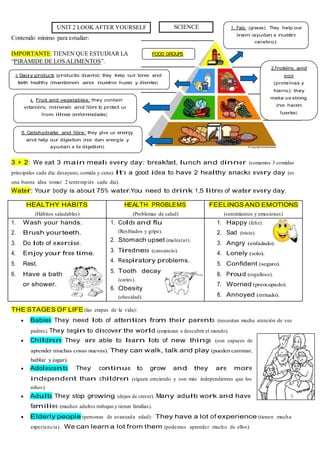
1. Fats: (grasas). They help our
brain (ayudan a nuestro
cerebro).
IMPORTANTE:TIENEN QUE ESTUDIAR LA
“PIRÁMIDE DE LOS ALIMENTOS”.
3. Dairy products (productos diarios): they keep our bones and
teeth healthy (mantienen sanos nuestros huesos y dientes).
4. Fruit and vegetables: they contain
vitamins, minerals and fibre to protect us
from illness (enfermedades).
2.Proteins and
iron
(proteínas y
hierro): they
make us strong
(nos hacen
fuertes).
5. Carbohydrates and fibre: they give us energy
and help our digestion (nos dan energía y
ayudan a la digestion).
FOOD GROUPS
SCIENCE
3 + 2: We eat 3 main meals every day: breakfast, lunch and dinner (comemos 3 comidas
principales cada día: desayuno, comida y cena). It’s a good idea to have 2 healthy snacks every day (es
una buena idea tomar 2 tentempiés cada día).
Water: Your body is about 75% water.You need to drink 1,5 litres of water every day.
HEALTHY HABITS
(Hábitos saludables)
HEALTH PROBLEMS
(Problemas de salud)
FEELINGS AND EMOTIONS
(sentimientos y emociones)
1. Wash your hands.
2. Brush yourteeth.
3. Do lots of exercise.
4. Enjoy your free time.
5. Rest.
6. Have a bath
or shower.
1. Colds and flu
(Resfriados y gripe).
2. Stomach upset (malestar).
3. Tiredness (cansancio).
4. Respiratory problems.
5. Tooth decay
(caries).
6. Obesity
(obesidad).
1. Happy (feliz).
2. Sad (triste).
3. Angry (enfadado).
4. Lonely (solo).
5. Confident (seguro).
6. Proud (orgulloso).
7. Worried (preocupado).
8. Annoyed (irritado).
THE STAGES OF LIFE (las etapas de la vida):
 Babies: They need lots of attention from their parents (necesitan mucha atención de sus
padres). They begin to discover the world (empiezan a descubrir el mundo).
 Children: They are able to learn lots of new things (son capaces de
aprender muchas cosas nuevas). They can walk, talk and play (pueden caminar,
hablar y jugar).
 Adolescents: They continue to grow and they are more
independent than children (siguen creciendo y son más independientes que los
niños).
 Adults: They stop growing (dejan de crecer). Many adults work and have
families (muchos adultos trabajan y tienen familias).
 Elderly people (personas de avanzada edad): They have a lot of experience (tienen mucha
experiencia). We can learn a lot from them (podemos aprender mucho de ellos).

Summary converted

  • 1.
    UNIT 2 LOOKAFTER YOURSELF Contenido mínimo para estudiar: 1. Fats: (grasas). They help our brain (ayudan a nuestro cerebro). IMPORTANTE:TIENEN QUE ESTUDIAR LA “PIRÁMIDE DE LOS ALIMENTOS”. 3. Dairy products (productos diarios): they keep our bones and teeth healthy (mantienen sanos nuestros huesos y dientes). 4. Fruit and vegetables: they contain vitamins, minerals and fibre to protect us from illness (enfermedades). 2.Proteins and iron (proteínas y hierro): they make us strong (nos hacen fuertes). 5. Carbohydrates and fibre: they give us energy and help our digestion (nos dan energía y ayudan a la digestion). FOOD GROUPS SCIENCE 3 + 2: We eat 3 main meals every day: breakfast, lunch and dinner (comemos 3 comidas principales cada día: desayuno, comida y cena). It’s a good idea to have 2 healthy snacks every day (es una buena idea tomar 2 tentempiés cada día). Water: Your body is about 75% water.You need to drink 1,5 litres of water every day. HEALTHY HABITS (Hábitos saludables) HEALTH PROBLEMS (Problemas de salud) FEELINGS AND EMOTIONS (sentimientos y emociones) 1. Wash your hands. 2. Brush yourteeth. 3. Do lots of exercise. 4. Enjoy your free time. 5. Rest. 6. Have a bath or shower. 1. Colds and flu (Resfriados y gripe). 2. Stomach upset (malestar). 3. Tiredness (cansancio). 4. Respiratory problems. 5. Tooth decay (caries). 6. Obesity (obesidad). 1. Happy (feliz). 2. Sad (triste). 3. Angry (enfadado). 4. Lonely (solo). 5. Confident (seguro). 6. Proud (orgulloso). 7. Worried (preocupado). 8. Annoyed (irritado). THE STAGES OF LIFE (las etapas de la vida):  Babies: They need lots of attention from their parents (necesitan mucha atención de sus padres). They begin to discover the world (empiezan a descubrir el mundo).  Children: They are able to learn lots of new things (son capaces de aprender muchas cosas nuevas). They can walk, talk and play (pueden caminar, hablar y jugar).  Adolescents: They continue to grow and they are more independent than children (siguen creciendo y son más independientes que los niños).  Adults: They stop growing (dejan de crecer). Many adults work and have families (muchos adultos trabajan y tienen familias).  Elderly people (personas de avanzada edad): They have a lot of experience (tienen mucha experiencia). We can learn a lot from them (podemos aprender mucho de ellos).