BOLETIN Nº V MATEMÁTICAS 4º ESO – Logaritmos y Ec. Exponenciales – Curso 2011/12

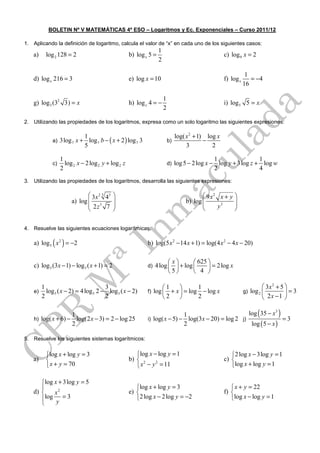
1. Aplicando la definición de logaritmo, calcula el valor de “x” en cada uno de los siguientes casos:
                                                                   1
   a)    log 2 128 = 2                              b) log x 5 =                                    c) log 9 x = 2
                                                                   2

                                                                                                                1
   d) log x 216 = 3                                 e) log x = 10                                   f) log x      = −4
                                                                                                               16

                                                                       1
   g) log 3 (32 3) = x                              h) log x 4 = −                                  i) log 5 5 = x
                                                                       2

2. Utilizando las propiedades de los logaritmos, expresa como un solo logaritmo las siguientes expresiones:

                          1                                                   log( x 2 + 1) log x
             a) 3log 7 x + log 7 b − ( x + 2 ) log 7 3                     b)              −
                          5                                                        3          2

                  1                                                                              1                1
             c)     log 2 x − 2 log 2 y + log 2 z                          d)   log 5 − 2 log x − log y + 3log z + log w
                  2                                                                              2                4
3. Utilizando las propiedades de los logaritmos, desarrolla las siguientes expresiones:

                               3 x 2 5 43                                                 9 x2 x + y 
                       a) log  3                                                  b) log             
                               2z 7                                                           y3     
                                                                                                     


4. Resuelve las siguientes ecuaciones logarítmicas:

    a) log 5 ( x 2 ) = −2                                   b) log(5 x 2 − 14 x + 1) = log(4 x 2 − 4 x − 20)

                                                                        x       625 
    c) log 3 (3 x − 1) − log 3 ( x + 1) = 2                 d)   4 log   + log       = 2 log x
                                                                       5        4 

      1                            3                               1          1                                        3x 2 + 5 
    e) log 5 ( x − 2) = 4 log 5 2 − log 5 ( x − 2)          f) log  + x  = log − log x                       g) log 2           =3
      2                            2                               2          2                                        2x −1 

                    1                                                       1                         log ( 35 − x3 )
    h) log( x + 6) − log(2 x − 3) = 2 − log 25              i) log( x − 5) − log(3 x − 20) = log 2 j)                 =3
                    2                                                       2                          log ( 5 − x )

5. Resuelve los siguientes sistemas logarítmicos:


          log x + log y = 3                           log x − log y = 1                              2 log x − 3log y = 1
   a)                                              b)  2                                          c) 
           x + y = 70                                  x − y = 11                                    log x + log y = 1
                                                               2


      log x + 3log y = 5
                                                      log x + log y = 3                               x + y = 22
   d)     x2                                       e)                                             f) 
      log y = 3                                       2 log x − 2 log y = −2                         log x − log y = 1
      
6. Resuelve las siguientes ecuaciones exponenciales, usando el método que corresponda en cada caso:

          2 x+1                         2 x−3
                                                                            −3 x + 2                               −11 x + 30
                  = 27                          = 64                                   =1                                       = 16
                                                                        2                                      2
   a) 3     3
                                 b) 4     5
                                                               c) 7 x                                 d) 4 x


   e) 9 x − 2 = 33 x +1          f) 2 x +5 = 8 x −1            g) 22 x −1 − 6·2 x −1 + 4 = 0                         h) 4 x +1 + 2 x + 2 = 320


   i) 53 x + 2 + 3·56 x + 2 − 100 = 0                  j) 6 x − 9·6− x + 8 = 0                        k) 7 2 x +1 = 5 x


                                                                                                      5                                                  17
   l) 37 x = 5                   m) 7 −2 x +1 = 49                             n) 2 x +1 + 2 x −1 =                               o) 81+ x + 23 x −1 =
                                                                                                      2                                                  16

Boletin 2 logarit 1112

  • 1.
    BOLETIN Nº VMATEMÁTICAS 4º ESO – Logaritmos y Ec. Exponenciales – Curso 2011/12 1. Aplicando la definición de logaritmo, calcula el valor de “x” en cada uno de los siguientes casos: 1 a) log 2 128 = 2 b) log x 5 = c) log 9 x = 2 2 1 d) log x 216 = 3 e) log x = 10 f) log x = −4 16 1 g) log 3 (32 3) = x h) log x 4 = − i) log 5 5 = x 2 2. Utilizando las propiedades de los logaritmos, expresa como un solo logaritmo las siguientes expresiones: 1 log( x 2 + 1) log x a) 3log 7 x + log 7 b − ( x + 2 ) log 7 3 b) − 5 3 2 1 1 1 c) log 2 x − 2 log 2 y + log 2 z d) log 5 − 2 log x − log y + 3log z + log w 2 2 4 3. Utilizando las propiedades de los logaritmos, desarrolla las siguientes expresiones:  3 x 2 5 43   9 x2 x + y  a) log  3  b) log    2z 7   y3      4. Resuelve las siguientes ecuaciones logarítmicas: a) log 5 ( x 2 ) = −2 b) log(5 x 2 − 14 x + 1) = log(4 x 2 − 4 x − 20)  x  625  c) log 3 (3 x − 1) − log 3 ( x + 1) = 2 d) 4 log   + log   = 2 log x 5  4  1 3 1  1  3x 2 + 5  e) log 5 ( x − 2) = 4 log 5 2 − log 5 ( x − 2) f) log  + x  = log − log x g) log 2  =3 2 2 2  2  2x −1  1 1 log ( 35 − x3 ) h) log( x + 6) − log(2 x − 3) = 2 − log 25 i) log( x − 5) − log(3 x − 20) = log 2 j) =3 2 2 log ( 5 − x ) 5. Resuelve los siguientes sistemas logarítmicos: log x + log y = 3 log x − log y = 1 2 log x − 3log y = 1 a)  b)  2 c)   x + y = 70  x − y = 11 log x + log y = 1 2 log x + 3log y = 5  log x + log y = 3  x + y = 22 d)  x2 e)  f)  log y = 3 2 log x − 2 log y = −2 log x − log y = 1 
  • 2.
    6. Resuelve lassiguientes ecuaciones exponenciales, usando el método que corresponda en cada caso: 2 x+1 2 x−3 −3 x + 2 −11 x + 30 = 27 = 64 =1 = 16 2 2 a) 3 3 b) 4 5 c) 7 x d) 4 x e) 9 x − 2 = 33 x +1 f) 2 x +5 = 8 x −1 g) 22 x −1 − 6·2 x −1 + 4 = 0 h) 4 x +1 + 2 x + 2 = 320 i) 53 x + 2 + 3·56 x + 2 − 100 = 0 j) 6 x − 9·6− x + 8 = 0 k) 7 2 x +1 = 5 x 5 17 l) 37 x = 5 m) 7 −2 x +1 = 49 n) 2 x +1 + 2 x −1 = o) 81+ x + 23 x −1 = 2 16