






















El documento describe cómo estamos viviendo un período de cambios masivos desde la revolución industrial. Los cambios son societales, de actitudes, tecnológicos, económicos e industriales y afectan todos los aspectos del comercio y la vida.
The only constantis change, and we are living in one of the most
exciting periods of change since the Industrial Revolution.
The changes we are observing are societal, attitudinal,
technological, economic, industrial, and impact every
aspect of commerce and life..
OBJETIVO GENERAL
Adquirir unavisión global del mundo del marketing digital de hoy
mediante la apropiación de herramientas de gestión que le
permitan dirigir una estrategia de marketing digital
14.
1. Adquirir lascompetencias necesarias para dirigir una campaña de marketing
digital.
2. Aprender a utilizar eficientemente las herramientas disponibles para ejecutar
campañas de marketing digital.
3. Conocer casos de éxito que puedan servir de Benchmark a los asistentes.
4. Descubrir las oportunidades que el marketing digital tiene para las empresas
de hoy en día
OBJETIVOS ESPECIFICOS
SONDEO INICIAL
1. ¿DefinaSEO?
2. ¿Defina SEM?
3. ¿Que es Re-marketing?
4. ¿Que es CPM?, ¿Que es CPC?
5. ¿Cómo es mejor comprar la publicidad en digital
por CPM o por CPC?
6. ¿Que diferencia existe entre una app y un web
app?
7. ¿Qué es un esquema de medición por
atribución?
8. ¿Qué es una cookie?
9. ¿Explique la ley de Cookies?
10. Explique que es pauta Search y Pauta display
4. SEM
1. Estrategiasde posicionamiento en SEM
2. Pasos básicos de creación de una campaña en Google Adwords
3. Uso de la concordancia de palabras clave en el grupo de Red de
display de Google
4. Taller Práctico
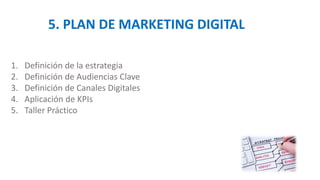
5. PLAN DEMARKETING DIGITAL
1. Definición de la estrategia
2. Definición de Audiencias Clave
3. Definición de Canales Digitales
4. Aplicación de KPIs
5. Taller Práctico
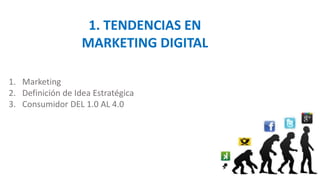
1. TENDENCIAS EN
MARKETINGDIGITAL
1. Definición de Objetivos
2. Definición de Idea Estratégica
3. Consumidor 4.0
43.
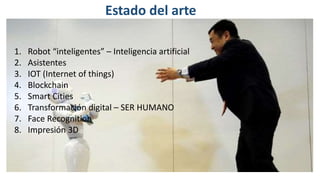
1. Robot “inteligentes”– Inteligencia artificial
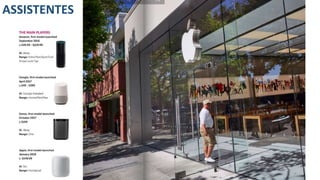
2. Asistentes
3. IOT (Internet of things)
4. Blockchain
5. Smart Cities
6. Transformación digital – SER HUMANO
7. Face Recognition
8. Impresión 3D
Estado del arte
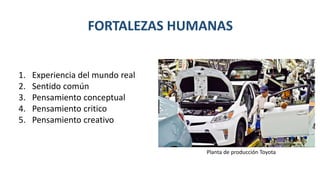
FORTALEZAS HUMANAS
1. Experienciadel mundo real
2. Sentido común
3. Pensamiento conceptual
4. Pensamiento critico
5. Pensamiento creativo
Planta de producción Toyota
MARKETING - Definiciones
Esun proceso social y administrativo mediante el cual grupos e individuos
obtienen lo que necesitan y desean a través de generar, ofrecer e
intercambiar productos de valor con sus semejantes.
52.
MARKETING - Definiciones
PROCESO:
1)Identificar las necesidades del consumidor, 2) conceptualizar tales necesidades
en función de la capacidad de la empresa para producir, 3) comunicar dicha
conceptualización a quienes tienen la capacidad de toma de decisiones en la
empresa. 4) conceptualizar la producción obtenida en función de las
necesidades previamente identificadas del consumidor y 5) comunicar dicha
conceptualización al consumidor"
John A. Howard, de la Universidad de Columbia
53.
MARKETING
Es conocer alcliente
Es un proceso social
Es crear vacas purpuras
Es superar las expectativas del cliente
54.
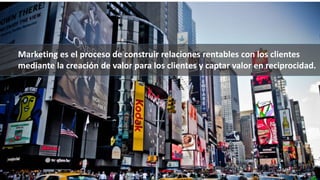
Marketing es elproceso de construir relaciones rentables con los clientes
mediante la creación de valor para los clientes y captar valor en reciprocidad.
57.
Brands are whatconnects businesses to people inside and out
Creating real proximity
Brands are what personalize technology so that it becomes a means for authentic engagement
and unforgettable experiences.
Brands are the constancy that accelerates business growth—moving at the
speed of life, reflecting how people want to grow, growing along with them, and standing out
in a shifting landscape. Interbrand
MARKETING
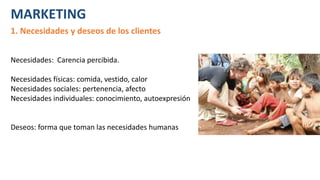
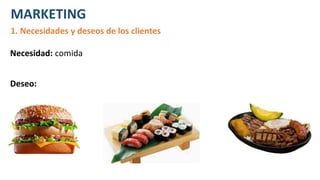
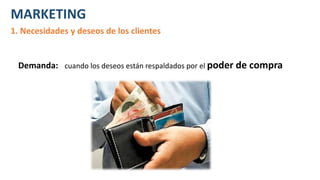
1. Necesidades ydeseos de los clientes
Demanda: cuando los deseos están respaldados por el poder de compra
80.
CONSUMIDOR
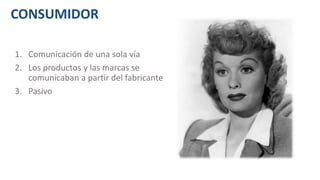
1. Comunicación deuna sola vía
2. Los productos y las marcas se
comunicaban a partir del fabricante
3. Pasivo
81.
MARKETING
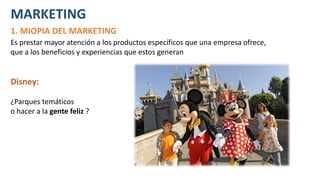
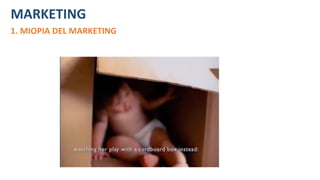
1. MIOPIA DELMARKETING
Es prestar mayor atención a los productos específicos que una empresa ofrece,
que a los beneficios y experiencias que estos generan
Disney:
¿Parques temáticos
o hacer a la gente feliz ?
¿Para qué esel marketing?
• Para que nos prefieran:
• Nos compren
• Podamos vender a un mejor precio.
• El esfuerzo es menor.
• La rentabilidad es mayor.
• Tenemos CERTIDUMBRE EMPRESARIAL.
• Mejores relaciones con el comercio.
• El valor de la empresa es mayor.
• La EMPRESA EN SU TOTALIDAD TIENE
VIDA.
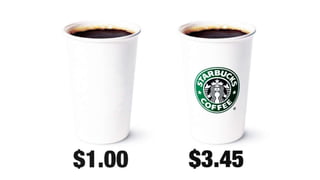
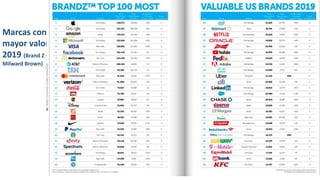
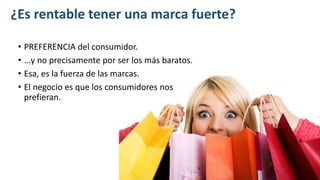
¿Es rentable teneruna marca fuerte?
• PREFERENCIA del consumidor.
• ...y no precisamente por ser los más baratos.
• Esa, es la fuerza de las marcas.
• El negocio es que los consumidores nos
prefieran.
113.
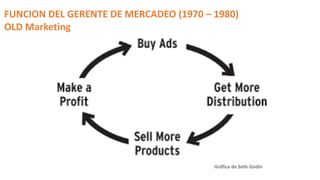
FUNCION DEL GERENTEDE MERCADEO (1970 – 1980)
OLD Marketing
Gráfica de Seth Godin
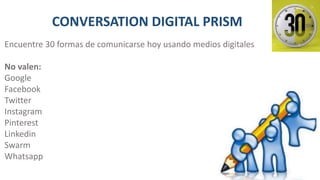
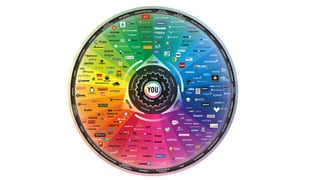
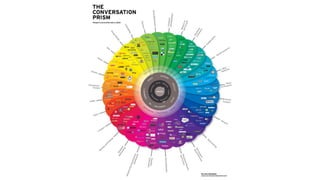
CONVERSATION DIGITAL PRISM
Encuentre30 formas de comunicarse hoy usando medios digitales
No valen:
Google
Facebook
Twitter
Instagram
Pinterest
Linkedin
Swarm
Whatsapp
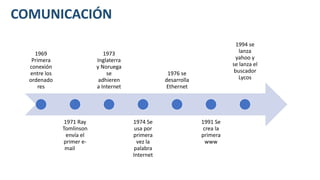
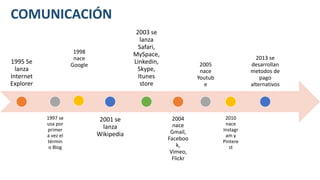
COMUNICACIÓN
1995 Se
lanza
Internet
Explorer
1997 se
usapor
primer
a vez el
términ
o Blog
1998
nace
Google
2001 se
lanza
Wikipedia
2003 se
lanza
Safari,
MySpace,
Linkedin,
Skype,
Itunes
store
2004
nace
Gmail,
Faceboo
k,
Vimeo,
Flickr
2005
nace
Youtub
e
2010
nace
Instagr
am y
Pintere
st
2013 se
desarrollan
metodos de
pago
alternativos
#45 Que aprenden
Saben más acerca de usted
https://www.youtube.com/watch?v=9qmwdbhsbVs
Six Digital Disruptors Emerge as Finalists in Global Innovation Grand Challenge 2016
Alex Goryachev - October 25, 2016 - 3 Comments
http://blogs.cisco.com/innovation/six-digital-disruptors-emerge-as-finalists-in-global-innovation-grand-challenge-2016
The final sprint is on to the finish line spotlighting the world’s most disruptive digital innovators for industry.
It is my distinct honor to announce the six finalists of this year’s Innovation Grand Challenge. These six superstar startups rose to the top of a competition launched last May at the Pioneers Festival in Vienna, attracting more than 5,500 participants from 150 countries that spanned every continent except Antarctica.
They are all digital trailblazers with the best potential to shake up private and public market sectors by harnessing the power of Cisco’s digital platform.
The finalists are:
CloudMedx, United States: AI platform simplifies, scales and automates delivery of healthcare apps to care providers for better treatment.
Dedrone, United States: Automated, 3D aerial security platform identifies unauthorized drones, protecting critical installations.
Gestoos, Spain: Artificial intelligence for cameras that can see people’s movement and understand their behavior.
L7 Defense, Israel: Self- and machine-learning intelligence platform lessens DDoS attacks with little user interference.
ProGlove, Germany: Smart, wearable gloves link workers to digitized systems, improving speed, quality and data.
Streamroot, France, Centralized video optimization network improves speed, quality of service, and global reach.
This is an impressive array of inter-connected and networked technologies in both the public and private sectors.
These finalists now move on to the live competition Nov. 9 at the Web Summit in Lisbon, Portugal. There, they will pitch their ventures to a panel of prominent industry experts, who will declare three winners and award a total of $250,000 in cash plus world class, co-innovation support and opportunities. Judges will score each idea on its potential to expand new markets, compatibility with Cisco’s technology and business objectives, creative differentiation, and caliber of their talent to go to market.
With just two weeks to go, the finalists will fine-tune their solutions, sharpen their value propositions, hone their messages, rehearse their pitches and respond to written questions from judges. We will provide them with travel arrangements to the Web Summit, an ideal venue for such a global event where 50,000 attendees from Fortune 500 companies and aspiring startups converge.
Our own John Chambers, Chairman of the Board, is keynoting, “Every country will be digital” on the center stage, Nov. 8, 11:20a.m.
We must recognize that innovation doesn’t happen on its own! We especially appreciate and value our partnership with TTTech to help run this challenge, and to co-host the finals at the Web Summit.
Also, narrowing such a large field of entrepreneurial ingenuity has been no easy job. About 100 Cisco leaders volunteered to pore over the thousands of entries, analyze them against our criteria, whittle them to 15 semifinalists, and now down to six finalists. There are too many to name, but I cannot thank all of you enough for your time, diligence and dedication in this important process.
I also want to tip my hat to all those who have participated in our Innovation Grand Challenges. We consider all of you winners—today’s and tomorrow’s emerging game-changers. You are true pioneers whose brilliant ideas, business acumen, and technology know-how are vastly improving the quality of life in society and business. I hope you keep coming back year after year.
It’s hard to believe that we are in the third year of the Innovation Grand Challenge and nearing the winner’s circle once again. The speed and growth of innovation is breathtaking these days. We have nearly doubled participation each year, and this challenge has already attracted 57.5 million impressions on social media platforms. Clearly, there’s never been a better time to innovate.
The digital revolution, powered by the Internet of Things, is opening vast opportunities in every industry sector. We know that innovation can come from anywhere, and companies—no matter their size or success—can’t innovate alone. That is why we search the world over to discover new talent, co-innovate and collaborate for everyone’s success.
Stay tuned for my update in a couple of weeks when we culminate this year’s Innovation Grand Challenge by declaring the three winners in Lisbon. My heartfelt best wishes to all the finalists!
#CGIC16
#NeverBetter
#CiscoInnovates
Tags:Alex Goryachev
business innovation
digitization
Disruption
Innovation Grand Challenge
internet of things
IoT
Leave a commentWe'd love to hear from you! To earn points and badges for participating in the conversation, join Cisco Social Rewards. Your comment(s) will appear instantly on the live site. Spam, promotional and derogatory comments will be removed.
In an effort to keep conversations fresh, Cisco Blogs closes comments after 60 days. Please visit the Cisco Blogs hub page for the latest content.
3 Comments
#60 Los conceptos básicos del mercadeo actual fueron adoptados alrededor de los años 60´s. El concepto de la mezcla de mercadeo fue introducido en los años 50´s por Neil H. Borden, profesor de Harvard University, y la clasificación de los elementos de la mezcla de mercadeo en cuatro factores (producto, precio, plaza y promoción) fue denominada las cuatro P´s y popularizada por E. Jerome McCarthy al comienzo de los años 70´s.
El concepto de las cuatro P´s fue una simplificación de las ideas originales de Borden, quien había incluído doce elementos en su definición. El concepto de la mezcla de mercadeo tuvo sin embargo otros antecedentes: en los años 50´s, en Europa los investigadores, de la que se denominó la Escuela de Copenhague, llegaron a una noción similar a la de la mezcla de mercadeo que hoy conocemos, basándose en la Teoría de los Parámetros presentada en los años 30´s por Von Stackelberg, Arne Rasmussen y Gosta Mickwitz, que fue un enfoque de la mezcla de mercadeo ligada al ciclo de vida del producto y donde los parámetros eran integrados mediante elasticidades variables del mercado. Amigos así fue...
#65 El SER HUMANO
Inicios de la escritura 3000 años antes de cristo
Sumerios
Tablas de arcilla
Jeroglificos – Egipcios Push policy: Promoting a product only to the next institution down the marketing channel
Pull policy: Promoting a product directly to consumers
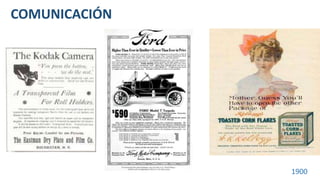
#69 Comunicación basada en Producto – Producto producto producto
Kodak ad (c. 1891)
1906 W.K. Kellogg places his first ads for Corn Flakes in six midwestern newspapers. By 1915, he is spending $1 million on national advertising.First Kellogg's Ad
Los años 50 marcaron la era de los productos. Era una época en que los publicistas fijaban su atención en las características del producto y en los beneficios que obtenía e cliente. Buscaban lo que Rosser Reeves denominó "la Propuesta de Venta Única." (PVU.)
#71 Andy Wharhol 1962
Posicionamiento
El consumidor es emocional, más que racional. Es por esto que el objetivo de toda publicidad es elevar las expectativas; Crear la ilusión de que el producto o servicio realizará los milagros que se esperan.
Por esto, si se tiene un producto por entero nuevo, es mejor decirle al cliente lo que no contiene, en lugar de explicarle qué es.* (Ejemplos de esto: "Gasolina sin Plomo", "Jugo 100% natural, sin preservativos ni colorantes", etc.)
http://www.maestriascr.com/Posicionamiento.pdf
#103 Think Different - “Think Different” was an advertising slogan for Apple Inc. created by advertising agency TBWA\Chiat\Day in 1997. It was used as the company’s slogan until 2002, when it was replaced by the Apple Switch ad campaign. However Apple haven't used a generic slogan for all Apple products since 'Think Different' as each product they produce has its own slogan. Therefore 'Think Different' is still thought of as Apple's general slogan.
#104 Think Different - “Think Different” was an advertising slogan for Apple Inc. created by advertising agency TBWA\Chiat\Day in 1997. It was used as the company’s slogan until 2002, when it was replaced by the Apple Switch ad campaign. However Apple haven't used a generic slogan for all Apple products since 'Think Different' as each product they produce has its own slogan. Therefore 'Think Different' is still thought of as Apple's general slogan.
#105 Just Do It - Nike’s “Just Do It” advertising slogan is probably one of the most famous in the world. First introduced in 1988, the infamous tagline has featured on all of the brand’s advertising since. It reflects the ‘no nonsense’ approach the brand has to its products. It also encourages audiences to get out there, and get active.
#106 Just Do It - Nike’s “Just Do It” advertising slogan is probably one of the most famous in the world. First introduced in 1988, the infamous tagline has featured on all of the brand’s advertising since. It reflects the ‘no nonsense’ approach the brand has to its products. It also encourages audiences to get out there, and get active.
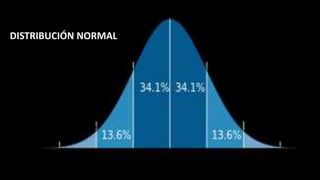
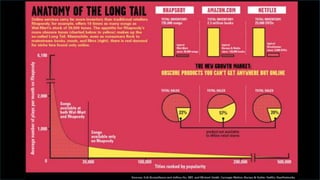
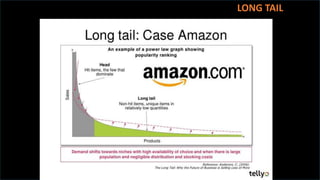
#115 http://es.wikipedia.org/wiki/Distribuci%C3%B3n_normal
OLD MARKETING:COMPRAR ATENCIÓN
#117 http://es.wikipedia.org/wiki/Distribuci%C3%B3n_normal
eCONOMISTA 80 -20 RULE
PARETO EN ITALIA
TERREMOTOS
ESCACES DE PANTALLAS DE CINE
https://www.youtube.com/watch?v=RIq3b9wPIcY
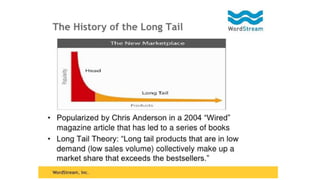
DISTORCIÓN DEL MERCADO
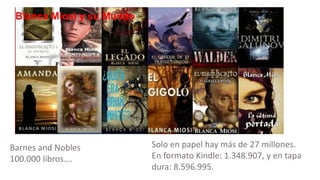
METODOS DE DISTRIBUCIÓN DONDE NO HAY ESCASES
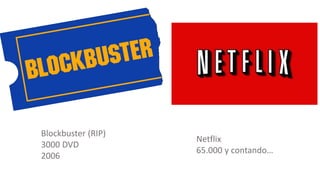
No se podía conectar la oferta con la demanda
#120 http://es.wikipedia.org/wiki/Distribuci%C3%B3n_normal
eCONOMISTA 80 -20 RULE
PARETO EN ITALIA
TERREMOTOS
ESCACES DE PANTALLAS DE CINE
https://www.youtube.com/watch?v=RIq3b9wPIcY
DISTORCIÓN DEL MERCADO
METODOS DE DISTRIBUCIÓN DONDE NO HAY ESCASES
No se podía conectar la oferta con la demanda
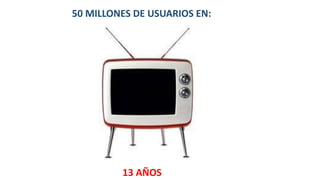
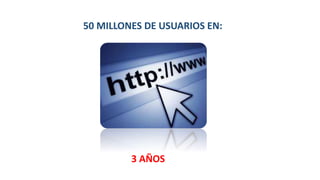
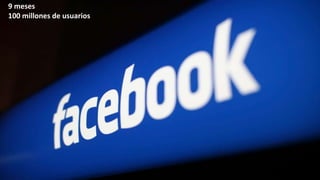
#125 Las redes sociales son una revolución no una moda
Llegaron para cambiar las vida de la humanidad
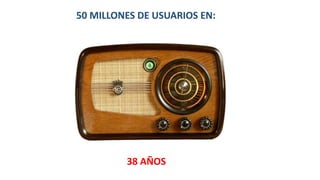
Tiempo que le tomó a cada medio tener 50 millones de usarios
#135 http://www.clasesdeperiodismo.com/2013/07/01/actualizan-mapa-del-universo-de-redes-sociales/
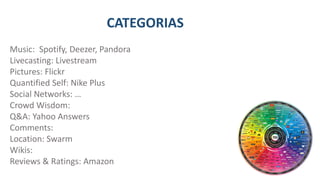
En el 2008 Brian Solis presentó por primera vez la Conversation Prism, una infografía bastante simple con 22 categorías de redes sociales que tenían impacto en diversas marcas. La versión de este año tiene 4 nuevos espacios y muestra parte de la evolución de cada plataforma.
#137 Wiki: Wiki nota 1 (del hawaiano wiki, 'rápido') es el nombre que recibe un sitio web, cuyas páginas pueden ser editadas directamente desde el navegador, donde los usuarios crean, modifican o eliminan contenidos que, generalmente, comparten.