Español I – Sr. Johnston

martes, el dos de octubre del 2012
    Tuesday, October 2, 2012
Para empezar
• First ten minutes of class: Study for Quiz 2

• Quiz 2: 20 minutes duration

• Write Tarea in Agenda: Complete ¿Cómo
  eres?
¿Cómo eres?
• We have seen these two words before, just
  not together. What do they each mean, and
  what does this question ask?
                 What are you like?
• It literally asks “How are you?” but not in the
  same way of “¿Cómo estás?”.
• Instead of asking about your well-being, it
  asks about your personality.
Vocabulario: ¿Cómo eres?
•   ¿Cómo eres?            What are you like?
•   (Yo) soy       .       I am        .
•   (Yo) no soy        .   I am not         .
•   (Tú) eres      .       You are       .
•   (Tú) no eres       .   You are not        .
Vocabulario: ¿Cómo eres?
•   muy            very
•   bastante       somewhat
•   pero           but
•   y              and
•   ni             neither/nor
•   a veces        sometimes
•   siempre        always
•   nunca          never
Adjectives must agree with gender
• Adjectives that end in “o” or “a”:
  – Match the gender of the person.
     • Male:          Soy generoso.
     • Female:        Soy generosa.

• Adjectives that end in “r”:
  – Match the gender of the person.
     • Male:          Soy trabajador. (no change)
     • Female:        Soy trabajadora. (add an “a”)

• Adjectives that end in “e”:
  – No change.
     • Male:          Soy paciente.
     • Female:        Soy paciente.
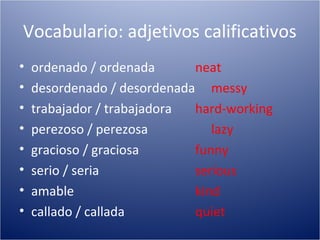
Vocabulario: adjetivos calificativos
•   generoso / generosa     generous
•   tacaño / tacaña         stingy
•   paciente                patient
•   impaciente              impatient
•   atlético / atlética     athletic
•   artístico / artística   artistic
•   atrevido / atrevida     daring
•   prudente                cautious
Vocabulario: adjetivos calificativos
•   ordenado / ordenada      neat
•   desordenado / desordenada messy
•   trabajador / trabajadora hard-working
•   perezoso / perezosa         lazy
•   gracioso / graciosa      funny
•   serio / seria            serious
•   amable                   kind
•   callado / callada        quiet

10 02 12 leccion

  • 1.
    Español I –Sr. Johnston martes, el dos de octubre del 2012 Tuesday, October 2, 2012
  • 2.
    Para empezar • Firstten minutes of class: Study for Quiz 2 • Quiz 2: 20 minutes duration • Write Tarea in Agenda: Complete ¿Cómo eres?
  • 3.
    ¿Cómo eres? • Wehave seen these two words before, just not together. What do they each mean, and what does this question ask? What are you like? • It literally asks “How are you?” but not in the same way of “¿Cómo estás?”. • Instead of asking about your well-being, it asks about your personality.
  • 4.
    Vocabulario: ¿Cómo eres? • ¿Cómo eres? What are you like? • (Yo) soy . I am . • (Yo) no soy . I am not . • (Tú) eres . You are . • (Tú) no eres . You are not .
  • 5.
    Vocabulario: ¿Cómo eres? • muy very • bastante somewhat • pero but • y and • ni neither/nor • a veces sometimes • siempre always • nunca never
  • 6.
    Adjectives must agreewith gender • Adjectives that end in “o” or “a”: – Match the gender of the person. • Male: Soy generoso. • Female: Soy generosa. • Adjectives that end in “r”: – Match the gender of the person. • Male: Soy trabajador. (no change) • Female: Soy trabajadora. (add an “a”) • Adjectives that end in “e”: – No change. • Male: Soy paciente. • Female: Soy paciente.
  • 7.
    Vocabulario: adjetivos calificativos • generoso / generosa generous • tacaño / tacaña stingy • paciente patient • impaciente impatient • atlético / atlética athletic • artístico / artística artistic • atrevido / atrevida daring • prudente cautious
  • 8.
    Vocabulario: adjetivos calificativos • ordenado / ordenada neat • desordenado / desordenada messy • trabajador / trabajadora hard-working • perezoso / perezosa lazy • gracioso / graciosa funny • serio / seria serious • amable kind • callado / callada quiet