Líquidos en sepsis
Coloides
• No atraviesan la membrana celular por su alto
peso molecular
• Propiedad de permanecer intravascular=
expansor de volumen. T1/2 3-24h
• Se dividen en
– Humanas (albúmina 4 -5%) y sintéticos (dextran,
gelatinas, hidroxyetil starches)
– Hipooncóticas (gelatinas, albumina 4-5%),
hiperoncóticas (dextran, HES y albumina 20-25%)
• Dextrán: reacciones anafilactoides, alt renales y
coagulación
• Las gelatinas T1/2 mas corta, menos peso molecular y
rápida excreción renal, el menos efectivo. Coagulación
ok y renal ok, alta tasa de rxn alérgica
• HES almidón, no se hidroliza por las amilasas
plasmáticas, mas tiempo en plasma y mas tóxico en
riñón, hígado, MO, piel
• graves problemas de seguridad, de acuerdo a un metaanálisis
publicado por Ryan Zarychanski, y col. en JAMA (Journal of the
American Medical Association ) de marzo de 2013
– Se modificó, ahora con peso molecular mas bajo y menos
efectos deletéreos en la coagulación
– Aún controversias, incremento en mortalidad y TRR en uci
+ sepsis
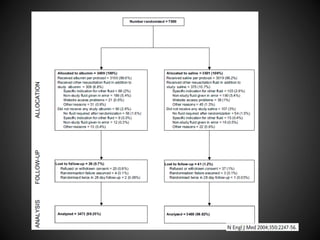
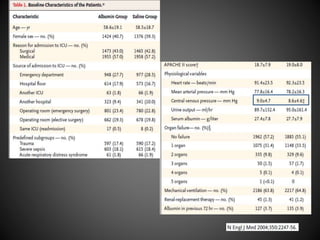
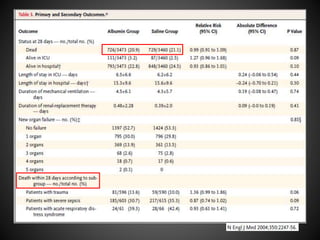
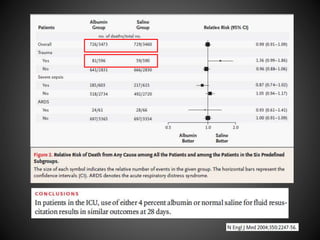
• Multicéntrico, aleatorizado, doble ciego
– 16 ICUs de Australia y New Zealand
– Noviembre 2001 a Junio 2003
• Albúmina 4% vs SSN
• Resultado primario: Mortalidad a 28 días en UCI**
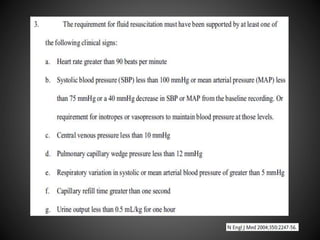
• Inclusión
– LEV para mantener o aumentar volumen intravascular
• Excluidos
– Pop cx cardio, trasplante higado y quemados
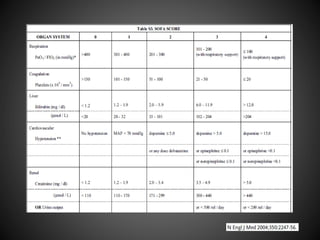
• Seguimiento con SOFA
– En la aleatorización
– Cada día por 7 días
– Cada 3er día hasta el alta
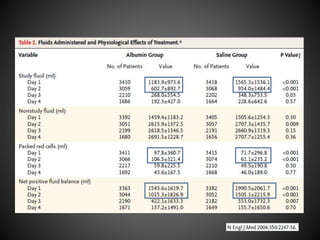
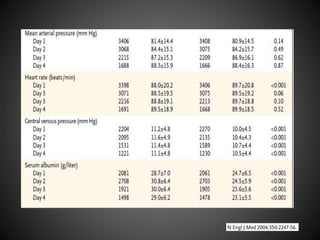
• FC, PVC, PAM, vol admon, Hemoderivados,
balance de Liq, VM, uso de TRR hasta dia 28 o
muerte o salida de UCI
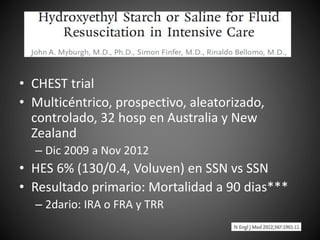
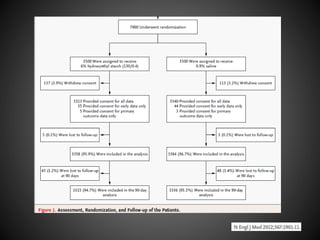
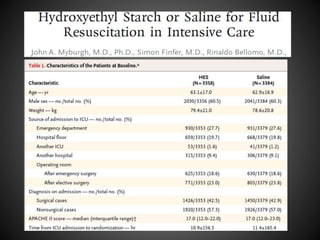
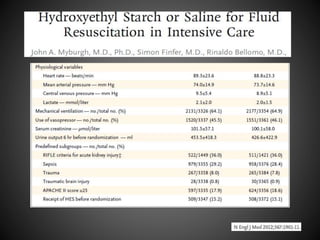
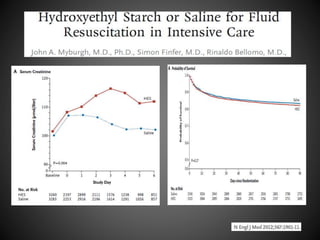
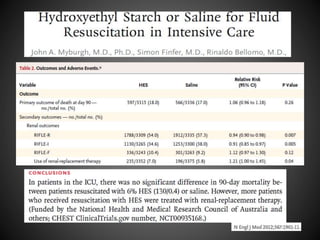
• CHEST trial
• Multicéntrico, prospectivo, aleatorizado,
controlado, 32 hosp en Australia y New
Zealand
– Dic 2009 a Nov 2012
• HES 6% (130/0.4, Voluven) en SSN vs SSN
• Resultado primario: Mortalidad a 90 dias***
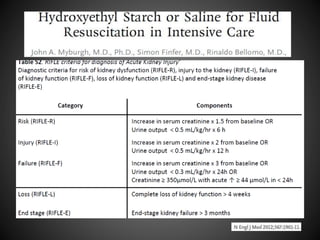
– 2dario: IRA o FRA y TRR
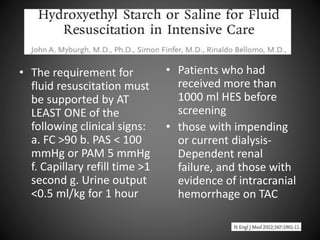
• The requirement for
fluid resuscitation must
be supported by AT
LEAST ONE of the
following clinical signs:
a. FC >90 b. PAS < 100
mmHg or PAM 5 mmHg
f. Capillary refill time >1
second g. Urine output
<0.5 ml/kg for 1 hour
• Patients who had
received more than
1000 ml HES before
screening
• those with impending
or current dialysis-
Dependent renal
failure, and those with
evidence of intracranial
hemorrhage on TAC
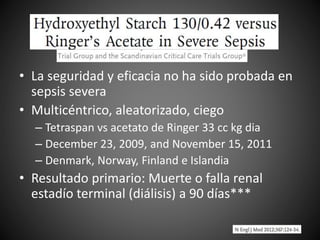
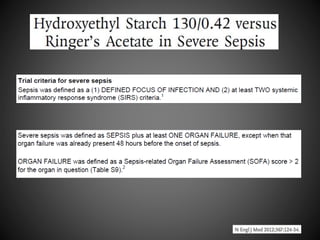
• La seguridad y eficacia no ha sido probada en
sepsis severa
• Multicéntrico, aleatorizado, ciego
– Tetraspan vs acetato de Ringer 33 cc kg dia
– December 23, 2009, and November 15, 2011
– Denmark, Norway, Finland e Islandia
• Resultado primario: Muerte o falla renal
estadío terminal (diálisis) a 90 días***
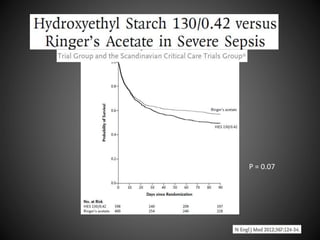
P = 0.07
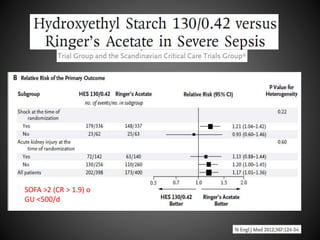
SOFA ˃2 (CR ˃ 1.9) o
GU ˂500/d
• We searched the following electronic databases:
– Cochrane Injuries Group Specialised Register (17 October
2012)
– the Cochrane Central Register of Controlled Trials (The
Cochrane Library) (Issue 10, 2012)
– MEDLINE (OvidSP) 1946 to October, Week 1, 2012
– EMBASE (OvidSP) 1980 to 2012, Week 41
– ISI Web of Science: Science Citation Index Expanded (1970
to October 2012)
– ISI Web of Science: Conference Proceedings Citation Index-
Science (1990 to October 2012)
– PubMed (October 2012)
– National Research Register (2006, Issue 4)
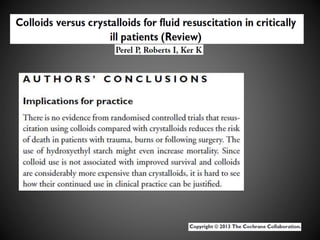
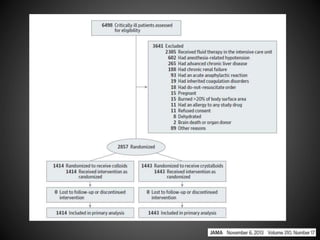
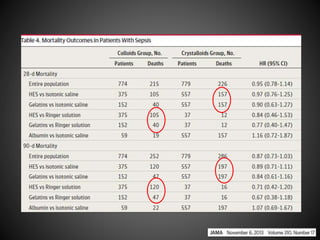
• RCTs de coloides vs cristaloides en pacientes
que requieren reemplazo de volumen
– Quemados, trauma, sepsis, cirugia
• Excluidos estudios crossover, embarazadas y
neonatos
• 78 estudios elegibles; 70 con datos de
mortalidad
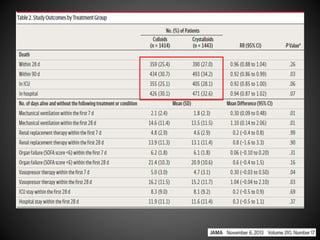
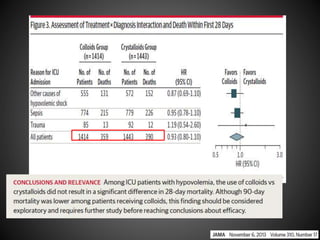
• Principal resultado: Mortalidad**
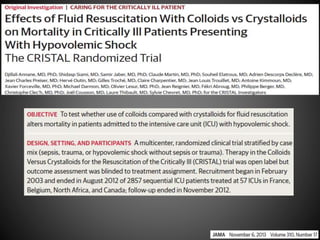
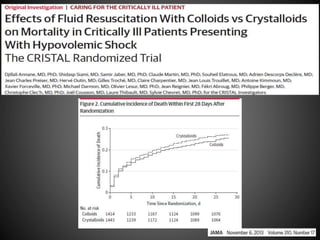
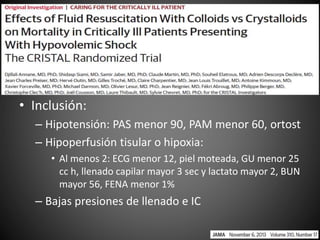
• Inclusión:
– Hipotensión: PAS menor 90, PAM menor 60, ortost
– Hipoperfusión tisular o hipoxia:
• Al menos 2: ECG menor 12, piel moteada, GU menor 25
cc h, llenado capilar mayor 3 sec y lactato mayor 2, BUN
mayor 56, FENA menor 1%
– Bajas presiones de llenado e IC
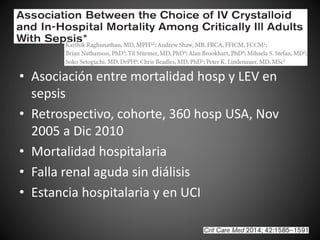
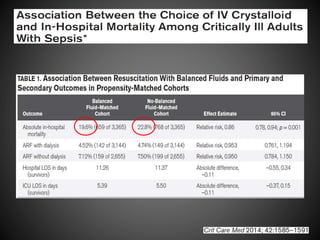
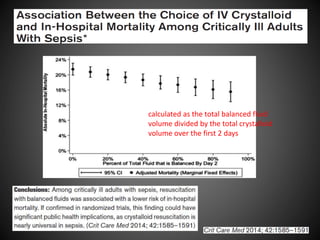
• Asociación entre mortalidad hosp y LEV en
sepsis
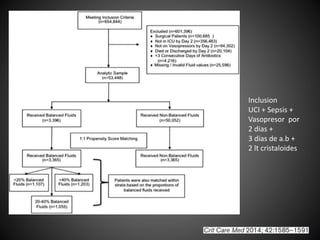
• Retrospectivo, cohorte, 360 hosp USA, Nov
2005 a Dic 2010
• Mortalidad hospitalaria
• Falla renal aguda sin diálisis
• Estancia hospitalaria y en UCI
Inclusion
UCI + Sepsis +
Vasopresor por
2 dias +
3 dias de a.b +
2 lt cristaloides
calculated as the total balanced fluid
volume divided by the total crystalloid
volume over the first 2 days
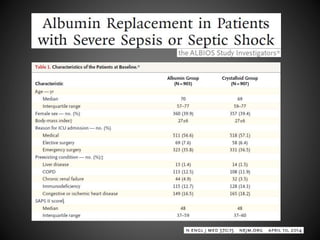
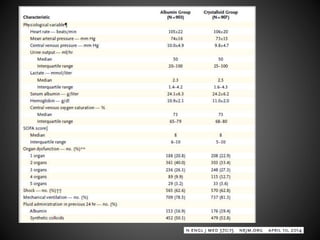
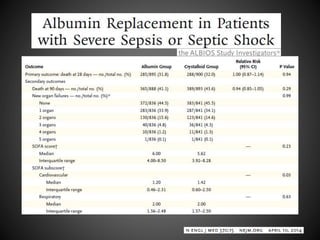
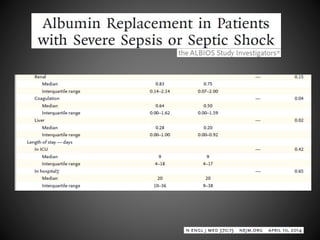
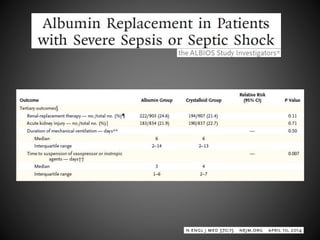
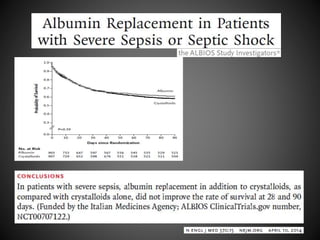
• Albumin Italian Outcome Sepsis
• Multicéntrico, aleatorizado, controlado
– 100 UCI Italia
• 300 cc Albumina 20% vs cristaloides hasta dia
28 a alta de UCI
– Mantener albumina sérica por encima de 30 gr/L
– Coloides sintéticos no permitidos
Liquidos en sepsis
Liquidos en sepsis
Liquidos en sepsis
Liquidos en sepsis
Liquidos en sepsis
Liquidos en sepsis

Liquidos en sepsis

  • 1.
  • 2.
    Coloides • No atraviesanla membrana celular por su alto peso molecular • Propiedad de permanecer intravascular= expansor de volumen. T1/2 3-24h • Se dividen en – Humanas (albúmina 4 -5%) y sintéticos (dextran, gelatinas, hidroxyetil starches) – Hipooncóticas (gelatinas, albumina 4-5%), hiperoncóticas (dextran, HES y albumina 20-25%)
  • 3.
    • Dextrán: reaccionesanafilactoides, alt renales y coagulación • Las gelatinas T1/2 mas corta, menos peso molecular y rápida excreción renal, el menos efectivo. Coagulación ok y renal ok, alta tasa de rxn alérgica • HES almidón, no se hidroliza por las amilasas plasmáticas, mas tiempo en plasma y mas tóxico en riñón, hígado, MO, piel • graves problemas de seguridad, de acuerdo a un metaanálisis publicado por Ryan Zarychanski, y col. en JAMA (Journal of the American Medical Association ) de marzo de 2013 – Se modificó, ahora con peso molecular mas bajo y menos efectos deletéreos en la coagulación – Aún controversias, incremento en mortalidad y TRR en uci + sepsis
  • 5.
    • Multicéntrico, aleatorizado,doble ciego – 16 ICUs de Australia y New Zealand – Noviembre 2001 a Junio 2003 • Albúmina 4% vs SSN • Resultado primario: Mortalidad a 28 días en UCI** • Inclusión – LEV para mantener o aumentar volumen intravascular • Excluidos – Pop cx cardio, trasplante higado y quemados
  • 8.
    • Seguimiento conSOFA – En la aleatorización – Cada día por 7 días – Cada 3er día hasta el alta • FC, PVC, PAM, vol admon, Hemoderivados, balance de Liq, VM, uso de TRR hasta dia 28 o muerte o salida de UCI
  • 15.
    • CHEST trial •Multicéntrico, prospectivo, aleatorizado, controlado, 32 hosp en Australia y New Zealand – Dic 2009 a Nov 2012 • HES 6% (130/0.4, Voluven) en SSN vs SSN • Resultado primario: Mortalidad a 90 dias*** – 2dario: IRA o FRA y TRR
  • 16.
    • The requirementfor fluid resuscitation must be supported by AT LEAST ONE of the following clinical signs: a. FC >90 b. PAS < 100 mmHg or PAM 5 mmHg f. Capillary refill time >1 second g. Urine output <0.5 ml/kg for 1 hour • Patients who had received more than 1000 ml HES before screening • those with impending or current dialysis- Dependent renal failure, and those with evidence of intracranial hemorrhage on TAC
  • 23.
    • La seguridady eficacia no ha sido probada en sepsis severa • Multicéntrico, aleatorizado, ciego – Tetraspan vs acetato de Ringer 33 cc kg dia – December 23, 2009, and November 15, 2011 – Denmark, Norway, Finland e Islandia • Resultado primario: Muerte o falla renal estadío terminal (diálisis) a 90 días***
  • 30.
  • 31.
    SOFA ˃2 (CR˃ 1.9) o GU ˂500/d
  • 33.
    • We searchedthe following electronic databases: – Cochrane Injuries Group Specialised Register (17 October 2012) – the Cochrane Central Register of Controlled Trials (The Cochrane Library) (Issue 10, 2012) – MEDLINE (OvidSP) 1946 to October, Week 1, 2012 – EMBASE (OvidSP) 1980 to 2012, Week 41 – ISI Web of Science: Science Citation Index Expanded (1970 to October 2012) – ISI Web of Science: Conference Proceedings Citation Index- Science (1990 to October 2012) – PubMed (October 2012) – National Research Register (2006, Issue 4)
  • 34.
    • RCTs decoloides vs cristaloides en pacientes que requieren reemplazo de volumen – Quemados, trauma, sepsis, cirugia • Excluidos estudios crossover, embarazadas y neonatos • 78 estudios elegibles; 70 con datos de mortalidad • Principal resultado: Mortalidad**
  • 37.
    • Inclusión: – Hipotensión:PAS menor 90, PAM menor 60, ortost – Hipoperfusión tisular o hipoxia: • Al menos 2: ECG menor 12, piel moteada, GU menor 25 cc h, llenado capilar mayor 3 sec y lactato mayor 2, BUN mayor 56, FENA menor 1% – Bajas presiones de llenado e IC
  • 43.
    • Asociación entremortalidad hosp y LEV en sepsis • Retrospectivo, cohorte, 360 hosp USA, Nov 2005 a Dic 2010 • Mortalidad hospitalaria • Falla renal aguda sin diálisis • Estancia hospitalaria y en UCI
  • 44.
    Inclusion UCI + Sepsis+ Vasopresor por 2 dias + 3 dias de a.b + 2 lt cristaloides
  • 46.
    calculated as thetotal balanced fluid volume divided by the total crystalloid volume over the first 2 days
  • 47.
    • Albumin ItalianOutcome Sepsis • Multicéntrico, aleatorizado, controlado – 100 UCI Italia • 300 cc Albumina 20% vs cristaloides hasta dia 28 a alta de UCI – Mantener albumina sérica por encima de 30 gr/L – Coloides sintéticos no permitidos

Notas del editor

  • #3 Colloids are suspension of molecules that cannot cross the cellular membrane because of their molecular weight [7&]. Their property to remain inside the intravascular space is responsible for the volumesparing effect. In fact, a 1 : 3 ratio of colloids to crystalloids is considered necessary to achieve an equivalent plasma expansion. However, a crystalloid- to-colloid ratio of approximately 1.5 has been recently demonstrated to be closer to reality. Colloids are mainly divided into human (e.g. 4–5% of albumin) [20] and synthetic (dextrans, gelatins, hydroxyethyl starches), hypooncotic (gelatins, 4–5% of albumin) and hyperoncotic (dextrans, hydroxyethyl starches, and 20–25% of albumin). Dextran, a glucose polymer, should be avoided for fluid resuscitation because of the risk for anaphylactoid reactions, negative effects on renal function and coagulation Gelatins, modified beef collagens with short half-life for their low molecular weight and their rapid renal excretion, are the least effective colloids. They are well tolerated in terms of coagulation and renal effects despite the highest rate of allergic reactions [22]. Hydroxyethyl starch (HES), a highpolymeric glucose produced by hydroxyethyl substitution of amylopectin, is protected against hydrolysis by nonspecific plasmatic amylases. This feature not only increases the intravascular expansion but also its toxic effects on kidney, liver, bone marrow and skin. HES with a high molecular weight of 200 kDa and a substitution degree of more than 0.4 can cause acute kidney failure in patients with severe sepsis [23–25] and can impair coagulation
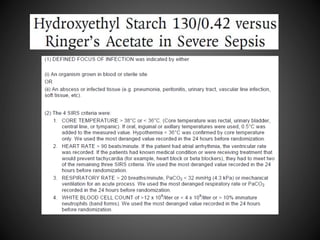
  • #4 Gelatins, modified beef collagens with short half-life for their low molecular weight and their rapid renal excretion, are the least effective colloids. They are well tolerated in terms of coagulation and renal effects despite the highest rate of allergic reactions [22]. Hydroxyethyl starch (HES), a highpolymeric glucose produced by hydroxyethyl substitution of amylopectin, is protected against hydrolysis by nonspecific plasmatic amylases. This feature not only increases the intravascular expansion but also its toxic effects on kidney, liver, bone marrow and skin. HES with a high molecular weight of 200 kDa and a substitution degree of more than 0.4 can cause acute kidney failure in patients with severe sepsis [23–25] and can impair coagulation El uso de hidroxietil almidón (hydroxyethyl starch) para la reanimación aguda de volumen en pacientes en estado crítico se asocia con graves problemas de seguridad, de acuerdo a un metaanálisis publicado por Ryan Zarychanski, y col. en JAMA (Journal of the American Medical Association ) de marzo de 2013.  However, controversies still exist on safety of the latest HES solutions. Recently, 6% HES (130; 0.42) was associated with significant increase of 90-day mortality and renal replacement therapy, in ICU patients with severe sepsis, compared with Ringer’s acetate, similarly to 10% HES in previous trials
  • #6 We conducted a multicenter, randomized, double-blind trial to compare the effect of fluid resuscitation with albumin or saline on mortality in a heterogeneous population of patients in the ICU. We randomly assigned patients who had been admitted to the ICU to receive either 4 percent albumin or normal saline for intravascular-fluid resuscitation during the next 28 days. The primary outcome measure was death from any cause during the 28-day period after randomization. A meta-analysis published by the Cochrane Injuries Group Albumin Reviewers included 24 studies involving a total of 1419 patients and suggested that the administration of albumin containing fluids resulted in a 6 percent increase in the absolute risk of death when compared with the administration of crystalloid solutions. 1 However, a subsequent meta-analysis of 55 trials involving a total of 3504 patients examined the effect of resuscitation with albumin-containing fluid on the risk of death in a general population of patients and did not find a significant increase in the risk of death. Eligible patients were those whom the treating clinician judged to require fluid administration to maintain or increase intravascular volume, with this decision supported by the fulfillment of at least one objective criterion. Patients admitted to the ICU after cardiac surgery, after liver transplantation, or for the treatment of burns were excluded
  • #7 (SOFA) score, 13 as described in Table S3 of the Supplementary Appendix, were recorded at the time of randomization, daily for the next seven days, and then every third day until discharge from the ICU or until day 28
  • #9 were recorded at the time of randomization, daily for the next seven days, and then every third day until discharge from the ICU or until day 28 After randomization, the heart rate, central venous pressure, mean arterial blood pressure, volume of study fluid administered, volume of nonstudy fluid and blood products administered, net fluid balance (calculated as the total fluid input minus the total fluid output), use of mechanical ventilation, and use of renal-replacement therapy (intermittent or continuous hemodialysis, hemofiltration, or hemodiafiltration) were recorded daily until discharge from the ICU or death or until day 28.
  • #11 We conducted a multicenter, randomized, double-blind trial to compare the effect of fluid resuscitation with albumin or saline on mortality in a heterogeneous population of patients in the ICU. We randomly assigned patients who had been admitted to the ICU to receive either 4 percent albumin or normal saline for intravascular-fluid resuscitation during the next 28 days. The primary outcome measure was death from any cause during the 28-day period after randomization. A meta-analysis published by the Cochrane Injuries Group Albumin Reviewers included 24 studies involving a total of 1419 patients and suggested that the administration of albumincontaining fluids resulted in a 6 percent increase in the absolute risk of death when compared with the administration of crystalloid solutions. 1 However, a subsequent meta-analysis of 55 trials involving a total of 3504 patients examined the effect of resuscitation with albumin-containing fluid on the risk of death in a general population of patients and did not find a significant increase in the risk of death. Eligible patients were those whom the treating clinician judged to require fluid administration to maintain or increase intravascular volume, with this decision supported by the fulfillment of at least one objective criterion. Patients admitted to the ICU after cardiac surgery, after liver transplantation, or for the treatment of burns were excluded
  • #16 The Crystalloid versus Hydroxyethyl Starch Trial (CHEST) was an investigator-initiated, multicenter, prospective, blinded, parallel-group, randomized, controlled trial conducted in 32 hospitals in Australia and New Zealand We randomly assigned 7000 patients who had been admitted to an intensive care unit (ICU) in a 1:1 ratio to receive either 6% HES with a molecular weight of 130 kD and a molar substitution ratio of 0.4 (130/0.4, Voluven) in 0.9% sodium chloride or 0.9% sodium chloride (saline) for all fluid resuscitation until ICU discharge, death, or 90 days after randomization. The primary outcome was death within 90 days. Secondary outcomes included acute kidney injury and failure and treatment with renal-replacement therapy
  • #17 The Crystalloid versus Hydroxyethyl Starch Trial (CHEST) was an investigator-initiated, multicenter, prospective, blinded, parallel-group, randomized, controlled trial conducted in 32 hospitals in Australia and New Zealand
  • #18 The Crystalloid versus Hydroxyethyl Starch Trial (CHEST) was an investigator-initiated, multicenter, prospective, blinded, parallel-group, randomized, controlled trial conducted in 32 hospitals in Australia and New Zealand
  • #20 The Crystalloid versus Hydroxyethyl Starch Trial (CHEST) was an investigator-initiated, multicenter, prospective, blinded, parallel-group, randomized, controlled trial conducted in 32 hospitals in Australia and New Zealand
  • #21 The Crystalloid versus Hydroxyethyl Starch Trial(CHEST) was an investigator-initiated, multicenter, prospective, blinded, parallel-group, randomized, controlled trial conducted in 32 hospitals in Australia and New Zealand
  • #22 The Crystalloid versus Hydroxyethyl Starch Trial (CHEST) was an investigator-initiated, multicenter, prospective, blinded, parallel-group, randomized, controlled trial conducted in 32 hospitals in Australia and New Zealand
  • #23 The Crystalloid versus Hydroxyethyl Starch Trial (CHEST) was an investigator-initiated, multicenter, prospective, blinded, parallel-group, randomized, controlled trial conducted in 32 hospitals in Australia and New Zealand
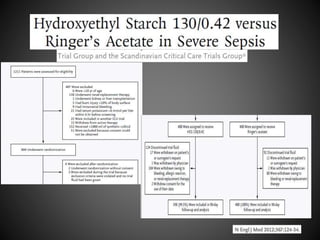
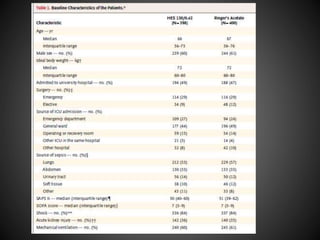
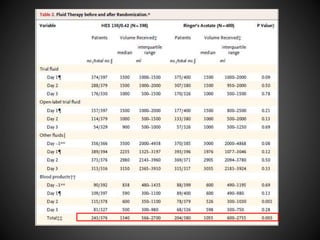
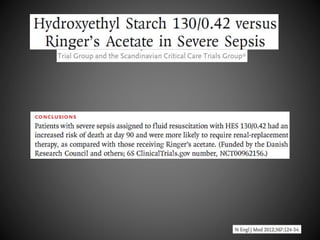
  • #24 Background Hydroxyethyl starch (HES) is widely used for fluid resuscitation in intensive care units (ICUs), but its safety and efficacy have not been established in patients with severe sepsis In this multicenter, parallel-group, blinded trial, we randomly assigned patients with severe sepsis to fluid resuscitation in the ICU with either 6% HES 130/0.42 (Tetraspan) or Ringer’s acetate at a dose of up to 33 ml per kilogram of ideal body weight per day. The primary outcome measure was either death or end-stage kidney failure (dependence on dialysis) at 90 days after randomization Those trials had substantial limitations, and participants received HES solutions with a molecular weight of 200 kD and a substitution ratio (the number of hydroxyethyl groups per glucose molecule) of more than 0.4. These solutions have largely been replaced by HES solutions with a lower molecular weight and a lower substitution ratio, HES 130/0.4
  • #25 Trial fluid composition 6% hydroxyethyl starch (HES) with a molecular weight of 130 kDa and a substitution ratio of 0.42 (6% Tetraspan®, B. Braun Medical AG, Melsungen, Germany). One liter contains HES 130/0.42 60 g, Na+ 140.0 mmol, K+ 4.0 mmol, Ca++ 2.5 mmol, Mg++ 1.0 mmol, Cl- 118.0 mmol, malic acid 5.0 mmol and acetate 24.0 mmol. Ringer’s acetate (Sterofundin ISO®, B. Braun). One liter contains Na+ 145.0 mmol, K+ 4.0 mmol, Ca++ 2.5 mmol, Mg++ 1.0 mmol, Cl- 127.0 mmol, malic acid 5.0 mmol and acetate 24.0 mmol
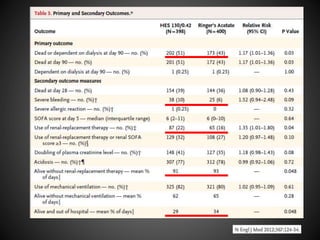
  • #30 More patients in the starch group than in the Ringer’s acetate group received renal-replacement therapy (Table 3). Among all patients, renal replacement therapy was associated with increased 90-day mortality (61%, vs. 44% for those not receiving renal-replacement therapy; P<0.001). In the starch group, 38 patients (10%) had severe bleeding, as compared with 25 (6%) in the Ringer’s acetate group (relative risk, 1.52; 95% CI, 0.94 to 2.48; P = 0.09) (Table 3).
  • #31 Panel A shows the survival curves censored at day 90 for the two intervention groups in the modified intention-totreat population. Kaplan–Meier analysis showed that the survival time did not differ significantly between the two groups (P = 0.07)
  • #32 Panel B shows relative risks with 95% confidence intervals (CIs) for the primary outcome of death or dependence on dialysis at day 90 in the HES 130/0.42 group as compared with the Ringer’s acetate group, among all patients and in the two predefined subgroups. Shock at the time of randomization was defined as a mean arterial pressure of less than 70 mm Hg, need for ongoing treatment with vasopressor or inotropic agents, or a plasma lactate level of more than 4.0 mmol per liter in the hour before randomization. Acute kidney injury at the time of randomization was defined as a renal score on the Sepsis-related Organ Failure Assessment (SOFA) of 2 or higher (plasma creatinine level >1.9 mg per deciliter [170 μmol per liter] or urinary output <500 ml) in the 24 hours before randomization. The SOFA score includes subscores ranging from 0 to 4 for each of five organ systems (circulation, lungs, liver, kidneys, and coagulation), with higher scores indicating more severe organ failure.
  • #34 To assess the effects of colloids compared to crystalloids for fluid resuscitation in critically ill patients Randomised controlled trials (RCTs) of colloids compared to crystalloids, in patients requiring volume replacement.We excluded crossover trials and trials involving pregnant women and neonates We identified 78 eligible trials; 70 of these presented mortality data.
  • #38 To be eligible, research participants had to have received no prior fluids for resuscitation during their ICU stay and now require fluid resuscitation for acute hypovolemia as defined by the combination of (1) hypotension: systolic arterial pressure of less than 90 mm Hg, mean arterial pressure of less than 60 mm Hg, orthostatic hypotension (ie, a decrease in systolic arterial pressure of at least 20 mm Hg from the supine to the semirecumbent position), or a delta pulse pressure of 13% or higher; (2) evidence for low filling pressures and low cardiac index as assessed either invasively or noninvasively; and (3) signs of tissue hypoperfusion or hypoxia, including at least 2 of the following clinical symptoms: a Glasgow Coma Scale score of less than 12, mottled skin, urinary output of less than 25 mL/h, or capillary refilling time of 3 seconds or longer; and arterial lactate levels higher than 2 mmol/L, blood urea nitrogen higher than 56 mg/dL, or a fractional excretion of sodium of less than 1%. The reasons for exclusion are listed in Figure 1 and eTable 1
  • #44 We examined the association between choice of crystalloids and in-hospital mortality during the resuscitation of critically ill adults with sepsis. Design: A retrospective cohort study of patients admitted with sepsis, not undergoing any surgical procedures, and treated in an ICU by hospital day 2. We used propensity score matching to control for confounding and compared the following outcomes after resuscitation with balanced versus with no-balanced fluids: in-hospital mortality, acute renal failure with and without dialysis, and hospital and ICU lengths of stay. We also estimated the dose- response relationship between receipt of increasing proportions of balanced fluids and in-hospital mortality Three hundred sixty U.S. hospitals that were members of the Premier Healthcare alliance between November 2005 and December 2010.
  • #45 inclusion to patients who were in an ICU receiving vasopressors by day 2 and had blood cultures and three consecutive days of treatment with antibiotics (initiated within the first two hospital days) receive at least 2 L of crystalloids by day 2
  • #47 The x-axis categorizes patients based on the proportion of balanced fluids received, whereas the y-axis displays the adjusted absolute in-hospital mortality rate. The absolute mortality rate was lower with each increment in the proportion of balanced fluids received after accounting for all differences in demographics, comorbidities, and cotreatments. Patients receiving greater balanced fluid proportions were observed to have lower in-hospital mortality. CIs increased as fewer patients received large proportions of balanced fluids All patients in the “no-balanced fluid” group received only crystalloids with a SID = 0 such as IS with or without 5% dextrose. In contrast, patients in the “balanced fluids” group received varying amounts of both balanced (such as LR) and nonbalanced solutions (mainly IS), and we categorized these patients based on the proportion of balanced fluids received (calculated as the total balanced fluid volume divided by the total crystalloid volume over the first 2 days)
  • #48 Albumin Italian Outcome Sepsis (ALBIOS) study — an investigator-initiated, multicenter, open-label, randomized, controlled trial — in 100 intensive care units (ICUs) in Italy. Although previous studies have suggested the potential advantages of albumin administration in patients with severe sepsis, its efficacy has not been fully established During the first 7 days, patients in the albumin group, as compared with those in the crystalloid group, had a higher mean arterial pressure (P = 0.03) and lower net fluid balance (P<0.001). The total daily amount of administered fluid did not differ significantly between the two groups (P = 0.10). At 28 days, 285 of 895 patients (31.8%) in the albumin group and 288 of 900 (32.0%) in the crystalloid group had died (relative risk in the albumin group, 1.00; 95% confidence interval [CI], 0.87 to 1.14; P = 0.94). At 90 days, 365 of 888 patients (41.1%) in the albumin group and 389 of 893 (43.6%) in the crystalloid group had died (relative risk, 0.94; 95% CI, 0.85 to 1.05; P = 0.29). No significant differences in other secondary outcomes were observed between the two groups. After randomization, patients in the albumin group received 300 ml of 20% albumin solution. From day 1 until day 28 or ICU discharge (whichever came first), 20% albumin was administered on a daily basis, to maintain a serum albumin level of 30 g per liter or more. In both groups,
  • #54 Figure 2. Probability of Survival from Randomization through Day 90. The graph shows the Kaplan–Meier estimates for the probability of survival among patients receiving albumin and crystalloids and among those receiving crystalloids alone. The P value was calculated with the use of the log-rank test.