RAMIRO E. SARMIENTO V.
HOSPITAL “ CARLOS ANDRADE MARÍN”
ORTOPEDIA Y TRAUMATOLOGIA
ABORDAJE DE HOMBRORestaurar el máximo de función indolora del hombro.
INDICACIONES:
 Reconstrucción de luxaciones recidivantes.
 Drenaje de infecciones
 Biopsia y resección de infecciones
 Reparación/estabilización tendón TCLB
 Artroplastia de hombro
ABORDAJE DE HOMBRO
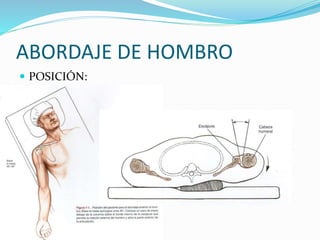
 POSICIÓN:

ABORDAJE DE HOMBRO
ABORDAJE DE HOMBRO
 REFERENCIAS e INSICION:
ABORDAJE DE HOMBRO
ABORDAJE DE HOMBRO
ABORDAJE DE HOMBRO
ABORDAJE DE HOMBRO
ABORDAJE DE HOMBRO
ABORDAJE POSTERIOR
INDICACIONES:
•REPARACIOIN EN CASOS DE LUXACIONES O SUBLUXACIONES
POSTERIORESRECIDIVANTES DE HOMBRO
•OSTEOTOMIA GLENOIDEA
•BIOPSIA Y RESECCION DE TUMORES
•DRENAJE DE INFECCIONES
•TRATAMIENTO DE FX DEL CUELLO DE ESCAPULA
Posición del paciente
Incisión recta a todo lo
largo de la espina de la
escápula, hasta el
ángulo posterior del
acromion
Plano Internervioso
El plano
internervioso
discurre entre el
redondo menor
(nervio axilar) y el
infraespinoso (nervio
supraescapular)
DISECCIÓN SUPERFICIAL
Identifique el origen
del músculo
deltoides, la espina
de la escápula y la
inserción desde su
origen. Comience
desinsertando el
músculo desde lateral
a medial
Identifique el plano internervioso existente entre
los músculos infraespinoso y redondo menor .
Tenga en cuenta que es difícil de definir
Rechace el infraespinoso
proximalmente y el redondo
menor distalmente con
objeto de alcanzar la región
posterior de la articulación
del hombro
PRINCIPIOS DE ARTROSCOPIA
ABORDAJE ANTERIOR Y POSTERIOR
INDICACIONES
 Descompresión subacromial artroscópica en las
tendinitis crónicas del manguito rotador.
 Tratamiento de las roturas parciales del
manguito rotador.
 Tratamiento de roturas del labrum glenoideo
 Tratamiento de las lesiones degenerativas de la
articulación acromioclavicular.
 Extracción de cuerpos libres intraarticulares.
 Tratamiento de la osteocondritis disecante.
 Sinovectomia
POSICION
POSTERIOR
INCISIONES
INCISIONES
ANTERIOR
1. Introducir el artroscopio por la incisión posterior
2. Identificar el tendón del bíceps
3. Se rota el artroscopio hacia arriba para visualizar el supraespinoso.
4. Observe el triangulo anterior de hombro, formado por el tendón del bíceps, el
borde superior del subescapular y la glenoides. (sitio seguro para portal anterior)
ABORDAJE DE HOMBRO
 A 4.2-mm motorized shaver was used to débride
fibrinous debris and inflamed synovial tissue
.
 A closed suction drain was inserted at the end of the
operation.
 Postoperatively the patient was encouraged to
move the shoulder with the arm in a sling.
Staging of the infection was based
on the criteria of Gächter
 I indicates opacity of fluid, redness of the synovial
membrane, and possible petechial bleeding.
 II severe inflammation, fibrinous deposition, and pus.
 III thickening of the synovial membrane,
compartment formation , and cartilage erosion.
 IV aggressive pannus with infiltration of the cartilage,
undermining the cartilage.
RESULTADOS The average duration of symptoms prior to the arthroscopic
lavage was three weeks range, one to eight weeks.
 The causative organism could be identified in 13 patients:
 Staphylococcus aureus 7,
 Pseudomonas 3
 Pneumococcus, Acinetobacter, and Escherichia coli in one
each.
 The six patients who had negative cultures had received
oral antibiotics before the operation. However, histological
analysis of intraoperative biopsy specimens  acute active
inflammation  septic arthritis.
RESULTADOS
 DISTRIBUCION DE PACIENTES
 I : 1 PACIENTE
 II: 7 PACIENTES
 III: 9 PACIENTES
 IV: 2 PACIENTES
RESULTADOS
 The infection was eradicated completely with a single
arthroscopic procedure in 14 patients.
 Five patients (two with a stage-II infection, two with a
stage-III infection, and one with a stage-IV infection)
required a second arthroscopic lavage within two
weeks after the first operation.
 Scottish Intercollegiate Guidelines Network
EN LA MARIN ….MIENTRAS TANTO
EN LA LEY…
Abordaje de hombro

Abordaje de hombro

  • 1.
    RAMIRO E. SARMIENTOV. HOSPITAL “ CARLOS ANDRADE MARÍN” ORTOPEDIA Y TRAUMATOLOGIA
  • 3.
    ABORDAJE DE HOMBRORestaurarel máximo de función indolora del hombro. INDICACIONES:  Reconstrucción de luxaciones recidivantes.  Drenaje de infecciones  Biopsia y resección de infecciones  Reparación/estabilización tendón TCLB  Artroplastia de hombro
  • 4.
    ABORDAJE DE HOMBRO POSICIÓN: 
  • 5.
  • 6.
    ABORDAJE DE HOMBRO REFERENCIAS e INSICION:
  • 7.
  • 8.
  • 9.
  • 10.
  • 11.
  • 13.
    ABORDAJE POSTERIOR INDICACIONES: •REPARACIOIN ENCASOS DE LUXACIONES O SUBLUXACIONES POSTERIORESRECIDIVANTES DE HOMBRO •OSTEOTOMIA GLENOIDEA •BIOPSIA Y RESECCION DE TUMORES •DRENAJE DE INFECCIONES •TRATAMIENTO DE FX DEL CUELLO DE ESCAPULA
  • 14.
  • 15.
    Incisión recta atodo lo largo de la espina de la escápula, hasta el ángulo posterior del acromion
  • 16.
    Plano Internervioso El plano internervioso discurreentre el redondo menor (nervio axilar) y el infraespinoso (nervio supraescapular)
  • 17.
    DISECCIÓN SUPERFICIAL Identifique elorigen del músculo deltoides, la espina de la escápula y la inserción desde su origen. Comience desinsertando el músculo desde lateral a medial
  • 18.
    Identifique el planointernervioso existente entre los músculos infraespinoso y redondo menor . Tenga en cuenta que es difícil de definir
  • 19.
    Rechace el infraespinoso proximalmentey el redondo menor distalmente con objeto de alcanzar la región posterior de la articulación del hombro
  • 22.
  • 23.
    ABORDAJE ANTERIOR YPOSTERIOR INDICACIONES  Descompresión subacromial artroscópica en las tendinitis crónicas del manguito rotador.  Tratamiento de las roturas parciales del manguito rotador.  Tratamiento de roturas del labrum glenoideo  Tratamiento de las lesiones degenerativas de la articulación acromioclavicular.  Extracción de cuerpos libres intraarticulares.  Tratamiento de la osteocondritis disecante.  Sinovectomia
  • 25.
  • 26.
  • 28.
  • 30.
    1. Introducir elartroscopio por la incisión posterior 2. Identificar el tendón del bíceps 3. Se rota el artroscopio hacia arriba para visualizar el supraespinoso.
  • 31.
    4. Observe eltriangulo anterior de hombro, formado por el tendón del bíceps, el borde superior del subescapular y la glenoides. (sitio seguro para portal anterior)
  • 34.
  • 35.
     A 4.2-mmmotorized shaver was used to débride fibrinous debris and inflamed synovial tissue .  A closed suction drain was inserted at the end of the operation.  Postoperatively the patient was encouraged to move the shoulder with the arm in a sling.
  • 36.
    Staging of theinfection was based on the criteria of Gächter  I indicates opacity of fluid, redness of the synovial membrane, and possible petechial bleeding.  II severe inflammation, fibrinous deposition, and pus.  III thickening of the synovial membrane, compartment formation , and cartilage erosion.  IV aggressive pannus with infiltration of the cartilage, undermining the cartilage.
  • 39.
    RESULTADOS The averageduration of symptoms prior to the arthroscopic lavage was three weeks range, one to eight weeks.  The causative organism could be identified in 13 patients:  Staphylococcus aureus 7,  Pseudomonas 3  Pneumococcus, Acinetobacter, and Escherichia coli in one each.  The six patients who had negative cultures had received oral antibiotics before the operation. However, histological analysis of intraoperative biopsy specimens  acute active inflammation  septic arthritis.
  • 40.
    RESULTADOS  DISTRIBUCION DEPACIENTES  I : 1 PACIENTE  II: 7 PACIENTES  III: 9 PACIENTES  IV: 2 PACIENTES
  • 41.
    RESULTADOS  The infectionwas eradicated completely with a single arthroscopic procedure in 14 patients.  Five patients (two with a stage-II infection, two with a stage-III infection, and one with a stage-IV infection) required a second arthroscopic lavage within two weeks after the first operation.
  • 45.
     Scottish IntercollegiateGuidelines Network
  • 48.
    EN LA MARIN….MIENTRAS TANTO EN LA LEY…