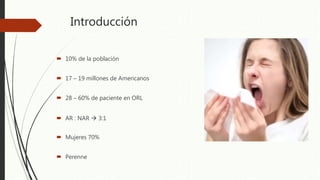



RINITIS NO ALERGICA
UNIVERSIDAD AUTONOMA DE SINALOA
HOSPITAL CIVIL DE CULIACAN
CENTRO DE INVESTIGACIÓN Y DOCENCIA EN CIENCIAS DE LA SALUD
OTORRINOLARINGOLOGIA Y CIRUGIA DE CABEZA Y CUELLO
DR. ANGEL CASTRO URQUIZO
R1 ORL
CULIACAN SINALOA
AGOSTO 2016
Temas a tratar
Introducción
Fisiopatogenia
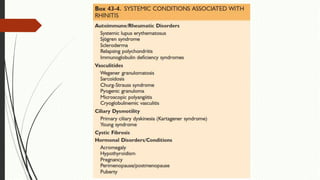
Rinitis no alérgica con eosinofilia
Rinitis hormonal
Rinitis por medicamentos
Rinitis atrófica
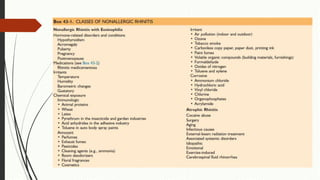
Rinitis Inducida por irritantes
Rinitis Vasomotora
Diagnostico
Tratamiento
Introducción
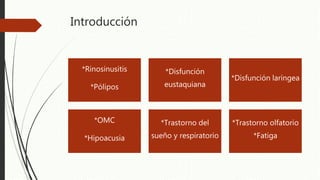
 10% de la población
 17 – 19 millones de Americanos
 28 – 60% de paciente en ORL
 AR : NAR  3:1
 Mujeres 70%
 Perenne
Introducción
*Rinosinusitis
*Pólipos
*Disfunción
eustaquiana
*Disfunción laríngea
*OMC
*Hipoacusia
*Trastorno del
sueño y respiratorio
*Trastorno olfatorio
*Fatiga
Introducción
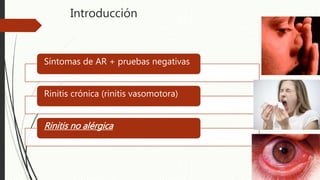
Síntomas de AR + pruebas negativas
Rinitis crónica (rinitis vasomotora)
Rinitis no alérgica
Fisiopatología
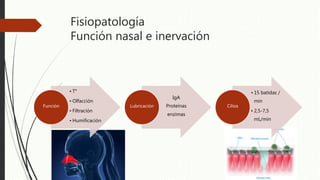
Función nasal e inervación
• T°
• Olfacción
• Filtración
• Humificación
Función
IgA
Proteínas
enzimas
Lubricación
• 15 batidas /
min
• 2,5-7,5
mL/min
Cilios
Fisiopatología
Función nasal e inervación
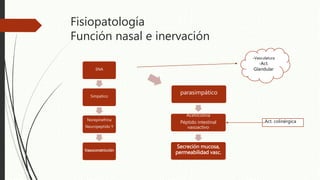
SNA
Simpático
Norepinefrina
Neuropeptido Y
Vasoconstricción
parasimpático
Acetilcolina
Péptido intestinal
vasoactivo
Secreción mucosa,
permeabilidad vasc.
-Vasculatura
-Act.
Glandular
Act. colinérgica
Fisiopatología
Función nasal e inervación
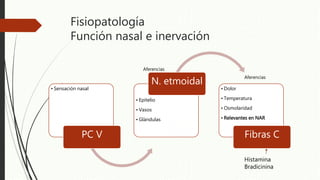
• Sensación nasal
PC V
• Epitelio
• Vasos
• Glándulas
N. etmoidal
• Dolor
• Temperatura
• Osmolaridad
• Relevantes en NAR
Fibras C
Histamina
Bradicinina
Aferencias
Aferencias
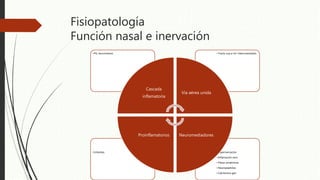
Fisiopatología
Función nasal e inervación
• Hiperinervación
• Inflamación nerv.
• Fibras amielinicas
• Neuropeptidos
• Calcitonina gen
• Irritantes
• Tracto sup e inf. interconectados• PG, leucotrienos
Cascada
inflamatoria
Vía aérea unida
NeuromediadoresProinflamatorios
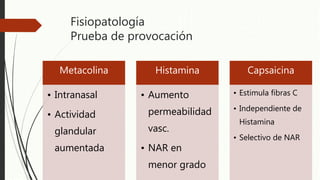
Fisiopatología
Prueba de provocación
Metacolina
• Intranasal
• Actividad
glandular
aumentada
Histamina
• Aumento
permeabilidad
vasc.
• NAR en
menor grado
Capsaicina
• Estimula fibras C
• Independiente de
Histamina
• Selectivo de NAR
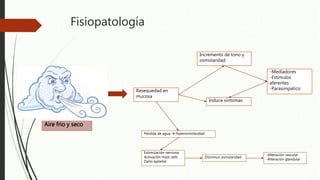
Fisiopatología
Aire frio y seco
Resequedad en
mucosa
Induce síntomas
Incremento de tono y
osmolaridad
-Mediadores
-Estímulos
aferentes
-Parasimpatico
Perdida de agua  hiperosmolaridad
Estimulación nerviosa
Activación mast cells
Daño epitelial
Disminuir osmolaridad
-Alteración vascular
-Alteración glandular
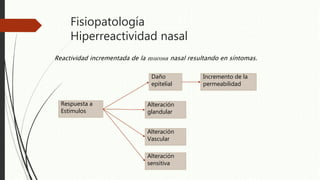
Fisiopatología
Hiperreactividad nasal
Respuesta a
Estímulos
Reactividad incrementada de la mucosa nasal resultando en síntomas.
Daño
epitelial
Incremento de la
permeabilidad
Alteración
glandular
Alteración
Vascular
Alteración
sensitiva
Fisiopatología
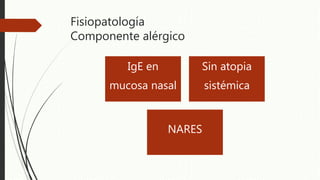
Componente alérgico
IgE en
mucosa nasal
Sin atopia
sistémica
NARES
Clasificación
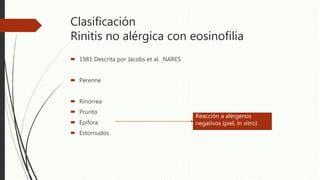
Rinitis no alérgica con eosinofilia
 1981 Descrita por Jacobs et al. NARES
 Perenne
 Rinorrea
 Prurito
 Epifora
 Estornudos
Reacción a alérgenos
negativos (piel, in vitro)
Clasificación
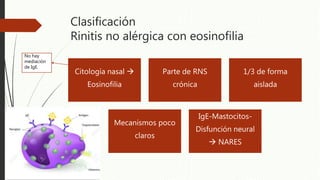
Rinitis no alérgica con eosinofilia
Citología nasal 
Eosinofilia
Parte de RNS
crónica
1/3 de forma
aislada
Mecanismos poco
claros
IgE-Mastocitos-
Disfunción neural
 NARES
No hay
mediación
de IgE.
Clasificación
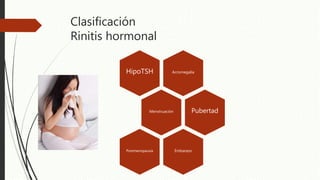
Rinitis hormonal
AcromegaliaHipoTSH
Menstruación Pubertad
EmbarazoPostmenopausia
Clasificación
Rinitis hormonal
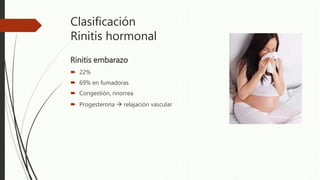
Rinitis embarazo
 22%
 69% en fumadoras
 Congestión, rinorrea
 Progesterona  relajación vascular
Clasificación
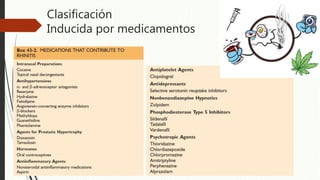
Inducida por medicamentos
Clasificación
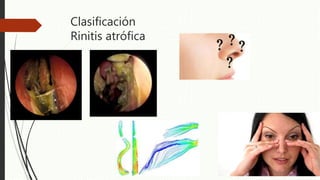
Rinitis atrófica
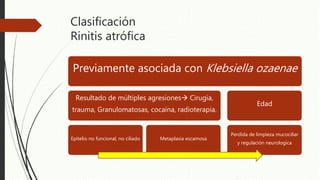
Previamente asociada con Klebsiella ozaenae
Resultado de múltiples agresiones Cirugia,
trauma, Granulomatosas, cocaína, radioterapia.
Epitelio no funcional, no ciliado Metaplasia escamosa
Edad
Perdida de limpieza mucociliar
y regulación neurologica
Clasificación
Rinitis atrófica
Clasificación
Rinitis atrófica
Tratamiento
 Insatisfactorio y limitado
 Antibióticos
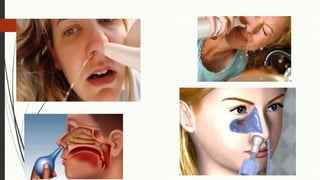
 Lavados nasales
 Humidificación
Clasificación
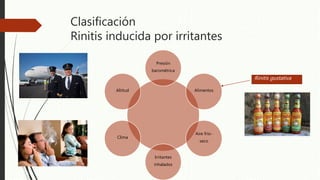
Rinitis inducida por irritantes
Presión
barométrica
Alimentos
Aire frio-
seco
Irritantes
inhalados
Clima
Altitud
Rinitis gustativa
Clasificación
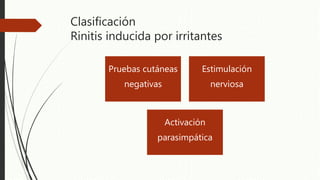
Rinitis inducida por irritantes
Pruebas cutáneas
negativas
Estimulación
nerviosa
Activación
parasimpática
Clasificación
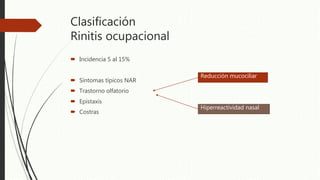
Rinitis ocupacional
 Incidencia 5 al 15%
 Síntomas típicos NAR
 Trastorno olfatorio
 Epistaxis
 Costras
Reducción mucociliar
Hiperreactividad nasal
v
Clasificación
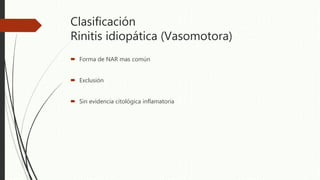
Rinitis idiopática (Vasomotora)
 Forma de NAR mas común
 Exclusión
 Sin evidencia citológica inflamatoria
Clasificación
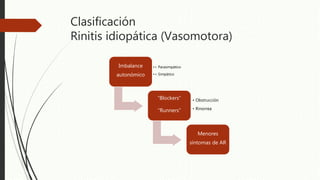
Rinitis idiopática (Vasomotora)
Imbalance
autonómico
•> Parasimpático
•< Simpático
“Blockers”
“Runners”
• Obstrucción
• Rinorrea
Menores
síntomas de AR
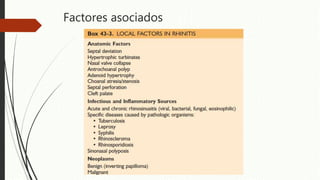
Factores asociados
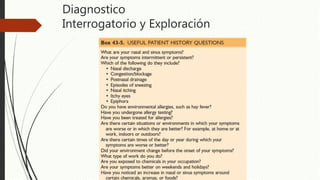
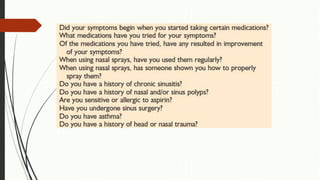
Diagnostico
Interrogatorio y Exploración
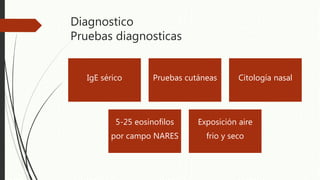
Diagnostico
Pruebas diagnosticas
IgE sérico Pruebas cutáneas Citología nasal
5-25 eosinofilos
por campo NARES
Exposición aire
frio y seco
Tratamiento
Prevención
Tratamiento
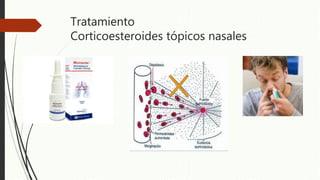
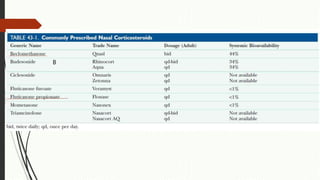
Corticoesteroides tópicos nasales
B
Corticoesteroides tópicos nasales
Efectos adversos
 Irritación septal
 Resequedad nasal y costras
 Resequedad de garganta
 Cefalea
 Perforación septal
 Efectos sistémicos
Tratamiento
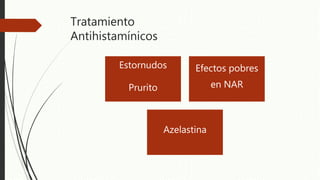
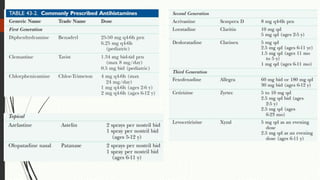
Antihistamínicos
Estornudos
Prurito
Efectos pobres
en NAR
Azelastina
Tratamiento
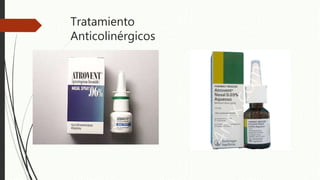
Anticolinérgicos
Tratamiento
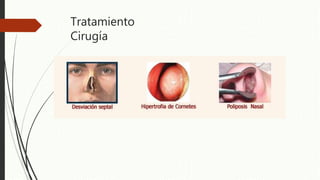
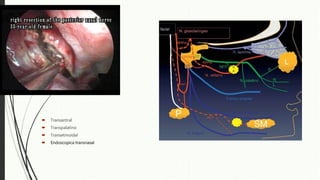
Cirugía
 Transantral
 Transpalatino
 Transetmoidal
 Endoscopica transnasal

Rinitis no alergica

Notas del editor

  • #2 CAP 43 CM 371 BLY
  • #4 10% of the population is affected by chronic or recurrent nasal symptoms, with an estimated 17 to 19 million Americans affected by nonallergic rhinitis. In many instances, AR and NAR are often indistinguishable and coexist
  • #5 Problemas que surgen de rinitis cornica 80% de las fatigas cronicas
  • #6 These symptoms often interfere with school or work performance, and a lack of productivity is worsened by the need for frequent doctor visits. In a recent survey of rhinitis patients, one fourth noted restricting their choice of occupation or residence to reduce their symptoms In addition, medications, although usually helpful, may elicit undesirable side effects such as drowsiness, epistaxis, palpitations, and nasal dryness, which compound the overall impact of NAR.
  • #7 Most commonly a patient will complain of rhinorrhea, nasal congestion, and sneezing despite a negative allergic history and negative skin testing and nasal cytology. Unfortunately, after allergy has been ruled out as the cause of the rhinitis, these patients may be diagnosed with vasomotor rhinitis, a blanket term used to diagnose affected patients Chronic rhinitis has been described in the literature using many terms. Historically, the term vasomotor rhinitis has been favored, but distinct vascular or motor nerve dysfunction has been difficult to identify.
  • #8 The effects of NAR cannot be fully appreciated without a brief review of nasal function, which includes temperature regulation, olfaction, filtration, and humidification of inspired air. The nasal lining also produces secretions that contain immunoglobulin A, protein, and enzymes to provide lubrication and protection. Secretions trap particulate matter, and nasal cilia propel the matter toward the natural ostia. This occurs at a frequency of 10 to 15 beats/min, and the mucous blanket streams at a rate of 2.5 to 7.5 mL/min.
  • #9 N. eferentes.. Mitad simpáticos y mitad para Regulation of mucosal vasculature and glandular secretions is controlled by the autonomic nervous system. The sympathetic nerves form one half of the efferent nasal reflex arc. Once stimulated, sympathetic nerves release norepinephrine and neuropeptide Y, which cause vasoconstriction of the nasal vasculature. The parasympathetic nerves comprise the other half of the efferent nasal reflex arc. After they have been stimulated, parasympathetic nerves release acetylcholine, norepinephrine, and vasoactive intestinal peptide. Cholinergic neuropeptides and neurotransmitters stimulate the serous glands of the nasal mucosa and increase mucus secretion. Unilateral stimulation of the efferent reflex arc leads to a bilateral response
  • #10 Nasal sensation primarily originates from the trigeminal nerve. Afferent ethmoidal nerves provide sensory innervation to the epithelium, vessels, and glands. C fibers are unspecialized afferent sensory nerves that react to pain and changes in temperature and osmolarity, and they are the most relevant type of sensory fibers in NAR.
  • #11 DESORDE DE CALQIER COMPONENTE DE LA MUCOSA TE PUEDE DAR NAR The nonspecific and variable symptoms of NAR are confounding, which compounds the difficult task of identifying the exact pathophysiologic source.
  • #12 METACOLINA: ACT. AUMENTADA EN AR Y NAR. NO ES PARA DIFERENCIARLAS Agonista colinérgico. receptor muscarinicos Histamine provocation increases vascular permeability, causing sneezing, pruritus, rhinorrhea, and nasal obstruction
  • #14 spicy foods, changes in temperature and humidity, environmental tobacco smoke, exercise, household cleaning products, perfumes and colognes, alcohol consumption, and bright lights
  • #15 recently showed a subgroup of NAR patients who also produced local IgE upon nasal provocation testing. This has also been studied and shown in a clinical study performed by Wedbeck and colleagues in 2005. These results suggest that a subgroup of NAR patients may have an allergic disease pathway, while still exhibiting negative systemic atopy; this group could possibly be those with NAR with eosinophilia NARES
  • #18 The majority of patients deny specific triggers, although some complain that weather changes or exposure to irritant chemicals are troublesome. Cytologic examination of nasal secretions shows marked eosinophilia. This reaction may occur as part of a continuum of chronic rhinosinusitis with and without nasal polyps, and Samter triad, or may occur as an isolated disorder in up to one third of patients with NAR. However, as noted above, studies have shown that mast cells, IgE-postive cells, and eosinophils are increased in the nasal mucosa of AR and NAR patients, possibly as a consequence of localized IgE-mediated reactions. Along with this possible allergic component, nasal neural dysfunction has also been described to contribute to the symptomatology in NARES patients
  • #19 Through direct effects on the nasal mucosa, hormones may cause mucous gland hyperreactivity and increased rhinorrhea.1 PROLACTINA
  • #20 Aumetno de flujo sistemico
  • #21 semi-ischemic state results in rebound congestion from decreased vasomotor tone increased parasympathetic activity, increased vascular permeability
  • #22 Rinitis crónica inflamatoria caracterizada por atrofia de las estructuras nasales internas (cornetes, mucosa). Incrementa con la edad DE EPITELIO RESPIRATORIO CILIADO SX NARIZ VACIA
  • #23 Crusting, fetor, mucosal atrophy, and widely patent nasal cavities are seen in patients who complain of nasal congestion.54 The normal pattern of airflow is changed, which likely contributes to the sensation of congestion and obstruction in addition to
  • #25 Temperature changes, alterations in barometric pressures, ingested foods, and inhaled irritants are other inciting causes of NAR. Physical stimuli such as cold air and weather changes are known triggers. As mentioned earlier, cold, dry air is a known factor in the development of profuse rhinorrhea.27,55 Altitude and pressure changes result in facial pressure, headaches, and nasal symptoms in susceptible individuals (e.g., those who work in the aviation field).
  • #26 AUSENCIA DE RESULTADOS EN PRUEBAS CUTANEAS Stimulation of afferent sensory nerves is the most likely pathophysiologic mechanism; this activates the parasympathetic nerves that supply the nasal mucosal glands and could also explain the sweating and epiphora that sometimes accompany this reaction.57
  • #27 The incidence is estimated to be 5% to 15%, and it should be differentiated from occupationally induced AR or immunologic rhinitis.
  • #28 Irritacion fibras C --- libera neuropeptidos, --- vasodilatación y edema ----- ALIVIO EN VACACIONES
  • #29 Idiopathic or vasomotor rhinitis (VMR) is diagnosed when other identifiable causes have been excluded and no cytologic evidence of mucosal inflammation is found.
  • #30 stos pacientes a menudo tienen una menor prevalencia de estornudos , prurito y conjuntival síntomas en comparación con el observado en pacientes CON AR
  • #35 Negativas en NAR Citilogia. Para ver si hay componenete inflamatorio 5 -25 comp con nARES
  • #36 Patient education is of utmost importance in treating NAR. Patients frequently are not aware of the specific trigger that incites their symptoms, but a thorough and accurate history can often elucidate the cause. After being informed, patients can take an active role in their health care and control their environment. Avoidance of inciting factors such as perfumes, tobacco smoke, cleaning supplies, and certain foods or wines can usually be accomplished without great difficulty. If a change in environment is not feasible, exposures can be limited; for example, occupational exposures can be reduced or eliminated by using masks and protective coverings, and medications associated with symptoms can be discontinued or changed. Exercise is an important and frequently overlooked adjunct to therapy; vigorous exercise decreases nasal congestion by stimulating adrenergic receptors in the nasal mucosa. Unfortunately, in many circumstances, inciting exposure cannot be avoided,
  • #37 Decongestants, either topical or systemic, can be used to decrease mucosal edema and assist with the initiation of topical nasal steroid application. After the topical steroids consistently and successfully reach the nasal mucosa, decongestants should be tapered and discontinued. Physiologically normal saline is another useful adjunct to therapy, and rinsing with this substance increases steroid efficacy at the mucosal level. In addition to cleansing the nose, saline improves ciliary function and mucociliary clearance. topical medications must reach the nasal mucosa to be effective.
  • #38 In addition to cleansing the nose, saline improves ciliary function and mucociliary clearance.
  • #39 Fluticasone propionate and beclomethasone are currently the only topical steroid preparations with a U.S. Food and Drug Administration (FDA) indication for treating NAR, because they have both been found to be effective in patients with NAR.79,80 Budesonide has also shown good efficacy and is currently the only topical nasal steroid that has a pregnancy category of B, whereas all others are C.81,82 On the other hand, mometasone did not show better efficacy than placebo in reducing rhinitis symptoms in perennial NAR patients over a 6-week period in a separate study
  • #40 Perofacion y sist. Muy raro
  • #41 Azelastine is an H1-receptor antagonist. In addition, it inhibits the synthesis of leukotrienes, kinins, and cytokines and also inhibits the expression of intercellular adhesion molecules and prevents the generation of superoxide free radicals --- se ha mostrado que ayda en OBSTRUCCION, RINORREA, EDEMA
  • #42 Azelastine is an H1-receptor antagonist. In addition, it inhibits the synthesis of leukotrienes, kinins, and cytokines and also inhibits the expression of intercellular adhesion molecules and prevents the generation of superoxide free radicals
  • #43 Para rinorera Alternatively, ipratropium bromide, which is a topical anticholinergic, acts locally and blocks parasympathetic input to the nasal mucosa glands only. Systemic side effects are uncommon with intranasal ipratropium bromide; epistaxis and nasal dryness may occur, but they are rarely intolerable, and they decrease in incidence with prolonged use of the medication.
  • #44 Nasal polyps, hypertrophic inferior turbinates, and septal spurs or deviation CON EL FIN DE QUE EL ESTEROIDE LE PEGUE MAS ALA MUCOSA Nervio petroso superficial mayor (rama colateral de nervio facial). - Nervio petroso profundo mayor (rama colateral del nervio glosofaríngeo).  steroid injection, electrocautery, laser ablation, microdebrider resection, submucosal resection, lateral displacement, partial turbinectomy, and radiofrequency ablation.
  • #45  La inervación parasimpática se origina en el núcleo salivar superior o lagrimonasal y sigue el nervio facial hasta el ganglio geniculado. Aquí las fibras parasimpáticas se separan del facial para formar el nervio petroso superficial mayor, que sale del hueso temporal a través del hiato facial en la superficie anterior del peñasco donde recibe una anastomosis del petroso profundo mayor. Este tiene su origen en el nervio de Jacobson, que a su vez es rama del glosofaringeo, quedando formado así el nervio vidiano, el cual al penetrar por el agujero rasgado posterior recibe otra anastomosis del plexo simpático paracarotídeo; después atraviesa la base de la apófisis pterigoides y al final de un trayecto muy corto termina en el ganglio esfenopalatino, en la extremidad anterior dilatada del canal vidiano. Conduce estímulos parasimpáticos secretorios de la mucosa nasal, con vasodilatación del lecho vascular.